Technical Knowledge
Super Flat Floor Joint Design and Construction Equipment Coordination Plan
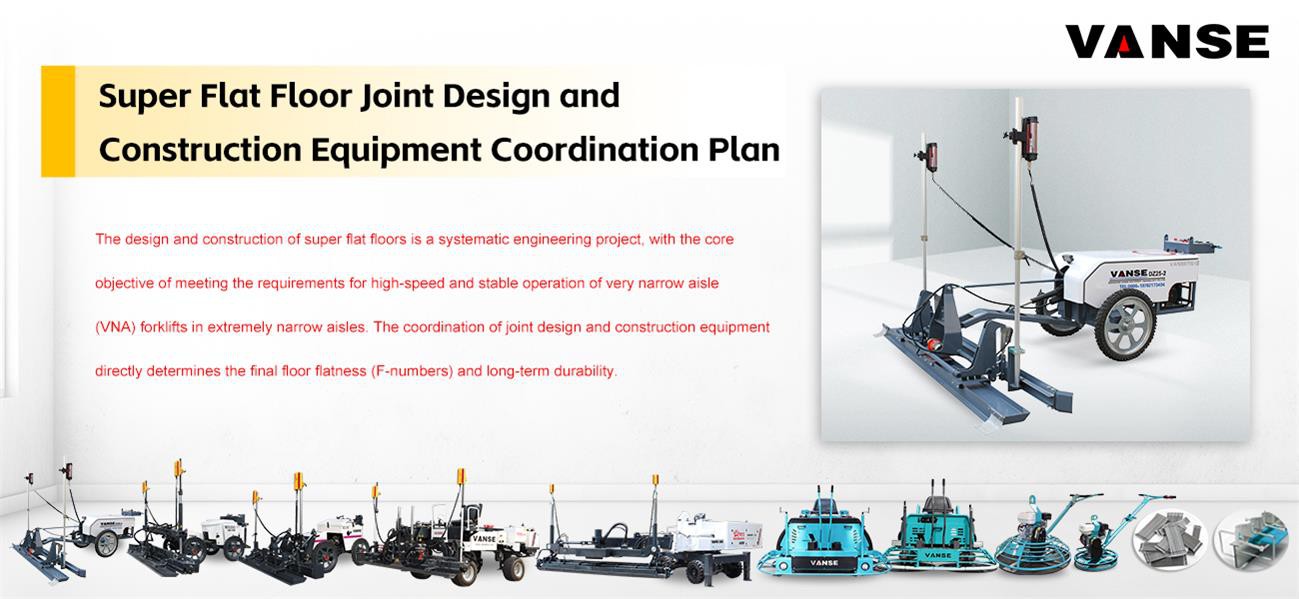
The design and construction of super flat floors is a systematic engineering project, with the core objective of meeting the requirements for high-speed and stable operation of very narrow aisle (VNA) forklifts in extremely narrow aisles. The coordination of joint design and construction equipment directly determines the final floor flatness (F-numbers) and long-term durability.
The following is a professional plan for super flat floor joint design and equipment coordination:
I. Joint Design Scheme: Reducing "Bumping" and Settlement
Ultra-flat floor slabs typically follow the principle of "large slab spans and fewer joints" to reduce the impact of forklift wheels on the joints.
1. Construction Joints
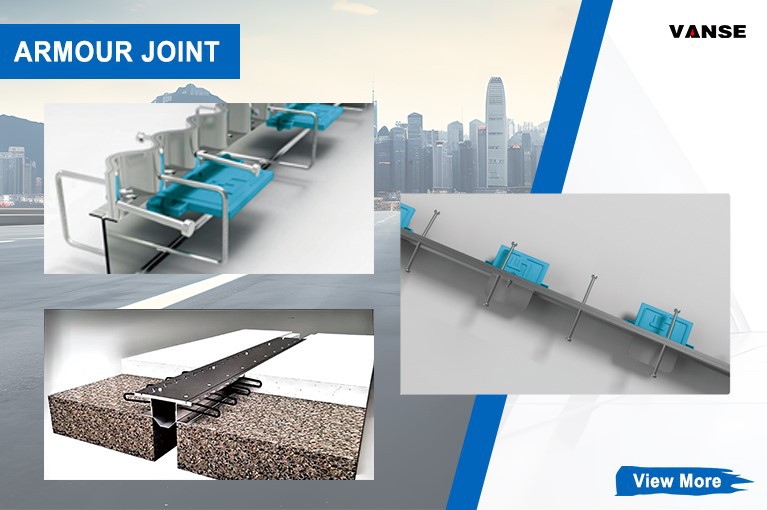
Load Transfer Bar Design: Square load transfer bars or armored joints must be used. Armored joints consist of two cold-drawn flat steel bars, which effectively protect the concrete edges from being crushed by the hard wheels of forklifts.
Placement: Avoid placing joints in the main forklift traffic areas as much as possible. In VNA (Very Narrow Aisle) areas, construction joints should be parallel to the aisles and ideally located under the racking rather than in the center of the aisle.
2. Contraction Joints (Induced/Saw-cut Joints)
Timing of cutting the joints: The joints should be cut after the concrete has initially set and reached a strength of 5-10 MPa, usually 6-12 hours after pouring.
Spacing control: It is recommended to keep the spacing within 6m x 6m to prevent the formation of irregular, random cracks.
3. Joint Filling
The joints must be filled with **high-hardness polyurea** or semi-rigid epoxy resin to support the edges of the joint. The filler should slightly overflow during application, and after curing, the excess should be trimmed flush with a blade to ensure the joint is perfectly level with the floor surface.
II. Construction Equipment Coordination Plan: High-Precision Control
Achieving a super-flat floor relies not only on manual work but also on high-precision automated equipment.
1. Laser Leveling Equipment
This is the core of super-flat floor construction.
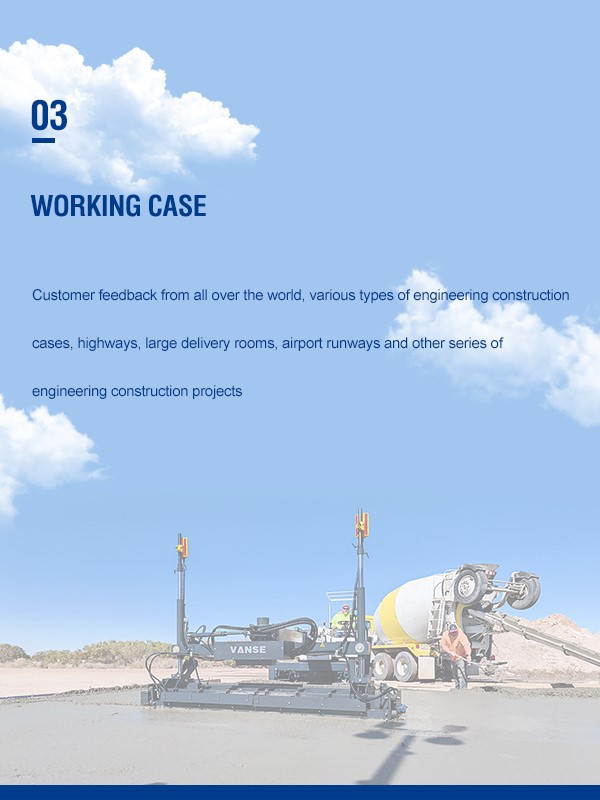
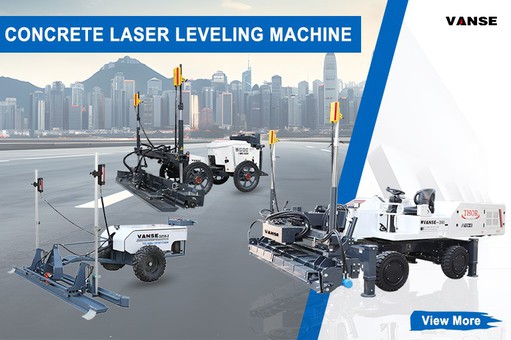
Equipment Selection: A telescopic-arm laser leveling machine with automatic leveling function is used.
Coordination Key Points: The laser transmitter should be installed at a high location unaffected by vibrations. The leveling machine automatically adjusts the height of the leveling head at a frequency of 10 times per second to ensure the accuracy of the initial floor elevation.
2. Paving Assistance: Guide Rail System
In some special tunnels requiring a flatness level of F min, the laser leveling process still needs to be supplemented with a side form guide rail system.
Process: Precision channel steel or I-beams are used as guide rails, combined with manual verification using a Leveling bar, to ensure extremely high accuracy in both the transverse and longitudinal directions.
3. Power Troweling and Finishing Equipment
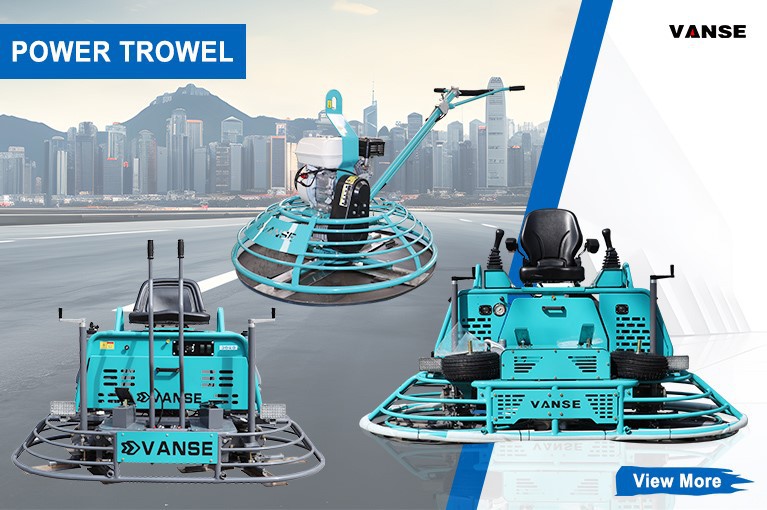
Double-drive ride-on power trowel: Used for large-area concrete finishing and compaction.
Recommended procedure: Must be used in conjunction with a **long-handled straightedge** for repeated leveling. After each pass with the power trowel, use a 3-4 meter long straightedge to level the surface in both longitudinal and transverse directions, eliminating any waves left by the trowel.
III. Equipment and Construction Coordination Process Flowchart
| Stages | Core Equipment | Key points for implementation |
| Spreading and leveling | Laser leveling machine + laser control system | Ensure continuous material supply to prevent machine stoppages that could cause indentations. |
| Initial leveling | Long-handled aluminum-magnesium alloy Leveling (Check Rod) | Before the concrete begins to set, manually smooth out any minor unevenness left by the leveling machine through repeated scraping. |
| Grouting and finishing | Ride-on power trowel + floating disc | Strictly control the finishing time, adjusting the blade angle according to the concrete's hardening degree. |
| Joint treatment | Automatic self-propelled concrete saw + polyurea joint filling machine | The cutting depth is typically 1/3 to 1/4 of the slab thickness. |
IV. Quality Inspection: F-Numbers Verification
After construction is complete, the floor must be inspected using a professional **floor flatness testing instrument (such as Dipstick or FloorPro)**.
FF (Floor Flatness): Reflects the flatness of the floor (small-scale undulations).
FL (Floor Levelness): Reflects the levelness of the floor (large-scale inclination).
Key reminder: The success of a super-flat floor depends 50% on equipment precision and 50% on controlling the concrete mix design (slump variation needs to be controlled within ± 20 mm).
Note: The parameters provided in this document are for reference only and are not mandatory. Due to differences in technical characteristics between different brands and models of laser levelers, please consult the manufacturer for a suitable solution before actual operation. This reference document assumes no responsibility for any issues arising from failure to follow the manufacturer's instructions.
Thanks to All the Friends Who Support and Trust Shandong Vanse Machinery Technology Co., Ltd.
If you want to know more about Shandong Vanse Machinery Technology Co., Ltd. or have any questions, please feel free to contact us:
Our Factory
Shandong Vanse Machinery Technology Co., Ltd.


Share this article

About the Author: Shandong Vanse Machinery Technology Co., Ltd.
Shandong Vanse Machinery Technology Co., Ltd. is a high-tech manufacturer specializing in concrete construction machinery, including laser screeds and related equipment. The company integrates R&D, production, and global sales, with products exported to over 60 countries and widely used in infrastructure projects worldwide.
Previous Post
Next Post
Related Articles
You Might Also Like
Analysis of the Causes of Unstable Laser Signals in Concrete Laser Leveling and Treatment Measures
The following is a detailed answer to the analysis of the causes of unstable laser signals in Concrete Laser Leveling and the corresponding treatment measures. Unstable laser signals are one of the common faults in the construction of Concrete Laser Leveling, which will directly lead to a decrease in the leveling accuracy and affect the flatness and quality of the floor. It is of vital importance to quickly locate and solve problems. The main causes of unstable laser signals come from four aspects: the laser emitter, the signal receiver, the external environment and the machinery itself. Power supply issue: Insufficient battery power or poor contact of the power adapter leads to unstable power supply to the laser and fluctuations in output power. Laser itself malfunction: Aging, damage of the laser module or loosening or contamination of internal optical components (such as lenses) can cause the beam to diverge or drift. Unstable reference point: The tripod of the laser emitter is not stably set up and may slightly move or sink under the influence of wind or human touch. Automatic calibration failure: The calibration system of the transmitter with self-leveling function (such as pendulum, magnetic damping or electronic sensor) malfunctions and cannot maintain a stable level reference. Power connection issue: The connection cable between the receiver and the main body of the leveler is loose, poorly connected or damaged. Sensor failure: The photoelectric sensor on the receiver is aged, its sensitivity has decreased, or it is covered with dirt (dust, cement slurry), making it impossible to accurately identify the laser signal. Improper installation: The receiver is not correctly installed on the mast, or there is severe vibration at the installation position, which affects signal reception. Strong light interference: The intense sunlight at noon, especially its infrared spectrum, can interfere with the receiver's recognition of laser signals. Obstruction: Temporary obstructions such as scaffolding, personnel, and equipment at the construction site block the laser beam, causing signal discontinuity. Vibration interference: There are large equipment (such as excavators, heavy trucks) operating nearby, or the laser emitter is set up on a platform with obvious vibration, causing the reference optical path to jitter. Atmospheric disturbance: At super-large construction sites, heat waves caused by high ground temperatures can lead to uneven air density, resulting in slight refraction and jitter of laser beams. Mechanical vibration: If the engine of the Leveling machine operates unsmoothly or the hydraulic system vibrates excessively, the vibration will be transmitted to the receiver, introducing signal noise. Electrical system interference: The generator, frequency converter or high-current circuit of the leveling machine itself generates electromagnetic interference, affecting the sensitive receiver circuit. Follow the principle of "from simple to complex and from outside to inside" in the investigation. Check the power supply: Ensure that the laser emitter is fully charged and all power connections are firm and reliable. Clean and inspect optical components: Use dedicated lens cleaning paper to clean the output lens of the laser emitter and the sensor window of the receiver. Stable reference: Confirm that the laser emitter tripod is firmly set up on a solid floor and kept away from vibration sources. Use counterweights to stabilize the tripod when necessary. Eliminate environmental interference Shading: Install a sunshade on the receiver to prevent direct exposure to strong light. Obstacle clearance: Inspect and clear all possible obstacles along the laser propagation path. Vibration avoidance: Suspend operations that generate strong vibrations nearby or move the position of the laser emitter. 5. Restart the system: Turn off the power of the laser emitter and the leveler, wait for one minute, and then restart to reset the electronic system. 6. Calibration check Manually rotate the transmitter to check if it can provide a stable signal throughout the entire 360-degree range. Use professional tools to check whether the automatic leveling function of the laser emitter is normal. If necessary, send it for repair and calibration. 7. Substitution method test Install the receiver on another confirmed normal level machine for testing. If the problem persists, it indicates that the receiver is faulty. Replace it with a confirmed normal laser emitter. If the problem is solved, the original emitter needs to be repaired. 8. Inspect the cables and connections: Carefully check all the cables from the receiver to the main controller for any signs of compression, wear or breakage, and reinsert all the connectors. 9. Seek professional support: If none of the above steps can solve the problem, it is very likely that there is a hard fault with the electronic components inside the laser or the receiver. At this point, you should immediately contact the after-sales service department of the equipment manufacturer (such as Shandong Wansai Technology) for diagnosis and repair by professional technicians. Do not disassemble the core components by yourself. Regular maintenance: Clean and calibrate the laser transmitter and receiver regularly in accordance with the operation manual. Standard operation: Set up and move the equipment correctly to avoid violent impacts. On-site investigation: Observe the on-site environment before construction, plan the installation position of the laser emitter in advance, and avoid potential interference sources. Backup equipment: For critical projects, it is recommended to prepare backup laser transmitters or receivers to deal with sudden malfunctions. Through systematic analysis and step-by-step investigation, the problem of unstable laser signals of concrete Laser Leveling machines can be efficiently solved, ensuring the quality and efficiency of construction. Note: The parameters provided in this document are for reference only and are not mandatory. Due to differences in technical characteristics between different brands and models of laser levelers, please consult the manufacturer for a suitable solution before actual operation. This reference document assumes no responsibility for any issues arising from failure to follow the manufacturer's instructions.Introducing laser leveling machines to solve the difficulties in shale gas platform construction
As far as the concrete structure of shale gas platform is concerned, its construction requirements are generally relatively high, and the construction period is relatively long. With the continuous expansion of shale gas drilling platforms, the requirements for drilling rig foundation and platform flatness are constantly raised, and the drawbacks of traditional construction methods are gradually emerging. In order to reduce the labor intensity and improve the flatness of concrete, the application of laser levelling machine in shale gas platform construction has gradually become an inevitable trend. The following is a brief analysis of the specific application of laser leveling machine in shale gas platforms. 1. Analysis of shale gas platform construction status With the continuous acceleration of natural gas development speed, shale gas development gradually to the factory development, the platform area is also expanding, the drilling depth is also increasing, and the requirements for the flatness and construction cycle of the concrete floor are becoming higher and higher. The conventional construction method is to divide the warehouse according to the working width of the vibratory beam 6-7m, divide the whole site into 7-13 pieces in the width direction, support the mold or set up the guide rail on both sides of each piece, pour concrete and smooth the vibratory beam, such method needs to set up the template or adjust the elevation of the guide rail many times. Within the working range of the vibratory beam, the place where the concrete is not hollow and not full cannot vibrate, and small pit functions are more likely to be formed by bleeding and sinking during the later maintenance. Water accumulation occurs in rainy days after the completion of the site, which seriously affects the placement and production and use of shale gas production and transportation equipment in the later stage. Therefore, the conventional method can not meet the requirements of the flatness of the shale gas platform. 2. The feasibility of the application of laser leveling machine ▶ The leveling machine is small in size, light in weight, not high in road capacity, convenient and fast in transportation; ▶ The leveling machine has high degree of automation, low failure rate, simple operation and easy to learn, and low requirements for operators; ▶ The leveling machine has simple structure, low procurement cost, low use cost, and little loss due to weather and other reasons; ▶ The single leveling width of the laser leveling machine can reach 2~3m, the paving speed can reach 4~5m/min, the area of 500 square meters can be completed per hour, and the area of 4000 square meters can be completed every day. It can be seen that the construction speed is fast, and the efficiency is more than 3 times that of the conventional construction method, especially suitable for the shale gas platform construction period is high. Concrete surface construction with simple surface shape and large working surface; The laser leveling machine provides laser signal through a fixed transmitter, which can completely cover the whole scene. The receiver receives the signal in time, and the computer automatically calculates the design elevation according to the current position of the leveling machine, and issues adjustment instructions to the whole plate up to 10 times per second, eliminating the influence of uneven field base and greatly improving the smoothness of the concrete. Compared with the ground constructed by the laser leveling machine and the conventional method, 22 points were detected (one point every 5mx4m), and the average flatness was 1.3mm and 4.1mm, respectively. It can be seen that the leveling quality of the laser leveling machine is more than 3 times that of the conventional method. ▶ Due to the good platform visibility conditions, there is no need to change the position of the laser transmitter during the construction process of the laser levelling machine, which can reduce unnecessary processes and reduce errors caused by operational errors. In the construction process of concrete, it is not necessary to separate the bin support mold, only at the edge of the site support mold can reduce the support modulus of more than 74%. After leveling, the addition of a single disc hand-held polishing machine, double disc driving polishing machine and cutting machine can make the heavy manual labor into mechanical paving, vibrating, leveling, pulp lifting, plastering, which can reduce the operator by 30% compared with the conventional construction method, and save 2 to 3 yuan /㎡ than the conventional process. In summary, the laser levelling machine has fast speed, high efficiency and obvious economic benefits, which is suitable for the characteristics of shale gas platform, and it is very necessary and feasible to construct concrete in large areas in mountainous areas. At present, many pilot application results have confirmed that the use of laser levelling machine is not only feasible but also very necessary in the large-scale concrete construction of shale gas platform. On the one hand, the application of laser levelling machine can improve the flatness of the platform, on the other hand, it can also improve the construction efficiency, shorten the construction period and reduce the cost, compared with the conventional construction method, the benefits brought by this construction method are beyond doubt.What are the main components of a concrete trowel?
– This is the power source of the trowel. There are two common types: electric and fuel-powered. Electric trowels are powered by electric motors. Their advantages are quiet operation, no pollution, and easy operation. They only need to be connected to the power supply. For example, the power of electric trowels used in small indoor construction sites is generally around 1-2 kilowatts. Fuel-powered trowels are powered by gasoline or diesel engines. This power unit is powerful and suitable for large outdoor concrete construction sites, especially when there is no power supply. Its engine power can reach 3-5 kilowatts, which can meet the needs of large-scale, high-intensity troweling operations. – Mainly include belts, chains and gears. The function of the transmission components is to transmit the power generated by the power unit to the trowel working parts. For example, the belt drive is relatively stable and can effectively reduce vibration. It is widely used in some trowel machines with high precision requirements; chain drive has high transmission efficiency, can withstand large loads, and is suitable for trowel machines with high power; gear drive can accurately control the speed ratio, so that the trowel working parts can obtain a stable speed. – The trowel disc is the part that directly contacts the concrete surface. It is generally a round metal disc, and its material requires high strength and wear resistance. The trowel blade is installed on the trowel disc, which is usually a blade made of wear-resistant alloy steel or special plastic. The number and shape of the trowel blades will vary depending on the model and purpose of the trowel machine. For example, in the rough trowel stage, thicker and larger angle trowel blades are used to quickly level the concrete surface; in the fine trowel stage, thinner and smaller angle trowel blades are used to make the concrete surface smoother. – The operating handle is convenient for the operator to hold and control the movement direction of the trowel machine. Its design conforms to the principles of ergonomics, allowing the operator to operate comfortably for a long time. The control device is usually installed near the operating handle, including the start and stop buttons, and the speed adjustment knob. The operator can easily turn on or off the trowel through the control device, and adjust the working speed of the trowel according to the state of the concrete and the construction requirements. – The body is the main frame of the entire trowel, which supports and connects other parts. It is usually made of solid metal materials such as steel or aluminum alloy to ensure the overall stability of the trowel. The chassis is located at the bottom of the trowel and is used to install the trowel working parts and power devices, etc. The design of the chassis also takes into account the balance and stability of the machine to prevent the trowel from shaking or tipping over during operation.