Technical Knowledge
Can laser leveling be used for uneven concrete floors (such as slopes)? What parameters need to be set?
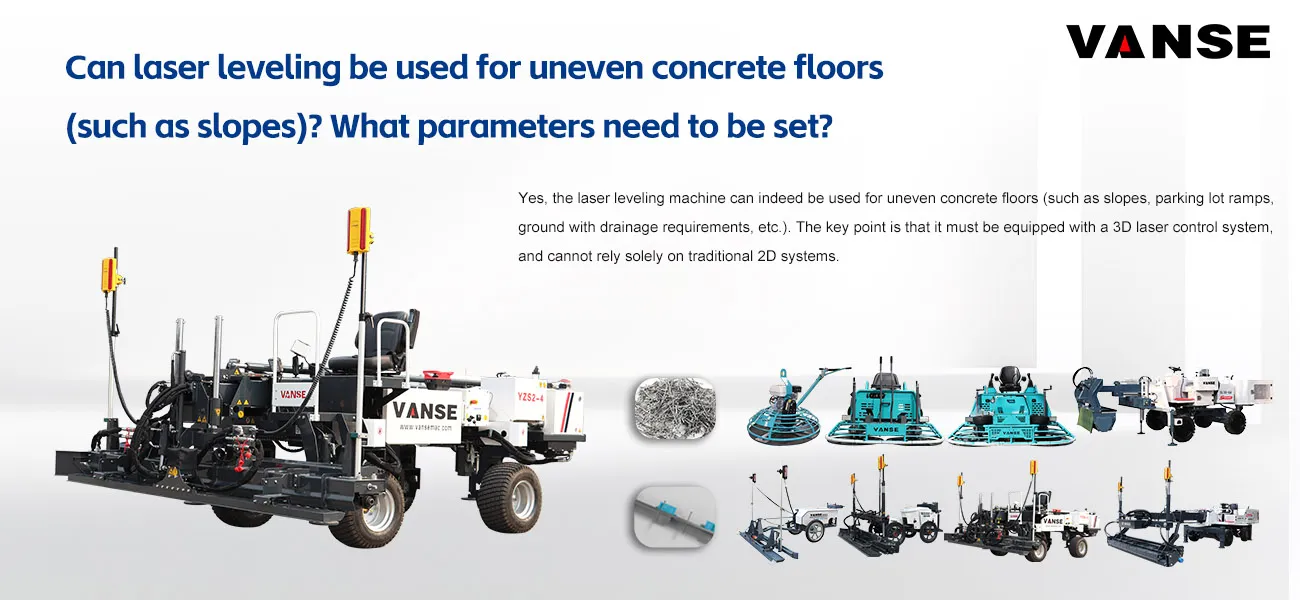
Yes, the laser leveling machine can indeed be used for uneven concrete floors (such as slopes, parking lot ramps, ground with drainage requirements, etc.). The key point is that it must be equipped with a 3D laser control system, and cannot rely solely on traditional 2D systems.
According to the information provided on the Vanse Machinery website, the YZ30-4E model clearly indicates "Sloping ground" in the "Special project" section, and states that "with the 3D laser system, it can precisely level ground with drainage slopes (such as parking lot ramps)". This provides a direct basis for your question.
⚙️ Core parameters that need to be set for the construction slope
To achieve precise leveling of the slope, the following key parameters need to be set, which are usually accomplished through the control panel of the 3D system or the accompanying software:
| Parameter Categories | Specific settings: | Function and Description |
| 1. Slope Direction and Ratio | Set the slope values for the X-axis (horizontal) and Y-axis (vertical). Usually expressed as percentages (%) or angles. For example, set a slope from point A to point B, with a 1 cm drop per meter (i.e., 1% slope). | This is the core data that defines the shape of the slope, informing the machine about the direction and angle at which the ground slopes. |
| 2. Elevation Reference Point | Input the absolute elevation of at least one known point on the slope as the reference for the entire slope calculation. | The 3D system will use this as a starting point, combined with the slope parameters, to automatically calculate the target elevation of any point on the slope. |
| 3. Import of 3D Digital Model | For complex slopes (such as bidirectional slopes, curved surfaces), directly import the 3D design drawings from the design institute (in formats like DXF, DWG). | This is the most efficient and accurate method. The machine can "understand" the design intent and automatically guide the leveling head operation. |
| 4. Settings of Laser Emitter | Set the laser emitter to slope mode (instead of horizontal mode), and adjust the prism or tilt sensor inside the emitter head according to the input slope parameters. | Ensure that the laser plane emitted is itself an accurate slope, providing the machine with the correct reference benchmark. |
🛠️Key points for operation during construction of the slope
Apart from parameter settings, there are also specific requirements during the construction process:
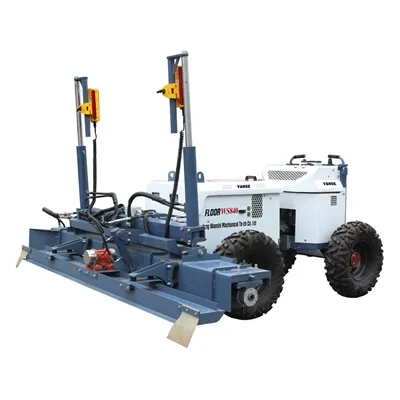
Equipment selection: It is preferable to use telescopic arm type or large seated laser leveling machines (such as the YZ series and WS series from Vanse). These types of equipment have good stability and provide a good field of vision for the operator, making them more suitable for safe and precise operation on slopes.
Construction from low to high: The sequence of concrete pouring and leveling should start from the lowest point at the bottom of the slope and progress towards the top. This allows the use of the self-weight and fluidity of the concrete to facilitate the control of elevation and density.
Controlling concrete slump: Slope construction has higher requirements for the fluidity of the concrete. If the slump is too large, the concrete will flow downward after vibration, making it difficult to form; if it is too small, it will be difficult to level. Generally, the slump should be reduced appropriately compared to flat construction (for example, controlled at 12 ± 2 cm), and adhesives may be needed to enhance the concrete's anti-flowing ability.
Strengthening formwork support: The formwork at the bottom of the slope needs to withstand greater lateral pressure and must be reinforced and supported to prevent the formwork from shifting during pouring, resulting in distorted slope.
Manual assistance: At the top, edges, or blind spots where machines cannot operate, manual replenishment and assistance for leveling are necessary to ensure the overall slope is consistent and coherent.
💡 Summary
Using a laser leveling machine equipped with a 3D system for slope construction, the accuracy and efficiency are far superior to traditional methods. The key lies in digitally transmitting the design intent to the machine (through slope parameters or 3D models), and having experienced operators adjust it flexibly during the construction process.
If your project has specific slope requirements (such as one-way or two-way slope? What is the slope percentage?), please let me know. I can help you further analyze the parameter settings or details of equipment selection. Contact us NOW
Note: The parameters provided in this document are for reference only and are not mandatory. Due to differences in technical characteristics between different brands and models of laser levelers, please consult the manufacturer for a suitable solution before actual operation. This reference document assumes no responsibility for any issues arising from failure to follow the manufacturer's instructions.
Thanks to All the Friends Who Support and Trust Shandong Vanse Machinery Technology Co., Ltd.
If you want to know more about Shandong Vanse Machinery Technology Co., Ltd. or have any questions, please feel free to contact us:
Our Factory
Shandong Vanse Machinery Technology Co., Ltd.








Share this article

About the Author: Shandong Vanse Machinery Technology Co., Ltd.
Shandong Vanse Machinery Technology Co., Ltd. is a high-tech manufacturer specializing in concrete construction machinery, including laser screeds and related equipment. The company integrates R&D, production, and global sales, with products exported to over 60 countries and widely used in infrastructure projects worldwide.
Previous Post
Next Post
Related Articles
You Might Also Like
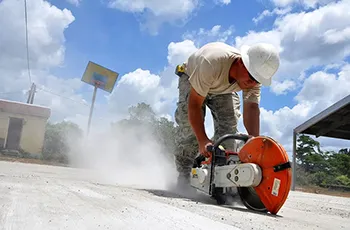
Construction of concrete cutting machine
1, rack The main role is to make horizontal cutting vehicles in the orbit for horizontal movement and cross-cutting mechanism in its orbit for vertical movements. 2, cross-cutting mechanism By the cross-frame, transmission and across the device, guide wheel, swing device, cutting wire and other components. The drive and the spanning device drive the cross section to cut the blanks vertically and cut the wires simultaneously for both directions. 3, the level of cutting cars By the frame, scraper device, trimming device, transmission device, hanging column, wheel group, Ping group and other components. Horizontal cutting car on both sides were equipped with two sets of sheaves and two sets of flat wheels, driven by the horizontal cutting machine in the spikes and flat track on the walk back and forth, to achieve horizontal cutting and "bread head" cutting. 4, flip table By the flip frame, carts, cars, flip the main cylinder and walking cylinder and other components, its role is to use the horizontal placed in the flip table on the body of the body turned 90 ° forward and moved to the cutting position, the horizontal, vertical cutting And six-sided cutting, complete cutting and then flip back to the starting position. 5, hydraulic system By the petrol station, motor, pump, all kinds of valves, pipe joints and other components. The main role is to flip the table smooth and accurate flip 90 °, cart, car synchronized to move to the appropriate location. [1] 6, electrical control system Follow the instructions to achieve manual and automatic control of all actions.Price And Cost-Effectiveness Evaluation Of Concrete Laser Leveling Machines
Price and cost-effectiveness evaluation of concrete laser leveling machine As an advanced floor construction equipment, concrete laser leveling machine has been widely used in construction, roads, bridges and other fields in recent years. For construction units, choosing a suitable concrete laser leveling is not only related to construction quality, but also to economic benefits. Therefore, this article will conduct an in-depth discussion on the price and cost performance of concrete laser leveling machines, with a view to providing valuable reference for construction units. ▷▪▪▪ Price structure of concrete laser leveling machine The price of concrete laser leveling machine is affected by many factors, including the following aspects: ☆ Equipment specifications and models: The prices of concrete laser leveling machines of different specifications and models vary greatly. Generally speaking, factors such as the working width, power, and degree of automation of the equipment will affect the price. For example, large, high-power, highly automated equipment tends to be more expensive. ☆ Brand and quality: Factors such as brand awareness, the technical level of the production company, the manufacturing process and quality of the equipment will also have an impact on the price. Equipment with well-known brands, leading technology, and reliable quality usually has higher prices. ☆ Market supply and demand relationship: Market supply and demand relationship is an important factor affecting the price of equipment. When market demand is greater than supply, equipment prices may rise; conversely, when market supply is greater than demand, equipment prices may fall. ▷▪▪▪ Cost-effectiveness evaluation of concrete laser leveling machine Cost-effectiveness is an important indicator for evaluating the value of a concrete laser leveling, which mainly includes the following aspects: ☆ Construction efficiency: The construction efficiency of the concrete laser leveling machine is much higher than the traditional manual leveling method. One piece of equipment can complete hundreds or even thousands of square meters of floor leveling work per hour, greatly shortening the construction period and saving labor costs. Therefore, the equipment price is relatively cost-effective relative to construction efficiency. ☆ Construction quality: The concrete laser leveling machine adopts a laser control system, which can accurately control the ground elevation and flatness to ensure construction quality. Compared with traditional manual leveling methods, concrete laser leveling machines can reduce construction errors and improve the integrity and aesthetics of the ground. Therefore, from the perspective of construction quality, the concrete laser leveling has a high cost performance. ☆ Comprehensive cost: In addition to the purchase cost of the equipment itself, subsequent costs such as equipment maintenance, maintenance, and consumables also need to be considered. Although the initial investment of a concrete laser leveling is high, in the long run, its overall cost is relatively low. Because the equipment can improve construction efficiency, reduce labor costs, reduce construction error rates, etc., thereby saving a lot of comprehensive costs, therefore, from the perspective of comprehensive costs, concrete laser levelings have a high cost performance. ▷▪▪▪ Actual case analysis Take a municipal road construction project as an example. The project uses a concrete laser leveling machine to perform ground leveling work. At the beginning of the project, the construction unit purchased a concrete laser leveling machine at a price of about 1 million yuan. During the project construction process, the equipment can complete approximately 2,000 square meters of floor leveling work every day, greatly improving construction efficiency. At the same time, because the equipment adopts a laser control system, the construction quality has been significantly improved and the construction error rate has been reduced. After comprehensive evaluation, the construction unit believes that the equipment has a high cost performance and is worthy of continued use in subsequent projects. ▷▪▪▪ Conclusion and outlook Through an in-depth discussion of the price and cost performance of concrete laser leveling machines, we can draw the following conclusions: Although the initial investment of concrete laser leveling machines is relatively high, it has relatively high performance in terms of construction efficiency, construction quality, comprehensive cost, etc. High cost performance. For construction units, choosing a suitable concrete laser leveling can significantly improve construction efficiency and quality, reduce overall costs, and achieve better economic benefits. Looking to the future, with the continuous advancement of technology and the growing market demand, concrete laser leveling machines will be used in more fields. At the same time, equipment manufacturers should also continue to improve product quality and technical level and reduce production costs to promote the rationalization of concrete laser leveling machine prices and improvement of cost performance. In addition, construction units should also fully consider their own needs and actual conditions when selecting equipment, and choose equipment models and brands that suit them to achieve the best economic and social benefits.What engineering scenarios are thr small concrete trowels suitable for?
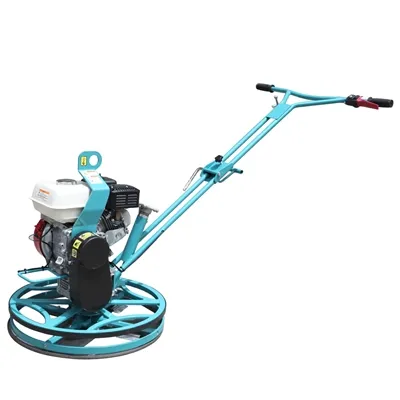
-Residential floor construction: During the construction or decoration of family houses, small concrete trowels can be used for concrete troweling of floors such as living rooms, bedrooms, kitchens and bathrooms. The floor area of these areas is relatively small, and small trowels are easy to operate, which can make the floor flat and smooth, providing a good foundation for the subsequent laying of floor tiles, wooden floors and other decorative materials. -Indoor floor of small commercial buildings: Small concrete trowels are also suitable for indoor floor construction in commercial places such as small shops and offices. It can ensure that the flatness of the floor meets the requirements and create suitable conditions for installing various floor coverings or directly using the floor. – For some small warehouses, small concrete trowels can efficiently polish the floor. It can make the warehouse floor more solid and flat, which is convenient for the stacking of goods and the driving of handling equipment. In addition, the floor after polishing is more wear-resistant and can effectively resist the friction of goods and vehicles in the warehouse. -Sidewalk construction: In the construction of urban sidewalks, small concrete trowels can be used to smooth the concrete pavement of sidewalks. Since the width of the sidewalk is relatively narrow, the small trowel can flexibly operate along the edge and middle part of the road to make the sidewalk surface smooth, improve the comfort of pedestrians, and also facilitate drainage. -Small squares: For places such as leisure squares and small commercial squares in residential areas where the ground area is not particularly large, small concrete trowels can well complete the polishing of the concrete surface. It can create a smooth and beautiful ground to meet people's daily leisure and activity needs. – After repairing some small concrete structures, such as the local repair of the bridge deck of a small bridge, and the local damage repair of the concrete wall or ground of a building, the small concrete trowel can be used to smooth the repair area. It can make the repaired surface smooth and consistent with the original structure surface, ensuring the appearance and performance of the structure.