Technical Knowledge
Construction of concrete cutting machine
1, rack
The main role is to make horizontal cutting vehicles in the orbit for horizontal movement and cross-cutting mechanism in its orbit for vertical movements.
2, cross-cutting mechanism
By the cross-frame, transmission and across the device, guide wheel, swing device, cutting wire and other components. The drive and the spanning device drive the cross section to cut the blanks vertically and cut the wires simultaneously for both directions.
3, the level of cutting cars
By the frame, scraper device, trimming device, transmission device, hanging column, wheel group, Ping group and other components. Horizontal cutting car on both sides were equipped with two sets of sheaves and two sets of flat wheels, driven by the horizontal cutting machine in the spikes and flat track on the walk back and forth, to achieve horizontal cutting and "bread head" cutting.
4, flip table
By the flip frame, carts, cars, flip the main cylinder and walking cylinder and other components, its role is to use the horizontal placed in the flip table on the body of the body turned 90 ° forward and moved to the cutting position, the horizontal, vertical cutting And six-sided cutting, complete cutting and then flip back to the starting position.
5, hydraulic system
By the petrol station, motor, pump, all kinds of valves, pipe joints and other components. The main role is to flip the table smooth and accurate flip 90 °, cart, car synchronized to move to the appropriate location. [1]
6, electrical control system
Follow the instructions to achieve manual and automatic control of all actions.
Thanks to All the Friends Who Support and Trust Shandong Vanse Machinery Technology Co., Ltd.
If you want to know more about Shandong Vanse Machinery Technology Co., Ltd. or have any questions, please feel free to contact us:
Our Factory
Shandong Vanse Machinery Technology Co., Ltd.








Share this article

About the Author: Shandong Vanse Machinery Technology Co., Ltd.
Shandong Vanse Machinery Technology Co., Ltd. is a high-tech manufacturer specializing in concrete construction machinery, including laser screeds and related equipment. The company integrates R&D, production, and global sales, with products exported to over 60 countries and widely used in infrastructure projects worldwide.
Previous Post
Next Post
Related Articles
You Might Also Like
What are the key operational differences and ideal uses for walk-behind versus boom type concrete laser leveling models?
The core operational difference is the operator's position and the machine's reach. Choosing between them is primarily a function of project scale and site accessibility, with walk-behind models excelling in tight, complex areas and boom-type machines dominating large, open floors. Here is a direct comparison to match the machine type to your job: Feature / Consideration Walk-Behind Laser Leveling Boom-Type (Ride-On) Laser Leveling Primary Operational Role Precision Leveling High-Speed Placement & Leveling Key Operation Difference The operator walks behind, manually guiding the machine's fixed-width (2.5-3m) Leveling head over placed concrete. The operator rides in a cab, remotely controlling a long, articulating boom (5.5-6m+) to place, spread, and level concrete from a distance. Ideal Job Size Small to Medium (up to ~20,000 sq ft / 2,000 m² per day). Medium to Very Large (30,000 to 100,000+ sq ft / 3,000-10,000+ m² per day). Optimal Site Accessibility Confined, obstructed, or complex layouts. Perfect for areas with walls, columns, tight corners, and strip pours. Wide-open, unobstructed slabs. Essential for vast, clear spaces like warehouses and distribution centers. Labor & Skill Impact Requires a small crew to manage concrete and assist. Operator has direct, physical control. Dramatically reduces labor; one operator replaces a large raking crew. Requires skill to manage the boom's reach and functions. Mobilization & Logistics Transportable on a trailer or in a pickup truck. Easy to move around site. Requires a low-boy trailer, semi-truck, and significant on-site space. Higher mobilization cost. Concrete Placement Strategy Works with concrete that has been dumped and roughly spread in front of it. Can actively pull concrete from large piles to fill low areas, enabling efficient "point-load" pouring. Use this decision flow to select the right type: Many Obstructions → Walk-behind (e.g., Vanse DZ25-2/DZ30-2). Fully Open → Proceed to Step 2. Under ~25,000 sq ft → Compact Ride-on (e.g., Vanse WS940C or compact boom model YZS2-4). Over ~30,000 sq ft → Full-size Boom-type (e.g., Vanse YZ40-4E, YZ30-4E). Indoor/Enclosed Site → Consider an Electric model (e.g., Vanse WS25-2D) for zero emissions. Critical Floor Flatness (FF/FL) → Boom-type machines generally produce superior, more consistent results. Multiple Small Pads or Additions → Walk-behind offers superior mobility between locations. Choose a Walk-Behind model when accessibility and agility are your top priorities for smaller, complex pours. Choose a Boom-Type model when production speed and efficiency are critical for dominating large, open slabs. If you can share details about your specific project's square footage, layout (presence of columns/walls), and pour method, I can help suggest a more precise model from a manufacturer's lineup. Note: The parameters provided in this document are for reference only and are not mandatory. Due to differences in technical characteristics between different brands and models of laser levelers, please consult the manufacturer for a suitable solution before actual operation. This reference document assumes no responsibility for any issues arising from failure to follow the manufacturer's instructions.What is the leveling effect of the laser leveling machine?
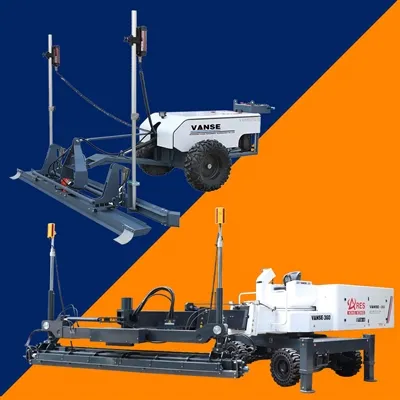
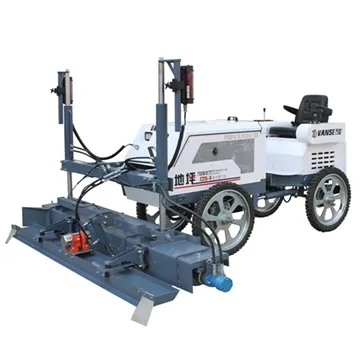
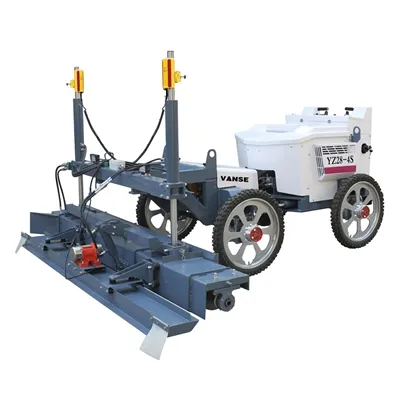
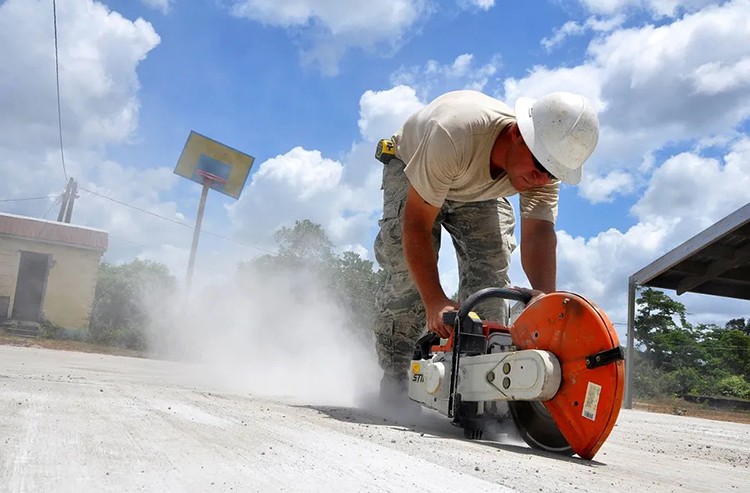
Concrete construction is generally leveled manually, and the appearance of laser leveling machines completely liberates the inconvenience of manual operation. It greatly reduces the labor cost for the construction site, and has a significant improvement in the leveling effect of the concrete. Therefore, mechanized operations in this era can have a great impact on the construction industry. Concrete laser leveling is a scientific and reasonable design, and there is no need for manual assistance in the operation of the equipment, which is the convenience, science, technology, etc. in the design process. Of course, the laser leveling equipment used in different construction fields is different. Because the concrete laser leveling equipment has a variety of models and sizes in the production process, it has a wide range of uses. All of these need to improve the advantages and technical characteristics in this aspect during the leveling process, so as to be able to occupy an advantage in the industry and improve the brand characteristics. As in concrete laser leveling, it must be seen through the concrete construction process. This is the key to technological progress. It has full advantages and status in the field of various leveling and leveling equipment, and has been recognized and trusted by more builders, so it has been widely promoted in construction sites across the country. Issues that should be noted: (1) Due to the high construction efficiency, the later cutting must keep up. Generally, each laser leveling machine is equipped with 7-8 cutting machines to meet the requirements. (2) In the early stage, plastic film should be used for maintenance, and non-woven fabric should be covered after cutting. (3) During the construction process, due to the lateral pressure of the concrete, the steel mesh is easy to displace horizontally. For this reason, an isolation bench is placed directly on the adjacent steel mesh, so that the horizontal displacement of the steel mesh can be effectively controlled, and the bench can be used repeatedly. Advanced equipment such as laser leveling machines are especially suitable for projects such as docks, storage yards, expressways, airports, large squares, parking lots, and municipal roads that have relatively simple shapes, large amounts of action, and high construction quality requirements. DETAIL IMAGESWhy is the price difference of laser leveling machines so big?
Compared with manual work, laser leveling machines are more efficient and effective, so more and more people are choosing laser leveling machines. So do you know why the price difference between laser leveling machines is so big? The editor will give you a brief introduction, let's take a look. The main reason why the prices of laser leveling machines vary in the market is the difference in quality and brand. Many products look very similar, but when you actually use them, you will find that these products actually seem to be somewhat different. Learn to conduct a comprehensive analysis of the quality of the products, so that you can better Make sure you end up buying a good product. Of course, you still have to make comparisons when faced with different prices. Features of an excellent laser leveler: 1. The leveling principle of the laser leveling machine is achieved by using precision laser technology, closed-loop control technology and a highly precise hydraulic system, under the automatic control of a computer. This is its most prominent feature that distinguishes it from other floor construction processes. . 2. The leveling principle of the laser leveling machine is to rely on the hydraulically driven leveling head to cooperate with the laser system and computer control system to complete the leveling work while automatically leveling. The leveling head is equipped with an integrated scraper, vibrator and leveling plate, which integrates all leveling, leveling, vibration and compaction work into one and completes it at one time. The computer control system automatically adjusts the height 10 times per second in real time, and the balanced designed vibrator has a vibration frequency of 3,000 times per minute. 3. The laser transmitter used to control the ground elevation is arranged independently. In this way, the floor elevation is not controlled by the template and does not produce cumulative errors. 4. The laser leveling machine can also automatically control the longitudinal and transverse slopes, which is also completed by the laser system, computer system, hydraulic system and mechanical system. For complex-shaped floors with high requirements such as drainage, a three-dimensional special-shaped ground treatment system can also be selected.