Technical Knowledge
Construction of Later Joint Cutting and Equipment Protection for Ultra-flat Floors
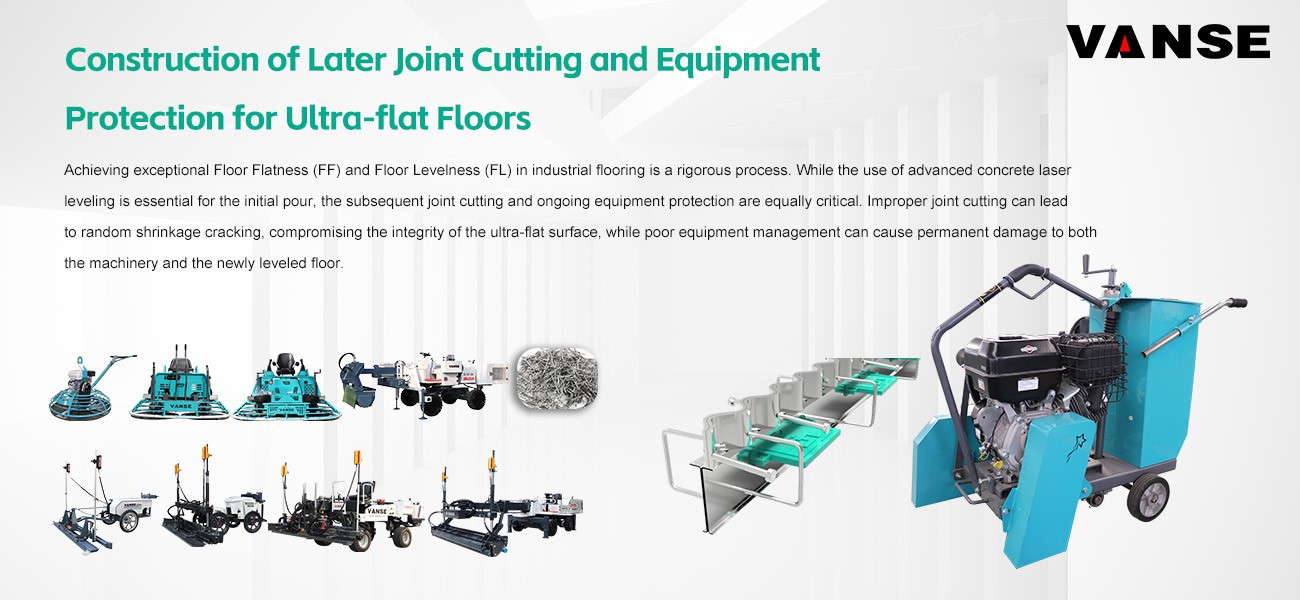
Achieving exceptional Floor Flatness (FF) and Floor Levelness (FL) in industrial flooring is a rigorous process. While the use of advanced concrete laser leveling is essential for the initial pour, the subsequent joint cutting and ongoing equipment protection are equally critical. Improper joint cutting can lead to random shrinkage cracking, compromising the integrity of the ultra-flat surface, while poor equipment management can cause permanent damage to both the machinery and the newly leveled floor.
Here is a comprehensive guide to mastering later joint cutting and equipment protection for ultra-flat concrete floors.
1. Precision Joint Cutting: Timing and Technique
Controlling the natural shrinkage of concrete requires strategically placed control joints. For ultra-flat floors, precision is non-negotiable.
Optimal Timing (The "Window of Opportunity"): Joint cutting must occur as soon as the concrete has gained enough strength to prevent raveling (dislodging of aggregates) but before internal tensile stresses cause random cracking. This is typically within 4 to 12 hours after finishing, depending on the ambient temperature, humidity, and concrete mix design. Early-entry dry-cut saws are highly recommended for ultra-flat projects.
Cutting Depth and Spacing: To effectively guide cracks, the cut depth should generally be 1/4 to 1/3 of the slab's total thickness. Spacing typically follows a rule of 24 to 36 times the slab thickness, forming square panels wherever possible.
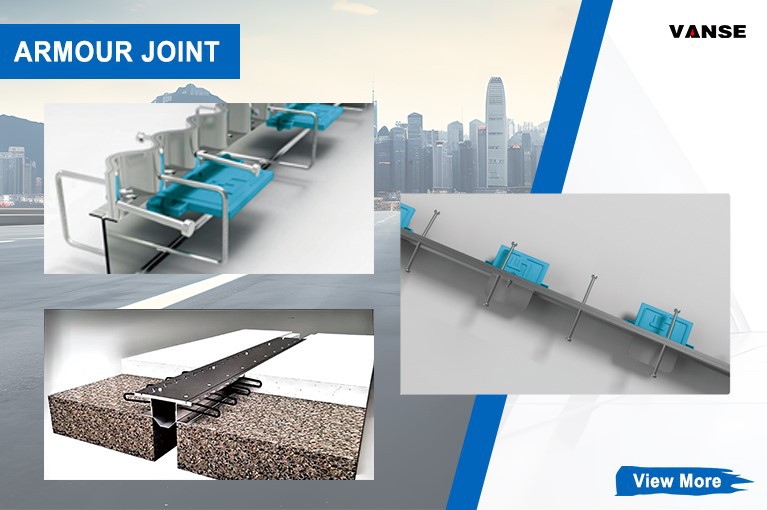
Line Precision: Any deviation in the cutting line is visually magnified on a high-gloss, ultra-flat floor. Using chalk lines and guide bars ensures perfectly straight cuts that align with structural columns and armor joints (steel joints).
2. Protecting the Ultra-flat Floor During Cutting
The equipment used for post-pour work poses a risk to the pristine surface if not properly managed.
Preventing Oil and Fluid Leaks: Ensure all cutting saws, power trowels, and utility vehicles are meticulously inspected for hydraulic fluid, oil, or fuel leaks before entering the slab. "Diapering" the equipment (placing absorbent pads underneath) during stationary periods is a standard best practice to prevent permanent staining.
Non-Marking Tires: Any machinery moving across the newly finished floor must be equipped with clean, non-marking tires. Debris caught in tire treads can easily scratch the surface, ruining the FF/FL metrics achieved by the laser leveling.
Dust and Slurry Management: Wet cutting generates slurry, while dry cutting generates fine silica dust. Immediate removal using industrial vacuums is required. If left to dry, slurry can permanently bond to the ultra-flat surface, requiring aggressive mechanical cleaning that damages the finish.
3. Equipment Protection and Maintenance
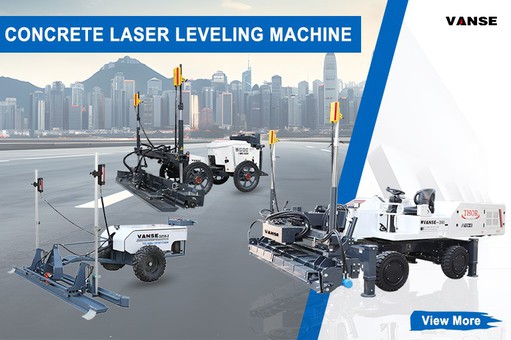
Protecting your capital equipment-from laser leveling to joint cutting saws-extends their lifespan and ensures consistent performance on demanding ultra-flat projects.
Immediate Post-Job Cleaning: Concrete residue is the biggest enemy of construction machinery. Pressure wash all equipment (while avoiding direct spray on electrical components and laser receivers) immediately after the pour.
Blade and Belt Inspection: For cutting saws, regularly inspect the diamond blades for uneven wear or missing segments, which can cause chipping along the concrete joint. Check drive belts for proper tension to maintain optimal RPM.
Routine Engine and Hydraulic Maintenance: High-performance equipment operates in dusty, harsh environments. Strictly adhere to the manufacturer's schedule for changing air filters, engine oil, and hydraulic fluids to prevent unexpected downtime.
Conclusion
The construction of an ultra-flat floor is a continuous chain of precision. By executing flawless joint cutting and strictly enforcing equipment protection protocols, contractors can deliver a durable, flawless surface that meets the highest international logistics and warehousing standards.
Note: The parameters provided in this document are for reference only and are not mandatory. Due to differences in technical characteristics between different brands and models of laser levelers, please consult the manufacturer for a suitable solution before actual operation. This reference document assumes no responsibility for any issues arising from failure to follow the manufacturer's instructions.
Thanks to All the Friends Who Support and Trust Shandong Vanse Machinery Technology Co., Ltd.
If you want to know more about Shandong Vanse Machinery Technology Co., Ltd. or have any questions, please feel free to contact us:
Our Factory
Shandong Vanse Machinery Technology Co., Ltd.
Share this article

About the Author: Shandong Vanse Machinery Technology Co., Ltd.
Shandong Vanse Machinery Technology Co., Ltd. is a high-tech manufacturer specializing in concrete construction machinery, including laser screeds and related equipment. The company integrates R&D, production, and global sales, with products exported to over 60 countries and widely used in infrastructure projects worldwide.
Previous Post
Next Post
Related Articles
You Might Also Like
A good choice to improve efficiency,the most cost-effective laser leveling machine
With the continuous development of the world economy and the continuous increase of the world's population, the construction industry is also booming. The technical level of the construction industry continues to improve. Take floor construction for example! In the past, our floors may have been finished manually, but now laser leveling machines have appeared. It is completely suitable for occasions that could only be handled manually. However, with the rapid development of the economy, there are more and more such machines, so that people do not know how to choose them. So how do we choose a cost-effective machine? It should not be difficult for us to know that there is a concrete laser leveling machine used for large-area floor construction, so we first need a machine with a small flatness error to complete the project to avoid major changes in the entire project due to a small error. So the second question is, how long will it take us to complete such a large-area project? Therefore, we have to choose a machine with a large workload. For example, Wanshi has a small machine that can complete an area of more than 1,500 square meters in just half a day. It is a good choice in this regard. Finally, it's cost-effectiveness. Many machines are high-priced but low-profile equipment, which costs a lot of money. Well, according to my experience, when constructing a building and watching their workers complete the construction bit by bit, using a small laser leveling machine, the entire project is very beautiful. . Although this small machine has a small body and head, it does have a great effect. Therefore, this type of small machinery is very popular on the market now, and it can also be recycled, recycled and disassembled to meet individual needs.Concrete laser leveling + emery construction plan
◆◆★◆◆ Preparation for the project ◆◆★◆◆ 1. Conduct a detailed survey of the construction site to understand the basic conditions of the ground and ensure that the ground is smooth, free of oil stains, and free of debris. 2. Develop detailed construction plans and progress plans based on construction drawings and technical requirements. 3. Organize the construction team to conduct technical briefings and safety training to ensure that the skills and safety awareness of construction personnel are up to standard. ◆◆★◆◆ Material selection and inspection ◆◆★◆◆ 1. Select raw materials such as cement, aggregates, admixtures, etc. that are of high quality and meet national standards. 2. Conduct quality inspection on the raw materials entering the site, including strength stability, moisture content and other indicators to ensure that the material quality meets the construction requirements. ◆◆★◆◆ Preparation of laser leveling equipment ◆◆★◆◆ 1. Choose laser leveling equipment with mature technology and stable performance to ensure construction efficiency and quality. 2. Carry out comprehensive inspection and maintenance of laser leveling equipment to ensure that the equipment operates normally during the construction process. ◆◆★◆◆ Emery laying process ◆◆★◆◆ 1. Determine the laying thickness and laying range of emery according to the construction drawings and technical requirements. 2. Apply a layer of primer evenly on the concrete surface to improve the adhesion between emery and concrete. 3. When laying emery, make sure it is laid evenly, without omissions, and compacted using special tools. ◆◆★◆◆ Construction process control ◆◆★◆◆ 1. Strictly control the mix ratio and mixing time of concrete to ensure uniform and stable concrete quality. 2. During the construction process, the operating status of the laser leveling equipment should be checked at any time to ensure the construction quality. 3. When laying emery, attention should be paid to the temperature and humidity of the construction environment to avoid affecting the hardening effect of emery. ◆◆★◆◆ Quality inspection and acceptance ◆◆★◆◆ 1. During the construction process, the construction quality should be tested regularly, including flatness, strength and other indicators. 2. After the construction is completed, relevant departments should be organized to conduct acceptance inspection to ensure that the construction quality meets the design requirements. ◆◆★◆◆ Safe and civilized construction ◆◆★◆◆ 1. Obvious safety warning signs should be set up at the construction site to ensure the safety of construction workers. 2. Construction workers should wear complete safety protective equipment, such as safety helmets, protective shoes, etc. 3. Good civilized construction habits should be maintained during the construction process and the construction site should be kept clean and orderly. ◆◆★◆◆ Post-project maintenance ◆◆★◆◆ 1. After the construction is completed, the emery floor should be regularly maintained and maintained to extend its service life. 2. For problems and damage that occur during use, repair and replacement should be carried out in time. Through detailed planning and implementation of the above eight aspects, it is possible to ensure the smooth progress of the concrete laser leveling + emery construction plan and achieve the expected construction results and quality standards. During the construction process, relevant technical specifications and safe operating procedures should be strictly observed to ensure the safety of construction personnel while ensuring the quality and service life of the project.What is the operation method of laser leveling machine?
Do you know what is a laser leveler? This is a kind of equipment that uses laser as the reference plane, adopts the original receiving and sending system, and controls the leveling head in real time to achieve high-precision and rapid leveling of concrete. The use of laser leveling machines provides a lot of convenience for engineering construction. So how should we maintain the laser leveling machine after normal use? We will give you a specific introduction to the next article, thank you for your reading and support. 1. The operation method of the laser leveling machine will be introduced in detail for you 1) One operator checks the machine equipment before starting work, sets up the transmitter with the operator, and installs the handheld receiver; adjusts the scraper of the floor machine in a static state, and there must be no error in the two points; operates the concrete leveling machine and observes the machine Whether it is working normally, check whether the laser receiver is in a horizontal position, and supervise whether the material feeder picks up and fills in time; after the construction of the day is over, clean the machine after the laser leveling machine has cooled down, check whether the functions of the machine are normal, and check the power of the transmitter. 2) One operator shall assist the operator to install and debug the machine, set up the transmitter with the main operator, and install the handheld receiver. Check whether the location of the transmitter is safe; measure the height of the concrete after the initial paving (the range is controlled at 2mm ≥, ≤ 10MM); measure the height of the concrete after the laser leveling machine is leveled (the range should not be lower than -2MM and not higher than 3MM) Key points: Concrete edges and hand-scraped concrete surfaces; when the construction is over on the day, clean the machine after it cools down, and check the power of the hand-held receiver. 3) 2 filling workers When the laser leveling machine is not in operation, they will preliminarily level the concrete together with the pavers; when following the machine, they must obey the command of the main machine crew to scrape and fill the position of the machine scraper (required The concrete material shall not be lower than the edge of the scraper, and shall not be higher than the edge of the scraper by 35MM). 4) 2-4 pavers must obey the command of the operator; carry out preliminary leveling of the concrete. 2. Laser leveling machine manufacturers describe how to maintain 1) The liquid crystal surface on the body of the laser leveling machine also needs to be cleaned. You can use organic resin or a special cleaning cloth for the lens to wipe the dirt. If there is too much dirt, you can use the lens cleaning solution to remove it. 2) After the laser leveling machine is constructed, there will be a lot of dust and mud. First, the dust on the laser leveling machine should be wiped clean, and the dirt and oil stains should be wiped clean with tissue paper or cotton cloth. 3) If the laser signal is lost during the construction of the laser leveling machine, the machine needs to be restarted, and the interval should be more than ten seconds. 4) If there are too many stains, you can use a soft cloth to soak in water diluted with a neutral detergent, and then wring out to clean. The laser leveling machine manufacturer reminds everyone not to use volatile oil, thinner, gasoline and other chemicals to clean wipe. The use of advanced construction equipment and concrete laser leveling machines can not only shorten the construction period, but also ensure the construction quality to a large extent. This high-grade ground can guarantee normal use for more than 20 years, which can greatly reduce the use and maintenance costs. Through the introduction of the article, I believe everyone has already understood how to operate the laser leveling machine. If you have other needs to know or are interested in our products, welcome to continue to pay attention to our official website, and look forward to your reading and support for more exciting information in the future.