Technical Knowledge
Laser leveling VS manual leveling for Superflat floors
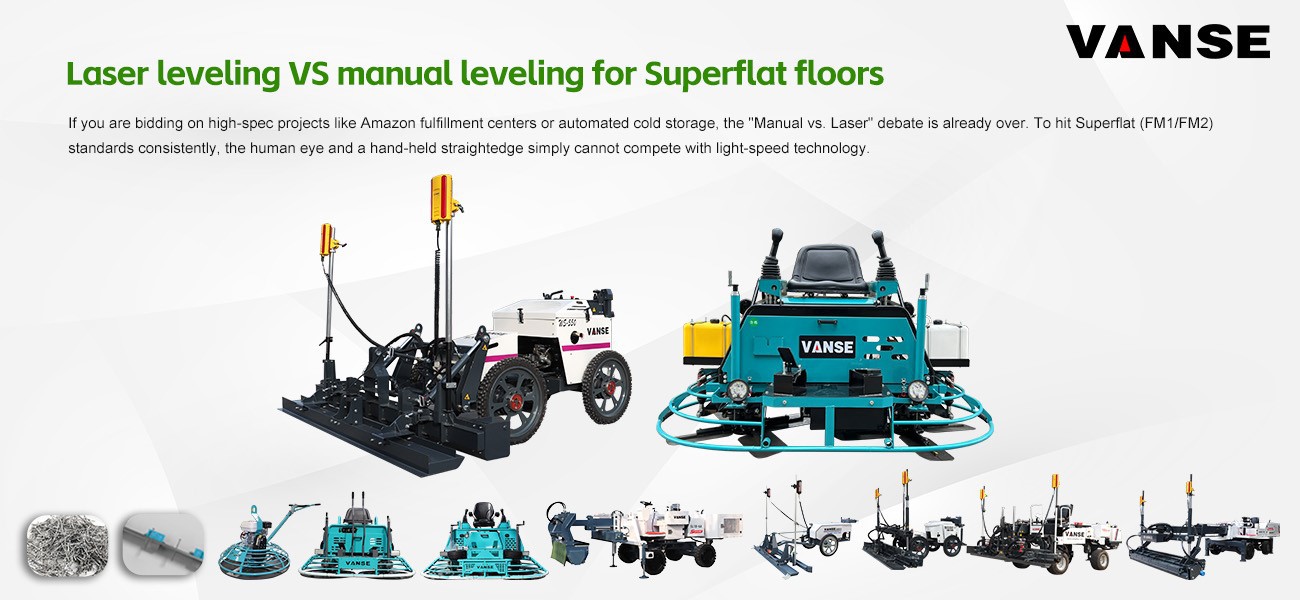
If you are bidding on high-spec projects like Amazon fulfillment centers or automated cold storage, the "Manual vs. Laser" debate is already over. To hit Superflat (FM1/FM2) standards consistently, the human eye and a hand-held straightedge simply cannot compete with light-speed technology.
But why exactly is the shift happening globally? If you’re a contractor weighing the investment, here is the professional breakdown of Laser leveling vs. Manual leveling and why the "Vanse System" is the modern industry standard.
1. The Precision Gap: FF/FL Numbers Don't Lie
Manual leveling relies on the physical stamina of the crew. By the 4th hour of a pour, fatigue sets in, and those "tight" tolerances begin to slip.
Manual: Even the best crew will struggle to hit FF 30 consistently across a 1,000sqm slab.
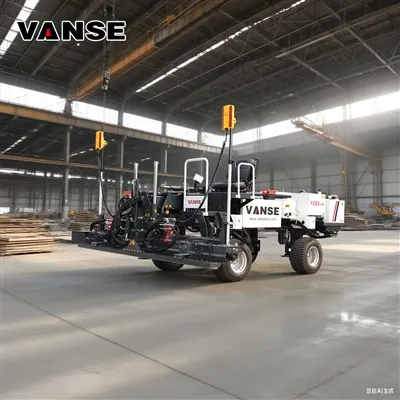
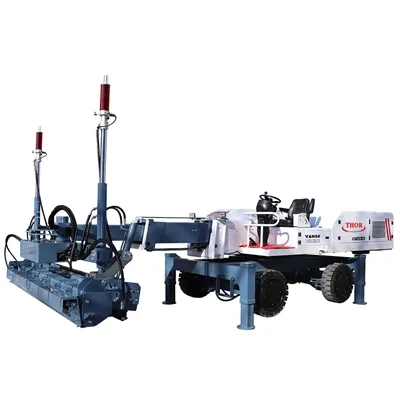
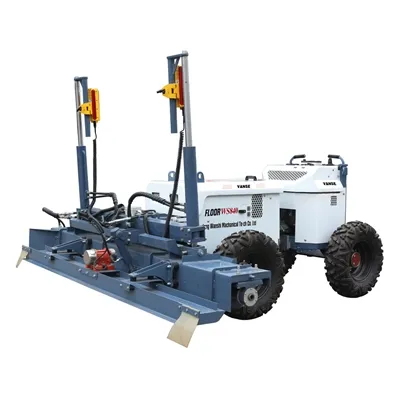
The Vanse Edge: A Vanse Concrete Laser Leveling Machine receives signals 10 times per second. It makes micro-adjustments to the hydraulic head in real-time. This automated precision is how you hit FF 50+ (Superflat) without breaking a sweat. It removes human error from the most critical stage of the pour.
2. The Efficiency Workflow: From Placement to Finish
A Superflat floor isn't just about the leveling; it’s about the entire "Value Chain." Manual crews often struggle with the sheer logistics of a large pour.
Placement: Instead of 6 guys with shovels struggling to move wet concrete, pros use a Vanse Concrete Distributor or a Mini Dumper. These tools place the concrete exactly where it needs to be, preventing the "mounds" that make leveling difficult.
Leveling: While the Laser Leveling Machine strikes off the floor, the Vanse Automatic Topping Spreader can follow behind to apply wear-resistant hardener with mechanical uniformity-something a manual thrower can never achieve.
Finishing: To turn that level slab into a mirror, you need torque. A Vanse Ride-on Power Trowel provides the heavy compaction needed to "burnish" the floor, closing the pores that manual floating leaves open
3. Labor Savings: From 12 Men to 5
In the international market, labor isn't just expensive; it’s hard to find.
The Math: A manual Superflat pour requires a "dream team" of 10–15 highly skilled laborers.
The Vanse Reality: With the right equipment, you can cut your specialized crew by 60%. One operator on the laser leveling, one on the Mini Dumper, and two on the Power Trowels. You produce 3x the square meters with half the people. The machine doesn't get tired, doesn't call in sick, and produces the same quality at 4 PM as it did at 8 AM.
4. Risk Management: Avoiding the "Grind"
If a manual floor fails the FF/FL test, your profits vanish into "rework" (grinding and patching).
Long-term Quality: Once the floor is set, a Vanse Concrete Cutting Machine (Floor Saw) ensures the joints are crisp and straight. This prevents the "spalling" and cracking that often plagues manually-leveled floors where the concrete wasn't consolidated uniformly.
Comparison Summary: Which One Wins?
| Feature | Manual leveling | Vanse Laser leveling System |
| Precision (FF/FL) | Variable (Human Error) | High/Superflat (Automated) |
| Production Speed | 400 – 600 m²/day | 2,500 – 3,500 m²/day |
| Labor Requirement | High (12+ people) | Low (4-6 people) |
| Surface Hardness | Uneven | Superior (Uniform Compaction) |
| Physical Strain | Extreme | Low (Machine-driven) |
| ROI | Low (High Labor + Rework Risk) | High (Speed + Guaranteed Spec) |
Final Word
Manual leveling belongs to the past. If you want to bid on the world's most demanding logistics and industrial projects, you need the precision of a Vanse fleet. From the initial transport with a Mini Dumper to the final pass of the Power Trowel, Vanse (www.vansemac.com) provides the technology to turn a simple concrete pour into a world-class asset.
Ready to upgrade your production? Explore the full range of Superflat solutions at Vanse Machinery and start hitting those high FF numbers today.
Note: The parameters provided in this document are for reference only and are not mandatory. Due to differences in technical characteristics between different brands and models of laser levelers, please consult the manufacturer for a suitable solution before actual operation. This reference document assumes no responsibility for any issues arising from failure to follow the manufacturer's instructions.
Thanks to All the Friends Who Support and Trust Shandong Vanse Machinery Technology Co., Ltd.
If you want to know more about Shandong Vanse Machinery Technology Co., Ltd. or have any questions, please feel free to contact us:
Our Factory
Shandong Vanse Machinery Technology Co., Ltd.








Share this article

About the Author: Shandong Vanse Machinery Technology Co., Ltd.
Shandong Vanse Machinery Technology Co., Ltd. is a high-tech manufacturer specializing in concrete construction machinery, including laser screeds and related equipment. The company integrates R&D, production, and global sales, with products exported to over 60 countries and widely used in infrastructure projects worldwide.
Previous Post
Next Post
Related Articles
You Might Also Like
What’s the process for setting the technical specifications and performance requirements for a concrete laser leveling machine?
To determine the technical specifications and performance requirements of the concrete laser leveling machine, it is necessary to combine:Construction scenario requirements, concrete properties, and engineering quality standards. The three core dimensions are gradually deduced through the logic of "clarifying application boundaries → breaking down technical parameters → verifying performance compatibility," ultimately forming a feasible selection or customization standard. The following are the specific breaking steps and key considerations: The starting point for technical specifications is "what scenario the problem is being solved." Different application scenarios have vastly different core requirements for devices, so the following four key boundaries must be clearly defined: Application boundary dimension Key decision points Example of impact on technical specifications Construction area and site form – Small area (such as indoor garages and workshops, ≤1000㎡) vs. large area (such as factories and airport runways, ≥5000㎡) Large areas require high endurance and wide operating width; small areas/special-shaped sites require flexible equipment (narrow body and small turning radius) Is the site regular (rectangular/irregular) and are there any obstacles (pillars, pipelines)? Concrete type and thickness – Ordinary commercial concrete (C20-C40) vs. special concrete (permeable, fiber, large aggregate concrete) Special concrete requires strong power for mixing/paving; thick pouring requires high vibration frequency (to prevent hollowing) and large counterweight (for compaction) – Casting thickness (thin type ≤ 100mm, regular type 100-300mm, thick type ≥ 300mm) Engineering quality standards – Flatness requirements (e.g. industrial flooring ≤2mm/2m, ordinary residential flooring ≤5mm/2m, refer to GB 50209) High-precision requirements require upgrading the laser system (such as dual laser heads, closed-loop control) and adding ultrasonic detection modules – Slope accuracy (e.g. drainage slope 0.5%, slope accuracy ±0.1%) Construction environment conditions – Indoor (floor height, ventilation) vs outdoor (wind speed, temperature) A wind-resistant laser receiver is required for outdoor use (stable when wind speed is ≥5m/s); a foldable operating arm is required for indoor low-lying spaces (floor height ≤2.5m) – Ground foundation (whether there is a risk of settlement, flatness of the base layer) Further refine the device according to the application boundaryMechanical performance, laser system, power system, control systemThe technical parameters of the four modules must correspond to clear "standards" or "test methods": Technical Parameters Definitions and Key Indicators Selection/customization basis Working width Concrete width covered by a single leveling operation (commonly 2.5m, 3.5m, 4.5m) For large areas, choose a wide width (e.g. 4.5m width, 40% efficiency improvement); for small spaces, choose a narrow width of ≤2.5m (flexible obstacle avoidance) Leveling thickness range The equipment can effectively handle the concrete pouring thickness (conventional 100-300mm, customized up to 50-500mm) For thin floors (such as indoor cushions), choose 50-150mm; for thick structures (such as equipment foundations), choose 200-500mm Vibration frequency and amplitude The vibration frequency (commonly 50-100Hz) and amplitude (0.3-0.8mm) of the vibrator determine the density of the concrete. Ordinary concrete should be 60-80Hz; large aggregate/fiber concrete should be ≥80Hz (to prevent aggregate accumulation) Travel speed and turning method Operating speed (0-6m/min), idling speed (0-12m/min), whether the steering is "crab steering" (all-wheel steering) Large areas require high operating speed (5-6m/min); special-shaped sites must use crab steering (minimum turning radius ≤1.5m) Body size and weight Length × width × height (e.g. 3500 × 2500 × 2800 mm), machine weight (3-8 tonnes) Indoor operations require controlled height (≤2.5m) and weight (≤5t to avoid damaging the base layer); weight restrictions can be relaxed for outdoor operations. The laser system is the "eye" of the leveling machine. Its accuracy directly determines the quality of the project. The following parameters need to be paid special attention to: The core indicator is "laser plane error", which is generally required to be ≤±0.1mm/m, and ≤±0.05mm/m for high-precision scenarios (such as industrial floors); it must support "single plane" and "dual slope" (such as drainage slope) modes, with a slope adjustment range of 0-5%. Receiving distance (indoors ≥50m, outdoor ≥30m, anti-interference), response speed ≤0.1s; for outdoor operation, select "anti-strong light receiver" (can work stably under direct sunlight to avoid signal loss). Give priority to the "closed-loop automatic control system" (real-time detection of flatness deviation, automatic adjustment of vibrating arm height, deviation compensation speed ≤ 0.5s), and avoid the open-loop system (frequent manual correction is required and the accuracy is low). For high-precision scenarios, it is recommended to add "ultrasonic thickness detection" (real-time monitoring of concrete thickness, error ≤ 2mm) and "real-time flatness display" (the onboard screen synchronously displays 2m ruler data). Select the appropriate power type based on the power supply/fuel supply conditions at the construction site. The core parameters are as follows: Power type Key Parameters (Example) Applicable Scenarios Electric (lithium battery) Battery capacity (e.g. 60V/100Ah, 4-6 hours of battery life), charging time (2-3 hours for fast charging) Indoor operations (no exhaust, noise ≤ 70dB), small-area construction (battery life sufficient for a single day's workload) Diesel engine Power (e.g., 25-40kW), fuel consumption (4-6L/h), emission standards (National III/National IV) Outdoor large-area construction (no charging restrictions), high-load scenarios (such as thick concrete vibration) Hybrid Hybrid-electric switching endurance (8-10 hours), fuel consumption in energy-saving mode (≤3L/h) Cross-scenario construction (electric power indoors, diesel power outdoors), long-term projects (reducing downtime and recharging time) Support "onboard control console + wireless remote control" dual mode (the effective distance of the remote control is ≥10m, which is convenient for observing corner construction); the control interface must be displayed in Chinese and the buttons must be simple (to avoid complex operations and reduce training costs). It must include "laser loss protection" (when the laser signal is interrupted, the equipment automatically shuts down to avoid out-of-tolerance), "overload protection" (frequency is reduced when the vibration load is too large to prevent motor burning), and "emergency stop button" (dual emergency stop onboard + remote control). For large-scale construction, it is recommended to choose "GPS positioning + work track recording" (to facilitate tracing the construction area and avoid omissions); LED work lights (illuminance ≥ 500lux) are required for night construction. After the technical specifications are determined, "performance testing" is required to verify whether they meet actual construction requirements. The core verification items include: Flatness test: According to GB 50209 standard, use a 2m ruler to randomly select 10 points on the concrete surface after construction and measure the maximum deviation value (must be ≤ the preset standard, such as industrial floor ≤ 2mm); Slope accuracy test: When constructing on a site with a preset slope (e.g. 0.5%), use a slope meter to measure the actual slope deviation (needs to be ≤±0.1%). Actual operating efficiency: Under standard working conditions (such as 300mm thick C30 concrete), record the leveling area per hour (must be ≥ the theoretical calculated value, such as 4.5m width × 5m/min speed = 1350㎡/h); Battery life and energy efficiency: Electric equipment is tested for continuous operation time at full charge (needs ≥4h, sufficient for half-day construction); diesel equipment is tested for full fuel endurance (needs ≥8h, sufficient for full-day construction). Site adaptability: Test turning and obstacle avoidance capabilities in a field with obstacles (such as pillars spaced 3 meters apart) (no collisions are required, and the edges and corners must be flat and without blind spots); Concrete adaptability: Use target concrete (such as fiber concrete) to test the vibration effect (there must be no aggregate accumulation and no honeycombed surface). Mandatory standards: It must comply with the industry standard "Concrete Laser Screed Machine" (JG/T 415-2013), focusing on mandatory requirements such as "flatness error", "noise limit", and "safety protection"; Case Benchmarking: Refer to the equipment selection of similar projects (for example, "4.5m width + dual laser heads" equipment is commonly used for airport runways, and "2.5m width + electric power" equipment is commonly used for indoor garages); Manufacturer's Commitment: Manufacturers are required to provide a "parameter measurement report" (issued by a third-party testing agency) and clearly state in the contract the "rectification responsibility when the accuracy does not meet the standards" (such as free rework and compensation for losses). Derived from "demand" to "parameters"Instead of blindly pursuing "high parameters", we focus on "construction scenarios and quality standards" and select parameters that have a direct impact on the actual results (such as laser accuracy and vibration frequency); Combining "hard parameters" with "soft performance": In addition to mechanical/laser parameters, attention should also be paid to ease of operation, safety protection, and after-sales service (such as spare parts supply and repair response time); Verify "parameters" through "actual measurement": Avoid just looking at the manufacturer's promotional page. You must conduct on-site testing or refer to third-party reports to ensure that the parameters are real and feasible. Through the above steps, the technical specifications and performance requirements of the concrete laser leveling machine that "precisely match needs, taking into account efficiency and quality" can be formed, avoiding project quality problems or cost waste caused by selection deviations. Click the below to jump immediately!!!In addition to construction, what other fields can laser leveling machines be used in?
In addition to being widely used in the field of construction, laser leveling machines can also be applied to many other fields to meet the high requirements for ground flatness and precision in different environments. 1. **Industrial plants and warehouses**: Laser leveling machines are used in large industrial plants, automated warehouses, etc. These places usually require large areas of flat ground to adapt to mechanized operations and cargo storage. 2. **Commercial facilities**: In large shopping malls, shopping centers, supermarkets and other commercial facilities, laser leveling machines ensure ground flatness and provide a better customer experience. 3. **Logistics and warehousing**: Logistics centers, warehouse supermarkets and exhibition centers require flat and durable floors, and laser leveling machines can meet these needs. 4. **Transportation infrastructure**: Airport runways, aprons, port terminals and container yards, etc., these places require high-quality concrete floors to support heavy-load traffic. 5. **Municipal engineering**: Municipal engineering such as city squares, residential floors, municipal roads, etc., laser leveling machines can improve construction quality and efficiency. 6. **Clean room environment**: Clean workshops such as electronic appliances, food materials, and medicines, which have strict requirements on the flatness and cleanliness of the ground. 7. **Outdoor floor**: Including outdoor parking lots, municipal roads, etc., laser leveling machines can cope with various climatic conditions and provide high-quality outdoor floor construction. 8. **Special ground engineering**: Such as aerospace manufacturing centers, aircraft manufacturing and maintenance workshops, etc., these places have special requirements for the flatness and bearing capacity of the ground. The versatility and high adaptability of the laser leveling machine enable it to play an important role in a variety of construction environments, improve construction efficiency and quality, and reduce long-term maintenance costs. With the continuous advancement of technology, the application scope of laser leveling machines will continue to expand to meet the construction needs of more fields.Concrete laser leveling compared to other construction methods
The concrete laser leveling is an advanced concrete construction equipment that uses laser technology to achieve high-precision concrete leveling. Concrete laser levelings offer many advantages over traditional manual construction methods. The following will compare the concrete laser leveling with other construction methods in terms of construction efficiency, construction quality, economic benefits and production safety. Construction efficiency The traditional artificial concrete leveling method requires a lot of manpower and time, and is limited by the workers' operating skills and fatigue, so the efficiency is low. In comparison, concrete laser leveling machines have higher construction efficiency. This equipment uses advanced laser technology to quickly and accurately complete large areas of concrete leveling. At the same time, the concrete laser leveling machine is simple to operate, which can reduce the interference of human factors and make the leveling work more stable and reliable. Therefore, from the perspective of construction efficiency, concrete laser levelings have obvious advantages. Construction Quality The quality of artificial concrete leveling methods is limited by the skills and operating accuracy of workers, and problems such as insufficient flatness and uneven concrete thickness often occur. These problems may affect the structural strength and stability of concrete, leading to safety risks. In contrast, concrete laser leveling machines use laser technology to precisely control the thickness and flatness of concrete, making the leveling work more precise and uniform. In addition, the concrete laser leveling machine can also monitor and control errors during the construction process in real time, thereby improving construction quality. Therefore, from the perspective of construction quality, concrete laser levelings have obvious advantages. Economic benefits Although the manufacturing cost of the concrete laser leveling is relatively high, its service life is long and it can improve construction efficiency and construction quality, thereby reducing the cost of the entire project. In contrast, traditional manual construction methods require a lot of manpower and time, and may require multiple reworks and repairs, increasing the cost of the entire project. Therefore, from the perspective of economic benefits, concrete laser levelings have obvious advantages. Production safety The traditional artificial concrete leveling method requires a large number of workers to be exposed to the construction site, and is susceptible to hazards and dangerous factors at the construction site, such as mechanical damage, falling objects from high altitude, etc. In contrast, concrete laser levelings are safe to operate and can reduce the time and frequency of personnel exposure to hazardous environments, thereby reducing the risk of safety accidents. In addition, the concrete laser leveling machine has a high degree of automation, which can reduce operator errors and mistakes, thereby avoiding accidents caused by human factors. Therefore, from the perspective of production safety, concrete laser levelings have obvious advantages. To sum up, concrete laser leveling has obvious advantages compared with other construction methods. It can not only improve construction efficiency and quality, but also improve economic benefits and production safety. With the continuous development and advancement of technology, the application prospects of concrete laser leveling machines will be broader. Therefore, when choosing a concrete construction method, the advantages and application conditions of concrete laser levelings should be fully considered in order to better meet construction needs and improve project quality.