Technical Knowledge
Superflat floor construction technology
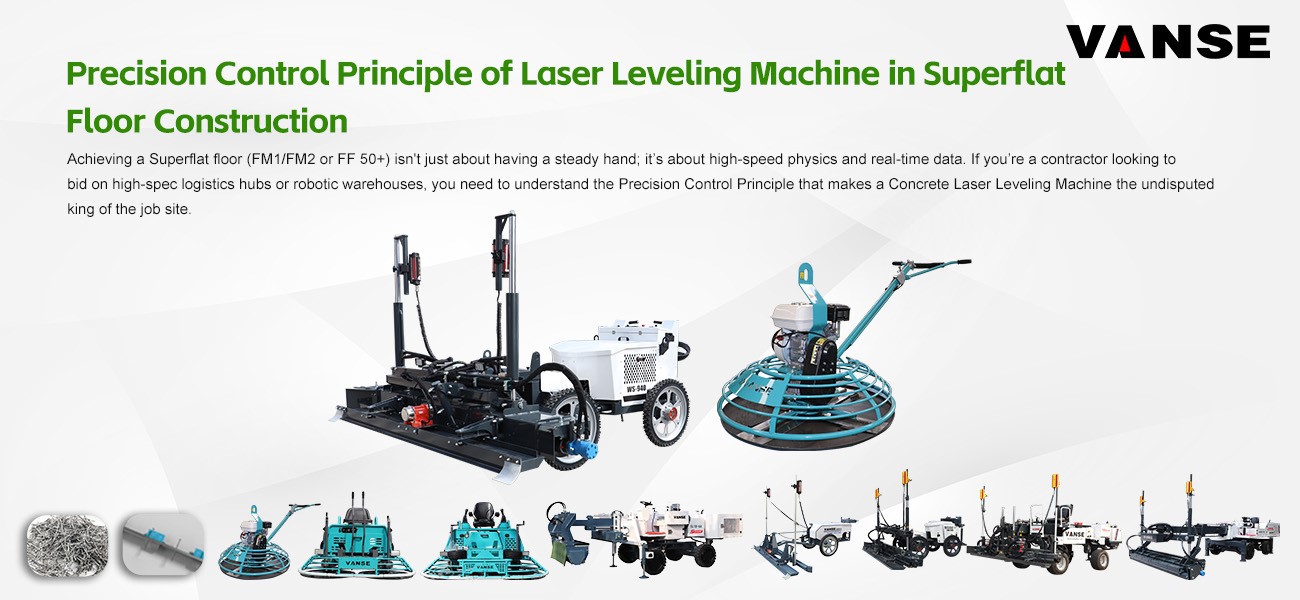
In the era of automated logistics and high-reach VNA (Very Narrow Aisle) warehouses, "flat" isn't just an aesthetic choice-it’s a functional requirement. Superflat floor construction technology is designed to meet extreme tolerances, typically measured as FF (Floor Flatness) and FL (Floor Levelness) numbers (e.g., FF 50+ or FM1 standards).
If you are a contractor looking to master this high-spec field, you don't just need workers; you need a synchronized ecosystem of precision machinery. Here is the ultimate professional workflow for Superflat success, featuring the specialized lineup from Vanse Machinery.
Phase 1: Controlled Placement & Material Handling
Superflat precision begins before the leveling starts. If your concrete distribution is uneven, you create "slump variations" that lead to dips later.
The Strategy: Use a Vanse Concrete Distributor to discharge the mix in uniform ribbons. To get material into tight strips or multi-level bays without the heavy footprint of a truck, the Vanse Mini Dumper (available in electric or gasoline) is the perfect "last-mile" tool. It allows your crew to place concrete with surgical precision, reducing the manual "shoveling" that often leads to inconsistencies.
Phase 2: High-Precision Leveling (The Core)
This is where the Superflat status is won or lost. Traditional manual leveling simply cannot hit FM1/FM2 numbers consistently.
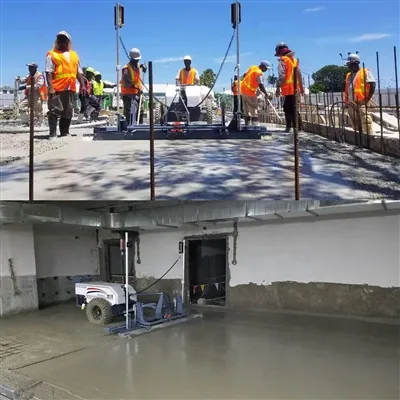
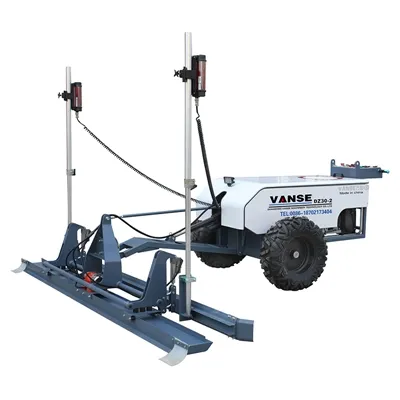
The Vanse Edge: The Vanse YZ30-4E Telescopic Boomed Laser leveling is the industry standard for large-scale precision. Its 6-meter telescopic boom allows the leveling head to strike off the concrete while the machine remains stationary, eliminating the "tire track" issues that ruin FL scores. For smaller projects, the agile Vanse YZ25-4 offers the same high-frequency vibration and laser-controlled precision in a compact frame, ensuring every square meter is consolidated from the bottom up.
Phase 3: Uniform Surface Hardening
VNA floors must be incredibly wear-resistant. However, manual "dry-shake" broadcasting is notoriously uneven, which can lead to color variations and localized "dusting."
The Strategy: Transition to a Vanse Automatic Topping Spreader. By mechanically applying the wear-resistant hardener immediately behind the laser leveling, you ensure a perfectly uniform grams-per-square-meter application. This creates a monolithic bond with the base slab, preserving the flatness achieved by the laser leveling machine while adding iron-clad durability.
Phase 4: Densification & The Mirror Finish
Once the concrete begins to set, you need to "seal" it. In Superflat flooring, this isn't just for looks; it’s about surface density.
The Vanse Edge: A machine like the Vanse Ride-on Power Trowel, provides the heavy compaction needed to "burnish" the floor. Its precision pitch control allows the operator to make micro-adjustments to the blades, smoothing out any remaining micro-imperfections to create a mirror-like finish that meets the highest FF (Flatness) requirements.
Phase 5: Precision Stress Relief (The Joints)
Even the perfect slab will fail if the joints are ragged. In VNA lanes, joint integrity is critical for forklift wheel health.
The Strategy: Use a Vanse Concrete Cutting Machine (Floor Saw) for early-entry or standard contraction joints. Its stable chassis and high-speed blade ensure clean, straight cuts that won't spall or lift, protecting the floor’s long-term FF/FL integrity.
Why Global Buyers are Investing in the "Vanse Workflow"
When you visit www.vansemac.com, you’re not just looking for a "smoothing tool"; you’re looking for a guaranteed result. Here is why international contractors are making the switch:
Labor Savings: A full Vanse fleet can turn a 12-man manual crew into a high-output 5-man team, often paying for itself in labor savings within 6-12 months.
Reduced Rework: Avoid the nightmare of "grinding" a floor that failed its F-number test. Vanse machines are designed to hit the spec the first time.
Reliability: By using world-class components (Honda, Rexroth, Danfoss), Vanse ensures your fleet stays on the job site, not in the repair shop.
Final Thought
Superflat floor construction is the "Formula 1" of the concrete world. You wouldn't take a family sedan to a race track-so don't take "standard" equipment to a Superflat job site. Equip your team with the precision of Vanse (www.vansemac.com) and transform every pour into a high-performance asset.
Ready to upgrade? Check out the full range of Superflat solutions at Vanse Machinery and see how we can help you set a new standard in your market.
Note: The parameters provided in this document are for reference only and are not mandatory. Due to differences in technical characteristics between different brands and models of laser levelers, please consult the manufacturer for a suitable solution before actual operation. This reference document assumes no responsibility for any issues arising from failure to follow the manufacturer's instructions.
Thanks to All the Friends Who Support and Trust Shandong Vanse Machinery Technology Co., Ltd.
If you want to know more about Shandong Vanse Machinery Technology Co., Ltd. or have any questions, please feel free to contact us:
Our Factory
Shandong Vanse Machinery Technology Co., Ltd.








Share this article

About the Author: Shandong Vanse Machinery Technology Co., Ltd.
Shandong Vanse Machinery Technology Co., Ltd. is a high-tech manufacturer specializing in concrete construction machinery, including laser screeds and related equipment. The company integrates R&D, production, and global sales, with products exported to over 60 countries and widely used in infrastructure projects worldwide.
Previous Post
Next Post
Related Articles
You Might Also Like
Is there have difference between floor paint and floor coating?
Floor paint and floor coatings differ in the following aspects: 1.Definition and properties Floor paint and floor paint are both coatings used for floor decoration and protection, but their properties and ingredients are different. Floor paint is a kind of paint with high hardness and wear resistance, which is mainly used to harden and protect the ground. It is usually composed of resin pigments, fillers, additives, etc., and has good wear resistance, pressure resistance and chemical corrosion resistance. Floor coating is a kind of coating mainly used for decoration and beautification of the ground, with high elasticity and gloss. It is usually composed of acrylic resin, pigments, fillers, additives, etc., and has good weather resistance, wear resistance and chemical corrosion resistance. 2.Construction technology The construction techniques of floor paint and floor coating are also different. The construction of floor paint usually requires smoothing the ground first, then applying primer, and finally applying topcoat. The construction process is relatively simple, but the construction temperature and humidity need to be strictly controlled to ensure the dry explosion and curing of the paint. The construction of floor coating requires multiple applications on a flat ground to achieve the desired decorative effect. The construction process is relatively complex, and the thickness and uniformity of each application need to be controlled to ensure the final decorative effect. 3. Scope of application Floor paint and floor coatings also differ in their scope of application. Floor paint is mainly used for floors that need to be hardened and protected in factories, warehouses, parking lots, etc. It can also be used for outdoor floors and garages. Due to its higher hardness and wear resistance, floor paint can provide better anti-slip effects. Floor coatings are mainly used in offices, conference rooms, restaurants, hospitals and other floors that require beautiful appearance and wear resistance. Due to its high elasticity and gloss, floor coatings can provide better decorative effects and usage experience. 4.Performance characteristics Floor paint and floor coatings also have different performance requirements. Floor paint has high hardness and wear resistance, which can provide better anti-slip effect and service life. At the same time, floor paint also has good chemical resistance and can adapt to various harsh environments. Floor coatings have high elasticity and gloss, which can provide better decorative effects and user experience. At the same time, floor coatings also have good weather resistance and wear resistance, and can adapt to various climate conditions and usage locations. 5. Price and cost performance The price and cost-effectiveness of floor paint and floor coatings are also different. Due to the high hardness and wear resistance of floor paint, its price is relatively high. However, due to its wide range of use, the price/performance ratio is relatively high. Floor paint is a good choice for floor locations that need to be hardened and protected. The price of floor coating is relatively low, but its decorative effect and use experience are better. For places where the floor needs to be beautiful and resistant to wear and tear, choosing floor paint is a good choice. Although its price is lower, its service life and weather resistance are better, so the price/performance ratio is relatively high. In short, there are differences between floor paint and floor coatings in terms of definition, properties, construction technology, scope of application, performance characteristics, price and cost-effectiveness. Choosing the right coating requires comprehensive consideration based on actual needs and usage locations.How to maximize the leveling efficiency of the laser leveler while ensuring flatness?
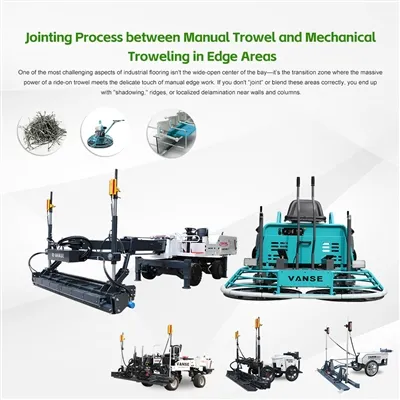
In concrete construction, the use of laser leveling machines has greatly improved construction efficiency and ground flatness. However, while ensuring flatness, how to maximize the leveling efficiency of the laser leveling machine is a challenge that the construction team needs to face. The following is a detailed analysis of this issue. Introduction As an advanced construction equipment, the high efficiency and high precision of the laser leveling machine have brought revolutionary changes to building construction. This article will explore how to maximize the working efficiency of the laser leveling machine while ensuring construction quality. 1. Preparation before construction Sufficient pre-construction preparation is the basis for improving the efficiency of the laser leveling machine: – **Equipment inspection**: Ensure that all components of the laser leveling machine are in good condition, especially the laser system and control system. – **Construction plan**: Develop a detailed construction plan according to the project requirements, including concrete mix ratio, pouring thickness and leveling process. – **Operator training**: Ensure that the operator is familiar with the equipment operation and construction process, and understands how to balance efficiency and flatness. 2. Quality control of construction materials The quality of construction materials directly affects the leveling efficiency of the laser leveler: – **Concrete ratio**: Strictly control the ratio of concrete to ensure its fluidity and plasticity, and reduce the working pressure of the laser leveler. – **Raw material quality**: Select high-quality cement, aggregates and additives to avoid affecting construction efficiency due to material problems. 3. Quality monitoring during construction Quality monitoring during construction is the key to ensuring flatness and improving efficiency: – **Laser system monitoring**: Real-time monitoring of the stability of the laser system to ensure the accuracy of the laser plane. – **Flatness detection**: Regularly use professional equipment to detect the flatness of the concrete surface and adjust the working parameters of the laser leveler in time. 4. Laser leveler operating skills Skilled operating skills can improve the leveling efficiency of the laser leveler: – **Equipment adjustment**: Adjust the height and speed of the leveler according to the actual situation of the concrete to achieve the best leveling effect. – **Operation continuity**: Maintain the continuity of operation to avoid inconsistent flatness or reduced efficiency due to operation interruptions. 5. Control of construction environment A good construction environment helps improve the leveling efficiency of the laser leveling machine: – **Environmental factor control**: Control the temperature, humidity and light conditions of the construction site to ensure a suitable construction environment for concrete. – **Construction site layout**: Rationally plan the construction site layout to reduce the time for equipment movement and material transportation. 6. Post-construction maintenance management Reasonable maintenance management is crucial to ensure construction results and improve efficiency: – **Timely covering**: Cover the concrete surface in time after construction to prevent moisture from evaporating too quickly. – **Curing time**: Ensure sufficient curing time to fully harden the concrete and avoid affecting the flatness due to improper curing. 7. Recording and analysis of construction data Detailed recording and analysis of construction data helps to continuously improve construction efficiency: – **Data recording**: Record various parameters during the construction process, such as concrete temperature, pouring speed, leveling speed, etc. – **Data analysis**: Analyze the data, find out the factors that affect construction efficiency, and formulate improvement measures. 8. Maintenance and upgrading of construction machinery Regular maintenance and timely upgrading of construction machinery are the guarantee for maintaining construction efficiency: – **Regular maintenance**: Develop equipment maintenance plans to ensure that the equipment is in good condition. – **Technology upgrade**: Pay attention to the development of industry technology, upgrade the equipment technology in a timely manner, and improve its work efficiency. 9. Prevention and control of construction risks Preventing and controlling construction risks can reduce construction interruptions and improve efficiency: – **Risk assessment**: Conduct construction risk assessments regularly to identify potential risk factors. – **Emergency plan**: Develop emergency plans to ensure that risks can be responded to quickly when they occur. 10. Technological innovation and application Technological innovation is an important way to improve the leveling efficiency of laser leveling machines: – **New process exploration**: Continuously explore and experiment with new construction processes to improve construction efficiency. – **Technology integration**: Integrate the latest technologies, such as intelligent control systems, to improve the level of construction intelligence. 11. Conclusion To maximize the leveling efficiency of the laser leveler while ensuring flatness requires comprehensive consideration of multiple aspects, including preparation before construction, quality control of construction materials, quality monitoring during construction, operation skills of the laser leveler, control of the construction environment, maintenance management after construction, recording and analysis of construction data, maintenance and upgrading of construction machinery, prevention and control of construction risks, and technological innovation and application. Through the implementation of these measures, construction efficiency can be effectively improved while ensuring construction quality.Jointing Process between Manual Trowel and Mechanical Troweling in Edge Areas
One of the most challenging aspects of industrial flooring isn't the wide-open center of the bay-it's the transition zone where the massive power of a ride-on trowel meets the delicate touch of manual edge work. If you don't "joint" or blend these areas correctly, you end up with "shadowing," ridges, or localized delamination near walls and columns. To achieve a seamless, professional finish that passes high-spec inspections, you need a workflow that bridges the gap between manual precision and mechanical force. Here is the pro's guide to mastering the edge transition using the Vanse professional fleet. The transition starts before the concrete is even poured. If you have "mounds" of concrete near the formwork, the manual crew has to work twice as hard to get it flat. The Vanse Workflow: Use a Vanse Concrete Distributor to place an even ribbon of material along the edges. For tight corners or indoor pillars where a truck can't reach, the Vanse Mini Dumper is the perfect "last-mile" tool. It allows you to dump concrete with surgical precision right up to the edge, reducing the manual labor needed to "pull" the concrete into place. If the edge isn't level, the power trowel will "hop" when it hits the transition, creating a visible ridge. The Vanse Workflow: A Vanse Concrete Laser Leveling Machine (like the agile YZ25-4) is designed to get incredibly close to the formwork. The high-frequency vibration consolidates the edges just as effectively as the center. This creates a uniform "baseline" flatness, so the manual crew only has to focus on the final 15cm of finish rather than trying to fix the level. A common failure point is the "soft edge"-where the center of the floor is hard as iron but the edges are dusty because the dry-shake wasn't applied correctly. The Vanse Workflow: The Vanse Automatic Topping Spreader ensures that your wear-resistant hardener is applied uniformly right up to the boundary lines. This means the manual troweling in the edge area will have the same material density as the mechanically troweled center. This is the critical "jointing" phase. The goal is to make it impossible to tell where the manual work ends and the machine work begins. The Strategy: As the manual crew finishes the edges with hand floats, the Power Trowel operator (using a machine like the Vanse VS836 walk-behind or the VS1046H ride-on) must overlap the manual work by at least 15-20cm. Vanse Edge-Friendly Tech: Vanse power trowels feature precision pitch control and balanced rotor designs. This allows the operator to "feather" the edge of the trowel pass, slowly decreasing the blade angle as they approach the manual work to create a perfectly flat, blended transition without "digging" into the fresh edge. Once the transition is blended, the edge area is under a lot of stress during the drying phase. The Vanse Workflow: Use a Vanse Concrete Cutting Machine (Floor Saw) to execute the contraction joints near walls and columns. A stable, high-speed cut ensures that any shrinkage stress is relieved exactly where you want it, preventing "random cracks" from ruining your beautiful edge work. Stage Manual Edge Focus Vanse Mechanical Support Placement Pulling concrete by hand. Mini Dumper / Distributor precision. Leveling Manual leveling (variable). Laser Leveling Machine (±1mm accuracy). Hardening Hand-throwing (uneven). Automatic Topping Spreader (uniform). Finishing Hand troweling (lower density). High-Torque Power Trowel (dense/burnished). Jointing Hand-tooling joints. Concrete Cutting Machine (clean/straight). The quality of a floor is judged by its weakest point-which is usually the edges. By utilizing a complete "system" from Vanse Machinery (www.vansemac.com), you ensure that your edges aren't just an afterthought. They become a seamless extension of the superflat floor you've worked so hard to create. Tired of "shadowed" edges? Visit Vanse today to see how our fleet can perfect your next project from center to boundary. Note: The parameters provided in this document are for reference only and are not mandatory. Due to differences in technical characteristics between different brands and models of laser levelers, please consult the manufacturer for a suitable solution before actual operation. This reference document assumes no responsibility for any issues arising from failure to follow the manufacturer's instructions.