Technical Knowledge
Precision Control Principle of Laser Leveling Machine in Superflat Floor Construction
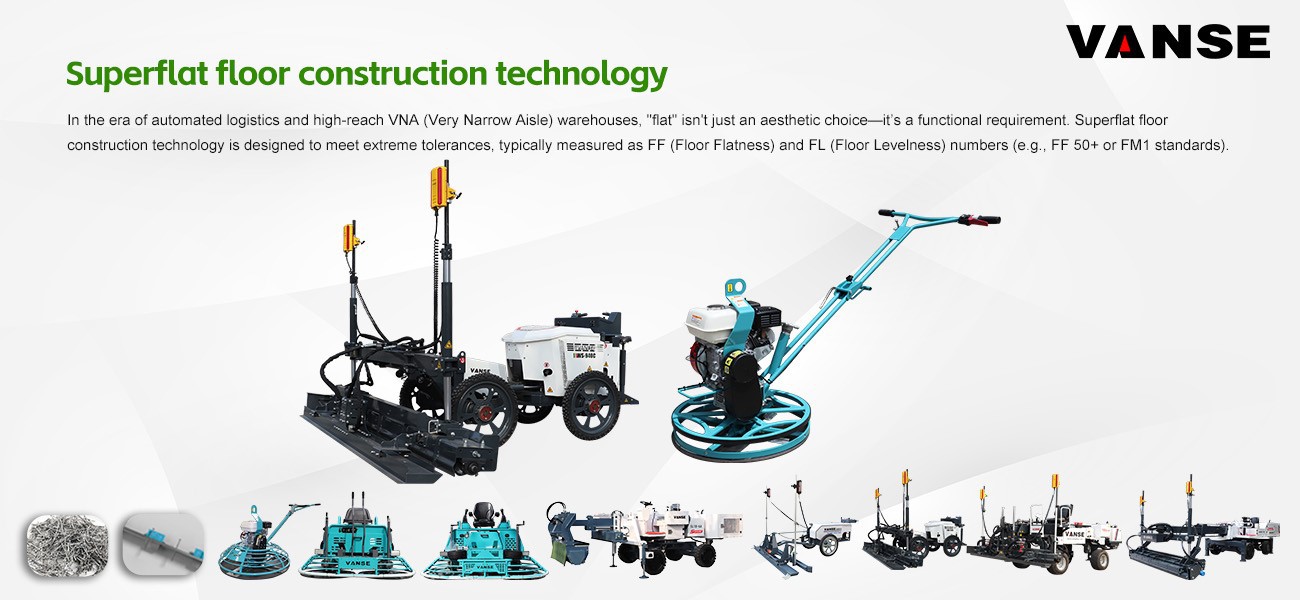
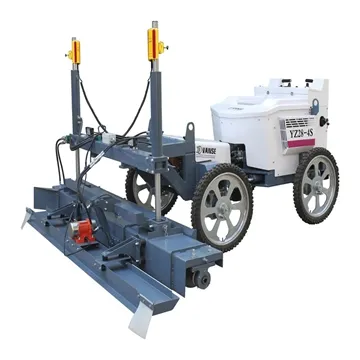
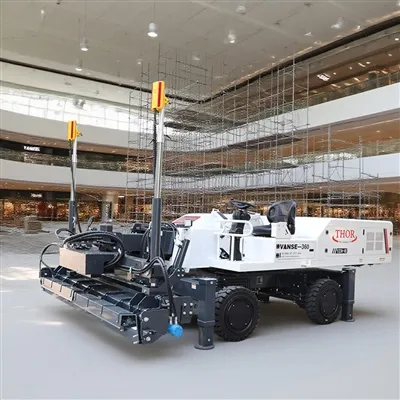
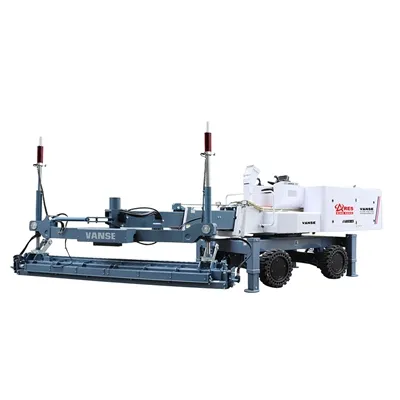
Achieving a Superflat floor (FM1/FM2 or FF 50+) isn't just about having a steady hand; it’s about high-speed physics and real-time data. If you’re a contractor looking to bid on high-spec logistics hubs or robotic warehouses, you need to understand the Precision Control Principle that makes a Concrete Laser Leveling Machine the undisputed king of the job site.
Here is the "under-the-hood" breakdown of how this technology works, and how the Vanse professional fleet turns these principles into flawless results.
1. The "Benchmark": Constant Laser Reference
The heart of the system is the Laser Transmitter. It sends out a 360-degree rotating beam that creates a perfectly horizontal (or sloped) reference plane over the entire work area.
The Vanse Advantage: Most Vanse machines, are designed to work with world-class laser systems (Leica/Trimble). This transmitter stays stationary, ensuring that the "zero point" never shifts, regardless of the terrain or machine movement.
2. The "Eyes": High-Frequency Receivers
Mounted on both sides of the machine's leveling head are the Laser Receivers.
The Principle: These receivers detect the laser beam and send height data to the on-board computer 10 times every second. This is far faster and more accurate than any human eye could ever hope to be.
The Vanse Workflow: Because the Vanse YZ30-4E Telescopic Boomed Laser leveling has such a long reach (6 meters), the receivers can maintain a "clean" signal without the interference of moving wheels on wet concrete, which is a major factor in hitting those ultra-high FL (Levelness) numbers.
3. The "Muscle": Instant Hydraulic Feedback
This is where the magic happens. The computer compares the data from the receivers to the benchmark. If the head is even 1mm too high or low, it sends an immediate command to the Hydraulic System.
The Principle: The hydraulic actuators make micro-adjustments to the leveling head's elevation in real-time. This ensures that the auger (which removes excess concrete) and the vibrator (which consolidates the slab) are always at the exact elevation required.
Vanse Integration: To make this process smoother, it helps if the concrete is placed evenly first. Using a Vanse Concrete Distributor or a Mini Dumper to place the mix prevents the laser leveling from "fighting" massive piles of concrete, allowing the hydraulic system to focus on precision rather than heavy lifting.
4. Consolidated Finishing: Preserving the Level
The precision control doesn't stop once the leveling passes. The surface must be finished without losing that laser-perfect flatness.
The Principle: You need to densify the slab without creating new "waves."
The Vanse Workflow:
Use a Vanse Automatic Topping Spreader to apply hardener uniformly. Manual throwing creates "hills" that ruin FF scores.
Follow up with a Vanse Ride-on Power Trowel. With its high-torque engine and precision pitch control, it burnishes the floor to a mirror finish while maintaining the flatness established by the laser leveling.
Finally, use a Vanse Concrete Cutting Machine (Floor Saw) for crisp contraction joints that won't spall or lift, preserving the floor's long-term FF/FL integrity.
Why "The Vanse System" Wins the FF/FL Game
Foreign buyers and engineers don't just look for a "smoothing tool"; they look for a System of Precision. Here is the ROI for your business:
| Control Element | Traditional Manual Result | Vanse Laser Control Result |
| Reaction Speed | Slow (Human observation) | Instant (10x per second) |
| Leveling Accuracy | ±5-10mm over 3m | ±1mm over 3m (Superflat) |
| Surface Density | Uneven (Manual vibration) | Uniform (High-frequency vibration) |
| Joint Quality | Ragged (Hand-tooling) | Clean & Straight (Floor Saw) |
| Labor Cost | High (12+ man crew) | Low (4-6 man crew) |
Final Thought
Precision control isn't a "feature"-it’s a requirement. If you are bidding on modern industrial projects, you aren't just competing on price; you are competing on accuracy. By utilizing a complete fleet from Vanse Machinery (www.vansemac.com), you are guaranteeing that every square meter of your floor meets the highest international standards.
Ready to hit those FM1 numbers? Explore the full technical breakdown at Vanse and see how our laser leveling technology can revolutionize your business.
Note: The parameters provided in this document are for reference only and are not mandatory. Due to differences in technical characteristics between different brands and models of laser levelers, please consult the manufacturer for a suitable solution before actual operation. This reference document assumes no responsibility for any issues arising from failure to follow the manufacturer's instructions.
Thanks to All the Friends Who Support and Trust Shandong Vanse Machinery Technology Co., Ltd.
If you want to know more about Shandong Vanse Machinery Technology Co., Ltd. or have any questions, please feel free to contact us:
Our Factory
Shandong Vanse Machinery Technology Co., Ltd.








Share this article

About the Author: Shandong Vanse Machinery Technology Co., Ltd.
Shandong Vanse Machinery Technology Co., Ltd. is a high-tech manufacturer specializing in concrete construction machinery, including laser screeds and related equipment. The company integrates R&D, production, and global sales, with products exported to over 60 countries and widely used in infrastructure projects worldwide.
Previous Post
Next Post
Related Articles
You Might Also Like
What are the advantages of using a laser leveler for building floor construction?
The construction floor construction industry is currently developing relatively fast, and with it, the use of construction machinery such as laser levelers is becoming more and more frequent. So, why must we recommend this kind of equipment for everyone among the many construction machinery? In fact, there are certain reasons. Next, let us take a look at the introduction of the following articles! Compared with traditional laser leveling machines, laser leveling machines have several advantages in building floor construction: 1. Reduce labor cost and double increase efficiency: There are many people involved in the construction of the traditional craft, which requires support formwork (channel steel), spotting, and paving. About 20 people are needed. The daily construction area is 700 square meters. The total number of people who use the concrete laser leveling machine is reduced by more than half compared with the traditional process. Can be operated by one person. The daily construction area is 2500-3500 square meters, which greatly reduces labor costs. 2. Laser alignment, high precision, low error: The traditional process of leveling requires support formwork to control the elevation of the ground and pull the control line. The elevation error is large. The levelness and flatness of the entire floor cannot be guaranteed. It adopts laser point-to-point emitter, which is suitable for large-scale one-time paving. There is a laser measurement and control system to control the elevation in real time. There is no need for pulling wires for leveling, and there is no need for side plates in the middle to control the elevation of the ground. In this way, the elevation error caused by the vibration of the formwork (channel steel) during the construction process is avoided, and the elevation error caused by traditional artificial block formwork is also reduced. 3. Better flatness and integrity: Traditional craft construction, one day of formwork and one day of watering, can only be skipped one by one for construction, which has great limitations, cannot be continuously operated, and the integrity is not good, which is easy to cause cumulative errors in construction joints. The laser leveling machine paves a large-area floor at one time, with higher efficiency and integrity. The completion of the entire floor makes the ground integrity better, which is completely impossible for traditional construction. 4. The ground is denser and more uniform: The 4000 times per minute high-frequency vibrator allows the leveling head vibrator to produce uniform high-frequency vibration, making the concrete floor more dense and uniform. As the leader in the design of concrete laser leveling machines, the laser leveling machines produced by our company can realize large-scale construction. By solving the concrete surface layer at one time, all the "common quality problems" caused by the secondary method are completely eliminated. We will continue to provide customers with reliable products and better services.How much money does a laser leveling truly save compared to traditional methods?
The financial savings from using a laser leveling are substantial, but they are realized primarily through reduced labor, increased speed, and minimized rework, rather than just equipment cost. Here is a summary of the true cost savings and efficiency gains compared to traditional levelinging methods: A laser leveling dramatically reduces the size and skill level required of a crew, leading to significant savings on payroll and associated costs. Labor Reduction: Up to 60% fewer workers needed for the levelinging and leveling process. Example: A large commercial pour might require 20+ people using traditional methods, but only 3–4 people with a ride-on laser leveling. Skill Dependency: The machine automates the critical leveling function, reducing reliance on expensive, highly specialized skilled laborers (who would otherwise be needed to set string lines and pour guides). Operational Flexibility: Laser leveling allow for staggered start times, helping contractors avoid overtime and reducing worker fatigue, leading to a healthier, more productive, and less error-prone crew. The speed of placement is where high-volume contractors generate major savings and gain a competitive edge. Increased Speed: Laser leveling can work 4 to 5 times faster than manual levelinging. Output: A typical ride-on unit can place and level 6,000–10,000 square feet (550–930 m^2) per hour, or potentially 2,500–3,500 m^2 in a single day. Shorter Construction Period: Contractors report completing slab installations 30%–40% faster, which reduces overall project timelines, minimizes formwork rental costs, and allows follow-up trades (e.g., floor finishing, racking installation) to start sooner. By delivering high FF/FL numbers, the machine eliminates costly grinding and maintenance down the line. Minimized Rework: The laser's high precision 1mm accuracy) virtually eliminates the need for expensive post-pour corrections like bump grinding or filling low spots. This dramatically reduces the risk of the slab failing ACI standards. Material Uniformity: The consistent vibration and leveling action leads to a denser, more uniform slab, improving the floor's strength and compactness by an estimated 25%. Equipment Maintenance: In high-tolerance environments (like VNA warehouses), a flatter floor reduces wear and tear on material handling equipment (like forklifts) by reducing bouncing and vibrations. One study suggested eliminating joint mismatches could save over $12 per square foot annually in material handling vehicle maintenance over the long term. For a high-volume concrete contractor, the cumulative, long-term savings from buying a laser leveling can total 740,000$ to 920,000$ in avoided labor and rework costs over the equipment's lifespan. However, for a smaller contractor, the saving is realized in the short-term by renting the machine for a large job, avoiding the multi-hundred thousand dollar capital investment while still capturing the labor efficiency and quality gains. Note: The parameters provided in this document are for reference only and are not mandatory. Due to differences in technical characteristics between different brands and models of laser levelers, please consult the manufacturer for a suitable solution before actual operation. This reference document assumes no responsibility for any issues arising from failure to follow the manufacturer's instructions.How does concrete laser leveling technology improve construction efficiency?
Concrete laser leveling technology is an innovative technology in the field of modern construction. It uses laser as a reference to achieve fast and precise leveling of concrete surfaces. This technology not only improves the efficiency of construction, but also ensures the stability and consistency of construction quality. The following is an in-depth analysis of how concrete laser leveling technology improves construction efficiency. Introduction In traditional concrete construction, ground leveling work usually relies on manual operation, which is not only labor-intensive and inefficient, but also difficult to ensure flatness and accuracy. With the improvement of the construction industry's requirements for construction quality and efficiency, concrete laser leveling technology has emerged, bringing revolutionary changes to construction. 1. Technical Overview Concrete laser leveling technology is a technology that uses laser as a reference to accurately level the concrete surface through automated equipment. The core of this technology lies in the effective coordination of laser transmitters, receivers, control systems and leveling equipment. > Learn more about customlzatlon >> 2. Working Principle The working principle of concrete laser leveling technology mainly includes the following steps: – **Laser transmitter**: emits a stable laser beam to form a horizontal reference plane. – **Receiver**: installed on the leveling machine, receives laser signals and converts them into electrical signals. – **Control system**: According to the received electrical signal, the working state of the leveler is automatically adjusted to ensure that the concrete surface is consistent with the laser plane. – **Leveling equipment**: According to the instructions of the control system, the concrete surface is leveled through vibration and scraping functions. > Learn more about customlzatlon >> 3. Key factors to improve construction efficiency The key factors for improving construction efficiency of concrete laser leveling technology include: – **High degree of automation**: Reduces manual intervention and improves construction speed. – **High construction accuracy**: Ensures the flatness and accuracy of the concrete surface. – **Stable construction quality**: Reduces rework caused by uneven construction quality. – **High material utilization rate**: Reduces material waste by accurately controlling the laying thickness of concrete. > Learn more about customlzatlon >> 4. Construction process optimization The application of laser leveling technology optimizes the construction process, including: – **Site preparation**: Quickly complete site cleaning and leveling. – **Laser transmitter setting**: Quickly and accurately set the laser transmitter. – **Concrete pouring**: With the assistance of the laser leveling machine, the concrete pouring is quickly completed. – **Leveling operation**: The laser leveler automatically completes the leveling of concrete according to the laser signal. – **Surface treatment**: Quickly complete the leveling and calendering of the concrete surface. – **Quality inspection**: Use professional equipment to quickly complete the flatness and levelness inspection of the concrete surface. > Learn more about customlzatlon >> 5. Technical advantages and practical applications Laser leveling technology has shown obvious advantages in practical applications: – **Industrial plant**: Quickly complete the leveling of large areas of ground and improve construction efficiency. – **Commercial facilities**: Ensure the flatness of the ground and improve customer experience. – **Airport runway**: Ensure the flatness and strength of the runway to ensure the safe takeoff and landing of aircraft. – **Roads and bridges**: Improve the flatness and bearing capacity of the road surface and extend its service life. > Learn more about customlzatlon >> 6. Technical challenges and coping strategies Although laser leveling technology has obvious advantages, it also faces some challenges in practical applications: – **Environmental factors**: Wind, temperature changes, etc. may affect the stability of the laser. – **Equipment maintenance**: The laser leveler needs regular maintenance to ensure its performance. – **Training of construction personnel**: Professional knowledge and skills are required to operate the laser leveling machine. Countermeasures include: – Improve the stability of the laser transmitter through technical improvements. – Establish a complete maintenance system and train operators. – Provide professional training courses to improve the operating skills of construction personnel. > Learn more about customlzatlon >> 7. Technological innovation and development trends With the continuous advancement of science and technology, laser leveling technology is also constantly innovating and developing: – **Intelligentization**: Integrate more intelligent sensors and control systems to improve the automation level of the leveling machine. – **Multifunctionality**: Develop a leveling machine that can complete multiple construction tasks at the same time. – **Environmentally friendly materials**: Research and use more environmentally friendly concrete materials to reduce the impact of construction on the environment. > Learn more about customlzatlon >> 8. Conclusion Concrete laser leveling technology has become an indispensable part of modern construction with its advantages of high efficiency, high precision and construction quality. By optimizing the construction process, improving material utilization and reducing rework rate, this technology has significantly improved construction efficiency. With the continuous development and innovation of technology, concrete laser leveling technology will play a greater role in the future and bring more possibilities to the construction industry. > Learn more about customlzatlon >>