Technical Knowledge
Why use a large laser leveling machine for construction?
January 28, 2023

With the rapid development and prosperity of the floor industry, laser leveling machines are more and more
used in floor construction, especially in the construction of large-area concrete floors, the use of laser leveling
machines can greatly improve construction efficiency.
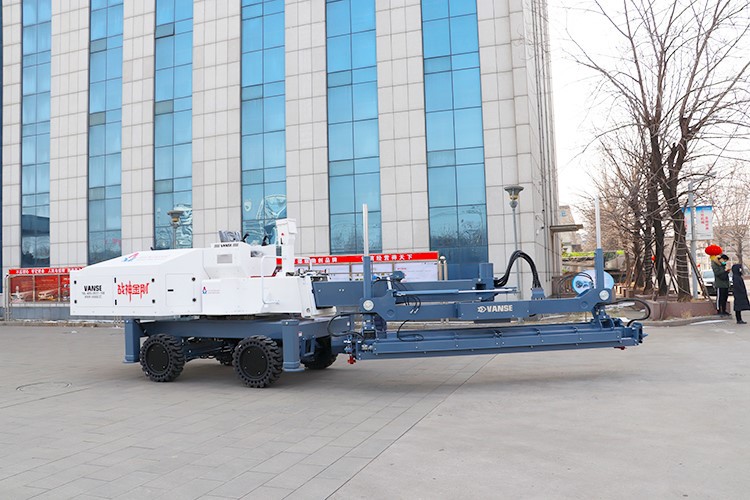
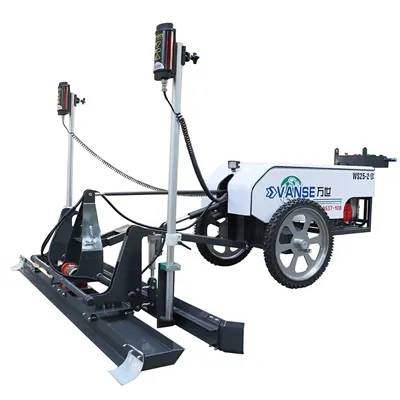
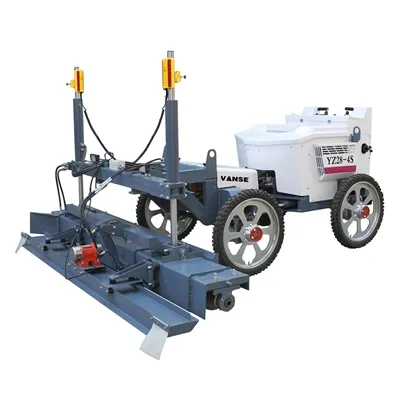
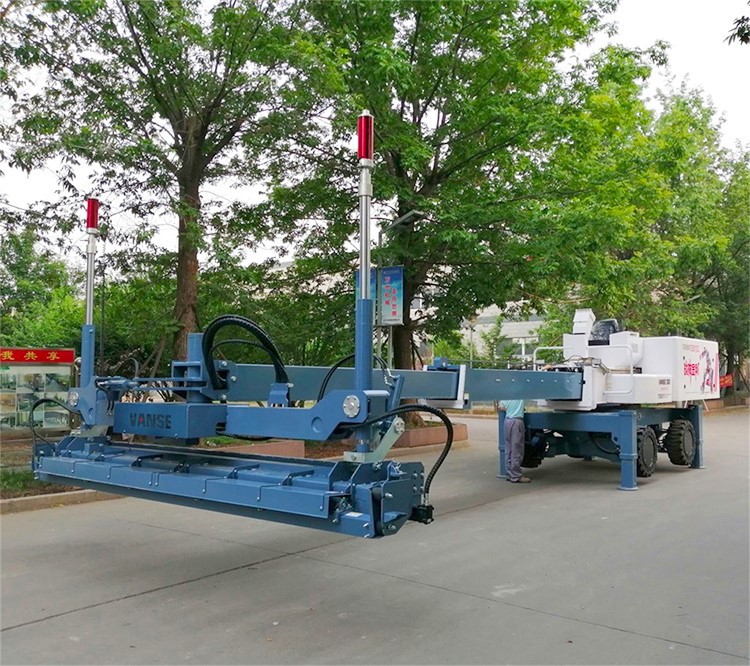
Vanse large-scale telescopic arm laser leveling machine adopts the most advanced laser system and full
hydraulic control system to make the concrete construction ground leveling with higher precision and stronger
compactness, and to meet high-standard construction requirements at the same time of high-efficiency construction.
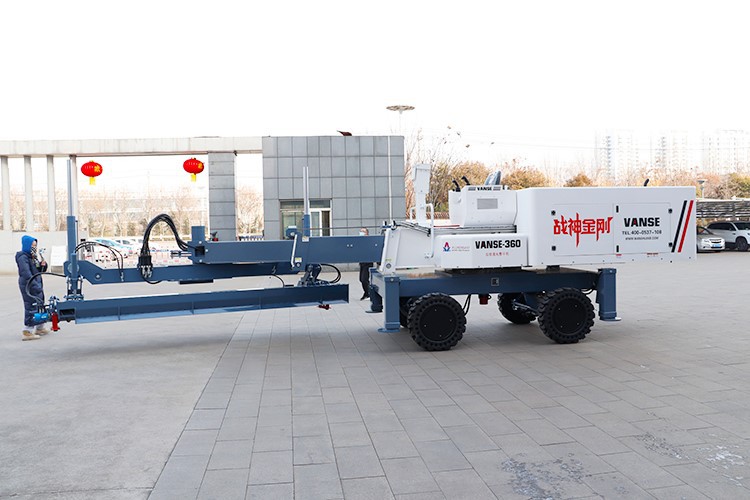
The application of large-scale laser leveling machines will ensure that various high-standard engineering
construction standards are met, comprehensively improve the quality of engineering construction, and create
higher value for customers.
Vanse large-scale telescopic arm laser leveling machine has a telescopic arm as long as 6 meters and a
leveling working width of 4 meters. It can complete the leveling of 24 square meters of good-quality concrete
per minute. The flexible and efficient hydraulic control system can control the scraper and the rotating Height,
keep the flatness of the leveling layer.
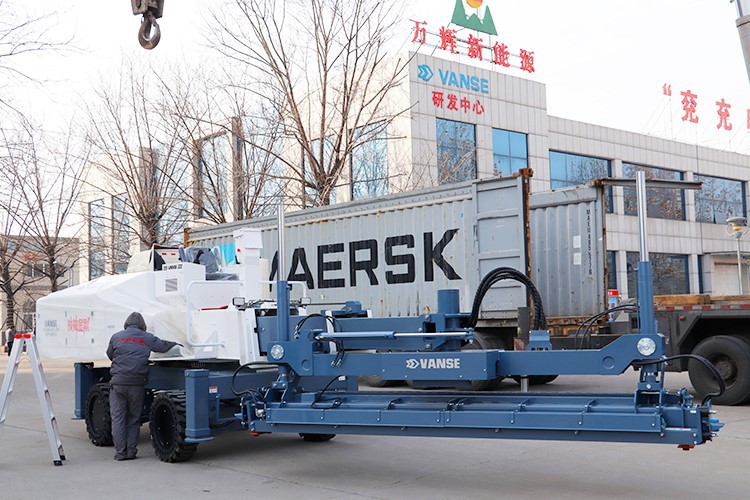
Another major feature of Wanshi large-scale telescopic arm laser leveling machine is that it saves labor and
improves efficiency. It can shorten the construction period by two thirds and reduce labor by more than half.
The key quality is better, the cost performance is very high, and the maintenance cost can also be reduced. ,
so for the general construction team, the cost is not too high, and the price of the floor industry is also acceptable.
Leasing or buying and selling large laser levelers is a very good choice.
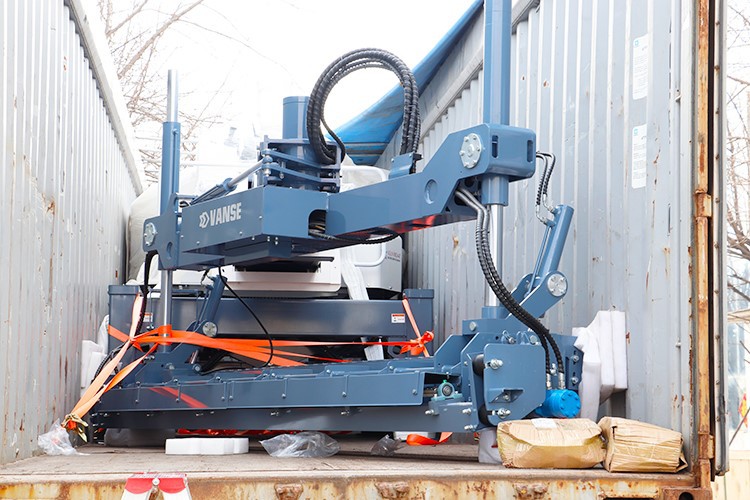
Shandong Vanse Machinery has experienced senior engineers who serve customers wholeheartedly,
develop together, and cooperate for win-win results.
Thanks to All the Friends Who Support and Trust Shandong Vanse Machinery Technology Co., Ltd.
If you want to know more about Shandong Vanse Machinery Technology Co., Ltd. or have any questions, please feel free to contact us:
Our Factory
Shandong Vanse Machinery Technology Co., Ltd.


About the Author: Shandong Vanse Machinery Technology Co., Ltd.

Shandong Vanse Machinery Technology Co., Ltd. is a high-tech manufacturer specializing in concrete construction machinery, including laser screeds and related equipment. The company integrates R&D, production, and global sales, with products exported to over 60 countries and widely used in infrastructure projects worldwide.

Shandong Vanse Machinery
Leading manufacturer specializing in high-performance concrete laser screeds, telescopic arm flatwork handlers, and mechanical ride-on power trowels.
Post overview
Main PRODUCT Categories
Need Machine Guidance?
Speak directly with Shandong Vanse field specialists for tailored equipment quotes and site planning.
Contact Us TodayRelated Articles
You Might Also Like
June 15, 2020
How to use power trowel
A power trowel machine is used to create a level, flat area of concrete, smooth finish on a large, just like a poured patio slab for a deck or an interior floor. A single or multiple blades are used that can rotate in a safety cage. The measurement of this tool is around 24 to 48 inches long and has three types such as finish, floating and combined. In relation and based on the size of work, you can use a riding model or a pushable concrete power trowel. Presented in this article are the steps that you can follow for you to use the tool to the best of its ability. Concrete contractors demand reliable equipment to get the job done right. VANSE concrete power trowel spider assembly uses high-strength wear plates made of trowel steel to prevent wear on key components. Repairing your trowel shouldn't be costly so we make certain our replacement parts are priced right. Spider trowel arm bushings Replacement of these high tolerance bushings assure like new trowel arm alignment. Here are the steps: 1. Select a pushable power trowel for sale with 24 to 36-inch trowel blades if you are planning to level a small area, like those that measure under 1000 square feet. And to smooth the concrete in one series of passes, you can use both the finish and float trowel blades. But if you are working on larger areas or those higher than 1000 square feet, choosing a riding power trowel can be a big help to quickly finish the job before the concrete sets too firmly. The recommended blades to use are those that measure around 36–48 inches. When working with corners, you can change your blade to a 24-inch one. Opt for a different finish or float blades, or a combination trowel blade. 2. Few hours before you use the power trowel, the concrete must be poured. Ensure that the concrete is firm enough to support the power trowel and you, conduct a footprint test. First is to step onto the slab and then measure the depth of the imprint. If the result is less or 1/8 of an inch deep, you can assume that the concrete is ready for troweling. 3. To level the concrete on your first pass, use the trowel with combined blades or float blades. Floating lessens the fills and bumps in the hollows. The machine should be operated at 3/4 speed while keeping the blades flat for the even distribution of weight and to avoid digging into the concrete. The rotational speed will also prevent splatters of still-damp concrete being thrown forward into the path of the machine. Overlap each pass by 1/2 the trowel blades' length as you traverse the poured plate. Once you're done floating the entire slab, turn the power trowel at 90 degrees to your first rows. The technique of crossover floating helps you finish missed spots. 4. Continue with the combined trowel blades or change your tool to finish blades to finish the surface, sealing the porous material. Walk behind power trowel to operate at its top speed, this time with the blades fully pitched downward onto the concrete. Doing so will give the slab that highest pressure. To get that matte, gleaming or light gloss finish, create as many passes at right angles. VANSE's concrete power trowel using high quality meterial and with origional HONDA engine, if you had such needs in this field, welcome for asking~Read More
December 16, 2025
What is the proper maintenance schedule for the boom sections of the concrete laser leveling machine?
The boom (also known as the telescopic boom or large boom) of the concrete laser leveling is its core structure and power transmission component, bearing the vibrating rammer and scraper. The reliability of its maintenance is directly related to the accuracy, service life and construction safety of the equipment. The following is a systematic and comprehensive correct maintenance plan for the boom section, covering daily, regular and professional-level maintenance. This is the most fundamental and crucial step in preventing malfunctions. Structural visual inspection: Carefully inspect the main body of the boom, the connection points of each section, and the hinge seats connected to the main unit for any visible cracks, open welds, severe deformations or corrosion. Focus on inspecting areas with stress concentration. Fastener inspection: Use manual tools to check whether all key bolts (especially hinge pin shaft bolts, boom extension and retraction fixing bolts, and cylinder connection pin bolts) are loose. Tighten regularly according to the torque specified by the manufacturer. Grease lubrication: Apply grease to all lubrication points (grease nipples) until all the old grease is completely squeezed out. Including: All articulated pin shafts Boom telescopic slide/slider (if any) The connection support between the vibrator and the boom Preliminary inspection of the hydraulic system: Check whether there are scratches, dents or leaks on the surface of the piston rods of the boom lifting and telescopic cylinders. Check whether there is any oil leakage at the hydraulic pipeline joints. Thorough cleaning: Use a high-pressure water gun (with moderate pressure, avoid direct impact on bearing seals and electrical components) to remove all solidified concrete slurry and debris from the boom, scraper, and tamper plate. Residual concrete will increase the load, disrupt the dynamic balance and cause corrosion. Inspect the slider/slide: After cleaning, check the wear condition of the slider of the boom extension mechanism (usually made of wear-resistant polymer materials), and remove the sand particles in the slide. Proper storage: Retract and lower the boom, place it on a stable support, and release the stress. Avoid storing for a long time in a fully extended or suspended state. Replenish the daily lubrication points and ensure the use of the correct type of grease specified in the equipment manual. For sliding contact surfaces without grease nipples, a thin layer of grease can be applied to prevent rust. Use a torque wrench to systematically retighten all key bolts of the boom structure strictly in accordance with the torque values provided by the manufacturer. Vibration is the primary cause of bolt loosening. Cylinder: Check the sealing condition of the cylinder more carefully and inspect whether the piston rod is bent. Pipes and joints: Inspect all hydraulic hoses for signs of wear, bulging, cracking or friction with structural components. Fix it in time with a rubber hose protective sleeve or re-bind it. Hydraulic oil status: Check the oil level and quality (color, odor, and presence of foam) of the entire machine's hydraulic oil. Contaminated or deteriorated hydraulic oil can damage the valve groups that control the movement of the boom. For equipment used at high intensity, it is recommended to use professional methods such as magnetic particle testing or ultrasonic testing to inspect key welding areas and stress zones, in order to detect micro-cracks that are invisible to the naked eye. Disassemble and inspect key pin shafts and bushings: Disassemble the main hinged pin shafts, check their wear and scratches, and measure the diameter. Check the wear clearance of the bushing/bearing. If it exceeds the wear limit, it must be replaced. Check the deformation of the boom: Use professional instruments or the wire pulling method to check whether the straightness and parallelism of the boom are within the allowable range. Replace worn parts: Replace worn telescopic sliders, scraper cutting edges, ramming plate bottom plates and other vulnerable parts. Hydraulic system maintenance: Replace hydraulic oil and filter elements, and clean the hydraulic oil tank. Check and adjust the working pressure and synchronization of the boom control valve group. Thoroughly remove the rust from the areas where the paint layer has peeled off and rusted, and reapply the same grade of anti-rust primer and topcoat as the original factory. High-intensity continuous operation: Shorten the interval between lubrication and inspection (such as adding one intermediate inspection per shift). Corrosive environments (coastal areas, near chemical plants) : Enhance cleaning and carry out anti-corrosion treatment more frequently. Extreme temperature difference environment: Pay attention that the type of hydraulic oil and grease must meet the temperature requirements. After cold start, low-speed preheating operation is required. Establish a maintenance log: record in detail the date of each maintenance, the project, the replaced components, the problems found and the handling measures. This is helpful for tracking the status of devices and predicting their lifespan. Standardized operation: The maintenance plan must be combined with standardized operation. Operators should avoid: Use the boom to forcefully push materials or collide. Driving at high speed or turning when the boom is not lifted. Allow the equipment to extend, retract or lift before it has completely stopped. Overloading or operating beyond the designed slope. Cleanliness is the foundation: preventing concrete consolidation and corrosion. Lubrication is key: reducing wear, preventing abnormal noise and jamming. Fastening is a guarantee: preventing structural loosening and accidents. Inspection is prevention: Through daily visual inspection and regular professional checks, potential hazards can be eliminated in their infancy. The records are based on: achieving traceable and scientific preventive maintenance. Strictly adhering to the specific regulations and suggestions in the "Operation and Maintenance Manual" provided by the equipment manufacturer is the fundamental basis for formulating and implementing any maintenance plan. When any undetermined abnormalities (such as abnormal noise, slow movement, or unexplained deviations) are detected, the machine should be stopped immediately and professional technicians should be contacted for diagnosis. Note: The parameters provided in this document are for reference only and are not mandatory. Due to differences in technical characteristics between different brands and models of laser levelers, please consult the manufacturer for a suitable solution before actual operation. This reference document assumes no responsibility for any issues arising from failure to follow the manufacturer's instructions.Read More
September 24, 2025
How can we promote market expansion and diversified applications of concrete laser leveling machines?
To promote market expansion and diversified applications of concrete laser leveling, we must focus on the three core principles of "technology adapting to specific scenarios, demand-driven market development, and ecosystem-lowering barriers to entry." We must build a path forward from four dimensions: technological iteration, deep application development, market cultivation, and ecosystem collaboration. This can be implemented through the following strategies: The core bottleneck of concrete laser leveling is that general-purpose models are difficult to adapt to specific application scenarios. Technical customization and functional expansion are necessary to cover more construction scenarios: For small/special-shaped applications: Develop lightweight, splittable models (such as portable devices that can be disassembled into 2-3 modules) suitable for construction in small spaces such as indoor floors, villa courtyards, and narrow alleyways. This addresses the limitations of traditional large equipment, which often require limited access and maneuverability. This also reduces unit costs (targeting 1/3-1/2 of those of large equipment), attracting small and medium-sized construction teams. For special material applications: Develop specialized models suitable for steel fiber reinforced concrete, permeable concrete, and lightweight concrete. For example, by adjusting the vibration frequency (for steel fiber reinforced concrete, reducing the frequency to avoid aggregate breakage) and optimizing the distribution structure (for permeable concrete, reducing aggregate compression), these machines address the pain points of low leveling accuracy and material segregation in special material construction, allowing them to enter niche markets such as municipal permeable pavement and industrial wear-resistant flooring. Targeting extreme environments: Developing models suitable for high temperatures (above 50°C), low temperatures (below -20°C), and high altitudes (above 3,000 meters). By optimizing the hydraulic system's heat resistance, upgrading the battery's low-temperature endurance (e.g., using a low-temperature battery capable of starting at -40°C), and adjusting the laser sensor's anti-interference algorithm (to adapt to strong ultraviolet rays at high altitudes), we aim to expand into markets such as western infrastructure and northern winter construction. Integrated "leveling + inspection + repair" functionality: A real-time flatness detection module (e.g., laser rangefinder + data analyzer) is installed on the equipment to directly generate a flatness report after construction. For small defects, a small repair nozzle (capable of spraying concrete repair agent) is provided to achieve a closed loop of "construction – quality inspection – micro-repair," enhancing competitiveness in high-precision applications such as electronics factories and laboratory floors. Linking upstream and downstream process equipment: Developing intelligent interfaces that connect with concrete pumps and automatic finishing machines. Using the Internet of Things, coordinated control of "delivery volume – leveling speed – finishing timing" is achieved (e.g., the pump automatically adjusts feed rate based on the progress of the finishing machine). This creates a "fully automated production line" and attracts large construction groups (e.g., China Construction and China Railway). Currently, laser leveling machines are primarily used in industrial plants and large plazas. Through "demand exploration and case studies," they need to penetrate more industries. Target industries Core Demand Pain Points Targeted Solutions Municipal engineering Tight construction schedules (e.g., road reconstruction), complex environments (e.g., numerous underground pipelines) Developed "quick assembly and disassembly + narrow-width operation" models (such as the 1.2m narrow-width leveling head), suitable for municipal roadside and sidewalk construction; equipped with an underground pipeline positioning module (integrated with municipal BIM models) to avoid pipeline damage. Agricultural facilities Low cost and corrosion resistance (e.g., greenhouse floors) Introduced an economical carbon steel model (reducing material costs by 30%) with an anti-corrosion coating; optimized leveling accuracy (meeting the needs of agricultural machinery, with an error of ≤5mm/3m), entering the construction of modern agricultural parks. Transportation hubs High loads (e.g., airport runways, high-speed rail stations), high precision Developed a "heavy-duty" model (with a 50% increase in vibrating force to ensure concrete density); and utilized a dual laser system (primary laser + backup laser) to prevent single failures from impacting construction, meeting the high reliability requirements of transportation projects. Prefabricated buildings High precision requirements for the connection between prefabricated components and on-site floors Developed an integrated "precast component leveling + on-site leveling" model. Laser scanning of precast component elevations automatically adjusts leveling parameters to ensure an error of ≤2mm at joints, making it suitable for floor construction in prefabricated factories and residential buildings. First-tier Cities/Eastern Coastal Areas: Focusing on "high precision and intelligence" needs, promote high-end models equipped with 5G remote control and digital twins, focusing on "efficiency + quality" (e.g., electronics factories and high-end commercial buildings), and build brand awareness through case studies (e.g., the Shanghai Disneyland floor and Shenzhen Airport T3 Terminal). Central and Western Regions/Third- and Fourth-tier Cities: Focusing on "cost-effectiveness and practicality," launch economical models (with a 20%-30% price reduction), simplify non-core functions (e.g., retaining foundation leveling and vibration, eliminating cloud management), and offer "rent-to-buy" services (lowering the initial investment threshold) to meet the needs of infrastructure construction in the central and western regions (e.g., county-level industrial parks and rural road paving). Users (especially small and medium-sized construction teams) face challenges with high procurement costs, difficult operation, and expensive maintenance. They need to lower barriers to entry through "financial support + training services + after-sales optimization": Financial Instrument Innovation: We collaborate with banks and leasing platforms to launch solutions such as "financial leasing" (30% down payment, 2-3 year installments), "rent-to-buy" (monthly rental as low as 1.5% of the total equipment price), and "old equipment replacement" (discounts on old traditional leveling equipment) to alleviate funding pressures for small and medium-sized teams. Bulk Purchase Discounts: For large clients such as construction groups and local municipal investment companies, we offer "bulk purchase + customized services" (such as adjusting machine parameters according to project requirements), offering a 10%-15% bulk discount and bundled maintenance services (such as two years of free maintenance) to increase repeat purchase rates among large clients. Intelligent Operation: Developed a "foolproof" control system, presetting core parameters (such as leveling thickness and vibration frequency) for scenario modes like "Municipal Road" and "Factory Floor." Operators simply select the scenario and start the equipment, requiring no specialized skills (reducing training time from 7 days to 1 day). Established a training system: Collaborated with local housing and construction departments and vocational colleges to offer "free operator training + certification" services (such as issuing a "Laser leveling Operator Certificate"). Furthermore, short video tutorials (such as the "One-Minute Startup Guide" on Douyin and Kuaishou) and an online simulation app were developed to reduce learning costs. Localized Service Network: Regional Service Centers will be established in key regions (such as the Yangtze River Delta, Pearl River Delta, and Chengdu-Chongqing), staffed with maintenance engineers and spare parts warehouses. We promise a "2-hour response and 24-hour on-site service" (within 48 hours in remote areas), addressing the pain points of slow after-sales service and spare parts shortages. Intelligent Operation and Maintenance Services: Equipment will be equipped with a "remote diagnostic module" that uses AI algorithms to monitor the status of key components (such as hydraulic pumps and laser sensors) in real time, providing early warning of faults (e.g., "Hydraulic oil temperature is too high, recommended replacement within 3 days") and automatically sending notifications of nearby repair locations to minimize downtime. A single company cannot drive market adoption. It is necessary to collaborate with industry chain partners, leverage policy initiatives, and establish industry standards to create synergistic effects: Upstream: Collaborate with concrete admixture companies (such as water-reducing agent manufacturers) and sensor companies (such as lidar manufacturers) to jointly develop "equipment + material" adaptation solutions (e.g., matching specific water-reducing agent formulas with equipment vibration frequency to improve leveling results), thereby reducing user trial-and-error costs. Downstream: Collaborate with architectural design firms and supervisory agencies to incorporate laser leveling construction techniques into design specifications (e.g., specifying in construction drawings that "laser leveling technology is used, with a flatness error of ≤3mm/3m"), guiding construction adoption through design. Simultaneously, collaborate with real estate developers and municipal engineering general contractors to create "demonstration projects" (e.g., using laser leveling in a residential community to demonstrate the advantages of "no sanding and cracking"), fostering word-of-mouth communication. Industry Exhibition Promotion: Dedicated zones will be set up at major exhibitions such as Bauma China and the China Construction Expo, offering live demonstrations of various construction scenarios (e.g., narrow-width models operating in simulated tunnels, heavy-duty models operating on simulated airport runways) to visually showcase the equipment's advantages. Customer Case Studies: "Customer Story" content will be produced and disseminated in industry media (such as Construction Machinery Magazine) and on short video platforms (Facebook, YouTube, Instagram, Douyin, and Video Accounts) to enhance the trust of potential users. Through these strategies, we will achieve "technology adaptation to specific scenarios, lowering service barriers, and expanding the ecosystem's impact," transforming concrete laser leveling from a niche device to a standard feature in floor construction across all industries, ultimately achieving breakthroughs in both market size and application scenarios. Note: The parameters provided in this document are for reference only and are not mandatory. Due to differences in technical characteristics between different brands and models of laser levelers, please consult the manufacturer for a suitable solution before actual operation. This reference document assumes no responsibility for any issues arising from failure to follow the manufacturer's instructions.Read More