Technical Knowledge
Whether the laser leveling machine should be maintained in time after use
WHETHER THE LASER LEVELING MACHINE SHOULD BE MAINTAINED IN TIME AFTER USE

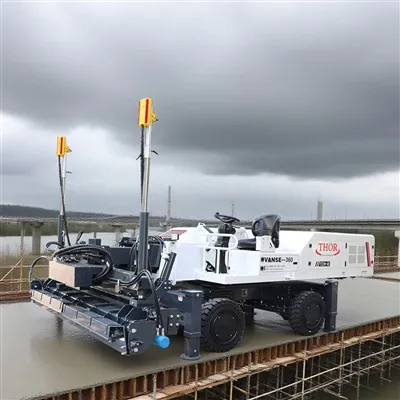
We found that when many users use the laser leveling machine, they often just know how to use it, but the follow-up maintenance and maintenance are basically not done. They don’t know that maintenance and maintenance are actually a crucial step for the leveling machine, because the correct maintenance steps are actually an important prerequisite for ensuring the efficient use of the leveling machine.
Maintenance method of laser leveling machine:
1. After the work is completed, please use the arm lift button to manually lift the machine head, and then push it out of the construction site. It is forbidden to push the machine when the vibrating leveling part is in contact with the ground to avoid damage to the vibrating plate.
2. After the construction is completed, it is necessary to rinse the laser leveling machine with a high-pressure water gun in time (it is strictly forbidden to flush the water gun directly at the mesh part of the fuselage, so as to prevent water from entering the inside of the fuselage and causing short circuits, etc.).
3. The place where the laser leveling machine is placed must be kept dry, and debris and flammable and explosive materials must not be piled up around it.
4. The battery of the leveler also needs to be paid attention to. If it is not used together for a long time, make sure to remove all batteries from the host and receiver and store them properly. The transmitter comes with a rechargeable battery with a charging time of eight hours.
5. During the use of the laser leveling machine, please try to charge the battery after the battery is fully used. When charging, try to ensure that it is fully charged for 8 hours at a time. The charging time is recommended to be 12 hours, and it is advisable to charge it for 8 hours later. To avoid damage to the battery and the transmitter, please unplug the power plug in time after it is fully charged.
6. If the laser signal is lost during the construction process, the concrete laser leveling machine needs to be restarted, and the interval time needs to be more than ten seconds.
7. If the laser leveling machine is placed on a stable ground when it is not used for a long time, lubricating grease should be added to each bearing part once a week, and lubricating oil should also be added to each chain to maintain good lubrication. At the same time, attention should be paid to avoid sand and other sundries getting into the chain to prevent premature damage to the chain. Generally, at the end of one month or every construction period, the laser leveling machine should be inspected and maintained once. Always pay attention to the tightness of the V-belt and the chain, adjust it in time if it is too loose, and adjust the fastening bolts frequently to prevent loosening.
About the maintenance method of the laser leveling machine, I will introduce you here. I believe that you have understood it clearly after reading it. If you want to know more about the leveling machine, you can continue to pay attention to our website. We will provide you with more information in this regard.
Thanks to All the Friends Who Support and Trust Shandong Vanse Machinery Technology Co., Ltd.
If you want to know more about Shandong Vanse Machinery Technology Co., Ltd. or have any questions, please feel free to contact us:
Our Factory
Shandong Vanse Machinery Technology Co., Ltd.








Share this article

About the Author: Shandong Vanse Machinery Technology Co., Ltd.
Shandong Vanse Machinery Technology Co., Ltd. is a high-tech manufacturer specializing in concrete construction machinery, including laser screeds and related equipment. The company integrates R&D, production, and global sales, with products exported to over 60 countries and widely used in infrastructure projects worldwide.
Previous Post
Next Post
Related Articles
You Might Also Like
Know about the 20/30/40 rule in concrete
The 20-30-40 rule in concrete is a crucial guideline, primarily used for flatwork projects like driveways, sidewalks, patios, and slabs. It refers to the general specifications for the aggregate (stone) size within the concrete mix. Here's what each number means: Number Meaning Typical Application 20 The maximum aggregate size should be 20 mm (about 3/4 inch). This ensures the mix can flow properly around rebar and into forms without creating voids or honeycombing. It's a standard size for general-purpose concrete. 30 The average aggregate size is around 30 mm (about 1 1/4 inch). This indicates the mix uses a gradation of stones, with an average size larger than the maximum to ensure good interlock and strength. 40 The minimum cement content should be 40 kg per cubic meter of concrete. This guarantees sufficient cement paste to coat all aggregates, bind them together, and achieve the desired strength and durability. Essentially, it's a shorthand for specifying a strong, workable, and durable concrete mix by controlling: How big the biggest rocks can be (20mm max). The general size of the mix of rocks (30mm avg). How much "glue" (cement) is in the mix (40kg minimum per m³). It's a Guideline, Not an Absolute Law: Exact mix designs are determined by structural engineers based on compressive strength (e.g., 3000 psi, 4000 psi), exposure conditions (freeze-thaw, sulfates), and placement method. The 20-30-40 rule provides a good starting point for typical residential and light commercial flatwork. Local Standards Vary: In the US, specifications are often in psi strength and slump rather than this exact ratio. However, the principle is the same: control aggregate size and cement content for performance. Common Related "Rules": You may also hear the "20-20 Rule" for placing concrete, which states: Slump should be a maximum of 20 cm (8 inches). (Too wet leads to shrinkage and cracking). The maximum aggregate size should be 20 mm (3/4 inch). Purpose: This rule helps prevent common problems: Too large aggregate: Makes finishing difficult and can cause surface flaws. Too little cement: Results in weak, permeable, and non-durable concrete. When ordering concrete for a project like a driveway, you can use this rule as a checklist when talking to your ready-mix supplier. You might say: *"I need a 4000 psi mix for a driveway, with a 3/4" max aggregate and a 4-5 inch slump."* This communicates the same intent as the 20-30-40 rule-you're asking for a mix with appropriately sized stone and sufficient cement for a strong, durable finish. IN SUMMARY: The 20-30-40 rule is a mix design guideline that balances aggregate size and cement content to produce workable, strong, and crack-resistant concrete for flatwork. It emphasizes that quality concrete isn't just about strength, but about the right proportions of its components. Note: The parameters provided in this document are for reference only and are not mandatory. Due to differences in technical characteristics between different brands and models of laser levelers, please consult the manufacturer for a suitable solution before actual operation. This reference document assumes no responsibility for any issues arising from failure to follow the manufacturer's instructions.How to prevent the concrete laser leveling machine from rusting? Full text analysis
When it comes to the rust of concrete laser leveling machines, it does not mean that the equipment is easy to rust. It is because of its improper use that these situations will occur. If you want to avoid the rust of equipment, it is actually very simple. Our manufacturer will introduce you to the tips on how to prevent the rust of concrete laser leveling machines in the following article. I hope you can read it carefully and look forward to your attention. 1. The rust of concrete laser leveling machines is caused by our inadequate use. Because there is no reasonable maintenance in the later period after use, the concrete laser leveling machines are rusted. The reason is that they are aged after a long time of use, so they cause rust. Although the main parts of the concrete laser leveling machine are made of high-quality steel, they are treated with heat treatment, tempering, plating and other processes, and the hardness is extremely high. Generally, rust rarely occurs. Unless you do not pay attention to maintenance, a small part of the parts may rust over time. How to prevent the rust of concrete laser leveling machines is something we all need to understand. Parts should be frequently added with butter or anti-rust oil to prevent the machine from rusting. Gears, sprockets and other parts need to be filled with lubricating butter once every fifteen days. 2. The cleaning of the leveler should be done well. The leveler roller should be cleaned. Some factories may have a lot of dust or the raw materials may be unclean, which may cause the leveler roller to be dirty. When leveling the materials, the materials may be contaminated or scratched, resulting in unqualified products. Therefore, you should always pay attention to cleaning the leveler roller. When cleaning the roller, you need to use long cloth strips and anti-rust cleaning oil. First, spray the anti-rust cleaning oil on the leveler roller and stack the metal materials together, then switch the leveler to manual mode, press forward to put the metal materials and cloth strips into the leveler roller together, wait for the cloth strips to come out of the discharge port, then remove the metal materials, and keep the cloth strips in the leveler roller, then switch the leveler to automatic mode, hold the cloth strips at the inlet with both hands, and use the rolling of the roller and the friction of the cloth strips to clean the dirt on the roller, so as to achieve the effect of cleaning the leveler roller. There are some dangers in this cleaning process, so professional operators should be invited to operate, and safety must be paid attention to. This section mainly shares with you how to prevent rust on concrete laser leveling machines. However, due to time constraints, I can only share it here. If you have other questions you need to know, you can contact our customer service online and our customer service will provide you with timely assistance.Under what circumstances does the concrete laser leveling machine need to be adjusted or suspended?
In what cases does the concrete laser leveling machine need to be adjusted or suspended? As a highly efficient modern construction equipment, the concrete laser leveling machine plays an important role in the construction of concrete floors with its precise leveling ability and high operating efficiency. However, in the actual construction process, due to the influence of various factors, it is sometimes necessary to adjust or suspend the construction of the concrete laser leveling machine. This article will elaborate on the specific circumstances in which the concrete laser leveling machine needs to be adjusted or suspended from the aspects of unsuitable environmental conditions, mechanical equipment failure, safety considerations for construction personnel, insufficient or abnormal material supply, changes in construction quality requirements, substandard ground conditions, climate abruptness or natural disasters, and updates or requirements of regulations and standards. 1. Unsuitable environmental conditions Environmental conditions are one of the key factors affecting the normal operation of the concrete laser leveling machine. In the following cases, it is necessary to consider adjusting or suspending construction: First, when the wind force at the construction site is too strong, the concrete surface is easily affected by the wind and causes drying and cracking. Therefore, when the wind force reaches a certain level, the construction should be suspended and the work should be continued after the wind force weakens. Secondly, temperature and humidity are also important factors affecting concrete construction. In high or low temperature environments, the setting time and strength of concrete will change, which may lead to poor leveling effect or other problems. Similarly, too high or too low temperature will also have a negative impact on the construction quality of concrete. Therefore, under unsuitable temperature and humidity conditions, it is necessary to adjust the mix ratio of concrete or suspend construction. 2. Mechanical equipment failure As a mechanical equipment, the concrete laser leveling machine may fail or abnormally during long-term use. The following are some situations that require special attention: First, when the laser transmitter or receiver of the laser leveling machine fails, it will affect the leveling accuracy and effect. At this time, the construction should be stopped immediately and the equipment should be repaired or replaced. Secondly, when the power system, transmission system or control system of the leveling machine fails, it may also cause the equipment to fail to work properly or the leveling effect is poor. In this case, it is also necessary to suspend construction and troubleshoot and repair the fault. 3. Safety considerations for construction personnel Safety is always the primary consideration during the construction process. In the following cases, in order to ensure the safety of construction workers, it is necessary to adjust or suspend the construction of the concrete laser leveling machine: First, when there are safety hazards or accident risks at the construction site, such as falling objects from high altitudes, exposed electrical lines, etc., the construction should be suspended immediately, and the work should be continued after the safety hazards are eliminated. Secondly, the physical condition of the construction workers is also an important factor affecting construction safety. When the construction workers are tired, unwell or make operating errors, the work plan should be adjusted in time or replacement personnel should be arranged to ensure construction safety and quality. 4. Insufficient or abnormal material supply During the construction of the concrete laser leveling machine, the quality and supply of concrete materials are directly related to the leveling effect and construction progress. The following are some situations that need attention: First, when the supply of concrete materials is insufficient, it will lead to construction interruption or delay in progress. In this case, it is necessary to adjust the construction plan in time, increase material reserves or adjust the source of materials. Secondly, if there are quality problems with the concrete materials, such as abnormal setting time and substandard strength, it will have a negative impact on the leveling effect. At this time, the construction should be suspended, and the quality of the concrete materials should be inspected and adjusted. 5. Changes in construction quality requirements During the construction process, the construction quality is sometimes adjusted or changed according to the actual situation or the requirements of the owner. In this case, the concrete laser leveling machine needs to be adjusted accordingly or the construction needs to be suspended. For example, when the owner's requirements for the flatness or levelness of the ground change, the parameters of the leveling machine need to be reset or the leveling process needs to be adjusted. Similarly, if the ground needs to be treated specially or the construction process needs to be improved, the construction needs to be suspended and the relevant measures need to be implemented before continuing the operation. 6. The ground conditions do not meet the standard Ground conditions are the basis for the construction of concrete laser leveling machines. When the ground conditions do not meet the construction requirements, it will affect the leveling effect and construction progress. The following are some common situations. First, when there are unevenness, cracks or debris on the ground, pretreatment or cleaning work needs to be carried out first to ensure that the ground is flat and clean. If the pretreatment work is not completed or the effect is not ideal, the construction should be suspended and the ground conditions should be continued after the requirements are met. Secondly, when the humidity or temperature of the ground does not meet the construction requirements, it will also affect the leveling effect. In this case, corresponding measures need to be taken to adjust the ground conditions, such as increasing ventilation, heating or cooling, etc. 7. Climate change or natural disasters Climate change or natural disasters are factors that cannot be predicted and avoided during the construction process. In the following cases, the construction of the concrete laser leveling machine needs to be suspended immediately: First, when encountering sudden severe weather such as strong winds, heavy rains, thunder and lightning, in order to ensure the safety of construction workers and the stability of equipment, construction should be stopped immediately and corresponding protective measures should be taken. Secondly, when natural disasters such as earthquakes and floods occur, priority should be given to personnel safety, all construction activities should be suspended, and evaluation and resumption of work should be carried out after the disaster has passed. 8. Updates or requirements of regulations and standards With the continuous updating and improvement of regulations and standards in the construction industry, it is sometimes necessary to adjust or suspend the construction of the concrete laser leveling machine. For example, when new safety regulations or environmental protection requirements are introduced, it may be necessary to update and improve the safety measures or environmental protection measures in the construction process. In this case, it is necessary to suspend construction, train and educate relevant personnel, and ensure that the construction meets the requirements of new regulations and standards. In summary, there are many situations in which the concrete laser leveling machine needs to be adjusted or suspended during construction. In order to ensure the safety, quality and efficiency of construction, it is necessary to pay close attention to the changes in various factors during the construction process and take corresponding measures in a timely manner according to the actual situation. At the same time, it is also necessary to strengthen the training and education of construction personnel, improve their professional skills and safety awareness, and ensure the smooth progress of the construction process. 9. Equipment maintenance cycle As a mechanical equipment, the normal operation of the concrete laser leveling machine is inseparable from regular maintenance. When the equipment reaches the predetermined maintenance cycle, it is necessary to suspend construction and conduct comprehensive inspection, cleaning and lubrication of the equipment. This not only ensures the normal operation of the equipment and prolongs its service life, but also avoids construction interruptions and quality problems caused by equipment failure. During the maintenance process, attention should be paid to the vulnerable parts and key components of the equipment, such as laser transmitters, receivers, transmission systems, hydraulic systems, etc., and parts with severe dry wear or damage should be replaced or repaired in time. At the same time, dust and debris on the surface of the equipment should be cleaned to keep the equipment clean and beautiful. 10. Construction plan adjustment During the construction process, sometimes the construction plan needs to be adjusted due to various reasons. For example, when the owner puts forward new requirements or design changes, the construction plan needs to be re-formulated. In addition, when the construction progress is delayed due to external factors, the construction plan also needs to be adjusted to ensure that the project is completed on time. In this case, it is necessary to suspend the construction of the concrete laser leveling machine, communicate and coordinate with relevant personnel, re-formulate the construction plan and adjust the use arrangement of the equipment. Through reasonable adjustment of the construction plan, the smooth progress and timely completion of the project can be ensured. In summary, the concrete laser leveling machine needs to consider adjustment or suspension of construction in the case of unsuitable environmental conditions, mechanical equipment failure, safety considerations for construction personnel, insufficient or abnormal material supply, changes in construction quality requirements, ground conditions that do not meet standards, climate changes or natural disasters, regulatory standards updates or requirements, equipment maintenance cycles, and construction plan adjustments. In the actual construction process, we should pay close attention to the changes in these factors and take corresponding measures according to the actual situation to ensure the safety, quality and efficiency of the construction. At the same time, we should also strengthen the training and education of construction personnel, improve their professional skills and safety awareness, and provide strong guarantees for the smooth progress of the project. Because the concrete laser leveling machine involves complex operation and maintenance, the specific situation in the actual construction process may be more complicated. Therefore, it is recommended to keep in close contact with equipment manufacturers, construction units and relevant experts in the actual construction process to consult and solve problems encountered in the construction in a timely manner. Through continuous practice and experience accumulation, we will continuously improve the application level of concrete laser leveling machines in construction. Please note that the above content is a summary based on existing knowledge and experience, and does not represent all possible situations and solutions. In the actual construction process, it is necessary to make judgments and decisions based on the specific situation. At the same time, with the continuous advancement of technology and the continuous development of the industry, the application and maintenance of concrete laser leveling machines may also have new changes and requirements. Therefore, it is recommended that relevant personnel continue to learn and pay attention to industry trends in order to adapt to and master new technologies and methods in a timely manner.