Technical Knowledge
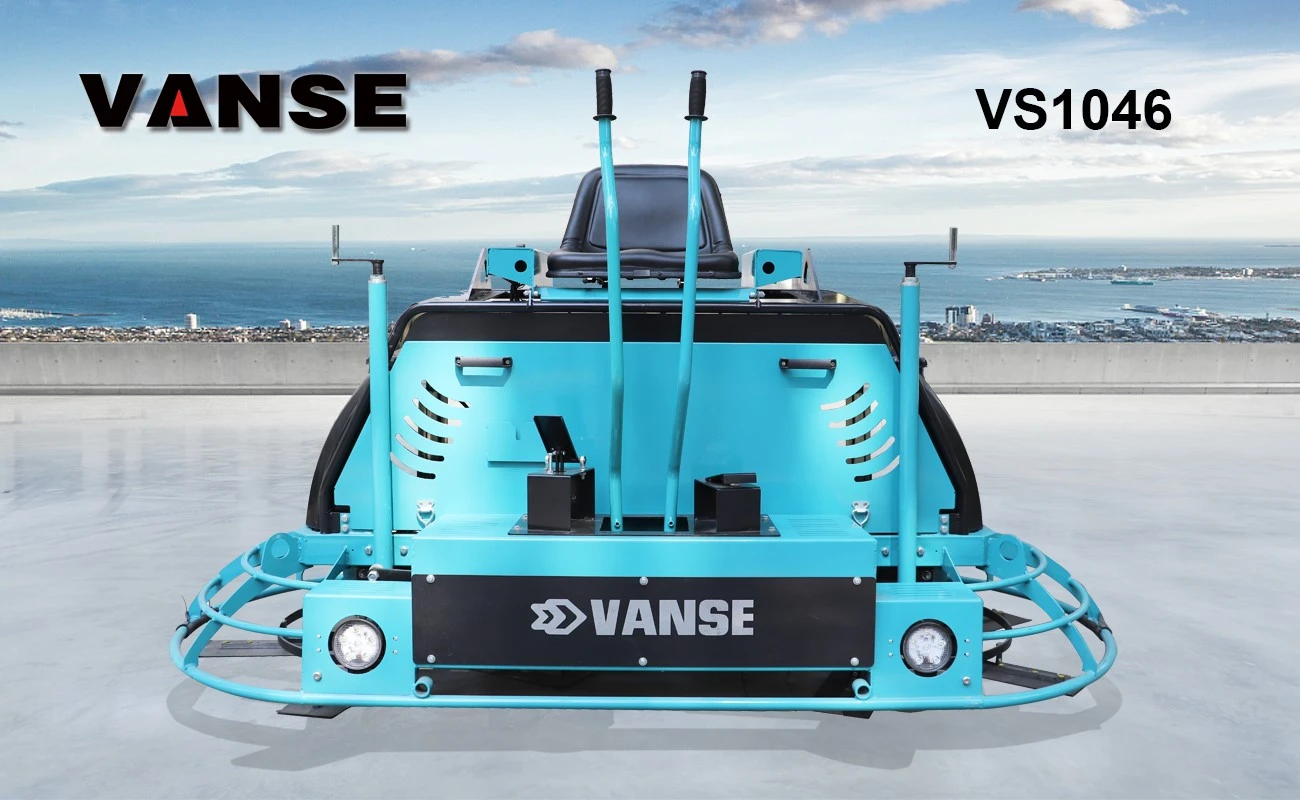
What should we pay attention to when using metal trowels?
1. Safety issues
– Prevent entrapment: When the metal trowel is rotating at high speed, the operator should be careful to avoid clothing, hair, fingers, etc. from getting close to the rotating trowel. Wear work clothes, tie the cuffs and hems tightly, and wear a safety helmet and protective gloves. For example, before starting the trowel, be sure to carefully check the surrounding environment to ensure that there are no debris that may be involved.
– Prevent fragments from splashing: If the metal trowel is cracked or broken, the fragments may splash and injure people. Therefore, check the integrity of the trowel regularly. If there are signs of cracks or damage, stop using it and replace it immediately. At the same time, during use, maintain an appropriate safety distance and avoid standing in the direction where you may be hit by fragments.
2. Operation specifications
– Proper installation: When installing the metal trowel, ensure that it is firmly installed. According to the instruction manual of the trowel, use appropriate tools to install the trowel on the corresponding shaft and tighten the screws. Insecure installation may cause the trowel to loosen or fall off during operation, which will not only affect work efficiency but also cause safety accidents.
– Control operating parameters:
– Speed control: Operate strictly according to the rated speed of the trowel machine, and do not increase the speed at will. Too high a speed will increase the centrifugal force of the trowel blade, which may cause the trowel blade to deform and damage, and will also increase wear. For example, for most concrete trowel operations, the trowel blade speed is generally controlled at around 70-150 revolutions per minute.
– Pressure control: Reasonably control the pressure of the trowel blade on the ground. If the pressure is too high, the friction between the trowel blade and the ground will be too large, which may easily cause the trowel blade to wear too quickly, and may also cause scratches or unevenness on the ground. Generally, the pressure is adjusted according to the hardness of the ground and the trowel stage (rough grinding or fine grinding). The pressure should be appropriately reduced in the fine grinding stage.
– Avoid idling and excessive friction: Try to reduce the idling time of the trowel blade. When idling, the trowel blade does not contact the ground for effective operation, but its own rotation will cause wear. At the same time, during use, avoid direct friction between the trowel and hard objects such as metal, such as avoiding operation on metal structures without concrete and other ground materials to prevent damage to the trowel blade.
3. Maintenance and inspection
– Timely cleaning: After each use, clean the concrete residue, dust and other debris on the trowel in time. If these debris are not cleaned in time, the friction between the trowel and the ground will increase the wear rate during the next use. You can use a brush or a high-pressure air gun to clean it.
– Check the wear condition: Check the wear degree of the trowel regularly. Observe whether the edge of the trowel becomes blunt, has a gap or a large area of wear. If the edge wear exceeds a certain limit (such as wear exceeding 2-3 mm), the trowel needs to be replaced. At the same time, check the flatness of the trowel. If deformation occurs, it should be replaced or repaired in time.
– Prevent corrosion: If used in an environment with chemical substances (such as acid, alkali, etc.), the trowel should be cleaned in time to prevent chemical substances from corroding the metal trowel. In addition, when storing in a humid environment, anti-rust measures should be taken, such as applying anti-rust oil.
Thanks to All the Friends Who Support and Trust Shandong Vanse Machinery Technology Co., Ltd.
If you want to know more about Shandong Vanse Machinery Technology Co., Ltd. or have any questions, please feel free to contact us:
Our Factory
Shandong Vanse Machinery Technology Co., Ltd.








Share this article

About the Author: Shandong Vanse Machinery Technology Co., Ltd.
Shandong Vanse Machinery Technology Co., Ltd. is a high-tech manufacturer specializing in concrete construction machinery, including laser screeds and related equipment. The company integrates R&D, production, and global sales, with products exported to over 60 countries and widely used in infrastructure projects worldwide.
Previous Post
Next Post
Related Articles
You Might Also Like
What should I do if the cement floor is uneven? Can the floor grinder smooth it?
The problem of uneven cement floors can be solved in a number of ways, one of which is using a floor sander. The following is a detailed answer to the problem of uneven cement floors, as well as detailed instructions on whether a floor grinder can smooth it. ☀Clean the base layer: Use tools to clean the base layer, including floating dust, oil stains, etc., to ensure that the base layer is smooth and clean. ☀Smooth the cement floor: Use cement mortar to smooth the cleaned base layer. During the smoothing process, tools such as a level should be used to ensure that the smoothed cement floor surface is flat. ☀Paving ceramic tiles: If you need to lay ceramic tiles, you should first spread a layer of dry cement mortar on the cement floor and scrape it with a scraper to ensure that the ceramic tiles are laid flat. ☀Use a floor grinder: If the cement floor that has been used is uneven or rough, you can consider using a floor grinder to grind it. A floor sander can remove stains and old coatings from the surface while smoothing the surface. ☀Choose the appropriate grinding disc: Choose the appropriate grinding disc according to the material and roughness of the ground to be polished. Grinding discs come in many different particle size grades. Grinding discs with finer grits are more expensive, but the grinding effect is better. ☀Install the grinding disc: Install the selected grinding disc on the grinder. Pay attention to the front and back sides and direction of the grinding disc to ensure that the grinding disc can operate normally. ☀Turn on the power: Turn on the power switch of the grinder and adjust the switch to the appropriate speed. Generally speaking, the higher the speed of the grinder, the better the grinding effect, but it will also increase noise and wear. ☀Start grinding: Use a hand-held grinder to grind on the ground, and choose different grinding methods according to the actual situation, such as linear grinding, circular grinding, etc. During the grinding process, pay attention to maintaining uniform strength and speed to avoid excessive wear or missed grinding. ☀Turn off the power: After completing grinding, turn off the power switch and remove the grinding disc for cleaning and maintenance. The floor grinder is suitable for grinding and polishing various hard floor materials, such as cement floors, ceramic tile floors, terrazzo floors, etc. At the same time, it can also be used for renovation and repair of old floors. ☀Before using the floor grinder, be sure to check whether the power cord and plug are intact to avoid leakage or electric shock. At the same time, make sure that all parts of the machine are installed correctly, especially the direction and tightening of the grinding discs. ☀During use, pay attention to maintaining safe posture and operating methods. Generally speaking, grinders should be held with both hands to avoid excessive pressure and uneven wear caused by one-handed operation. At the same time, be careful to avoid excessive force or rapid movement to avoid damage to the machine or personal injury. ☀During the grinding process, pay attention to the flatness and roughness of the ground. If you find that there are serious unevenness or stains on the ground, you should deal with them accordingly before continuing to polish. At the same time, appropriate grinding discs and grinding methods should be selected according to the actual situation to ensure grinding quality and efficiency. ☀After use, turn off the power in time and perform cleaning and maintenance. Clean the grinding disc and the dust and debris inside the machine, check each component for damage or wear, and replace or repair it in time if necessary. At the same time, regular care and maintenance should be carried out in accordance with the instructions provided by the manufacturer. Note: The parameters provided in this document are for reference only and are not mandatory. Due to differences in technical characteristics between different brands and models of laser levelers, please consult the manufacturer for a suitable solution before actual operation. This reference document assumes no responsibility for any issues arising from failure to follow the manufacturer's instructions.Best laser leveling models for narrow warehouse aisles Drop your picks!
For construction in narrow warehouse aisles (especially VNA narrow aisle racking systems), miniaturization, flexible steering, and precise machine head control are key considerations when choosing equipment from Vanse Machinery. Based on Vanse's latest product line, the following are some recommended models for narrow space construction: This is the most classic small walk-behind screed from Vanse, ideal for use in warehouses where some shelving has already been installed or space is extremely limited. Reasons for recommendation: Its small size (width approximately 2.5m to 2.8m) and light weight allow it to easily enter elevators or operate on the second floor or multiple levels of a warehouse without worrying about load capacity issues. Narrow aisle performance: With manual operation, it has a very small turning radius, allowing it to flexibly maneuver around columns and embedded structures. Key parameters: The flatness error is controlled within approximately ±1.5mm, perfectly meeting your requirements for ultra-flat floors. If you find walk-behind models a bit slow, but your workspace doesn't accommodate large telescopic boom machines, the YZ28-4S is the perfect balance. Reasons for Recommendation: Compared to walk-behind models, it features ride-on operation and an automatic cruise control system, ensuring a constant travel speed, which is crucial for consistent floor flatness. Performance in Narrow Passages: The four-wheel drive design provides strong traction, and the intelligent steering system allows for much faster turning and positioning in confined areas compared to traditional machines. Key Parameters: Paving width: 2.5m. It integrates screw spreading, vibration, and leveling into one machine, resulting in a high one-time molding rate and reducing the need for manual assistance. This model belongs to Vanse's high-end series, mimicking advanced international miniaturized structures and specifically developed for high-standard indoor logistics and warehousing. Reasons for Recommendation: Its compact structure and low center of gravity design ensure exceptional stability when paving high-viscosity (low-slump) concrete, minimizing the formation of surface waves. Narrow Aisle Performance: It features four-wheel steering, even allowing for a degree of "crab steering," providing extremely high positioning accuracy between narrow racking aisles. Key Parameters: Equipped with an imported laser system, it can be controlled in conjunction with a 3D total station. If you need to construct dedicated narrow-aisle tracks for VNA racking (i.e., Fmin floor slabs), this machine offers the best system compatibility. Application Scenarios Recommended models Advantages Operating method Ultra-narrow spaces / Multi-story buildings DZ25-2 Most lightweight and easiest to deploy Hand-held type Standard warehouse aisles / High efficiency YZ28-4S Automatic movement and constant pressure Riding type Super flat floors (SF) / VNA (Very Narrow Aisle) WS-550/940C Extremely high laser accuracy and good stability Riding type Machine head width: Vanse's standard leveling heads are typically 2.5m or 3m wide. Before purchasing or renting, please confirm the spacing of the warehouse columns. If the spacing is exactly 3m, it is recommended to choose a 2.5m machine head to allow for clearance. Laser transmitter position: During narrow aisle construction, the signal is easily blocked by shelves or walls. It is recommended to use Vanse's matching high-sensitivity Leica receiver and position the transmitter as close as possible to the center line of the aisle. Are you planning a renovation of an existing warehouse or construction of a new one? I can analyze your specific situation to determine if a 3D control system is necessary. Contact us NOW Note: The parameters provided in this document are for reference only and are not mandatory. Due to differences in technical characteristics between different brands and models of laser levelers, please consult the manufacturer for a suitable solution before actual operation. This reference document assumes no responsibility for any issues arising from failure to follow the manufacturer's instructions.About the summer maintenance of laser leveling machine
As we all know, summer is the time of year when the temperature is particularly high. Like winter, laser leveling machines are used in harsh environments. If the maintenance is not in place, coupled with the high temperature, the laser leveling machine is likely to have various problems. Therefore, when using the laser leveling machine in summer, special attention should be paid to the maintenance and maintenance. So how should the laser leveling machine be maintained and maintained in summer? 1. In summer construction, the engine should be prevented from overheating first. Under normal circumstances, the engine temperature should not exceed 95°. If the temperature is too high, a relatively cool area should be selected for shutdown and cooling. At the same time, the engine hood can be lifted for ventilation and heat dissipation. 2. The cooling water volume should be checked in time. When the water radiator reaches 100°, do not rush to add cooling water. Instead, the engine should be shut down immediately to cool down the engine at idle speed, and then add coolant. 3. The construction temperature is high in summer. Check the tire pressure and tire temperature of the laser leveler frequently. If the tire temperature is too high, stop the machine in time and place it in a cool place to cool down. Remember to use the wrong method of deflation or pouring cold water to cool down. 4. Check the liquid level of the laser leveler battery frequently, add distilled water in time, dredge the vents, pay attention to the density of the electrolyte, and maintain a good charging state. 5. Prevent the laser leveler engine from deflagration. Before entering the summer, the carbon deposits in the combustion chamber, valve top and other parts should be thoroughly removed to maintain good heat dissipation and normal compression ratio; and check and adjust the fuel supply advance angle to prevent engine deflagration. 6. Check the temperature of the hydraulic oil and hydraulic transmission oil frequently. If the temperature is too high, stop the machine for rest. Do not exceed high temperature operation. 1. Quality. When choosing a laser leveler, you should pay attention to the quality. If the quality of the laser leveler is not good, problems may occur during work, which may delay the construction period and the loss is immeasurable. 2. Operation effect. When purchasing a laser leveler, you should conduct an on-site inspection. If it is inconvenient, you can ask the manufacturer to provide some photos for reference. 3. After-sales service. When purchasing a laser leveler, you should also pay attention to the after-sales service. When purchasing a laser leveler, you should identify regular and professional manufacturers, and verify the manufacturer's technical capabilities and after-sales service. Only regular manufacturers can guarantee the performance of the machine, solve problems in time when the machine has problems, and extend its service life. It can be seen that when using equipment in extreme weather, you must pay special attention to its maintenance content, so as to ensure the smooth operation of the equipment. After reading the above article, I hope that everyone will pay attention to the above points when maintaining the laser leveler in the future. Thank you for your reading and support.