Technical Knowledge
What should we pay attention to when maintaining concrete?
Concrete curing is a key link to ensure the quality of concrete. The following points need to be noted:
1. Maintain appropriate humidity and temperature:
During concrete curing, appropriate humidity and temperature should be maintained to promote the hardening and strength development of the concrete. Excessively high temperature and leakage may cause concrete to crack or deform, while too low temperature and humidity may cause drying shrinkage cracks on the concrete surface. Therefore, appropriate moisturizing and heat preservation measures need to be taken according to specific maintenance conditions and requirements.
2. Avoid excessive exposure time:
During the setting curing period, the exposure time of surface mixing should be minimized, and the exposed surface of the concrete should be tightly covered in a timely manner to prevent surface moisture from evaporating. Before the concrete of the exposed surface protective layer is initially set, the covering should be rolled up, and the surface should be rubbed with a trowel at least twice to make it flat and then covered again. At this time, care should be taken that the covering should not directly contact the concrete surface until the concrete is finally set.
3. Increase the thickness of the protective layer appropriately:
In order to increase the wear resistance and durability of concrete, the thickness of the protective layer can be appropriately increased. When pouring concrete, you can lay a layer of plastic film or wet cloth on the surface to keep the concrete surface moist and smooth. During the maintenance period, the thickness of the protective layer should be checked regularly to ensure that it meets the design requirements.
4. Control the construction temperature:
During the concrete construction process, the construction temperature should be controlled to avoid excessively high or low temperatures affecting the quality of the concrete. During summer construction, measures should be taken to reduce the temperature of concrete entering the mold to avoid the phenomenon of "thermal bridge"; during construction in winter, measures should be taken to increase the temperature of concrete entering the mold to avoid the phenomenon of "cold bridge".
5. Regular inspection and maintenance:
During the concrete curing period, the concrete structure should be inspected and maintained regularly to ensure its quality and safety. If cracks, deformation or other problems are found in the concrete structure, timely measures should be taken to repair and reinforce it.
In short, concrete curing is a key link to ensure the quality of concrete. It is necessary to pay attention to maintaining appropriate humidity and temperature, avoiding excessive exposure time, appropriately increasing the thickness of the protective layer, controlling construction temperature, and regular inspection and maintenance. Only in this way can we ensure that the strength and durability of the concrete structure meet the design requirements and provide a strong guarantee for the safety and quality of the construction project.
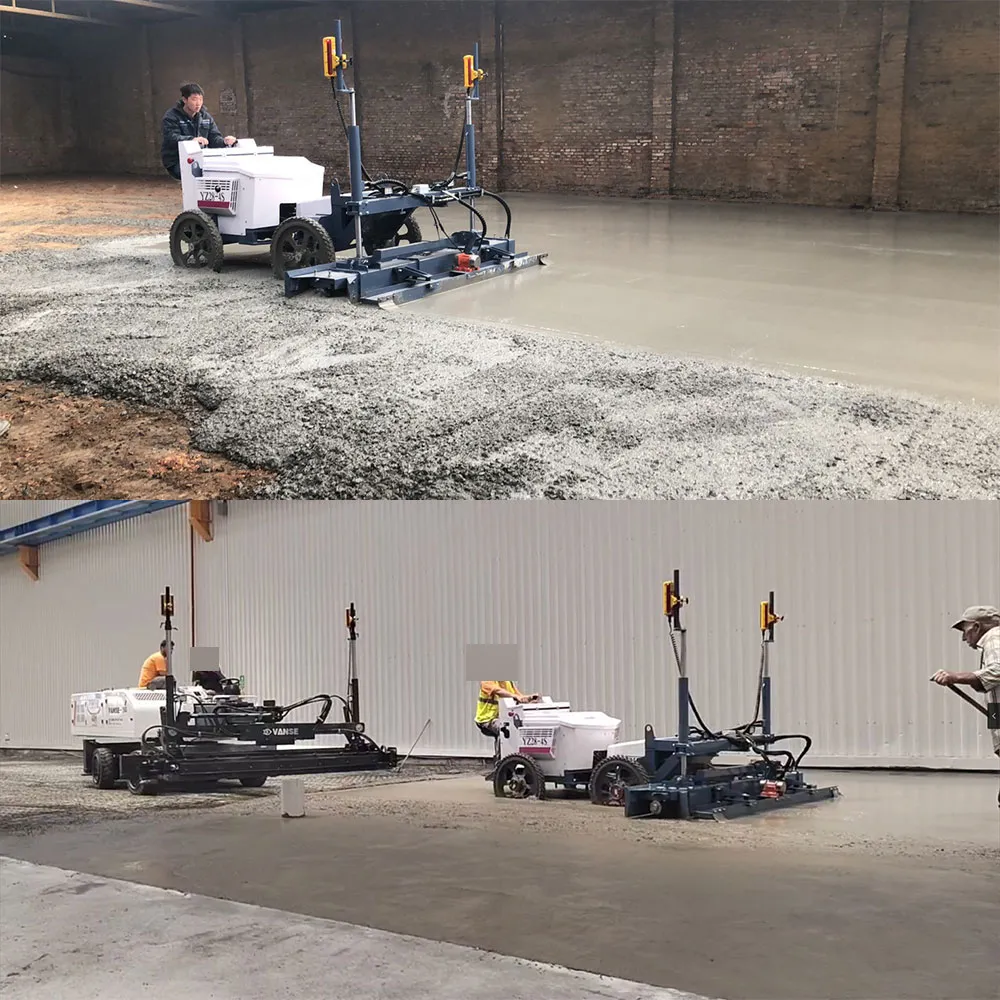
Thanks to All the Friends Who Support and Trust Shandong Vanse Machinery Technology Co., Ltd.
If you want to know more about Shandong Vanse Machinery Technology Co., Ltd. or have any questions, please feel free to contact us:
Our Factory
Shandong Vanse Machinery Technology Co., Ltd.








Share this article

About the Author: Shandong Vanse Machinery Technology Co., Ltd.
Shandong Vanse Machinery Technology Co., Ltd. is a high-tech manufacturer specializing in concrete construction machinery, including laser screeds and related equipment. The company integrates R&D, production, and global sales, with products exported to over 60 countries and widely used in infrastructure projects worldwide.
Previous Post
Next Post
Related Articles
You Might Also Like
About the Shandong Wanshi Machinery Technology Co., Ltd.
Since its establishment in 2013, Shandong Vanse Group has seized the golden period of the development of the concrete industry, adhered to the development concept of high-end, high-quality and high efficiency, and rapidly emerged as a leader in the field of domestic and even international concrete equipment. The group not only focuses on technology research and development and innovation, but also pays more attention to market expansion and customer service, and successfully builds a complete industrial chain integrating research and development, production, sales and after-sales service, and has won the trust and cooperation of many well-known companies such as JD Logistics, CATL, Great Wall Motors, and China Construction Corporation. Group Overview and Business Layout Vanse Group has several business divisions, including Vanse Machinery, Wanhui New Energy, Vanse Road and Bridge, and Shanghai Vanse Machinery, forming a diversified product line and service system. Its concrete equipment not only covers the vast market of 31 provinces, cities and autonomous regions in China, but also is exported to more than 30 countries and regions around the world, including the United States, the United Kingdom, Russia, Germany, Saudi Arabia, Australia, etc., demonstrating the international influence of the Vanse brand. Technical Cooperation and Innovative Development In 2018, the technical cooperation agreement between Vanse Group and British experts marked an important step in its internationalization strategy. By introducing the world's top technology, Vanse Group has perfectly integrated humanized mechanical design with laser systems, reaching the international advanced level. At the same time, the group has established a deep cooperation mechanism between industry, academia, research and application with higher education institutions such as Shandong University and Chang'an University to jointly promote technological innovation and achievement transformation, injecting a steady stream of power into the development of the industry. Corporate Vision and Social Responsibility Vanse Group has always taken the vision of "creating a better life for mankind" as the direction of corporate development, and is committed to improving product performance and optimizing user experience through technological innovation, and providing more efficient, environmentally friendly and intelligent concrete solutions for global customers. The group actively participates in social welfare undertakings, practices corporate citizenship responsibilities, and is committed to sustainable development, striving to contribute to social harmony and environmental protection while achieving commercial success. Looking to the Future Standing at a new historical starting point, Vanse Group will continue to deepen its domestic and foreign market layout, increase R&D investment, expand emerging fields such as new energy and intelligent equipment, and continuously explore new trends and technologies in the development of the concrete industry, drive development with innovation, and win the market with quality. Facing the future, Vanse Group will take a more open attitude and work with global partners to jointly create a more brilliant tomorrow for the concrete industry. Conclusion The growth process of Shandong Vanse Group is a model of innovation and pursuit of excellence. Through unremitting efforts, Vanse Group has not only shaped its own brand image, but also made positive contributions to the development of the global concrete industry. In the future, Vanse Group will continue to uphold its original aspirations, keep pace with the times, and work tirelessly to achieve the grand goal of "grasping the present and realizing the future". Working with Vanse to create a better future is not only the group's commitment, but also a good wish for every partner and all walks of life.Crack Control of Superflat Floors Optimization of Cutting Timing, Depth and Spacing
Let's be honest – superflat floors don't forgive mistakes. You spend hours behind the trowel chasing a perfect FF/FL number, and one badly timed or wrongly spaced saw cut can ruin the whole slab. Over the years, I've learned that crack control on superflat floors isn't just about following a generic spec. It's about understanding what the concrete is trying to tell you and reacting with the right timing, depth and spacing. Here's how to approach it. Superflat slabs are a different animal. Because we place them with very tight tolerances and often use large‑area finishing techniques, they tend to be denser at the surface and have less bleed water than a typical commercial floor. That dense, well‑closed surface is great – it's what gives you the flatness – but it also means the top dries and shrinks a little faster than the body of the slab. If you don't plan your cuts to relieve that stress at the right moment, you'll see random cracks appear in the first 24 to 48 hours, before you even think about loading the floor. Takeaway: A superflat slab puts more emphasis on early crack control because the tight‑finished surface concentrates drying shrinkage stress near the top. Your saw‑cutting game has to be spot on. Forget the overnight‑wait-and‑see approach. With superflat floors, you want to be in what I call the "Green Cut" window – as soon as the concrete can support the saw operator and the saw itself without raveling the aggregate. How early is too early? If your saw blade pulls out stones and leaves a ragged edge, you're too early. Back off and wait another 30 to 60 minutes. How late is too late? If you can see even a hairline random crack starting somewhere on the slab, you've already missed the boat. on superflat jobs, I want saw cuts in before the internal concrete temperature starts to drop from its peak, which is often 4 to 12 hours after finishing, depending on the weather and mix design. Search‑friendly rule of thumb: "Cut as soon as possible without spalling." This simple statement gets typed into Google a lot by floor guys asking when to cut concrete superflat floor or green saw cut timing. A pro tip: On hot or windy days when the slab is losing moisture fast, start cutting earlier. On cool, damp days you might have a slightly longer window, but never wait more than 12 hours on a superflat floor – the risk of random cracks skyrockets after that. The old rule says "depth = one‑quarter of the slab thickness." That's a minimum, not the target for superflat work. My rule of thumb: aim for one‑third of the slab thickness when you can. Here's why. Superflat floors are often 150 mm to 200 mm (6″ to 8″) thick and may contain steel fibers or light reinforcement. A deeper cut creates a stronger plane of weakness that reliably directs the shrinkage crack down into the joint, rather than letting it wander off sideways. I've seen too many floors where a shallow cut simply didn't do its job and the crack ran parallel to the joint, ruining the flatness. Soft‑cut (early) work: With a power trowel concrete floor this dense, use a soft‑cut saw with a thicker blade to make a wider kerf, especially with steel fibers. Depth for fibers: For fiber‑reinforced superflat slabs, I increase the cut depth to 35‑40% of slab thickness. Fibers bridge the joint slightly, so a deeper cut is needed to overcome that and ensure the crack forms where you want it. Search‑friendly note: People are Googling superflat concrete saw cut depth and control joint depth superflat warehouse floor. If your article includes these, you match buyer intent. Spacing formulas like "24 to 36 times the slab thickness" are a starting point, but on superflat floors you have to consider material handling traffic patterns and the flatness spec itself. Here's what I design by: Typical spacing: 2.5 m to 3.7 m (8 ft to 12 ft) on center for a 150 mm slab. Column lines matter: Always place joints directly over column lines and internal footings, no exceptions. If you don't, you'll get a classic restraint crack. Aspect ratio: Keep panels as square as possible. A long, skinny panel (over 1.5:1) will try to crack across the middle every time. Free‑movement joints at perimeters: Leave a proper isolation joint around columns and walls, filled with compressible material, because the superflat floor will shrink and move as a whole. Now here's where the finishing machine comes in. When you use a reliable walk‑behind power trowel like the VANSE VS424 with Honda GX160 power, you get a very consistent blade pressure and speed across the slab. That consistent finish means the concrete surface behaves uniformly during shrinking, so your joint plan works more predictably. I've had far fewer problems with erratic cracks after switching to a machine that holds blade pitch and rpm consistently – the slab doesn't have weak, rougher spots where shrinkage stress concentrates. How you cut matters as much as when and where. A few points from the job site: Use a straightedge guide for the initial cut, especially in very open areas. Any wobble looks terrible on a superflat floor. Match the saw blade to your aggregate. Hard aggregate, like granite or quartzite, needs a soft‑bond blade so it wears and exposes new diamonds. Soft aggregate needs a hard‑bond blade. This is a common question guys search: best blade for cutting superflat concrete. Clean the joints immediately. Use compressed air or a wet/dry vac – do not let slurry dry in the joint, because it stops the joint from closing properly during thermal expansion and can cause edge spalling later. Cure the slab before and after cutting. Apply a high‑quality curing compound right behind the finishing operation, and re‑apply over the saw cuts. This keeps the joint edges hard and chip‑free. If you're promoting your floor finishing service or selling equipment to guys who do this work, you need to talk about crack control in a way that builds trust. Your buyer is searching for crack control superflat floors, saw cut depth for superflat, and also concrete power trowel for superflat. They want to know two things: how to avoid call‑backs, and which machine gives a surface that's easy to cut cleanly. That's where a machine like the VANSE VS424 walk‑behind power trowel comes into the conversation naturally. It produces a dense, high‑quality finish that: Reduces micro‑cracking before sawing even starts, Holds blade pitch precisely, so the surface is uniformly closed, Is lightweight enough (62 kg) to be lifted onto a superflat slab without rutting the fresh concrete. When you finish a superflat floor with a consistent machine, the cutting operation goes more smoothly – fewer random cracks, better‑looking joints, and a floor that stays flat for years. Here's a no‑nonsense list you can pin to your job‑box – and it also works well as a featured snippet in search results: Timing: cut as soon as you can walk on the slab without leaving marks deeper than 3 mm, typically 4‑12 hours after finishing. Depth: minimum 1/4 slab thickness, but aim for 1/3 thickness; go deeper for fiber‑reinforced slabs. Spacing: 2.4 m to 3.6 m on center for 150–200 mm slabs; always cut over columns. Pattern: keep panels as square as possible; no aspect ratio over 1.5:1. Equipment: use a steady, well‑balanced power trowel to get a uniform surface before you start cutting – a 24‑inch walk‑behind power trowel like the VS424 is the sweet spot for superflat detail work and edging. Clean and cure: blow out joints immediately; apply cure over cuts. Listen, crack control on superflat floors isn't rocket science, but it does require discipline. Don't push the cutting to the next morning just because "the concrete needs to harden." That's old thinking. With today's fast‑track construction, you want early‑entry saws and a crew that's ready to go while the finishers are still packing up. Note: The parameters provided in this document are for reference only and are not mandatory. Due to differences in technical characteristics between different brands and models of laser levelers, please consult the manufacturer for a suitable solution before actual operation. This reference document assumes no responsibility for any issues arising from failure to follow the manufacturer's instructions.Collection of misunderstandings in concrete laser leveling machine maintenance
Small mistake, big crisis! A collection of common mistakes made by beginners in laser leveling machine maintenance!!! Compared with ordinary leveling machines, laser leveling machines undoubtedly have a series of operational advantages, but as the service life of the leveling machine continues to increase, one or another failure problem will inevitably occur. In order to ensure the normal operation of the laser leveling machine It is particularly important to master the maintenance skills of machine failures in time. In order to further improve the failure maintenance rate of the laser leveling machine and avoid unnecessary economic losses, this article simply lists a few small mistakes that are easy to make when maintaining the leveling machine equipment. ▼There are many phenomena of not paying attention to the detection of the fit clearance of parts Diesel engine piston and cylinder liner fit clearance, piston ring "three gaps", valve stem and valve guide fit clearance, etc., all kinds of laser leveling machine models have strict requirements, and they should be measured when maintaining the laser leveling machine. Components that do not meet clearance requirements shall be adjusted or replaced. ▼▼The situation of improper bolt tightening method is more serious Most of the fixing or connecting bolts of the laser leveling machine have tightening torque requirements, such as fuel injector fixing bolts, cylinder head bolts, connecting rod bolts, flywheel bolts, etc., some specify the tightening torque, some specify the tightening angle, and also specify tightening sequence. Some maintenance personnel use the afterburner rod at will and tighten it by feeling, resulting in a large difference in tightening torque. Therefore, when repairing the laser leveling machine, the bolts must be tightened according to the specified torque and sequence to prevent mechanical failure due to excessive tightening torque, too small or improper sequence. ▼▼▼Don't pay attention to the selection of bolts, and the phenomenon of confusion in the use of bolts is more prominent When repairing the laser leveling machine, the phenomenon of using bolts indiscriminately is still quite prominent, because the performance and quality of the bolts do not meet the technical requirements, resulting in frequent mechanical failures after maintenance. However, in actual maintenance, most of them use ordinary nuts, which are very difficult to disassemble over time. Some technical requirements stipulate that they should be replaced after several times of disassembly and assembly. Because maintenance personnel do not understand these conditions, unqualified bolts are repeatedly used. It is also easy to cause mechanical failure or accidents. Therefore, when repairing the laser leveling machine, when the bolts are damaged or lost, the bolts that meet the requirements should be replaced in time, and the bolts should not be used indiscriminately. In short, in order to quickly restore the normal operation of the laser leveling machine, ensure the normal progress of the project construction, and avoid unnecessary construction costs and troubles, it is also hoped that the relevant maintenance personnel must avoid the above-mentioned wrong behaviors in time, and strengthen the maintenance of the machine. Management and maintenance after repair.