Technical Knowledge
What is the working principle of concrete laser leveling machine?
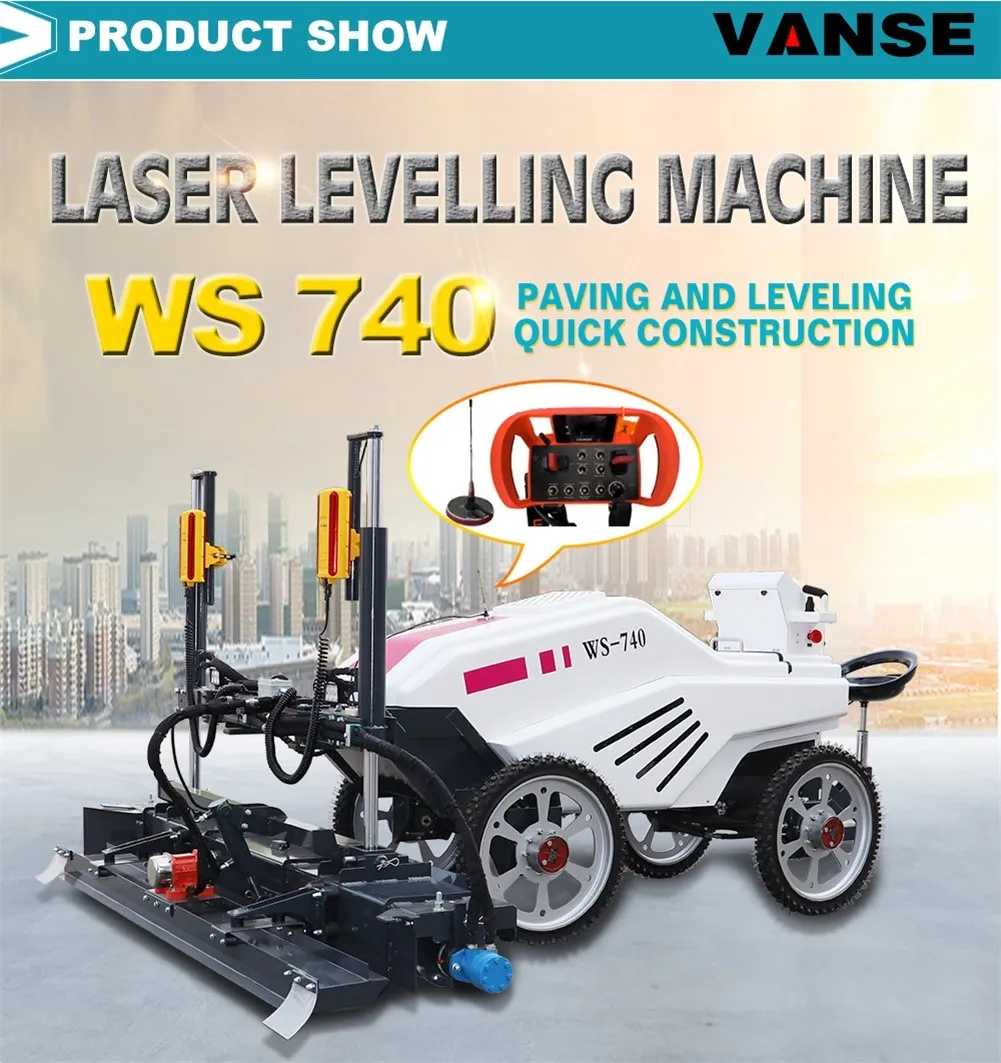
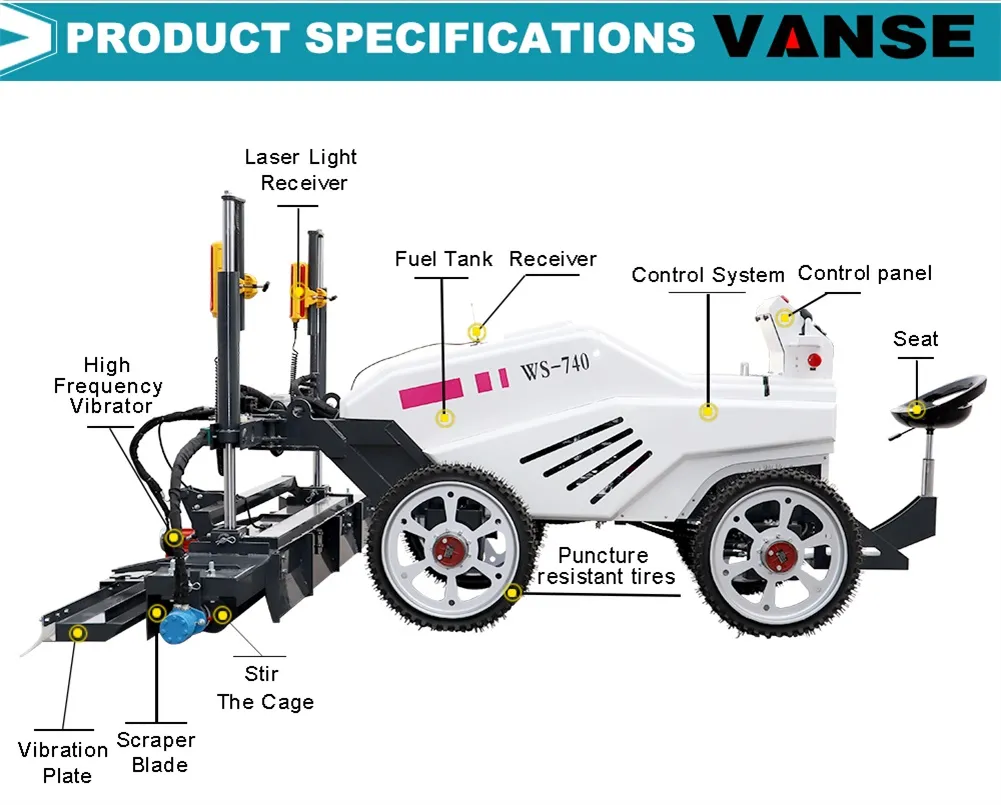
Concrete laser leveling machine is a kind of equipment used for concrete construction. Its working principle mainly involves laser technology and automatic control technology. The following is the working principle of concrete laser leveling machine
1. The laser transmitter emits a laser beam, which is projected onto the concrete surface.
2. The laser receiver receives the laser beam and detects the distance between the concrete surface and the laser beam.
3. After receiving the signal, the controller adjusts the horizontal movement mechanism and height adjustment mechanism of the leveler according to the received signal, so that the concrete surface and the laser beam are kept at a certain distance.
4. By constantly adjusting the position and height of the leveler, the concrete surface reaches the preset flatness requirements. Through this working principle, the concrete laser leveler can quickly and accurately complete the leveling work of the concrete surface, improving construction efficiency and quality.
Thanks to All the Friends Who Support and Trust Shandong Vanse Machinery Technology Co., Ltd.
If you want to know more about Shandong Vanse Machinery Technology Co., Ltd. or have any questions, please feel free to contact us:
Our Factory
Shandong Vanse Machinery Technology Co., Ltd.








Share this article

About the Author: Shandong Vanse Machinery Technology Co., Ltd.
Shandong Vanse Machinery Technology Co., Ltd. is a high-tech manufacturer specializing in concrete construction machinery, including laser screeds and related equipment. The company integrates R&D, production, and global sales, with products exported to over 60 countries and widely used in infrastructure projects worldwide.
Previous Post
Next Post
Related Articles
You Might Also Like
Detailed explanation of concrete laser leveling machine pouring leveling construction and leveling control matters
Detailed explanation of concrete laser leveling machine pouring leveling construction and leveling control matters 1. Preparation 1.1 After the base layer is processed, the equipment of the laser paver is debugged, and the fixed reference level point is drawn according to the original level point; the non-woven fabric is laid, the side formwork is supported, the laser transmitter is erected, and the ground level is introduced according to the original level point. Laser leveling machine. 1.2 Conveying concrete Commercial concrete is used, and the commercial concrete is transported to the entrance and exit of the garage by tank truck, and then transported to the construction site by a three-wheel dump truck. 1.3 Standard calibration Use a hand-held laser receiver to check the elevation of the floor, introduce the elevation into the laser paver, and adjust the reference point (±0.00) on the leveling machine. 2. Concrete paving Pouring steps: (1) After the formwork is supported, the warehouse should be cleaned one day in advance before pouring concrete, rinsed and soaked with water. When pouring is approaching, drain the open water and sweep the cement slurry or interface agent. At this time, no obvious water accumulation is strictly prohibited. If there is, it must be resolutely removed before paving concrete. (2) After the concrete is put down, it should be preliminarily leveled, and the leveling height should be 3 cm thicker than the elevation. Then level it with a laser paver. The corners that cannot be leveled can be leveled with a gasoline leveler or manually. (3) When the warehouse near the wall is being poured, after the leveling machine walks over, it must be scraped with a scraper in time. and so on. (4) For areas where concrete mixer trucks cannot be driven to the site, tractors should be used to transfer concrete. After the pouring is completed, the floor finishing construction begins when the concrete is initially set. (5) When the warehouse near the wall is being poured, it must be leveled with a scraper in time after the leveling machine has passed by. and so on. (6) For areas where concrete mixer trucks cannot be driven to the site, tractors should be used to transfer concrete. After the pouring is completed, the floor finishing construction begins when the concrete is initially set. 3. During construction, the laser signal received by the receiver of the laser paver (frequency of 10 times per second) automatically adjusts the elevation in real time to ensure that the construction elevation is always at the set standard. Because the laser transmitter is fixed after being set up, it can ensure that the construction of a large area of ground does not produce cumulative errors. 4. During the construction, the operator uses a hand-held laser receiver to detect the ground after the machine is constructed, and again ensures that the flatness error is within the controllable range. If there is anything you don't understand, you can consult us, and we will continue to answer for you.How to deal with the construction challenges of concrete laser leveling machines under special ground conditions?
To deal with the construction challenges of concrete laser leveling machines under special ground conditions, the following measures can be taken: 1. Strengthen technical training: Ensure that operators are familiar with machine performance and can operate accurately, especially when facing different ground conditions, they should be able to flexibly adjust machine parameters 2. Choose the appropriate construction method: Choose the appropriate construction method according to the ground conditions. For example, for soft soil ground, preloading method or filling method can be used; for hard ground, crushing method or milling method can be used 3. Strengthen on-site management: Ensure the construction site is orderly and avoid cross-operation and chaos. At the same time, strengthen material management to ensure the quality and supply of concrete and other materials 4. Use auxiliary equipment: As needed, auxiliary equipment such as vibrators and polishers can be equipped to improve the leveling quality and efficiency. 5. Regular maintenance and upkeep: Ensure the normal operation of the machine by regularly inspecting and maintaining key components, such as laser transmitters, sensors, etc. 6. Strengthen communication and collaboration: Maintain close communication with all parties such as design and construction, solve problems encountered during construction in a timely manner, and ensure smooth progress of construction. 7. Use intelligent technology: Consider using automation and intelligent technology, such as machine vision, intelligent control, etc., to improve construction efficiency and accuracy. 8. Pay attention to safety: During the construction process, you should always pay attention to safety and take necessary safety measures to ensure the safety of personnel and equipment. In short, dealing with the construction challenges of concrete laser leveling machines under special ground conditions requires comprehensive consideration of technology, management, collaboration and other aspects. By strengthening training, selecting appropriate construction methods, strengthening on-site management, using auxiliary equipment, regular maintenance and upkeep, strengthening communication and collaboration, adopting intelligent technology, and paying attention to safety, we can effectively deal with these challenges and improve construction efficiency and project quality.What factors should be considered when purchasing a concrete power trowel?
– Site size – For large-scale concrete construction sites, such as large industrial plants, warehouses, parking lots, etc., it is recommended to choose a ride-on trowel. The ride-on trowel has high working efficiency and can complete large-scale troweling work in a short time. For example, for the floor construction of a logistics warehouse with an area of more than 1,000 square meters, a ride-on trowel can quickly perform rough and fine grinding, effectively saving time and manpower. – For small-area indoor floors or local repair work, a walk-behind or handheld trowel is more suitable. For scenes such as home indoor floor decoration and small store floor repair, the walk-behind trowel is flexible to operate and can easily operate in narrow spaces and corners. – Ground flatness requirements – If the flatness and finish of the ground are extremely high, such as the floor of a high-end shopping mall, the clean workshop of an electronics factory, etc., a double-disc trowel needs to be considered. The double-disc trowel can better ensure the flatness of the ground. Its two trowel discs work at the same time, which can reduce the height difference of the ground and make the ground achieve a mirror-like effect. – For general ground, such as outdoor roads in ordinary houses, simple activity venues, etc., a single-disc trowel can meet basic troweling needs. – Electric trowel – Advantages: The electric trowel has the characteristics of low noise and no pollution, which is suitable for use indoors or in places with high requirements for environmental noise. Moreover, the operation of the electric trowel is relatively simple, and it is convenient to start and stop. You only need to turn on or off the power. – Disadvantages: The working range of the electric trowel is limited by the length of the power cord. If the construction site is large, the socket position may need to be changed frequently. In addition, the power of the electric trowel is relatively weak. When facing thicker or harder concrete, it may be insufficient. – Gasoline trowel – Advantages: The gasoline trowel has strong power, is suitable for various types of concrete, is not limited by the site power supply, and has good maneuverability. It can be freely moved and operated in remote construction sites or large open-air sites without power supply. – Disadvantages: Gasoline trowels are noisy and produce exhaust emissions, which have a certain impact on the environment and the health of operators. In addition, its maintenance cost is relatively high, and parts such as engine oil and spark plugs need to be replaced regularly. – Size of trowel disc – The larger the size of the trowel disc, the larger the coverage area of a single trowel and the higher the work efficiency. Generally, the diameter of the trowel disc of a hand-held trowel is between 600 and 1000 mm, and the diameter of the trowel disc of a ride-on trowel may reach more than 1000 mm. When choosing, determine the appropriate trowel disc size based on the size of the construction site and actual needs. – Speed range – The appropriate speed is one of the key factors to ensure the quality of troweling. Too high a speed may cause the trowel disc to wear too quickly and cause defects such as wavy lines on the ground; too low a speed will affect the troweling efficiency. The speed of a general trowel is between 70 and 150 rpm. The speed range of trowels of different brands and models may vary, and needs to be selected according to specific construction requirements. – Power – The power determines the working capacity of the trowel. For large trowels or when thicker and harder concrete needs to be processed, higher power is required. For example, the power of a ride-on trowel is generally between 5 and 10 horsepower, the power of a walk-behind trowel is usually between 3 and 5 horsepower, and the power of a handheld trowel is relatively low, generally between 1 and 3 horsepower. – The consumable parts of a trowel mainly include trowel blades, bearings, drive belts, etc. When purchasing a trowel, consider whether these consumable parts are in sufficient supply and whether they are easy to purchase. For example, some niche brands of trowels may have consumable parts that are difficult to find, making repair and replacement inconvenient. At the same time, you should also compare the prices of consumable parts of different brands and models of trowel machines, and try to choose a trowel machine with lower consumable parts costs, so as to reduce the cost of later use and maintenance. – Brand reputation: Choosing a trowel machine from a well-known brand can usually guarantee the quality and performance of the product. Well-known brands have stricter standards in product research and development, production processes, quality control, etc., and their products are more reliable. For example, some brands with many years of production experience in the field of construction machinery have had long-term inspections on the market and received good user feedback. – After-sales service: Good after-sales service is an important factor in ensuring the normal use of the trowel machine. After-sales service includes product warranty period, timeliness and professionalism of maintenance services, technical support, etc. When purchasing, you should understand whether the manufacturer provides door-to-door maintenance services, the speed of supply of maintenance parts, and whether there is a professional customer service team to answer questions encountered by users during use.