Technical Knowledge
What is the principle of leveling machine
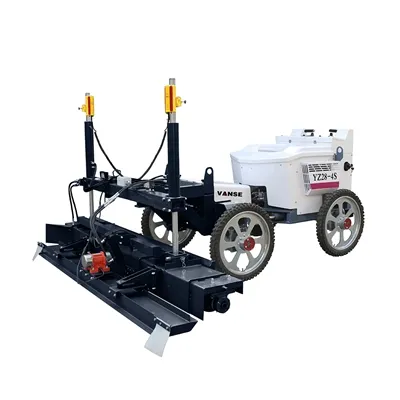
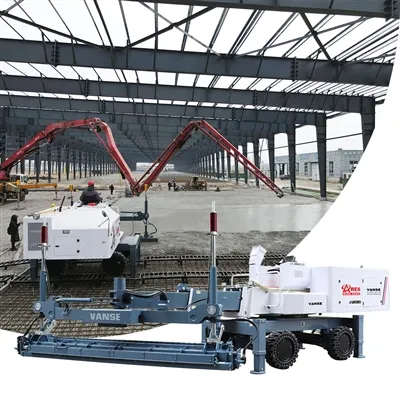
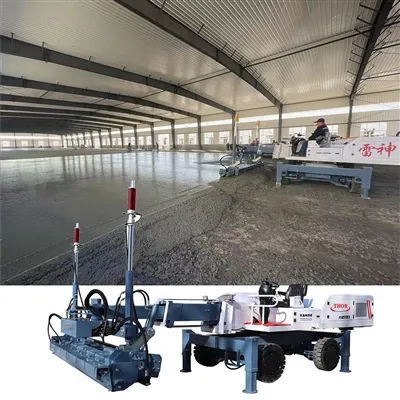
The principle of the leveling machine is mainly to use laser control technology, closed-loop control technology and high-precision hydraulic system, and then use the computer to adjust the control, so that the scraper and vibration instrument of the leveling head can complete most of the procedures in the project, realizing one-time Through this, the computer can change the altitude standard ten times per second, and the number of vibrations per minute can reach about four thousand times.
Specifically, the leveling machine emits the horizontal line through the laser transmitter, the laser receiver receives the horizontal line, and transmits the signal to the control panel, and the operator adjusts the height and angle of the leveling head according to the prompts of the control panel, so that the ground reaches The specified levelness and verticality. High-precision hydraulic systems and computer-regulated controls play an important role in the leveling process. The high-precision hydraulic system can ensure the precise control of the height and angle of the scraper of the leveling machine head and the vibrating instrument, and the computer adjustment control can realize one-time pass to ensure the flatness and smoothness of the ground.
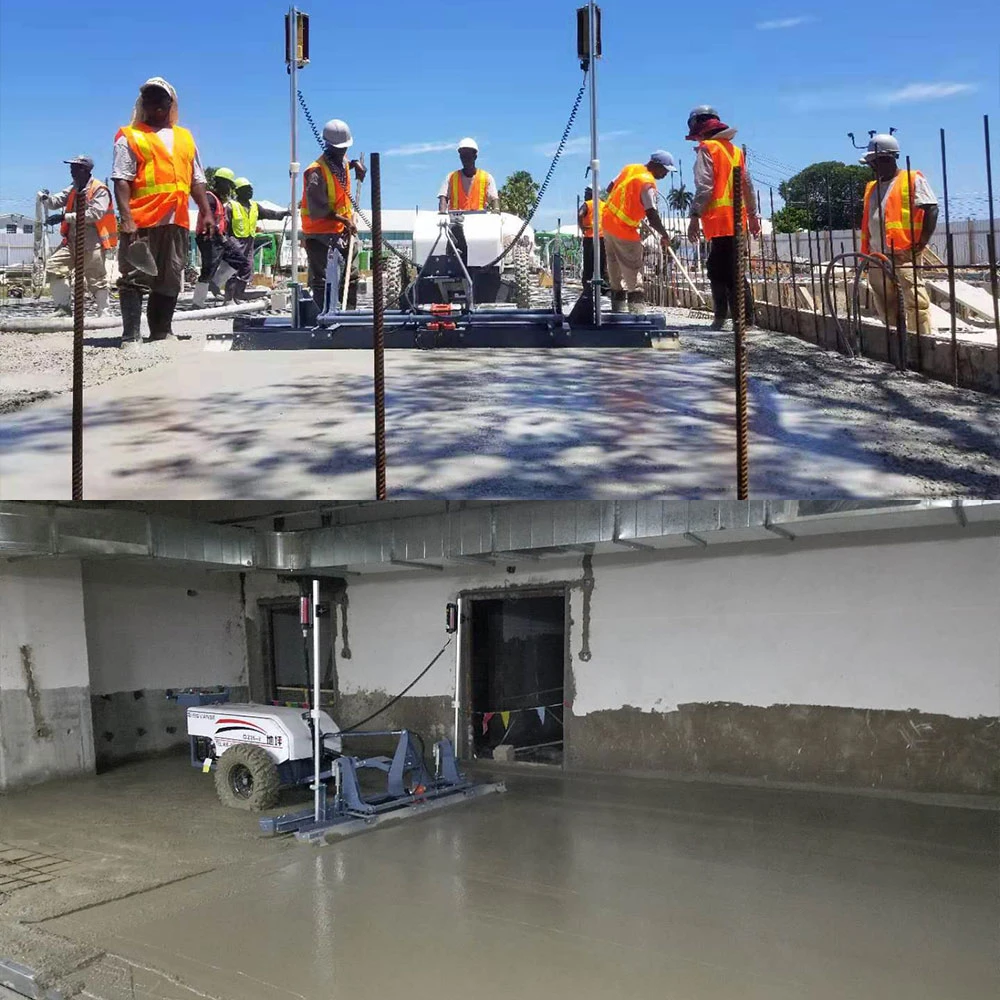
—-Compared with the traditional manual leveling method, the leveling machine has the following advantages:
High precision, able to achieve high-precision levelness and verticality control;
The speed is fast, which can greatly improve the leveling efficiency;
Good quality, can ensure the flatness and smoothness of the ground;
The labor intensity is small, which can reduce the labor intensity of the operator.
Therefore, levelings are widely used in construction, roads, bridges and other fields.
Thanks to All the Friends Who Support and Trust Shandong Vanse Machinery Technology Co., Ltd.
If you want to know more about Shandong Vanse Machinery Technology Co., Ltd. or have any questions, please feel free to contact us:
Our Factory
Shandong Vanse Machinery Technology Co., Ltd.








Share this article

About the Author: Shandong Vanse Machinery Technology Co., Ltd.
Shandong Vanse Machinery Technology Co., Ltd. is a high-tech manufacturer specializing in concrete construction machinery, including laser screeds and related equipment. The company integrates R&D, production, and global sales, with products exported to over 60 countries and widely used in infrastructure projects worldwide.
Previous Post
Next Post
Related Articles
You Might Also Like
What benefits and drawbacks does a concrete laser leveling machine have?
– Using the laser system for positioning and control, the horizontality and elevation control of the concrete surface can be accurately achieved, and the error can be controlled within ±3 mm, which is much higher than the accuracy of traditional manual leveling. – The laser signal has a wide coverage range, which can ensure the consistency of flatness in a large construction area and avoid local unevenness. – Mechanized operation replaces manual work, which can quickly complete the paving, leveling and vibration of concrete, and can process hundreds of square meters per hour, which is 3-5 times more efficient than traditional methods. – The equipment is relatively easy to operate, and only a few operators are needed to complete the entire construction process, reducing labor costs and management difficulties. – High-precision leveling can reduce the waste of concrete and avoid excessive use of materials or rework and repair due to inaccurate leveling. – Although the equipment purchase cost is high, in the long run, efficient construction progress and reduced labor costs can reduce the overall construction cost. – Vibration is carried out simultaneously during the leveling process to make the concrete density uniform, reduce quality problems such as hollowing and cracks, and improve the bearing capacity and durability of the ground. – The flat surface provides a good foundation for subsequent decoration projects (such as laying floor tiles, epoxy flooring, etc.), reducing the difficulty and cost of subsequent construction. – It can be used in large-scale concrete construction scenes such as large factories, warehouses, parking lots, airport runways, squares, etc., especially suitable for projects with high flatness requirements. – It can adapt to concrete pouring of different thicknesses, from thin cushion layers to thick foundations. – The purchase price of a laser leveling machine usually ranges from hundreds of thousands to millions of yuan. For small construction companies or short-term projects, the initial investment pressure is relatively large. – The equipment needs regular maintenance and upkeep. For example, the maintenance costs of components such as laser transmitters and hydraulic systems are relatively high. – Before construction, it is necessary to ensure that there is no strong electromagnetic interference around the site to avoid affecting the reception and transmission of laser signals. – For areas with complex terrain or obstacles (such as special-shaped structures and narrow spaces), the operation of the equipment will be restricted, and manual assistance may be required to complete local construction. – The debugging and operation of the equipment requires professionals. If the operator is not familiar with the laser system and equipment performance, it may affect the construction accuracy and efficiency. – Once the equipment fails or the laser system fails, professional technicians are required to repair it, which may cause construction interruption. – The equipment is large in size and heavy in weight. Special vehicles are required for transportation, the transfer cost is high, and a certain amount of space is required when moving within the site. – The equipment needs to consume diesel or electricity when running, which consumes a lot of energy. At the same time, the engine and hydraulic system will produce a lot of noise, which may be restricted when working in residential areas or noise-sensitive areas. Concrete laser leveling machines are widely used in large-scale concrete projects due to their high precision, high efficiency and high-quality construction advantages, but their high cost and technical requirements also make them have certain limitations in small projects or complex scenes. Construction units can weigh their advantages and disadvantages according to the project scale, precision requirements and budget, and choose the appropriate construction equipment. Click the below to jump immediately!!! ARMOUR JOINT CONCRETE LEVELING MACHINE LIGHT TOWER POWER TROWEL SLIPFORM MACHINE STEEL FIBER TOPPING SPREADER TRACKED MINI DUMPERWhat is the precaution for daily maintenance and care of the hydraulic system of the concrete laser leveling machine?
– Check the hydraulic oil level regularly, park the เครื่องปรับระดับคอนกรีตด้วยเลเซอร์ on a level surface, turn off the engine and check to ensure that the oil level is within the normal scale range. If the oil level is found to be too low, add hydraulic oil that meets the equipment requirements in time. Different models of concrete laser leveling machines, such as vanse concrete laser leveling machine or mini concrete paver leveling machine, may have different requirements for hydraulic oil, and must be selected strictly according to the instructions. – Pay attention to the quality of the oil. Hydraulic oil will age and deteriorate after long-term use. If the oil is found to be black, has a pungent smell, is turbid or has precipitation, it should be replaced immediately even if the specified replacement cycle has not been reached. When replacing, drain the old oil thoroughly, clean the oil tank and filter, and then add new oil. At the same time, pay attention to the equipment with higher vanse laser leveling price, and use high-quality hydraulic oil to ensure the performance and life of the hydraulic system. – The filter in the hydraulic system plays a key role and should be replaced regularly. Generally speaking, the filter needs to be replaced every certain number of working hours or every few months. The specific interval can be referred to the equipment manual. For places with harsh working environment and large dust, the replacement cycle should be appropriately shortened to ensure the cleanliness of the hydraulic oil and protect the precision parts of the hydraulic system. – When replacing the filter, carefully check whether there are impurities such as metal particles and fibers on the filter. If a large amount of impurities are found, it may mean that there are worn parts inside the hydraulic system, which requires further inspection and repair to avoid the expansion of the fault and affect the normal use of the เครื่องปรับระดับคอนกรีตด้วยเลเซอร์ or Extendedoras de hormigón. – Check the working status of the hydraulic pump and hydraulic motor, listen to whether the running sound is normal, and whether there is abnormal vibration and noise. Observe whether its working pressure is stable and whether it is within the specified range. If the pressure is unstable or there is an abnormal sound, it may be due to wear of the internal parts of the pump or motor, damage to the seal, etc., which needs to be repaired or replaced in time to ensure the stable power output of the Máy cán sàn bê tông bằng Laser hydraulic system. – Check whether there is oil leakage in the oil pipe and joints, and whether the oil pipe is damaged, aged, cracked, etc. If the oil pipe is found to be damaged, it should be replaced in time; loose joints should be tightened in time to prevent oil leakage from causing the pressure of the hydraulic system to drop and affect the normal operation of the equipment. At the same time, keep the surface of the system clean, clean up oil and dust in time to prevent them from entering the hydraulic system. In short, doing a good job of daily maintenance and maintenance of the hydraulic system of the concrete laser leveling machine can effectively extend the service life of the equipment, improve work efficiency, reduce maintenance costs, and ensure that the equipment can operate stably and reliably under various working conditions.How to inspect and accept the double-layer steel mesh after laying in the concrete pavement?
– Steel mesh surface: Observe whether there are obvious rust, oil stains, dirt and other pollutants on the surface of the steel mesh. If such conditions exist, it will affect the bonding between the steel bars and the concrete and needs to be cleaned. – Mesh flatness: Check whether the steel mesh is flat and whether there is warping or deformation. Observe with the naked eye or pull the wire to check. If the mesh is not flat, it may cause insufficient thickness of the local steel bar protective layer or uneven steel bar spacing during concrete pouring. – Cross-point binding: Check whether the steel bar intersection is firmly tied and whether the wire is loose or missing. It can be checked by manually pulling the steel bar intersection. For loose or missing parts, they should be re-tied in time. – Steel bar spacing: Use a steel tape measure to randomly select multiple parts to measure the spacing of steel bars, including the horizontal and longitudinal steel bar spacing of the same layer of steel mesh, and the spacing between the upper and lower layers of steel mesh. Check whether it meets the design requirements, and the allowable deviation is generally ±10mm. – Rebar position: Check whether the steel mesh is laid according to the design position, whether it deviates from the center line or exceeds the specified laying range. It can be determined by measuring the distance between the edge of the steel mesh and the control line drawn on the pavement base, and the deviation should be controlled within the allowable range. – Protective layer thickness: Use a steel bar protective layer thickness tester for detection, and measure at multiple points at different positions to ensure that the thickness of the concrete protective layer meets the design and specification requirements. Generally, the thickness of the steel bar protective layer of concrete pavement is between 30-50mm, and the allowable deviation is ±5mm. – Binding connection: For steel mesh connected by binding, check whether the number and spacing of binding points meet the requirements. Generally, the wire buckles of adjacent binding points are required to be in an eight-shaped shape to prevent the mesh from being skewed and deformed. At the same time, check the specifications and strength of the binding wire to ensure that it can withstand the tension during concrete pouring. – Welding connection: If welding connection is used, check the welding quality, including the length, height, and fullness of the weld. The weld surface should be smooth, without obvious defects such as pores, slag inclusions, cracks, etc. Use ultrasonic or radiographic testing methods to perform non-destructive testing on welds in important parts to ensure that the welding quality meets the requirements. – Material quality certification documents: Check the quality certificate, inspection report and other materials of the steel bars to ensure that the variety, specification, performance, etc. of the steel bars meet the design requirements. At the same time, check the qualification certificate of the steel mesh processing manufacturer to ensure that the product quality is traceable. – Construction records: Check the construction records of the laying of the steel mesh, including the cutting size, processing process, laying time, laying personnel and other information of the steel mesh, to ensure that the construction process has detailed records for quality traceability and problem analysis. – Concealed project acceptance records: Check whether the concealed project acceptance records are complete and whether the acceptance personnel have signed and confirmed. The records should record in detail the laying of the steel mesh, the inspection results, and the rectification of existing problems. During the inspection and acceptance process, if any problems are found, they should be recorded in time and the construction unit should be required to make rectifications. After the rectification is completed, acceptance will be carried out again until it meets the requirements. Only after acceptance can the next construction process be carried out. AMOUR JOINT CONCRETE LASER LEVELING MACHINE LIGHT TOWER POWER TROWEL STEEL FIBER TRACKED MINI DUMPER