Technical Knowledge
What is the future development of concrete laser leveling machines?

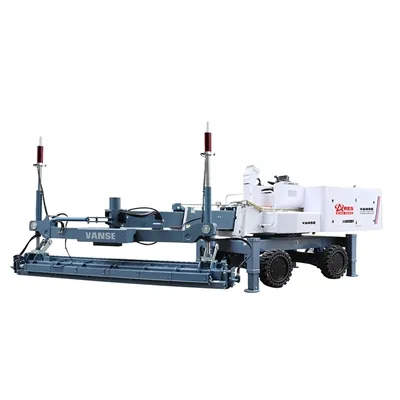
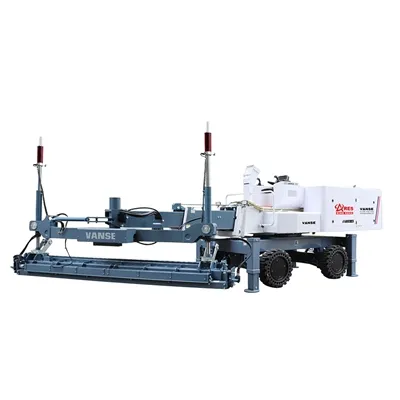
Concrete laser leveling machine is a high-tech construction equipment that has become increasingly popular in recent years. It uses laser technology to automatically control the leveling and leveling process of concrete. It has significant advantages such as high efficiency, high quality, and low cost. In the future, concrete laser leveling machines have broad development prospects and will achieve greater breakthroughs and applications in many aspects.
First, the concrete laser leveling will further improve construction efficiency. With the continuous acceleration of urbanization, construction period requirements for construction are becoming more and more stringent. Due to its high degree of automation, the concrete laser leveling has played an important role in shortening the construction period and improving construction efficiency. In the future, by further optimizing the equipment structure and control system, the construction efficiency of the concrete laser leveling will be further improved and the construction schedule requirements can be better met.
Secondly, concrete laser leveling machines will be more intelligent. With the continuous development of artificial intelligence, Internet of Things and other technologies, concrete laser leveling machines will gradually have more intelligent functions. For example, by combining with Building Information Modeling (BIM) technology, concrete laser levelings can achieve real-time monitoring and data management of the construction process, further optimizing the construction process and improving construction quality and efficiency. At the same time, by combining with intelligent equipment such as robots and drones, concrete laser levelings will achieve a more automatic and intelligent construction method, reducing manual intervention and reducing construction costs.
Third, concrete laser leveling machines will have richer functions. At present, concrete laser leveling machines are mainly used for leveling and leveling concrete, but in the future it will have more functions. For example, by adding additional equipment, the concrete laser leveling can realize automatic distribution, lightening, compaction and other operations of concrete, achieving one-stop concrete construction. In addition, by being equipped with appropriate sensors and detection equipment, the concrete laser leveling will be able to perform quality inspections such as concrete strength testing and crack detection, providing a more comprehensive guarantee for construction quality.
Finally, the application range of concrete laser levelings will be further expanded. At present, concrete laser levelings are mainly used in the construction of concrete structures such as buildings, bridges, and tunnels, but in the future its application scope will expand to more fields. For example, in road construction, concrete laser leveling machines can realize automatic leveling and compaction of road surfaces; in the agricultural field, concrete laser leveling machines can realize leveling, compaction and other operations of farmland, improving agricultural production efficiency and quality. .
In short, future concrete laser leveling machines will develop in a more efficient, intelligent, and multi-functional direction, providing more high-quality, efficient, and intelligent solutions for building construction. With the continuous advancement of technology and the expansion of application scope, concrete laser levelings will play an important role in more fields and make greater contributions to promoting the modern development of the construction industry.
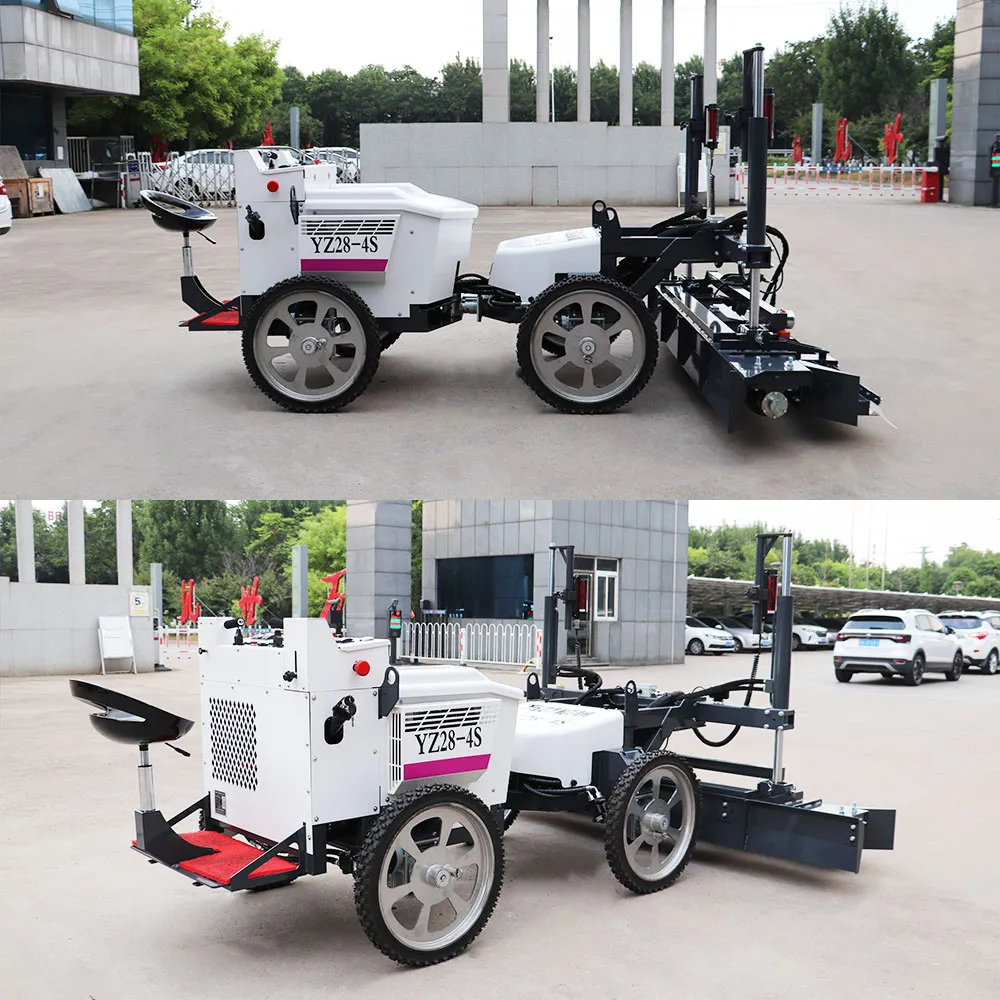
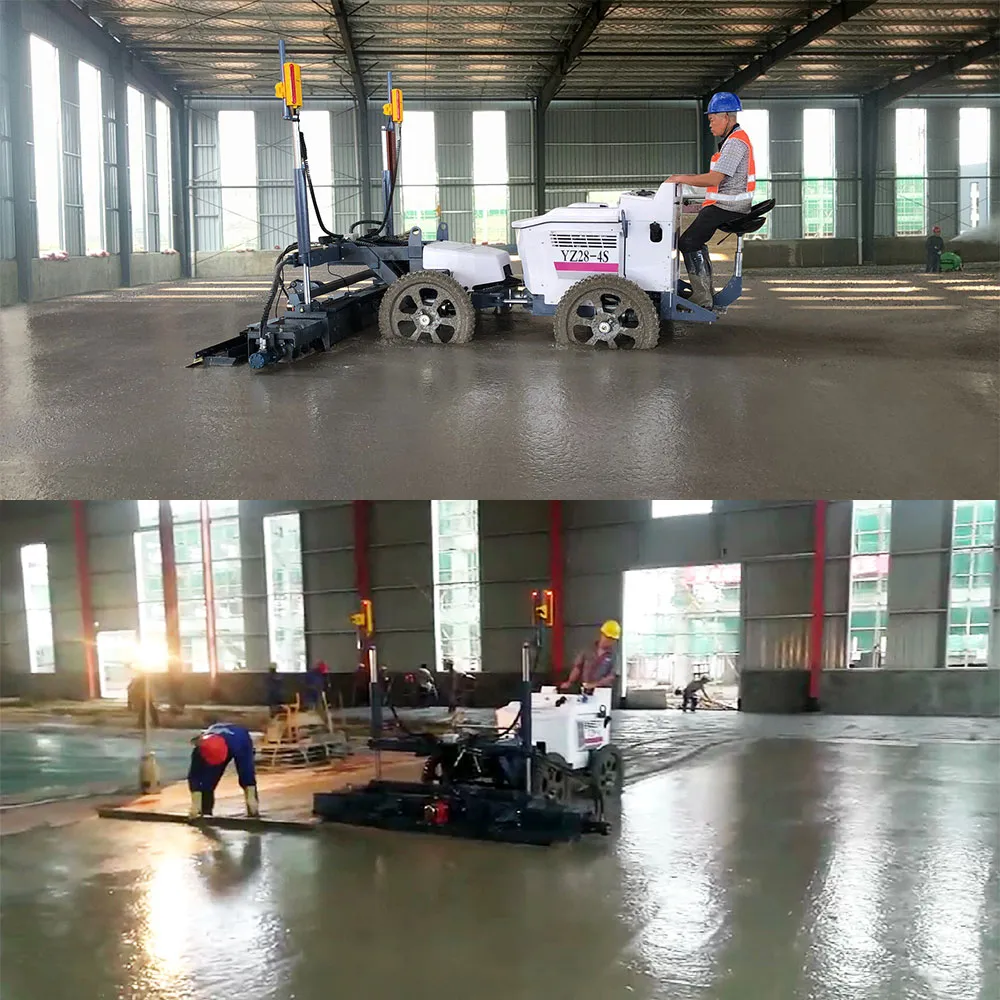
Thanks to All the Friends Who Support and Trust Shandong Vanse Machinery Technology Co., Ltd.
If you want to know more about Shandong Vanse Machinery Technology Co., Ltd. or have any questions, please feel free to contact us:
Our Factory
Shandong Vanse Machinery Technology Co., Ltd.








Share this article

About the Author: Shandong Vanse Machinery Technology Co., Ltd.
Shandong Vanse Machinery Technology Co., Ltd. is a high-tech manufacturer specializing in concrete construction machinery, including laser screeds and related equipment. The company integrates R&D, production, and global sales, with products exported to over 60 countries and widely used in infrastructure projects worldwide.
Previous Post
Next Post
Related Articles
You Might Also Like
Quality Control And Precautions In The Construction Process Of Concrete Laser Leveling Machine
Quality Control And Precautions In The Construction Process Of Concrete Laser Leveling Machine Concrete laser leveling machine is an indispensable equipment in construction machinery, and it is indispensable in the construction of building floors. Doing the following points well during construction will have a great effect on improving the productivity and construction quality of the concrete laser leveling machine. 1. Line setting and leveling on the wall (column): Since the laser leveling machine on the side of the wall cannot be touched, manual leveling is required within 40 cm along the side of the wall (formwork), so line setting is required as a reference for manual leveling . 2. Set up formwork (steel formwork is recommended) along the scope of pouring on the same day, reserve holes for dowel rods, and control the elevation of the formwork to avoid large deviations in the flatness of the joints of different warehouses. 3. Set templates or thin sheets along the walls, equipment foundations, columns, etc. (thickness and position are determined according to design requirements), and leave separation joints to avoid cracking of the concrete floor. 4. Laser transmitter erection: (1) The laser transmitter should be erected at the best position, and there should be no clips to be tightened; (2) There should be no large vibration sources around; (3) Reasonably set the concrete paving direction and leveling direction, and determine a reasonable construction walking route of the leveling machine to avoid leveling blind spots. (4) Feeding: The concrete conveying speed should be guaranteed to be a certain amount, and the feeding speed should be uniform, and the pause interval should be reduced in the middle to prevent cold joints and affect the progress of the project. The slump and initial setting time of the concrete sent to the site each time must be consistent. The concrete slump should be controlled at 14~16cm, and the initial setting time should be controlled at about 3 hours. Note: Some content of this quality control is for reference only, and the actual construction should be formulated according to the floor design requirements and the characteristics of the construction site.What is the market prospect of concrete trowel machine?
1. Market demand analysis With the rapid development of the construction industry, the market demand for concrete trowels is also increasing. At present, concrete trowelling machines are mainly used in construction processes such as smoothing, compacting and polishing concrete surfaces such as floors, walls, and ceilings of buildings. With the acceleration of urbanization and the continuous advancement of infrastructure construction, the market demand for concrete trowels will continue to grow. At the same time, as people's requirements for the living environment continue to increase, the requirements for the appearance and internal quality of buildings are also getting higher and higher. Therefore, the market demand for concrete trowels will become more diversified, and they need to meet the needs of different customers and provide more personalized and high-quality construction services. 2. Technology development trends With the continuous development of science and technology, the technology of concrete trowels is also constantly improving. In the future, concrete trowels will be more efficient and intelligent to adapt to higher quality and higher efficiency construction requirements. 1. Efficiency: Future concrete trowel machines will adopt more advanced drive systems and transmission systems to improve the operating speed and stability of the equipment. At the same time, advanced control technology is used to realize automated and intelligent operation of equipment and improve construction efficiency and quality. 2. Intelligentization: With the continuous development of artificial intelligence, Internet of Things and other technologies, future concrete trowels will be more intelligent. By introducing sensors, cameras and other equipment, real-time monitoring and feedback of equipment operating status and construction quality can be achieved, the self-diagnosis and repair capabilities of equipment can be improved, downtime can be reduced, and equipment utilization and construction efficiency can be improved. 3. Greening: With the continuous improvement of environmental awareness, the environmental protection requirements for concrete trowels are also increasing. Future concrete trowels will be made of environmentally friendly materials to reduce environmental pollution. At the same time, the equipment will have the characteristics of low noise and low energy consumption to reduce energy consumption and operating costs. In addition, the equipment will be driven by renewable energy sources, such as solar energy, wind energy, etc., to reduce dependence on traditional energy sources. 4. Modularization: Future conc rete trowel machines will adopt modular design to facilitate equipment maintenance and replacement. At the same time, the equipment will have multiple working modes and parameter adjustment functions to adapt to different construction environments and requirements. 3. Industry competition landscape Currently, there are multiple brands and models of concrete trowel machines on the market, and competition is fierce. The main competitors include well-known domestic brands and foreign brands. Domestic brands have advantages in price and market share, while foreign brands have advantages in technical level and product quality. In the future, as market competition intensifies and technology levels continue to improve, the concrete trowel market will see more intense competition. Enterprises need to continuously improve product quality and technical level, strengthen brand building and marketing, in order to win more market share. 4. Impact of policies and regulations Policies and regulations also have a greater impact on the concrete trowel market. The government's regulation and management of the construction industry will promote the healthy development of the concrete trowel market. At the same time, the government's increased environmental protection requirements will promote the development of concrete trowels in a green and environmentally friendly direction. In addition, the government's support and promotion of new technologies and products will also have a positive impact on the concrete trowel market. 5. Forecast of future development trends According to the analysis of market demand and technology development trends, the compact soil trowel market will show the following development trends in the future: 1. Efficiency and intelligence have become mainstream: In the future, concrete trowel machines will be more efficient and intelligent, meeting the construction requirements of higher quality and higher efficiency. 2. Greening and environmental protection have become a trend: With the improvement of environmental awareness, concrete trowels will pay more attention to the improvement of environmental performance in the future and promote the market to develop in the direction of green and environmental protection. 3. Increased demand for personalized customization: In the future, consumers will have higher and higher demands for personalization. Concrete trowel machines will pay more attention to personalized customization services to meet the needs of different customers. 4. Brand competition will become more intense: As market competition intensifies and technology levels continue to improve, brand competition will become more intense, and companies need to strengthen brand building and marketing to win market share.How to choose a concrete leveling machine
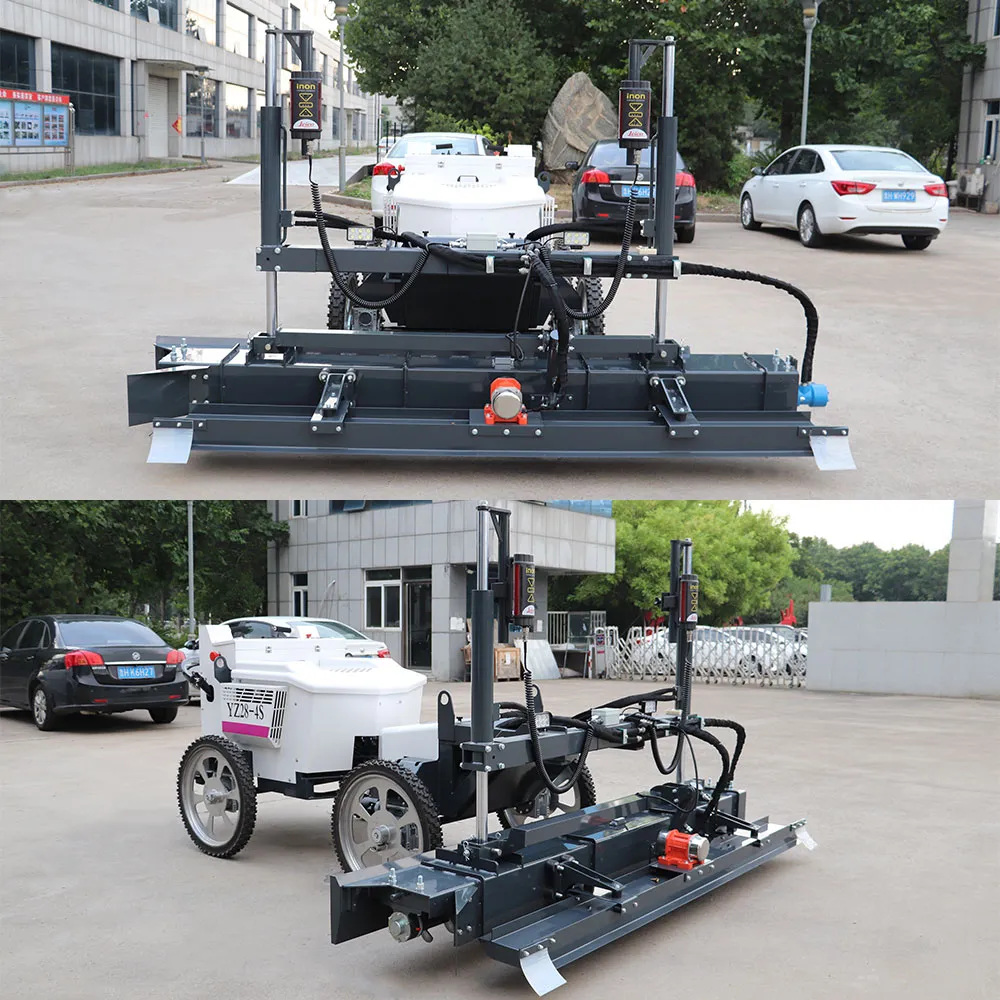
What are the advantages of the leveling machine? High precision laser elevation control system is adopted, which integrates three functions of measurement, leveling and surface finishing, and the efficiency is higher than that of manual work; Compared with manual robot construction, the leveling robot has lighter weight and smaller size, and can be constructed on double-layer reinforcement mesh and narrow room; The leveling accuracy is high. The basement construction can directly meet the levelness / flatness requirements of the concrete leveling layer at the construction stage of the main structure. It can be formed at one time, directly omit the subsequent floor construction, speed up the progress and save the cost. YZ30-4E Actual Picture of Construction Site With its unique two degree of freedom adaptive system, the machine can ensure that the machine can work stably on reinforced concrete; It can automatically set the leveling planning path and realize the automatic leveling construction of concrete ground. Compared with the actual construction, its work efficiency and accuracy are much higher than those of manual work. DZ25-2 actual picture of construction site According to the R & D team, the laser leveling machine project team has carried out many iterative updates, and finally improved the leveling accuracy of the machine from 11 mm to less than 3 mm, and the efficiency is synchronously improved by 2-3 times. YZ28-4S actual picture of construction site Vanse laser leveling machine series products have been introduced to the market for 10 years. After the test of tens of thousands of customers around the world, they have been highly praised by everyone. The R & D team of Shandong Vanse Machinery Technology Co., Ltd. will continue to strive for higher efficiency, smaller error and more intelligent operation mode, and strive to provide customers with more high-quality mechanical products.