Technical Knowledge
Can self-leveling cement repair concrete floors?
Self-leveling cement is a special concrete material with the characteristics of strong fluidity, high strength, low shrinkage and high density. Therefore, it can be used to repair cement floors, but there are some issues that need to be paid attention to.
First of all, for cement floors that are not seriously damaged, you can clean the floor first, and then use an appropriate amount of self-leveling cement to repair it. Before repairing, you can mix the self-leveling cement with an appropriate amount of water, stir evenly, and then pour it on the damaged floor to allow it to level naturally. After the self-leveling cement dries, you can get a repaired flat floor.
Secondly, for severely damaged cement floors, the damaged floors need to be completely removed first and then repaired with self-leveling cement. Before repairing, the ground needs to be leveled first, using cement mortar or concrete. After leveling, mix the self-leveling cement with an appropriate amount of water, pour it on the ground, and let it level naturally. After the self-leveling cement dries, you can get a repaired flat floor.
It should be noted that the amount of self-leveling cement should not be too much, otherwise it will increase the thickness of the ground and affect its service life. At the same time, the ground needs to be cleaned and leveled before repairing, otherwise the repair effect will be affected.
In short, self-leveling cement can be used to repair cement floors, but it needs to be selected and used according to the actual situation. If used properly, good repair results can be obtained and the service life of the floor can be extended.
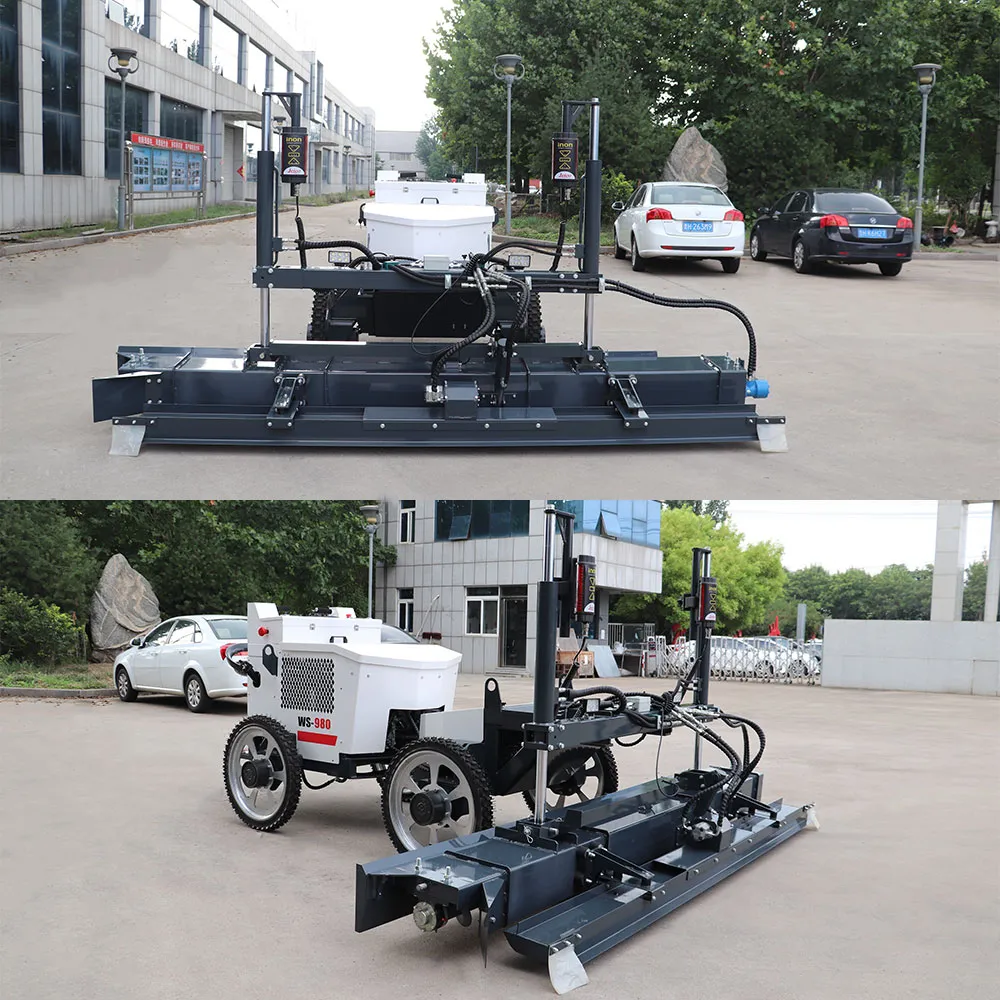
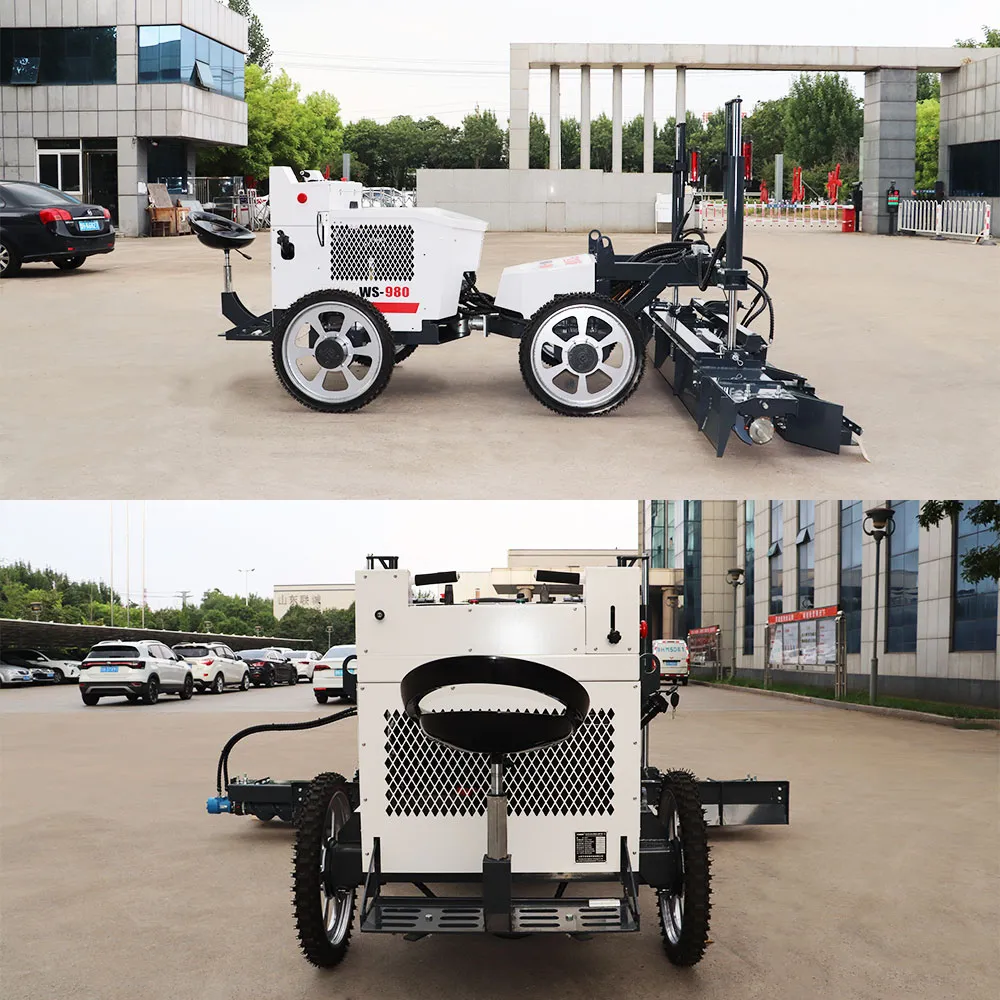
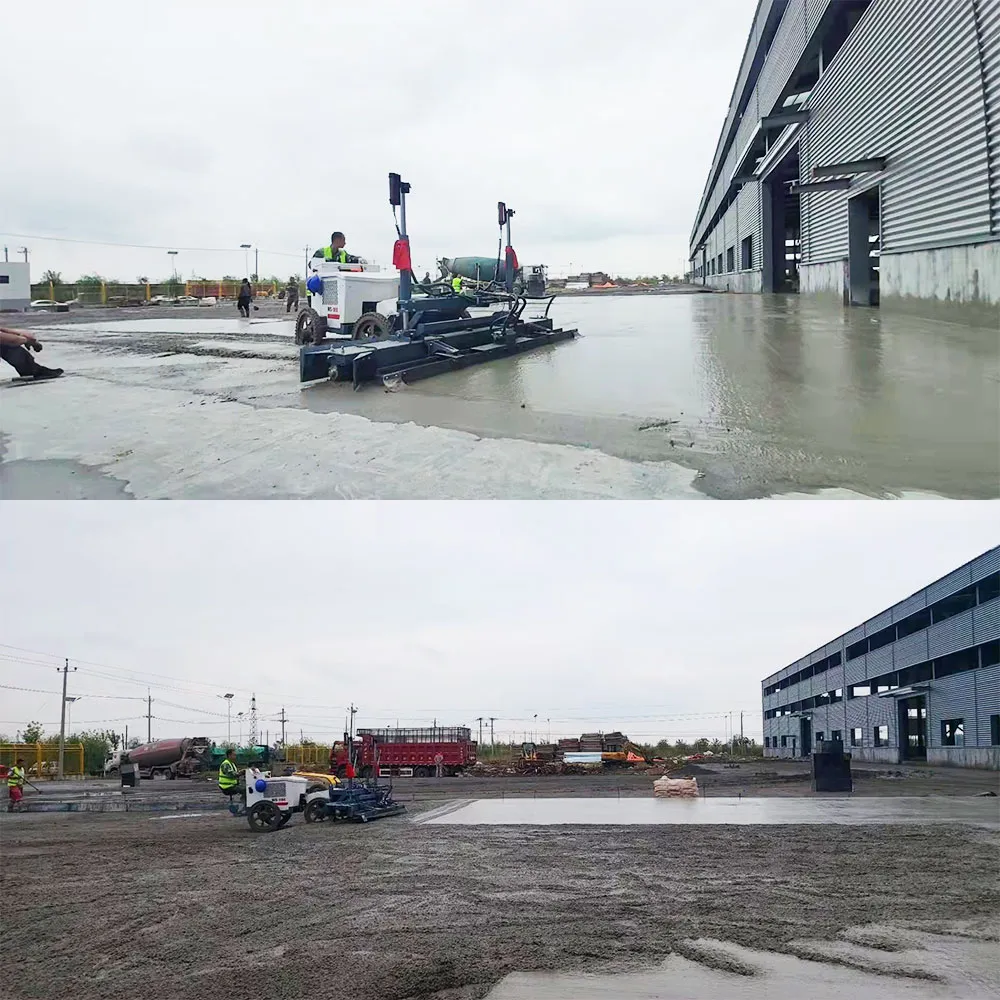
Thanks to All the Friends Who Support and Trust Shandong Vanse Machinery Technology Co., Ltd.
If you want to know more about Shandong Vanse Machinery Technology Co., Ltd. or have any questions, please feel free to contact us:
Our Factory
Shandong Vanse Machinery Technology Co., Ltd.








Share this article

About the Author: Shandong Vanse Machinery Technology Co., Ltd.
Shandong Vanse Machinery Technology Co., Ltd. is a high-tech manufacturer specializing in concrete construction machinery, including laser screeds and related equipment. The company integrates R&D, production, and global sales, with products exported to over 60 countries and widely used in infrastructure projects worldwide.
Previous Post
Next Post
Related Articles
You Might Also Like
How to ensure the safety of laser leveling machine during construction?
– Reasonable center of gravity design: The laser leveling machine should be designed to ensure that the center of gravity is low and reasonably distributed, so that it can effectively prevent rollover during operation, especially when working on uneven ground or when the machine is turning. Before the equipment is put into use, it is necessary to check whether its center of gravity related parameters meet the design requirements. For example, for large laser leveling machines, the center of gravity is located in the center area of the bottom of the machine by reasonably arranging the positions of components such as the engine and working device. – Good support device: The support legs or stabilizers of the machine should be able to work normally. Before construction, check whether the support legs are flexible and the locking device is reliable. When the laser leveling machine is working on a slope or does not move for a long time for fixed-point construction, a stable support device can prevent the machine from accidentally sliding or shaking. – Guardrails and protective covers are installed in place: For the rotating parts, transmission parts (such as sprockets, pulleys, etc.) of the machine, and moving parts such as scrapers, sturdy guardrails and protective covers should be installed. These protective devices should be able to withstand certain external impacts and be firmly installed to prevent loosening due to vibration and other reasons during construction. For example, a guardrail should be set at the edge of the scraper, and the height should meet safety standards, which can prevent operators from accidentally touching the scraper without affecting the construction line of sight. – Regularly check the wear of mechanical parts: Mechanical parts will wear after long-term use. For example, excessive wear of the scraper may reduce work efficiency and even cause the risk of breakage. The degree of wear of the parts should be checked regularly, and the parts should be replaced in time according to the wear limit. For example, an inspection plan should be formulated to check key parts such as scrapers and travel wheels every certain working hours (such as 100 hours) and record wear data. – Operation skills training: Operators should receive professional training, be familiar with the functions of various operating buttons and handles of the laser leveling machine, and master the correct operation methods. The training content includes various aspects of the machine's start, stop, travel, and leveling operations. For example, during the training process, operators should practice multiple times in an environment that simulates the construction site to master the operating skills under different ground conditions. – Safety knowledge education: Operators are given comprehensive safety knowledge education, including possible safety risks of the equipment and safety precautions at the construction site. For example, operators are informed that when the laser leveler is working, people around should keep a certain safe distance to prevent being hit by the machine; when the equipment is abnormal, how to properly make an emergency stop and other safety knowledge. At the same time, operators should obtain the corresponding operation qualification certificate to ensure that they have the ability to operate safely. – Safety helmets and protective shoes: Operators must wear safety helmets that meet the standards to prevent being hit on the head by falling objects from heights at the construction site. Protective shoes should have anti-slip and anti-smashing functions. When walking in the working area of the machine, avoid slipping or being hit by heavy objects on the feet. – Earplugs and goggles: The laser leveler will generate noise during operation, and long-term exposure may cause damage to the operator's hearing, so earplugs are required. At the same time, in certain construction environments, such as cutting materials or when there is a possibility of foreign objects splashing, goggles can protect the eyes from injury. – Clearing site debris: Before construction, the construction site should be thoroughly cleaned to remove stones, wood blocks, metal fragments and other debris on the ground. These debris may affect the normal operation of the laser leveler and even damage the parts of the machine. For example, when constructing on a site after the demolition of an old building, carefully clean up the construction waste and ensure that the ground is level before starting construction. – Marking underground obstacles: If there are obstacles such as underground pipelines and cables on the construction site, they should be clearly marked on the ground. Warning stakes, colored markings and other methods can be used to remind operators to avoid them. During the construction process, communicate with relevant departments to obtain detailed location and depth information of underground obstacles to avoid the machine from damaging underground facilities during construction and causing safety accidents. – Setting safety distance: Set a safety distance around the laser leveler. Generally, a safety range of at least 2-3 meters is maintained around the machine. Unrelated personnel are prohibited from entering this range to prevent being hit by the machine or injured by splashing materials during construction. Warning tapes, fences and other facilities can be used for isolation. – Divide the construction area: For large construction sites, divide different construction areas, such as concrete pouring area, leveling area, material stacking area, etc. Maintain reasonable passages between each area to ensure that material transport vehicles and construction equipment can pass safely. At the same time, mark the degree of danger in different areas, such as marking warning information such as "Beware of the collapse of stacked materials" in the material stacking area. – Insulation inspection: Regularly check the insulation performance of the electrical system of the laser leveler, including wires, cables, motors and other components. Use tools such as insulation resistance meters to detect whether the insulation resistance meets safety standards. If the insulation resistance is too low, it may cause leakage and cause electric shock accidents. For example, conduct an insulation inspection once a month, record the inspection data, and repair or replace components with reduced insulation performance in a timely manner. – Grounding protection: Ensure that the electrical equipment of the laser leveler has good grounding protection. The grounding device should be firmly connected and the grounding resistance should meet the specified requirements. In the event of an electrical fault, grounding protection can introduce current into the earth to prevent electric shock to operators and damage to equipment. – Laser radiation limit: The laser radiation intensity of the laser transmitter should comply with national safety standards. When selecting equipment, you should choose a laser transmitter that has been safety certified, and its laser wavelength, power and other parameters should be within the safe range. For example, for a laser leveler used for floor construction, the laser radiation intensity should be controlled within a range that will not cause harm to human eyes and skin. – Laser warning signs: Set up obvious laser warning signs around the laser transmitter and construction area to inform personnel to pay attention to laser radiation. The signs should include information such as laser hazard levels and protective measures. At the same time, operators should be trained in laser safety knowledge, such as not looking directly into the laser beam and avoiding exposure to laser radiation when the laser is working.How to choose the power trowel with appropriate power according to the construction scenario?
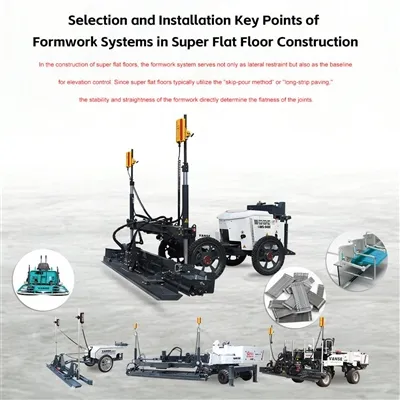
– The construction area of this type of scene is usually small, generally between tens of square meters and hundreds of square meters. For example, the floor area of the living room and bedroom of an ordinary residence may be around 20-50 square meters. The space is relatively narrow and there are many corners. – For this situation, a hand-held trowel with lower power is more suitable, with a power range of about 1-3kW. Because the low-power trowel has a small body and flexible operation, it can be easily moved in a limited space to perform trowel operations on narrow areas such as corners and walls. – Common indoor floor materials include cement mortar floors, fine stone concrete floors, etc. The thickness of these floor materials is relatively thin, generally within a few centimeters. – The precision requirements are high, and the trowel machine needs to be able to finely process the floor to achieve a high degree of flatness and glossiness. The speed and trowel force of the low-power trowel machine are relatively moderate, which can just meet this demand and avoid damaging the surface structure of the floor material due to excessive power. – The construction area is between a few hundred square meters and thousands of square meters, and the space is relatively open. For example, the area of a medium-sized warehouse may be 500-2000 square meters. – You can choose a moderately powered walk-behind or ride-on trowel. The power of a walk-behind trowel is generally 3-5kW, and the power of a ride-on trowel is 4-7kW. Ride-on trowels are more efficient when constructing large areas, and can quickly smooth the ground, saving time. Walk-behind trowels can be used in some corners that are difficult for ride-on trowels to reach. – The ground material may be thick concrete, about 10-20 cm thick. In this case, the trowel needs to have enough power to compact and smooth the ground. – Although the precision requirements are not as high as those for small indoor scenes, it is still necessary to ensure that the ground has a certain degree of flatness and smoothness to meet the needs of cargo storage or equipment installation. Medium-power trowels can complete the troweling task well while ensuring efficiency. – The construction area is very large, often exceeding thousands of square meters, or even tens of thousands of square meters. For example, a large city square may be 10,000 to 50,000 square meters in area, and an airport runway is even larger. – For this scenario, a high-power driving trowel should be selected, with a power of usually 7 to 15kW. Because large outdoor projects require a large amount of ground troweling work to be completed in a short period of time, a high-power trowel can provide sufficient power and high work efficiency to quickly cover a large area of the ground. – The ground material is generally a thick layer of high-strength concrete, which may be about 20 to 50 cm thick. The trowel needs to have strong power to handle this thick and hard ground material. – For precision requirements, large squares require good flatness and drainage slope of the ground, while airport runways have strict specifications for indicators such as flatness and roughness of the ground. High-power trowel machines can precisely control the trowel effect by adjusting components such as the trowel blade to meet these high standards.Selection and Installation Key Points of Formwork Systems in Super Flat Floor Construction
In the construction of super flat floors, the formwork system serves not only as lateral restraint but also as the baseline for elevation control. Since super flat floors typically utilize the "skip-pour method" or "long-strip paving," the stability and straightness of the formwork directly determine the flatness of the joints. The following are key points regarding the selection and installation of formwork systems for super flat floors: Traditional wooden formwork has been phased out in super-flat floor construction due to its susceptibility to deformation and low strength. The current mainstream solutions are as follows: Composition: Consists of two cold-drawn steel corner guards, load transfer bars, breakable bolts, and a lower steel plate. Advantages: No need to remove after construction; it remains in the floor as a permanent joint; effectively protects the concrete edges from impact damage by forklift wheels (prevents chipping). Applicable to: Longitudinal construction joints in very narrow aisle (VNA) areas. Requirements: Must possess sufficient rigidity, and the top surface must be machined and leveled. Advantages: When used with a laser leveling machine, it can serve as a physical reference for the leveling head. The accuracy of template installation directly affects the FL (Levelness) value, and the following steps must be followed: Precise elevation control: Use a high-precision leveling instrument (accuracy requirement within ± 0.5 mm ) for surveying. Denser measurement points: Set a fixed control point every 2 ~ 3 m along the template support trajectory to ensure straightness over long distances. Reinforcement design: The template must be firmly anchored to the base layer using steel reinforcement bars. In ultra-flat floor construction, the power trowel is heavy and vibrates strongly; even a 1 mm settlement of the template will result in unacceptable flatness in that area. Gap sealing: The gap between the bottom of the template and the base layer should be sealed with mortar to prevent leakage and the resulting "root rot" phenomenon, otherwise it will lead to honeycomb and pockmarked surfaces at the edges. Perpendicularity requirement: Dowel bars must be strictly parallel to the floor surface and perpendicular to the template surface. Displacement control: The use of dowel bar sleeves or supports is recommended. If the dowel bars tilt during pouring, it will cause irregular cracks in the concrete during shrinkage, rather than cracking at the predetermined joints. Key processes Technical Requirements Equipment coordination Top surface cleaning No old concrete or foreign objects shall remain on the top surface of the formwork. Manual inspection with a trowel is performed before pouring. Joint connection The connection between two formwork sections must have a "zero height difference" transition. A tongue-and-groove joint structure or reinforcing steel plates on the back are used. Demolding time The side formwork (non-armored joint) must be removed after the concrete strength reaches 2 to 3 MPa. Avoid using a sledgehammer to pry, to prevent damage to the edges of the newly poured concrete. When installing armored joints, it is important to pay attention to their three-dimensional adjustability. Adjustable height bolt supports are typically used, allowing for fine-tuning before concrete pouring to ensure the top surface of the angle steel is precisely at the design elevation. Misconception 1: Relying on laser Leveling without paying attention to formwork. Truth: When working near the edges of the formwork, laser Leveling are limited by the width of the Leveling blade and edge interference, often requiring the formwork as a physical reference. If the formwork is uneven, the flatness of the edges will inevitably be compromised. Misconception 2: Dowel bars are inserted directly through wooden formwork. Truth: This makes it very easy to dislodge the dowel bars during formwork removal, damaging the bond between the dowel bars and the initial setting concrete. It is recommended to use armored joints or steel formwork with professional sleeves. Note: The parameters provided in this document are for reference only and are not mandatory. Due to differences in technical characteristics between different brands and models of laser levelers, please consult the manufacturer for a suitable solution before actual operation. This reference document assumes no responsibility for any issues arising from failure to follow the manufacturer's instructions.