Technical Knowledge
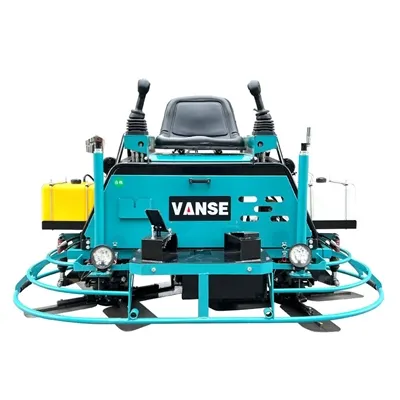
What influence does the speed of the power trowel’s disk have on the construction effect?

What influence does the speed of the concrete trowel's disk have on the construction effect?
1. Relationship between rotation speed and concrete surface flatness
– When the trowel speed is moderate, it can effectively flatten the raised parts of the concrete surface and fill the sunken parts. For example, in general indoor floor construction, if the trowel speed is set in a suitable range, such as 70-100 rpm, the blade on the trowel can initially level the newly poured concrete surface as the trowel moves forward. Because at this speed, the pressure and flattening effect of the blade on the concrete are relatively uniform, and it will not be over-cut due to too fast a speed, nor will it be unable to effectively deal with the unevenness of the surface due to too slow a speed.
– When the trowel speed is too high, the cutting force of the trowel blade on the concrete surface is too large. This may cause over-cutting of the concrete surface, destroy the original structure of the concrete, and cause fine cracks or pits on the surface. Especially for concrete whose strength has not yet fully developed, too high a speed may excessively disturb the cement slurry layer on the surface, affecting the final quality of the concrete.
– On the contrary, if the trowel speed is too low, the trowel blade will not have enough force on the concrete surface. This will make it impossible to effectively deal with the uneven parts of the concrete surface. For example, on the concrete surface with large stone protrusions or template splicing marks, the trowel at a low speed may not be able to remove these defects, resulting in the ground flatness not meeting the requirements.
2. Relationship between rotation speed and concrete surface compaction
– Appropriate trowel speed helps to improve the compaction of the concrete surface. When the trowel rotates at a certain speed, the weight of the trowel and the rotation of the blade work together to exert pressure on the concrete surface, so that the particles in the concrete are arranged more closely. For example, in concrete construction with high bearing capacity requirements such as industrial plant floors, the trowel speed is controlled at about 80-120 rpm, which can make the concrete surface better compacted during the troweling process, thereby improving the bearing capacity and wear resistance of the ground.
– When the speed is too high, although the surface looks smoother, it may actually make the mortar layer on the concrete surface too loose. Because too high a rotation speed will cause the water in the mortar layer to evaporate too quickly, and excessive rotation will destroy the bonding force between the mortar particles, resulting in insufficient surface compaction, which is prone to quality problems such as sanding and peeling during later use.
– If the speed of the trowel is too low, it will not generate enough pressure to compact the concrete surface. This will make the porosity of the concrete surface larger and reduce the compactness of the concrete. Such a concrete surface is easily damaged when there are heavy objects rolling or frequent friction.
3. Relationship between rotation speed and concrete surface gloss
– A higher trowel speed can make the concrete surface have better gloss. When the speed reaches a certain level, such as 100-150 rpm, the trowel blade can further smooth the mortar layer on the concrete surface during rapid rotation, making the surface more delicate and producing gloss. In some places with high requirements for appearance, such as shopping mall floors and exhibition hall floors, by appropriately increasing the trowel speed, a smooth mirror effect can be created.
– However, if the speed is too high, it may cause wavy textures on the concrete surface, affecting the uniformity of gloss. This is because too high a speed will cause the trowel to vibrate during the rotation process, and this vibration is transmitted to the concrete surface, affecting the surface flatness and destroying the uniformity of the gloss.
– When the speed is too low, the surface roughness of the concrete is greater and the glossiness is poor. Because the trowel rotating at a low speed cannot fully smooth the microscopic unevenness of the concrete surface, it cannot form a smooth surface, and can only obtain a relatively rough matte effect.
Thanks to All the Friends Who Support and Trust Shandong Vanse Machinery Technology Co., Ltd.
If you want to know more about Shandong Vanse Machinery Technology Co., Ltd. or have any questions, please feel free to contact us:
Our Factory
Shandong Vanse Machinery Technology Co., Ltd.








Share this article

About the Author: Shandong Vanse Machinery Technology Co., Ltd.
Shandong Vanse Machinery Technology Co., Ltd. is a high-tech manufacturer specializing in concrete construction machinery, including laser screeds and related equipment. The company integrates R&D, production, and global sales, with products exported to over 60 countries and widely used in infrastructure projects worldwide.
Previous Post
Next Post
Related Articles
You Might Also Like
What is the principle and structure of concrete laser leveling machine?
The concrete laser leveler is a construction machine that uses modern laser technology and a computer control system to level the concrete surface with high precision. The emergence of this kind of machinery has changed the shortcomings of traditional concrete leveling methods, improved the quality and efficiency of concrete construction, and reduced manual labor intensity and construction costs. The following is a detailed introduction to the principle and structure of the concrete laser leveling. 1. Principle of concrete laser leveling machine The concrete laser leveling machine uses a laser interferometer for measurement, and the control system uses computer control to achieve high-precision concrete leveling by automatically controlling the leveling head of the laser leveling machine. Laser interferometer measurement principle Laser interferometer is an instrument that uses the interference phenomenon of laser beams to measure. In the concrete laser leveling machine, the laser interferometer divides the laser beam into two paths, one is the reference beam and the other is the measured beam. The reference beam passes through the standard reflector, and the measured beam passes through the movable reflector. The two beams meet in the interferometer, causing interference. By measuring and processing the interference phenomenon through the computer control system, the length change of the measured beam can be obtained, thereby achieving high-precision measurement of the concrete surface. Computer control system principles The computer control system of the concrete laser leveling machine is built based on the industrial control computer (IPC) and programmable logic controller (PLC). The IPC is responsible for the control, data acquisition, data processing and output of the entire system, while the PLC is responsible for executing underlying tasks such as motion control and switch control. In the concrete laser leveling machine, the computer control system mainly completes the following tasks: (1) Control and collect data from the laser interferometer, and calculate the elevation data of the concrete surface based on the measurement results. (2) Calculate the control instructions of the leveling head based on the elevation data to realize the automatic leveling function. (3) Manual control and adjustment of the position and angle of the flattening head are achieved through the operation interface and remote control. 2. Structure of concrete laser leveling machine The concrete laser leveling machine mainly consists of a bracket, a laser interferometer, a computer control system, a leveling head, etc.: Bracket The bracket of the concrete laser leveling machine is welded with high-strength steel to support the structure of the entire machine. It is also equipped with components such as a laser interferometer and a computer control system. The bracket generally consists of four columns, two of which are used to support the laser interferometer and the other column is used to install the computer control system. The columns are connected by high-strength bolts, forming the basic structure of the entire machine. Laser Interferometer The laser interferometer of the concrete laser leveling machine is a high-precision measuring instrument used to achieve high-precision measurement of the concrete surface. Laser interferometer consists of laser, beam splitter, reflector, photodetector, etc. The laser generates a laser beam, and the beam splitter divides the laser beam into two paths, one is the reference beam and the other is the measured beam. The two beams of light meet again after being reflected by the reflector, causing interference. The photodetector measures and processes the interference phenomenon to obtain the length change of the measured beam, thereby achieving high-precision measurement of the concrete surface. Computer control system The computer control system of the concrete laser leveling machine is built based on the industrial control computer (IPC) and programmable logic controller (PLC). The IPC is responsible for the control, data acquisition, data processing and output of the entire system, while the PLC is responsible for executing underlying tasks such as motion control and switch control. The computer control system also includes components such as an operating interface and a remote control. The operator can control and adjust the machine through the operating interface or remote control. Flat head The leveling head of the concrete laser leveling machine is a key component used to achieve leveling of the concrete surface. Its structure consists of a support frame, an electric vibrator, a reducer, a scraper, etc. The support frame is used to support the electric vibrator and reducer. The electric vibrator generates vibration, and the reducer drives the scraper to perform rotating and smoothing operations. The flat head is installed under the bracket and connected with the bracket. The smoothing head can also adjust the distance between the scraper and the concrete surface by adjusting the height of the support frame to ensure the quality and effect of the smoothing operation. In short, the concrete laser leveling is an advanced construction machine that integrates modern laser technology, computer control system and mechanical structure. It has high-precision measurement and automatic leveling functions, which can greatly improve the efficiency and quality level of concrete construction. Its application will help improve the shortcomings of traditional construction methods and promote the progress and development of concrete construction technology.How Often Should A Concrete Laser Leveling Be Maintained?
What is the frequency of maintenance of concrete laser leveling machine? As an indispensable and important equipment in modern building construction, the diffuse concrete laser leveling machine's performance stability and service life directly affect the construction quality and efficiency. Therefore, it is particularly important to carry out scientific and reasonable maintenance of concrete laser leveling machines. However, many users may have some questions about the frequency of maintenance of concrete laser leveling machines. This article will focus on this issue and elaborate on the key points of daily equipment inspections, periodic maintenance plans, special maintenance needs, lubrication and cleaning, electrical system inspection, replacement of wearing parts, and repair and maintenance records. 1. Key points for daily inspection of equipment Routine inspection is the basic work to ensure the normal operation of the concrete laser leveling, and its frequency should be relatively high. In general, a thorough daily inspection should be performed before and after each use. Key check points include: ☀ Check whether the appearance of the equipment is intact and whether there is any damage, deformation, etc.; ☀ Check whether the fasteners of the equipment are loose. If they are loose, tighten them in time; ☀ Check whether the hydraulic and electrical systems of the equipment are working normally. If there are any abnormalities, they should be dealt with in time; ☀ Check whether the operation control of the equipment is flexible and reliable. If there is any jamming or failure, repair it in time; ☀ Check whether the walking system of the equipment is stable and whether the track is seriously worn, etc. Through daily inspections, problems with the equipment can be discovered and solved in time to ensure the normal operation of the equipment. 2. Periodic maintenance plan In addition to daily inspections, a periodic maintenance schedule should be developed based on the equipment's usage and manufacturer's recommendations. The frequency of periodic maintenance can generally be determined based on the working hours or length of use of the equipment. ☀Weekly maintenance: Conduct a comprehensive inspection of the equipment every week, including checking the oil level and quality of the hydraulic oil, cleaning the radiator and filter, and checking whether the wiring of the electrical system is loose, etc. ☀ Monthly maintenance: Perform more in-depth maintenance on the equipment every month, such as replacing hydraulic oil and filters, checking the engine oil and water tank, etc. ☀ Quarterly maintenance: Conduct extensive maintenance and upkeep on the equipment every quarter, such as checking the wear of the track, replacing severely worn track shoes, checking the sealing of the hydraulic cylinder, etc. By formulating and executing a periodic maintenance plan, the service life of the concrete laser leveling can be effectively extended and its work efficiency improved. 3. Special maintenance needs In some special cases, additional maintenance on your concrete laser leveling may be required. These special circumstances include: ☀ The equipment has not been used for a long time: If the equipment has not been used for a long time, it should be started and operated regularly to prevent parts from rusting or aging due to long-term parking of the equipment. ☀ Harsh working environment: In harsh working environments, such as high temperature, dusty, humid and other environments, the maintenance frequency of the equipment should be appropriately increased to cope with the impact of environmental changes on the equipment. ☀ Equipment failure: When equipment fails, troubleshooting and repairs should be carried out in a timely manner to ensure that the equipment can resume normal operation in a timely manner. For these special circumstances, we need to formulate corresponding maintenance measures and plans based on the actual situation to ensure the normal operation of the equipment and extend its service life. 4. Lubrication and cleaning Lubrication and cleaning are important aspects that cannot be ignored in the maintenance of concrete laser leveling machines. Lubrication can effectively reduce the wear and friction of equipment and extend its service life; while cleaning can prevent equipment failures caused by dust, debris, etc. ☀ In terms of lubrication, all lubrication points of the equipment should be lubricated regularly, such as bearings, chains, etc. At the same time, pay attention to selecting appropriate lubricating oil and grease to ensure the lubrication effect. ☀ In terms of cleaning, dust and debris on the surface of the equipment should be cleaned regularly to keep the equipment tidy. In addition, the radiator and filter of the equipment should be cleaned regularly to ensure the heat dissipation effect and ventilation performance of the equipment. Through reasonable lubrication and cleaning work, the working efficiency and stability of the concrete laser leveling can be effectively improved. 5. Electrical system inspection The electrical system is a critical part of the proper operation of the concrete laser leveling, so regular inspection and maintenance of it is essential. Electrical system inspection mainly includes the following aspects: ☀ Check whether the cable lines are intact and not damaged or aged; ☀ Check the working status of electrical components, such as whether switches, relays, etc. are working normally; ☀ Check the stability and accuracy of the electrical control system to ensure that the operation and control of the equipment are accurate and reliable; ☀ Clean and dust-proof the electrical system regularly to prevent failures caused by dust accumulation. Through electrical system inspection, electrical faults can be discovered and solved in time to ensure the normal operation of the concrete laser leveler. 6. Replace wearing parts During the use of the concrete laser leveling, some wearing parts will gradually wear or be damaged as the use time increases. In order to ensure the normal operation of the equipment and extend its service life, these wearing parts need to be replaced in time. Common wearing parts include blades, scrapers, track shoes, etc. These parts will wear or deform during long-term use, affecting the construction quality and efficiency of the equipment. Therefore, the wear of these parts should be checked regularly and replaced according to the actual situation. When replacing wearing parts, you should choose qualified products produced by regular manufacturers and perform replacement operations in accordance with the requirements of the equipment manual. At the same time, replacement records should be kept for reference in subsequent maintenance work. 7. Repair and maintenance records In order to better understand the maintenance status of the concrete laser leveling machine, it is recommended to establish complete repair and maintenance records. The record content includes basic information of the equipment, maintenance time, content, personnel, and replaced parts and other information. Through repair and maintenance records, you can clearly understand the maintenance history and usage status of the equipment, providing a reference for subsequent maintenance work. At the same time, it also helps to discover potential problems in the operation of the equipment and take timely measures to deal with them to avoid failures. In addition, repair and maintenance records can help improve the efficiency of equipment management. Through the analysis of records, the effectiveness of equipment maintenance can be evaluated, deficiencies in maintenance work can be found, and a more scientific and reasonable maintenance plan can be formulated. When establishing repair and maintenance records, it is recommended to use electronic methods for recording and management. Through the electronic recording system, data can be easily queried, counted and analyzed to improve work efficiency. At the same time, it can also reduce the risk of loss and damage of paper records and ensure the integrity and reliability of data. In summary, the maintenance of concrete laser leveling machines is of great significance to the normal operation and extended service life of the equipment. By formulating reasonable maintenance plans, performing daily inspections and periodic maintenance, paying attention to special maintenance needs, doing lubrication and cleaning work, checking electrical systems, replacing wearing parts in time, and establishing complete repair and maintenance records, we can ensure that The stable operation of the pyrolysis soil laser leveling machine improves construction quality and efficiency. However, it should be noted that the maintenance frequency and content mentioned in this article are only general recommendations, and actual operations need to be adjusted and improved according to the specific conditions of the equipment, the use environment and the manufacturer's recommendations. At the same time, maintenance work should be performed by professionals with corresponding qualifications and experience to ensure correct, safe and effective operations. Finally, we hope that the discussion in this article can provide some reference and help for the maintenance of concrete laser levelings, and contribute to the stable operation and extended service life of the equipment.How to maintain and service a riding power trowel?
Body cleaning: After each use of the trowel, the dust, concrete residue and other debris on the body should be cleaned in time. You can use a damp cloth to wipe the surface of the body, but be careful to avoid water entering key parts such as the engine. For stubborn stains, you can use a mild detergent to clean them. Clean the trowel and spatula: If the concrete remaining on the trowel and spatula is not cleaned in time, it will affect the effect of the next use. You can use special tools such as scrapers to remove the solidified concrete residues, and then rinse with clean water. Check screws and nuts: Regularly check whether the screws and nuts of various parts of the trowel are loose. Focus on checking the installation screws of the trowel and spatula, as well as the fasteners of the various connecting parts of the body. If looseness is found, tighten it in time with appropriate tools. Replace the engine oil and oil filter: Regularly replace the engine oil and oil filter according to the engine's working hours or the manufacturer's recommendations. Generally speaking, the engine oil needs to be replaced every 50-100 hours of work. When replacing the engine oil, choose a high-quality engine oil that is suitable for the engine model. Check the air filter: The air filter is essential for the normal operation of the engine. Regularly check whether the air filter is blocked. If the filter element is found to be dirty, it should be cleaned or replaced in time. Usually, it needs to be checked every 20-30 hours of work. Spark plug maintenance: Regularly check the electrode wear and carbon deposits of the spark plug. If the electrode is severely worn or there is too much carbon deposits, it will affect the engine's ignition performance. Generally, the spark plug can be cleaned every 100-200 hours of work, or replaced according to the actual wear of the spark plug. Trowel maintenance: Regularly check the degree of wear of the tiller. When the blade wear of the spatula exceeds a certain limit (such as 2-3 mm), the spatula should be replaced in time. At the same time, during use, the spatula can be properly lubricated to reduce wear. Pad maintenance: Check the flatness and balance of the pad. If the pad is deformed, it will affect the polishing effect and needs to be corrected or replaced in time. At the same time, pay attention to whether the connection part of the pad is loose or worn. Tire maintenance: Check the tire pressure regularly to ensure that the tire pressure meets the requirements. Generally, the tire pressure of the driving trowel is maintained at about 2-3 atmospheres. At the same time, check the wear of the tire. If the tire is found to be damaged or bulging, the tire should be replaced in time. Steering system and transmission system maintenance: Regularly check the flexibility and accuracy of the steering system, and lubricate the steering shaft, steering knuckle and other components. For the transmission system, check the tightness of the transmission chain or belt. If it is too loose or too tight, it needs to be adjusted. And check the wear of the chain or belt, if necessary, it should be replaced in time. Cleaning and drying: Before storing the trowel for a long time, the machine should be thoroughly cleaned, including the machine body, trowel plate, spatula and other parts. Make sure the surface of the machine is dry to avoid rust. The machine can be placed in a well-ventilated place for natural drying. Rust-proof treatment: Anti-rust treatment is performed on the metal parts of the machine. A layer of anti-rust oil can be applied on the metal surface, especially on the spatula, trowel plate, screws and other parts that are prone to rust. Battery maintenance (if it is an electric trowel): For electric driving trowels, pay attention to the maintenance of the battery during long-term storage. Store the battery after fully charging it, and charge and discharge the battery once every period of time (such as one month) to maintain the battery activity. At the same time, the battery should be stored in a dry and cool place to avoid moisture or overheating. Storage environment: Choose a suitable storage environment, preferably a dry, ventilated indoor space that avoids direct sunlight. If stored outdoors, use facilities such as awnings to prevent the machine from being eroded by rain and exposed to the sun.