Technical Knowledge
How to ensure safety when performing the concrete laser leveling machine maintenance?
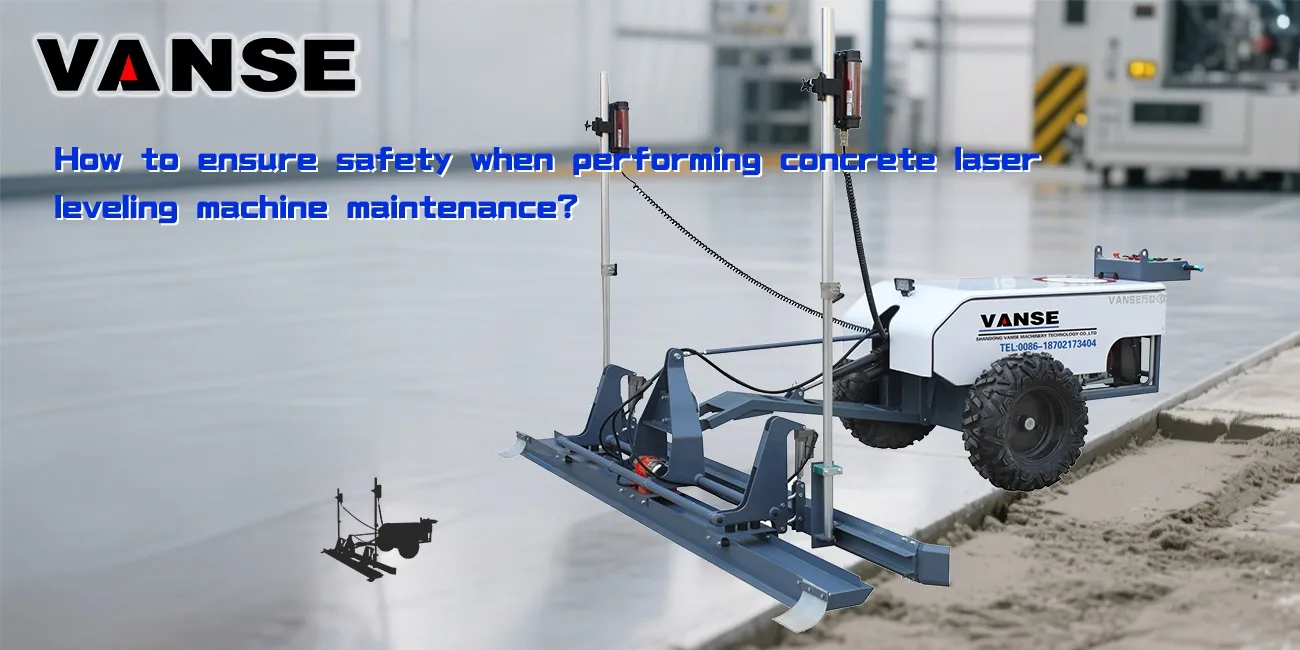
During the maintenance of the concrete laser leveler, safety is the core premise. A full-process protection system must be established from four dimensions: personnel protection, equipment status, environmental control, and operating specifications to avoid risks such as mechanical injuries, electric shock, and falls. The following are the specific operating points:
Ⅰ. Before maintenance: Make "safety preparations" to eliminate source risks
Preparation before maintenance is the first line of defense for safety. It is necessary to ensure that "people, machines, and the environment" are all in a safe initial state:
Personnel qualifications and protective equipment are in place
Maintenance personnel must undergo professional training and be familiar with the equipment structure (such as laser transmitter, leveling scraper, hydraulic system), electrical principles and safe operating procedures. Unlicensed or non-professional operation is strictly prohibited.
Wearing all necessary personal protective equipment (PPE):
Head Protection: Wear an impact-resistant helmet to prevent injuries from falling equipment parts or tools.
Hand Protection: Wear non-slip, wear-resistant gloves to avoid contact with sharp parts and oily surfaces. Wear insulating gloves when operating electrical equipment.
Foot Protection: Wear impact-resistant and puncture-resistant safety shoes to prevent injuries from being crushed by the equipment or punctured by debris on the ground.
Eye Protection: Wear goggles to prevent eye splashes when cleaning equipment dust or checking hydraulic fluid.
Other: If welding or cutting is involved, wear a welder's mask and flame-retardant clothing.
Equipment shutdown and energy isolation
Strictly implement the "Lockout, Power-Off, and Lockout" (LOTO) procedure:
First, park the equipment on level, firm, and flat ground (to prevent it from sliding), shut off the engine, and remove the key.
Disconnect the main power switch (battery switch or main power switch) and hang a "Maintenance in Progress, Do Not Close" warning sign at the switch. Lock the equipment if necessary (keys should be kept by maintenance personnel).
Discharge residual energy from the equipment: For hydraulic systems, fully retract the cylinders by operating the joysticks to release hydraulic pressure. Pneumatic components should be depleted from their air tanks. Capacitive components should be discharged to prevent electric shock.
Check that moving parts (such as leveling wheels and scrapers) are in the "non-operating" position. Use wedges to wedge the wheels if necessary (especially when performing maintenance on slopes to prevent the equipment from rolling).
Environmental investigation and cleanup
Clear the maintenance area of any obstructions (such as rebar, gravel, and tools). Designate a "safe work zone" of at least 1.5 meters, prohibiting unauthorized personnel from entering (warning tape or signs may be used).
Check the environment for potential risks: Avoid performing electrical system maintenance in rainy or humid conditions (to prevent short circuits and electric shock). If performing maintenance in a confined space (such as an underground garage), ensure adequate ventilation (to prevent engine exhaust poisoning). Ensure adequate lighting (at least 50 lux) for nighttime maintenance.
II. During Maintenance: Strictly adhere to "Operational Specifications" to avoid process risks.
During maintenance, specific safety measures must be implemented based on the characteristics of the equipment's key systems (electrical, hydraulic, and mechanical):
1. Electrical System Maintenance (Core Protection Against Electric Shock)
It is strictly forbidden to remove electrical components (such as the laser controller and junction box) while the device is energized. Use a multimeter to confirm that the circuit is free of voltage before proceeding.
When replacing wires or sensors, use parts that meet the original manufacturer's specifications (e.g., insulation rating of at least IP67). Connectors must be waterproof and sealed to prevent rainwater from seeping in and causing a short circuit.
If using power tools (such as drills and multimeters), ensure the insulation is intact, use a socket with a residual current protection (leakage current ≤ 30mA), and operate the tool with one hand to minimize the path of current passing through the body in the event of an electric shock.
2. Hydraulic System Maintenance (Core Protection Against High-Pressure Oil Spray)
Hydraulic oil should be checked 15 minutes after the equipment has been shut down (after the system pressure has been completely released). Never remove joints while hydraulic lines are pressurized (high-pressure oil spray can reach 100 m/s and can easily pierce skin).
When removing hydraulic components (such as cylinders and pumps), wrap joints with a rag to prevent oil splashing and contamination, and to buffer residual pressure.
When refilling hydraulic oil, use a filter to prevent impurities from entering the system, and keep the oil level below the tank mark to prevent leakage caused by excessive oil temperature. If the hydraulic oil has a pungent odor or is cloudy, replace it immediately to prevent wear and bursting of the hydraulic pump.
3. Mechanical Component Maintenance (Core Preventing Mechanical Pinch Injuries)
When inspecting rotating components such as leveling wheels and scrapers, manually rotate them to ensure they are not stuck. Do not use tools to pry (to prevent sudden rotation and pinching of fingers).
When tightening bolts (such as frame bolts), use a torque wrench to the factory-specified torque (with a torque tolerance of ±5% to prevent breakage or loosening). Do not stand directly over the bolts (to prevent the wrench from slipping and causing injuries).
When replacing worn parts (such as scraper blades), secure the components with a bracket to prevent them from falling. When removing sharp parts, wrap the edges with a cloth to prevent cuts.
Ⅲ. Post-Maintenance: Conduct a "Final Inspection" to Prevent Residual Risks
After maintenance is completed, a systematic inspection is required to ensure the equipment has returned to a safe operating state and avoid subsequent accidents caused by improper maintenance.
Equipment functional testing
First, conduct a no-load test run: Start the equipment and test the laser positioning, screed wheel rotation, and scraper lift functions in sequence. Observe that all components operate smoothly (no abnormal noise or vibration) and that there are no leaks in the hydraulic lines (no more than one drop of oil in 10 minutes).
During the test run, an observation area should be set up around the equipment, with maintenance personnel standing to the side (avoiding direct contact with rotating components). If any abnormalities are detected (such as laser deviation or unusual noise), the equipment should be shut down and powered off for inspection immediately.
Site Cleanup and Recording
Clean oil, tools, and accessories from the maintenance area, and store hazardous waste such as waste oil and filters in a classified manner (hand them over to qualified personnel for disposal; dumping is strictly prohibited).
Remove the "Maintenance in Progress" sign. Before turning off the power switch, re-confirm that all maintenance personnel have evacuated the equipment area to prevent accidental startup and injury.
Fill out the Maintenance Record Form, recording maintenance items, replaced parts, test results, and other information (for easy traceability. If loose bolts are found, check for insufficient torque).
Confirm personnel safety
Maintenance personnel must clean their bodies (especially areas that have come into contact with hydraulic oil or rust inhibitors to prevent skin allergies) and check that their protective equipment is intact (for example, gloves are not damaged and can be used again during the next maintenance session).
If minor scratches or electric shocks occur during maintenance, work must be stopped immediately and emergency treatment must be implemented (such as flushing the wound with saline solution and applying iodine. After an electric shock, rest and observe for 30 minutes). In serious cases, seek medical attention immediately.
IV. Additional Safety Guarantees: Establishing a "Long-Term Mechanism"
Regular Safety Training:
Quarterly, maintenance personnel will review the "Equipment Safety Operating Procedures" and conduct simulated emergency scenarios such as electric shock and hydraulic leaks (e.g., using an insulated rod to disconnect live wires and sealing oil leaks with cotton cloth).
Equipment Safety Inspections:
A "three-minute safety inspection" must be conducted daily before starting the equipment (checking the brakes, lights, and warning bells for proper function). Monthly functional tests of safety devices (e.g., emergency stop buttons and seat belts) must be conducted (all power must be immediately disconnected if the emergency stop button is triggered).
Emergency Supplies:
Equipment storage areas must be equipped with a first aid kit (including tourniquets, burn ointment, and insulated gloves), a fire extinguisher (ABC dry powder type, for electrical or oil fires), and emergency lighting (with a battery life of at least 4 hours).
In short, the safety of concrete laser leveling machine maintenance must run through the entire process of "before – during – after", and the core is "respecting risks and strictly abiding by regulations" – you must be familiar with the characteristics of the equipment and pay attention to the details of personnel protection to fundamentally prevent safety accidents.
Note: The parameters provided in this document are for reference only and are not mandatory. Due to differences in technical characteristics between different brands and models of laser levelers, please consult the manufacturer for a suitable solution before actual operation. This reference document assumes no responsibility for any issues arising from failure to follow the manufacturer's instructions.
Thanks to All the Friends Who Support and Trust Shandong Vanse Machinery Technology Co., Ltd.
If you want to know more about Shandong Vanse Machinery Technology Co., Ltd. or have any questions, please feel free to contact us:
Our Factory
Shandong Vanse Machinery Technology Co., Ltd.








Share this article

About the Author: Shandong Vanse Machinery Technology Co., Ltd.
Shandong Vanse Machinery Technology Co., Ltd. is a high-tech manufacturer specializing in concrete construction machinery, including laser screeds and related equipment. The company integrates R&D, production, and global sales, with products exported to over 60 countries and widely used in infrastructure projects worldwide.
Previous Post
Next Post
Related Articles
You Might Also Like
What are the precautions for the safe operation procedures of concrete laser leveling machines?
The core of the safe operating procedures for concrete laser leveling machines is "personnel protection, equipment control, environmental avoidance, and emergency response." Focus on the following four key areas to ensure human and machine safety and construction compliance: Operators must undergo professional training and be familiar with the equipment's structure (laser system, hydraulic system, vibrating mechanism) and operating buttons. Operating the equipment without a license is strictly prohibited. Support personnel must understand the equipment's operating range and avoid entering hazardous areas. All personnel must wear hard hats and non-slip, insulated shoes during operation. When working with concrete, wear waterproof gloves. When cleaning the equipment, wear protective clothing to prevent burns from cement slurry splashes. It is strictly forbidden to adjust the laser transmitter/receiver while the machine is operating (this requires shutting down the machine and disconnecting the power supply). Avoid direct laser light into your eyes (the strong light may cause blindness). Do not stand under the scraper or vibrator or inside the machine's tracks/tires to prevent hydraulic system failure from causing components to fall or the machine to overturn. Do not be distracted during operation (e.g., answering or making phone calls). Two people working together must maintain communication (using hand gestures or a walkie-talkie) to avoid accidental collisions. Inspection Area Inspection Items and Standards Purpose Laser System The transmitter/receiver is fully charged, calibrated correctly, and free of signal interference. Avoid elevation errors and equipment misjudgment Hydraulic System The oil pipes are leak-free and the hydraulic oil level is within the upper and lower limits. Prevent hydraulic failure (such as scraper jamming) Power and Transmission The engine oil and coolant levels are normal, and the tires/tracks are undamaged. Ensure stable equipment operation Safety Devices The emergency stop button (red) is responsive, and the warning lights and horn are functioning properly. Enable rapid shutdown in emergencies After starting the equipment, allow it to idle for 1-2 minutes to confirm that the vibrator and scraper are operating smoothly without unusual noise or jamming before entering the work area. Strictly control the travel speed to 0.5-1.5 m/min. Reduce speed when turning (≤ 0.5 m/min) to avoid rollover caused by high-speed turns. Overloading is strictly prohibited (e.g., concrete pile thickness exceeds the maximum handling capacity of the equipment) to prevent motor overload and scraper deformation. Do not operate on rainy days or when the base is flooded. This can reflect the laser signal (causing elevation errors) and potentially short-circuit the equipment's electrical system. Avoid areas with strong electromagnetic interference (such as those near large transformers or welding machines) to prevent laser signal interference and equipment loss of control. For nighttime operations, ensure adequate lighting (≥50 lux) and display warning signs around the laser transmitter to prevent collisions. Warning tape or guardrails must be installed at the edges of the work area. Especially when working at height (such as pouring floors), edge protection (such as scaffolding) must be checked to prevent equipment from slipping or falling. The laser transmitter must be mounted on a stable, unobstructed support (≥1.5m in height) and supervised by a designated person. Unauthorized movement is prohibited. In the event of an emergency (such as laser signal interruption, unusual equipment noise, or hydraulic leakage), immediately press the emergency stop button, disconnect the power supply, and troubleshoot the problem. Do not operate with the equipment in a faulty state. If equipment overturns and causes injury, evacuate personnel to a safe area, call emergency services (such as 120), secure the scene, and report the incident to the responsible person. After completing the operation, first shut down the laser system, then the power supply, and use a high-pressure water jet to clean any remaining concrete (do not use water directly on electrical components). The equipment must be parked away from slopes and edges, with the handbrake engaged and triangular wood placed to prevent rolling. The laser transmitter and receiver must be stored in a moisture-proof box to prevent damage. All operations must comply with the "Technical Regulations for Safety in the Use of Construction Machinery" (JGJ 33) and the "Concrete Structure Construction Quality Acceptance Code" (GB 50204). Regular (every three months) professional verification of the equipment's safety devices and laser accuracy should be performed to ensure long-term compliance. Note: The parameters provided in this document are for reference only and are not mandatory. Due to differences in technical characteristics between different brands and models of laser levelers, please consult the manufacturer for a suitable solution before actual operation. This reference document assumes no responsibility for any issues arising from failure to follow the manufacturer's instructions.How to determine the maintenance cycle of concrete laser leveling machine?
As an important equipment in modern construction, the efficient and precise leveling performance of concrete laser leveling machine greatly improves the quality and efficiency of the project. However, the long-term stable operation of any equipment is inseparable from scientific and reasonable maintenance. Therefore, determining the maintenance cycle of concrete laser leveling machine is a vital task. This article will discuss in depth how to determine the maintenance cycle of concrete laser leveling machine from the aspects of equipment use frequency analysis, working environment investigation, manufacturer recommended cycle, component wear inspection, maintenance record, maintenance cost analysis, and safety and performance evaluation. 1. Equipment use frequency analysis + – The use frequency of concrete laser leveling machine is one of the important factors affecting its maintenance cycle. The higher the frequency of equipment use, the faster the wear and aging of its internal mechanical parts, so more frequent maintenance is required. For equipment with high frequency use, the maintenance cycle should be shortened to ensure that the equipment is always in good working condition. On the contrary, for equipment with low frequency of use, the maintenance cycle can be appropriately extended Avoid unnecessary waste of resources. When conducting a frequency analysis, we need to carefully record each use of the equipment, including information such as usage time, workload, and working environment. Through the statistics and analysis of these data, we can derive the average frequency and characteristics of the equipment, which provides an important basis for determining the maintenance cycle. 2. Working environment inspection + – The working environment of the temperature-soluble soil laser leveling machine also has an important impact on its maintenance cycle. The equipment works in a harsh environment, such as dust, high temperature, etc., which will accelerate the corrosion and wear of its components. Therefore, when determining the maintenance cycle, the impact of the working environment must be fully considered. We should conduct on-site inspections of the working environment of the equipment to understand factors such as humidity, temperature, and dust concentration in the environment. At the same time, it is also necessary to pay attention to whether the equipment is often exposed to corrosive substances or subjected to strong mechanical shock during work. Based on this information, we can make appropriate adjustments to the maintenance cycle of the equipment to adapt to different working environments. 3. Manufacturer recommended cycle + – Equipment manufacturers usually give recommended maintenance cycles based on the design and manufacturing process of the equipment. These recommended cycles are usually based on the normal service life and expected wear of the equipment, and have certain reference value. When determining the maintenance cycle of the concrete laser leveling machine, we should refer to the recommended cycle provided by the manufacturer and make comprehensive considerations based on the actual use of the equipment and the working environment. If the equipment does not have any abnormal situation during use and the working environment is good, then maintenance can be carried out according to the cycle recommended by the manufacturer. However, if the equipment fails frequently or the working environment is bad, the maintenance cycle may need to be shortened. 4. Component wear inspection + – The various components of the concrete laser leveling machine will wear during use, and the different degrees of wear will directly affect the performance and life of the equipment. Therefore, regular wear inspection of the components of the equipment is an important basis for determining the maintenance cycle. When inspecting component wear, we should focus on the vulnerable parts and key components of the equipment, such as blades, bearings, seals, etc. By checking the wear of these components, we can understand the overall operating status of the equipment and then determine whether maintenance is needed. At the same time, according to the wear law of the components, the future wear trend can be predicted to provide a basis for formulating maintenance plans. 5. Maintenance records + – Maintenance records are important data reflecting the maintenance of equipment. By analyzing the maintenance records, we can understand the historical maintenance of the equipment and the operating status after each maintenance. This information is of great significance for determining the maintenance cycle. We should establish a complete maintenance record system to record the time, content, personnel and other information of each maintenance in detail. At the same time, we should also track and record the operation of the equipment after maintenance. Through the statistics and analysis of these records, we can find potential problems in the operation of the equipment, so as to carry out preventive maintenance in advance. 6. Maintenance cost analysis + – Maintenance cost is one of the important factors to be considered when determining the maintenance cycle of wet concrete laser leveling machine. Too frequent maintenance will increase maintenance costs, while too long maintenance cycle may lead to more equipment failures and increase the cost of overhaul or replacement of parts. Therefore, we need to conduct a comprehensive analysis of the maintenance cost of the equipment. This includes counting the cost of each maintenance and repair, and analyzing the relationship between the cost and the maintenance cycle. By finding the best balance point, we can reduce maintenance costs while ensuring the normal operation of the equipment. When conducting maintenance cost analysis, it is also necessary to consider the purchase cost and expected service life of the equipment. If the purchase cost of the equipment is high and the expected service life is long, then when determining the maintenance cycle, more attention should be paid to the long-term stable operation of the equipment and the reduction of long-term costs. 7. Safety and performance evaluation + – Safety and performance are key indicators for the operation of concrete laser leveling machines, and are also important bases for determining maintenance cycles. The safety of equipment includes the safety of operators and the safety of the equipment itself, while performance is directly related to construction quality and efficiency. Therefore, we need to regularly evaluate the safety and performance of the equipment. This includes checking whether the safety protection devices of the equipment are intact, whether the operation is convenient, and whether the operation is smooth. At the same time, it is also necessary to test and evaluate the performance indicators of the equipment, such as leveling accuracy and work efficiency. Based on the evaluation results of safety and performance, we can adjust the maintenance cycle. If the safety and performance of the equipment decline or fluctuate, the maintenance cycle should be shortened, and the problem should be checked and solved in time. On the contrary, if the safety and performance of the equipment are stable and good, the maintenance cycle can be appropriately extended. In summary, determining the maintenance cycle of the concrete laser leveling machine requires comprehensive consideration of equipment use frequency, working environment, manufacturer recommended cycle, component wear inspection, maintenance records, maintenance costs, safety and performance evaluation, and other aspects. Only by comprehensively considering these factors can we formulate a scientific and reasonable maintenance plan to ensure the long-term stable operation and efficient construction of the equipment. 8. Specific implementation of safety and performance evaluation + – When implementing safety and performance evaluation, it is necessary to first provide professional training to operators to ensure that they are familiar with the various safety operating procedures of the equipment and can correctly identify and deal with potential safety hazards. At the same time, the equipment manager or maintenance engineer also needs to conduct regular equipment inspections, focusing on whether the safety protection devices and warning signs of the equipment are complete and clear to ensure the safety of the operators. In terms of performance evaluation, professional testing equipment and methods can be used to quantitatively evaluate the various performance indicators of the concrete laser leveling machine. For example, by measuring the leveling accuracy and efficiency of the equipment, the performance status of the equipment can be intuitively understood. At the same time, the performance of the equipment can also be comprehensively evaluated in combination with the actual needs of the construction to determine whether it is necessary to adjust the maintenance cycle or take other improvement measures. In addition, with the continuous advancement of technology and the upgrading of equipment, we also need to pay attention to the safety performance and performance characteristics of the new concrete laser leveling machine. By comparing and analyzing the differences between new equipment and existing equipment, we can provide a reference for formulating a more scientific and reasonable maintenance cycle. 9. Dynamic adjustment of maintenance cycle + – It should be noted that the maintenance cycle of the concrete laser leveling machine is not static. With the increase of equipment use time, changes in working environment and technological progress, the maintenance cycle may need to be adjusted dynamically. Therefore, we should establish a dynamic maintenance cycle adjustment mechanism. This includes regular evaluation and analysis of the equipment's operating conditions, component wear, maintenance costs, etc., and timely adjustment of the maintenance cycle based on the evaluation results. At the same time, it is also necessary to pay attention to changes in industry standards and best practices, and promptly apply new experiences and practices to the maintenance of equipment. 10. Conclusion + – In summary, determining the maintenance cycle of concrete laser leveling machines is a complex and meticulous process that requires comprehensive consideration of multiple factors. Through scientific analysis, reasonable evaluation and dynamic adjustment, we can formulate a maintenance plan that meets the actual needs of the equipment, ensure the safe and stable operation of the equipment and efficient construction, and at the same time, this will also help reduce the maintenance cost of the equipment, extend its service life, and provide strong guarantees for the sustainable development of the enterprise. In future work, we should continue to deepen the research and practice of the maintenance cycle of warm concrete laser leveling machines, constantly explore new methods and means, improve the maintenance level and management efficiency of equipment, and at the same time strengthen exchanges and cooperation within the industry, share experience and resources, and jointly promote the progress and development of maintenance technology for concrete laser leveling machines.Laser leveling machine components
This is the core component of the laser leveling machine, responsible for generating high-quality laser beams. Its quality directly affects the working effect and stability of the leveling machine.Leak inspection: Carefully inspect the entire hydraulic system, including: This system is responsible for positioning the laser beam to the surface of the object to be measured for scanning and reflection. It is generally composed of rotating mirrors, oscillators, optical devices, etc. Its accuracy and speed have a direct impact on the leveling accuracy of the leveling machine. This is the part that performs leveling actions. It is usually made of wear-resistant materials and can complete paving, scraping, tamping and other actions. Its one-time forming width can reach 2.5 meters (depending on the machine itself, 2.5m, 3m, 4m, etc.). In addition, the rotating auger can discharge materials in forward and reverse directions, and it discharges materials in the forward direction during normal operation. It is mainly used for lifting and angle adjustment of the leveling mechanism. There are two self-aligning spherical bearings at the hinge of the lifting frame. The nut at the adjusting screw rod can adjust the angle of the leveling mechanism to adapt to different concrete. 2 high-pressure double-rod lifting cylinders are used to fix the leveling head and level it up and down. A front guard is installed in front to secure and protect electrical components such as lamps and aviation plugs. Used to fix the laser receiver. During the construction process, the bracket and the receiver cannot be moved at will, otherwise it will affect the leveling accuracy. This stand can be turned upside down during transportation to reduce the overall height. Including high-strength frame, power part, hydraulic system, electrical system, cleaning system, etc. The high-strength overall frame is the main frame of the laser leveling machine and fixes all components. During transportation, the safety lifting lugs on the frame can be used for lifting. The overall frame makes the machine safer and more reliable. In addition, there are also components such as a leveling feedback system. For more information about laser leveling machines, please speak to our sales manager. Note: The parameters provided in this document are for reference only and are not mandatory. Due to differences in technical characteristics between different brands and models of laser levelers, please consult the manufacturer for a suitable solution before actual operation. This reference document assumes no responsibility for any issues arising from failure to follow the manufacturer's instructions.