Technical Knowledge
What changes will the construction effect of the laser leveling machine have under different climatic conditions?

The effect of laser leveling machine construction under different climatic conditions may be affected to a certain extent, mainly reflected in the following aspects:
1. **Temperature changes**:
– Extremely high or low temperatures may affect the performance of electronic components of laser leveling machine, such as the accuracy of laser transmitters and receivers. High temperature may cause the equipment to overheat, and low temperature may affect battery life and the response speed of electronic components.
– Temperature also affects the setting time and hardening process of concrete. At high temperatures, concrete may lose moisture and solidify faster, which may shorten the operating window of the laser leveling machine, while at low temperatures, concrete solidifies more slowly and it may take longer to complete the leveling work.
2. **Humidity and rainfall**:
– High humidity may affect the propagation of laser signals. Although laser leveling machines are usually designed with waterproof functions, continuous high humidity or direct rainfall may interfere with laser signals and affect leveling accuracy.
– Rain will directly affect the pouring and leveling of concrete, because rain will make the concrete surface unstable, increase the difficulty of leveling, and may also cause the operation of the laser leveling machine to be suspended until the weather improves.
3. **Wind**:
– Strong winds may interfere with the laser signal, especially when working outdoors. Wind may cause the laser transmitter or receiver to move slightly, affecting the accuracy of leveling.
– Wind may also accelerate the evaporation of water from the concrete surface, especially in dry and hot conditions, which may affect the surface quality of the concrete and the final leveling effect.
4. **Lighting conditions**:
– Strong sunlight or reflected light may interfere with the reception of laser signals, especially when there is strong light directly in the path of the laser signal. This is not a problem when working at night or on cloudy days.
5. **Dust and sand**:
– Large amounts of dust and sand may block the laser signal, especially when working in a dusty environment. This may require more frequent cleaning and maintenance to ensure the normal operation of the laser leveling machine.
In order to avoid the above factors affecting the construction effect of the laser leveling machine, the measures usually taken include:
– Avoid construction in extreme weather conditions as much as possible, or choose the time of day when the weather conditions are most stable.
– Perform regular maintenance on the laser leveling machine to ensure its optimal performance in various environments.
– Take appropriate concrete pouring and maintenance measures to adapt to different climatic conditions.
– Use auxiliary equipment such as protective covers or parasols to reduce the interference of external environmental factors on laser signals.
In short, although the laser leveling machine is designed to take into account the influence of various environmental factors, in actual construction, it is still necessary to make corresponding adjustments according to specific climatic conditions to ensure construction quality and safety.
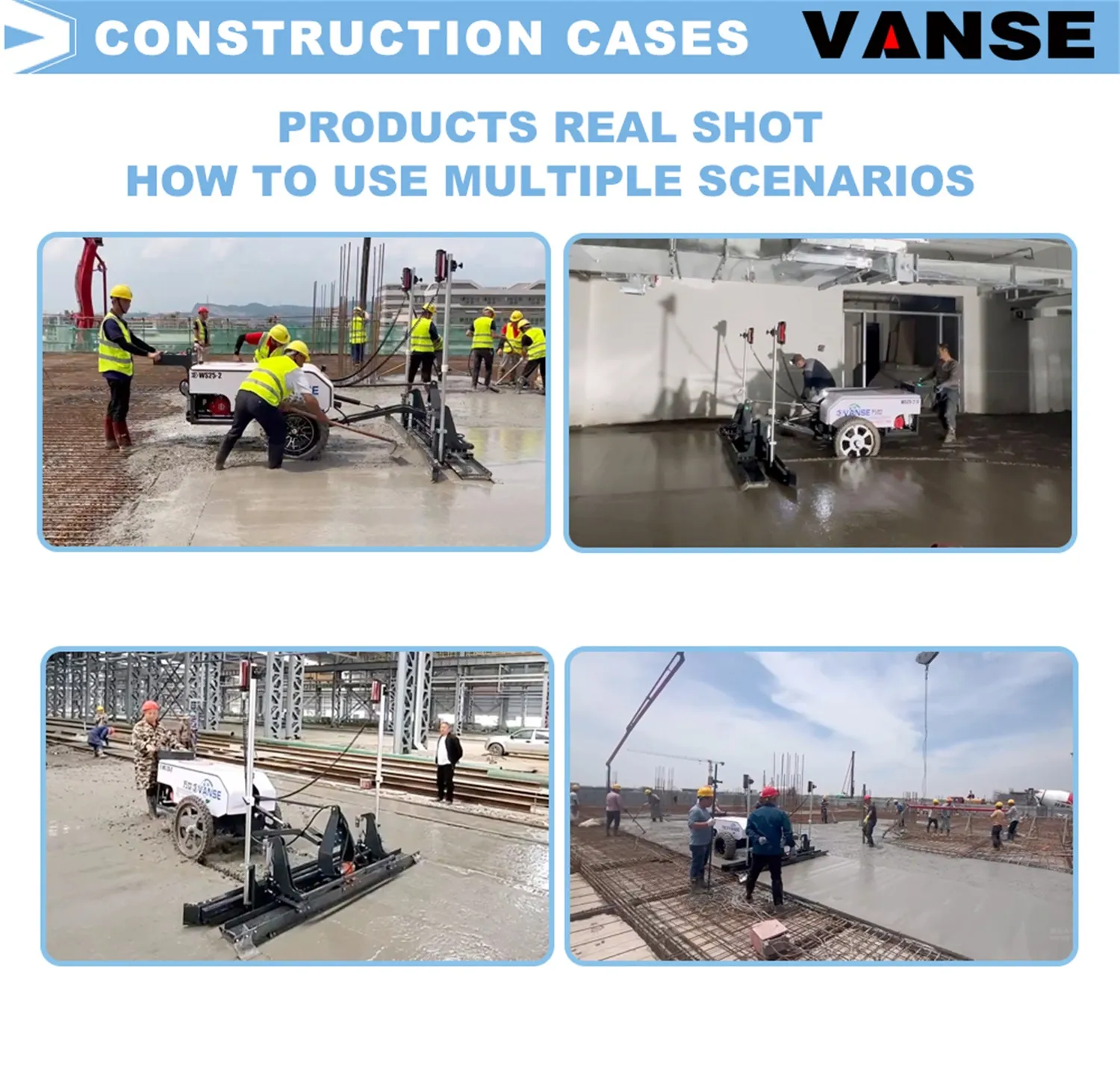
Thanks to All the Friends Who Support and Trust Shandong Vanse Machinery Technology Co., Ltd.
If you want to know more about Shandong Vanse Machinery Technology Co., Ltd. or have any questions, please feel free to contact us:
Our Factory
Shandong Vanse Machinery Technology Co., Ltd.








Share this article

About the Author: Shandong Vanse Machinery Technology Co., Ltd.
Shandong Vanse Machinery Technology Co., Ltd. is a high-tech manufacturer specializing in concrete construction machinery, including laser screeds and related equipment. The company integrates R&D, production, and global sales, with products exported to over 60 countries and widely used in infrastructure projects worldwide.
Previous Post
Next Post
Related Articles
You Might Also Like
The Specific Content Of Maintenance Of Concrete Laser leveling Machine
What are the specific contents of maintenanc e of concrete laser leveling machine? As an important equipment in modern building construction, concrete laser leveling machine's maintenance work is crucial. Correct maintenance can not only ensure the normal operation and extend the service life of the equipment, but also improve construction efficiency and quality. Therefore, this article will elaborate on concrete laser leveling from the aspects of daily inspection and maintenance, regular cleaning and maintenance, wave pressure system maintenance, electrical system inspection, engine maintenance, cutting and wearing parts, lubrication system inspection, and storage and transportation precautions. Specific content of machine maintenance. 1. Daily inspection and maintenance Routine inspection is the basic work for the maintenance of concrete laser leveling machine, which mainly includes the following aspects: ☑ Check the appearance of the equipment: Check whether there are scratches, deformations or damage on the surface of the leveler. If so, repair or replace relevant parts in time. ☑Check the traveling system: Check whether the tires or tracks are severely worn, whether the bolts are tight, and whether the traveling mechanism is flexible. If there are any abnormalities, they should be dealt with in time. ☑Check the laser system: Check whether the laser transmitter, receiver and reflector are clean and intact to ensure stable laser signal transmission. ☑ Check the operation control system: Check whether the operating handle, buttons, switches, etc. are flexible and reliable, and whether their functions are normal. In addition, during daily use, you need to pay attention to the operating status of the equipment. If there are abnormal sounds, vibrations, or excessive temperatures, you should stop the machine in time for inspection and troubleshooting. 2. Regular cleaning and maintenance Regular cleaning and maintenance are key to keeping the concrete laser leveling in good operating condition, including: ☑Clean the body: Clean the body of the leveler regularly with clean water and a soft cloth to remove dust, oil and other stains to keep the equipment clean. ☑Clean the hydraulic oil tank and filter element: Change the hydraulic oil regularly and clean the oil tank and filter element to prevent oil contamination and blockage. ☑Clean the radiator: Clean the dust and debris on the radiator regularly to maintain good heat dissipation and prevent the device from overheating. In addition, the equipment needs to be rust-proofed regularly to prevent equipment from rusting and corroding. 3. Hydraulic system maintenance The hydraulic system is the core part of the concrete laser leveling machine, and its maintenance is crucial. Specific contents include: ☑ Check the hydraulic oil tank; regularly check the oil level and oil quality of the hydraulic oil tank to ensure that the oil is clean and sufficient, and replace the hydraulic oil in time according to usage. ☑ Check the hydraulic pipeline: Check whether the hydraulic pipeline is leaking, aging or damaged. If so, it should be replaced or repaired in time. ☑Check the hydraulic cylinder: Check the sealing and flexibility of the hydraulic cylinder. If there is leakage or stuck, deal with it in time. In addition, it is necessary to pay attention to the operating specifications of the hydraulic system and avoid overloading, overspeeding or illegal operations to ensure the stable operation of the system. 4. Electrical system inspection The electrical system is an important part of the concrete laser leveling machine, and its normal operation is crucial to the stability and safety of the equipment. Electrical system inspection mainly includes: ☑ Check the cable line: Check whether the cable line is intact and whether the connection is tight to prevent short circuit, open circuit or poor contact. ☑ Check the motor and controller: Check the working status of the motor and controller to ensure their normal operation. If there are any abnormalities, they should be dealt with in time. ☑Check electrical components: Check whether each electrical component is intact and working properly, such as relays, fuses, etc., to ensure the safe and stable operation of the electrical system. 5. Engine maintenance The engine is the power source of the concrete laser leveling machine, and its maintenance is equally important. Specific contents include: ☑ Check the engine oil: Check the oil level and oil quality of the engine oil regularly, and replace the oil and oil filter in time. ☑ Check the engine coolant: Make sure the engine coolant is sufficient and clean, and replace the coolant regularly to prevent the engine from overheating. ☑ Check engine accessories: Check whether the engine belts, chains and other accessories are intact. If they are worn or aged, they should be replaced in time. In addition, it is also necessary to pay attention to the engine starting and stopping operating specifications and avoid frequent starts or emergency stops to reduce damage to the engine. 6. Cutting and wear parts The cutting and wearing parts of the concrete laser leveling will gradually wear out during use and require regular inspection and replacement. Specific contents include: ☑Check the blade: Regularly check whether the blade is sharp and intact. If it is worn or damaged, replace or repair it in time. ☑ Check the scraper: Check whether the scraper is flat and not deformed or damaged. If there are any abnormalities, deal with them in time. ☑Check worn parts: Regularly check other worn parts, such as belt plates, chains, etc., and replace them in time according to the degree of damage. By replacing worn parts in time, the construction efficiency and quality of the concrete laser leveling can be ensured, while the service life of the equipment can be extended. 7. Lubrication system inspection The lubrication system is the key to ensuring the normal operation of all components of the concrete laser leveling, so the inspection of the lubrication system is also an important part of maintenance. Specific contents include: ☑Check lubrication points: Regularly check the grease condition of each lubrication point, such as bearings, chains, etc., to ensure adequate lubrication. ☑Replace lubricating oil: According to the equipment usage and instructions, replace the lubricating oil regularly to ensure clean oil quality. ☑Clean the lubrication system: Clean the lubrication system regularly to remove impurities and sediments and keep the system smooth. Through good lubrication system maintenance, equipment wear and failure can be reduced, and the service life and working efficiency of the equipment can be improved. 8. Storage and transportation precautions During the storage and transportation of the concrete laser leveling machine, some matters need to be paid attention to to ensure the safety and integrity of the equipment. The following are key points to note during storage and transportation: ☑Storage environment selection: When storing the concrete laser leveling machine, you should choose a dry, ventilated, and non-corrosive gas indoor environment to prevent the equipment from being eroded by moisture, dust or harmful gases. At the same time, ensure that the storage area is flat and stable to prevent equipment from being damaged due to uneven ground. ☑Equipment fixation and protection: When the equipment is stored, fixing measures should be taken to prevent the equipment from tipping or moving due to external forces. At the same time, vulnerable parts of the equipment should be protected, such as covering with dust covers, etc., to prevent dust, Debris, etc. cause damage to the equipment. ☑ Precautions during transportation: When transporting the concrete laser leveling machine, ensure that the equipment is firmly fixed to prevent shifting or collision during transportation. At the same time, avoid transporting in bad weather or poor road conditions to avoid unnecessary damage to the equipment. ☑Inspection before transportation: Before transportation, the equipment should be fully inspected to ensure that the equipment is in good condition and without damage or failure. At the same time, check whether the accessories, tools, etc. of the equipment are complete so that it can be put into use quickly after arriving at the destination. In addition, during storage and transportation, attention should be paid to keeping the equipment confidential to prevent equipment information from being leaked or illegally obtained. To sum up, the maintenance of concrete laser leveling machines involves many aspects, including daily inspection and maintenance, regular cleaning and maintenance, hydraulic system maintenance, electrical system inspection, engine maintenance, cutting and wearing parts, lubrication system inspection and storage and transportation precautions, etc. Only by completing these maintenance tasks comprehensively and meticulously can the normal operation and extended service life of the concrete laser leveling be ensured, providing a strong guarantee for construction quality and efficiency. In actual operation, specific maintenance plans should be formulated based on the specific conditions and usage environment of the equipment and strictly implemented. At the same time, it is necessary to strengthen the training and management of equipment operators, improve their operating skills and maintenance awareness, and ensure the safe and efficient operation of equipment. In addition, with the continuous development of science and technology, the maintenance technology of concrete laser leveling machines is also constantly updated and improved. Therefore, in actual work, we should also pay attention to the application of new technologies and new methods, continuously improve the maintenance level of equipment, and provide strong support for the improvement of construction quality and efficiency. In short, the maintenance of concrete laser levelinging machines is a long-term and important work. It requires us to continuously accumulate experience and sum up lessons in daily use, and constantly improve and optimize maintenance measures to ensure the stable operation of the equipment and extend its service life.How to maintain a large pavement concrete trowel?
Ride-on trowels have now basically become the main equipment for pavement polishing. They are loved by everyone because of their simple and convenient operation and fast operation speed. Ride-on trowels with such good operating results also need to be well maintained on a daily basis. To work, it is correct and effective to start from these aspects. 1. Clean the fuselage regularly, and clean the sticky concrete on the fuselage and the trowel grinding disc promptly after the construction is completed to avoid damage to the inside of the machine; 2. The trowelling machine constantly vibrates and changes speed when working. Some bolts may become loose. The tightness should be checked frequently and adjusted in time; 3. During use, lubrication and maintenance of all parts of the machine must be done frequently to avoid wear and tear of the machine parts; 4. When the trowel is not in use, it should be placed on a flat ground to prevent the trowel disc from deforming and affecting its next use; 5. Check the oil levels of various oils frequently and add them in time when insufficient. Taking good maintenance measures for your trowel machine will not only maintain the working efficiency of the machine, but also effectively extend the life of the machine and allow your project to be completed ahead of schedule. Therefore, all aspects of maintenance cannot be ignored.Laser leveling machine failure is inevitable after long-term use. Early treatment ensures safety
1. Material problems ○ Improper concrete mix ratio, too little cement content or too high mud content in sand will lead to insufficient ground strength and easy sanding. ○ The strength grade of the selected cement is not enough to meet the construction requirements. 2. Construction problems ○ Improper operation of the laser leveler, such as too fast leveling speed, leads to insufficient density of concrete. ○ Poor grasp of the finishing time, too early or too late finishing will affect the quality of the ground. ○ Inadequate maintenance, concrete lacks water during the hardening process, affecting the development of strength. 3. Environmental problems ○ Too high or too low construction environment temperature will affect the coagulation and hardening of concrete and increase the risk of sanding. ○ Low air humidity and too fast evaporation of water on the concrete surface can also easily lead to sanding. 1. Material aspects ○ Optimize the concrete mix ratio, ensure moderate cement content, and control the mud content of sand. ○ Choose cement with appropriate strength grade to ensure the strength requirements of the ground. 2. Construction ○ Operators should be proficient in the use of laser leveling machines, control the leveling speed, and ensure the density of concrete. ○ Accurately grasp the finishing time, generally finishing after the initial setting of concrete and before the final setting. ○ Strengthen maintenance, such as covering with plastic film and sprinkling water to keep the concrete surface moist, and the curing time is not less than 7 days. 3. Environmental ○ Adjust the construction time and maintenance measures according to the ambient temperature to avoid construction under extreme temperatures. ○ In a dry environment, the number of sprinkling water can be appropriately increased to maintain the humidity of the concrete surface.