Technical Knowledge
How to ensure the laser transmitter of the concrete laser leveling machine is installed stably?
How to ensure the laser transmitter of the concrete laser leveling machine is installed stably?
It is very important to ensure that the laser transmitter of the concrete laser leveler is installed stably. Here are the specific methods:
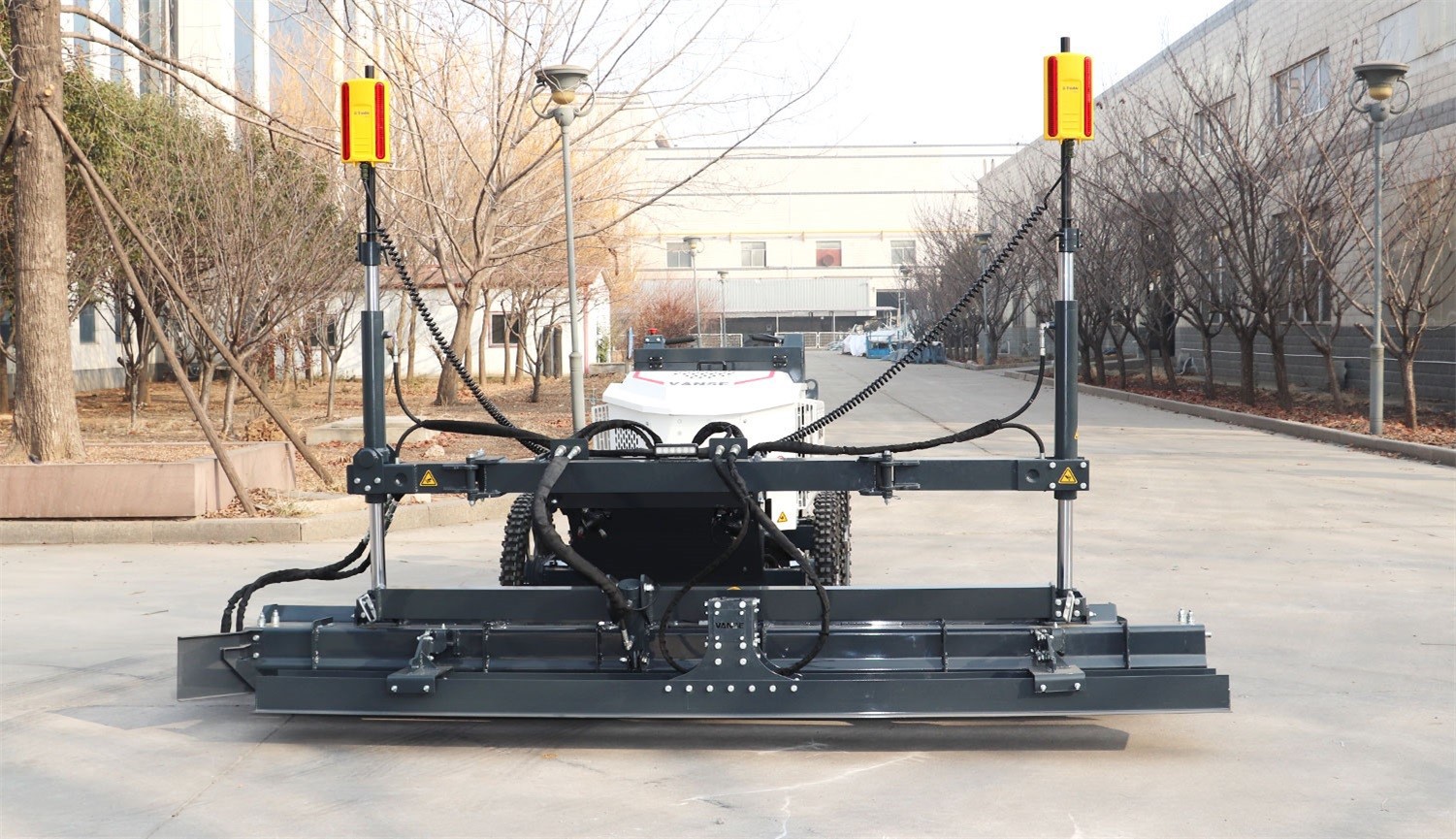
Pre-installation preparation
– Select a suitable location:
According to the shape, size and obstacle distribution of the construction site, choose an open, flat location that can fully cover the construction area to install the laser transmitter. Generally speaking, it can be placed near the center of the site or at the edge of the site where the terrain is higher, and avoid placing it in places that are susceptible to vibration and collision.
– Clean the installation surface:
Use cleaning tools such as brooms and rags to thoroughly remove dust, debris, oil and loose particles on the surface of the installation location to ensure that the surface is clean and flat, providing a good foundation for subsequent installation.
– Check the appearance of the transmitter:
Carefully check whether the laser transmitter has any external damage, such as cracked or deformed shell, and whether the lens has scratches, stains, looseness, etc., to ensure that the laser transmitter itself has no quality problems and damage, so as to avoid affecting its normal operation and installation stability.
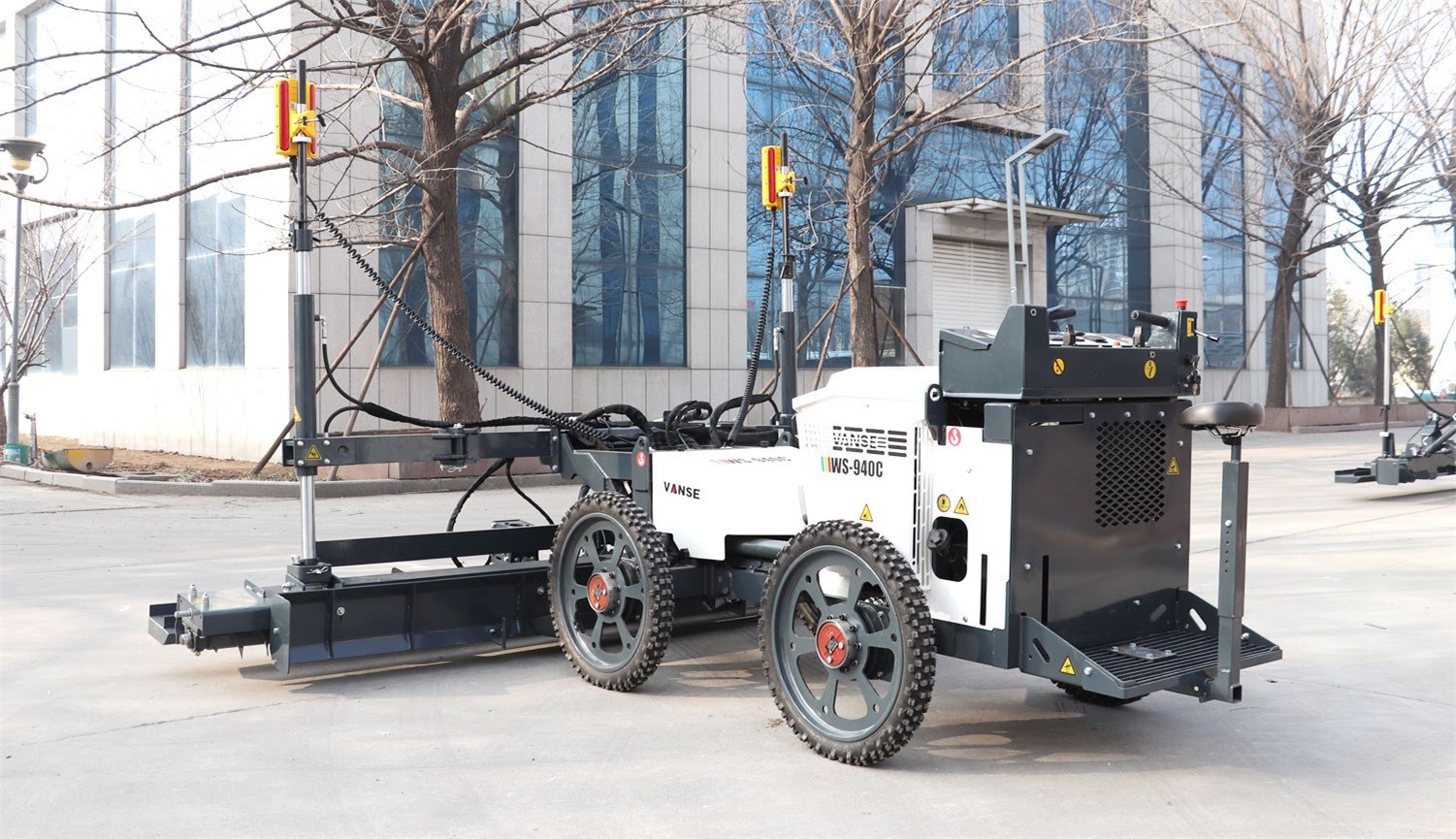
Installation process operation
– Use the level adjustment device:
When installing, use the level adjustment foot or level meter that comes with the laser transmitter. By adjusting the height of the level adjustment foot, the level bubble of the laser transmitter is located in the center position to ensure that the transmitter is in a horizontal state. For some high-precision laser transmitters, a high-precision electronic level may also be required for auxiliary calibration.
– Fix with a fastening device:
After placing the laser transmitter in the selected position, use the matching bolts, nuts, washers and other fastening devices to firmly fix it on the mounting bracket or foundation. When tightening the bolts, operate according to the specified torque value to ensure that the tightening force of each bolt is uniform to prevent the transmitter from tilting or loosening due to uneven force.
– Perform angle calibration:
According to the construction requirements, use the angle adjustment mechanism on the transmitter to accurately adjust the angle of the laser emission so that it maintains the correct angle relationship with the construction plane or reference plane. During the calibration process, angle measurement tools such as theodolites and total stations can be used for auxiliary measurement to ensure that the angle error is within the allowable range.
Post-installation inspection and maintenance
– Inspect installation stability:
After installation, gently shake the laser transmitter to check for looseness or shaking. At the same time, observe whether the horizontal state and angle of the transmitter have changed. If there is any abnormality, readjust and tighten it in time.
– Regular maintenance and calibration:
During the use of the concrete laser leveling machine, the laser transmitter should be inspected and maintained regularly. At regular intervals of working time or construction mileage, the transmitter's horizontality, angle, and accuracy of the laser beam should be calibrated and debugged to ensure that it always maintains a stable and accurate working state.
– Set up protective measures:
To prevent the laser transmitter from being disturbed and damaged by external factors, protective devices such as guardrails and protective covers can be set around it. The height and strength of the guardrail should be able to effectively prevent personnel and equipment from colliding with the transmitter, and the protective cover should be able to prevent rain, dust, and sun, providing a good working environment for the transmitter.
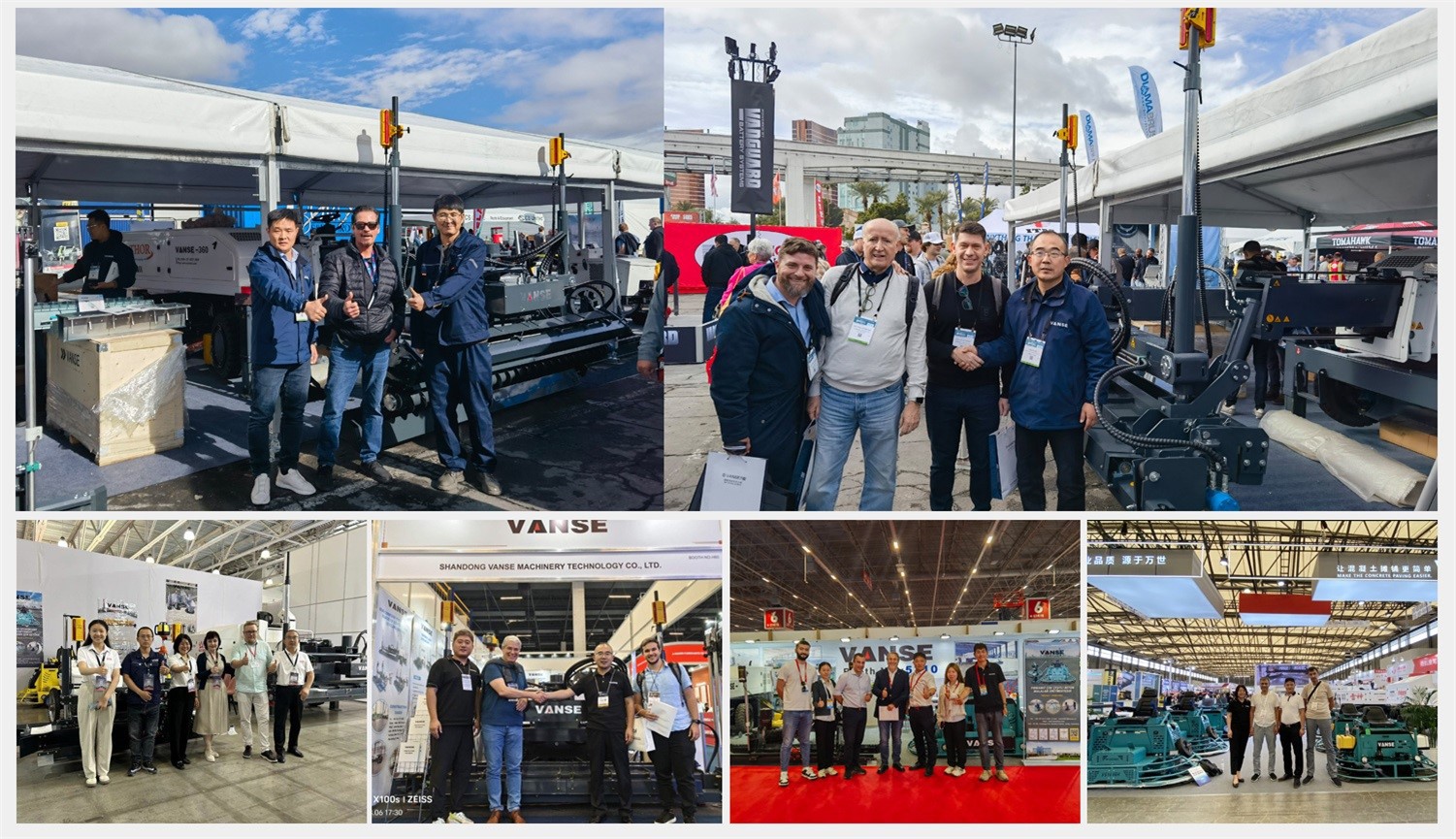
Thanks to All the Friends Who Support and Trust Shandong Vanse Machinery Technology Co., Ltd.
If you want to know more about Shandong Vanse Machinery Technology Co., Ltd. or have any questions, please feel free to contact us:
Our Factory
Shandong Vanse Machinery Technology Co., Ltd.








Share this article

About the Author: Shandong Vanse Machinery Technology Co., Ltd.
Shandong Vanse Machinery Technology Co., Ltd. is a high-tech manufacturer specializing in concrete construction machinery, including laser screeds and related equipment. The company integrates R&D, production, and global sales, with products exported to over 60 countries and widely used in infrastructure projects worldwide.
Previous Post
Next Post
Related Articles
You Might Also Like
How to ensure safety during the construction process of concrete laser leveling machine?
••◆◆◆•• Introduction As an indispensable construction equipment in the modern construction industry, the safe operation of the concrete laser leveling is crucial to ensuring the safety of personnel, the integrity of the equipment and the quality of the project at the construction site. This document aims to explain how to ensure safety during the construction process of concrete laser leveling machines, including compliance with safe operating procedures, equipment inspection and maintenance, wearing protective equipment, on-site safety warnings, construction personnel training, environmental risk assessment, and emergency plan preparation As well as construction progress and quality control. ••◆◆◆•• Comply with safe operating procedures 1. Before using the concrete laser leveling, you must read and understand the safe operating procedures of the equipment in detail to ensure that every operator is familiar with the safety requirements. 2. Operators must hold a certificate to work. Unlicensed or illegal operations are prohibited. 3. During the construction process, operators should always pay attention to the surrounding environment and avoid collisions with people, other equipment or obstacles. ••◆◆◆•• Equipment inspection and maintenance 1. Before starting the equipment, a comprehensive inspection should be carried out, including electrical systems, mechanical components, laser systems, etc., to ensure that the equipment is in good working condition. 2. During the use of the equipment, regular maintenance should be carried out and worn parts should be replaced in time to ensure stable performance of the equipment. 3. If there is a malfunction or abnormality in the equipment, stop it immediately for inspection and contact professionals for repair. ••◆◆◆•• Wear protective equipment 1. Operators should wear standard protective equipment, including safety helmets, work clothes, non-slip shoes, gloves, etc., to prevent accidents. 2. At the construction site, special protective equipment such as protective glasses and dustproof mouthpieces should also be worn as needed. ••◆◆◆•• On-site safety warning 1. Obvious safety warning signs, such as safety warning signs, warning lights, etc., should be set up at the construction site to remind personnel to pay attention to safety. 2. During the construction process, cordons or warning areas should be set up according to the actual situation, and non-construction personnel are prohibited from entering. ••◆◆◆•• Construction personnel training 1. Operators should receive comprehensive construction safety technical training and be familiar with equipment operation methods, safety requirements and emergency response measures. 2. Conduct safety education and training for construction personnel on a regular basis to improve their safety awareness and self-protection capabilities. ••◆◆◆•• Environmental risk assessment 1. Before construction, an environmental risk assessment should be conducted on the construction site to identify potential safety risks. 2. Develop corresponding risk control measures and emergency plans for the identified safety risks. ••◆◆◆•• Emergency plan preparation 1. Develop a detailed emergency plan, including accident reporting procedures, personnel evacuation and rescue measures, etc. 2. Conduct regular emergency drills to improve the ability to respond to emergencies. ••◆◆◆•• Construction progress and quality control 1. Develop a reasonable construction progress plan to ensure that the construction progress meets the design requirements and avoid safety risks caused by blind rush to work. 2. Strengthen construction quality control to ensure that the construction quality of concrete laser leveling machines meets relevant standards and specifications. ••◆◆◆•• Conclusion The safety assurance of the construction process of the concrete laser leveling is a systematic project that requires the joint efforts of all construction personnel. Safety risks during the construction process can be effectively reduced by complying with safe operating procedures, equipment inspection and maintenance, wearing protective equipment, on-site safety warnings, construction personnel training, environmental risk assessment, emergency plan preparation, and construction progress and quality control. , protect the life safety of construction personnel and ensure the quality and progress of the project.Laser leveling machine manufacturers explain to you in detail: Six major effects of engine oil on equipment
The laser leveling machine has attracted the attention of consumers since its launch, which has a lot to do with its own role. The engine oil has the unique role of lubrication and wear reduction, cooling, sealing and leak prevention, shock absorption and buffering on the equipment. It is precisely because of these humanized roles that the equipment has been welcomed by consumers. During use, the engine oil can effectively reduce the wear of the equipment. The following laser leveling machine manufacturer will take you to learn about the six major roles of engine oil on the laser leveling machine in detail. ★ Lubrication and wear reduction: In recent years, in order to pursue a smoother and more perfect ground, more and more people use laser leveling machines for construction. The use of equipment construction can ensure that the entire ground is dense and uniform, which has been well received by the construction industry. The laser leveling machine needs necessary maintenance after using it for a period of time. During maintenance, engine oil has a very large effect on the laser leveling machine. There is very fast relative sliding between the piston and the cylinder, and between the spindle and the bearing. Therefore, to prevent the parts from wearing too quickly, an oil film must be established between the two sliding surfaces. As long as there is a sufficient thickness of the oil film, the surfaces of the relatively sliding parts will be separated, so as to achieve the purpose of reducing wear. ★ Cooling and cooling: The engine oil can bring heat back to the oil tank and then dissipate it into the air to help the water tank cool the engine. Cleaning and cleaning: Good engine oil can bring carbides, sludge, wear metal particles, etc. on engine parts back to the oil tank through circulation, and wash the dirt generated on the working surface of the parts through the flow of lubricating oil. ★ Sealing and leakproof: The engine oil can form a sealing ring between the piston ring and the piston to reduce gas leakage and prevent external pollutants from entering the engine. Rust and corrosion prevention: Lubricating oil can be adsorbed on the surface of the parts to prevent water, air, acidic substances and harmful gases from contacting the parts. ★ Shock absorption and buffering: When the pressure at the cylinder port of the laser leveling machine engine rises sharply, the load suddenly added to the piston, piston chips, connecting rod and crankshaft bearings will be very large. This load will be transmitted and lubricated by the bearings and will buffer the impact load. The relevant knowledge points shared by the laser leveling machine manufacturer for you are basically explained here. If you have good suggestions or opinions, you can contact us in time. We will have professional technicians to help you solve the problem. Thank you for your continued attention and support.Jining concrete laser leveling machine manufacturer
Shandong Vanse Machinery Technology Co., Ltd. is a laser leveling machine manufacturer in Shandong. It focuses on the research and development of concrete laser leveling machines and is committed to creating a brand of concrete laser paving and leveling machines. The Shandong laser leveling machine produced by Vanse uses excellent laser technology to level the concrete floor. It is currently a high-precision leveling equipment with high accuracy and small error. The vibration frequency of the machine is 4000 times/minute, which ensures the compactness of the concrete floor and one-time forming. The operation is simple and flexible, with a high degree of automation, which greatly improves the construction efficiency. It is especially suitable for large-area floor construction. It can achieve a workload of 3,000 square meters per day and ensure that 350 square meters of work can be completed per hour, which greatly reduces labor costs and reduces labor intensity. Shandong Jining laser leveling machine laser measurement and control system automatically controls the elevation. The imported American laser system floor top surface design elevation is automatically controlled by the laser machine computer, which can ensure a very high ground flatness and can achieve precise leveling directly on the concrete layer. The ground flatness is not affected by the vibration of the construction template, and no formwork is required in the middle, which reduces the input of labor materials, reduces the construction procedures, and speeds up the construction progress. Laser leveling machines are super flat, super strong, and super economical. Since the 1990s, the "clear water concrete" (floor) floor and colored wear-resistant (floor) floor methods have been continuously promoted. After more than ten years of exploration and continuous improvement, through the upgrade of laser leveling machine equipment and the integration and improvement of process flow, the "three super" floors in the current "leveling" product series have reached domestic or international levels. 1. Reduce labor costs and double efficiency. The number of people in traditional construction is large, and it requires templates (channel steel), dotting, and paving. It requires about 20 people. The construction area is 700 square meters per day. The total number of people using concrete laser leveling machines is more than half of that of traditional processes. It can be operated by one person. The construction area is 2500-3500 square meters per day, which greatly reduces labor costs. 2. Laser point, high precision and low error. The traditional process leveling requires templates to control the elevation of the ground and pull control lines. The elevation error is large. The levelness and flatness of the entire floor cannot be guaranteed. The laser point transmitter is used, which is suitable for one-time paving of a large area. There is a laser measurement and control system to control the elevation in real time. There is no need to pull the wire for leveling, and there is no need to support the side plate in the middle to control the ground elevation. This avoids the elevation error caused by the vibration of the template (channel steel) during the construction process, and also reduces the elevation error caused by traditional manual block support. 3. Better flatness and integrity. Traditional construction technology, one day of formwork, one day of pouring, can only be skipped one by one, with great limitations, cannot be operated continuously, and poor integrity, which is easy to cause cumulative errors in construction joints. The concrete laser leveling machine has higher efficiency and integrity for one-time overall paving of a large area of floor. The completion of the entire floor makes the ground integrity better, which is completely impossible for traditional construction. 4. The ground is more dense and uniform. The high-frequency vibrator of 4000 times per minute allows the leveling head vibrator to produce uniform high-frequency vibration, making the concrete floor denser and more uniform.