Technical Knowledge
What are the construction advantages of concrete laser leveling machine?
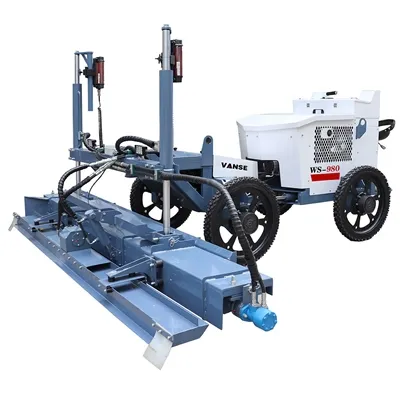
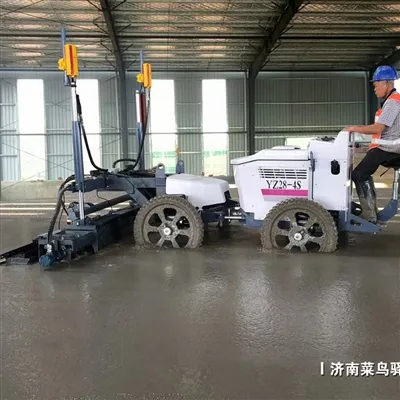
The concrete laser leveling is a high-tech concrete construction equipment. Its construction advantages are mainly reflected in the following aspects:
High precision and efficiency: The concrete laser leveling machine uses advanced laser technology to level large areas of concrete in a short time. At the same time, due to the high precision and efficiency of laser, labor costs can be greatly reduced and construction efficiency improved.
High flatness: The concrete laser leveling machine uses laser point-to-point construction, which can ensure the flatness of the concrete surface, making the entire construction area more flat and meeting high-precision requirements.
High strength and durability: The concrete surface leveled by the concrete laser leveling is very dense and has higher structural strength, which can improve the durability of the concrete. At the same time, due to the fast construction speed of the leveling machine, problems such as cracking and deformation of concrete can be reduced.
Environmental protection and energy saving: The concrete laser leveling machine is driven by electricity, which does not produce noise and pollution, and meets the requirements of environmental protection and energy sa
ving. At the same time, due to the fast construction speed of the leveling, concrete waste and energy consumption can be reduced.
Wide range of applications: Concrete laser leveling machine is suitable for various types of concrete construction, including roads, bridges, tunnels, airports, etc. At the same time, due to its high efficiency and high-quality construction, it can be widely used in various large-scale engineering and commercial buildings.
Reduce labor costs: Concrete laser leveling machines can replace traditional manual construction methods, reduce labor costs, and improve construction efficiency. At the same time, due to its high-precision and high-efficiency construction, it can reduce reliance on skilled workers and reduce labor costs.
Improve construction quality: The concrete laser leveling can accurately control the flatness and flatness error of the concrete surface, which can improve the construction quality and aesthetics. At the same time, due to its high efficiency and high-quality construction, it can reduce rework and repair problems during construction and improve construction efficiency.
In summary, the construction advantages of concrete laser leveling machines are mainly reflected in high precision, high efficiency, high flatness, high strength and durability, environmental protection and energy saving, wide range of applications, reduced labor costs and improved construction quality. These advantages can make concrete construction more efficient, precise and quality-reliable, thereby increasing the lifespan and value of buildings.
Thanks to All the Friends Who Support and Trust Shandong Vanse Machinery Technology Co., Ltd.
If you want to know more about Shandong Vanse Machinery Technology Co., Ltd. or have any questions, please feel free to contact us:
Our Factory
Shandong Vanse Machinery Technology Co., Ltd.








Share this article

About the Author: Shandong Vanse Machinery Technology Co., Ltd.
Shandong Vanse Machinery Technology Co., Ltd. is a high-tech manufacturer specializing in concrete construction machinery, including laser screeds and related equipment. The company integrates R&D, production, and global sales, with products exported to over 60 countries and widely used in infrastructure projects worldwide.
Previous Post
Next Post
Related Articles
You Might Also Like
How to choose a concrete laser leveling machine?
There are many aspects to consider when purchasing a concrete laser leveling. Here are some suggestions: 1. Determine needs and budget: Before choosing a concrete laser leveling, you need to clarify your needs and budget. First, consider the area that needs to be leveled, the hardness of the ground, the flatness that needs to be achieved, etc., and then choose the appropriate model based on your budget. 2. Understand the performance parameters of the machine: When purchasing a concrete laser leveling machine, you need to understand the performance parameters of the machine, including the performance indicators of the laser transmitter, receiver, controller, leveling head and other components. Among them, the power, spot size, spot shape, etc. of the laser transmitter will affect the leveling effect, and the sensitivity of the receiver will also affect the measurement accuracy. 3. Consider the reliability of the machine: Concrete laser levelinging machines require long-term, high-intensity work, so products with high reliability are needed. When purchasing, you need to pay attention to choosing products with high brand awareness and good reputation. At the same time, you should also pay attention to factors such as the material, structure, and service life of the machine. 4. Number and configuration of leveling heads: The number and configuration of leveling heads of the concrete laser leveling machine are also factors that need to be considered. Generally speaking, the greater the number of leveling heads, the faster the leveling speed, but it is also necessary to consider whether the leveling head configuration is suitable for actual needs. 5. Convenience of operation: When purchasing a concrete laser leveling, you need to consider whether it is easy to operate. Generally speaking, the simpler the operation and easier to use the machine, the better it is to use and can save a lot of time and cost. 6. Maintenance convenience: The maintenance of the concrete laser leveling machine is also a factor that needs to be considered. When purchasing, you need to pay attention to the convenience and cost of maintenance. 7. Manufacturer and service: Manufacturer and after-sales service are also factors that need to be considered. When choosing a manufacturer, you need to choose a company with technical strength, production scale and good after-sales service. In short, when purchasing a concrete laser leveling, you need to consider many factors, such as demand and budget, machine performance parameters, reliability, number and configuration of leveling heads, ease of operation, ease of maintenance, manufacturer and service, etc. Only by comprehensive consideration can you choose a concrete laser leveling that is cost-effective and meets actual needs.Curing Time Management of Dry-Applied Materials Under Different Climatic Conditions
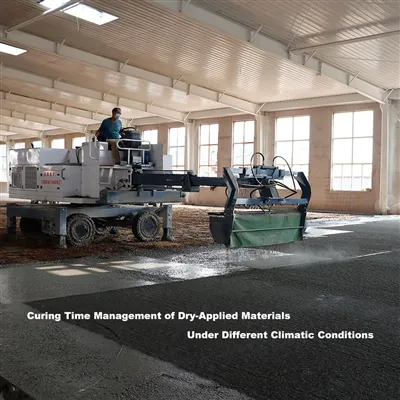
Under different climatic conditions, managing the curing of dry-applied materials (such as wear-resistant floor hardeners) is crucial for ensuring floor strength. Environmental temperature, humidity, and wind speed directly determine the rate of water evaporation and the efficiency of cement hydration reactions. The following are curing time management strategies for different climatic conditions: In this environment, water loss is extremely rapid, easily leading to cracking or delamination of the dry-applied material. Curing time management: Shorten the "water absorption waiting period" after dry application. Begin troweling immediately after the material darkens (indicating absorption of moisture from the base layer) to prevent the material from failing to bond with the base layer due to rapid water loss. Core operation: Increase spraying or use film curing to ensure stable dissipation of hydration heat. Low temperatures significantly slow down the hydration reaction of cement, leading to a substantial increase in curing time. Curing Time Management: Extend the monitoring period for initial and final setting times. When the temperature approaches 0°C, heating or insulation measures must be taken; otherwise, the dry-mix material may freeze and fail before complete curing. Key Operation: Strictly control the amount of dry-mix material to prevent premature cessation of bleeding from the base layer, which would prevent the material from being properly wetted. In high-humidity environments, water evaporation is extremely slow, and the surface tends to remain wet or even accumulate water for extended periods. Curing Time Management: Appropriately extend the time before using the power trowel to prevent premature finishing, which can lead to bubbles or peeling on the surface. Core Operation: Enhance ventilation to aid in water evaporation. If working outdoors, strictly monitor rainfall forecasts, as uncured material will be washed away by rain. Climate Types Water evaporation rate Curing speed Key Management Points Hot and dry Very high Very fast Prevent cracking, expedite construction, and ensure proper wet curing. Cold winters Very low Slow Strengthen insulation and prevent frost damage. Humid and rainy Low Slower Control the timing of finishing work and enhance ventilation. Note: The parameters provided in this document are for reference only and are not mandatory. Due to differences in technical characteristics between different brands and models of laser levelers, please consult the manufacturer for a suitable solution before actual operation. This reference document assumes no responsibility for any issues arising from failure to follow the manufacturer's instructions.How to perform post-inspection and treatment of concrete laser leveling machine?
Post-inspection and handling of the concrete laser leveling machine are very important to ensure the normal operation of the machine and extend its service life. Here are some suggestions: 1. Daily inspection: After the completion of daily construction, the levelinging machine should be inspected daily, including whether the fasteners are loose, whether the oil level is normal, whether there is any leakage, etc. These daily inspections can detect and solve potential problems in time, preventing small problems from accumulating into large failures. 2. Regular maintenance: According to the usage, make a regular maintenance plan, including replacing lubricating oil, cleaning the machine, checking sensors, etc. Regular maintenance can ensure that the performance indicators of the leveling machine are normal and extend the service life of the machine. 3. Professional maintenance: If you encounter problems that cannot be solved, you should seek help from professional maintenance personnel. Do not attempt to disassemble or repair the leveler yourself to avoid further damage or safety incidents. 4. Storage: When the concrete laser leveler is not in use, it should be stored in a dry and ventilated place, and the equipment should be kept clean. At the same time, the machine should be started regularly to keep it in good condition. 5. Battery maintenance: If the leveler uses battery power, attention should be paid to the charging and storage of the battery. Avoid overcharging or discharging and try to use the original charger for charging. 6. Recording and tracking: Establish detailed maintenance records to track machine usage and maintenance history. This helps to detect and deal with potential problems in time, while providing a reference for future maintenance. 7. Safe operation: Always comply with safe operating procedures and ensure that safety measures in the construction area are implemented. When using the leveler, avoid wearing loose clothing or accessories that may get caught in the rotating part. To sum up, the later inspection and processing of the concrete laser leveling machine need to be considered and implemented from the aspects of daily inspection, regular maintenance, professional repair, storage, battery maintenance, recording and tracking, and safe operation. Through the implementation of these measures, the normal operation and use effect of the concrete laser leveling can be ensured, its service life can be extended, and maintenance costs can be reduced.