Technical Knowledge
What are the applicable scopes of concrete laser leveling machines?

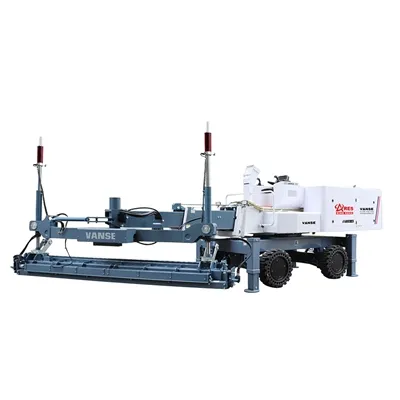
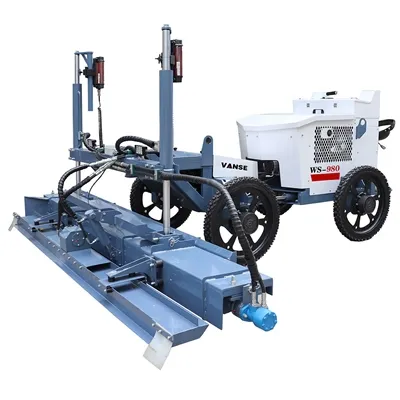
The concrete laser leveler is a modern construction equipment suitable for leveling various types of concrete surfaces. The following is the application scope of concrete laser leveling machine:
▶Concrete floors:
Concrete floors are one of the most common applications of concrete laser leveling machines, including various types of indoor and outdoor concrete floors, such as parking lots, squares, roads, etc.
▶Walls:
Walls are also one of the objects that the concrete laser leveling machine can process, including various types of walls, such as concrete walls, brick walls, etc.
▶Ceiling:
Ceiling is another applicable scope of concrete laser levelinging machine, including various types of indoor and outdoor ceilings, such as stadiums, stations, etc.
▶Bridges:
Bridges are one of the important applications of concrete laser leveling machines, which can be used for concrete leveling work on bridge decks, piers and other parts.
▶Tunnel:
Tunnel is another important application of concrete laser leveling machine, which can be used for concrete leveling work inside and outside the tunnel.
▶Highway:
The asphalt pavement of the highway can also be leveled using a concrete laser leveler to improve the quality and life of the road surface.
▶Other buildings:
In addition
to the above common applications, concrete laser leveling machines can also be used in other types of buildings, such as airports, convention and exhibition centers, museums, etc.
In general, the concrete laser leveling machine has a very wide range of applications and can perform concrete leveling work on various types of buildings and structures. If you need to perform concrete leveling work, you can use a concrete laser leveling machine to increase efficiency and quality.
Thanks to All the Friends Who Support and Trust Shandong Vanse Machinery Technology Co., Ltd.
If you want to know more about Shandong Vanse Machinery Technology Co., Ltd. or have any questions, please feel free to contact us:
Our Factory
Shandong Vanse Machinery Technology Co., Ltd.








Share this article

About the Author: Shandong Vanse Machinery Technology Co., Ltd.
Shandong Vanse Machinery Technology Co., Ltd. is a high-tech manufacturer specializing in concrete construction machinery, including laser screeds and related equipment. The company integrates R&D, production, and global sales, with products exported to over 60 countries and widely used in infrastructure projects worldwide.
Previous Post
Next Post
Related Articles
You Might Also Like
Common Sense of Using the Power Section of the Small Road Roller
First, the use of precautions1. When using, adjust and maintain according to the maintenance methods and various regulations described in the corresponding product manual. 2. It is not allowed to work at full speed and full load immediately after starting. It must be gradually transitioned from low speed and no load to high speed full load. 3. The fuel used in the diesel engine must be clean and should be allowed to stand for more than 72 hours. 4. The normal water temperature (75 °C ~ 95 °C) should be maintained for the diesel engine with radiator. When releasing the cooling water, you must first open the radiator cover (after the water temperature is lowered, then open it to avoid burns), and then unscrew the water discharge switch on the cylinder block. 5. The normal working oil pressure should be 0.2~0.4MPa. 6, the load must be strictly controlled, no overload is allowed, otherwise it will affect the reliability and service life of the diesel engine. 7. After the new or replacement injector, the medium-speed low-load running-in should be carried out, and the running-in time should not be less than 30 minutes. Before installation, the parts should be cleaned with clean kerosene or light diesel oil to remove anti-rust oil. 8. In the course of operation, if abnormal phenomena are found, stop in time. Second, fuel, oil and cooling water 1. Fuel Users should select the light diesel grades to be used according to the season and ambient temperature of the region. Recommendation: Use diesel fuel with a sulfur content below 0.5%. If the sulfur content is high, the oil change cycle will be shortened. Diesel filling and precautions Before the diesel engine is injected into the diesel engine, it must be allowed to stand for more than 72 hours, then the upper layer of clean diesel oil without water and impurities or filtered with silk cloth. Warning: (1) Do not fill fuel tank with fuel while the engine is running. (2) Do not smoke when filling the fuel tank with diesel fuel. (3) Use a clean oil pipe when refueling. Do not splash diesel oil outside. (4) Wipe off the spilled fuel. Materials that are fueled must be moved to a safe place. 2. Lubricating oil The oil must be selected according to the regulations. The viscosity of the oil is greatly affected by the temperature, and the user needs to correctly select the corresponding brand oil according to the ambient temperature. 3.cooling water should use clean soft water: rain, tap water or river water. If you use well water, spring water or other hard water with more minerals, you should add appropriate amount of softener, such as sodium carbonate (soda). The easiest way to do this is to boil the water and then precipitate it to remove impurities and use. In the cold winter, antifreeze can be added to the cooling system to prevent freezing. The most commonly used antifreeze is an aqueous solution of ethylene glycol (glycol) or alcohol. The use of antifreeze should be noted: Since the antifreeze has the characteristics of increasing volume with increasing temperature, when adding the cooling medium, the addition amount should be 5% to 6% less than the total capacity of the cooling system. Ethylene glycol – water-based antifreeze is toxic, special care should be taken when using it, and no entry is allowed. The boiling point of ethylene glycol is 194.4 ° C, so the water in the antifreeze is easy to evaporate, and the alcohol should be properly added after a period of use. If it is not anti-rust antifreeze, it should be removed regularly. When the diesel engine is used for a long time, the surface of the cooling water chamber will form scale, which will affect the heat dissipation of the diesel engine. For this reason, the scale should be cleaned regularly. The cleaning method is as follows: When cleaning, 25% hydrochloric acid solution can be injected into the water chamber and parked for 10 minutes. After that, the solution was drained and washed with water. If the scale is not removed, repeat it again Cooling water filling and precautions: (1) Fill the cooling water to the mark of the filling port. (2) Note that the drain valve is closed after the cooling water flows out from the drain valve. (3) Tighten the filler cap. (4) Start the engine and run to normal temperature until the thermostat is turned on (the cooling water pipe is obviously warmed up during the big cycle). (5) After the first operation, stop cooling and check the liquid level. Inspection and preparation before starting 1. When the new machine is started for the first time, carefully check the tight connection of each part, whether the attachment is complete, and whether the operating mechanism is flexible. 2. Check the oil level of the oil pan and the fuel injection pump between the upper limit mark and the lower limit mark of the oil scale. 3. Check the fuel storage capacity of the fuel tank. Turn on the fuel tank switch to allow diesel to flow to the fuel injection pump and remove air from the fuel system. 4. Check the battery and wiring. Check the electrolyte level in the battery. 5. Check the cooling system and add enough water. 6. In case of cold and freezing weather, the diesel engine should be placed in a cold-proof place. When working in the field, heat the oil sump and add two or three times of hot water to warm the diesel engine before starting. 7. The clutch should be in the separated state when the diesel engine starts. Startup After the preparation work before starting is completed and confirmed to meet the requirements, it can be started. The clutch should be disengaged when starting. The starting steps are as follows: 1. Push the lock switch to start the diesel engine. The starting time is less than 5 seconds each time to protect the starter and battery. After each failed start, stop for 1-2 minutes and start again. If the start fails three times in a row, you should find out the cause and troubleshoot before starting again. Once the diesel engine is started, the starter switch key should be released immediately and the lock switch should be returned to its original position. 2. Check the oil pressure immediately after starting. When the diesel engine is running at idle speed, the oil pressure should not be lower than 0.05MPa. After the newly assembled diesel engine is started for 5 minutes, stop the oil level of the oil pan and check if necessary, add oil so that the oil level is between the upper and lower marks on the oil scale. 3. Within one minute after starting the diesel engine, the water temperature gauge should be checked immediately to confirm that the cooling system is working properly. V. Operation After the diesel engine is started, the full-load operation should not be carried out immediately. The diesel engine should be heated in the idle mode at low speed and medium speed. 1. When operating, always pay attention to the oil pressure and cooling water temperature. When the speed is calibrated, the oil pressure should be 0.2~0.4MPa (2~4kgf/cm) 2. The temperature of the cooling water outlet is controlled at 80-90 °C. 3. When the diesel engine is running, always pay attention to observe whether the reading on the instrument panel is normal, whether there is abnormal sound. If it is found, it should be stopped immediately to check and find the cause and then allow it to start and run again. 4, always pay attention to the sealing of the oil and water connections, if there is a leak, it should be immediately removed. 5. The charging generator must be charged to the battery during operation, and the ammeter pointer points to “+”. 6. New or overhauled diesel engines are allowed to run at full speed at full speed after 50 to 100 hours of operation. Small roller parking 1. Remove the load and gradually reduce the speed to idling for 3 to 5 minutes before parking. 2. When the temperature is lower than 5 °C, if antifreeze is not used, the cooling water should be drained in time after parking to prevent cracking of the body. 3. After each stop, the faults found during operation must be discharged in time, and necessary inspections should be carried out. The diesel engine should be inspected and maintained frequently, and some sporadic faults should be eliminated in time to keep the diesel engine working properly and avoid serious faults. The necessary conditions for good economic returns. Daily maintenance of small road roller: (in combination with inspection preparation work), the driver usually carries out maintenance every day; check the fuel tank fuel quantity and add enough; check the oil level in the oil sump, when it is insufficient, it should be added; check and eliminate leakage and leakage Oil and gas leakage; check the stability of each accessory device; check the liquid level of the water tank.How to choose a concrete leveling machine
What are the advantages of the leveling machine? High precision laser elevation control system is adopted, which integrates three functions of measurement, leveling and surface finishing, and the efficiency is higher than that of manual work; Compared with manual robot construction, the leveling robot has lighter weight and smaller size, and can be constructed on double-layer reinforcement mesh and narrow room; The leveling accuracy is high. The basement construction can directly meet the levelness / flatness requirements of the concrete leveling layer at the construction stage of the main structure. It can be formed at one time, directly omit the subsequent floor construction, speed up the progress and save the cost. YZ30-4E Actual Picture of Construction Site With its unique two degree of freedom adaptive system, the machine can ensure that the machine can work stably on reinforced concrete; It can automatically set the leveling planning path and realize the automatic leveling construction of concrete ground. Compared with the actual construction, its work efficiency and accuracy are much higher than those of manual work. DZ25-2 actual picture of construction site According to the R & D team, the laser leveling machine project team has carried out many iterative updates, and finally improved the leveling accuracy of the machine from 11 mm to less than 3 mm, and the efficiency is synchronously improved by 2-3 times. YZ28-4S actual picture of construction site Vanse laser leveling machine series products have been introduced to the market for 10 years. After the test of tens of thousands of customers around the world, they have been highly praised by everyone. The R & D team of Shandong Vanse Machinery Technology Co., Ltd. will continue to strive for higher efficiency, smaller error and more intelligent operation mode, and strive to provide customers with more high-quality mechanical products.Can self-leveling cement repair concrete floors?
Self-leveling cement is a special concrete material with the characteristics of strong fluidity, high strength, low shrinkage and high density. Therefore, it can be used to repair cement floors, but there are some issues that need to be paid attention to. First of all, for cement floors that are not seriously damaged, you can clean the floor first, and then use an appropriate amount of self-leveling cement to repair it. Before repairing, you can mix the self-leveling cement with an appropriate amount of water, stir evenly, and then pour it on the damaged floor to allow it to level naturally. After the self-leveling cement dries, you can get a repaired flat floor. Secondly, for severely damaged cement floors, the damaged floors need to be completely removed first and then repaired with self-leveling cement. Before repairing, the ground needs to be leveled first, using cement mortar or concrete. After leveling, mix the self-leveling cement with an appropriate amount of water, pour it on the ground, and let it level naturally. After the self-leveling cement dries, you can get a repaired flat floor. It should be noted that the amount of self-leveling cement should not be too much, otherwise it will increase the thickness of the ground and affect its service life. At the same time, the ground needs to be cleaned and leveled before repairing, otherwise the repair effect will be affected. In short, self-leveling cement can be used to repair cement floors, but it needs to be selected and used according to the actual situation. If used properly, good repair results can be obtained and the service life of the floor can be extended.