Technical Knowledge
What are the applicable scenarios of the concrete laser leveling machine?
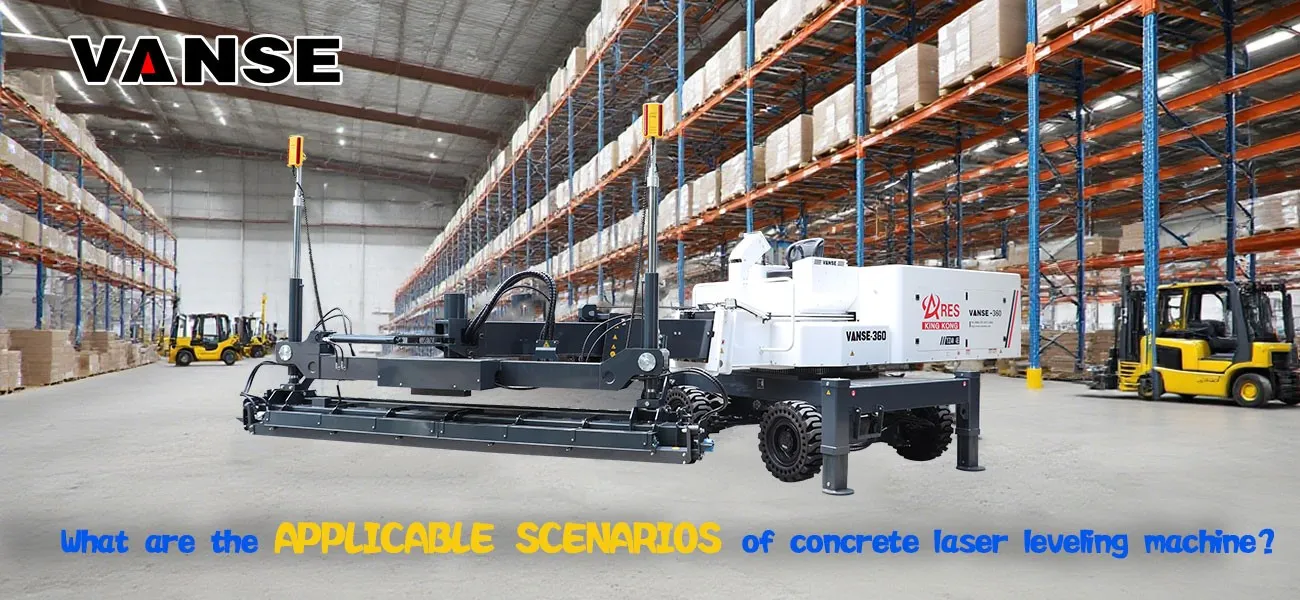
Summary of core application scenarios of concrete laser leveling machine
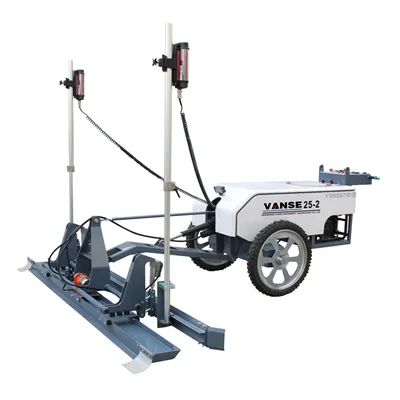
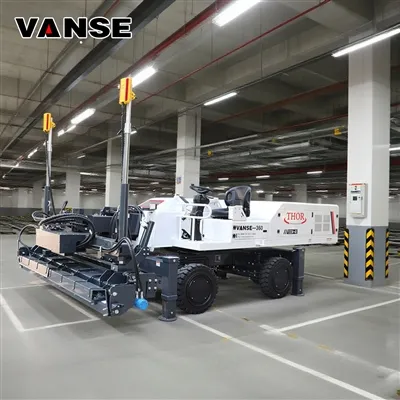
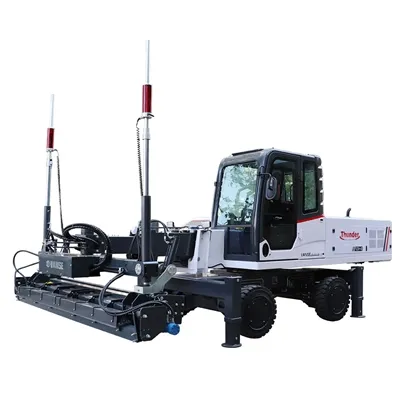
The concrete laser leveling is a highly efficient construction device that uses a laser measurement and control system to achieve automatic leveling. Its core value lies in its ability to efficiently complete large-scale concrete floor construction with medium to high requirements for flatness, levelness, and density in a single operation. It primarily replaces traditional manual formwork and scraper leveling processes, delivering a qualitative leap in precision, efficiency, and overall integrity.
1. Core application areas (by industry classification)
| Field Classification | Typical scenarios | Core requirements and equipment advantages |
| 1) Industry and warehousing | Automated logistics warehouses |
Requirements: Ensure smooth operation of AGVs, stackers, and forklifts; withstand heavy loads; be wear-resistant and dust-free.
Advantages: Achieve extremely high flatness (e.g., ±3mm/3m), ensure uniformity over large areas, reduce equipment operation and maintenance costs, and provide seamless, high-strength flooring. |
| Large industrial plants (automotive, electronics, pharmaceuticals, etc.) | ||
| Production workshops and warehouses | ||
| 2) Commercial and public facilities | Large supermarkets/shopping malls |
Requirements: Balance comfort, safety, and aesthetics; durability required in high-traffic areas; precise drainage slope required for parking lots.
Advantages: Efficient and shortened construction schedule; precise slope control to prevent water accumulation; and a perfect, aesthetically pleasing base surface. |
| Underground parking lot | ||
| Airport terminal, high-speed rail station | ||
| Exhibition centers, gymnasiums | ||
| 3) Municipal administration and infrastructure | Municipal roads, auxiliary roads, squares |
Requirements: Durability and impermeability; operation within specialized spaces (such as pipe corridors); extremely flat tank floor to ensure smooth water flow.
Advantages: Small equipment adapts to narrow spaces; improved density and leak resistance; precise control of slope and flatness. |
| Underground utility corridors/tunnel surfaces | ||
| Sewage treatment plant/water plant tank bottoms | ||
| 4) Special application scenarios | Cold Storage Flooring |
Requirements: Low-temperature resistance to frost heave; providing a perfect base for high-end surface coatings.
Advantages: Reduces cold bridge cracks; the flatness of the base determines the final effect and lifespan of the surface coating, so machine-leveling is the best option. |
| Wear-Resistant Flooring/Epoxy Flooring Base Treatment |
2. Advantages Summary (vS. Traditional Crafts)
Ultra-high precision:
Flatness can reach ±2-3mm/3m, far exceeding manual accuracy.
Extremely high efficiency:
A single-day work area of over 2,000 square meters can be completed, 5-10 times faster than manual labor, significantly shortening construction time.
Improved integrity:
Reduced construction joints avoid potential cracks and unevenness caused by block pouring.
Increased floor strength:
High-frequency vibration increases concrete density and improves wear and pressure resistance.
Reduced labor costs:
Automated operation reduces reliance on skilled workers and reduces labor intensity.
3. Scenarios Where This Is Not Applicable or Requires Cautious Evaluation
Despite its outstanding advantages, laser leveling machines are not omnipotent and may not be applicable or cost-effective in the following scenarios:
For very small areas (e.g., <50 m2):
Equipment delivery and commissioning costs may be higher than labor costs.
For complex and irregularly shaped surfaces (e.g., multi-curved and undulating artistic floors):
The equipment is suitable for regular flat or inclined surfaces, but complex shapes still require manual shaping.
For temporary surfaces with very low strength requirements (e.g., temporary construction paths):
High precision is not required; simple manual leveling can meet the requirements.
For ultra-thick base construction:
When pouring too thick a layer in one go, additional paving equipment may be required for preliminary paving.
Summarize
Concrete laser leveling are a powerful tool in modern floor construction, with applications centered around the key concepts of "large-scale," "high precision," "high efficiency," and "high demands." With the rapid development of modern logistics, intelligent manufacturing, and large-scale infrastructure, they have rapidly gained popularity and become the mainstream and preferred equipment for industrial flooring, large public buildings, and municipal projects. When selecting a laser leveling, a comprehensive assessment should be made based on the specific project area, precision requirements, budget, and construction schedule.
Click the below to jump immediately!!!


CONCRETE LASER LEVELING MACHINE


Thanks to All the Friends Who Support and Trust Shandong Vanse Machinery Technology Co., Ltd.
If you want to know more about Shandong Vanse Machinery Technology Co., Ltd. or have any questions, please feel free to contact us:
Our Factory
Shandong Vanse Machinery Technology Co., Ltd.








Share this article

About the Author: Shandong Vanse Machinery Technology Co., Ltd.
Shandong Vanse Machinery Technology Co., Ltd. is a high-tech manufacturer specializing in concrete construction machinery, including laser screeds and related equipment. The company integrates R&D, production, and global sales, with products exported to over 60 countries and widely used in infrastructure projects worldwide.
Previous Post
Next Post
Related Articles
You Might Also Like
Introduction to the construction process and precautions of laser leveling machine
Regarding the construction process and precautions of the laser leveling machine, I believe this is also a question that operators are more concerned about. We all know that if we want to use the laser leveling machine better, we need to understand its construction process and precautions. In order to help everyone use the equipment better, we will introduce this aspect to you in the next article. I hope you will be interested in it. Check whether the outer template has been fully supported, confirm that the laser leveling construction equipment is intact, find the specified elevation, and install the laser transmitter; check whether the slump of the concrete on site meets the requirements of laser leveling. When using the precision laser leveling machine, the slump of the concrete is required to be 160±10mm; and confirm that the concrete can be supplied continuously. Be careful to avoid obstacles when installing the laser transmitter; the speed of the laser leveling machine should not be too fast during leveling; the concrete should be initially leveled before leveling, and the concrete after initial leveling should be higher than the established elevation. 1. Before starting work, one operator shall check the machine equipment, set up the transmitter with the operator, and install the handheld receiver; adjust the scraper of the floor machine in a static state, and there shall be no error at two points; operate the laser leveling machine, observe whether the machine is working properly, check whether the laser receiver is in a horizontal position, and supervise whether the material replenisher is scraping and filling in time; at the end of the construction on the same day, clean the machine after the machine cools down, and check whether the functions of the machine are normal; check the power of the transmitter. 2. One operator shall assist the operator in installing and debugging the machine, and set up the transmitter with the main operator and install the handheld receiver. Check whether the transmitter is placed safely; measure the height of the concrete after preliminary paving; measure the height of the concrete after leveling. Focus: the edge of the concrete and the concrete surface scraped by hand; at the end of the construction on the same day, clean the machine after the laser leveling machine cools down, and check the power of the handheld receiver. 3. When the laser leveling machine is not operated, two material replenishers shall perform preliminary leveling of the concrete with the paving worker. When following the machine, they shall obey the instructions of the main operator and scrape and fill the machine scraper position. 4. 2-4 pavers need to follow the command of the operator and perform preliminary leveling of the concrete. The above are the precautions and construction processes for the use of laser leveling machines introduced by the manufacturer. I hope it can provide you with some effective reference opinions. If you have any questions or don't understand the above issues, you can call us for consultation. We will patiently answer your questions.What are the benefits of using a laser leveling machine for concrete construction?
Concrete laser levelings have become a core piece of equipment for achieving high quality standards in modern floor construction. Their advantages are multifaceted and revolutionary, far surpassing traditional manual construction methods. The following are the main advantages of concrete laser leveling machines in construction, divided into four aspects: efficiency, quality, cost and safety: Technical principle: The leveling machine receives the rotating laser signal generated by the laser transmitter, and the control system automatically adjusts the height of the scraper in real time to achieve precise control of the concrete elevation. Results: This completely eliminates the errors associated with manual rebar punching and leveling, easily achieving ultra-high precision of FF 50/FL 35 (American Concrete Institute standards) and even exceeding FF 100/FL 80. This is impossible to achieve manually, making it particularly suitable for logistics warehouses, large supermarkets, clean workshops, aircraft hangars, and other locations with extremely high floor requirements. Technical principle: The equipment's high-power vibrator produces uniform, high-frequency vibrations, making the concrete aggregate more evenly distributed and the thickness of the mortar floating layer consistent. Effect: Greatly reduces the pores and bubbles in the base layer, making the concrete denser and stronger, thereby significantly improving the wear resistance, compression resistance, and impact resistance of the ground and extending its service life. Technical principle: The construction efficiency of the laser leveling machine allows one-time continuous pouring of ultra-large areas (up to tens of thousands of square meters). Effect: Construction joints formed by multiple pourings are reduced, thus fundamentally avoiding potential cracking problems caused by joints. The entire floor becomes a complete plate with better structural performance. A laser leveling machine can achieve an average productivity of 150-300 square meters per hour, 10-15 times faster than traditional manual construction methods. This significantly shortens construction timelines and saves valuable project time. Traditional craftsmanship: A large number of workers are required to perform heavy physical labor such as supporting formwork, making mortar cakes, scraping bars and leveling. Laser leveling: It can be completed by only 1 equipment operator and 4-6 auxiliary workers responsible for paving concrete and operating the laser transmitter, saving more than 60% of labor, reducing dependence on skilled workers and management difficulty. A substantial reduction in the number of employees directly means a significant drop in labor costs, which is particularly advantageous today when labor costs are increasing. Because the floor is highly flat, has good integrity, and is less susceptible to dust and cracking, the frequency and cost of subsequent maintenance (such as repairs, polishing, and curing) are greatly reduced. This is a very important long-term value for the owner. Precise elevation control avoids concrete waste caused by over-thick pouring. In theory, it can achieve "zero error" pouring thickness and save materials. Workers are freed from heavy bending and squatting labor and can now focus on operating and maintaining machinery, greatly reducing labor intensity. The shortened construction period means that the exposure time of safety risks of the entire project site is reduced, which indirectly improves the overall safety of the project. Advantages Traditional manual construction Laser Leveling Installation Results: Flatness/Levelness Relies on experience, low precision (FF20-30) Fully automatic control, extremely high precision (FF50+) Meets high-standard requirements, such as automated warehouses. Construction Efficiency Slow, 50-100 m2/day/group Extremely fast, 1000-2000 square meters/day/machine Significantly shortens construction timelines and accelerates project progress. Number of Workers Requires a large number of skilled workers (10-15 people) Reduced staff requirements (5-7 people) Reduces labor costs and management complexity. Surface Integrity Prone to delamination, uneven strength High density, high strength, and excellent integrity Durable and wear-resistant, with a long service life. Maintenance Prone to dust and cracking, frequent maintenance Resistant to damage, extremely low maintenance costs Saves long-term costs for owners. Labor Intensity High-intensity physical labor Mechanically operated, low labor intensity Improves the work environment and makes recruitment easier. In short, the concrete laser leveling represents not only an upgrade to construction tools but also a revolution in construction technology. Through automated, digital, and precise control, it achieves breakthroughs in quality, efficiency, cost, and safety, making it an indispensable and critical piece of equipment for modern large-scale floor construction. Click the below to jump immediately!!!What are the advantages and limitations of concrete laser levelings?
Concrete laser levelings offer many advantages, including 1. High flatness: The concrete laser leveling machine uses laser technology, which can accurately control the height and slope of the ground to achieve high-precision ground leveling. 2. High efficiency: Compared with the traditional manual leveling method, the concrete laser leveling machine can greatly improve the construction efficiency and shorten the construction period. 3. Reduce material waste: Due to the high leveling accuracy, it can reduce the waste of concrete materials and reduce costs. 4. Easy to operate and maintain: The concrete laser leveling machine is simple to operate and requires low skills of workers. At the same time, the equipment is also easier to maintain. 5. Applicable to various floors: The concrete laser leveling machine can be applied to a variety of different floors, such as cement, asphalt, etc. However, concrete laser levelings also have some limitations: 1. Higher cost: The purchase and maintenance cost of a concrete laser leveling is higher, which may increase the total investment of the project. 2. Limited adaptability to terrain: The concrete laser leveler has limited adaptability to terrain, and may not be able to level some special terrain or obstacles. 3. Professional operation and maintenance are required: Although operation and maintenance are relatively simple, professionals are still required to operate and maintain the equipment to ensure the performance and life of the equipment. 4. Not suitable for small-area construction: For small-area construction projects, it may not be cost-effective to use a concrete laser leveler because of its higher cost. 5. Not suitable for short-term construction projects: Since concrete requires a certain amount of time to harden and stabilize, it may not be suitable to use a compact laser leveling for short-term construction projects. In general, concrete laser leveling machines have significant advantages in improving construction efficiency and achieving high-precision ground leveling. They are especially suitable for large industrial plants, logistics centers, airports and other places that require high-precision and high-strength floors. However, limitations such as its high cost and limited adaptability to terrain also need to be considered in practical applications.