Technical Knowledge
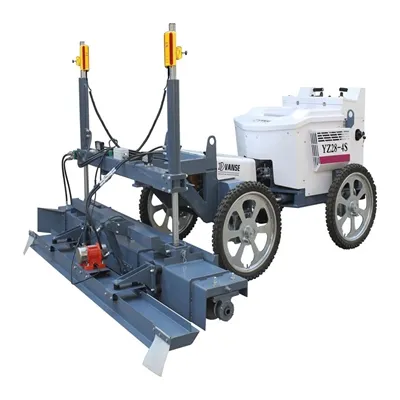
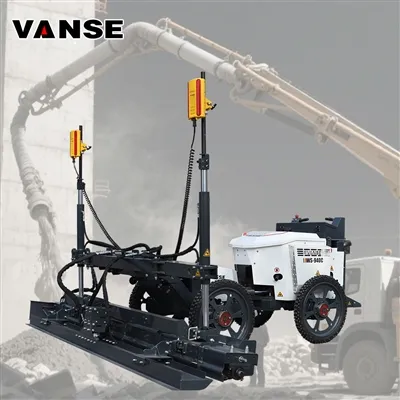
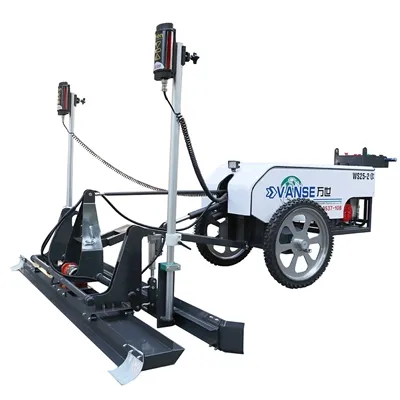
What are the advantages and disadvantages of concrete laser leveling machine in construction?
1. Advantages
● Efficiency:
The concrete laser leveling machine uses laser technology for precise leveling, which greatly improves construction efficiency. Compared with traditional manual leveling methods, laser leveling machines can complete large-area ground leveling work faster.
● High precision:
The laser leveling machine can ensure the accuracy of the ground flatness through the laser control system. This is particularly important in some engineering projects that require extremely high ground flatness.
● Stable quality:
Since the construction process of the laser leveler is automated and standardized, it can effectively reduce the impact of human factors on the construction quality, thereby ensuring a more stable construction quality.
● Cost savings:
Although the initial investment of a laser leveler may be large, due to its high construction efficiency and good quality, it can save a lot of labor and material costs in the long run.
● Wide scope of application:
The concrete laser leveling machine is suitable for leveling a variety of ground materials, such as concrete, mortar, etc., and has strong versatility.
2. Shortcomings
● Large initial investment:
As an advanced construction equipment, the purchase and maintenance costs of concrete laser levelings are relatively high, which may cause certain pressure for some construction units with limited funds.
● High technology dependence:
The operation and maintenance of laser leveling machines require certain professional and technical knowledge. If the operator has insufficient skills or improper maintenance, it may cause the equipment performance to decrease and even affect the construction quality.
● Construction environment restrictions:
Although the laser leveler is suitable for a variety of ground materials, its construction effect may be affected in some special construction environments, such as slippery and muddy sites.
● Dependence on power supply and water source:
Laser leveling machines require stable power supply and water supply during the construction process. If the power supply and water supply at the construction site are unstable or insufficient, it may affect the normal operation of the equipment.
● Operation complexity:
Compared with traditional construction equipment, the operation of concrete laser levelinging machines is relatively complex and requires operators to have a certain technical level and experience. This increases the difficulty and complexity of construction to a certain extent.
In summary, the concrete laser leveling has significant advantages in construction, but there are also some shortcomings. When choosing whether to use a laser leveler, the construction unit needs to comprehensively consider factors such as engineering needs, technical strength, and economic costs.
Thanks to All the Friends Who Support and Trust Shandong Vanse Machinery Technology Co., Ltd.
If you want to know more about Shandong Vanse Machinery Technology Co., Ltd. or have any questions, please feel free to contact us:
Our Factory
Shandong Vanse Machinery Technology Co., Ltd.








Share this article

About the Author: Shandong Vanse Machinery Technology Co., Ltd.
Shandong Vanse Machinery Technology Co., Ltd. is a high-tech manufacturer specializing in concrete construction machinery, including laser screeds and related equipment. The company integrates R&D, production, and global sales, with products exported to over 60 countries and widely used in infrastructure projects worldwide.
Previous Post
Next Post
Related Articles
You Might Also Like
What is the difference of concrete laser leveling machine VS man construction?
In recent years, with the continuous development of the economy and society, there are more and more construction demands for large-area sites such as parking lots, large squares, and industrial plants, because these sites mainly use concrete to pour the foundation on site, and then cover it with floor tiles or floor tiles. Flat paint, so higher requirements are put forward for the flatness of the base layer. In order to ensure that the flatness of the ground after construction reaches an ideal level, a concrete laser leveling machine is required at this time. So, what is the difference between concrete laser leveling machine construction and manual construction? What are the significant construction advantages of the concrete laser leveling machine itself? █Traditional construction methods The common concrete floor construction method is to manually level it, and then use a trowel to smooth it. This method requires a lot of labor, and the quality of the construction process is not controlled. It needs manual corrections, repeated measurement and adjustment of the ground under construction, and the efficiency is not high. The construction of large-area concrete floors requires the use of a large number of wooden or metal plates in advance to form the side formwork, and the height of the side formwork is measured by a level to control the height of the concrete after laying. Due to the need to use a level instrument for multi-point measurement, re-measurement is required after the side formwork is laid to ensure accuracy. Therefore, the process is prone to human error. In addition, the dismantling of the side formwork also requires a lot of labor. █Intelligent construction method 1. Operating principle Pre-set up the Topcon laser transmitter on the construction site to provide the working elevation reference surface, use the Topcon receiver LS-B110 fixed on the laser leveling machine to receive the laser elevation position signal, and transmit the real-time elevation position signal to the controller, which automatically controls The electric push rod or hydraulic system of the concrete laser leveling machine ensures that the elevation of the receiver is equal to the reference surface, and the mechanical device of the leveling machine realizes paving according to the set height. 2. Construction advantages The advantages of using concrete laser leveling machine for concrete leveling are highlighted in the following aspects: (1) It can easily lay high-strength concrete, low-slump concrete and fiber cement concrete; (2) The construction quality is high, and the leveling quality of the laser leveling machine is more than three times higher than that of the traditional manual construction method, reaching an ultra-flat ground; (3) Improve work efficiency and save labor. Concrete laser leveling machine is used for construction to shorten construction time, improve work efficiency and save labor; (4) Change the heavy physical labor to mechanical paving, vibrating, leveling, pulping, and plastering, reducing the number of operators, reducing labor intensity, and creating high-quality ground; (5) The application of concrete laser leveling machine not only saves costs compared with traditional manual processes, but also has fewer ground joints and greatly reduces maintenance costs in the later period, thereby significantly improving economic benefits; (6) The use of concrete laser leveling machine can realize large-scale construction, reduce a large number of construction joints, reduce the slump of concrete, ensure the strength of concrete, make the ground integrity good, and cracks are not easy to appear. Summary of this chapter: Although the concrete laser leveling machine is a new equipment with sophisticated technology emerging in recent years, it is widely used in airport runways, high-speed rail platforms, large workshop roads, etc., which have extremely high requirements for ground flatness. In engineering projects, if it can be widely popularized and promoted, it will definitely bring very considerable construction benefits.How does a concrete laser leveling machine work?
The core operating principle of a concrete laser leveling machine is a closed-loop control system combining "laser positioning reference + real-time signal feedback + automatic mechanical execution" to achieve high-precision leveling and vibration of the concrete surface. Essentially, this system replaces the traditional manual "relative level determination" with the laser's "absolute level reference," eliminating human error and ensuring that the flatness and levelness of the finished surface meet high standards. Its workflow can be broken down into four core steps: reference establishment, signal detection, command calculation, and mechanical execution. The detailed principles are as follows: Before understanding the principles, it is necessary to first understand the core components of the device. All actions revolve around the coordination of these three systems: System Name Core Components Core Functions Laser Positioning System Laser Transmitter, Laser Receiver Establishes an "absolute level/slope baseline" and detects height deviations between the concrete surface and the baseline in real time. Electrical Control System Central Controller (PLC), Sensors Receives deviation signals from the receiver, calculates them, and sends action commands (raise/lower, accelerate/decelerate) to the actuators. Mechanical Actuation System Leveling Scraper, Vibrator, Travel Mechanism Executes controller commands: adjusts scraper height for leveling, vibrators for compacting concrete, and travel mechanisms for moving the equipment. The operation of a concrete laser leveling is a dynamic closed-loop process of **"real-time detection → instant adjustment → continuous leveling"**, which can be divided into four steps: This is the prerequisite for high-precision leveling, the purpose of which is to set a fixed, unchangeable reference datum for the leveling surface (replacing the traditional "level + ruler" artificial datum). Operation: Place the laser transmitter on a stable support at the construction site (away from sources of vibration and electromagnetic interference). Use a level to align the transmitter so that it emits a 360° circular laser beam (which can be set to a "level reference" or a "preset slope reference," such as a 2% drainage slope). Principle: Lasers have the physical properties of strong directionality, good monochromaticity, and stable propagation. They exhibit virtually no attenuation over short distances (typically within 100 meters), forming an "absolute level/slope" baseline that remains stable despite manual operation or equipment movement. Key: The laser transmitter must be independently powered and securely fixed to prevent vibration or impact that could cause the baseline to shift. Any shift will cause errors in all subsequent leveling operations. The laser receiver (usually installed on the leveling support or top of the machine) is responsible for capturing the laser reference line in real time, comparing the "concrete surface height" with the "reference line height" and detecting the deviation value. Detection Process: The receiver contains multiple built-in photosensors (or photoelectric sensors). When a laser beam strikes the receiver, the photosensors at different locations determine the current concrete surface height based on the "height at which they are illuminated." If the location of the receiver illuminated by the laser is above a preset reference (indicating a low concrete surface), a signal indicating "raise the scraper" is output; if the location is below the reference (indicating a high concrete surface), a signal indicating "lower the scraper" is output. Deviation signals are transmitted to the central controller in real time via wired or wireless means (such as Bluetooth or radio frequency), typically at a frequency of 10 to 50 times per second, ensuring that the controller is instantly aware of surface height changes. Additional Note: Some high-end equipment may be equipped with multiple receivers (such as one at the front and one at the rear) to simultaneously detect heights at different locations, preventing single-detection errors caused by equipment tilt. The central controller (with a programmable logic controller (PLC) at its core) is the "brain" of the equipment. It receives deviation signals from the receiver, performs rapid calculations based on preset parameters (such as leveling thickness and vibration frequency), and generates specific execution instructions. Operational Logic: If the deviation is small (e.g., ±1mm), the controller will only fine-tune the oil flow in the scraper lift cylinder to achieve slight scraper movement, avoiding over-adjustment and surface fluctuations. If the deviation is large (e.g., ±5mm), the controller will increase the hydraulic cylinder movement and may also adjust the travel mechanism speed (e.g., slowing down the travel mechanism to allow the scraper sufficient time to level). If a "loss of signal" is detected (e.g., the receiver temporarily leaves the laser beam), the controller will immediately pause scraper adjustment and issue an alarm to avoid unintended action. Key: The controller's response speed directly impacts accuracy-high-quality equipment typically has a command calculation and execution delay of less than 0.5 seconds, allowing it to keep up with changes in concrete surface height in real time. The controller's instructions are ultimately transmitted to the mechanical execution system, which adjusts the height of the leveling scraper and compacts the concrete with the vibrator, completing the dual functions of "leveling + compacting". This is also the core advantage of laser leveling machines compared to traditional manual leveling. Leveling Scraper Operation: The scraper is driven by a hydraulic cylinder, raising and lowering in real time according to controller commands. When the concrete surface is low, the cylinder raises the scraper to reduce the amount of concrete removed (or even allows the concrete to naturally accumulate to the reference height). When the surface is high, the cylinder lowers the scraper to remove excess concrete and push it to the lower area, ensuring the surface is flush with the laser reference line. Synchronous Vibrator Operation: Under the scraper are typically multiple sets of high-frequency vibrators (vibrating at a frequency of 3,000 to 5,000 times per minute). These vibrators are inserted into the concrete while leveling, removing air bubbles and compacting the aggregate. This prevents honeycombing and rough surfaces caused by uneven vibration with traditional manual vibrating, while also creating a denser concrete surface and higher strength later on. Travel Mechanism: The equipment moves slowly on wheels or tracks (the travel speed is adjustable, typically 0.5 to 2 m/min), allowing the scraper and vibrator to continuously cover the concrete surface, avoiding "joints." Some ride-on models can also operate autonomously, reducing operator error. Traditional manual leveling relies on a "level rod + ruler" method, requiring repeated measurement and leveling. This is not only inefficient but also prone to poor flatness due to human judgment errors (such as visual deviation and uneven force). The core logic of the laser leveling machine is: The laser's absolute horizontal reference replaces the manually set relative reference, eliminating reference errors. The "detect → calculate → execute" automated closed-loop system replaces the manual "read the ruler → adjust" process, eliminating operator errors. High-frequency vibration combined with continuous leveling replaces the manual "scraping + vibrating" process, ensuring both smoothness and density. Ultimately, the result is a concrete surface construction effect with "millimeter-level precision (usually up to ±2mm/2m), high efficiency (3 to 5 times that of manual labor), and high density." This is particularly suitable for large-scale, high-precision ground projects (such as factories, garages, airport runways, etc.). Click the below to jump immediately!!! ARMOUR JOINT view more CONCRETE LASER LEVELING MACHINE view more POWER TROWEL view more SLIPFORM MACHINE view more STEEL FIBER view more TOPPING SPREADER view moreHow to effectively avoid concrete splashing during construction?
During the construction process, the construction effect of the concrete laser leveling machine will be affected by different climatic conditions. Here are some specific changes and countermeasures: ● Under high temperature conditions, the setting speed of concrete will be accelerated, which may cause the leveling machine to be unable to perform fine leveling in time. It is recommended to carry out construction during periods of low temperature, or control the amount of concrete poured at one time to avoid too fast initial setting. ● Low temperature will prolong the hardening time of concrete, and heating equipment or antifreeze may be required to ensure that the concrete can solidify and level under suitable conditions. ● In a humid environment, the drying speed of concrete may slow down, affecting the construction progress. Measures should be taken to keep the construction site dry and avoid construction on rainy days. ● Strong winds may affect the stability of the laser signal. It is recommended to set up wind barriers at the construction site to reduce the impact of wind on the laser leveling machine. ● In rainy weather, measures should be taken to protect the concrete surface to prevent water erosion from affecting the strength and surface quality of the concrete. Through the above measures, the laser leveling machine can maintain good construction effects under different climatic conditions and ensure construction quality and efficiency. For specific construction methods and technical details, it is recommended to refer to relevant construction technical information and industry standards to ensure the implementation of best practices.