Technical Knowledge
VANSE Machinery warmly reminds you what aspects you should pay attention to when purchasing a car-mounted laser leveling machine
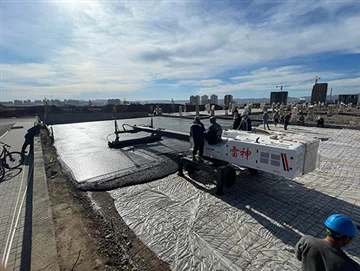
With the continuous increase of domestic labor costs, engineering construction enterprises are increasingly demanding laser machinery with high efficiency, short construction period and low cost. The car-mounted laser leveling machine is convenient and quick to operate, suitable for different engineering needs, and has become the mainstream nowadays.
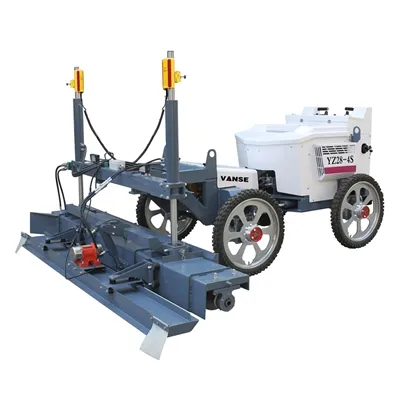
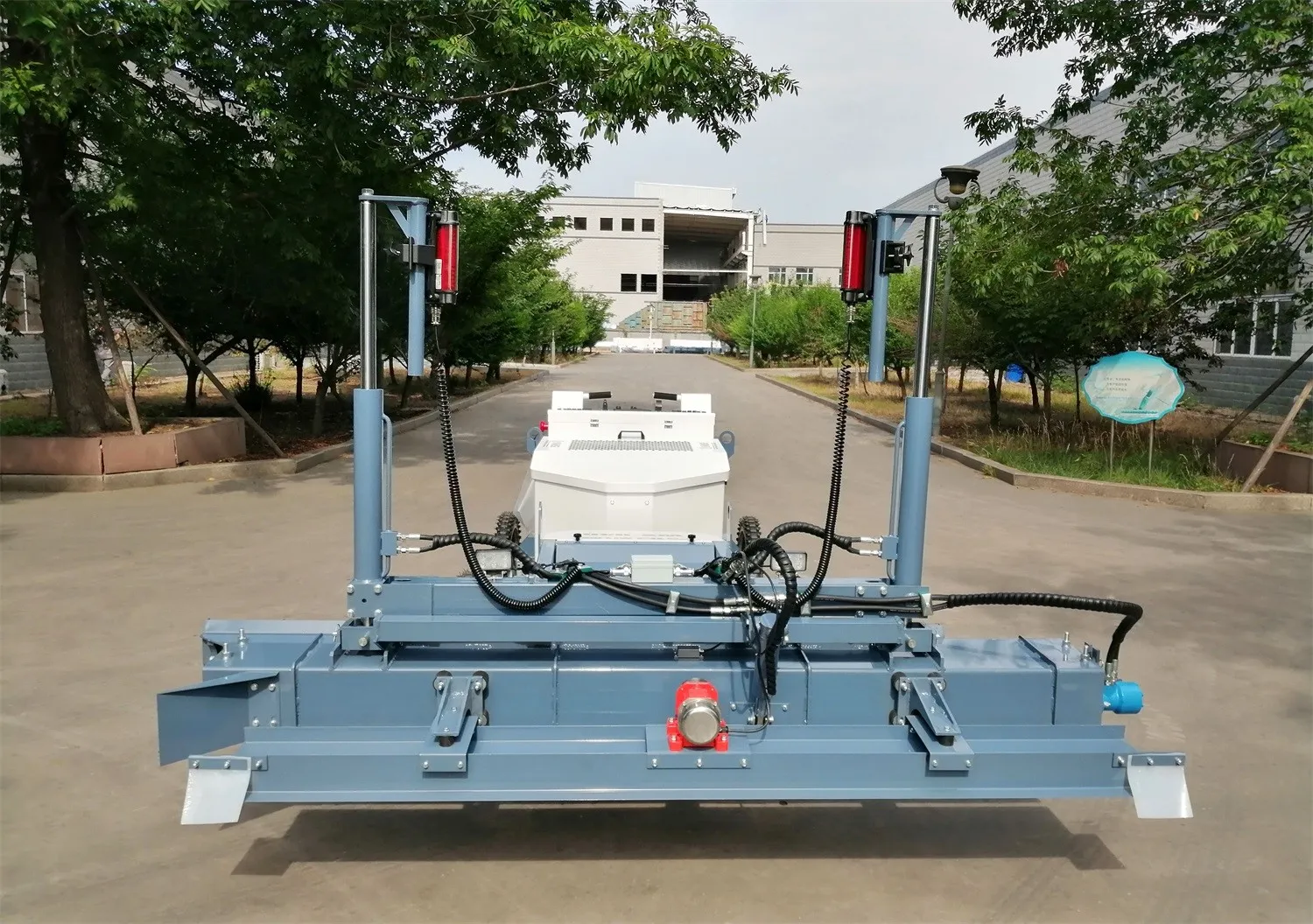
The VANSE brand YZ25-4 four-wheel concrete laser leveling machines produced by Shandong VANSE Machinery are convenient and quick to operate, suitable for large-area paving, and have better compaction effects. Pay attention to the following aspects when purchasing a car-mounted laser leveling machine:
Look at the model: it is mainly selected and determined based on the construction site and area.
Look at the effect of the machine.
Leveling speed
Leveling accuracy requirements
Look at the manufacturer: the strength of the manufacturer directly affects the quality of the equipment.
Look at the price: If the price of a machine is too lower than the average price of the industry, buyers should be alerted. Under the condition of not achieving large-scale production, too low price does not mean low profit, but low cost, and low cost will directly affect the life and use effect of machinery, and even implies that enterprises There will not be too much investment in after-sales and R&D. Don't just look at the price because you don't know much about the technology. In the end, the gain outweighs the loss and you have to buy it again. Not only wasted money, but also delayed their own production.
Look at safety: when choosing a laser leveling machine, the braking performance and operation safety of the laser leveling machine should also be fully considered.
The parts of VANSE mechanical laser leveling machine are all produced by large-scale manufacturers in advanced countries such as Germany and the United States. The production process is strictly in accordance with national standards, enterprise standards, and quality control assurance systems to ensure that product quality meets or exceeds enterprise standards and related According to the requirements of national standards, it has won the trust and praise of users for its excellent quality, excellent performance and superior cost performance.
Shandong VANSE Machinery series products have been widely used in factories, with customers all over the country, inside and outside the Great Wall, and have been recognized by many engineering project partners and customers such as workshops, underground garages, floors, access bridges, square floors, logistics and warehousing.
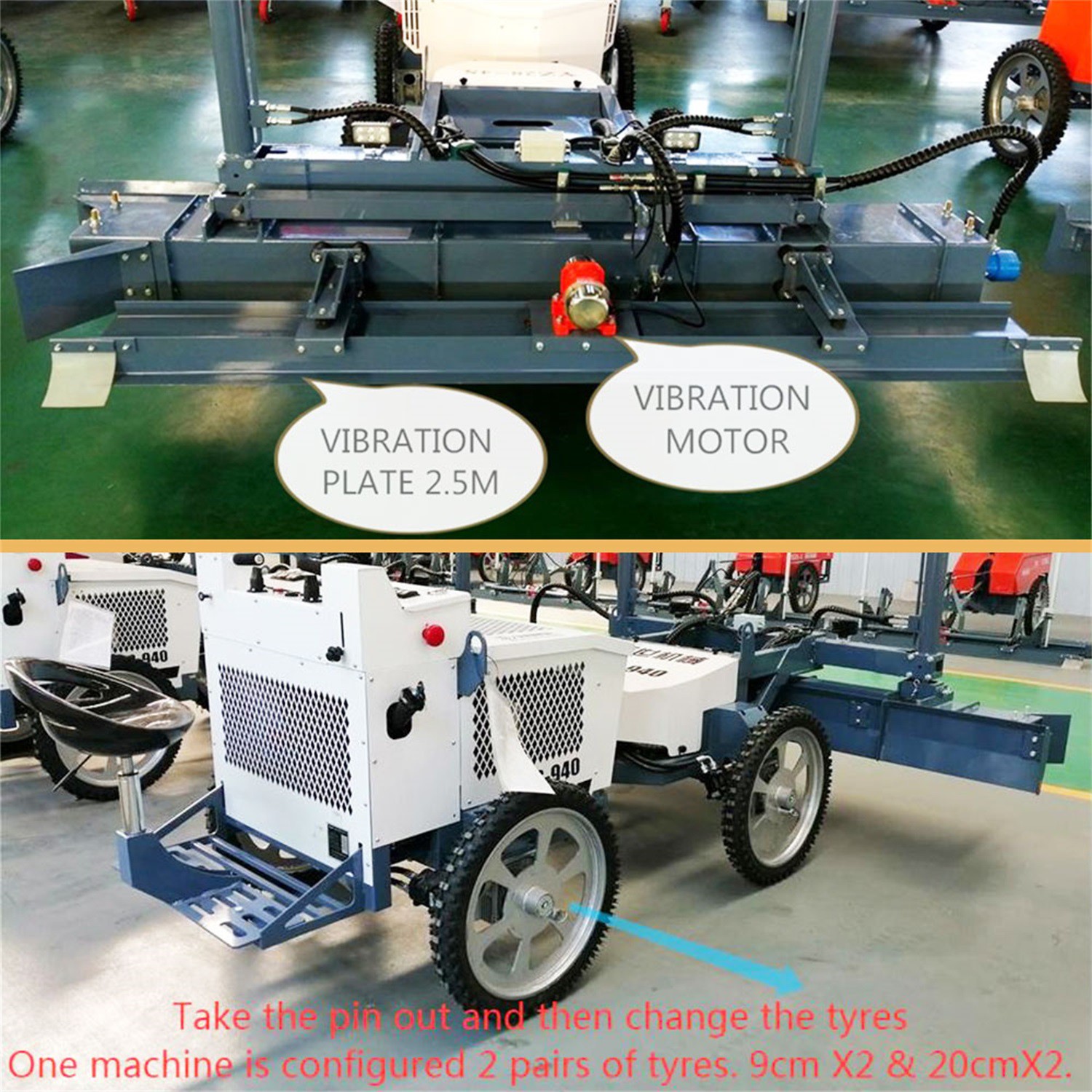
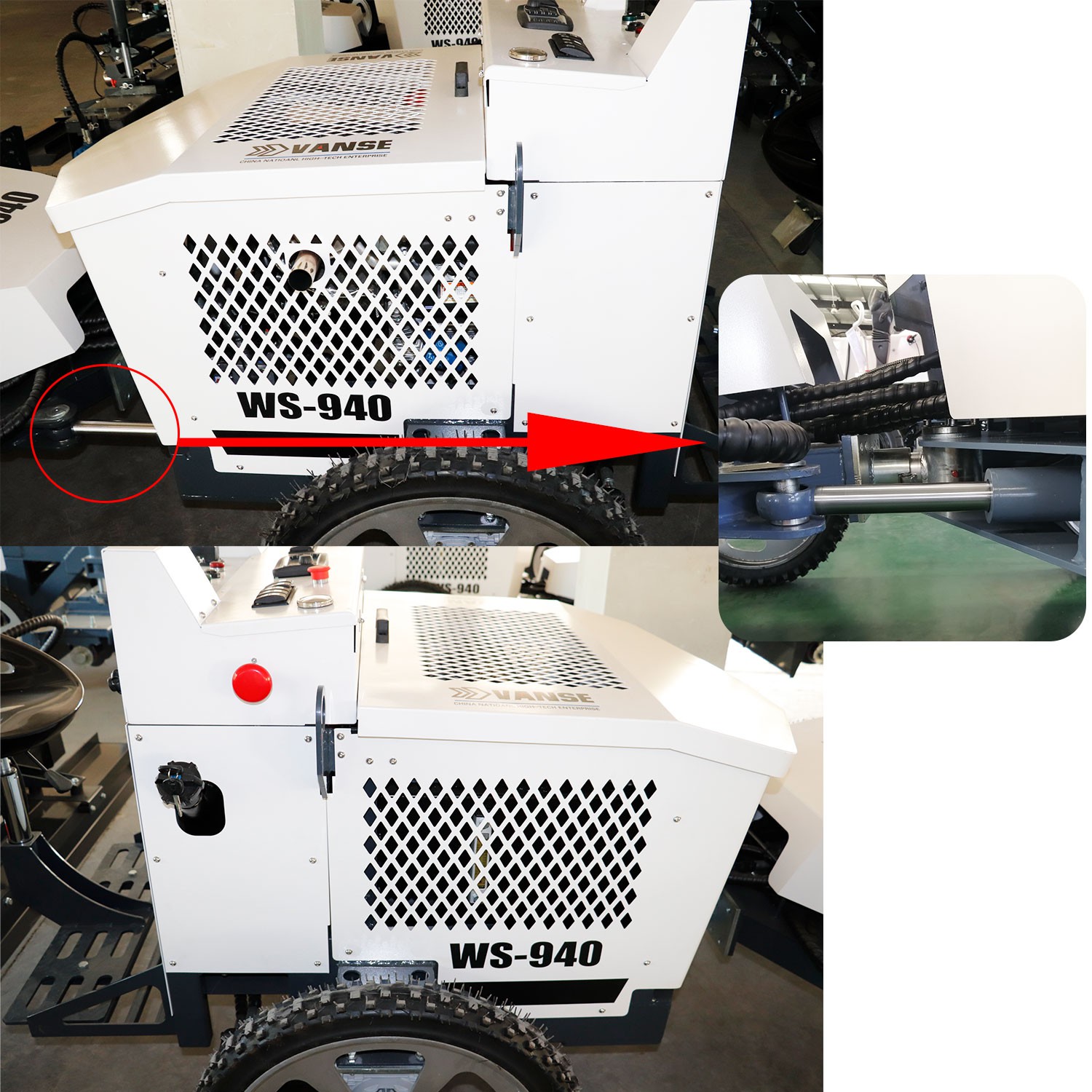

Thanks to All the Friends Who Support and Trust Shandong Vanse Machinery Technology Co., Ltd.
If you want to know more about Shandong Vanse Machinery Technology Co., Ltd. or have any questions, please feel free to contact us:
Our Factory
Shandong Vanse Machinery Technology Co., Ltd.








Share this article

About the Author: Shandong Vanse Machinery Technology Co., Ltd.
Shandong Vanse Machinery Technology Co., Ltd. is a high-tech manufacturer specializing in concrete construction machinery, including laser screeds and related equipment. The company integrates R&D, production, and global sales, with products exported to over 60 countries and widely used in infrastructure projects worldwide.
Previous Post
Next Post
Related Articles
You Might Also Like
Vanse mechanical laser leveling machine serves overseas construction sites.
Laser leveling machines are widely used in modern industrial plants, large shopping places, warehouses and other large-area concrete ground construction. Its maintenance can greatly improve the life of the machine and save costs. Laser leveling machine maintenance method/step Fuselage cleaning: When cleaning the surface of the machine, first check whether there is any depression or leakage in the fuel tank, oil pipes, joints, etc., and check whether the fixing screws of the fuel tank bracket are tightened before cleaning. Prevent rust: In the daily maintenance of the laser leveling machine, butter or anti-rust oil should be used to prevent the rust of the exposed parts and mechanical parts, and the gears, sprockets and other parts should be lubricated every half a month. Leveling: The quality of the leveling and the construction quality also have a necessary relationship. Some buildings have a lot of dust or other sundries, which will cause the leveling machine to level the concrete and become dirty, which will lead to unqualified construction. Therefore, it is usually necessary to Remember to tell Xun Phi to clean the leveling in time. Oil replacement: The engine oil and hydraulic oil in the machine need to be replaced after a period of use. Most people think that it is enough to drain the oil in the oil tank and fill up with new hydraulic oil. But at this time, there will be a lot of old grease trace hydraulic oil in the hydraulic oil pipe. When the equipment is in use, the new oil and the old oil will be mixed together, which will shorten the service life of the new oil. The correct oil change procedure is to drain the hydraulic oil in the hydraulic oil tank first, clean the oil tank and then add new hydraulic oil. Then remove the circuit main pipe, start the engine and run it at a low speed to make the oil pump work, operate each mechanism separately, and use new hydraulic oil to discharge the old oil in the circuit one by one until new oil flows out of the oil return main pipe. Finally, connect the oil return main pipe to the fuel tank, and add new hydraulic oil to the fuel tank to the specified position. Precautions The usual maintenance and maintenance of machinery is important, but it is more important to choose a good machine equipment. VANSE laser leveling machine is your best choice!Precision Setting Techniques for Concrete Laser Leveling Machines in Super-Flat Floor Construction
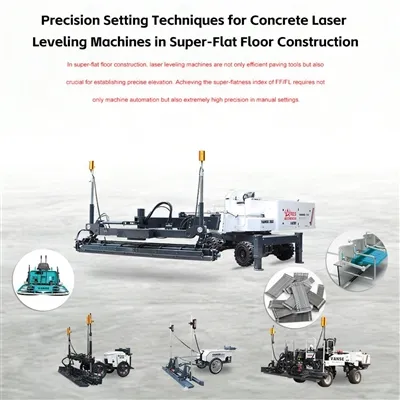
In super-flat floor construction, laser leveling machines are not only efficient paving tools but also crucial for establishing precise elevation. Achieving the super-flatness index of FF/FL requires not only machine automation but also extremely high precision in manual settings. The following are precision setting and operation techniques for laser leveling machines to achieve super-flatness: Avoid interference sources: The transmitter must be installed outside the concrete paving area and away from crane vibrations, passing vehicles, and airflow interference (the support structure needs to be reinforced in windy conditions). Height coverage: Ensure that the transmitter's signal plane covers the entire work area and is not obstructed by on-site columns or equipment. Dual transmitter verification: For extra-large areas, it is recommended to set up two transmitters for mutual verification to ensure that signal attenuation or drift during long-distance transmission is detected in a timely manner. Before the start of each shift, the physical elevation of the top of the formwork must be compared with the signal elevation of the laser transmitter using the same handheld laser receiver rod. Error limit: The error between the measured elevation of the formwork and the laser signal elevation must be controlled within ±1 mm. Technique: Adjust the sensitivity of the hydraulic sensor based on the concrete slump. If the concrete is stiffer, the sensitivity should be appropriately reduced to prevent the leveling head from frequently bouncing due to resistance; if the concrete is thinner, increase the sensitivity to ensure immediate correction of small height differences. Screw Feeder Setting: The lower edge of the screw feeder should be slightly higher than the design elevation (approximately 3-5 mm), using the rear vibrating beam to compact the material to the design position. Material Excess: Always maintain a suitable amount (approximately 2-5 cm) of concrete accumulation in front of the leveling head. Too little material will result in "empty scraping," and too much material will create pushing waves. Operation: Each paving pass should overlap the previously completed pass by 200-300 mm. Technique: Set the hydraulic control on the overlapping side to "manual" and the non-overlapping side to "automatic". This allows the screed to use the completed pavement as a reference, ensuring consistent elevation at the joint and eliminating noticeable "joint ridges". At the end of each paving pass (when the machine retracts its arm), the travel speed should be slightly reduced to prevent the suction created when the screed lifts from pulling up the concrete and causing low spots at the edges. Factors Factors affecting accuracy Troubleshooting Techniques: Wind speed Wind can cause the laser beam to shake. Use windproof supports or add a filtering function to the laser receiver. Concrete slump The consistency (dryness/wetness) of each batch of material varies. Assign a dedicated person to monitor at the discharge point and strictly prohibit spreading material with a slump error exceeding ±20 mm. Tire pressure The amount of tire deflection changes. Check the tire pressure of the leveling machine before starting work each day to ensure symmetry and consistent pressure on both sides. The **first pass with a long-handled straightedge (Highway Straightedge)** after the laser Leveling is completed is crucial: Operation: While the concrete is still plastic, the operator should use an aluminum alloy straightedge of more than 3 meters in length, following the Leveling machine and performing reciprocating leveling perpendicular to the paving direction. Purpose: To eliminate the small marks left by the laser Leveling when changing lines or turning. Note: The parameters provided in this document are for reference only and are not mandatory. Due to differences in technical characteristics between different brands and models of laser levelers, please consult the manufacturer for a suitable solution before actual operation. This reference document assumes no responsibility for any issues arising from failure to follow the manufacturer's instructions.Concrete laser leveling technology is used in floor slab construction
Discussion on the use of concrete laser leveling technology in floor slab construction 1. Introduction: Current status of floor slab construction With the rapid development of modern construction technology, the quality and efficiency of floor slab construction have become key factors affecting the overall performance and construction cycle of buildings. Traditional floor slab construction methods often rely on manual operation, which not only makes it difficult to ensure construction accuracy, but also has low construction efficiency, making it difficult to meet the high-precision and high-efficiency requirements of modern buildings. Therefore, seeking a new floor slab construction technology to improve construction quality and efficiency has become an urgent problem to be solved in the current construction industry In recent years, laser leveling technology, as an advanced construction technology, has been widely used in floor slab construction. This technology uses the laser beam plane as the control reference and realizes high-precision control of floor slab construction through high-precision measurement and positioning tools. This paper aims to explore the specific application and advantages of concrete laser leveling technology in floor slab construction, in order to provide a useful reference for the development of the construction industry. 2. Overview of laser leveling technology Laser leveling technology is an advanced construction technology that uses the laser beam plane to replace the human visual control reference in conventional mechanical leveling. It controls the leveling and scraping machinery through the same hydraulic system to achieve the refinement and automation of land leveling operations. This technology combines high-tech laser control technology with conventional mechanical leveling technology, which can greatly improve construction accuracy and efficiency. In floor slab construction, concrete laser leveling technology can achieve high-precision leveling of the floor slab surface, effectively eliminate surface unevenness, and improve the overall performance of the floor slab. Compared with traditional construction methods, laser leveling technology has the advantages of high construction accuracy, high efficiency, and stable quality, so it has been widely used in floor slab construction. 3. Preparation and requirements before construction Before using concrete laser leveling technology for floor slab construction, full preparation is required. First, a detailed construction plan should be made to clarify the construction method, material selection, construction plan, etc. Secondly, determine the type and quantity of materials required according to the construction plan, and purchase and distribute them to ensure that there is enough material supply during the construction process. At the same time, it is also necessary to clean and level the construction site to ensure that there is no debris, dust, etc. on the construction site to create a good environment for construction. In addition, the requirements for construction personnel are relatively high. Construction personnel need to have certain professional skills and experience, and be able to master the operation methods and techniques of laser leveling technology. At the same time, it is also necessary to pay enough attention to safety issues during the construction process and take corresponding safety protection measures to ensure the safe and smooth progress of the construction. 4. Detailed explanation of the construction process The application of concrete laser leveling technology in floor slab construction mainly includes the following steps: ❶ Formwork installation and adjustment: According to the requirements of the building design, the formwork is set up and adjusted according to the construction plan. Ensure that the level and slope of the formwork meet the design requirements, laying the foundation for subsequent concrete pouring and leveling work. ❷ Concrete pouring: After the formwork is installed, the concrete is poured. During the pouring process, attention should be paid to controlling the field fall and uniformity of the concrete to ensure the stability of the quality of the concrete. ❸ Laser leveling machine operation: After the concrete is initially set, use a laser leveling machine to level the surface of the floor slab. The laser leveling machine uses the laser beam plane as the control reference to achieve high-precision leveling of the floor slab surface. The operator needs to make precise adjustments and operations according to the instructions of the laser leveling machine to ensure that the flatness of the floor slab surface meets the requirements. ❹ Maintenance and finished product protection: After the floor slab construction is completed, proper maintenance work is required to improve the strength and durability of the concrete. At the same time, the finished product needs to be protected to prevent damage or contamination during subsequent construction. 5. Quality control and testing When using concrete laser leveling technology in floor slab construction, quality control and testing are key links to ensure construction quality and performance. First, each link in the construction process must be strictly monitored and managed to ensure that the construction operation meets the specifications and requirements. Secondly, after the construction is completed, the floor slab needs to be fully inspected for quality. Quality inspection mainly includes the following aspects: First, surface flatness inspection. Use a ruler or level to inspect the flatness of the floor slab surface to ensure that the surface is flat without ripples, protrusions or depressions; Second, size and thickness inspection. Use measuring instruments to measure the length, width and thickness of the floor slab to ensure accurate size and uniform thickness; Third, strength and durability inspection. Through sampling testing and experimental analysis, evaluate whether the strength and durability of concrete meet the design requirements. Through comprehensive quality control and testing, the stable quality and reliable performance of floor slab construction can be effectively ensured, providing strong guarantee for the safe use and long-term maintenance of buildings. 6. Technical advantages and cost-effectiveness Concrete laser leveling technology has significant technical advantages and cost-effectiveness in floor slab construction. First, this technology can achieve high-precision leveling of the floor slab surface, effectively eliminate surface unevenness, and improve the overall performance and service life of the floor slab. Secondly, laser leveling technology can greatly improve construction efficiency, reduce manpower and time investment, and shorten the construction cycle. In addition, this technology can also reduce material waste and loss during construction, improve material utilization, and further reduce construction costs. In the long run, floor slab construction using concrete laser leveling technology can also bring many benefits to the use and maintenance of buildings. For example, a flat floor slab surface can reduce the workload of cleaning and maintenance and reduce maintenance costs; at the same time, high-quality floor slabs can also improve the sound insulation, heat insulation and other properties of the building, and improve the comfort of living and use. 7. Practical application case analysis In practical applications, concrete laser leveling technology has been successfully applied in multiple floor slab construction projects. Taking a high-rise residential project as an example, the project used concrete laser leveling technology for floor slab construction, which effectively improved the construction quality and efficiency. During the construction process, through precise laser control and automated mechanical equipment operation, the flatness of the floor slab surface was significantly improved, meeting the design requirements. At the same time, the construction period was greatly shortened, reducing labor costs and time costs. In addition, the project cost was effectively controlled due to the reduction of material waste and loss. In another commercial complex project, concrete laser leveling technology also played an important role. The floor slab area of this project is large and the construction requirements are high, which is difficult to meet with traditional construction methods. By introducing laser leveling technology, not only the construction accuracy and efficiency are improved, but also the quality of the floor slab is stable. After the completion of the project, it has received unanimous praise from the owner and the supervision unit These practical application cases fully demonstrate the advantages and value of concrete laser leveling technology in floor slab construction, and provide useful reference and reference for the construction of similar projects. 8. Future development and prospects With the continuous advancement of science and technology and the continuous development of the construction industry, concrete laser leveling technology will play a more important role in floor slab construction. In the future, this technology will further realize the development of personalization and multifunctionality, adapting to the needs of different engineering categories, materials and construction environments. At the same time, with the trend of extending both miniaturization and large-scale, laser leveling machinery and equipment will be more flexible and diverse, meeting the construction needs of different scales and complexities. In addition, as the concepts of green building and sustainable development are deeply rooted in the hearts of the people, concrete laser leveling technology will also pay more attention to environmental protection and energy saving. By optimizing the construction process and equipment configuration, reducing energy consumption and emissions, improving the efficiency of stealing source utilization, and realizing the green and sustainable development of floor slab construction. In short, concrete laser leveling technology has broad application prospects and huge development potential in floor slab construction. With the continuous innovation of technology and the continuous expansion of the market, it is believed that this technology will bring more opportunities and challenges to the development of the construction industry in the future. In summary, as an advanced floor slab construction method, warm-melting soil laser leveling technology is gradually replacing traditional construction methods with its advantages of high precision, high efficiency, high quality and low cost. Through the discussion of this article, we have an in-depth understanding of the principles, application processes, quality control and actual application cases of laser leveling technology, and fully demonstrated its advantages and value in floor slab construction. In the future, with the continuous advancement of technology and the continuous expansion of the market, concrete laser leveling technology will play a more important role in floor slab construction and inject new vitality into the development of the construction industry. Of course, we must also see that there are still some challenges and problems in the actual application of laser leveling technology, such as high equipment cost and strict operating technical requirements. Therefore, we need to further increase research and development efforts, improve the performance and stability of equipment, reduce the cost of use, and at the same time strengthen the training and education of operators, improve their skills, and ensure that laser leveling technology can better serve the floor slab construction work. In addition, we should also pay attention to the integration and application of laser leveling technology with other new technologies. For example, it can be combined with intelligent control technology, Internet of Things technology, etc. to realize the intelligence and automation of floor slab construction, and further improve construction efficiency and quality. At the same time, it is also possible to explore the application of laser leveling technology in other fields, such as road paving, water conservancy projects, etc., to expand its application scope and market prospects. In short, as an innovative method for floor slab construction, concrete laser leveling technology has broad development space and huge application potential. Through continuous technological innovation and market expansion, I believe it will bring a better future for the development of the construction industry.