Technical Knowledge
The necessity of choosing a laser leveling machine!
THE NECESSITY OF CHOOSING A LASER LEVELING MACHINE!!!
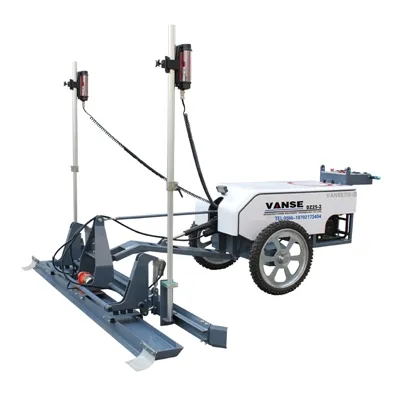
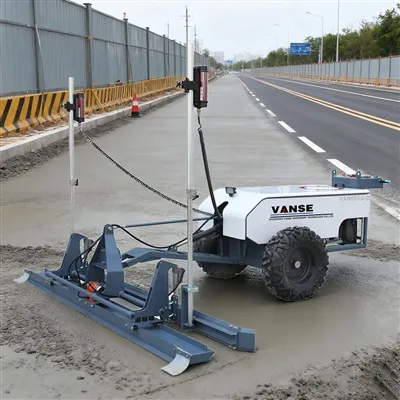
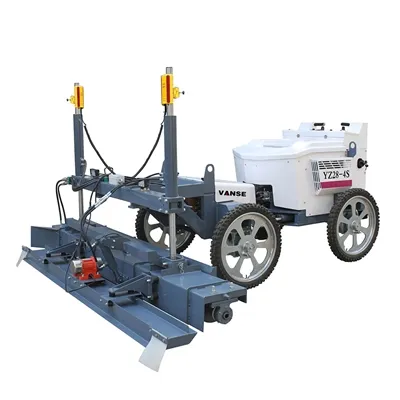
The laser leveling machine uses laser to level the ground, which has higher accuracy and smaller ground error after paving. Moreover, the construction efficiency of this kind of equipment is basically more than three times that of manual work, and one piece of equipment can be done, saving labor investment and reducing capital cost investment.
Definition of laser leveling machine: A device guided by a laser for leveling and leveling fresh concrete. A concrete construction method that uses a laser leveling machine to pave and level the newly poured concrete.
Advantages of concrete laser leveling machine:
1. High construction quality
The laser leveling machine can level the ground, which can significantly improve the flatness of the ground. For the ground constructed by the laser leveling machine and the traditional method, 22 points are detected (one point every 5mx4m), and the average flatness is 1.3mm and 4.1mm respectively. Laser leveling The leveling quality of equipment such as leveling machines is more than three times higher than that of traditional methods.
The application of equipment such as laser leveling machines can realize large-scale construction, reduce a large number of construction joints, reduce the slump of concrete, ensure the strength of concrete, and make the ground integrity good and cracks are not easy to appear.
2. Fast construction speed
The use of laser leveling machines and other equipment to construct large concrete slabs improves the work efficiency by 3 times compared with the traditional beam vibrator method and saves 30%. The construction area per hour is more than 300㎡, and the daily workload can be completed from 3000㎡ to 5000㎡. Work efficiency is greatly improved.
Of course, high-quality and efficient large-area overall floor construction requires not only a high-quality and reliable laser leveler, but also a fast and convenient spreader. Somero STS-11M spreader equipment eliminates a series of defects that affect the final aesthetics and quality of the floor, such as uneven spread, dust pollution, footprints, and color differences caused by traditional wear-resistant aggregate spreader, and truly achieves high efficiency. Wear-resistant aggregate one-time mechanized distribution.
3. Save manpower and improve industrial efficiency
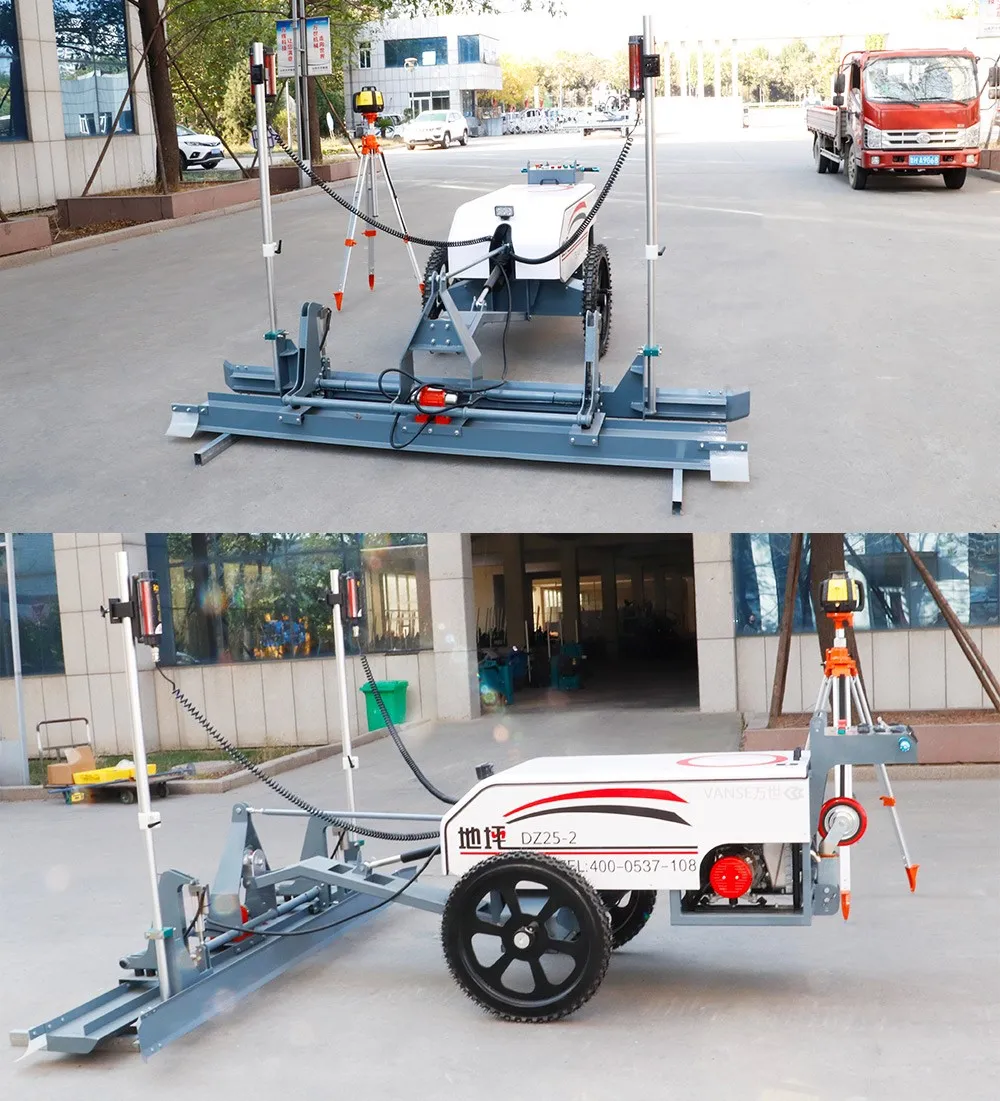
1)Integrated leveling head: It is composed of scraper, vibrator, vibrating plate, stirring cage and other components. It integrates multiple processes such as stirring, leveling, vibrating, and vibrating, and is completed by the machine at one time. Improve efficiency and save labor.
2)The high-frequency vibrator with 4000 times per minute and the uniform high-frequency vibration of the leveling head vibrating plate make the concrete floor dense and can avoid ground cracks caused by stress concentration caused by deformation. It can effectively solve the problems of hollowing, shelling, cracking and inequality on the ground.
3)The leveling head can maintain the level of the construction under the double transformation of the undulating foundation and the slope of the ground.
4)The laser measurement and control system automatically controls the elevation: the design elevation of the top surface of the floor is automatically controlled by the laser machine computer, which can ensure very high ground flatness, and can directly achieve accurate leveling on the concrete layer, and the ground flatness is not affected by the vibration of the construction formwork Influence, there is no need to support the formwork in the middle, reduce the input of artificial materials, reduce the construction procedure, and speed up the construction progress.
Finally, it should be noted that if you want to use a concrete laser leveling machine, you must choose a professional concrete laser leveling machine brand equipment and pay attention to the method of use. Without professional training, the construction efficiency may not be able to keep up, and the effect will be poor. Big discount.
Thanks to All the Friends Who Support and Trust Shandong Vanse Machinery Technology Co., Ltd.
If you want to know more about Shandong Vanse Machinery Technology Co., Ltd. or have any questions, please feel free to contact us:
Our Factory
Shandong Vanse Machinery Technology Co., Ltd.








Share this article

About the Author: Shandong Vanse Machinery Technology Co., Ltd.
Shandong Vanse Machinery Technology Co., Ltd. is a high-tech manufacturer specializing in concrete construction machinery, including laser screeds and related equipment. The company integrates R&D, production, and global sales, with products exported to over 60 countries and widely used in infrastructure projects worldwide.
Previous Post
Next Post
Related Articles
You Might Also Like
Concrete laser leveling summer maintenance
Concrete laser leveling summer maintenance 1.The hot weather construction to prevent engine overheating, in general, the temperature of the engine not more than 95 °, if the temperature is too high, you should select a shaded area to cool down, down at the same time can have the fuselage cover ventilation cooling. 2.Before entering the summer, should thoroughly remove the combustion chamber, valve top and the carbon of other parts in order to maintain good heat dissipation and normal compression ratio, in case of engine deflagration. 3.Often clean the hydraulic oil radiator, in order to prevent poor heat dissipation. 4.In the summer construction, high temperature, need to check the tire pressure and tire temperature, if the tire temperature is too high should be promptly shut down and placed in a cool place to cool down, disable the wrong way to vent or pour cold water to cool down. 5.The electrical system should pay attention to waterproof, do not open the box cover, do not use water to wash the electrical protection box, do not use corrosive liquid cleaning machine! 6.Check the temperature of hydraulic oil and hydraulic transmission oil.The temperature is too high to rest, not more than high temperature operation. 7.To pay attention to the daily maintenance of concrete machinery and equipment.The operator should regularly carry out comprehensive maintenance of the machinery, due to the rise of temperature, summer construction must be timely replacement of the engine air filter, oil filter and oil, and check the performance of the fan, water tank, generator is reliable, necessary maintenance, maintenance or replacement;At the same time, the concrete solidification speed is fast in summer, so the concrete impurities of the fuselage should be cleaned in time to ensure the cleanliness of the fuselage.How to ensure the safety of construction workers during concrete floor construction?
To ensure the safety of personnel during the construction of concrete floors, we need to establish a comprehensive safety protection system that covers management and execution, as well as individuals and the environment. The following are specific and operational measures, which are divided into three levels: core safety principles, specific safety measures, and the safety management system. Prevention first: The core of all safety work is to identify risks in advance and eliminate them, rather than to remedy them afterwards. Full participation: Safety is not only the responsibility of safety officers. From project managers to operators, everyone is responsible for their own and others' safety. Continuous education: Through uninterrupted training and safety briefings, internalize safety norms into everyone's behavioral habits. This is a direct barrier to protect workers and must be mandatory. Head: Wear a qualified safety helmet correctly and fasten the chin strap. Feet: Wear safety shoes (work shoes) that are resistant to impact, puncture and slip. Concrete workers are advised to wear high-top rubber boots to prevent cement corrosion. Eyes: When performing stirring, pumping, cutting or grinding operations, protective glasses or face masks must be worn. Breathing: When dust is generated during the handling, mixing, dry spreading and cutting and grinding of cement, a dust mask (such as N95 level or higher) must be worn. Hands: Wear chemical-resistant gloves (such as rubber or latex gloves) to prevent burns from cement and alkaline substances. At heights and edges: When working near the edge of floor slabs or openings, a full-body safety belt must be fastened. Before use, check whether the electrical circuits, insulation and protective covers are in good condition. It is strictly forbidden to insert hands or tools into the cylinder during operation. When cleaning or conducting maintenance, power must be cut off and a "Do Not Close" warning sign hung. A dedicated person should be assigned for supervision. Check whether the blade/grinding disc is installed firmly and whether the cable is damaged. When operating, hold your hands tightly to maintain your balance and prevent the machine from losing control and "jumping" to hurt people. The cables should be managed overhead to prevent them from being caught in machinery or run over by vehicles. Operators need to undergo professional training. Clear all obstacles along the equipment's movement path and set up a warning area to prevent people from approaching. All electric tools must be connected to the power supply through a leakage protection device (RCD). Cables must not be dragged on the ground or immersed in water. It is strictl y prohibited to use aged or damaged cables. Non-professional electricians are strictly prohibited from wiring or conducting maintenance. Opening and edge protection: All reserved openings, staircase entrances, and elevator shaft openings must be covered with firm covers or equipped with guardrails, and safety warning signs must be hung. Cement, sand, gravel and other materials should be neatly stacked, with a height not exceeding the specified limit and kept away from the slope. When manually moving heavy objects, use the correct posture (bend your knees and keep your back straight), and have two or more people cooperate to carry them to prevent sprains and injuries from being hit. Arrange the processes reasonably and minimize vertical cross operations as much as possible. When it is unavoidable, a solid safety isolation layer (such as a protective shed) must be set up, and a dedicated person should be assigned to coordinate and direct. When working at night or underground, ensure that the working surface is well-lit and leaves no dark corners. When conducting construction in enclosed Spaces such as basements, it is essential to ensure forced ventilation to prevent the accumulation of harmful gases and oxygen deficiency. When using chemicals such as concrete curing agents, release agents, and epoxy resins, it is necessary to read the Material Safety Data Sheet (MSDS). According to the MSDS requirements, wear the corresponding protective equipment (such as gas masks, chemical protective gloves, and goggles). Ensure good ventilation in the operation area. Safety and technical Briefing: Before the start of each day's work or the beginning of each new process, the team leader must provide a detailed explanation to all workers about the day's work content, potential hazards, preventive measures and emergency methods, and have all personnel sign for confirmation. Equipment inspection: Before starting work every day, the operator conducts a routine inspection of the machinery and equipment used to ensure they are in a safe condition. Appoint a full-time safety officer: The safety officer continuously patrols the site, promptly identifying and correcting unsafe behaviors (such as not wearing a safety helmet, operating in violation of regulations, etc.). Set up warning zones: In the operation areas of large equipment such as laser screed machines and pump trucks, clearly demarcate dangerous zones with warning tapes, and irrelevant personnel are not allowed to enter. Civilized construction: Clean up debris, oil stains and standing water on the ground in a timely manner, keep the passageways unobstructed, and reduce the risk of slipping and tripping. On-site first aid kits should be provided: Ensure that all items in the first aid kit are complete and effective, and placed in a conspicuous and easily accessible location. Clarify emergency procedures: All personnel should be familiar with the initial rescue procedures and alarm methods in the event of accidents such as electric shock, mechanical injury, and falls from heights. Conduct emergency drills: Regularly organize simple emergency drills, such as fire evacuation and casualty transportation. To ensure the safety of concrete floor construction, the key lies in eliminating "unsafe human behaviors" and "unsafe conditions of objects" in their infancy. This requires the joint efforts of strict management systems, continuous education and training, effective personal protection measures and real-time on-site supervision to form a closed-loop safety culture, thereby truly ensuring the life safety of every construction worker. Note: The parameters provided in this document are for reference only and are not mandatory. Due to differences in technical characteristics between different brands and models of laser levelers, please consult the manufacturer for a suitable solution before actual operation. This reference document assumes no responsibility for any issues arising from failure to follow the manufacturer's instructions.What are the acceptance standards for concrete floors?
The acceptance standards and specifications for concrete floors mainly include the following aspects: ★Preparation before construction Before construction, it is necessary to check whether the base conditions, construction drawings and construction materials of the construction site meet the requirements. The base conditions should include foundation treatment, site drainage, etc.; construction drawings should include the design requirements, construction scope and construction technology of the floor, etc.; construction materials should meet design and quality requirements, and have corresponding certification documents. ★Construction process During the construction process, it is necessary to operate in accordance with the construction drawings and specifications to ensure that the flatness, strength and wear resistance of the floor meet the requirements. Specifically, the following points should be controlled: (1) Construction mix proportion: Conduct mix proportion tests in strict accordance with design requirements and specifications to ensure the quality and strength of concrete. (2) Pouring and Vibration: When pouring concrete, it should be poured in layers, and the thickness and vibration time of each layer should be controlled to ensure the density and integrity of the concrete. (3) Surface treatment: After the initial setting of the concrete, surface smoothing, compaction and wear-resistant treatment should be carried out to ensure the flatness and wear resistance of the floor surface. (4) Maintenance and protection: After the concrete reaches a certain strength, maintenance and protection should be carried out to prevent the floor from being damaged and polluted. ★Appearance quality Appearance quality is one of the important indicators for the acceptance of concrete floors. You should check whether the floor surface is flat, smooth, beautiful, and free of cracks, pits, holes and other defects. At the same time, the color and texture of the floor should be checked to ensure that it meets the design requirements. ★Dimensional deviation and elevation During acceptance, the dimensional deviation and elevation of the floor should be measured to ensure that it meets the design and specification requirements. Specifically, you should check whether the flatness, levelness, length, width, and height of the floor meet the requirements. ★Compressive strength and wear resistance Compressive strength and wear resistance are one of the important indicators for the acceptance of concrete floors, and corresponding tests should be carried out. Compressive strength refers to the maximum pressure value that the floor can withstand, and is generally tested using the rebound method or core drilling method; wear resistance refers to the degree to which the floor can withstand wear during use, and the wear resistance test method is generally used. Perform testing. ★Environmental performance During acceptance, the environmental performance of the concrete floor should also be checked to ensure that it will not cause harm to the environment and human body during use. Specifically, the materials used in the floor should be inspected to ensure that they do not contain ingredients harmful to humans and the environment. In general, the acceptance standards for concrete floors mainly include pre-construction preparation, construction process, appearance quality, dimensional deviation and elevation, compressive strength and wear resistance, environmental performance, etc. During acceptance, inspection and testing should be carried out in strict accordance with the design and specification requirements to ensure that the quality and use effect of the floor meet the requirements. At the same time, during daily use, the floor should also be inspected and maintained regularly to detect and deal with problems in time to extend its service life.