Technical Knowledge
Can Good Maintenance Habits Really Prolong The Service Life Of Laser levelings?
Can good maintenance habits really prolong the service life of laser levelings?
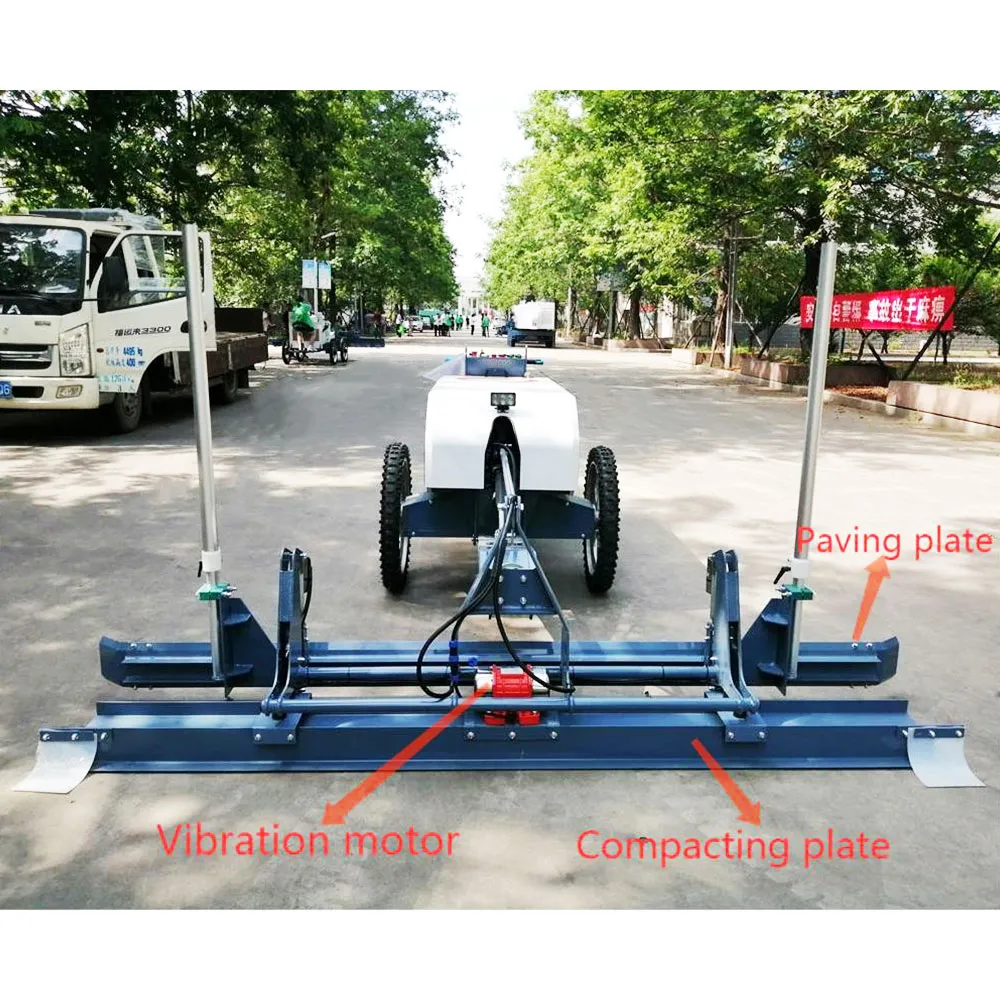
Laser leveling machine is a great helper for leveling machinery in construction, but road builders can always feel that after several years of use, the equipment is far from being as flexible and convenient as before. What is the reason for this? Many users only know the surface and don't know the reason, so they can only procrastinate and procrastinate. When they use it next time, they will regret it.
During the use of the laser leveling machine, due to the different working intensity, there may be some small faults after use. At this time, road builders should pay attention to it. After use, it is necessary to properly do some daily maintenance for the machine. This can prolong the service life of the machine equipment.
Developing a good habit of operating the laser leveling machine will be of great help to the construction and storage of the laser leveling machine in the future. This will not only improve the work efficiency, but also extend the service life of the machine to a certain extent .
Thanks to All the Friends Who Support and Trust Shandong Vanse Machinery Technology Co., Ltd.
If you want to know more about Shandong Vanse Machinery Technology Co., Ltd. or have any questions, please feel free to contact us:
Our Factory
Shandong Vanse Machinery Technology Co., Ltd.








Share this article

About the Author: Shandong Vanse Machinery Technology Co., Ltd.
Shandong Vanse Machinery Technology Co., Ltd. is a high-tech manufacturer specializing in concrete construction machinery, including laser screeds and related equipment. The company integrates R&D, production, and global sales, with products exported to over 60 countries and widely used in infrastructure projects worldwide.
Previous Post
Next Post
Related Articles
You Might Also Like
Personal safety protective equipment (PPE) specifications and best practices for operating a power trowel machine
Operating a power trowel machine is a high-risk job, involving high-speed rotating components, flying debris, intense vibration and loud noise. Strictly adhering to personal protective equipment (PPE) standards is not only a company regulation but also a key to safeguarding your life safety and health. The following is a detailed specification and best practices for personal safety protective equipment (PPE) used in operating a power trowel machine. This is a comprehensive protection system covering the head to the feet, none of which can be missing. Body parts Protective equipment Normative requirements and significance Head Safety helmet It must be worn to prevent it from colliding with the pipelines or structures above when working with your head up, or falling when bending over. Eyes and Face Protective glasses/safety goggles • Absolutely necessary. Prevent high-speed splashes such as cement debris and dust from harming your eyes. It is recommended to choose a model with side wing protection to provide all-round protection. Listening Noise-canceling earplugs or earmuffs It is strongly recommended to wear it. The engine of the power trowel machine is extremely noisy, and long-term exposure can lead to permanent hearing damage. The noise reduction effect of ear cups is usually better than that of earplugs, and they are more comfortable. Respiratory system Dust mask (at least N95 level) • Must be worn. Concrete operation generates a large amount of cement dust and silica dust. Inhaling them can seriously harm lung health and may lead to silicosis. In confined Spaces or when there is a great deal of dust, a half mask respirator (with P100 filter cotton) should be considered for use. Hand Anti-vibration gloves • Must be worn. Not only is it anti-slip and wear-resistant, but more importantly, it can effectively reduce shock. Long-term operation of a power troweler can cause "hand-transmitted vibrations", which may lead to "white finger disease" (vibration-induced vascular disease) and nerve damage. Shock-absorbing gloves are the first line of defense. Body Long-sleeved work clothes Wear tight and durable long-sleeved shirts and pants to prevent your skin from being burned by cement or scratched by flying debris, and to protect it from the sun. Do not wear loose clothing to avoid being caught in rotating parts. Feet Puncture-resistant and anti-slip safety shoes • Absolutely necessary. The toe of the shoes should be made of steel to prevent heavy objects from injuring the toes. The soles of shoes should be puncture-resistant to prevent stepping on sharp objects such as nails. The soles of shoes must be anti-slip because walking on fresh concrete surfaces is very slippery. Leg Waterproof pants/aprons (optional but recommended) When it is necessary to kneel on the ground or work close to wet concrete, waterproof pants can keep the body dry and prevent cement from corroding the skin and clothing. After personal protective measures are in place, it is also necessary to check the equipment and environment Blade/power trowel: Whether it is firmly installed, free of cracks, and whether the wear is within the safe range. Protective cover: Whether it is intact and properly installed. This is a key component to prevent the feet from being drawn in and must not be removed or damaged. Wiring/Fuel: Check if the wires are damaged (electric type) or if the fuel is leaking (gasoline type). Operating mechanism: Whether the throttle and switch are flexible and effective. Clear the site: Remove all obstacles on the ground, such as tools, steel bar ends, and wooden boards. Check the condition of the concrete: Confirm that the concrete has reached the initial setting strength suitable for people to operate on (usually the depth of footprint subsidence does not exceed 5-10mm). Operating too early will damage the ground and the machine is prone to sinking. Lighting: Ensure that the working area is well-lit. ** bystanders: ** Ensure that there are no unauthorized personnel in the work area, especially children. When starting up, make sure the blade is kept away from the ground and anyone. Always hold the operation handle tightly with both hands to maintain your balance and the stability of the machine. Always stay vigilant, pay attention to your feet and the surrounding environment, and avoid tripping over wires or pump pipes. Walking route: Adopt a regular and overlapping walking path to avoid sudden turns or steps backward. Wire management: If it is an electric power trowel, make sure the wires are always behind you and away from the area where the blades rotate. The wire can be carried over the shoulder strap. If the machine is stuck or malfunctioning: Immediately turn off the engine. Wait until the blade has completely stopped before conducting an inspection. When encountering obstacles such as steel bars: Stop the machine immediately and avoid them. When feeling tired: Rest immediately. Fatigue will greatly increase the risk of accidents. Cleaning and maintenance must be carried out only after the machine has completely stopped, the spark plug connector has been removed (for gasoline engines), or the power supply has been disconnected (for electric motors). When cleaning the blade, extra care should be taken even if the machine is turned off, as the edges are extremely sharp Trap 1: "Just for a moment. It's fine not to wear protective gear." Avoidance: Accidents occur in an instant. It is essential to develop a muscle memory that requires protection when the device is turned on. Trap 2: "It's too hot. Don't wear earplugs/masks anymore." Avoidance: Damage to hearing and lungs is cumulative and irreversible. Comfort can never override health. Trap 3: Remove the protective cover for operation. Avoidance: This is an extremely dangerous behavior! The protective cover is designed to save lives and must never be removed at any time. Trap 4: Cleaning the blade by hand while the machine is running. Avoidance: This is the main cause of serious finger breakage accidents. The machine must be shut down before handling. The safety guidelines for operating a power trowel machine can be summarized as: Full-body protection, stay alert, respect the machine, and anticipate risks. " Internalizing this guideline as your operational habit is not only responsible for yourself but also for your family and colleagues. Safety is always the top priority in construction. No project progress is worth trading for safety. Note: The parameters provided in this document are for reference only and are not mandatory. Due to differences in technical characteristics between different brands and models of laser levelers, please consult the manufacturer for a suitable solution before actual operation. This reference document assumes no responsibility for any issues arising from failure to follow the manufacturer's instructions.The impact of the maturity of the rental market on the sales strategies of power trowels and the business models of manufacturers
The maturity of the leasing market is a core variable influencing the construction machinery industry, especially for equipment like power trowels. It will have a fundamental impact on the sales strategies and business models of manufacturers. Let's explore this influence in detail in two parts below. The maturity of the rental market directly changes who the manufacturers' "customers" are and how they deal with them. Target customers: mainly end users, such as construction team leaders, individual contractors, and small and medium-sized construction companies. Core of sales strategy Price-driven: Customers are extremely sensitive to prices, and their purchase decisions are mainly based on the initial purchase cost. Function and durability promotion: Emphasize the basic functions, power and "durability" of the product, as the equipment is used and maintained by the owner themselves, and what they care about is "how long it can be used without recouping the cost". Channel penetration: Relying on a wide network of distributors to cover scattered end customers, providing timely in-stock purchases and basic after-sales services. Marketing methods: mainly offline stores, industry exhibitions, and referrals from acquaintances. Target customers: Professional leasing companies have become core major customers (such as United Leasing, Solar Belt Leasing, etc.), as well as large contractors. Core of sales strategy Value and total cost of ownership driven: Price is no longer the only factor. Leasing companies are more concerned about the total cost of ownership, including: Reliability & Attendance Rate: Does the machine rarely break down? Because idle machines mean a loss of rent. Maintenance convenience & Service Cost: Is it easy to maintain on a daily basis? Are the components cheap and readily available? Residual value: How much can the equipment still be sold for after several years of use? This is directly related to the asset return of the leasing company. Standardization and universality: Leasing companies hope that for products of the same brand or even the same platform, their operation methods, maintenance procedures and components can be as universal as possible to reduce training costs and inventory pressure. Direct sales to major clients and customization: Manufacturers will establish dedicated major client teams to directly connect with large leasing companies, and even provide customized products based on their specific needs (such as special color markings, software interfaces, and security configurations). Data and service support: Remote data monitoring (optional) is provided to assist leasing companies in managing equipment fleets, predicting maintenance times, and optimizing equipment deployment The maturity of the rental market has not only changed "what to sell" and "to whom to sell", but also profoundly promoted the transformation of manufacturers' "who I am". Core model: Production, manufacturing and sales The core of a manufacturer is to produce a product and then sell it. The business chain is basically over at this point. The profits mainly come from the sales of new machines. After-sales service is a cost center, and its main purpose is to support sales and prevent customer complaints. The rise of the rental market has forced manufacturers to transform from mere "equipment manufacturers" to "comprehensive solution providers". Model Evolution One: From selling products to operating assets Manufacturers have realized that their equipment is the "asset" that leasing companies use to make money. Therefore, they need to ensure that this asset can operate efficiently and economically throughout its entire life cycle. This has given rise to an extreme pursuit of reliability, durability and residual value management. Manufacturers will proactively release residual value reports and design products that are easy to refurbish to maintain their brand's value in the second-hand market. Model Evolution Two: Financial Services Become a key pillar Financial companies affiliated with or cooperating with manufacturers have become crucial. They offer to leasing companies: Flexible financial leasing solutions help it expand its fleet. Credit support helps its customers (end tenants) rent equipment more easily. This is not only a tool to boost sales, but also a source of profit in itself. Model Evolution Three: The proportion of after-market and service revenue has increased The new machine sales market fluctuates with the economic cycle, but the large fleet of existing equipment brings stable after-market income. Manufacturers actively sell original factory parts, repair services, extended warranties and maintenance contracts. The profit margins of these businesses are usually higher than those of new machine sales. Services have transformed from a "cost center" to a "profit center". Model Evolution Four: Exploration of Datafication and Service Orientation By installing sensors on the equipment, manufacturers can offer: Remote diagnosis and predictive maintenance can notify the leasing company in advance that the equipment may need repair, reducing unexpected downtime. Fleet management report helps leasing companies understand equipment utilization rate, fuel consumption, working hours, etc., and optimize business decisions. This initiated an upgrade in the business model from "selling hardware" to "selling hardware + services + data". Model Evolution Five: Entering the second-hand equipment and leasing business Some powerful manufacturers (such as Caterpillar) establish official certification and resale channels for used equipment, which helps control residual value and provides customers with full life-cycle options. A few manufacturers may even directly enter the market, operate their own leasing businesses, compete or cooperate with downstream customers, and gain a deeper understanding of market demands. Dimension A low-maturity rental market A highly mature rental market Core customers Scattered end users Large leasing companies, major contractors Competitive focus Price, basic functions TCO (Total Cost of Ownership), reliability, residual value Product Strategy It meets basic needs with a wide variety of models Platform-based, standardized and customizable Sales relationship One-time transaction, through the distributor Strategic cooperation, direct management of major clients Source of profit It mainly relies on the sales of new models New machine sales + after-market services + financial services Service role Cost center, supporting sales Profit center, independent business segment Business model Equipment manufacturer Provider of equipment asset management and solutions The maturity of the leasing market is a key force driving the evolution of the power trowel machine and even the entire construction machinery industry. It forces manufacturers to shift their focus from one-time sales of products to the value of operating equipment throughout its entire life cycle. In mature markets, the competition among manufacturers is no longer a simple price war, but a comprehensive ecological competition concerning brand reputation, service networks, financial support and digital capabilities. For manufacturers who want to enter or establish themselves in mature markets such as North America and Europe, understanding and adapting to these rules of the game is a prerequisite for success. Note: The parameters provided in this document are for reference only and are not mandatory. Due to differences in technical characteristics between different brands and models of laser levelers, please consult the manufacturer for a suitable solution before actual operation. This reference document assumes no responsibility for any issues arising from failure to follow the manufacturer's instructions.What are some common troubleshooting steps for laser system failures?
The laser system of the concrete laser leveling is the core for achieving high-precision screing. Once a malfunction occurs, it will lead to a decrease in the leveling accuracy and affect the construction quality. The following are systematic and common troubleshooting steps. It is recommended to follow the principle of "from simple to complex and from outside to inside". Stop the machine immediately: Turn off the leveling machine and make sure the laser emitter is also turned off to prevent the laser from causing harm to the eyes. Confirm whether the battery power of the laser transmitter and receiver is sufficient. Low battery power can cause unstable signals. Check all cables and plugs for any damage, looseness or poor contact (especially the connection line between the receiver and the main unit of the leveler). Laser receiver: Clean its sensing panel to ensure there is no cement slurry, dust or oil stains covering it. Laser emitter: Clean the emission window to ensure the lens is clean. Mast/Benchmark: Check whether the mast on which the receiver is installed is vertical, stable and free from deformation. Confirm the status of the transmitter Make sure the laser emitter is turned on and in the rotating (sweeping) mode. Check if it is level (observe the bubble level it comes with). Listen to the sound and observe: During normal operation, there should be the sound of the motor rotating, and a moving red dot can be seen on the obstacle when the laser beam appears. Height and position inspection Height: Ensure that the receiver is within the effective working height of the laser plane (usually, the laser plane is best at the middle position of the receiver's sensing rod). If the receiver is too high or too low, no signal will be received. Location: Move the receiver directly near the laser emitter to see if there is a signal. If it is present near but not far away, it might be that the laser plane is blocked or the emitter is not level. Interference screening Check whether there is strong direct sunlight, other laser equipment or strong light source interference in the work area. Try to cover the receiver with a light shield. Equipment replacement test (if conditions permit) : Test with a confirmed normal receiver, or take the faulty receiver to another normally working transmitter for testing. This can quickly determine whether the fault point is the transmitter or the receiver. Inspect the ground and foundation Is the laser emitter tripod set up on a solid and stable ground? The vibration or subsidence of the ground during the pouring process can cause the launcher to shake. Check whether the leveling machine itself shakes violently when moving. Check the mechanical connections Is the connection between the receiver and the mast, as well as the connection between the mast and the body of the leveling machine, firm? Any loosening will cause signal jitter. Check whether the connection hydraulic cylinder/hinge point between the scraper or rammer plate of the leveling machine and the body is too loose, causing free travel. Electrical interference Lay the cables of the laser system separately from the main power line and hydraulic line of the leveling machine to avoid parallel and close contact, so as to reduce electromagnetic interference. Environmental review Is there a large amount of dust and steam in the air? These will scatter laser, causing the signal to weaken and become unstable. High-temperature heat waves can also cause light refraction. Calibration check (the most common cause) : Transmitter calibration: Use the dedicated calibration tool provided randomly and follow the steps in the manual to check and calibrate the horizontal accuracy of the laser transmitter itself. This is the most crucial step. Receiver zero point calibration: At a reference point of known height (such as a pre-set reference post), perform the operation of "zeroing" the receiver or setting the reference height. Reference point and setting check Recheck whether the construction reference point (elevation) is accurate and whether the height set on the transmitter is correct. Confirm whether the mode selected on the control panel of the leveling machine (such as the "Leveling" mode) is correct. Mechanical system linkage inspection After the laser system gives the correct signal, check whether the hydraulic lifting system of the leveling machine responds promptly and accurately. Are there any problems such as clogged hydraulic valves or leakage inside the cylinder? The lifting action can be manually operated to test whether it is smooth and powerful. If none of the above steps can solve the problem, it may involve an internal fault: Transmitter: Internal level sensor failure, motor drive module damage, laser tube aging, etc. Receiver: Damaged sensing element, mainboard failure, etc. Contact the equipment supplier or professional maintenance personnel. Provide detailed fault phenomena and the troubleshooting steps that have been taken. Do not disassemble the core components of the laser emitter or receiver by yourself, especially since the laser emitter has precise optical components and high-precision sensors inside. Non-professional disassembly may lead to permanent damage or calibration failure. Proper storage: After use, clean the equipment thoroughly and store it in a dry, shockproof toolbox. Regular calibration: In accordance with the requirements of the operation manual, conduct official calibration of the laser system on a regular basis (such as every quarter or before the start of each major project). Battery management: Use original or high-quality batteries. Remove the batteries when not in use for a long time. Avoid impact: Handle with care to prevent the laser equipment from being subjected to severe impacts or drops. Observe the fault phenomenon → Power off for safety inspection → Cleaning and appearance inspection → Power supply and wiring inspection → Select the above path for troubleshooting based on the phenomenon (no signal/unstable/poor precision) → Try to replace the component for testing → Contact professional maintenance. Through the above systematic steps, the vast majority of common faults of the laser system of the concrete laser leveling can be solved. Note: The parameters provided in this document are for reference only and are not mandatory. Due to differences in technical characteristics between different brands and models of laser levelers, please consult the manufacturer for a suitable solution before actual operation. This reference document assumes no responsibility for any issues arising from failure to follow the manufacturer's instructions.