Technical Knowledge
Summer Concrete Construction Methods
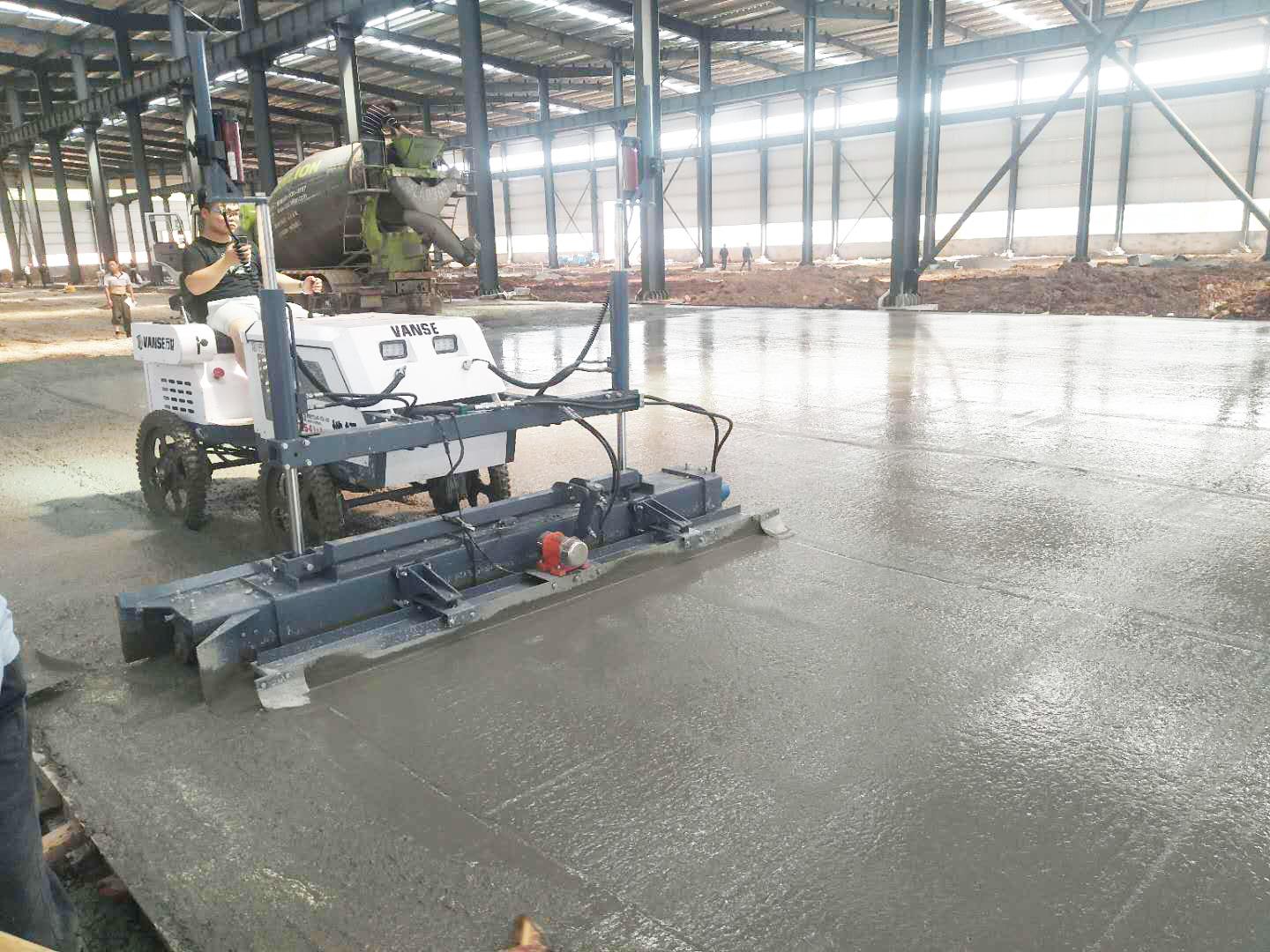
In summer, the temperature is high and the drying is fast. The newly poured concrete may have an accelerated condensing speed and a decrease in strength. At this time, care should be taken when pouring, trimming and curing the concrete.
First, mixing and transportation:
When mixing, the measures should be taken to control the temperature rise of the crucible, and the additional water quantity should be controlled at one time to reduce the slump loss and reduce the plastic shrinkage cracking. The following measures can be taken during the mixing and transportation process.
1. Use water reducing agent or replace some cement with fly ash to reduce the amount of cement, and increase the aggregate particle size while the casting conditions allow.
2. If the transportation distance of the bismuth mixture is long, the setting time of the hydrazine can be controlled by a retarder, but it should be noted that the dosage of the retarder should be reasonable, especially for the large-scale slab floor project.
3. If you need a high slump bismuth mixture, use a superplasticizer. Some of the high- efficiency water reducing agent produced a slump of 2 h. The high-efficiency water reducing agent also reduces the friction between the aggregate particles during the mixing process and slows the heat accumulation in the mixing barrel.
4. In case of meeting the requirements of construction specifications, try to use slag Portland cement and fly ash Portland cement.
5. Sprinkle water into the aggregate to reduce the temperature of the aggregate; if it is sprayed with groundwater or well water, the cooling effect is better.
6. In the hot season or large volume concrete construction, cold water or ice cubes can be used instead of some mixing water.
7. For the long-distance transportation of sputum in the hot season, the delayed stirring of the mixer can be considered, so that the raft is still in agitating state when it arrives at the construction site.
8. It is recommended abroad to paint the outside of the drum of the mixer in white in the summer, so that the absorption of solar radiation by the drum is significantly reduced. In the summer, taking the transport distance of 1 h as an example, the temperature in the white mixing drum is at least 1 ° C lower than that in the conventional red mixing drum.
9. Construction organization design should be done to avoid pouring concrete at the highest temperature in the day. During the high temperature drying season, the evening pouring is relatively less affected by wind and temperature, and can be finally condensed near sunrise, while the relative humidity is high, so the possibility of early drying and cracking is minimal.
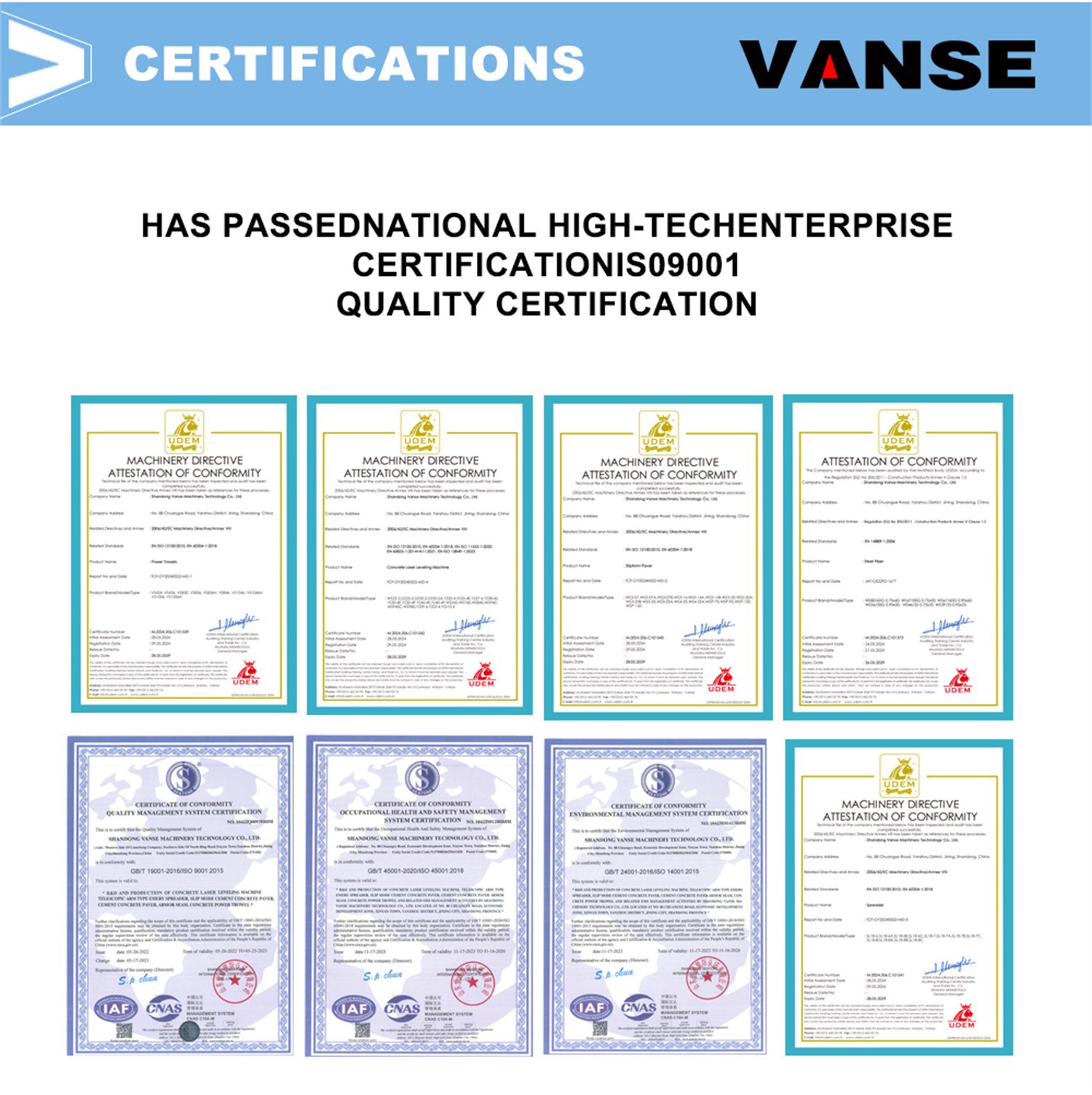
Thanks to All the Friends Who Support and Trust Shandong Vanse Machinery Technology Co., Ltd.
If you want to know more about Shandong Vanse Machinery Technology Co., Ltd. or have any questions, please feel free to contact us:
Our Factory
Shandong Vanse Machinery Technology Co., Ltd.








Share this article

About the Author: Shandong Vanse Machinery Technology Co., Ltd.
Shandong Vanse Machinery Technology Co., Ltd. is a high-tech manufacturer specializing in concrete construction machinery, including laser screeds and related equipment. The company integrates R&D, production, and global sales, with products exported to over 60 countries and widely used in infrastructure projects worldwide.
Previous Post
Next Post
Related Articles
You Might Also Like
How to deal with cracking and peeling during the maintenance of diamond abrasive wear-resistant floors?
How to deal with cracking and peeling in the maintenance of diamond wear-resistant flooring Diamond wear-resistant flooring has been widely used in industrial and commercial places due to its excellent wear resistance and compression resistance. However, during use, the floor may crack and peel, which not only affects the aesthetics of the floor, but also may affect the use effect. Therefore, it is particularly important to maintain diamond wear-resistant flooring, especially to deal with cracking and peeling. 1. Analysis of the causes of cracking and peeling There are many reasons for cracking and peeling of diamond wear-resistant flooring, mainly including the following aspects: ❶ Improper construction: Improper operation during the construction of the floor, such as inadequate base treatment, improper material mixing ratio, uneven construction thickness, etc., may cause cracking and peeling of the floor during use. ❷ Environmental impact: The floor is affected by environmental factors such as temperature changes and humidity changes for a long time, which will cause aging and deformation of the floor material, resulting in cracking and peeling. ❸ Improper use: The floor is hit by heavy objects, scratched by sharp objects and other external forces during use, which can easily cause damage and cracking on the surface of the floor. 2. Preliminary preventive measures In order to effectively avoid cracking and peeling of diamond wear-resistant floor, we can take the following preliminary preventive measures: ❶ Strictly control the construction quality: During the floor construction process, the base layer should be clean and flat, the material mixing ratio should be accurate, and the construction thickness should be uniform. At the same time, after the construction is completed, sufficient maintenance should be carried out to ensure that the floor is in the best use state. ❷ Select high-quality materials: Select diamond wear-resistant floor materials with reliable quality and stable performance to reduce cracking and peeling caused by material quality problems ❸ Reasonably plan the use environment: Before using the floor, you should fully understand its use environment and requirements, and reasonably plan the use environment to avoid long-term exposure of the floor to harsh environments. 3. Crack repair skills For the cracking problem of diamond wear-resistant floor that has already occurred, we can take the following repair skills: ❶ Clean the cracks: First, you need to use professional cleaning tools to clean the debris and dust in the cracks to ensure that the repair materials can fully penetrate into the cracks. ❷ Fill the cracks: Select suitable repair materials, such as cyclopentane resin, cement slurry, etc., and mix and stir according to the instructions for use of the materials. Then, use a spatula or scraper to evenly apply the repair material to the crack surface to ensure that it is filled completely. ❸ Flat surface: After the repair material dries, use a grinder or sandpaper to grind and trim the repair surface to keep it flat and consistent with the surrounding floor surface. 4. Peeling treatment method For the peeling problem of diamond wear-resistant floor, we can take the following treatment methods: ❶ Scrape off the peeling part: Use a spatula or scraper to gently scrape off the peeling part, and be careful to avoid damage to the surrounding floor, ❷ Grinding treatment: Use a grinder or sandpaper to grind the peeling part and its surroundings to remove surface residues and uneven parts. ❸ Leveling treatment: Choose a repair material that is similar to the color of the floor, such as floor paint, repair paste, etc., and mix and stir according to the instructions for use of the material. Then, use a spatula or scraper to evenly apply the repair material to the peeling part and its surroundings to ensure that it is leveled and complete. 5. Daily maintenance In addition to dealing with cracking and peeling problems, daily maintenance is also the key to keeping the diamond wear-resistant floor in good use. Here are some suggestions: ❶ Regular cleaning: Use a vacuum cleaner or mop to regularly clean the dust and debris on the floor surface to avoid dirt accumulation and damage to the floor. ❷ Avoid heavy objects: During use, heavy objects should be avoided from directly hitting the floor surface to avoid damage and cracking. ❸ Timely treatment of stains: For stains and oil stains on the floor, detergents should be used to clean them in time to avoid stains from staying for a long time and causing corrosion and damage to the floor. 6. Maintenance material selection Choosing the right maintenance material is crucial to dealing with cracking and peeling problems of diamond wear-resistant floors. Here are some suggestions: ❶ Choose materials with good environmental performance: When choosing repair materials and cleaners, pay attention to their environmental performance, avoid using materials containing harmful substances, and ensure safety for the floor and the environment. ❷ Choose repair materials with similar colors to the floor: In order to ensure that the surface of the repaired floor is consistent with the surrounding parts, repair materials with similar colors should be selected for treatment. 7. Professional maintenance suggestions For the maintenance and maintenance of diamond sand wear-resistant floors, professional maintenance teams and suggestions can provide more comprehensive and effective solutions. The following are some professional maintenance suggestions: ❶ Regular professional inspections: Regularly ask professional maintenance teams to conduct comprehensive inspections of the floors, timely discover and deal with potential cracking and peeling problems, and ensure the safety and life of the floors. ❷ Follow professional maintenance guidance: According to the advice and guidance of the maintenance team, formulate and implement a reasonable maintenance plan to ensure that the floors are properly maintained and maintained. In summary, the cracking and peeling problems of diamond sand wear-resistant floors can be effectively solved through in-depth cause analysis, early preventive measures, crack repair techniques, peeling treatment methods, daily maintenance, maintenance material selection, and professional maintenance suggestions. Through scientific maintenance methods and reasonable maintenance measures, we can extend the service life of the diamond sand wear-resistant floor, maintain its beauty and use effect, and provide a stable and reliable basic guarantee for production and operation At the same time, we should also realize that the maintenance and maintenance of diamond sand wear-resistant floors is a long-term and continuous process, which requires continuous observation, detection and treatment. In daily use, we should also focus on cultivating correct usage habits to avoid unnecessary damage to the floor. For example, avoid using sharp objects to scratch the floor surface, avoid dragging heavy objects on the floor, etc. In addition, for floors in special environments and specific use conditions, targeted maintenance measures need to be taken to ensure their performance and life. In addition, with the continuous advancement of science and technology and the emergence of new materials, there may be more advanced maintenance technologies and materials in the future, which will be applied to the maintenance of diamond wear-resistant floors. Therefore, we should also keep paying attention to and learning about new technologies and new materials so as to timely understand and master more efficient and environmentally friendly maintenance methods. In summary, the maintenance and maintenance of diamond wear-resistant floors is a comprehensive and technically demanding job. Only through in-depth cause analysis, scientific maintenance methods, reasonable maintenance measures, and continuous learning and innovation can we ensure that diamond wear-resistant floors always maintain excellent performance and beautiful appearance, and provide stable and reliable support for production and operation. However, although we have conducted in-depth discussions and analyses on the cracking and peeling of diamond wear-resistant floors from multiple aspects, it should be noted that each actual use environment and conditions may be different. Therefore, in actual operation, we should also flexibly adjust the maintenance and maintenance plan according to the specific situation to achieve the best results. At the same time, we should also encourage more professionals and scientific research institutions to participate in the research of diamond wear-resistant floor maintenance technology to jointly promote the progress and development of this field. Through continuous exploration and practice, we are expected to find more efficient and environmentally friendly maintenance methods in the future, and provide a more solid guarantee for the widespread application of diamond wear-resistant floors. In summary, the maintenance and maintenance of diamond wear-resistant floors is a process that requires long-term persistence and continuous exploration. Only through comprehensive understanding, scientific methods and continuous learning can we ensure the durability and good performance of the floor and provide stable and reliable support for production and operation. In the future development, we look forward to seeing more innovative maintenance technologies and materials applied to this field, and jointly promote the maintenance of diamond wear-resistant floors to a new height. Here, we remind the majority of users that the maintenance and maintenance of diamond wear-resistant floors must be taken seriously and put into practice. Only by doing a good job of daily maintenance can we ensure the long-term use and value of the floor. At the same time, we also hope that relevant enterprises and institutions can increase investment and R&D efforts in this field to provide users with more high-quality and efficient maintenance products and services. In addition, for diamond abrasive wear-resistant floors that have cracked and peeled, we recommend contacting a professional maintenance team as soon as possible for treatment. They have rich experience and professional skills, and can formulate effective repair plans for specific situations to ensure the restoration and use of the floor. The above is a comprehensive analysis and suggestions for dealing with cracking and peeling problems in the maintenance of diamond abrasive wear-resistant floors. Through in-depth analysis of causes, the proposal of early preventive measures, the introduction of repair techniques and treatment methods, the guidance of daily maintenance and the sharing of professional maintenance suggestions, we hope to provide users with useful reference and help. At the same time, we also look forward to more innovations and breakthroughs in the field of diamond abrasive wear-resistant floor maintenance in the future, bringing users a more convenient, efficient and environmentally friendly maintenance experience.Introduction to Sports flooring
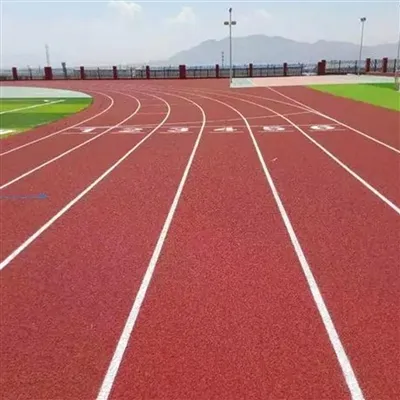
When you leap with all your might on the sports field and your running shoes draw graceful arcs on the track, the ground beneath your feet is your most loyal "invisible guardian". The sports ground is not merely a "flooring material", but a precise system that integrates materials science, ergonomics and sports mechanics. Sports flooring refers to the ground material layer specially designed and constructed for various sports competitions and fitness activities. It needs to meet the requirements of elasticity, anti-slip, wear resistance, shock absorption and environmental protection for sports, and adapt to the technical requirements of different sports. 1. Concept: The plastic track floor is an elastic ground material made of synthetic resins such as polyurethane (PU) and polyvinyl chloride (PVC) as the main binders, mixed with rubber particles and other raw materials. It is also known as an all-weather sports floor and is commonly seen in basketball courts, badminton courts and other venues. Due to its good elasticity, anti-slip and wear-resistant properties, it has become the mainstream choice for modern sports venues. 2. Advantages: Excellent elasticity, good anti-slip performance, high rebound rate, wear-resistant and shock-resistant, customizable according to the needs of different sports venues, and highly practical. 3. Disadvantages: Large initial investment, may release a slight odor at high temperatures, improper construction is prone to problems such as bulging and delamination, and the difficulty of later repair is relatively high. 4. Applicable venues: ball game venues, various types of track and field tracks, comprehensive sports venues in schools and stadiums, simple sports venues in communities and parks. Concept: Acrylic flooring is a new type of environmentally friendly flooring material composed of acrylic resin as the core component, combined with pigments, fillers and additives. 2. Advantages: Green, environmentally friendly and pollution-free, with excellent weather resistance and anti-aging ability, stable structure and not easy to fall off, long-term stable and reliable material performance, and simple construction process, short cycle and quick effect, suitable for a wide range of scenarios 3. Disadvantages: It has high requirements for the flatness of the base layer. An uneven base layer can easily lead to cracking and peeling of the coating. It has a relatively weak ability to resist the impact of heavy objects and is prone to damage when subjected to long-term heavy pressure or sharp object impacts. The stain resistance is average. Stubborn stains need to be cleaned up in time; otherwise, it is easy to leave marks. In low-temperature environments, its toughness decreases. Long-term use in extremely cold regions may lead to brittle cracking, and color differences are likely to remain after repair. 4. Applicable venues: Indoor and outdoor basketball courts, tennis courts, badminton courts and other professional sports venues as well as sports venues for leisure and entertainment. 1. Concept: Artificial turf can be classified into two major categories based on the production process: injection-molded artificial turf and woven artificial turf. (1) Injection-molded artificial turf: It adopts an integrated injection molding process, where plastic particles are extruded into shape in a dedicated mold at one time. Subsequently, professional bending techniques are used to make the grass leaves present a naturally curved shape. The arrangement of its grass leaves follows the rule of equal spacing and equal quantity, maintaining a completely uniform height, with excellent flatness and regularity. (2) Woven artificial turf: With synthetic fibers that imitate the shape of natural grass leaves as the core material, the fibers are precisely implanted into the woven base fabric through specialized equipment, and then a fixed coating is evenly applied to the back to enhance structural stability. It has a high degree of simulation, excellent toughness and is applicable in a wide range of scenarios. 2. Advantages and disadvantages: (1) The injection molding type adopts an integrated injection molding process, featuring regular grass leaves, low cost, wear resistance and easy maintenance. Its safety is suitable for children's scenarios, but its simulation degree and elasticity are average. (2) The woven type involves embedding synthetic fibers into the base fabric and applying a fixed coating. It features high simulation, comfortable foot feel, and excellent elasticity, making it suitable for professional venues. However, it has a relatively high cost and requires regular maintenance 3. Applicable scenarios (1) Injection-molded artificial turf can be used in multiple aspects such as activity areas in kindergartens, auxiliary areas of sports fields, balcony decoration, urban greening projects, and the laying of sand and gold fields. (2) Woven artificial turf can be widely applied in professional sports fields, leisure activity areas, golf courses, courtyard floor laying and urban greening projects, etc. 1. Concept: The silicon PU court floor is composed of elastic base material for the court, wear-resistant surface material, topcoat, marking lines and other parts 2. Advantages: It features outstanding wear resistance, weather resistance and anti-fouling properties. Moreover, the surface layer of the court can be adjusted to various colors as needed to beautify the environment and bring visual enjoyment. 3. Disadvantages: Higher initial investment cost, strict environmental requirements for construction, slight yellowing may occur when exposed to strong light for a long time, affecting the consistency of appearance, weak resistance to scratches from sharp objects, easy to leave marks when scratched by hard objects, and there may be color differences after repair. 4. Applicable scenarios: It is suitable for professional sports venues such as indoor and outdoor basketball courts, tennis courts, and badminton courts. It is also compatible with activity areas in kindergartens, school playgrounds, leisure and fitness areas, and children's play areas. 1. Concept: Suspended modular floor, also known as modular sports floor, is made of high-strength polypropylene environmentally friendly material at its core. It does not require professional bonding and can be directly laid on flat base surfaces such as cement and asphalt. Through the unique locking structure of the floor itself, it can be quickly assembled and fixed. 2. Advantages: It features environmental friendliness, durability, convenience, portability, cold and heat resistance, anti-aging, comfort, safety and health, as well as excellent sports performance 3. Disadvantages: It relies on the flatness of the base layer, the lock buckle is prone to loosening due to high-intensity use or temperature changes, the texture is relatively hard, the movement buffering performance is average, the anti-slip performance will decline with the passage of time, and it is prone to cracking at low temperatures. 4. Applicable scenarios: It can be used to lay ideal high-performance basketball courts, tennis courts, roller skating courts, table tennis courts, and multi-functional courts such as volleyball and badminton courts. It can also be used in various domestic sports venues and playgrounds and sports fields in kindergartens and primary schools. The texture, safety and comfort of sports fields are all hidden in every detail of the floor. Whether it is the wear resistance and elasticity required for professional events or the environmental protection and anti-slip features valued in school playgrounds and community leisure areas, high-quality floors silently protect every run, jump and laugh, laying a solid foundation of peace of mind for sports moments in different scenarios. Note: The parameters provided in this document are for reference only and are not mandatory. Due to differences in technical characteristics between different brands and models of laser levelers, please consult the manufacturer for a suitable solution before actual operation. This reference document assumes no responsibility for any issues arising from failure to follow the manufacturer's instructions.How Do The Laser Transmitter And Receiver Of A Concrete Laser leveling Work?
How the laser transmitter and receiver of a concrete laser leveling machine work Concrete laser leveling machine, as an important equipment in modern building construction, has been widely used in the construction industry with its efficient and accurate ground leveling capabilities. In this machine, the laser transmitter and receiver play a vital role, working together to ensure the flatness and accuracy of the concrete surface to predetermined standards. This article will discuss in detail the working principle of the laser transmitter and receiver of the concrete laser leveling, including its principle, signal transmission and processing, precise positioning and calibration, etc., and also discuss the impact of environmental factors on the equipment and the maintenance and upkeep of the equipment. Key points, and finally a summary and outlook on technology applications and development trends. 1. Principle of laser transmitter The laser transmitter is one of the core components of the concrete laser leveling. Its main function is to emit a stable, high-precision laser beam. These laser beams provide the leveling with a reliable reference, allowing the machine to precisely control the concrete paving and leveling process. The working principle of a laser transmitter is based on the physical process of laser generation. With specific optical components and excitation sources, laser transmitters are able to produce a high-quality laser beam. This laser beam has extremely high directivity and monochromaticity, allowing it to maintain stable characteristics during propagation. At the same time, laser transmitters are usually equipped with angle and height adjustment devices so that users can adjust the direction and projection range of the laser beam according to actual needs. In the application of concrete laser leveling machine, the laser transmitter is placed on a stable platform to ensure the stability of the laser beam. By adjusting the angle and height of the emitter, precise control of the laser beam can be achieved to meet different construction needs. 2. Working principle of the receiver The laser receiver is another key component of the concrete laser leveling machine. It is responsible for receiving the laser beam emitted by the laser transmitter and converting it into a processable electrical signal. These electrical signals are then used to control the operation of the leveling, ensuring a smooth surface on the concrete. The working principle of the laser receiver is based on the principle of photoelectric conversion. When the laser beam irradiates the photoelectric element on the receiver, the photoelectric element will generate a photocurrent. The size of this photocurrent is proportional to the intensity of the laser beam, so the photocurrent can be measured. size to determine the intensity of the laser beam. At the same time, the receiver can also focus and filter the laser light through the built-in optical system to improve the receiving sensitivity and anti-interference ability. During the operation of the concrete laser leveling, the laser receiver needs to be kept within the irradiation range of the laser beam at all times. When the receiver receives the laser beam, it converts the optical signals into electrical signals and transmits these signals to the leveler's control system. The control system calculates the actual height and position information of the concrete surface based on the received signals, and adjusts the working parameters of the leveling machine accordingly, such as the height and vibration frequency of the blade, to achieve accurate leveling effects. 3. Signal transmission and processing Signal transmission and processing between the laser transmitter and receiver are the key to achieving high-precision operation of the leveler. In concrete laser leveling machines, signal transmission mainly relies on transmission media such as electrical or optical fiber. These media transmit the electrical signals converted by the laser receiver to the leveler's control system. After the control system receives the signal, it processes and analyzes it. This process usually includes signal amplification, filtering, conversion and calculation steps. Through signal processing, the control system can accurately obtain the height and position information of the concrete surface and compare it with the preset leveling standards. Based on the comparison results, the control system will adjust the working parameters of the leveling machine to achieve the desired leveling effect. 4. Precise positioning and calibration The precise positioning and calibration of the laser leveler is an important part of ensuring construction quality. The leveler requires initial calibration before work to ensure precise alignment between the laser transmitter and receiver. Initial calibration involves adjusting parameters such as the height and angle of the transmitter, and the position and sensitivity of the receiver. During the construction process, the leveling machine also needs to be calibrated in real time to deal with possible errors and changes. Real-time calibration is usually achieved by comparing the difference between the received laser signal and a preset value. When the difference exceeds the allowable range, the leveler will automatically adjust the working parameters to eliminate the error. In addition, the laser leveling machine is equipped with high-precision sensors and control systems to achieve more accurate positioning and calibration. These sensors can monitor the position and status of the leveling machine in real time and provide accurate data support for the control system. 5. Impact of environmental factors on Environmental factors have a non-negligible impact on the performance of the laser transmitter and receiver of the concrete laser leveling. First, changes in temperature can cause changes in the performance of laser transmitters and receivers. Such as the stability of the laser beam, the sensitivity of the photoelectric components, etc. In a high-temperature environment, the equipment may overheat, affecting its normal operation; while in a low-temperature environment, the performance of some components may be degraded due to low temperatures. In addition, humidity and dust are also important factors affecting the performance of laser transmitters and receivers. A high-humidity environment may cause condensation inside the device, affecting the normal operation of electronic components; and the accumulation of dust may block the receiving surface of the photoelectric component and reduce the receiving sensitivity. Therefore, when using a concrete laser leveling, it is necessary to fully consider the impact of environmental factors on the performance of the equipment and take appropriate measures for protection and maintenance. For example, in high-temperature environments, heat dissipation measures can be taken, such as installing fans or radiators; in environments with high humidity, the equipment can be dehumidified regularly; at the same time, regular cleaning of the surface and interior of the equipment is also necessary. 6. Maintenance and Maintenance Points The maintenance and upkeep of the concrete laser leveling machine is the key to ensuring its long-term stable operation. For laser transmitters and receivers, the following are key maintenance and care points: First, regularly check the optical components of the laser transmitter and receiver to ensure that their surfaces are clean and dust-free. Any dirt or scratches may affect the transmission and reception quality of the laser beam. Special cleaning cloths and detergents should be used for cleaning, and harsh chemical solvents should be avoided. Secondly, keep the mechanical parts of the transmitter and receiver in good condition, regularly check whether the fasteners are loose, and lubricate the moving parts to ensure their normal operation and extend their service life. At the same time, pay attention to waterproofing and moisture-proofing to avoid using the device in humid or harsh environments to avoid damaging electronic components. In addition, regular calibration of the equipment is necessary. Since the equipment may be affected by various factors during use, resulting in changes in the signal shift of the laser beam or the receiving sensitivity, regular calibration can ensure the accuracy and stability of the equipment. Finally, equipment that is not used for a long time should be properly stored. The device should be placed in a dry, ventilated environment away from direct sunlight and high temperatures. At the same time, the equipment should be powered on regularly to ensure the normal operation of its circuits and components. 7. Technology Application and Development The application of warm concrete laser leveling machines in the construction industry has become more and more widespread, and its characteristics of high precision and high efficiency have been widely recognized. With the continuous development of science and technology, the performance of laser transmitters and receivers are also constantly improving, providing more reliable technical support for the work of the leveling machine. In the future, with the continuous advancement of laser technology and the improvement of intelligence level, concrete laser leveling machines are expected to achieve higher precision and wider applications. For example, by optimizing the design of the laser transmitter and receiver, the stability and anti-interference ability of the laser beam are improved; by introducing more advanced control systems and sensors, more precise positioning and calibration can be achieved; at the same time, the Internet of Things and Big data technology enables remote monitoring and intelligent maintenance of equipment, improving equipment efficiency and reliability. In addition, with the continuous improvement of environmental awareness, the application of concrete laser leveling machines in green construction will also receive more attention. By optimizing equipment design and construction technology, energy consumption and waste emissions are reduced to achieve green and environmentally friendly building construction. 8. Summary and Outlook The laser transmitter and receiver of the concrete laser leveler are key components to achieve high-precision leveling. They provide reliable reference and control signals for the leveling machine by emitting and receiving laser beams. During use, you need to pay attention to the impact of environmental factors on equipment performance, and take appropriate measures for protection and maintenance. Looking to the future, with the continuous advancement of science and technology and the continuous expansion of application fields, concrete laser levelings are expected to achieve higher precision, wider applications and more environmentally friendly construction methods. At the same time, we also need to continue to pay attention to the development of new technologies and new materials, promote technological innovation and industrial upgrading of concrete laser leveling machines, and make greater contributions to the sustainable development of the construction industry. In short, the laser transmitter and receiver of the concrete laser leveling are the key links to ensure construction accuracy and efficiency. By in-depth understanding of its working principle and maintenance points, we can better utilize this advanced technology, improve the quality and efficiency of construction, and promote the sustainable development of the construction industry.