Technical Knowledge
Small mistakes, big risks! A collection of common mistakes made by laser leveler maintenance novices

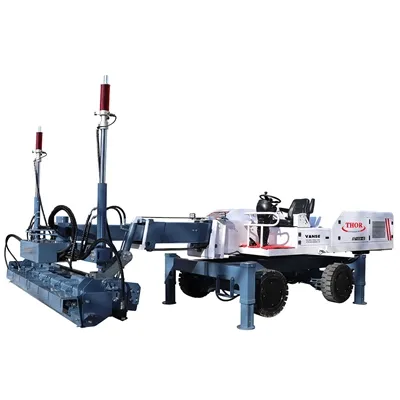
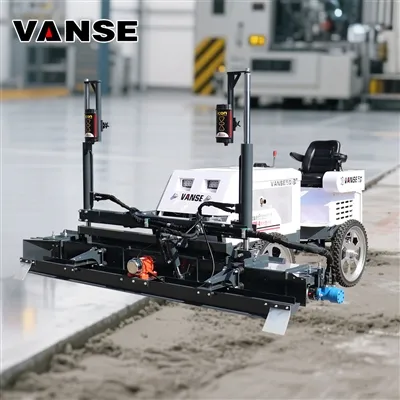
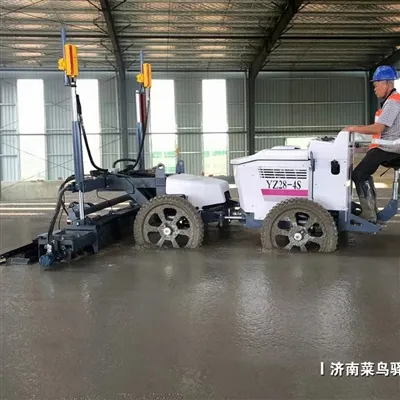
Compared with ordinary leveling machines, laser leveling machines undoubtedly have a series of operational advantages, but as the service life of leveling machines continues to increase, it is inevitable that one or another fault problem will occur. In order to ensure the normal use of laser leveling machines, it is particularly important to master the machine fault repair skills in time. In order to further improve the fault repair rate of laser leveling machines and avoid unnecessary economic losses, this article simply lists several small mistakes that are easy to make when repairing leveling equipment.
▼There are many cases of not paying attention to the detection of the clearance of parts
The clearance between the diesel engine piston and the cylinder liner, the "three gaps" of the piston ring, the clearance between the valve stem and the valve guide, etc., all types of laser leveling machines have strict requirements. When repairing the laser leveling machine, measurements should be taken, and parts that do not meet the clearance requirements should be adjusted or replaced.
▼▼The situation of improper bolt tightening method is more serious
Most of the fixing or connecting bolts of various parts of the laser leveling machine have tightening torque requirements, such as injector fixing bolts, cylinder head bolts, connecting rod bolts, flywheel bolts, etc. Some specify tightening torque, some specify tightening angle, and also specify tightening sequence. Some maintenance personnel use the force rod at will and tighten by feeling, resulting in a large difference in tightening torque. Therefore, when repairing the laser leveling machine, the bolts must be tightened according to the specified torque and sequence to prevent mechanical failure due to excessive, too small or improper tightening torque of the bolts.
▼▼▼Not paying attention to the selection of bolts, the phenomenon of chaotic use of bolts is more prominent
When repairing the laser leveling machine, the phenomenon of misusing bolts is still more prominent. Because the performance and quality of the bolts do not meet the technical requirements, mechanical failures occur frequently after maintenance. However, in actual maintenance, most of them use ordinary nuts, which are very difficult to disassemble after a long time. Some technical requirements stipulate that they should be replaced after several disassembly and assembly. Because maintenance personnel do not understand these situations, repeated use of unqualified bolts can easily lead to mechanical failures or accidents. Therefore, when repairing laser leveling machines, when bolts are damaged or lost, they should be replaced in time with bolts that meet the requirements, and bolts should not be used indiscriminately.
In short, in order to quickly restore the normal operation of the laser leveling machine, ensure the normal progress of the project construction, and avoid unnecessary construction costs and troubles, it is also hoped that relevant maintenance personnel must avoid the above-mentioned wrong behaviors in time and strengthen the management and maintenance of the machine after maintenance.
Thanks to All the Friends Who Support and Trust Shandong Vanse Machinery Technology Co., Ltd.
If you want to know more about Shandong Vanse Machinery Technology Co., Ltd. or have any questions, please feel free to contact us:
Our Factory
Shandong Vanse Machinery Technology Co., Ltd.








Share this article

About the Author: Shandong Vanse Machinery Technology Co., Ltd.
Shandong Vanse Machinery Technology Co., Ltd. is a high-tech manufacturer specializing in concrete construction machinery, including laser screeds and related equipment. The company integrates R&D, production, and global sales, with products exported to over 60 countries and widely used in infrastructure projects worldwide.
Previous Post
Next Post
Related Articles
You Might Also Like
How does concrete laser leveling technology achieve precise leveling of concrete surfaces?
Concrete laser leveling technology is an efficient construction technology that uses laser beams as reference planes to accurately level the concrete surface through automated equipment to ensure the flatness and accuracy of the concrete floor. This technology has been widely used in the modern construction industry, especially in large industrial plants, warehouses, airport runways, large commercial facilities and other places where there are extremely high requirements for ground flatness. The following is a specific introduction and analysis of concrete laser leveling technology. Technical Overview The core of concrete laser leveling technology is to use laser as a reference. The laser beam emitted by the laser transmitter forms a horizontal plane in the construction area. The construction personnel or machines adjust the laying thickness and flatness of the concrete according to this horizontal plane. > Learn more about leveling machine >> Working Principle The laser leveling machine usually consists of the following parts: – **Laser transmitter**: emits a stable laser beam to form a horizontal reference plane. – **Receiver**: installed on the leveling machine, receives laser signals and converts them into electrical signals. – **Control system**: automatically adjusts the working state of the leveling machine according to the received electrical signal to ensure that the concrete surface is consistent with the laser plane. – **Leveling machine**: According to the instructions of the control system, the concrete surface is leveled through vibration and scraping functions. > Learn more about leveling machine >> Technical advantages – **High efficiency**: The laser leveling machine can quickly complete the leveling of large-area concrete, saving manpower and time. – **High precision**: Laser leveling technology can ensure that the flatness of the concrete surface reaches extremely high standards and reduce subsequent finishing work. – **Reduce material waste**: Reduce material waste by accurately controlling the laying thickness of concrete. – **Improve construction quality**: A flat concrete surface can improve the overall quality and service life of the building. > Learn more about leveling machine >> Construction process 1. **Site preparation**: Clean the construction site to ensure that the ground is clean and flat. 2. **Laser transmitter setting**: Set the position and angle of the laser transmitter according to construction requirements. 3. **Concrete pouring**: Concrete is poured with the assistance of the laser leveling machine. 4. **Leveling operation**: The laser leveling machine automatically adjusts the scraper height according to the laser signal for leveling. 5. **Surface treatment**: After leveling, the concrete surface is smoothed and calendered to improve the surface quality. 6. **Quality inspection**: Use professional equipment to inspect the flatness and levelness of the concrete surface. > Learn more about leveling machine >> Technical application Laser leveling technology is widely used in the following fields: – **Industrial plants**: Large, flat floors are required for mechanical operation and cargo storage. – **Commercial facilities**: Such as shopping malls, exhibition halls, etc., require flat floors to provide a good customer experience. – **Airport runways**: There are extremely high requirements for flatness and strength to ensure the safe takeoff and landing of aircraft. – **Roads and bridges**: Precise flatness is required to ensure the smoothness and safety of vehicle driving. > Learn more about leveling machine >> Technical challenges and solutions – **Environmental factors**: Such as wind force, temperature changes, etc. may affect the stability of the laser. The solution is to improve the stability of the laser transmitter through technical improvements. – **Equipment maintenance**: Laser leveling machines require regular maintenance to ensure their performance. The solution is to establish a complete maintenance system and train operators. – **Training of construction personnel**: Operating a laser leveling machine requires professional knowledge and skills. The solution is to provide professional training courses. > Learn more about leveling machine >> Future development With the advancement of science and technology, laser leveling technology is also developing. Future development directions may include: – **Intelligentization**: Improving the automation level of leveling machines by integrating more intelligent sensors and control systems. – **Multifunctionality**: Developing leveling machines that can complete multiple construction tasks at the same time. – **Environmentally friendly materials**: Researching and using more environmentally friendly concrete materials to reduce the impact of construction on the environment. > Learn more about leveling machine >> Conclusion Concrete laser leveling technology has become an indispensable part of modern construction with its advantages of high efficiency, high precision and construction quality. With the continuous advancement and innovation of technology, this technology will play a greater role in the future and bring more possibilities to the construction industry. This article provides a comprehensive introduction to concrete laser leveling technology, including its working principle, technical advantages, construction process, application areas, challenges faced, and future development directions. The article avoids the use of clichés and shows how this technology plays a role in the modern construction industry through specific technical details and practical application cases. I hope this article can provide readers with valuable information and in-depth understanding. > Learn more about leveling machine >>How does the acceptance of concrete laser leveling machine reflect the reliability of equipment performance?
The acceptance of concrete laser leveling machines is a core step in verifying the reliability of equipment performance. This requires multi-dimensional verification through systematic testing, data verification, and operating simulation to ensure that the equipment meets design standards and construction requirements in key performance indicators such as accuracy, stability, durability, and safety. The reliability evaluation process can be broken down into the following five core acceptance dimensions, each with its own specific testing methods and reliability assessment criteria: The core value of a laser leveler lies in its "high-precision leveling." This dimension's acceptance directly determines whether the equipment can meet construction quality requirements and is the primary verification point for reliability. Acceptance requires a two-way verification of both "laser positioning accuracy" and "mechanical execution accuracy." The specific methods are as follows: Acceptance Project Test Method Reliability judgment criteria Risk of failure (if not met) Laser transmitter accuracy 1. Place the laser transmitter on a horizontal reference point and use a precision level (accuracy ≥ 0.1mm) to calibrate the transmitter's levelness. Within the full operating radius, the laser receiving height deviation is ≤±0.5mm; the deviation fluctuation during rotation is ≤0.3mm, and there is no "break" or "jump" phenomenon. Unstable laser signals lead to deviations in the leveling height, resulting in ground height differences and substandard flatness, necessitating rework. 2. Place a laser receiver at 10m/20m/30m (maximum operating radius of the coverage device) and record the receiving height deviation. 3. Rotate the transmitter 360° and record the deviation value every 45°. Leveling mechanism execution accuracy 1. Simulate standard construction conditions (concrete slump 120-180mm) and cast a 3m×3m test block; The flatness deviation of the 2m straightedge is ≤3mm/2m; the elevation deviation is ≤±2mm; the fluctuation of the 3 test data is ≤1mm, with no obvious dispersion. Poor mechanical execution accuracy results in excessive ground flatness, affecting the subsequent construction of the wear-resistant layer or the use of the ground (such as storage and workshop floors). 2. After the concrete has initially set, use a 2m straightedge to check the surface flatness (measure one point every 1m, for a total of 9 points) and use a laser leveler to check the overall elevation deviation; 3. Repeat the test three times and compare the data consistency each time. Slope control accuracy 1. Set the slope mode of the laser transmitter (e.g. 2%, 5% bidirectional slope); The deviation between the actual slope and the set slope is ≤±0.1%; the slope of the entire working surface is uniform, with no local "steep drops/sharp rises". Failure of slope control results in poor ground drainage (such as roofs and outdoor areas), causing water accumulation and leakage problems. 2. Measure one point every 2 meters along the diagonal direction of the test block and calculate the deviation between the actual slope and the set slope; 3. Test the slope accuracy in both horizontal and vertical directions. The power system (engine/motor) and drive system (travel and leveling roller drive) are the "power source" for continuous operation of the equipment. Their stability directly determines whether the equipment can cope with long-term, high-load construction and is the foundation of reliability. Acceptance requires a combination of "static parameter verification" and "dynamic operating condition testing": Parameter verification: Check the engine/motor model, rated power, speed (e.g., diesel engine rated speed 2200-2800 rpm), output torque and other parameters to ensure they are consistent with the equipment manual to avoid "downgrading" and resulting in insufficient power. Dynamic testing: Run the machine at no load for 30 minutes, monitoring the power system speed fluctuation (≤±50r/min), oil temperature (≤85°C), and noise (≤95dB). No abnormal vibration or noise should be observed. Run at full load (the leveling head is pressed into the concrete to a depth of 50-80mm) for 1 hour, observe whether the power system experiences any "speed drop" or "stall", and verify the overload capacity (run at 120% of the rated load for 10 minutes without any fault). Travel reliability: Test forward/reverse/turning functions on a concrete surface (before initial setting). Ensure the travel speed (adjustable from 0-15 m/min) is smooth, the turning radius complies with the specifications (e.g., minimum turning radius ≤ 2 m), and the drive wheels do not slip and the bearings do not overheat (≤ 70°C) after one hour of continuous travel. Leveling auger drive: Test the forward and reverse rotation of the leveling auger and the speed adjustment (0-60r/min). Observe whether the auger rotates evenly, without "stuck" or "eccentric shaking", and whether the auger rotates freely after shutdown (to verify the reliability of the brake). Laser leveling machines are required to operate for long periods of time under bumpy and high-load conditions. The strength and durability of their structural components (frame, leveling rollers, laser bracket) directly affect the life of the equipment. Therefore, acceptance must be verified through "static strength verification" and "dynamic fatigue testing": Size and material: Use calipers and spectrometers to inspect key structural parts (such as the wall thickness of the leveling roller ≥12mm, the cross-sectional size of the frame main beam ≥150×80mm). The material must be Q355B grade steel or above, and the welding points must be free of pores and cracks (using penetrant testing). Load-bearing capacity: Apply a load 1.5 times the rated pressure to both ends of the leveling roller (e.g., 750 kg for a rated load of 500 kg) for 30 minutes. Measure the deformation of the structural components (frame deflection ≤ 2 mm/m, leveling roller bending ≤ 1 mm). No permanent deformation should be observed after unloading. Simulate bumpy road conditions at a construction site (set a 50mm high bump and a 10° slope). Drive the machine continuously at a medium speed (8m/min) for 2 hours with the leveling function enabled. After the test, check the tightness of the structural connection parts (bolts, pins) (torque attenuation ≤ 10%), whether the welding points are cracked, and whether the laser bracket is loose (laser receiver position deviation ≤ 0.3mm) to verify the structural fatigue resistance. Modern laser levelers rely on electronic control systems (PLC, touch screen, sensors) for automated operation. The stability of the control system directly affects the safety and efficiency of equipment operation. Acceptance verification focuses on "operational response" and "fault handling capabilities": Human-computer interaction: Test the touch screen (or operating handle) command response speed (e.g., slope adjustment, speed switching response time ≤ 0.5s), with no "delay" or "misoperation", and the display interface data (laser height, travel speed, oil temperature) is updated in real time (refresh rate ≥ 1 time/second). Automatic leveling function: Artificially create a height deviation of the laser receiver (e.g., raise it by 5mm) and observe whether the equipment can automatically adjust the leveling roller height to the set elevation within 3 seconds. Repeat 10 times with an adjustment accuracy deviation of ≤0.5mm, with no over-adjustment or under-adjustment. Simulate common faults (such as laser signal interruption, low engine oil pressure, and drive motor overload) to verify that the control system can alarm within 3 seconds (audio-visual alarm + on-screen fault code display), and that the alarm information is consistent with the actual fault; Test the fault protection function: for example, when the laser signal is interrupted, whether the equipment automatically shuts down (to avoid blind operation); when the oil pressure is too low, whether the power output is automatically reduced and an alarm is issued to prevent engine damage. Equipment reliability not only means "being able to work", but also "working safely". The acceptance of safety protection measures is the bottom line for ensuring the safety of operators and equipment. It must comply with the "Technical Regulations for Safety in the Use of Construction Machinery" (JGJ33-2012): Safety features Acceptance requirements Reliability judgment criteria Emergency stop function Test the operating handle and the emergency stop button on the side of the machine. After pressing it, the device must cut off power within 1 second (engine shutdown, motor power off), and must be manually reset after restarting. Emergency shutdown response time ≤ 1s, no "failure" or "false triggering". Protective devices 1. There must be a guardrail (height ≥ 1.2m) on the outside of the leveling roller to prevent people from contacting it; The protective device is firm (withstands 500N force without deformation) and is not missing or damaged. 2. The engine exhaust port must be equipped with a heat shield with a surface temperature of ≤60°C; 3. Wires and hydraulic pipes must have protective covers and no exposed parts. Stability Park the equipment on a 15° slope (empty or fully loaded) and observe whether it slides or overturns. Test the supporting strength of the outriggers (if any) to ensure they do not sink after loading. There is no sliding when parking on the slope, and the horizontal deviation of the fuselage after support by the outriggers is ≤0.5°. The acceptance of concrete laser levelings essentially involves transforming the abstract concept of "reliability" into measurable, concrete data (such as accuracy deviation, fault response time, and structural deformation) through quantitative performance testing and simulated operating conditions. Only when these five dimensions meet design standards and the test data demonstrates consistency (no significant fluctuations across multiple tests) and redundancy (such as dynamic overload capacity and structural load margin) can the equipment be proven to deliver reliable performance with long-term stable operation, low failure rates, and high fault tolerance in actual construction, thus preventing quality defects and project delays caused by equipment issues.Floor engineering laser leveling/ leveling construction technology
• • • ★ • • •Pre-construction preparation • • • ★ • • • Before carrying out laser leveling construction of floor projects, adequate preparation is the key to ensuring construction quality and progress. The following are the main contents of preparation before construction: 1. On-site investigation and evaluation: Conduct a detailed investigation of the construction site to understand basic conditions such as terrain, landforms, and soil conditions, evaluate the difficulty of construction and possible problems, and provide a basis for the formulation of subsequent construction plans. 2. Construction plan formulation: Based on the on-site survey results and engineering requirements, formulate a detailed construction plan, including construction process, personnel organization, equipment configuration, construction schedule, etc. 3. Personnel training and preparation: Provide operating training for laser leveling equipment to personnel involved in construction to ensure that they are familiar with equipment performance, operating essentials and safety precautions. At the same time, construction personnel should be equipped with necessary labor protection supplies. 4. Equipment inspection and debugging: Conduct a comprehensive inspection of construction equipment such as laser levelers and mixed soil pumps to ensure their good performance, safety and reliability. Carry out necessary debugging and calibration of equipment to ensure that it can work accurately and efficiently during the construction process. 5. Site layout and preparation: Clean the construction site to ensure there is no debris or water accumulation, and provide sufficient working space for construction equipment. Set up construction signs, warning signs and other safety facilities to ensure safety during construction. • • • ★ • • •Material selection and blending • • • ★ • • • The materials required for laser leveling construction of floor projects mainly include cement, aggregates, additives, etc. Choosing appropriate materials and reasonable mixing ratios are crucial to ensuring construction quality. 1. Cement selection: Choose cement with stable quality and meeting the requirements to ensure the strength and durability of the concrete. 2. Aggregate selection: Select appropriate aggregates, such as sand, stone, etc., according to project requirements. Aggregates should have good gradation and particle shape to improve the compactness and workability of the concrete. 3. Use of additives: According to the needs of the project, an appropriate amount of water reducing agent, slow agent and other additives can be added to improve the working performance and hardening performance of the concrete. 4. Material preparation: Material preparation is carried out according to the design requirements, and key parameters such as water-cement ratio and aggregate content are strictly controlled to ensure that the quality of the concrete meets the standard requirements. • • • ★ • • •Basic Processing • • • ★ • • • Before laser leveling construction, the foundation needs to be treated to ensure the flatness and solidity of the floor. 1. Foundation cleaning: Remove oil, debris, etc. from the foundation surface to ensure that the foundation surface is clean and dry. 2. Foundation leveling: If the surface of the foundation is uneven, mortar and other materials must be used for leveling to ensure the quality of subsequent construction. 3. Foundation solidification: The newly poured foundation needs to be cured and cured for a certain period of time to ensure that the foundation strength reaches the required level before laser leveling construction is carried out. • • • ★ • • •Laser Equipment Calibration • • • ★ • • • Laser leveling machine is the core equipment for laser leveling construction of floor projects, and its calibration accuracy is directly related to the quality of construction. 1. Laser transmitter installation and calibration: Install the laser transmitter in a fixed position and ensure that its height and angle meet the requirements. Calibration using a laser receiver ensures that the laser beam is accurately projected onto the ground to be leveled. 2. Laser receiver installation and debugging: Install the laser receiver on the concrete laser leveler to ensure that it can accurately receive the laser signal from the laser transmitter. Make adjustments to the laser receiver as needed to ensure it is working properly. • • • ★ • • • Concrete Pouring • • • ★ • • • Concrete pouring is a key link in laser leveling construction of floor projects, and the quality and speed of concrete pouring need to be strictly controlled. 1. Concrete mixing and transportation: Mix concrete according to the material mixing ratio to ensure that the concrete is evenly mixed and free of impurities. Use equipment such as concrete pumps to transport concrete to the construction site to ensure that the concrete maintains good working performance during the construction process. 2. Concrete pouring speed: According to the construction plan and actual site conditions, the concrete pouring speed should be reasonably controlled to ensure that the concrete can cover the entire construction area in a timely and even manner. 3. Concrete pouring quality: During the pouring process, the uniformity and compactness of the concrete should be checked to ensure that the concrete pouring quality meets the design requirements. • • • ★ • • •Laser Leveling Operations • • • ★ • • • Laser leveling operation is the core step of laser leveling construction in floor engineering, which requires operators to master equipment operation skills. 1. Operator requirements: Operators should receive professional training and be familiar with the performance characteristics, operating essentials and safety precautions of the laser leveler. During the construction process, stay focused and strictly follow the operating procedures. 2. Leveling operation points: After starting the laser leveling machine, adjust the height and angle of the scraper according to the laser signal to ensure that the scraper maintains an appropriate distance and angle from the ground. During operation, the stability of the scraper must be maintained to avoid adverse effects such as shaking or ripples on the scraper. At the same time, the leveling speed must be controlled according to construction requirements to ensure the best leveling effect. 3. Construction quality monitoring: During the leveling process, the construction quality should be monitored in real time to observe whether the ground is flat and smooth, and whether there are cracks, sand and other defects. If problems are found, the machine should be stopped immediately for inspection and equipment parameters or construction methods should be adjusted to ensure that the construction quality meets the design requirements. • • • ★ • • •Conservation and Protection • • • ★ • • • After the laser leveling construction of the floor project is completed, certain maintenance and protection work is required to ensure the durability and beauty of the floor. 1. Maintenance measures: The floor should be maintained within a period of time after the construction is completed (usually 7-14 days). During the maintenance period, adverse factors such as heavy pressure and flooding should be avoided, and the floor surface should be kept dry and clean. At the same time, laser leveling construction technology for floor engineering can be used. • • • ★ • • •Conservation and Protection (continued) • • • ★ • • • 1. Use special curing agents to maintain the floor surface to enhance the wear resistance, dustproof and anti-slip properties of the floor. 2. Protection measures: During the use of the floor, necessary protective measures should be taken to prevent the floor from being scratched, worn and contaminated. For example, set up protective mats or anti-slip mats on the passages in and out of the construction area to reduce wear and tear on the floor: clean and maintain the floor regularly, and remove dirt and debris in a timely manner. • • • ★ • • •Quality inspection and acceptance • • • ★ • • • Quality inspection and acceptance are important links to ensure the quality of laser leveling construction of floor projects, and they need to be carried out in strict accordance with relevant standards and specifications. 1. Quality inspection: During and after construction, the floor should be inspected for various quality indicators, including flatness, levelness, strength, wear resistance, anti-slip, etc. The detection method can use a combination of visual inspection, measuring instrument measurement, laboratory testing and other methods to ensure that the detection results are accurate and reliable. 2. Acceptance standards: The acceptance standards for laser leveling construction of floor projects should comply with relevant national standards and specifications, as well as the stipulations in the project contract. During acceptance, check whether the various quality indicators of the floor meet the requirements and whether there are defects such as cracks, sand, and hollows. If problems are found, rectification and repair should be carried out in a timely manner to ensure that the floor construction quality meets the acceptance standards. 3. Acceptance procedure: The acceptance procedure should include three stages: initial inspection, preliminary inspection and final inspection. The initial inspection is carried out during the construction process, mainly to check whether the construction technology of each roof meets the requirements; the re-inspection is carried out after the construction is completed, and all quality indicators of the floor are comprehensively tested; the final inspection is during the maintenance period Conducted after completion, the final quality of the floor is evaluated and confirmed. During the acceptance process, relevant records and documentation should be compiled for subsequent review and audit. • • • ★ • • •Summary• • • ★ • • • The laser leveling construction technology for floor engineering is an efficient and accurate construction method that can effectively improve the flatness and construction efficiency of the floor. During the construction process, various operations should be carried out strictly in accordance with the construction technology requirements to ensure The construction quality meets the design requirements. At the same time, during the construction process and after the construction is completed, necessary maintenance and protection work should be carried out on the floor to extend the service life and aesthetics of the floor. Finally, through the quality inspection and acceptance process, the reliability and stability of the laser leveling construction quality of the floor project are ensured.