Technical Knowledge
How does the concrete laser leveling machine ensure the construction effect and ground flatness?
1. High-precision sensor:
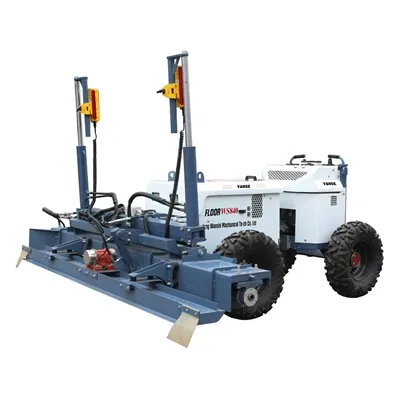
The concrete laser leveling machine is equipped with a high-precision sensor that can monitor the height and level of the concrete surface in real time. By comparing it with a preset elevation, the sensor can precisely control the movement and lifting of the leveling to ensure the smoothness of the concrete surface.
2. Automated control system:
The concrete laser leveling machine adopts an automated control system, which can achieve precise control and intelligent adjustment. The control system can automatically adjust the operating status of the leveler, including speed, vibration frequency, etc., based on sensor feedback data to adapt to different ground conditions and ensure construction results.
3. Advanced working principle:
The concrete laser leveling machine uses laser technology for positioning and calibration. The laser beam emitted by the laser transmitter is received by the sensor through the receiver to form an accurate reference plane. The leveling machine automatically adjusts the working height and direction according to this reference plane to ensure the flatness and elevation accuracy of the concrete surface.
4. Efficient vibration system:
The concrete laser leveling machine is equipped with an efficient vibration system, which uses high-frequency vibration to evenly vibrate the concrete material and smooth the surface. The vibration system can adjust the amplitude and frequency as needed to adapt to different concrete types and thicknesses, improving construction results and smoothness.
5. Professional operators:
Professionals who operate concrete laser leveling machines have been trained and are familiar with machine performance and operating techniques. They can adjust machine parameters according to actual conditions, choose appropriate construction methods, and master the correct operating procedures to ensure construction effects and ground flatness.
To sum up, the concrete laser leveling machine ensures the construction effect and ground flatness through the combined effect of high-precision sensors, automated control systems, advanced working principles, efficient vibration systems and professional operators. The combined use of these technical means makes the concrete laser leveling an efficient and precise construction equipment that can meet the flatness requirements under various ground conditions.

Thanks to All the Friends Who Support and Trust Shandong Vanse Machinery Technology Co., Ltd.
If you want to know more about Shandong Vanse Machinery Technology Co., Ltd. or have any questions, please feel free to contact us:
Our Factory
Shandong Vanse Machinery Technology Co., Ltd.








Share this article

About the Author: Shandong Vanse Machinery Technology Co., Ltd.
Shandong Vanse Machinery Technology Co., Ltd. is a high-tech manufacturer specializing in concrete construction machinery, including laser screeds and related equipment. The company integrates R&D, production, and global sales, with products exported to over 60 countries and widely used in infrastructure projects worldwide.
Previous Post
Next Post
Related Articles
You Might Also Like
Concrete laser leveling machine maintenance process
The concrete laser leveling is a piece of equipment widely used in concrete construction. Its efficient flatness and precise elevation control have won the favor of the majority of constructors. In order to maintain its good working condition and extend its service life, regular maintenance and repairs are essential. The following is the maintenance process of concrete laser leveling machine. Daily maintenance: After each day's work, the following maintenance work should be performed. Clean the machine surface: Wipe the machine surface with a damp cloth to remove dust and debris. Check the oil level: Check the oil level of the engine and hydraulic system to make sure it is within the normal range. Check the coolant: Check the coolant (antifreeze) level. If the level is too low, add an appropriate amount of coolant. Weekly maintenance: The following maintenance work should be performed every week. Check tire pressure: Check the pressure of the machine's tires to make sure it is within the normal range. Check the hydraulic pipeline: Check whether there is oil leakage at the joint of the hydraulic pipeline. If oil leakage is found, deal with it immediately. Check the laser receiver: Check whether the laser receiver is clean. If dust or debris is found, clean it. Monthly maintenance: The following maintenance work should be performed every month. Check the engine: Check the operation of the engine and make sure the engine sound and vibration are normal. Check the hydraulic pump: Check the working condition of the hydraulic pump to ensure that the hydraulic pump is operating normally. Check the laser transmitter: Check the condition of the laser transmitter and make sure the lens of the laser transmitter is clean and intact. Annual maintenance: Comprehensive maintenance should be carried out every year, including the following work. Change engine oil and filter: Replace your engine's oil and air filter to ensure smooth engine operation. Check the electrical system: Check the wiring and components of the electrical system to ensure the safety of the electrical system. Check the hydraulic system: Check the components and pipelines of the hydraulic system to ensure the normal operation of the hydraulic system. The above is the maintenance process of the concrete laser leveling machine. Through regular maintenance work, you can ensure that the machine is always in good working condition, improve work efficiency, and also extend the service life of the machine. During use, if any abnormality occurs, stop the machine immediately for inspection and contact professionals for repair.Is Laser Leveling Machine Suitable for Fiber Reinforced Concrete (FRC) Mixing
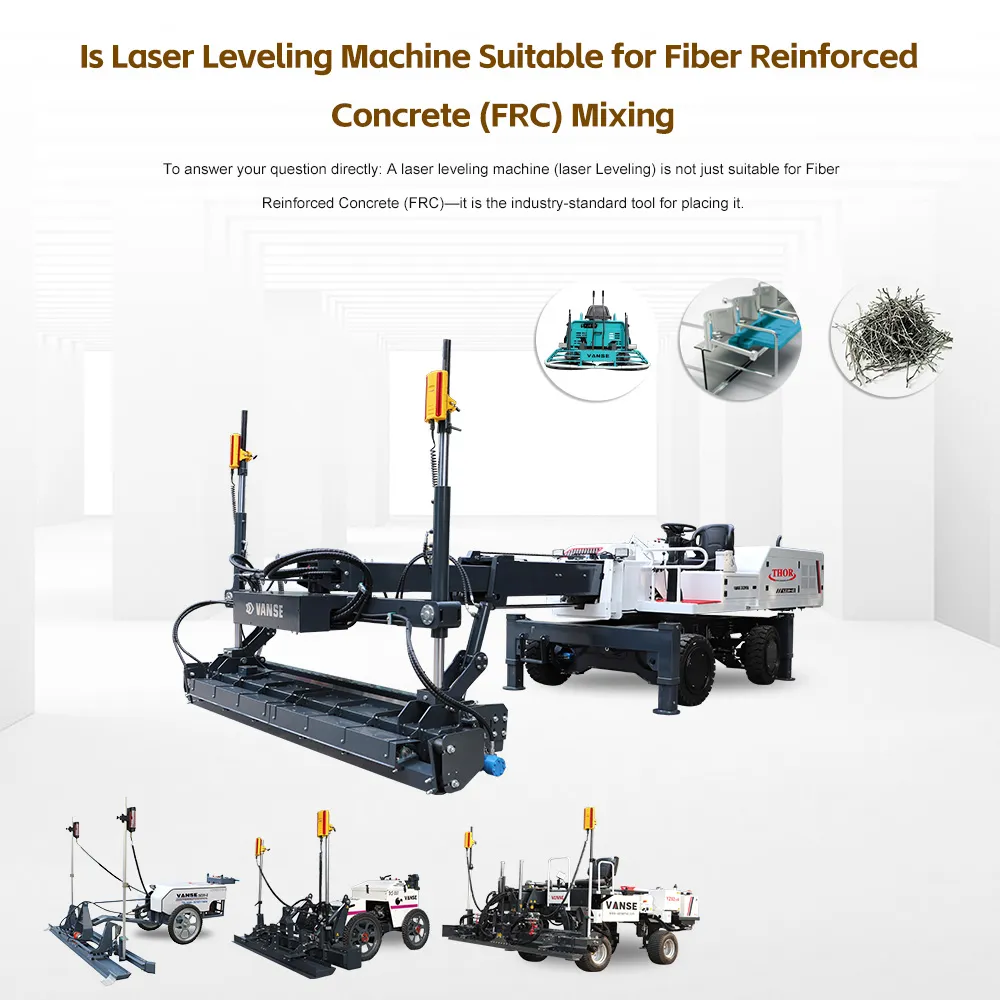
To answer your question directly: A laser leveling machine (laser Leveling) is not just suitable for Fiber Reinforced Concrete (FRC)-it is the industry-standard tool for placing it. However, it's important to clarify the terminology: the machine does not "mix" the fibers into the concrete; it specializes in distributing and leveling the FRC mix once it has been discharged from the truck. Here is how the laser leveling machine interacts with FRC and the specific technical advantages it offers. The Mixing: Fibers (Steel or Synthetic) must be added at the batch plant or in the truck mixer. The laser Leveling receives the FRC after it has been thoroughly mixed. The Leveling: Once the FRC is on the ground, the laser Leveling's auger and vibrator head work together. The auger cuts the "peaks" of the fiber-clumped concrete, while the high-frequency vibrator forces the fibers down into the paste, ensuring they don't all stick out of the surface. Using traditional manual Levelinging with fibers is a nightmare for laborers. The laser Leveling solves three major FRC problems: Fibre "Balling": If the mix isn't perfect, fibers can clump. A laser Leveling's powerful auger breaks up minor clumps that a hand-Leveling would simply snag on and pull across the floor. Surface Flatness (FF): Fibers increase the "internal friction" of concrete, making it stiffer. A laser Leveling has the hydraulic power to strike off this stiff material much more accurately than human power. Submerging the Fibers: The vibration of the Leveling head is tuned to help the heavy aggregate and fibers settle slightly below the surface (the "cream"), which is essential for a smooth finish. While the machine is suitable, you must adjust your operation based on the Fiber Type: Fiber Type Challenge with Laser Leveling Technical Fix Macro-Synthetic Can "spring back" after the Leveling passes, causing micro-bumps. Increase the vibration frequency on the Leveling head. Steel Fiber Highly abrasive; wears down the Leveling's auger and plow. Use hardened steel components or "wear-strips" on the machine. High Dosage Rates The mix becomes "harsh" and hard to move. Use a mid-to-high range water reducer (superplasticizer) to maintain flow. Plow Height Adjustment: When running FRC, set the plow slightly higher than a standard mix. This prevents the plow from "dragging" the fibers and creating tears in the surface. Consistency is King: The laser Leveling relies on a consistent "slump." If one truck has a high fiber dosage and the next has less, the Leveling will settle differently, ruining your floor flatness. Auger Direction: Ensure the auger is pushing the excess FRC toward the "wet" side of the pour to prevent fibers from accumulating in one spot and creating a "dead zone" of reinforcement. Expert Note: If you are using Steel Fibers, ensure they are the "hooked-end" or "glued-bundle" variety. These distribute more evenly under the laser Leveling's auger than loose, straight fibers, which tend to "nest" and cause the machine to struggle. Would you like me to provide a specific "Leveling Maintenance Checklist" for projects involving high-dosage steel fiber concrete? Contact us NOW Note: The parameters provided in this document are for reference only and are not mandatory. Due to differences in technical characteristics between different brands and models of laser levelers, please consult the manufacturer for a suitable solution before actual operation. This reference document assumes no responsibility for any issues arising from failure to follow the manufacturer's instructions.Common troubleshooting of concrete laser leveling machine
★1★ Introduction to laser leveling machine The concrete laser leveler is a high-tech concrete construction equipment that uses laser technology to achieve high-precision leveling operations. This equipment has the advantages of high degree of automation, good leveling effect, and high construction efficiency. It is widely used in concrete construction in construction, roads, bridges and other fields. ★2★ Common fault types 1. Laser system failure: Including abnormalities in the laser transmitter, receiver and other components, causing the laser signal to be unstable or unable to be transmitted normally. 2. Leveling mechanism failure: Including damage or improper adjustment of leveling machine rollers, scrapers and other components, resulting in poor leveling effect. 3. Control system failure: Including control system software or hardware failure, causing the equipment to be unable to control or respond normally. 4. Other mechanical failures: Including abnormalities in other mechanical components such as the engine and hydraulic system, causing the equipment to fail to operate normally. ★3★ Troubleshooting methods 1. Laser system troubleshooting: Check whether the connection between the laser transmitter and the receiver is firm and ensure that the line is not loose; clean the optical components to remove dust and dirt: adjust the laser system parameters to ensure stable transmission of the laser signal. 2. Troubleshooting of the leveling mechanism: Check whether the rollers and random plates of the leveling machine are damaged, and replace them if necessary: adjust the height and angle of the rollers and scrapers to ensure that the leveling effect meets the requirements; check whether the hydraulic system is normal and ensure Oil cleanliness. 3. Control system troubleshooting: Restart the control system software to check whether the hardware connection is firm; update or reinstall the software to solve software faults; check whether the various line connections of the control system are normal. 4. Other mechanical troubleshooting: Check whether other mechanical components such as the engine and hydraulic system are normal; replace damaged components; adjust relevant parameters to ensure normal operation of the equipment. ★4★ Maintenance and maintenance In order to ensure the normal operation and service life of the concrete laser leveling machine, regular maintenance and upkeep is required. The specific methods are as follows: regularly clean the surface and internal components of the equipment to remove dust and dirt; check the connection and tightening of each component, and replace or adjust if necessary; regularly replace hydraulic oil and other lubricants to ensure oil quality, according to usage conditions , conduct a comprehensive inspection and maintenance of the equipment. ★5★ Precautions for safe operation When using a concrete laser leveling, safety operating procedures should be followed to ensure the safety of personnel and equipment. Specific precautions are as follows: Operators need to undergo professional training and be familiar with equipment performance and operating essentials; during operation, they should wear protective equipment such as hard hats and gloves: ensure that the construction site is safe and tidy, and avoid people falling or tripping; during operation , a stable and safe distance should be maintained to avoid collision or interference with other construction machinery. ★6★ Future development trends With the continuous development of science and technology, concrete laser leveling machines will develop in a more intelligent, efficient and environmentally friendly direction. In the future, concrete laser levelings will have higher-precision control capabilities and more efficient work efficiency, and will also pay more attention to environmental protection and energy-saving design. In addition, with the development of Internet of Things and artificial intelligence technology, concrete laser levelinging machines will realize remote monitoring and intelligent control functions, improving the automation and ease of use of the equipment.