Technical Knowledge
Small laser leveling machine pouring and leveling construction and control matters

The liquid crystal surface on the body of the small laser leveler also needs to be cleaned. You can use organic resin or special cleaning cloth for lenses to wipe the dirt. If there is too much dirt, you can use lens cleaning fluid to remove it.
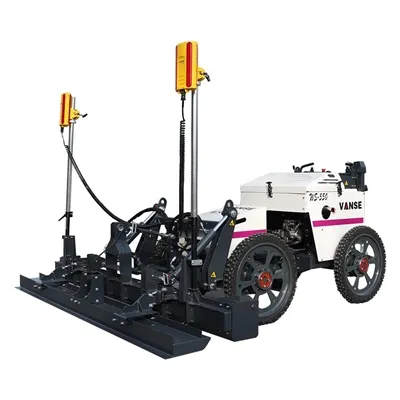
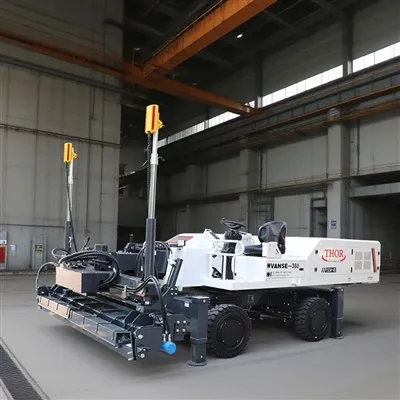
The small laser leveler is a device that uses laser as the reference plane, adopts an original imported receiving and transmitting system, and controls the leveling head in real time to achieve high-precision and rapid leveling of concrete. I believe that friends in the industry circle have a certain understanding of the small laser leveler, so how to maintain the small laser leveler after normal use? The manufacturer of the small laser leveler will explain to you the best way to maintain the small laser leveler after use.
1. The liquid crystal surface on the body of the small laser leveler also needs to be cleaned. You can use organic resin or special cleaning cloth for lenses to wipe the dirt. If there is too much dirt, you can use lens cleaning fluid to remove it.
2. There will be a lot of dust and mud on the small laser leveler after construction. First, wipe the dust off the small laser leveler, and wipe the dirt and oil stains with thin paper or cotton cloth.
3. If the laser signal is lost during the construction of the small laser leveling machine, the machine needs to be restarted, and the interval time needs to be more than ten seconds.
4. If there are too many stains, you can soak a soft cloth in water diluted with a neutral detergent, wring it out and wash it. The small laser leveling machine manufacturer reminds everyone not to use volatile oil, thinner, gasoline and other chemicals for cleaning and wiping.
Small laser leveling machine pouring and leveling construction and control matters:
1. Preparation work
①. After the base layer is processed, the small laser leveling machine is debugged, and a fixed reference leveling point is made according to the original leveling point; non-woven fabrics are laid, side molds are supported, and laser transmitters are set up. According to the original leveling point, the ground elevation is introduced into the small laser leveling machine. Small laser leveling machine manufacturer
②. Concrete transportation
Commercial concrete is used. The tank truck transports the commercial concrete to the garage entrance and exit, and then it is transported to the construction site with a three-wheel dump truck.
③. Check the elevation of the floor using a handheld laser receiver, introduce the elevation into the small laser leveler, and adjust the reference point on the leveler (±0.00).
2. Concrete pouring
Pouring steps:
①. After the formwork is supported, clean the warehouse one day in advance before pouring concrete, rinse and soak with water. When pouring is approaching, drain the open water and sweep the cement slurry or interface agent. At this time, it is strictly forbidden to have obvious water accumulation. If there is, it must be removed resolutely before paving concrete. Small laser leveling machine manufacturer
②. After the concrete is put down, it is initially flattened. The flattening height should be 3 cm higher than the elevation. Then use a small laser leveler to level it. For the corners that cannot be leveled, you can use a gasoline leveling ruler or manually scrape it flat.
③. When pouring the warehouse near the wall, wait until the leveler passes by, and then use a scraper to scrape it flat in time. And so on.
④. For areas where concrete mixer trucks cannot be driven to the site, tractors are also used to transport concrete. After pouring, wait for the concrete to initially set before starting the floor finishing construction.
3. Receiver signal adjustment during construction
The laser signal (frequency of 10 times/second) received by the small and medium-sized laser leveling machine receiver automatically adjusts the elevation in real time to ensure that the construction elevation is always within the set standard. Because the laser transmitter is fixed after setting, it can ensure that there is no cumulative error in the construction of large areas of ground.
During construction, the operator uses a handheld laser receiver to detect the ground after the machine construction, and once again ensures that the flatness error is within the controllable range.
Thanks to All the Friends Who Support and Trust Shandong Vanse Machinery Technology Co., Ltd.
If you want to know more about Shandong Vanse Machinery Technology Co., Ltd. or have any questions, please feel free to contact us:
Our Factory
Shandong Vanse Machinery Technology Co., Ltd.








Share this article

About the Author: Shandong Vanse Machinery Technology Co., Ltd.
Shandong Vanse Machinery Technology Co., Ltd. is a high-tech manufacturer specializing in concrete construction machinery, including laser screeds and related equipment. The company integrates R&D, production, and global sales, with products exported to over 60 countries and widely used in infrastructure projects worldwide.
Previous Post
Next Post
Related Articles
You Might Also Like
Safety Evaluation Of Concrete Laser Leveling Machine
Safety evaluation of concrete laser leveling machine •••▷ Introduction With the rapid development of the construction industry, concrete laser levelings, as important equipment on modern construction sites, play a huge role in improving construction efficiency and ensuring construction quality. However, at the same time, the security of the device cannot be ignored. This article will conduct an in-depth discussion on the safety of concrete laser leveling machines, analyze possible safety risks based on actual cases, and put forward corresponding safety evaluations and suggestions. •••▷ Overview of concrete laser leveling Concrete laser leveling machine is a kind of engineering machinery that uses laser technology to control the flatness of concrete surface. It mainly consists of a frame, power system, laser measurement and control system, leveling device, etc. , During the construction process, the laser measurement and control system emits a laser beam and receives the reflected light signal through the receiver to achieve real-time measurement and control of the concrete surface, so that the alarm leveling device can work according to the set elevation and flatness requirements. •••▷ Safety issues of concrete laser leveling Although concrete laser levelings have significant advantages in improving construction efficiency and quality, there are still some safety hazards during actual use. Here are some common security issues: 1. Equipment failure: Due to long-term use or improper maintenance of equipment, problems such as wear of mechanical parts and aging of electrical systems may occur, thereby increasing the risk of equipment failure. Once the equipment fails, it will not only affect the construction progress, but may also pose a safety threat to the operators. 2. Laser measurement and control system failure: The laser measurement and control system is the core part of the concrete laser leveling machine. If it fails, it will lead to a decrease in leveling accuracy and may even cause a safety accident. For example, when the laser transmitter is interfered with or damaged, it may cause the laser beam to be unstable or distorted, thus affecting the leveling effect. 3. Insufficient operator skills: The operation of the concrete laser leveling requires certain professional knowledge and skills. If the operator is untrained or has insufficient skills, it may lead to misoperation or improper operation, which may lead to safety accidents. •••▷ Case Analysis In order to better understand the safety issues of concrete laser leveling machines, two practical cases are listed below: Case 1: When a concrete laser leveling was used for construction at a construction site, the laser measurement and control system malfunctioned because the equipment had not been maintained for a long time. The operator failed to detect and deal with the problem in time and continued the operation, which ultimately resulted in serious substandard leveling results and cracks and unevenness on the ground. This not only affects the construction progress and quality, but also brings safety risks to subsequent construction. Case 2: At a certain construction site, an untrained operator operated a concrete laser leveling machine without authorization. Due to lack of skills, he failed to correctly adjust the parameters of the laser measurement and control system during the operation, resulting in a serious decline in leveling accuracy. In addition, he failed to discover some potential faults in the equipment in time, which ultimately led to a safety incident. •••▷ Safety evaluation and suggestions In view of the above cases and security issues, the following are some security evaluations and suggestions: 1. Regularly maintain and inspect the concrete laser leveling to ensure that the equipment is in good working condition. Especially for key components such as laser measurement and control systems, inspection and maintenance should be strengthened to avoid malfunctions or failures. 2. Strengthen the training and management of operators. Operators should have certain professional knowledge and skills, and must undergo relevant training and assessment before taking up their posts. At the same time, safety education and skills improvement training should be conducted regularly for operators to improve their safety awareness and operational skills. 3. Establish a sound safety management system and emergency plan. Construction sites should develop detailed safety management systems and operating procedures to clarify the responsibilities and authorities of personnel at all levels. At the same time, emergency plans should also be established to prevent and respond to possible safety accidents. 4. Strengthen safety supervision at construction sites. Construction site management personnel should strengthen safety supervision of construction sites and promptly discover and correct possible safety hazards. For safety problems discovered, measures should be taken promptly to rectify them to ensure construction safety. •••▷ Conclusion As an important equipment on modern construction sites, concrete laser levelings play an important role in improving construction efficiency and quality. However, during use, great attention must be paid to its safety issues. By strengthening equipment maintenance, operator training, safety management system construction, and construction site supervision, we can effectively reduce safety risks and protect the lives and property of construction workers. At the same time, it will also help improve the overall safety level of the construction industry and promote the sustainable and healthy development of the construction industry.Want to extend the life of laser leveling machine parts? Understanding the structure and frequent maintenance are very important
As a new floor construction equipment, laser leveling machine has attracted wide attention from the industry due to its excellent construction efficiency and construction accuracy as soon as it entered the market, and has been increasingly used in large-scale concrete floor construction in warehouses, basements, parking lots, industrial plants, etc. Like other construction machinery, laser leveling machine is also a whole composed of many parts, and the construction environment is relatively complex, so it is easier to wear than general mechanical parts during long-term work. In order to extend the effective service life of the laser leveling machine, the following is a brief introduction to the main components of its parts and the tips for use and maintenance. —-Core components and functions of laser leveling machine—- ➤Transmission system: mainly composed of transmission, universal joint, transmission shaft and drive axle; ➤Travel system: composed of frame/axle/suspension/wheels, etc. The function is to support the quality of the whole vehicle and ensure the driving of the laser leveler; ➤ Steering system: It is composed of steering wheel, steering gear, steering knuckle, steering knuckle arm, tie rod, straight tie rod, etc., and its function is steering; ➤ Hydraulic brake: The hydraulic brake device is composed of brake pedal, master brake cylinder, slave cylinder, drum brake and oil pipe and other parts; ➤ Transmission: It is composed of transmission case, transmission cover, first shaft, second shaft, intermediate shaft, reverse shaft, gear, bearing, operating mechanism and other parts, which are used for laser leveler speed change and output torque change; ➤ Leaf spring and shock absorber: The function of leaf spring is to maintain elastic connection between frame and body and wheels or axles. The function of shock absorber is to ease vibration when laser leveler is subjected to vibration shock; ➤ Starter: Its function is to convert electrical energy into mechanical energy, drive crankshaft rotation, and start engine. If the continuous starting time is too long, the battery will be discharged in large quantities and the starter coil will overheat and smoke, which will easily damage the laser leveling machine parts; ➤Battery: The function of the battery is to supply electricity to the starter, and to supply power to the engine ignition system and other electrical equipment when the engine is started or running at low speed. When the engine is running at high speed, the generator generates sufficient electricity, and the battery can store excess electricity; ➤Motor: The motor is the power device of the laser leveling machine. Its main function is to generate driving torque as a power source for electrical appliances or various machines. Its main function is to convert mechanical energy into electrical energy. At present, it is more commonly used to use heat energy, water energy, etc. to drive the generator rotor to generate electricity. —-Use and maintenance of core parts of laser leveling machine—- ➤Regularly replace lubricating oil to ensure that all parts of the machine are well lubricated and reduce the wear of parts; ➤Keep the whole machine and parts clean regularly, and tighten loose parts in time to prevent loose parts from aggravating the wear of parts or causing the loss of parts; ➤Pay attention to the workload of each part during the running-in period. The workload during the running-in period should generally not exceed 80% of the rated workload, and deploy appropriate workload to prevent overheating caused by long-term continuous operation of the laser leveling machine; ➤Start the leveling machine engine once every half a month to charge the battery and run all hydraulic actuators, such as rotating hydraulic motors, telescopic cylinders, etc. Do not remove the battery from the machine to prevent the failure of the controller's internal software program being lost due to long-term parking of the equipment; ➤Start the leveling machine regularly and turn on all hydraulic functions on the machine to allow the hydraulic drive components to work regularly to prevent the relevant seals from being damaged due to long-term parking, and metal components such as cylinder rods from rusting. Try to retract all cylinder rods into the hydraulic cylinder oil chamber as much as possible to better protect the surface of the cylinder rod. Reasonable use and regular maintenance of various components are effective ways to extend the service life of the laser leveling machine and improve the economic benefits of the operation. It is recommended that before using the leveling machine, you should be fully familiar with the composition and functions of each component of the machine, master the correct operation method, and strengthen daily maintenance.Life cycle management & replacement records of vulnerable parts (such as scrapers and hydraulic oil filters) of Concrete Laser Levelings
Scientific life cycle management and detailed replacement records of the vulnerable parts of the Concrete Laser Leveling are the keys to ensuring construction quality, reducing the total cost of equipment and avoiding unplanned shutdowns. The following provides you with a complete life cycle management and replacement record system for vulnerable parts, including management methods, record templates and practical operation suggestions. Life cycle management is not merely about "replacing when broken", but rather a comprehensive strategy that encompasses both preventive replacement and condition-based replacement. Name of vulnerable parts Life cycle (Reference Management strategy Key influencing factors Scraper 50,000-150,000 square meters Condition-based replacement Concrete corrosiveness, aggregate hardness, ground flatness requirements, and operating habits Hydraulic oil filter element 500 hours or one year Preventive replacement The cleanliness of the working environment, the quality of hydraulic oil, and the working time of the system Walking tires/track plates 1,000 to 2,000 hours Condition-based replacement Ground roughness, presence of sharp objects, and load conditions Laser receiver Depending on usage State check Collision, vibration, aging Engine filter element According to the engine manual Preventive replacement Environmental dust concentration, fuel/engine oil quality (Air filter, mechanical filter, diesel filter (Usually 250 to 500 hours Hydraulic oil 2,000 hours or 2 years Preventive replacement Working hours, oil temperature, and contamination conditions Strategy explanation Preventive replacement: Replace components based on running time or calendar time, regardless of whether they are damaged or not. It is applicable to hydraulic oil filter elements, engine filter elements, etc. Its failure will trigger a chain reaction (such as filter element blockage causing pump damage). Condition-based replacement: Whether to replace a component is determined based on its actual wear or performance condition. It is applicable to scrapers, tires, etc. The wear and tear is obvious. Replacing them too early will cause waste. ① Establish files: Create an independent "Wear Parts Life Cycle Management Card" for each piece of equipment. ② Data Recording: Strictly record the replacement time, square meters, reasons for replacement, etc. in the table below. ③ Regular inspection Daily inspection: Before starting work each day, the operator should check the wear of the scraper, the tire pressure and the wear condition. Weekly/Monthly inspection: The equipment administrator checks the appearance of the filter element and records the cumulative working time of the equipment. ④ Data analysis Regularly (such as every quarter) review the records and analyze the average lifespan of each vulnerable part. If the lifespan of a certain component is much lower than expected, the cause needs to be investigated (such as operational issues, material problems, environmental issues). ⑤ Optimization strategy: Based on the analysis results, adjust the preventive replacement cycle or increase the frequency of status checks to achieve the optimal balance between cost and efficiency. It is recommended to use paper forms for on-site record-keeping and summarize them into electronic forms for long-term analysis later. Equipment Number: ______ Equipment Model: ______ Person in Charge of Management: ______ Serial number Change date Name of vulnerable parts Specification and model Replacement reasons (wear/damage/prevention) Current device hours (h) Current leveled area (㎡) Supplier/Brand Replace the person Remarks 1 2023/10/26 Main scraper ABC-100 The edge wear exceeds 5mm 1250 58,500 XX brand A The area to be leveled this time starts from the previous 50,000 square meters 2 2023/11/15 Hydraulic oil filter element XYZ-01 Preventive replacement 1500 75,000 Original factory B Change the hydraulic oil at the same time 3 2024/3/10 Walking tire 8.5-24 The tread pattern is smoothed out 2100 110,000 YY brand C … … … … … … … … … … Instructions for Use Current equipment hours/leveled area: This is the most crucial indicator for measuring the life cycle and must be accurately recorded. Replacement reason: Clear record for easy distinction between normal wear and tear and accidental damage. Note: Record any abnormal conditions, related maintenance activities (such as whether the oil was changed when replacing the filter element), etc. Name of vulnerable parts Specification and model Applicable equipment Current inventory Safety stock Supplier Information Procurement Warning Main scraper ABC-100 Concrete Laser Leveling machine #01, #02 2 3 Contact person:… Telephone:… Triggered when inventory is less than or equal to safety stock Hydraulic oil filter element XYZ-01 Concrete Laser Leveling machine #01 5 4 Contact person:… Telephone:… Walking tire 8.5-24 Concrete Laser Leveling machine #01, #02 1 2 Contact person:… Telephone:… Warning … … … … … … … Inspection standard: When the blade of the scraper wears more than 3-5mm or irregular wear occurs that affects the scraping effect, it should be replaced immediately or flipped over for use (if the design permits). Best Practice Keep the scraper clean and remove the adhered concrete after each use. Prepare spare parts before the wear reaches the limit to avoid work stoppages due to lack of materials. Record the square meters completed by each scraper to calculate its true lifespan Replacement standard: Preventive replacement must be carried out strictly in accordance with the time or hours specified in the equipment manual. Under harsh working conditions, the replacement cycle should be shortened. Best Practice When replacing the filter element, change the hydraulic oil at the same time to ensure the cleanliness of the system. Before and after replacement, pay attention to cleaning the area around the filter element seat to prevent contaminants from entering the system. Use genuine or high-quality compatible filter elements. Inferior filter elements are the "killers" of hydraulic systems. For companies with multiple devices, it is advisable to consider upgrading to digital management Use equipment management software (such as CMMS) : Input the information of each device, maintenance plans, and replacement records into the system. Set up automatic reminders: The system can automatically send reminders to the administrator for preventive maintenance tasks such as filter element replacement and hydraulic oil replacement based on the operating hours or calendar time. Data analysis and Reporting: Easily generate equipment maintenance cost reports, wear and tear consumption analysis, etc., providing data support for management decisions. The core value of conducting meticulous life cycle management and record-keeping for the vulnerable parts of Concrete Laser Leveling machines lies in: Ensure construction quality: Worn scrapers will directly affect the flatness of the floor. Control maintenance costs: Avoid high repair fees caused by excessive maintenance and catastrophic damage. Enhance equipment availability: Minimize unexpected downtime through planned maintenance. Form a knowledge base: Long-term recorded data is a valuable asset for the company, which helps optimize procurement, training and equipment selection. Establishing and strictly implementing this system will shift your equipment management from "passive maintenance" to "active prevention", ultimately achieving cost reduction and efficiency improvement. Note: The parameters provided in this document are for reference only and are not mandatory. Due to differences in technical characteristics between different brands and models of laser levelers, please consult the manufacturer for a suitable solution before actual operation. This reference document assumes no responsibility for any issues arising from failure to follow the manufacturer's instructions.