Technical Knowledge
What impact does concrete pavement paving speed have on flatness?

The influence of concrete pavement paving speed on flatness is mainly reflected in the following aspects:
🥂Affecting the concrete vibration effect: If the paving speed is too fast, the concrete stays in the vibration area for too short a time, and the vibrator cannot fully vibrate the concrete, resulting in the inability to completely discharge the air inside the concrete and insufficient density. In this way, in the subsequent use of the pavement, problems such as local subsidence are prone to occur, affecting the flatness. On the contrary, if the paving speed is too slow, the concrete stays in the vibration area for too long, which will cause excessive vibration of the concrete, causing the coarse aggregate to sink, the fine aggregate and cement slurry to float, and segregation, which will also affect the flatness and overall quality of the pavement.
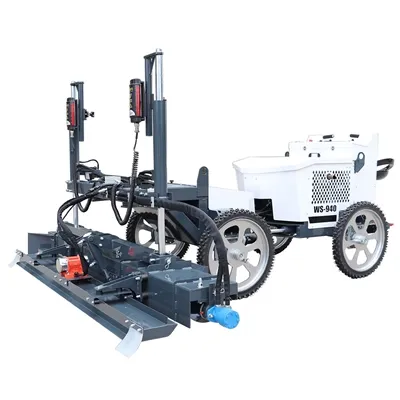
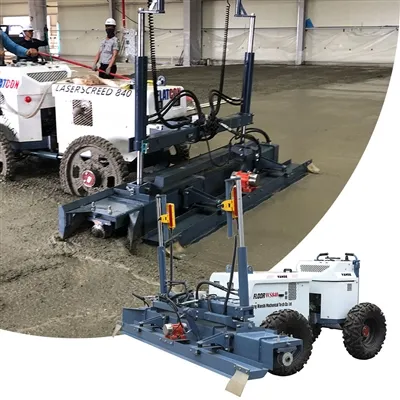
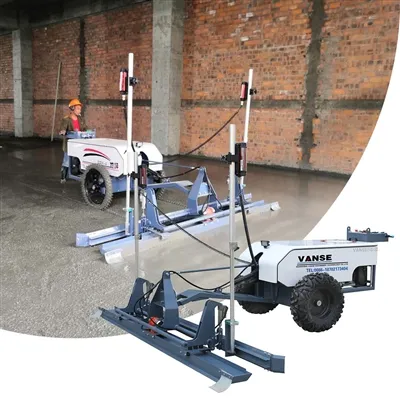
🥂Affecting the working state of the leveling plate: The leveling plate of the paver is a key component for the initial leveling of concrete. When the paving speed changes, the concrete resistance of the leveling plate will also change. If the paving speed suddenly increases, the amount of concrete accumulation in front of the leveling plate decreases, and the upward buoyancy of the leveling plate decreases, which may cause the leveling plate to sink, causing local depressions on the pavement after paving. On the contrary, if the paving speed suddenly slows down, the concrete accumulation in front of the leveling increases, and the buoyancy of the leveling increases, which will cause the leveling to rise, resulting in the road surface being too high in some parts, affecting the flatness.
🥂Affecting the finishing of the concrete surface: The appropriate paving speed helps the construction workers to timely and effectively finish the newly paved concrete surface. If the paving speed is too fast, the construction workers will not have time to carefully deal with the unevenness of the concrete surface, and some small bumps will remain, affecting the flatness of the road surface. If the paving speed is too slow, the water on the concrete surface will evaporate too much. When finishing, it is easy to cause surface roughness and peeling, which is also not conducive to ensuring flatness.
To ensure the flatness of the concrete pavement, the appropriate and stable paving speed should be selected according to the properties of the concrete (such as slump and workability), the performance of the paver and the actual situation of the construction site. It is generally advisable to control it at 2-3m/min.
Click the below to jump immediately!!!


CONCRETE LEVELING MACHINE


SLIPFORM MACHINE


TOPPING SPREADER

TRACKED MINI DUMPER
Thanks to All the Friends Who Support and Trust Shandong Vanse Machinery Technology Co., Ltd.
If you want to know more about Shandong Vanse Machinery Technology Co., Ltd. or have any questions, please feel free to contact us:
Our Factory
Shandong Vanse Machinery Technology Co., Ltd.








Share this article

About the Author: Shandong Vanse Machinery Technology Co., Ltd.
Shandong Vanse Machinery Technology Co., Ltd. is a high-tech manufacturer specializing in concrete construction machinery, including laser screeds and related equipment. The company integrates R&D, production, and global sales, with products exported to over 60 countries and widely used in infrastructure projects worldwide.
Previous Post
Next Post
Related Articles
You Might Also Like
How to ensure the safety and reliability of concrete laser leveling machine during construction?
It is very important to ensure the safety and reliability of the concrete laser leveling machine during the construction process. This is not only related to the quality of the project, but also directly affects the safety of the operator. Here are some key steps and suggestions to ensure the safe and reliable operation of the concrete laser leveling machine: 1. Training and certification: Ensure that all operators have received appropriate operation training and are familiar with all functions and emergency stop procedures of the equipment. 2. Equipment inspection: Before starting work every day, perform a comprehensive visual inspection of the leveling machine, including checking tires, fuel levels, oil, coolant, and all controls. 3. Laser calibration: Ensure that the laser transmitter is properly installed and calibrated to provide an accurate height reference. 4. Safety protection: Ensure that all safety devices such as emergency brake buttons, safety guardrails, etc. are in good condition. 1. Site leveling: Before using the laser leveling machine, properly prepare the construction site to ensure that the ground is relatively flat and free of large debris. 2. Traffic control: Set up warning signs and fences to restrict unauthorized personnel from entering the work area. 3. Material supply: Rationally arrange the supply speed of concrete to avoid idling of equipment or pouring too quickly due to waiting for concrete, resulting in quality degradation. 4. Smooth communication: Ensure good communication means within the construction site to facilitate command and dispatch and emergency response. 1. Smooth driving: The operator should maintain a constant speed and avoid sharp turns or sudden braking, which can improve flatness and reduce the risk of equipment damage. 2. Monitoring laser signals: Keep an eye on the working conditions of the laser receiver to ensure that a stable signal is received. 3. Timely adjustment: Adjust the scraper angle and vibration frequency according to the actual construction conditions to achieve the best effect. 4. Rest and inspection: Let the machine rest regularly and check the equipment condition again during this period. 1. Regular maintenance: Perform routine maintenance tasks according to the manufacturer's recommended schedule, such as changing the engine oil and cleaning the filter. 2. Record keeping: Keeping detailed records of each maintenance helps track the historical performance of the equipment and predict possible problems in the future. 3. Professional repair: When encountering complex failures, please contact professional repair services instead of trying to repair them yourself. The above measures can greatly improve the safety and reliability of concrete laser leveling machines on the construction site. It is important to always follow the guidelines in the user manual provided by the manufacturer and comply with relevant local safety regulationsConcrete laser leveling machine construction efficiency
Concrete laser leveling machine construction efficiency ♦1♦ Introduction As an advanced construction equipment, the concrete laser leveling has significant advantages in improving construction efficiency. This article will discuss the construction efficiency of concrete laser leveling machines from aspects such as equipment performance, operator skills, and construction environment. ♦2♦ Equipment performance 1. The efficient construction Concrete laser leveling machine uses advanced laser measurement and control technology to accurately measure and control the flatness and elevation of the concrete surface. At the same time, the equipment is equipped with a high-efficiency scraper mechanism and vibrator, which can quickly level the concrete surface and improve construction efficiency. 2. High degree of automation The concrete laser leveling machine adopts an intelligent control system and can realize automated operation. The operator only needs to set relevant parameters and the equipment can automatically complete the leveling operation. This highly automated equipment greatly reduces manual operation time and labor costs. ♦3♦ Operator skills 1. Train qualified operators In order to ensure the construction efficiency of the concrete laser leveling machine, operators need to undergo professional training and master the operation methods and maintenance knowledge of the equipment. Only trained and qualified operators can skillfully operate the equipment and improve construction efficiency. 2. Experienced operators Operators with extensive experience can better cope with various construction environments and conditions. They can adjust the parameters and operating methods of the equipment according to the actual situation to ensure the stability and reliability of the equipment, thereby improving construction efficiency. ♦4♦ Construction environment 1. Good construction environment The concrete laser leveling needs to operate in a good construction environment. If there are severe weather conditions such as sand, rain and snow at the construction site, it will affect the construction efficiency of the equipment. Therefore, when selecting the construction time and location, weather factors need to be fully considered to ensure that the equipment can operate in a good environment. 2. Reasonable construction organization Reasonable construction organization is one of the key factors to improve the construction efficiency of concrete laser leveling machine. During the construction process, it is necessary to formulate reasonable construction plans and organizational plans based on the actual situation. Ensure that the equipment can complete various tasks efficiently. At the same time, on-site management also needs to be strengthened to ensure the safe and stable operation of the equipment. ♦5♦ Conclusion To sum up, the construction efficiency of concrete laser leveling machine is affected by many factors. In order to improve construction efficiency, factors such as equipment performance, operator skills, and construction environment need to be comprehensively considered. Only by giving full play to the performance of the equipment, improving the skills of the operators and choosing a good construction environment can the construction efficiency of the compacted soil laser leveling machine be truly improved.How to operate the concrete laser leveling machine
The operation method of the concrete laser leveling machine generally includes pre-operation preparation, equipment debugging, construction operation and post-operation processing. The following are the specific contents: 1. Site cleaning: Clear the debris and obstacles in the construction site to ensure that the ground is flat and there are no sharp objects to avoid affecting the operation of the equipment or damaging the tires and scrapers and other parts. 2. Equipment inspection: Conduct a comprehensive inspection of the equipment, including whether the connections of each component are firm, whether the electrical system and hydraulic system are normal, whether the laser transmitter and receiver can work normally, whether the water tank and oil tank levels are within the normal range, etc. 3. Material and tool preparation: Prepare the required concrete materials to ensure that their quality and performance meet the construction requirements. At the same time, prepare necessary auxiliary tools such as shovels, trowels, etc. 4. Staffing: Arrange at least one skilled operator and auxiliary construction personnel to be responsible for the loading and paving of concrete. Operators should be familiar with the operation methods and safety precautions of the equipment and wear appropriate personal protective equipment, such as safety helmets and safety shoes. 1. Laser system debugging: Turn on the laser transmitter and set the height and slope of the laser according to the construction requirements. Install the laser receiver on the corresponding position of the leveler, and adjust the height and angle of the receiver so that it can accurately receive the laser signal. Start the leveler and move the equipment to check the signal reception of the laser receiver to ensure that the signal is stable and accurate. 2. Scraper and vibration plate debugging: According to the paving thickness and construction requirements of the concrete, adjust the height and angle of the scraper to keep a suitable distance from the ground. Generally, the distance between the bottom of the scraper and the ground is slightly less than the design thickness of the concrete. At the same time, debug the vibration frequency and amplitude of the vibration plate. Usually, it is adjusted according to the slump and density requirements of the concrete. The vibration frequency and amplitude can be appropriately increased for concrete with a small slump. 3. Travel system debugging: Start the travel system and check whether the forward, backward, steering and other functions of the equipment are normal. Adjust the travel speed. According to the paving speed of the concrete and the construction progress requirements, select a suitable travel speed, generally within the range of 1-3 meters/minute. 1. Concrete loading and paving: Use concrete conveying equipment to transport concrete to the construction site, and auxiliary construction personnel will cooperate to evenly spread the concrete on the ground. The paving thickness should be slightly higher than the designed thickness, generally 5-10 cm higher, to compensate for the concrete sinking during the leveling process. 2. Leveling operation: The operator starts the concrete laser leveling machine and drives the equipment forward slowly. During the movement of the equipment, the scraper will scrape the raised concrete flat, and the vibration plate will vibrate and compact the concrete to make the concrete surface initially flat. During the leveling process, the operator should closely observe the signal changes of the laser receiver, and adjust the height of the scraper and vibration plate in time according to the signal indication to ensure that the flatness of the concrete surface meets the requirements. 3. Edge and corner processing: For corners that are difficult for the equipment to reach, auxiliary construction personnel need to use shovels, trowels and other tools for manual leveling to ensure the flatness and density of the entire construction surface. 4. Multiple leveling: For large-area concrete construction, multiple leveling operations may be required. After the first leveling, wait for the concrete surface to dry slightly, and then perform the second leveling to further improve the flatness and finish of the concrete surface. 1. Equipment cleaning: After the construction is completed, turn off the power supply of the equipment in time, use a high-pressure water gun or compressed air to thoroughly clean the equipment, and remove concrete residues, dust and other debris on the surface and components of the equipment. In particular, the scraper, vibrating plate, spiral feeder and other parts must be cleaned to prevent damage to the equipment after the concrete solidifies. 2. Component inspection and maintenance: Perform a comprehensive inspection of the equipment to check whether the components are damaged or loose, and repair and tighten them in time if there are any problems. At the same time, lubricate and maintain the parts that need lubrication in accordance with the equipment maintenance requirements, and add or replace lubricating oil, hydraulic oil, etc. 3. Storage equipment: Park the equipment at the designated storage location, ensure that the storage site is flat and dry, and avoid the equipment from being affected by natural factors such as rain and sun. If the equipment is not used for a long time, appropriate protective measures should be taken, such as covering with canvas.