Technical Knowledge
Revealed: Tips for choosing a concrete laser leveling machine, don’t use it wrong again!

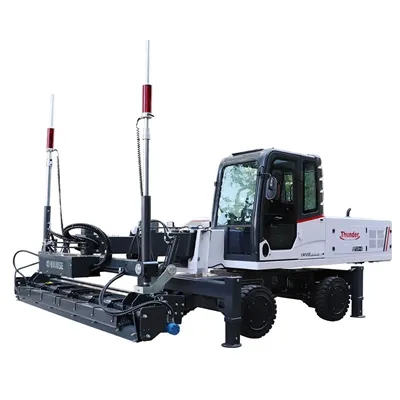
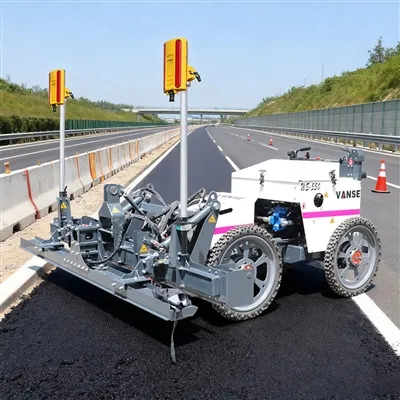
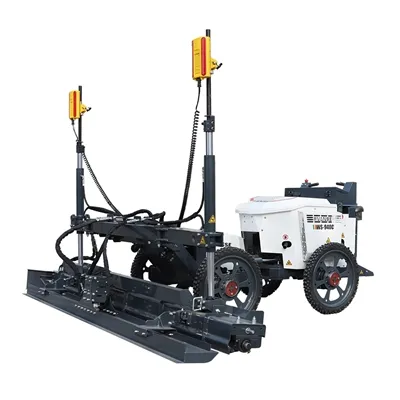
| Since the concrete laser leveling machine market is relatively chaotic, if you want to better choose products with better quality, you need to master some purchasing skills. If you don’t know much about this, don’t worry, because next, our experts will share with you the purchasing skills of concrete laser leveling machines. I hope you can read it carefully. Thank you for your support. | |
Purchase skills of concrete laser leveling machines: |
|
1. Many people often fall into the misunderstanding of product prices when purchasing concrete laser leveling machines.They think that the appearance and performance of the products are not much different, so they start to hesitate on the price. In fact, a good machine should be "both inside and outside". Low prices often mean low quality, and built-in parts or services are discounted accordingly. This is in line with the eternal truth that you get what you pay for. In this way, sellers can make money and have a basis for survival. However, if you just covet low prices, you can only worry about yourself! In addition, for users, when choosing a concrete laser leveling machine, they should pay more attention to the quality inspection. Ground construction is a link in the construction. If the quality of the laser leveling machine is not good, problems will occur in the ground process, which will lead to delays in the entire construction period and cause greater losses. Therefore, when purchasing a laser leveling machine, you cannot blindly pursue low prices, but pay more attention to the quality of the product. In the market competition, low prices often play a disruptive role and have no profit support. |
|
2. So, how can you choose a more practical concrete laser leveling machine?First of all, you must carefully choose the entry-level brand. For high-tech products such as concrete laser leveling machines, in addition to technological innovation, there is another important factor that affects the quality of concrete laser leveling machines, that is, experience. How to define laser leveling machine products of different models and specifications? How to deal with the flatness of the ground? How to locate the laser transmitter and other issues all require years of long-term accumulation to accurately grasp. If users hastily purchase products of entry-level brands when choosing laser leveling machine products, they are likely to become "guinea pigs" and encounter various troubles. It is very easy to identify whether this brand is new. You only need to check its patent registration time and understand the real cases in the past. |
|
| This is a brief introduction to the purchase tips of concrete laser leveling machines. If you have other questions, you can contact our customer service online. Our customer service will provide you with help in a timely manner. We look forward to your reading and thank you for your support. |
Thanks to All the Friends Who Support and Trust Shandong Vanse Machinery Technology Co., Ltd.
If you want to know more about Shandong Vanse Machinery Technology Co., Ltd. or have any questions, please feel free to contact us:
Our Factory
Shandong Vanse Machinery Technology Co., Ltd.








Share this article

About the Author: Shandong Vanse Machinery Technology Co., Ltd.
Shandong Vanse Machinery Technology Co., Ltd. is a high-tech manufacturer specializing in concrete construction machinery, including laser screeds and related equipment. The company integrates R&D, production, and global sales, with products exported to over 60 countries and widely used in infrastructure projects worldwide.
Previous Post
Next Post
Related Articles
You Might Also Like
Don’t throw away your scrapped laser levelings anymore, they can be turned into treasures!
Even the best laser levelers will likely age or even become scrapped as they age or are used more and more, or due to improper maintenance, untimely after-sales service from the manufacturer, and other factors. Faced with such machines, many construction units usually abandon them, not knowing that many manufacturers have launched activities such as "recycling old machines at high prices and exchanging old for new". For scrapped laser levelers, customers can participate in the above activities in the following ways. ● Sell the idle laser levelers directly, and the manufacturers will recycle them at a high price For the idle and aging scrapped laser levelers in your hands, it may be due to the large amount of engineering, long service life, old software system, or replacement with a newer or larger laser leveler, or the transformation of the industry and no longer direct concrete paving construction, and no longer intend to reuse the original idle laser levelers. As long as the laser system is intact, it can be sold directly to manufacturers with "old for new" activities. They will definitely conduct professional evaluation of your equipment and help you realize cash. ● Repair and refurbish the laser leveler in your hands, and the manufacturer provides you with remanufacturing services At the end of the year, many construction units will sort out the construction equipment in their hands after they are idle, in preparation for the construction next year. They hope to reuse the idle and aging laser levelers in their hands, but they often do not have professional skills and cannot repair them. The cost of purchasing a new machine is too high. At this time, you can contact the manufacturer of "old machine recycling at a high price" to remanufacture your laser leveler. In addition to solving the problems of your current equipment and replacing damaged parts, you can also use your own technical advantages to upgrade and transform your equipment software system to "turn waste into treasure". ● Replace the scrapped equipment in your hands with a new machine, and the manufacturer provides "old for new" service As a precision equipment, some friends ignored the after-sales service, brand technology, product quality and other factors when they bought the laser leveler. They often bought low-quality products without after-sales service because they only wanted to be "cheap" for a while. Although there are concrete paving projects in hand, they cannot be used normally due to problems with the equipment or the manufacturer has not provided systematic and professional training to the operator. I want to buy a product with higher intelligence, guaranteed service and excellent quality, but due to financial pressure, I can't buy it for the time being. In order to meet the needs of such friends, we carry out the "old for new" service, conduct replacement evaluation, and replace the new intelligent laser leveling machine after making up the price difference. After the laser leveling machine has been used for a long time, it will inevitably be idle or scrapped, but as long as we handle it reasonably, we can successfully turn waste into treasure and obtain unexpected benefits. Therefore, if the laser leveling machine in your hand has become old or scrapped, do not discard it at will. You can contact the manufacturer with recycling activities to let the equipment "turn waste into treasure".Cement Floor Cracks: Cause Analysis and Prevention
Cracks in cement floors (typically referring to cement concrete surfaces, such as indoor floors, outdoor plazas, and parking lots) not only affect appearance but can also reduce durability and even hinder functionality due to water seepage and debris accumulation. The following detailed analysis covers common crack symptoms, core causes, and targeted prevention and control measures to help accurately identify and effectively resolve the problem. The form, width, and distribution of cement floor cracks directly reflect their causes and can be categorized as follows: Crack Types Appearance Characteristics Common Locations Hazard Level Surface Cracks Cracks are short and thin (<0.1mm wide), forming an irregular network with no discernible depth, mostly concentrated in the surface layer (1-3mm deep). Large indoor floors and outdoor plazas Low (appearance only, no structural risk) Vertical/Horizontal Cracks Cracks are long (several to tens of meters long), straight, 0.1-0.5mm wide, and can penetrate the surface layer (5-10mm deep). Along the length/width of the floor, or along both sides of a partition joint Medium (easy to seep, accelerating surface degradation) Cracks at the Edges and Corners of Plates Cracks extend from the corners of the slab (such as the corners of a square floor) toward the center, forming an L-shaped or diagonal pattern, with a width of 0.2-0.8mm. At the joints of indoor and outdoor floor panels, near wall corners High (likely to cause edge peeling, affecting pedestrian safety) Through-Breaking Cracks Cracks extend through the entire cement surface layer (even penetrating the base layer), are >0.5mm wide, and are sometimes accompanied by slight ground subsidence or sanding. Highly loaded areas (such as parking lots and warehouses), and areas with uneven subgrades Extremely High (may cause floor damage and water accumulation, requiring urgent attention) The root cause of cement floor cracking is "internal stress in the surface layer exceeding its tensile strength." The sources of this stress are related to five key factors: material, base layer, construction, environment, and usage. The details are as follows: Improper material selection or proportioning directly leads to insufficient crack resistance in the surface layer: Incorrect cement selection: Using cement with a high heat of hydration (such as P.O. 42.5R rapid-hardening cement) to cast large surfaces releases a large amount of heat during hydration, raising the internal temperature of the surface layer. Contraction upon cooling creates "temperature stress," which can cause longitudinal and transverse cracks. Using expired cement (which has reduced strength) can also lead to insufficient tensile strength in the surface layer, making it more susceptible to cracking. Poor aggregate grading: If the fine aggregate (sand) is too fine (fineness modulus <2.3) or the mud content is too high (>3%), the cement requirement will increase (more cement paste is needed to coat the aggregate), leading to increased shrinkage of the surface layer. If the coarse aggregate (stone) is too small (<5mm) or missing, it will not form a "skeletal support," resulting in unrestrained shrinkage of the surface layer and prone to network cracking. If the water-cement ratio is too high: In pursuit of fluidity during construction, water usage is often blindly increased (water-cement ratio > 0.55). After the surface layer hardens, excess water evaporates, creating internal voids and reducing density. This significantly increases shrinkage (approximately 20% increase in shrinkage for every 0.1 increase in water-cement ratio), which can easily lead to surface cracking and edge cracking. Improper admixtures/admixtures: Failure to add or incorrect addition of admixtures (e.g., failure to add a retarder in summer, resulting in rapid initial setting of the surface layer and inability to grout after surface water evaporates; failure to add an antifreeze in winter, resulting in internal structural damage after freezing); and failure to add admixtures such as fly ash and mineral powder (key to reducing hydration heat and shrinkage) result in poor crack resistance in the surface layer. Cement floor surfaces rely on the stable support of a base layer (such as a lime soil base, crushed stone base, or concrete base). Base layer problems can directly affect the surface layer: Uneven base layer settlement: If the base layer is not compacted layer by layer during construction (e.g., a lime soil base with a compaction level less than 95%), or if there is a weak soil layer beneath the base layer (e.g., uncompacted backfill), the surface layer can experience partial subsidence during use, subjecting it to tensile stress and causing through-hole cracks or cracks at the edges and corners of the slabs. Uneven/contaminated base layer surface: The base layer surface has a height difference greater than 5mm (not leveled). The surface layer has uneven thickness after pouring, with thinner areas shrinking faster than thicker areas, creating "temperature differential stress." Oil and loose dust on the base layer surface have not been cleaned, resulting in insufficient adhesion between the surface layer and the base layer. After hardening, the two separate, and the surface layer shrinks independently, causing cracks. No isolation layer is provided for the base layer: When the base layer is concrete or a rigid material, without an insulating layer such as polyethylene film, the surface layer adheres too tightly to the base layer. During shrinkage, it is constrained by the base layer and cannot deform freely, causing cracks in areas of stress concentration (such as corners and joints). Construction operation is critical to crack control. Common mistakes include: Improper pouring and vibration: Failure to follow the "staged pouring, gradual progress" principle during pouring (e.g., large areas of ground are not divided into blocks, with individual blocks >20 m2), resulting in no channels for the surface layer to shrink as a whole; insufficient vibration during vibration (low density in some areas of the surface layer, insufficient tensile strength) or over-vibration (aggregate sinks, cement slurry floats, forming a "floating slurry layer" on the surface. After hardening, the floating slurry shrinks and cracks, known as crazing). Incorrect timing of surface calendering: Calendering too early (the surface layer has not yet set and the cement slurry has not yet developed strength) can easily cause sanding on the surface; calendering too late (the surface layer has already set and a crust has formed on the surface) can damage the surface structure, forming microcracks that later expand into cracks. Inadequate or improper sizing of the slurry: Large areas of flooring (single floor area >15 m2) are not provided with standardized expansion joints (spacing: ≤6 m vertically, ≤8 m horizontally). This lack of "stress relief" during surface shrinkage can lead to vertical/transverse cracks along weak areas (such as the center). Insufficient expansion joint depth (<1/3 of the surface layer thickness) or inadequate filler (such as asphalt mortar) can cause cracks to extend along both sides of the expansion joints. Untimely/inadequate curing: Failure to cover and cure the surface layer within 12 hours of pouring (e.g., exposure to direct sunlight in summer or wind in winter) allows surface moisture to evaporate rapidly, preventing internal moisture from being replenished. This results in "shrinkage stress" and causes surface cracking. Insufficient curing time (<7 days) prevents the surface layer from reaching its designed strength (typically ≥70% strength), leading to premature loading (e.g., pedestrians or vehicles), which can easily lead to corner cracks or through-hole cracks. Ambient temperature and humidity fluctuations can exacerbate stress in the surface layer and induce cracks: Severe Temperature Fluctuations: In summer, during daytime pouring (ambient temperature 35°C), the temperature drops sharply at night (15°C). The surface layer cools and contracts rapidly, while the interior cools and contracts slowly. This internal constraint creates "temperature stress" on the surface, leading to longitudinal, straight cracks. In winter, if the surface layer freezes before reaching its frost resistance (≥70% of design strength), the internal moisture freezes and expands, and upon thawing, the volume contracts, forming "freeze-thaw cracks" (mostly cracks at the edges and corners of the slabs, accompanied by surface spalling). Chronic and unstable humidity: In humid environments (such as bathrooms and underground garages), the surface layer absorbs moisture over time, softening the cement paste and reducing its tensile strength. In dry environments (such as heated rooms and warehouses in northern China), moisture from the surface layer continuously evaporates, accumulating shrinkage stress. The alternating effects of these two factors can easily lead to surface cracking or through-hole cracks. Improper load or maintenance during use can accelerate the development of cracks: Premature loading or overloading: Heavy objects (such as furniture and building materials) are piled on the surface before it reaches its design strength (28 days), or vehicles are driven on it (for example, a parking lot is opened to traffic without proper maintenance). This causes the surface to be subjected to loads exceeding its tensile strength, leading to through-cracks or cracks along the edges of the slabs. Lack of routine maintenance: Failure to promptly seal small cracks in the surface allows rainwater and oil to seep in, eroding the surface's internal structure. Furthermore, in winter, the water that seeps in freezes and expands, causing cracks to widen. Prolonged exposure to heavy loads (such as frequent forklift traffic in a warehouse) can lead to localized stress concentrations, causing longitudinal cracks. The core of prevention and control lies in "source control (materials + base layer), process control (construction), and post-maintenance (environment + use)." It is divided into two parts: "preventive measures" and "crack repair measures": Precise Material Selection: Prioritize cement with low hydration heat (such as P.O. 42.5 ordinary cement or slag Portland cement); use well-graded medium sand (fineness modulus 2.3-3.0, mud content ≤3%) and 5-10mm continuously graded crushed stone (mud content ≤1%) as aggregates; add Grade I fly ash (15%-20%) or mineral powder (20%-25%) to reduce hydration heat and shrinkage. Strictly control the water-cement ratio: The water-cement ratio should be ≤ 0.5 (for standard floors) and ≤ 0.45 (for impermeable floors). If necessary, add a retarding water reducer (at a dosage of 0.5%-1%) to maintain fluidity while reducing water consumption and minimizing shrinkage risk. Ensure the base layer is compacted and leveled: The base layer (lime soil/gravel) should be constructed in layers, with each layer ≤30cm thick and a compaction level ≥95% (tested using the knife ring method). The base layer surface should be leveled with cement mortar, with a height difference ≤3mm and cleaned (free of oil stains and loose dust). Apply a primer if necessary (to enhance adhesion between the surface layer and the base layer). Installing Isolation Layers and Expansion Joints: For rigid base layers (such as concrete), lay a 0.1mm thick polyethylene film isolation layer. For base layers >10m long, install expansion joints every 6-8m along the length (20mm wide and filled with asphalt hemp) to prevent base layer shrinkage from transferring to the surface layer. Scientific pouring and vibrating: For large floor areas, pour in blocks, with each block ≤15 m2 (rectangular blocks, aspect ratio ≤1.5). Leave 20 mm wide joints between blocks (the joint depth should be 1/3-1/2 the surface layer thickness). Vibrate with a flat vibrator (at a speed of 1-1.5 m/min) until the surface is free of bubbles and slurry. Avoid missed or over-vibration. Choose the right timing for calendering: Calender in three steps: ① Before initial setting (after the surface layer has absorbed water), smooth it with a wooden trowel; ② After initial setting (no visible finger marks remain), perform initial compaction with an iron trowel; ③ Before final setting (when the surface is nearly hardened), perform final compaction with an iron trowel to ensure a smooth surface without any marks. Strengthened maintenance management: Cover the surface with geotextile or plastic film (add a shade net in summer and a thermal blanket in winter) within 12 hours after pouring to keep the surface moist. Curing time for ordinary surfaces is ≥7 days, and for impermeable/load-bearing surfaces is ≥14 days. Pedestrians and vehicles are prohibited from entering during the curing period. Temperature Control: In summer, avoid pouring at noon (select morning and evening temperatures between 25-30°C). Cover the surface to maintain moisture. In winter, preheat the aggregate (≥5°C) before pouring, ensure the surface is at least 10°C before pouring, and maintain an ambient temperature of ≥5°C during curing (use heating if necessary). Usage and Management: The surface should be cured for 28 days before use. Premature stacking of heavy objects is prohibited. In areas such as parking lots and warehouses, limit vehicle/cargo weight to the designed load capacity to avoid local overloading. Regularly inspect the floor surface and seal any minor cracks with epoxy resin glue. If cracks have already appeared, first clean them (remove debris and dust, and flush with a high-pressure water gun), then repair them as follows: Crack Types: Repair methods Material Selection Key Points: Surface cracks Surface sealing method Epoxy sealer, cement-based penetrating crystallization coating (CCCW) Use a brush to evenly apply the glue/paint to the crack surface and a 5cm area on either side. Repeat 2-3 times. Cure for 24 hours. Vertical/horizontal cracks (width < 0.5mm) Low-pressure grouting method Cement slurry (water-cement ratio 0.45), epoxy slurry Drill an 8mm diameter hole (5mm deep) every 20cm along the crack. Insert a grouting tube and inject grout using a low-pressure pump (0.2-0.3MPa) until the grout overflows. Cure for 7 days. Cracks along edges and corners (width 0.2-0.8mm) Painting mortar filling method Polymer cement mortar (cement: sand: latex = 1:2:0.15) Chisel away the loose surface layer on both sides of the crack (5-10cm wide, 3-5mm deep). Clean and apply a primer. Fill with mortar and compact. Cure for 7 days. Through cracks (width > 0.5mm) Grouting + reinforcement method High-strength epoxy slurry, carbon fiber cloth First, fill the crack with high-pressure grouting (1.0-1.5MPa). Then, apply carbon fiber cloth (15cm wide, along the crack). Apply a topcoat. Cure for 14 days. The key to preventing and controlling cracks in cement floors is "prevention is better than cure": By optimizing the material mix (controlling the water-cement ratio and adding admixtures), stabilizing the base layer (compacting, leveling, and insulating layers), and standardizing construction (block-by-block pouring, timely maintenance, and appropriate gridding), stress can be reduced at the source. If cracks have already occurred, appropriate repair methods should be selected based on the crack morphology (width, depth, and location) to prevent further crack expansion. Paying attention to load control and regular maintenance during daily use can significantly extend the service life of cement floors. Note: The parameters provided in this document are for reference only and are not mandatory. Due to differences in technical characteristics between different brands and models of laser levelers, please consult the manufacturer for a suitable solution before actual operation. This reference document assumes no responsibility for any issues arising from failure to follow the manufacturer's instructions.Introducing laser leveling machines to solve the difficulties in shale gas platform construction
As far as the concrete structure of shale gas platform is concerned, its construction requirements are generally relatively high, and the construction period is relatively long. With the continuous expansion of shale gas drilling platforms, the requirements for drilling rig foundation and platform flatness are constantly raised, and the drawbacks of traditional construction methods are gradually emerging. In order to reduce the labor intensity and improve the flatness of concrete, the application of laser levelling machine in shale gas platform construction has gradually become an inevitable trend. The following is a brief analysis of the specific application of laser leveling machine in shale gas platforms. 1. Analysis of shale gas platform construction status With the continuous acceleration of natural gas development speed, shale gas development gradually to the factory development, the platform area is also expanding, the drilling depth is also increasing, and the requirements for the flatness and construction cycle of the concrete floor are becoming higher and higher. The conventional construction method is to divide the warehouse according to the working width of the vibratory beam 6-7m, divide the whole site into 7-13 pieces in the width direction, support the mold or set up the guide rail on both sides of each piece, pour concrete and smooth the vibratory beam, such method needs to set up the template or adjust the elevation of the guide rail many times. Within the working range of the vibratory beam, the place where the concrete is not hollow and not full cannot vibrate, and small pit functions are more likely to be formed by bleeding and sinking during the later maintenance. Water accumulation occurs in rainy days after the completion of the site, which seriously affects the placement and production and use of shale gas production and transportation equipment in the later stage. Therefore, the conventional method can not meet the requirements of the flatness of the shale gas platform. 2. The feasibility of the application of laser leveling machine ▶ The leveling machine is small in size, light in weight, not high in road capacity, convenient and fast in transportation; ▶ The leveling machine has high degree of automation, low failure rate, simple operation and easy to learn, and low requirements for operators; ▶ The leveling machine has simple structure, low procurement cost, low use cost, and little loss due to weather and other reasons; ▶ The single leveling width of the laser leveling machine can reach 2~3m, the paving speed can reach 4~5m/min, the area of 500 square meters can be completed per hour, and the area of 4000 square meters can be completed every day. It can be seen that the construction speed is fast, and the efficiency is more than 3 times that of the conventional construction method, especially suitable for the shale gas platform construction period is high. Concrete surface construction with simple surface shape and large working surface; The laser leveling machine provides laser signal through a fixed transmitter, which can completely cover the whole scene. The receiver receives the signal in time, and the computer automatically calculates the design elevation according to the current position of the leveling machine, and issues adjustment instructions to the whole plate up to 10 times per second, eliminating the influence of uneven field base and greatly improving the smoothness of the concrete. Compared with the ground constructed by the laser leveling machine and the conventional method, 22 points were detected (one point every 5mx4m), and the average flatness was 1.3mm and 4.1mm, respectively. It can be seen that the leveling quality of the laser leveling machine is more than 3 times that of the conventional method. ▶ Due to the good platform visibility conditions, there is no need to change the position of the laser transmitter during the construction process of the laser levelling machine, which can reduce unnecessary processes and reduce errors caused by operational errors. In the construction process of concrete, it is not necessary to separate the bin support mold, only at the edge of the site support mold can reduce the support modulus of more than 74%. After leveling, the addition of a single disc hand-held polishing machine, double disc driving polishing machine and cutting machine can make the heavy manual labor into mechanical paving, vibrating, leveling, pulp lifting, plastering, which can reduce the operator by 30% compared with the conventional construction method, and save 2 to 3 yuan /㎡ than the conventional process. In summary, the laser levelling machine has fast speed, high efficiency and obvious economic benefits, which is suitable for the characteristics of shale gas platform, and it is very necessary and feasible to construct concrete in large areas in mountainous areas. At present, many pilot application results have confirmed that the use of laser levelling machine is not only feasible but also very necessary in the large-scale concrete construction of shale gas platform. On the one hand, the application of laser levelling machine can improve the flatness of the platform, on the other hand, it can also improve the construction efficiency, shorten the construction period and reduce the cost, compared with the conventional construction method, the benefits brought by this construction method are beyond doubt.