Technical Knowledge
Laser leveling For Sale In Good Price
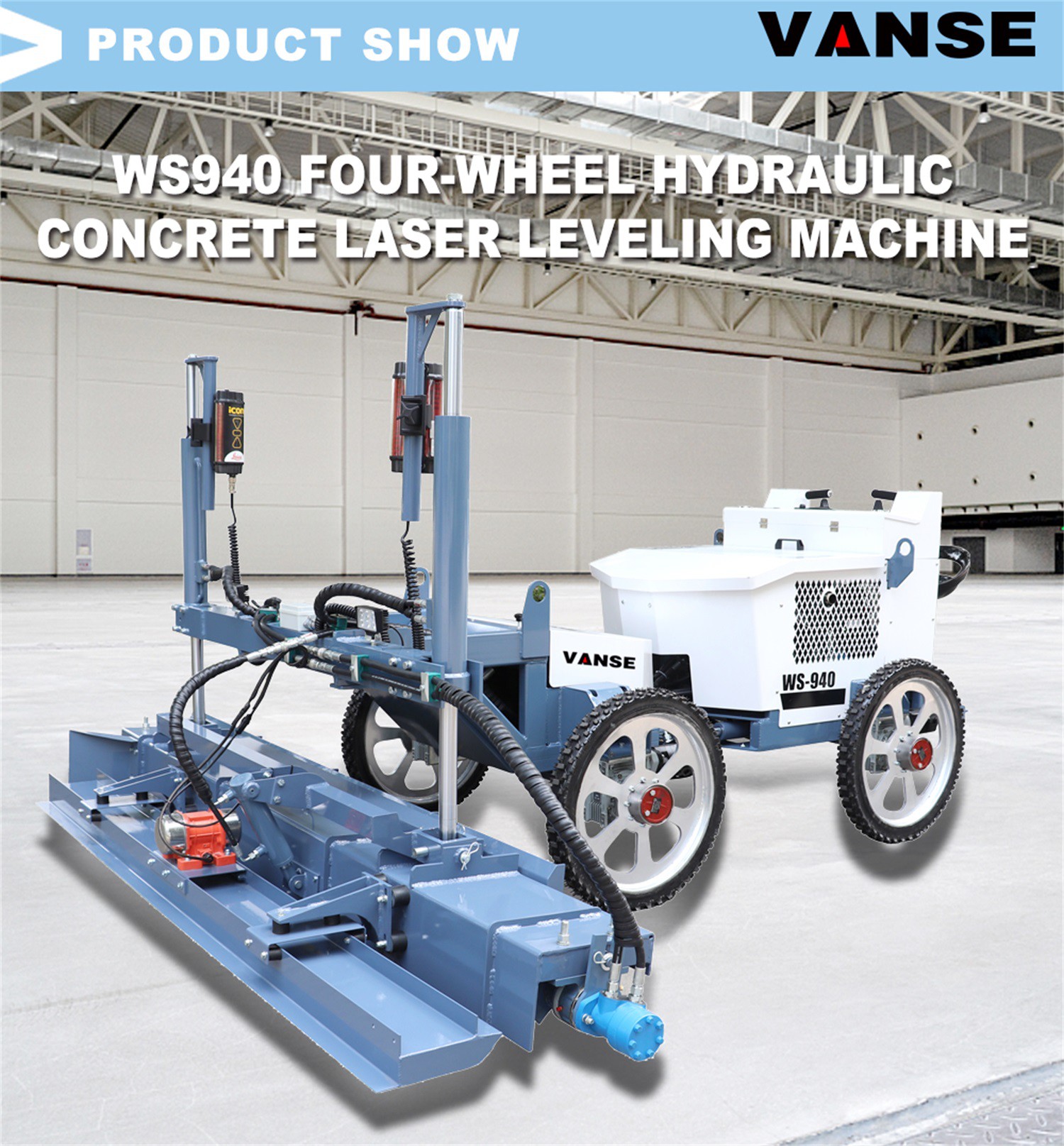
1. Shandong VANSE Machinery Technology Co., Ltd. is the only high-tech enterprise in China that integrates scientific research and development, production and sales, and technical services, and is professionally engaged in concrete laser positioning and leveling machines. Supporting services in one step.
2. The modular design of the electrical drive starting system is adopted to effectively reduce the failure rate.
3. The generator imported from Japan (Japanese generator) is more fuel-efficient, easy to start and quieter.
4. Originally imported laser leveling equipment, the laser leveling signal is more accurate and smoother.
5. The integrated shell is more beautiful: dust-proof, concrete splash-proof, and internal equipment protection.
6. Super vibration force, more compact. The vibration frequency is as high as 4000r/min to avoid honeycomb, foaming and other phenomena.
7. Imported button switch, more flexible, more durable and more accurate in operation.
8. Independent research and development of anti-tilt device, which is more conducive to the paving of concrete and improves the smoothness.
9. Tailor-made performance tires: 16-inch narrow tires, suitable for paving large areas and hardened ground, and compacting the ground. 21-inch wide tires are suitable for use on reinforced mesh ground.
10. The overall body is convenient for transportation. The whole part can be disassembled on site, which is convenient for transportation and hoisting, and more convenient to use.
Thanks to All the Friends Who Support and Trust Shandong Vanse Machinery Technology Co., Ltd.
If you want to know more about Shandong Vanse Machinery Technology Co., Ltd. or have any questions, please feel free to contact us:
Our Factory
Shandong Vanse Machinery Technology Co., Ltd.








Share this article

About the Author: Shandong Vanse Machinery Technology Co., Ltd.
Shandong Vanse Machinery Technology Co., Ltd. is a high-tech manufacturer specializing in concrete construction machinery, including laser screeds and related equipment. The company integrates R&D, production, and global sales, with products exported to over 60 countries and widely used in infrastructure projects worldwide.
Previous Post
Next Post
Related Articles
You Might Also Like
How does the laser control system of the concrete laser leveling machine achieve precise leveling?
How does the laser control system of the concrete laser leveler achieve precise leveling? ✍ Introduction ◎◈◎ With the continuous advancement of modern construction technology, concrete construction has become a key technical field. Among them, the concrete laser leveler plays an increasingly important role in the construction industry with its efficient and precise leveling capabilities. The core of the concrete laser leveler lies in its laser control system, which achieves high-precision leveling of the concrete surface by precisely controlling laser emission and reception. This article will explore in depth how the laser control system of the concrete laser leveler achieves precise leveling, in order to provide readers with a deeper understanding. ✍ Composition and working principle of the laser control system ◎◈◎ The laser control system of the concrete laser leveler is mainly composed of a laser transmitter, a receiver, a control system, and a leveling head. When working, the laser transmitter emits a laser beam, which is reflected by a reflector to form a stable laser plane. The receiver on the leveler can receive these laser signals in real time, convert them into electrical signals, and transmit them to the control system. The control system accurately calculates the distance between the leveling head and the laser plane based on the received signal, and adjusts the lifting and movement of the leveling head to make the concrete surface reach the predetermined flatness. ✍ Key technologies for laser control systems to achieve precise leveling ◎◈◎ 1. Laser positioning technology Laser positioning technology is the core of the laser control system. The laser beam emitted by the laser transmitter has a high degree of directionality and stability, and can form a precise plane in space. By receiving the laser signal, the receiver can determine the positional relationship between the leveling head and the laser plane in real time. This positioning method is not only highly accurate, but also fast, and can achieve real-time and continuous leveling of the concrete surface. 2. Closed-loop control technology Closed-loop control technology is an important means to achieve precise leveling. During the operation of the laser leveling machine, the control system will adjust the lifting and movement of the leveling head in real time according to the received laser signal. When the leveling head deviates from the laser plane, the control system will respond quickly and adjust the motion trajectory of the leveling head to return it to the laser plane. This closed-loop control method can ensure that the leveling head always remains within the predetermined flatness range, thereby achieving a high-precision leveling effect. 3. Accurate hydraulic drive system The hydraulic drive system is the power source for precise leveling. The lifting and movement of the leveling head need to be driven by the hydraulic system. The accuracy of the hydraulic system directly affects the accuracy of leveling. Therefore, laser leveling machines usually use high-precision hydraulic components and control systems to ensure that the motion trajectory of the leveling head can accurately follow the changes in the laser plane. ✍ Application of laser control system in actual construction ◎◈◎ The laser control system of the concrete laser leveling machine has a wide range of application value in actual construction. Whether it is the ground construction of large shopping malls and parking lots, or the construction of infrastructure such as highways and airport runways, high-precision leveling of the concrete surface is required. Through its precise laser control system, the laser leveling machine can achieve fast, efficient and precise leveling of the concrete surface, greatly improving the construction efficiency and quality. In addition, the laser control system can also be flexibly adjusted according to construction needs. For example, in different construction environments, the position, angle and other parameters of the laser transmitter and receiver can be adjusted to meet different construction requirements. At the same time, the control system can also accurately control the lifting and moving speed of the leveling head according to the construction progress and quality requirements to achieve the best leveling effect. ✍ Advantages and Challenges of Laser Control System ◎◈◎ The application of laser control system in concrete laser leveling machine brings many advantages. First, it greatly improves the accuracy and efficiency of leveling, so that the flatness of the concrete surface has been significantly improved. Secondly, the laser control system can realize automated construction, reduce manual intervention and errors, and improve the reliability and stability of construction. In addition, the laser control system is also highly flexible and adaptable, and can adapt to different construction environments and requirements. However, the laser control system also faces some challenges. For example, the stability of the laser signal is easily affected by environmental factors such as temperature, humidity, wind, etc. In addition, the operation and maintenance of the laser leveling machine also requires certain professional skills and experience. Therefore, when using the laser leveling machine, it is necessary to strengthen the training and management of operators to ensure the normal operation of the equipment and the smooth progress of construction. ✍ Future Development Trend of Laser Control System ◎◈◎ With the continuous advancement of science and technology and the continuous development of the construction industry, the laser control system of the concrete laser leveling machine will continue to be optimized and upgraded. In the future, laser control systems may develop in the following directions: 1. Intelligent development: By introducing technologies such as artificial intelligence and machine learning, the laser control system will have stronger autonomous learning and adaptability, and can automatically adjust and optimize according to different construction environments and requirements. 2. High-efficiency development: By improving the performance of key components such as laser transmitters, receivers, and hydraulic systems, the response speed and accuracy of the laser control system will be improved, and the leveling efficiency and quality will be further improved. 3. Modular design: Using modular design ideas, the laser control system is divided into multiple independent modules, which is convenient for maintenance, upgrading and expansion, and improves the reliability and flexibility of the equipment. 4. Green and environmental protection development: The environmental performance of Fengzhong laser control system reduces the energy consumption and environmental pollution of equipment by adopting low-energy consumption and low-emission technologies and materials, and realizes green construction. ✍ Conclusion ◎◈◎ The laser control system of the concrete laser leveling machine is the key to achieving precise leveling. It achieves high-precision leveling of the concrete surface through technical means such as laser positioning technology, closed-loop control technology and precise hydraulic drive system. In actual construction, the laser control system has a wide range of application value, which can improve construction efficiency and quality, and reduce manual errors and costs. Although the laser control system is still facing some challenges, with the continuous advancement of science and technology and the continuous development of the construction industry, it is believed that the laser control system of the concrete laser leveling machine will usher in a broader development prospect in the future. With the integration and application of cutting-edge technologies such as artificial intelligence, the Internet of Things, and big data, the intelligence, adaptation, and self-learning capabilities of the laser control system will be further improved, making the leveling process more accurate, efficient, and reliable. At the same time, the concept of green environmental protection and sustainable development will also be more reflected in the design of the laser control system. By optimizing the equipment structure, adopting environmentally friendly materials and energy-saving technologies, reducing energy consumption and emissions, and achieving green construction, it will be an important direction for the development of laser control systems in the future. In addition, with the continuous improvement of the construction industry's requirements for the quality of concrete construction, the laser control system also needs to be continuously innovated and improved. In the future, we can expect the advent of more intelligent, efficient, and environmentally friendly laser control systems, which will bring more excellent leveling effects and user experience to concrete construction.How to use concrete laser leveling machine
The concrete laser leveling machine is an indispensable and efficient equipment in modern building construction. It uses laser technology to ensure the flatness after concrete pouring, thereby greatly improving the quality and construction efficiency of the floor. This article will elaborate on the use of concrete laser leveling, including preliminary preparation, equipment debugging, operating procedures, common problems and solutions, etc., aiming to help operators better understand how to use the equipment and ensure construction quality. 1. Equipment inspection: Make sure that all components of the concrete laser leveling are intact and that the mechanical structure, electrical system, hydraulic system, etc. are in normal working condition. 2. Site preparation: Clean the construction site to ensure there is no debris or water accumulation, and the ground is solid and flat to provide a good environment for equipment operations. 3. Material preparation: Prepare the appropriate amount of concrete materials to ensure that the material quality meets the design requirements. 1. Laser emitter installation and debugging: Install the laser emitter at the designated location, and adjust its height and angle as needed to ensure that the laser beam can be accurately projected onto the concrete surface to be leveled. 2. Laser receiver installation and debugging: Install the laser receiver on the concrete laser leveler to ensure that the laser signal emitted by the laser transmitter can be accurately received. 3. Control system debugging: Check whether the various functions of the control system are normal, including the reception, processing, and output of laser signals, etc. 1. Start the equipment: Start the laser transmitter first, and then start the concrete laser leveling machine after the laser is stable. 2. Concrete pouring: According to the design requirements, pour the concrete evenly on the ground to be leveled. 3. Leveling operation: Operate the concrete laser leveling machine to follow the predetermined path. During the walking process, the equipment will automatically adjust the height and angle of the sharp plate according to the laser signal to achieve precise leveling of concrete. 4. Monitoring and adjustment: During the leveling process, the operator should monitor the leveling effect in real time and adjust the height and angle of the scraper according to the actual situation to ensure that the concrete surface is flat and smooth. 5. The job is completed: When all the leveling areas are completed, turn off the concrete laser leveling machine, clean the site, and do a good job in the care and maintenance of the equipment. 1. The laser signal is unstable: it may be that the laser transmitter or receiver is interfered with or damaged. Check whether there are any obstructions or sources of interference in the environment around the equipment. If necessary, adjust the location of the equipment or replace damaged parts. 2. Poor leveling effect: It may be that the height or angle of the scraper is improperly set, or the quality of the concrete material does not meet the requirements. The height and angle settings of the scraper should be checked and adjusted according to the actual situation; at the same time, ensure that the quality of the concrete materials used meets the design requirements. 3. Equipment failure: If you encounter equipment failure, you should stop working immediately and turn off the power of the equipment. Then check the faulty part and take corresponding maintenance measures according to the fault situation. If parts need to be replaced, original parts should be used to ensure stable and reliable performance of the equipment. 1. Operators should receive professional training and be familiar with equipment operating procedures and safety knowledge to ensure that they can use the concrete laser leveling correctly and safely. 2. During the operation of the equipment, it is strictly prohibited to put your hands or other parts of the body into the inside of the equipment or under the scraper to avoid accidental injury. 3. When the equipment is in operation, the site should be kept clean and tidy to prevent debris or personnel from entering the working area to avoid damage to the equipment or personnel. 4. During the operation, if any equipment abnormalities or safety hazards are discovered, the operation should be stopped immediately and reported to relevant personnel for processing in a timely manner. 1. Regularly inspect and maintain the concrete laser leveling, including cleaning the surface of the equipment, checking the tightening of mechanical parts, adding lubricating oil, etc., to ensure that the equipment is in good working condition. 2. Key components such as laser transmitters and receivers should be calibrated and debugged regularly to ensure their accuracy and stability. 3. When the equipment is not used for a long time or encounters bad weather, corresponding protective measures should be taken, such as covering the equipment, turning off the power, etc., to prevent the equipment from being damaged or corroded. As an efficient and accurate floor construction equipment, concrete laser leveling machine plays an increasingly important role in modern building construction. Through the introduction of this article, I believe that the operators have a deeper understanding of the use of concrete laser leveling machines. During the actual operation, the operators should strictly follow the machine operation steps and pay attention to the construction effects and adjustments. Equipment parameters to ensure stable and reliable construction quality. At the same time, the safety management and maintenance of equipment should also be strengthened to ensure long-term stable operation of the equipment and provide a strong guarantee for construction construction. Note: The parameters provided in this document are for reference only and are not mandatory. Due to differences in technical characteristics between different brands and models of laser levelers, please consult the manufacturer for a suitable solution before actual operation. This reference document assumes no responsibility for any issues arising from failure to follow the manufacturer's instructions.How to ensure construction quality and efficiency at the same time during real-time monitoring?
Ensure construction quality and efficiency during real-time monitoring During the construction process, real-time monitoring is a key link to ensure construction quality and efficiency. Through real-time monitoring, the construction process can be comprehensively controlled, and problems can be discovered and solved in time, thereby ensuring construction quality and improving construction efficiency. The following is the specific content of how to ensure construction quality and construction efficiency at the same time during real-time monitoring. ▷▷▷▷ Clarify monitoring goals Before conducting real-time monitoring, the monitoring objectives must first be clarified. This includes a comprehensive understanding of the key parameters during construction, the construction environment and construction quality standards. By clarifying the monitoring objectives, the accuracy and effectiveness of monitoring data can be ensured, providing a basis for subsequent construction quality control and efficiency improvement. ▷▷▷▷ Choose appropriate monitoring technology and equipment Choosing appropriate monitoring technology and equipment is key to real-time monitoring. According to the specific construction project and monitoring objectives, select monitoring equipment with high accuracy, high stability and high reliability. At the same time, it is necessary to ensure that the monitoring equipment can monitor key parameters during the construction process in real time, such as temperature, temperature, pressure, vibration, etc. In addition, the ease of operation and maintenance of the equipment should also be considered to ensure the smooth progress of the monitoring work. ▷▷▷▷ Establish an effective monitoring network Establishing an effective monitoring network is an important means to ensure construction quality and efficiency. By arranging multiple monitoring points at the construction site to form a comprehensive monitoring network, all-round monitoring of the construction process can be achieved. At the same time, it is necessary to ensure that the data transmission and processing speed of the monitoring network is fast enough to detect problems in time and take corresponding measures. treatment measures. ▷▷▷▷ Implement real-time monitoring and data analysis During the implementation of real-time monitoring, it is necessary to pay close attention to the changing trends of monitoring data. Through real-time analysis of monitoring data, abnormal conditions or potential problems during the construction process can be discovered in time. Once a problem is discovered, appropriate measures should be taken immediately to ensure construction quality and efficiency. ▷▷▷▷ Optimize construction process and resource allocation Real-time monitoring data can not only be used for quality control, but also provide a basis for the optimization of construction processes and resource allocation. Through the analysis of real-time monitoring data, bottlenecks and problem points in the construction process can be identified, thereby optimizing the construction process, adjusting resource allocation, and improving construction efficiency. For example, the operating parameters of construction equipment can be adjusted based on real-time monitoring data, and the work arrangements of the construction team can be optimized. ▷▷▷▷ Strengthen personnel training and team building During the real-time monitoring process, the quality and skill level of personnel are crucial to ensuring construction quality and efficiency. Therefore, it is necessary to strengthen personnel training and team building, and improve the professional skills and sense of responsibility of monitoring personnel. Through regular training and assessment, it is ensured that monitoring personnel are proficient in monitoring technology and equipment operation methods, and can accurately analyze monitoring data and take corresponding processing measures. At the same time, it is necessary to strengthen team building and cultivate the spirit of collaboration and communication skills among team members to ensure the smooth progress of monitoring work. ▷▷▷▷ Strengthen safety management and environmental awareness During the real-time monitoring process, safety management and environmental awareness must always be strengthened. Ensure safe production during the monitoring process by formulating strict safety management systems and operating procedures. At the same time, it is necessary to strengthen the awareness of environmental protection on construction sites and reduce the impact of construction on the environment. For example, noise reduction, dust reduction and other measures can be taken to reduce the impact on surrounding residents; construction waste can be reasonably disposed of to reduce environmental pollution. To sum up, ensuring construction quality and efficiency during real-time monitoring requires multiple aspects. By clarifying monitoring objectives, selecting appropriate testing technologies and equipment, establishing an effective temporary testing network to implement real-time monitoring and data analysis, optimizing construction processes and source configuration, strengthening personnel training and team building, and strengthening safety management and environmental awareness, etc. Comprehensive measures can achieve the goal of simultaneously ensuring construction quality and construction efficiency during real-time monitoring. This will help improve the overall level of construction and promote the sustainable development of the construction industry.