Technical Knowledge
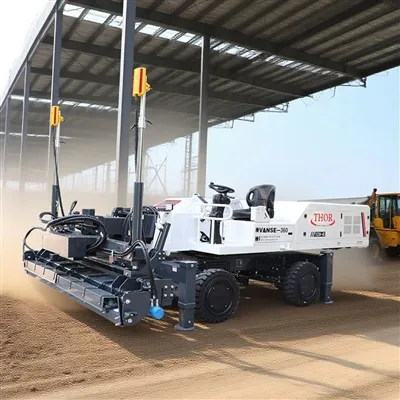
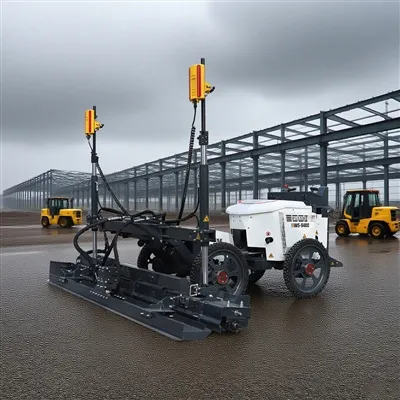
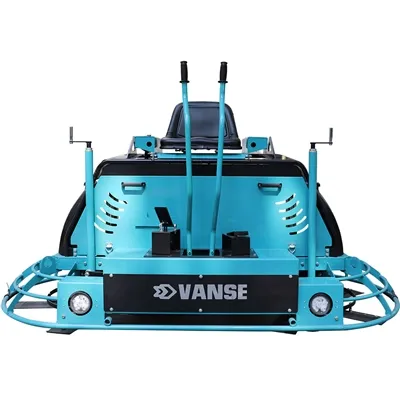
How to choose a concrete leveling machine
What are the advantages of the leveling machine?
High precision laser elevation control system is adopted, which integrates three functions of measurement, leveling and surface finishing, and the efficiency is higher than that of manual work; Compared with manual robot construction, the leveling robot has lighter weight and smaller size, and can be constructed on double-layer reinforcement mesh and narrow room; The leveling accuracy is high. The basement construction can directly meet the levelness / flatness requirements of the concrete leveling layer at the construction stage of the main structure. It can be formed at one time, directly omit the subsequent floor construction, speed up the progress and save the cost.
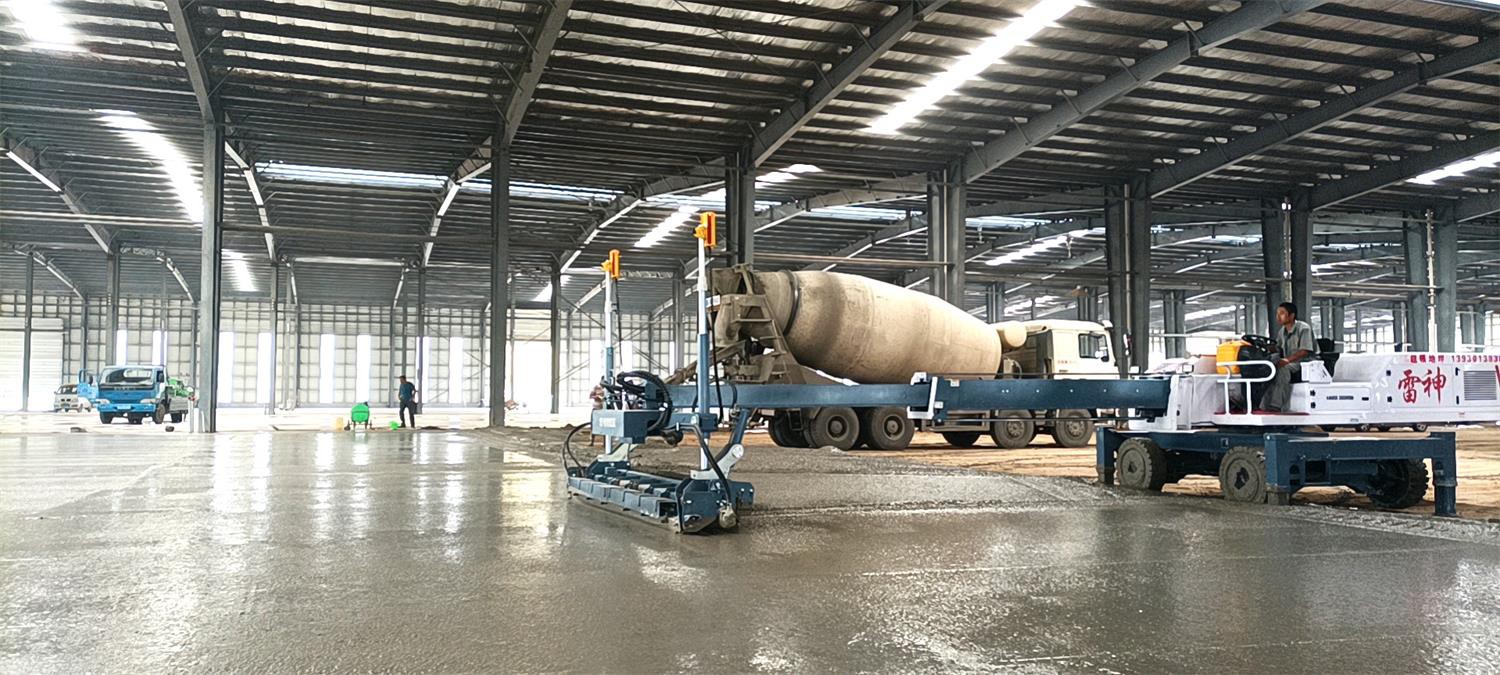
YZ30-4E Actual Picture of Construction Site
With its unique two degree of freedom adaptive system, the machine can ensure that the machine can work stably on reinforced concrete; It can automatically set the leveling planning path and realize the automatic leveling construction of concrete ground. Compared with the actual construction, its work efficiency and accuracy are much higher than those of manual work.
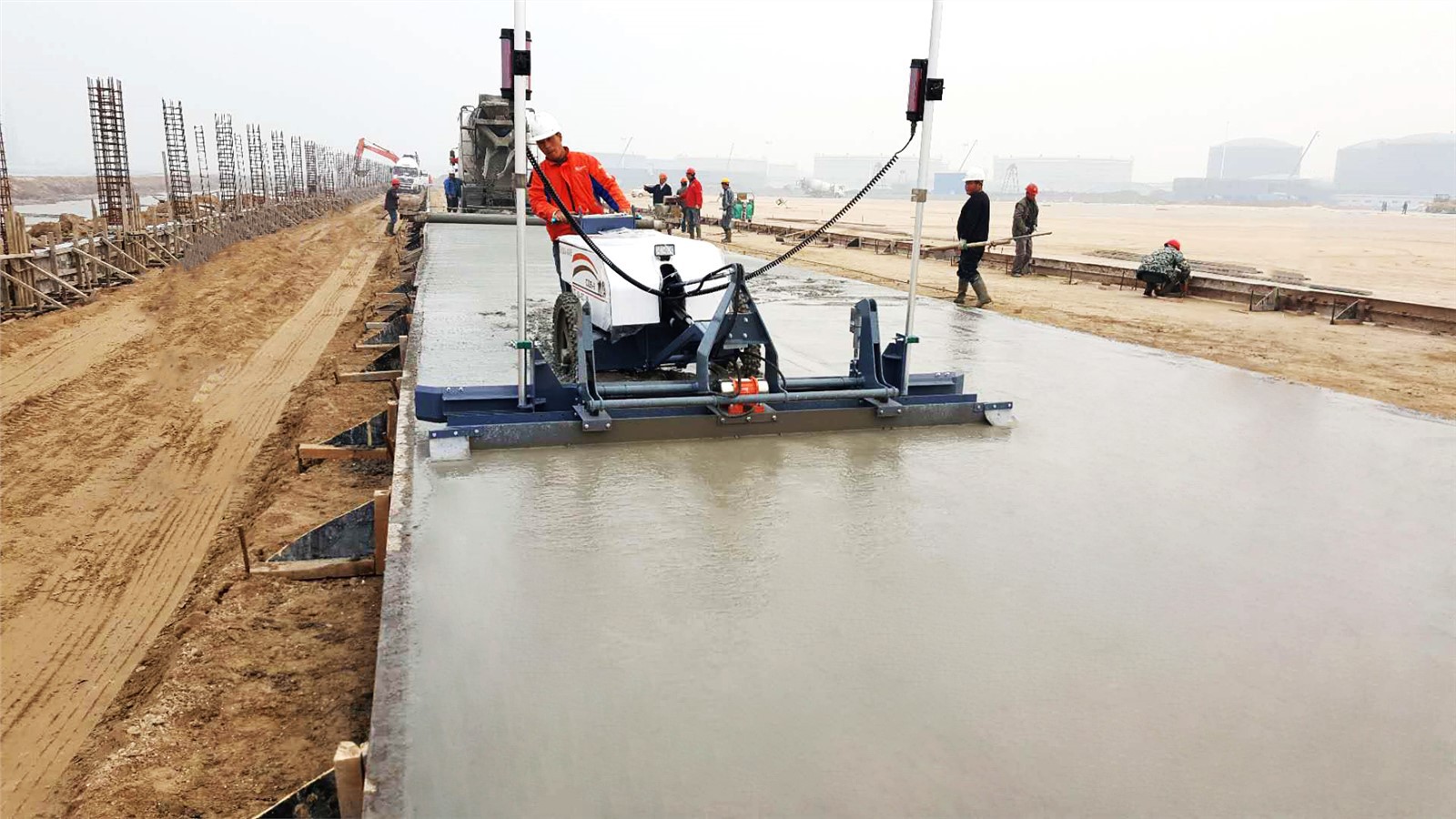
DZ25-2 actual picture of construction site
According to the R & D team, the laser leveling machine project team has carried out many iterative updates, and finally improved the leveling accuracy of the machine from 11 mm to less than 3 mm, and the efficiency is synchronously improved by 2-3 times.
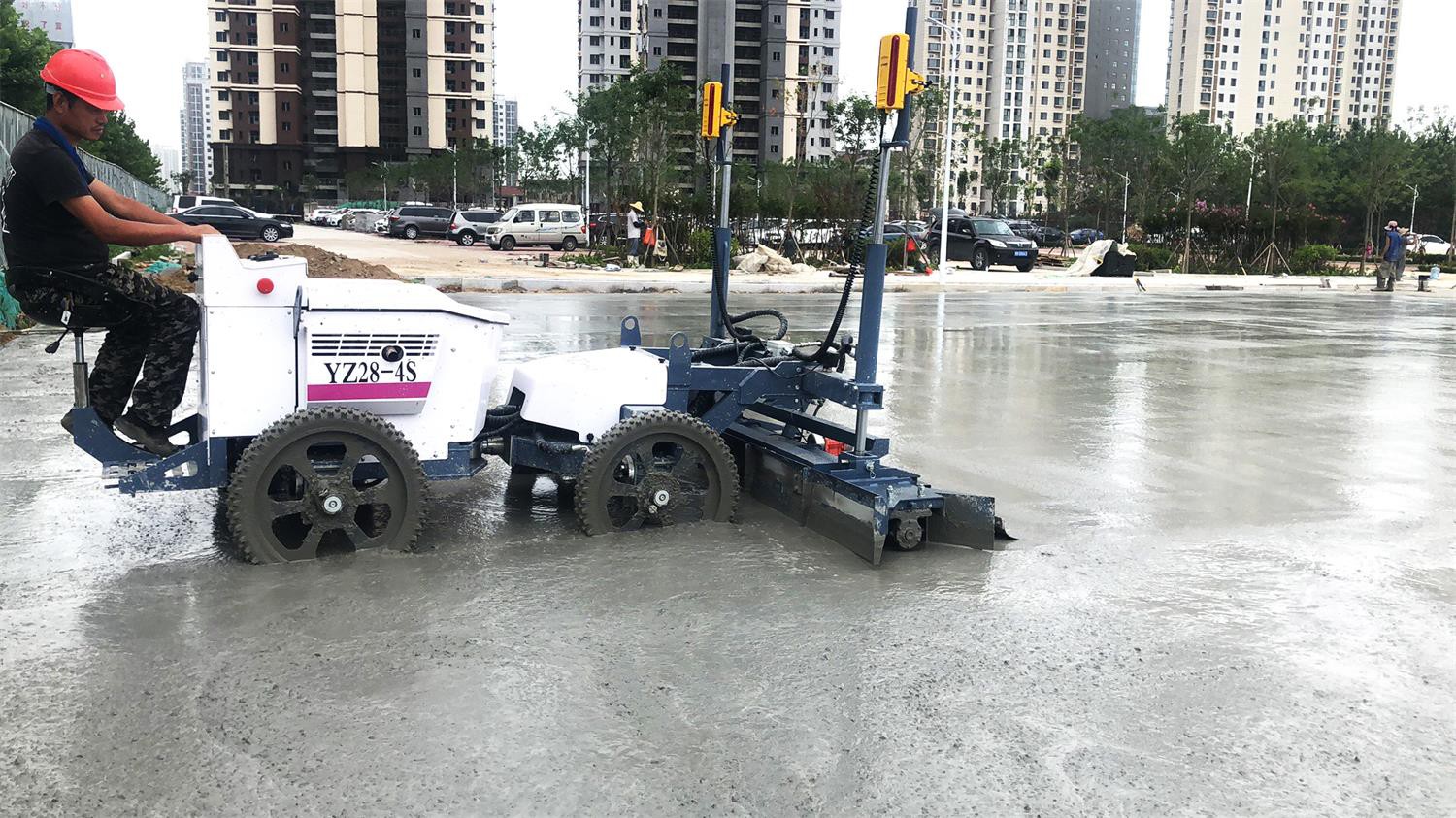
YZ28-4S actual picture of construction site
Vanse laser leveling machine series products have been introduced to the market for 10 years. After the test of tens of thousands of customers around the world, they have been highly praised by everyone. The R & D team of Shandong Vanse Machinery Technology Co., Ltd. will continue to strive for higher efficiency, smaller error and more intelligent operation mode, and strive to provide customers with more high-quality mechanical products.
Thanks to All the Friends Who Support and Trust Shandong Vanse Machinery Technology Co., Ltd.
If you want to know more about Shandong Vanse Machinery Technology Co., Ltd. or have any questions, please feel free to contact us:
Our Factory
Shandong Vanse Machinery Technology Co., Ltd.








Share this article

About the Author: Shandong Vanse Machinery Technology Co., Ltd.
Shandong Vanse Machinery Technology Co., Ltd. is a high-tech manufacturer specializing in concrete construction machinery, including laser screeds and related equipment. The company integrates R&D, production, and global sales, with products exported to over 60 countries and widely used in infrastructure projects worldwide.
Previous Post
Next Post
Related Articles
You Might Also Like
The equipment adaptability transformation of concrete laser leveling machines in agricultural modernization
Applying concrete laser leveling to agricultural modernization is a typical innovative idea of "cross-border technology application". The core idea is to make targeted modifications to high-precision and high-efficiency civil engineering construction equipment to meet the specific scene requirements in agricultural production. The following is a detailed analysis of the equipment adaptability transformation of concrete laser leveling machines in agricultural modernization: The original advantages of the laser leveling are precisely what modern agriculture is pursuing: Extremely high flatness accuracy (±3mm/3m) : Lays the foundation for the construction of high-standard farmland, irrigation uniformity, and mechanized sowing/harvesting. High-efficiency and large-scale operation: The daily operation area can reach several thousand to tens of thousands of square meters, far exceeding manual labor or traditional machinery. Automated construction: Relying on laser transmitters and receivers, the height of the scraper is automatically controlled, reducing the reliance on the operator's experience and ensuring uniform quality. Integrated concrete vibration and leveling: Its powerful vibration system is inspiring for soil compaction and leveling. Core challenge: The original equipment was used for concrete with poor fluidity, while the soil was loose, had variable viscosity, and contained impurities such as crop roots and stems. Key points of the renovation Scraper system: Replace the metal scraper with an adjustable hydraulic scraper or plowshare type soil insertion component, which can automatically adjust the Angle and depth according to soil resistance. Vibration system: Eliminate high-frequency vibration rods and replace them with heavy-duty compaction rollers or vibration compaction plates. It is used to moderately compact the soil after leveling (to the agronomic requirement of compactness) to prevent excessive looseness from causing moisture loss or sowing too deep. Material handling: Add a rotating rake or a straw chopper and spiller at the front end to first deal with surface debris to ensure the quality of leveling. The core challenge: Although the farmland terrain has been initially leveled, it is still more complex than the building foundation and may have problems such as uneven humidity and local softness (risk of machine sinking). Key points of the renovation Track modification: Use widened or lengthened rubber or steel tracks to reduce the ground contact pressure and adapt to soft fields. Four-wheel drive and differential system: Ensure passability and traction in muddy conditions. Lightweight design: Under the premise of ensuring structural strength, the overall weight of the machine should be reduced as much as possible to minimize the compaction of deep soil (avoiding the formation of a plow bottom layer). The core challenge: Farmland leveling is not an absolute level. It often requires micro-terrain shaping, such as maintaining a certain slope for drainage or conducting ridge and trench construction. Key points of the renovation GNSS (Beidou /GPS) RTK high-precision positioning system integration: To replace or complement laser systems. GNSS is more suitable for large fields and unobstructed environments. It can be directly constructed according to the Digital elevation model (DEM) to achieve precise slope control (such as an accurate slope of 0.1%). 3D design model import: Connect with the agricultural Internet of Things and smart agriculture platforms, directly read the field design drawings (such as the integrated 3D models of grid fields, ditches, and ridges), and achieve "construction according to the drawings". Multi-sensor fusion: Add soil moisture and compactness sensors to provide real-time feedback and adjust the compaction force. Core idea: Transform the leveler into a "multi-functional fine farmland preparation platform". Key points of the renovation Quick connection system: Different working heads can be quickly replaced. Typical attachment module Laser scraper: used for the final fine leveling. Ridge forming machine: Used for ridging and bed making. Furrow opener: Synchronously excavates field ditches or drainage ditches. Pre-sowing compaction wheel: Specialized compaction. Integrated fertilization/sowing device: Deep application of base fertilizer or sowing of grass seeds can be carried out simultaneously with leveling. High-standard farmland construction: Rapidly complete large-scale land leveling to meet the requirements of "square fields, interconnected canals, linked roads, irrigation in drought and drainage in flood", with precision far exceeding that of traditional laser land levelers. Rice-growing area grid field transformation: Merge small plots of land into large grids, precisely control the height difference of the field surface, significantly save water, increase production, and facilitate mechanization. Large-scale farms (corn, wheat, soybeans) : Meticulous land preparation before sowing creates the best surface conditions for subsequent precise sowing, uniform germination, and efficient harvesting. Facility agriculture base: It is used for the fine preparation of soil bed surfaces inside multi-span greenhouses and large solar greenhouses. Saline-alkali land/tidal flat improvement: After completing chemical and hydraulic improvements, precise leveling is carried out to suppress salt return and facilitate uniform salt washing and farming. Construction of sports fields and ecological lawns: such as football fields, golf courses, and soil base bed construction for ecological restoration projects. High cost: The initial investment is much higher than that of traditional agricultural flatland machinery, making it more suitable for large farms, cooperatives or specialized agricultural service companies. Technical complexity: It requires a composite team with knowledge of mechanics, hydraulics, laser /GNSS and agronomy to operate and maintain. Soil type adaptability: On extremely heavy clay or sandy soils, special attachments and parameter adjustments may be required. The integration of agronomy and engineering: Flatness is not the sole indicator. Agronomic requirements such as soil tillage layer structure, organic matter protection, and microbial environment must be comprehensively considered. Excessive compaction should not be pursued for the sake of flatness. The future direction of transformation will be "intelligent farmland robots" : All-electric and new energy: Reducing emissions and noise, suitable for facility agriculture. AI visual assistance: Identify and avoid field obstacles, and automatically handle special areas. Cloud collaboration and digital twin: Real-time upload of operation data and comparison with the digital model of farmland to optimize the next operation plan. Fully autonomous unmanned operation: Under preset boundaries and conditions, it realizes continuous and automated land preparation operations at night. In summary, the agricultural adaptability transformation of concrete laser leveling machines is essentially introducing the "precision manufacturing" concept from civil engineering to the front end of agricultural production. It is not a simple copy but a systems engineering project that deeply integrates mechanical engineering, information technology and agronomy. Its successful application will significantly enhance land utilization rate, water resource efficiency and agricultural mechanization level, and it is a powerful tool for promoting agricultural modernization towards "precision" and "intelligence". For a country like China where per capita cultivated land resources are tight, the innovative application of such technologies holds significant strategic importance. Note: The parameters provided in this document are for reference only and are not mandatory. Due to differences in technical characteristics between different brands and models of laser levelers, please consult the manufacturer for a suitable solution before actual operation. This reference document assumes no responsibility for any issues arising from failure to follow the manufacturer's instructions.Diagnosis and Solution of Abnormal Walking System of Concrete Laser Leveling Machine
The walking system of the Concrete Laser Leveling is one of its core functions. Once it malfunctions, it will directly affect the construction efficiency and the flatness of the floor. The following is a systematic review of the diagnostic steps and solutions for abnormal walking systems for you. First, make a preliminary classification based on different fault phenomena: Completely unable to walk: The leveling machine is completely stationary. Weak walking/Slow speed: Can walk, but lacks power and cannot reach the set speed. Unstable walking/shaking: Stammering during walking or severe shaking of the body. Abnormal walking on one side: One side is normal, while the other side is motionless, weak or in the wrong direction. Walking deviation: Unable to walk in a straight line, automatically veers to one side. Follow the principle of conducting the investigation from simple to complex and from the outside to the inside. Emergency stop switch and mode selection Diagnosis: Check whether the emergency stop switch on the operation console or remote control has been pressed and whether the working mode (such as manual/automatic) has been selected correctly. Solution: Release the emergency stop switch and select the correct working mode. Power supply and line connection: Diagnosis: Check whether the main power switch and battery terminals are loose, corroded or have insufficient power (for battery-powered models). Check whether the plugs at the main control cabinet and the walking motor are loose. Solution: Tighten all terminal blocks, clean the battery terminals, charge the battery or replace it. Make sure all the plugs are securely connected. Jamming of mechanical transmission components Diagnosis: Check whether the walking wheels (tracks), drive shafts, chains or gears are jammed by solidified cement, crushed stones or other foreign objects. ** Solution ** : Immediately stop the machine and thoroughly clear all obstructions. Check the lubrication condition of the chain or gearbox and add or replace the specified grease if necessary. If there are no issues found during the initial inspection, focus on checking the hydraulic system. Hydraulic oil level and oil quality Diagnosis: Insufficient hydraulic oil can cause the pump to run dry, resulting in weak or no movement during movement. Deteriorated oil (turning black, foaming, or having metal shavings) can damage hydraulic components. Solution: Check the oil level while the machine is shut down and replenish it to the specified mark. If the oil quality is substandard, the hydraulic oil and filter element of the original factory-specified model must be completely replaced. Walking motor and drive pump Diagnosis (Unilateral abnormality) : If only one side of the walking is abnormal, you can try to swap the hydraulic pipelines of the walking motors on both sides. If the fault phenomenon then shifts to the other side, it indicates that the walking motor or pump on the original side is faulty. Solution: Please contact professional maintenance personnel. It may be necessary to inspect or replace the walking motor, variable pump or related control valves. This job requires professional knowledge and tools. Do not disassemble it by yourself. Hydraulic system pressure Diagnosis: Use a hydraulic pressure gauge to check whether the overflow pressure of the main safety valve and the walking circuit of the system has reached the specified value. Low pressure can lead to weakness when walking. Solution: Have a professional technician adjust the corresponding relief valve to the standard pressure. Do not adjust it at will, otherwise the hydraulic system may be damaged. For laser leveling machines that adopt advanced control systems. Laser control system Diagnosis: Check whether the laser transmitter is working properly and whether the signal is stable. Check whether the laser receiver on the leveler is clean and firmly installed. Signal loss or instability can cause the machine to move in confusion or stop. Solution: Ensure that the laser transmitter is stably set up and the signal covers the entire construction area. Clean the laser receiver rod and sensor head. Recalibrate the system. Control module and sensor Diagnosis: Observe whether there are any fault code alarms on the control panel. Check whether the walking speed sensor, Angle sensor, etc. are damaged or the circuit is disconnected. Solution: Check the cause according to the fault code manual. Check and plug in the sensor wiring tightly. Replace it if any damage is found. Remote control/line controller Diagnosis: Weak signal, insufficient battery power or internal faults of the remote control can cause instructions to fail to be sent correctly, resulting in abnormal walking. Solution: Check the battery level of the remote control and try frequency matching or restarting. If possible, switch to the line control mode for comparative testing to determine whether the problem lies with the machine or the remote control. Fault phenomenon Possible reasons Solution Completely unable to walk 1. The emergency stop switch is activated 1. Release the emergency stop switch 2. Main power supply disconnected/Battery discharged 2. Check and connect the power supply/charge 3. Failure of the main hydraulic pump 3. Overhaul the main pump 4. Control signal interruption 4. Check the remote control, receiver and wiring Weakness in walking The hydraulic oil level is too low or the oil quality is poor 1. Add or change the oil 2. The hydraulic filter element is clogged 2. Replace the hydraulic filter element 3. System pressure is too low 3. Adjust the pressure by professionals 4. Leakage inside the walking motor or pump 4. Inspect or replace hydraulic components One side not moving/weak The track/wheel on this side is mechanically jammed 1. Remove foreign objects 2. The walking motor on this side is faulty 2. Swap the hydraulic pipelines for testing and then carry out the repair after confirmation 3. The valve core of the control valve on this side is stuck or damaged 3. Clean or replace the valve assembly 4. The speed sensor on this side is faulty 4. Check or replace the sensor Shaking/Unstable walking There is air in the hydraulic system 1. Perform the exhaust operation 2. The signal of the flow/speed sensor is unstable 2. Check the sensors and circuits 3. Hydraulic oil contamination leads to discontinuous valve core operation 3. Replace the hydraulic oil and filter element Walking off course 1. The laser signal is inaccurate Recalibrate the laser system 2. The tension of the tracks on both sides is inconsistent 2. Adjust the tracks to the same tension 3. The bearing of one of the walking wheels is damaged 3. Replace the damaged bearing 4. Calibration error of the control system 4. Re-perform the walking calibration Before starting work every day, check the hydraulic oil level, battery power, whether there are any foreign objects in the walking mechanism, and whether all sensors are clean. Regular maintenance: Replace the hydraulic oil and filter elements strictly in accordance with the maintenance manual, and lubricate all bearings and chains. Standard operation: Avoid driving at high speed on overly bumpy or foreign object surfaces, and turn smoothly. Timely cleaning: After each day's construction, it is essential to thoroughly clean the machine before the concrete solidifies, especially the traveling wheels and sensor parts. Important Note: The hydraulic and control systems are highly precise. When issues involve the disassembly of internal components and pressure adjustment, it is strongly recommended to contact the equipment manufacturer or an authorized professional service engineer for handling to avoid causing greater damage or safety accidents. Note: The parameters provided in this document are for reference only and are not mandatory. Due to differences in technical characteristics between different brands and models of laser levelers, please consult the manufacturer for a suitable solution before actual operation. This reference document assumes no responsibility for any issues arising from failure to follow the manufacturer's instructions.What types of concrete trowels machine are there?
A concrete trowel is a mechanical device used for smoothing concrete surfaces. According to different construction needs and application scenarios, concrete trowels can include the following types: ◆Disc trowel: The disc trowel is one of the most common concrete trowels. It has two or more rotating discs. Through the friction of these discs, the concrete surface can be smoothed. This type of trowel is suitable for use on various types of concrete surfaces, including indoor and outdoor floors, walls, and more. ◆Vibration trowel: The vibration trowel uses the action of the vibrating head to vibrate the concrete into the formwork and make its surface smooth. This type of trowel is suitable for surface treatment of newly poured concrete. It can smooth the surface immediately after pouring to reduce bubbles and cracks on the concrete surface. ◆Laser troweling machine: The laser troweling machine is a high-precision concrete troweling machine that uses laser technology for positioning and measurement to ensure troweling accuracy and quality. This type of trowel is suitable for engineering projects that require high precision, such as highways, bridges, etc. ◆Automatic troweling machine: The automatic troweling machine is an intelligent concrete troweling machine that can automatically identify the surface condition of the concrete and automatically perform smoothing operations. This type of troweling machine is suitable for large-scale engineering projects, such as airports, stations, etc., and can greatly improve construction efficiency and quality. ◆ Hand-push trowel: The hand-push trowel is a small, lightweight concrete trowel. It is suitable for small-area concrete surface treatment, such as courtyards, parking lots, etc. This type of trowel machine is simple and convenient to operate and has a wide range of applications. ◆Orbital trowel: The orbital trowel is a special concrete trowel that uses rails for movement and positioning, and can quickly and accurately complete large-area concrete surface treatment. This type of trowel is suitable for large engineering projects such as highways, bridges, etc. In short, there are many types of concrete trowels, and different types are suitable for different construction needs and application scenarios. When choosing to use, the choice should be based on the actual situation to achieve the best construction effect.