Technical Knowledge
Laser leveling machine manufacturers explain to you in detail: Six major effects of engine oil on equipment

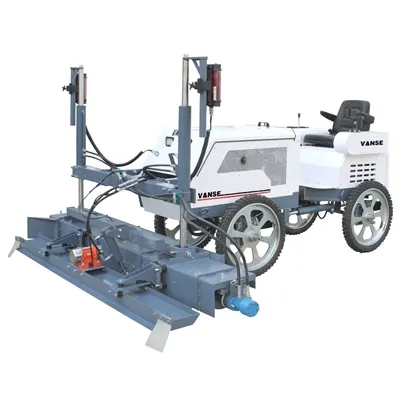
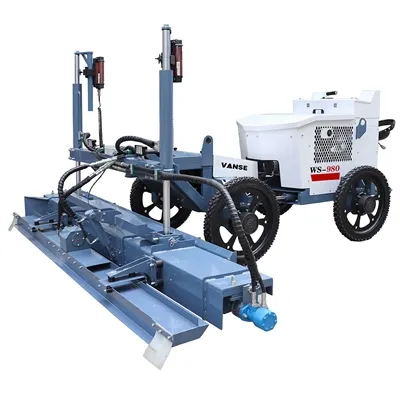
The laser leveling machine has attracted the attention of consumers since its launch, which has a lot to do with its own role. The engine oil has the unique role of lubrication and wear reduction, cooling, sealing and leak prevention, shock absorption and buffering on the equipment. It is precisely because of these humanized roles that the equipment has been welcomed by consumers. During use, the engine oil can effectively reduce the wear of the equipment. The following laser leveling machine manufacturer will take you to learn about the six major roles of engine oil on the laser leveling machine in detail.
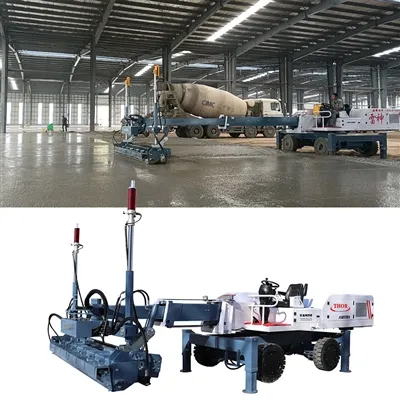
★ Lubrication and wear reduction: In recent years, in order to pursue a smoother and more perfect ground, more and more people use laser leveling machines for construction. The use of equipment construction can ensure that the entire ground is dense and uniform, which has been well received by the construction industry. The laser leveling machine needs necessary maintenance after using it for a period of time. During maintenance, engine oil has a very large effect on the laser leveling machine. There is very fast relative sliding between the piston and the cylinder, and between the spindle and the bearing. Therefore, to prevent the parts from wearing too quickly, an oil film must be established between the two sliding surfaces. As long as there is a sufficient thickness of the oil film, the surfaces of the relatively sliding parts will be separated, so as to achieve the purpose of reducing wear.
★ Cooling and cooling: The engine oil can bring heat back to the oil tank and then dissipate it into the air to help the water tank cool the engine. Cleaning and cleaning: Good engine oil can bring carbides, sludge, wear metal particles, etc. on engine parts back to the oil tank through circulation, and wash the dirt generated on the working surface of the parts through the flow of lubricating oil.
★ Sealing and leakproof: The engine oil can form a sealing ring between the piston ring and the piston to reduce gas leakage and prevent external pollutants from entering the engine. Rust and corrosion prevention: Lubricating oil can be adsorbed on the surface of the parts to prevent water, air, acidic substances and harmful gases from contacting the parts.
★ Shock absorption and buffering: When the pressure at the cylinder port of the laser leveling machine engine rises sharply, the load suddenly added to the piston, piston chips, connecting rod and crankshaft bearings will be very large. This load will be transmitted and lubricated by the bearings and will buffer the impact load.
The relevant knowledge points shared by the laser leveling machine manufacturer for you are basically explained here. If you have good suggestions or opinions, you can contact us in time. We will have professional technicians to help you solve the problem. Thank you for your continued attention and support.
Thanks to All the Friends Who Support and Trust Shandong Vanse Machinery Technology Co., Ltd.
If you want to know more about Shandong Vanse Machinery Technology Co., Ltd. or have any questions, please feel free to contact us:
Our Factory
Shandong Vanse Machinery Technology Co., Ltd.








Share this article

About the Author: Shandong Vanse Machinery Technology Co., Ltd.
Shandong Vanse Machinery Technology Co., Ltd. is a high-tech manufacturer specializing in concrete construction machinery, including laser screeds and related equipment. The company integrates R&D, production, and global sales, with products exported to over 60 countries and widely used in infrastructure projects worldwide.
Previous Post
Next Post
Related Articles
You Might Also Like
Laser leveling machine purchase tips
Now the sales of laser leveling machines in the market are becoming more and more fierce. Many manufacturers are competing for sales, and dealers are blooming everywhere. All sellers are doing their best to expand marketing, while consumers are mostly in a waiting state. Consumers feel very confused and don't know how to start when purchasing equipment. They are afraid that the quality of the purchased products is not good, the seller does not have enough integrity, the after-sales service is not in place after the purchase, and the boss is not satisfied with the purchased products. A series of problems. The editor knows the difficulties of being a purchaser, so the editor is here to solve everyone's confusion today. How to buy a laser leveling machine that you are satisfied with can be considered from these aspects: channel, quality, brand, and after-sales. These four aspects can be used to evaluate whether the laser leveling machine is the product you want to buy. First of all, the channel, the channel here refers to the source of the equipment. Everyone knows that the manufacturer is always the choice of the customer. Shandong Vanse Machinery has focused on the research and development of laser leveling machines for more than ten years. The laser leveling machine is sold directly by the manufacturer. Compared with dealers, customers will save a lot of costs, one-step, convenient and fast, and quality guaranteed. Quality is the core of a product. All equipment that is not produced for quality will be eliminated. Without quality, there will be no product survival. Shandong Vanse Machinery's laser leveling machine uses imported engines, integrates high-tech technologies such as laser, integrated hydraulics, and closed-loop control technology, and its high-standard design appearance has won praise from many old customers. Brand is the soul of the product. Without a soul, it is like a walking corpse. The brand is given by the enterprise. An enterprise with a positive energy culture has a full of positive energy in its product soul. Shandong Vanse Machinery has always adhered to the development concept of technological innovation and providing excellent products to users in the field of laser leveling machine industry. This is also an important reason why Shandong Vanse Machinery Technology Co., Ltd. has been at the forefront of the industry and has become the first brand for users. After-sales service is even more assured. Shandong Vanse Machinery is located in Yanzhou, Shandong, the birthplace of Confucianism. It has a large production plant and an excellent technical team. Many years of good service reputation have accumulated many good praises for the company. If you have any needs for laser leveling machines, the company will accept your questions at any time and answer your questions with professional equipment technology.What is the slump of concrete during the concrete pavement construction?
Slump: 120~180mm (about 150mm is appropriate) Applicable scenarios: Applicable to laser leveling machine or paver construction to ensure that the fluidity of concrete meets the requirements of mechanical paving and vibration. High slump: 180~220mm (when adding water reducer) Applicable scenarios: Complex reinforcement structure or high temperature dry environment, it is necessary to improve the fluidity of concrete to avoid segregation. Low slump: 80~120mm (dry hard concrete) Applicable scenarios: Construction with slipform paver, or projects with high early strength requirements. Laser leveling machine: requires a higher slump (120~180mm) to facilitate mechanical vibration and leveling. Slipform paver: The slump should be strictly controlled at 80~120mm to avoid deformation of the structure due to excessive fluidity. Hot and dry weather: The slump can be appropriately increased (+20~30mm) to reduce the slump loss caused by water evaporation. Low temperature or rainy season: The slump can be appropriately reduced (-10~20mm) to prevent concrete segregation. When the coarse aggregate particle size is large and the grading is poor, the slump needs to be increased to ensure workability. Adding water reducer can reduce the water-cement ratio and improve strength while maintaining the slump. Each truck of concrete needs to be tested for slump before unloading. If the deviation exceeds ±20mm, it needs to be adjusted (such as adding admixtures or secondary mixing). The mixing and pouring of concrete must be completed before the initial setting (usually ≤2 hours) to avoid slump loss due to too long time. Slump is too large: it is easy to cause bleeding and segregation, which can be improved by adding fly ash or reducing the water-cement ratio. Slump is too small: poor fluidity, it is necessary to add water reducer or increase the water consumption appropriately (need to be verified by the laboratory). "Technical Specifications for Construction of Highway Cement Concrete Pavement" (JTG/T 3650-2020): The recommended slump is 100~180mm, which is adjusted according to the construction machinery. "Concrete Structure Engineering Construction Quality Acceptance Code" (GB 50204-2015): The slump detection frequency is required to be no less than once every 100m³. Reasonable control of slump can ensure the construction quality, durability and appearance smoothness of concrete pavement. The specific parameters need to be determined in combination with design requirements, construction technology and environmental conditions.What materials are suitable for concrete laser leveling machines?
Concrete laser leveling: suitable materials and applications ★1★ Introduction to compact soil laser leveling machine The concrete laser leveling is a high-efficiency, high-precision concrete construction equipment that is widely used in the construction of floors, roads, bridges and other fields. This equipment achieves high-precision positioning and leveling through laser technology, which can greatly improve the quality and efficiency of concrete construction. ★2★ Concrete material properties Concrete is a composite material widely used in construction projects. It is mainly composed of aggregates, cement, water and other additives. The hardening process of concrete involves factors such as hydration reaction and temperature changes, and it requires a certain amount of time and appropriate maintenance to reach the design strength. Due to the diversity of concrete materials, different types and proportions of mixers have different characteristics and application ranges. ★3★ Working principle of concrete laser leveling machine The working principle of the compacted soil laser leveling machine mainly uses laser technology for high-precision positioning and measurement. By installing a laser transmitter and receiver on the equipment, the concrete laser leveling can form a laser beam in the construction area, and monitor and control the height and level of the laser beam in real time through sensors and control systems. During the leveling process, the equipment will automatically adjust the walking track and concrete paving thickness to ensure the flatness and compactness of the floor. ★4★ Applicable material range of concrete laser leveling machine Concrete laser leveling machines are suitable for many types of concrete materials, including but not limited to the following: 1. Ordinary concrete: suitable for concrete construction in general construction projects, such as floors, roads, etc. 2. High-strength concrete: suitable for structures with high strength requirements, such as bridges, high-rise buildings, etc. 3. Durable concrete: Suitable for projects with high durability requirements, such as nuclear power plants, tunnels, etc. 4. Special function concrete: such as thermal insulation concrete, refractory concrete, etc., suitable for projects with specific functions. It should be noted that for different types of concrete materials, appropriate mix design and construction process adjustments need to be carried out according to their characteristics and requirements to ensure Construction Quality. ★5★ Application of concrete laser leveling machine in different scenarios The application of concrete laser leveling machines in different scenarios includes the following aspects: 1. Floor construction: Suitable for floor construction in industrial plants, warehouses, parking lots, shopping malls, etc., which can improve the flatness and durability of the floor. 2. Road construction: It is suitable for the construction of urban roads, highway bridges and other road projects. It can improve the smoothness and durability of the road and reduce maintenance costs. 3. Bridge construction: It is suitable for construction on the surface of bridges, which can improve the flatness and durability of the bridge and extend the service life of the bridge. 4. Airport runway construction: Suitable for the construction of airport runways, it can improve the flatness and durability of the runway and ensure flight safety. 5. Special projects: Suitable for the construction of special projects with extremely high safety requirements such as nuclear power plants, tunnels, and oil depots. ★6★ Advantages and limitations of concrete laser leveling machine The advantages of the compacted soil laser leveler mainly include high precision, high efficiency, and high degree of automation, which can greatly improve construction quality and efficiency, and reduce labor costs and material waste. However, there are also some limitations to the compacted soil laser leveling, such as the higher skill level requirements for operators, additional processing and adjustments that may be required for construction with complex shapes and special requirements, and in addition, the purchase and maintenance costs of the equipment. It also requires reasonable economic considerations. ★7★ Operation and maintenance of concrete laser leveling machine Operating a concrete laser leveling requires professional training and practical experience. Operators need to master the performance and working principles of the equipment and strictly abide by operating procedures and safety regulations. During use, the equipment must be inspected and maintained regularly to ensure the normal operation and service life of the equipment. At the same time, for different types of concrete materials and construction scenarios, corresponding adjustments and treatments are required to ensure construction quality. ★8★ Market Prospects and Investment Value Analysis With the continuous expansion of the scale of construction projects and the continuous improvement of construction requirements, the market demand for concrete laser leveling machines is also gradually increasing. In the next few years, with the continuous advancement of technology and the expansion of application fields, there is still a lot of room for improvement in the accuracy, efficiency and service life of concrete laser levelings. Therefore, for investors with a long-term perspective, concrete laser leveling machines are a potential investment area. However, it should be noted that the investment cost of equipment is relatively high, and adequate preparation and planning are required economically. At the same time, market competition is becoming increasingly fierce, and it is necessary to strengthen technological innovation and service quality improvement to maintain competitive advantages.