Technical Knowledge
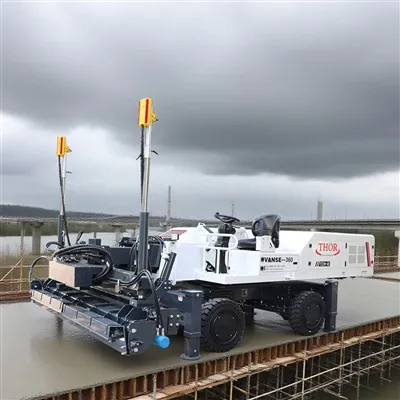
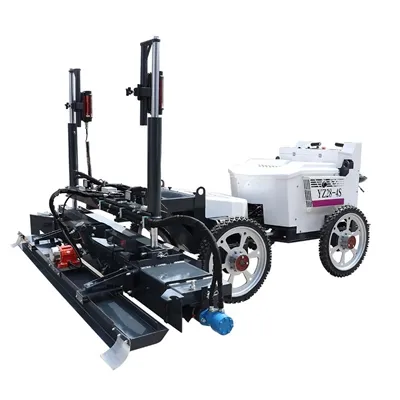
Large area floor laser leveling machine leveling construction method
Large area floor laser leveling machine leveling construction method
1. Laser transmitter
The laser transmitter is one of the important components of the large-area floor laser leveling machine. It is responsible for emitting laser beams and providing positioning and navigation benchmarks for the leveling machine. The laser transmitter should have the characteristics of high precision, high stability and long life to ensure the accuracy and reliability of leveling construction. When selecting a laser transmitter, factors such as its power, wavelength, and beam quality should be considered to meet different construction needs.
2. Work head
The leveling head is the core component of the large-area floor laser leveling machine. It is responsible for leveling and compacting concrete materials to form a smooth and flat floor. The design and manufacturing quality of the smoothing head directly affects the quality and appearance of the floor. The smoothing head is generally composed of a scraper, a pressing plate, a motor, etc. It has a variety of working modes and adjustment functions, and can be selected and adjusted according to different concrete materials and construction requirements.
3. Engine
The engine is the power source of the large-area floor laser leveling machine and provides power for the operation of the leveling machine. The choice of engine should be based on the specifications and construction needs of the leveling machine. Generally, a diesel engine or an electric motor is used. Engine performance parameters such as power, fuel consumption, noise, etc. are also important factors in selection.
4. Control Panel
The control panel is the control center of the large-area floor laser leveling machine. The operator can control the operation of the leveling machine and switch between various working modes through the control panel. The control panel generally has multiple functions, such as start, stop, speed adjustment, direction control, etc. It can also display the working status and fault information of the machine. The design of the control panel should be concise and clear, making it easy for operators to quickly grasp and operate.
5. Auxiliary equipment
Large-area floor laser levelings also require some auxiliary equipment such as concrete mixers, transport trucks, water pumps, etc. to complete the entire construction process. The selection and use of these auxiliary equipment should be based on actual conditions to ensure the smooth progress of construction and improve construction efficiency.

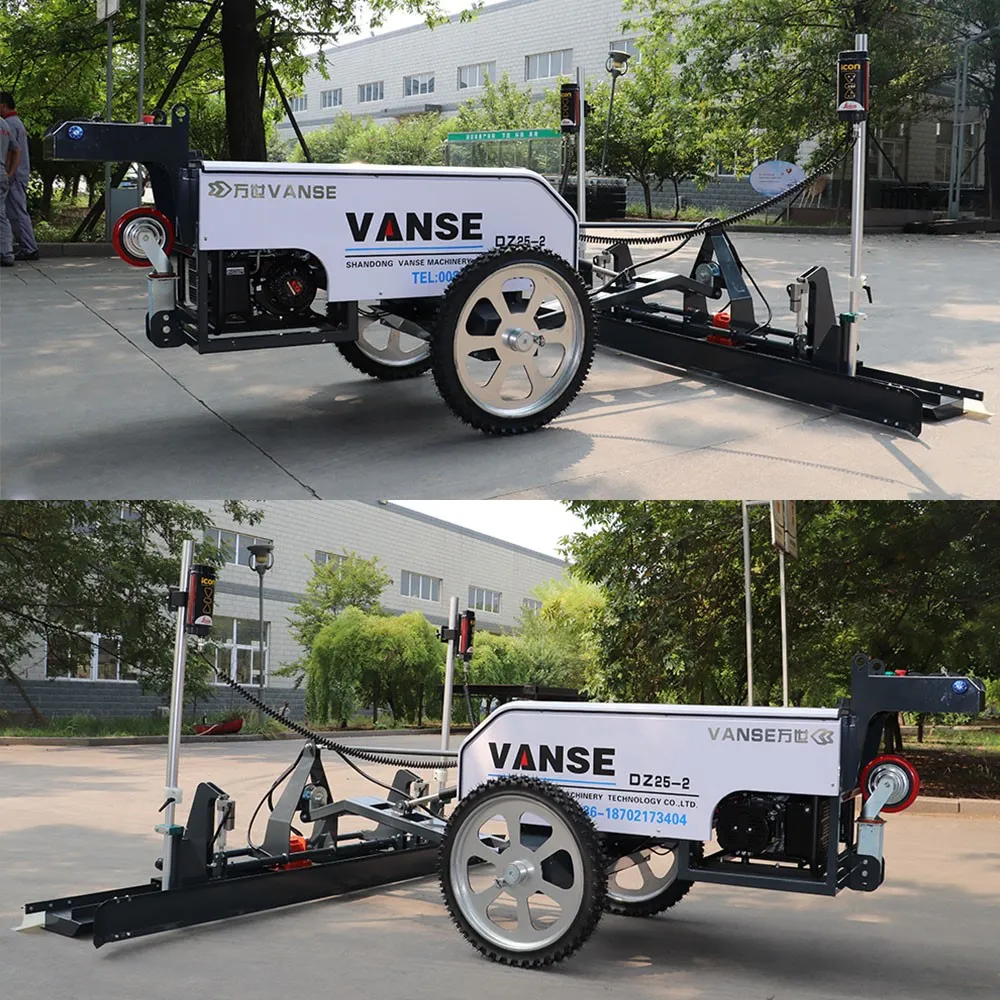


Thanks to All the Friends Who Support and Trust Shandong Vanse Machinery Technology Co., Ltd.
If you want to know more about Shandong Vanse Machinery Technology Co., Ltd. or have any questions, please feel free to contact us:
Our Factory
Shandong Vanse Machinery Technology Co., Ltd.








Share this article

About the Author: Shandong Vanse Machinery Technology Co., Ltd.
Shandong Vanse Machinery Technology Co., Ltd. is a high-tech manufacturer specializing in concrete construction machinery, including laser screeds and related equipment. The company integrates R&D, production, and global sales, with products exported to over 60 countries and widely used in infrastructure projects worldwide.
Previous Post
Next Post
Related Articles
You Might Also Like
Know about the 20/30/40 rule in concrete
The 20-30-40 rule in concrete is a crucial guideline, primarily used for flatwork projects like driveways, sidewalks, patios, and slabs. It refers to the general specifications for the aggregate (stone) size within the concrete mix. Here's what each number means: Number Meaning Typical Application 20 The maximum aggregate size should be 20 mm (about 3/4 inch). This ensures the mix can flow properly around rebar and into forms without creating voids or honeycombing. It's a standard size for general-purpose concrete. 30 The average aggregate size is around 30 mm (about 1 1/4 inch). This indicates the mix uses a gradation of stones, with an average size larger than the maximum to ensure good interlock and strength. 40 The minimum cement content should be 40 kg per cubic meter of concrete. This guarantees sufficient cement paste to coat all aggregates, bind them together, and achieve the desired strength and durability. Essentially, it's a shorthand for specifying a strong, workable, and durable concrete mix by controlling: How big the biggest rocks can be (20mm max). The general size of the mix of rocks (30mm avg). How much "glue" (cement) is in the mix (40kg minimum per m³). It's a Guideline, Not an Absolute Law: Exact mix designs are determined by structural engineers based on compressive strength (e.g., 3000 psi, 4000 psi), exposure conditions (freeze-thaw, sulfates), and placement method. The 20-30-40 rule provides a good starting point for typical residential and light commercial flatwork. Local Standards Vary: In the US, specifications are often in psi strength and slump rather than this exact ratio. However, the principle is the same: control aggregate size and cement content for performance. Common Related "Rules": You may also hear the "20-20 Rule" for placing concrete, which states: Slump should be a maximum of 20 cm (8 inches). (Too wet leads to shrinkage and cracking). The maximum aggregate size should be 20 mm (3/4 inch). Purpose: This rule helps prevent common problems: Too large aggregate: Makes finishing difficult and can cause surface flaws. Too little cement: Results in weak, permeable, and non-durable concrete. When ordering concrete for a project like a driveway, you can use this rule as a checklist when talking to your ready-mix supplier. You might say: *"I need a 4000 psi mix for a driveway, with a 3/4" max aggregate and a 4-5 inch slump."* This communicates the same intent as the 20-30-40 rule-you're asking for a mix with appropriately sized stone and sufficient cement for a strong, durable finish. IN SUMMARY: The 20-30-40 rule is a mix design guideline that balances aggregate size and cement content to produce workable, strong, and crack-resistant concrete for flatwork. It emphasizes that quality concrete isn't just about strength, but about the right proportions of its components. Note: The parameters provided in this document are for reference only and are not mandatory. Due to differences in technical characteristics between different brands and models of laser levelers, please consult the manufacturer for a suitable solution before actual operation. This reference document assumes no responsibility for any issues arising from failure to follow the manufacturer's instructions.The laser leveling machine needs to be temperature controlled to avoid high temperature ‘burns’
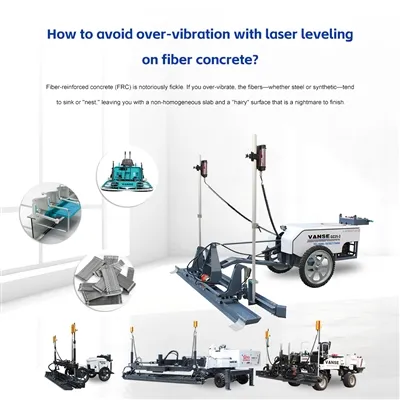
Whether it is winter or summer, the use of laser leveling machines is indispensable for road construction. In the summer, the use of leveling machines may cause some parts inside the machine to overheat due to the increase in temperature, thus affecting the leveling effect of the laser leveling machine. In order to improve the use value of the equipment and improve work efficiency, we need to do a good job of temperature control during the operation of the laser leveling machine. First of all, controlling the temperature of the laser leveling machine is one of the keys to ensure the quality of leveling. When leveling, the equipment should meet the requirements of relevant standards according to the asphalt type, grade, consistency, ambient temperature, leveling thickness, etc. Secondly, when the construction temperature of highways and roads is lower than 10℃ and the construction temperature of other grades of roads is lower than 5℃, it is not suitable for leveling. If leveling work is required, the temperature of the road leveling machine should be increased, and there should be low-temperature leveling requirements that meet the regulations. The material transporter should have insulation measures, and high-precision leveling machines should be used as much as possible to start paving, and the trade plate should be heated and leveled immediately after the pressure is applied to shorten the length of the pressure. Remember that leveling should meet the requirements of relevant standards based on asphalt type, grade, consistency, ambient temperature, leveling thickness, etc., so that it is relatively simple and easy to control the temperature. Mastering the performance characteristics of the laser leveling machine will help us do a good job of temperature control. (1) The leveling principle of the laser leveling machine is to use advanced laser technology, closed-loop control technology and high hydraulic system, and realize it under the automatic control of the computer. This is its outstanding feature different from other floor construction processes. (2) The leveling principle of the leveling machine is to rely on the hydraulically driven leveling head, cooperate with the laser system and computer control system to complete the leveling work while automatically leveling. The leveling head is equipped with an integrated scraper, vibrator and leveling plate, which integrates all leveling, leveling, vibration and compaction work into one, and completes it at one time. The computer control system automatically adjusts the elevation in real time 10 times per second, and the vibration frequency of the balanced vibrator reaches 3000 times/minute. (3) The laser transmitter used to control the ground elevation is arranged independently, so that the floor elevation is not controlled by the template and no cumulative error will be generated. (4) The laser leveling machine can also automatically control the longitudinal and transverse slopes, which is also completed by the laser system, computer system, hydraulic system, and mechanical system. For complex-shaped ground with high requirements such as drainage, a three-dimensional special-shaped ground processing system can also be selected to achieve it. The above is the relevant knowledge told by the manufacturer. We hope that through our narration, you can understand the temperature control method of the laser leveling machine during the construction process, and hope that your equipment can run smoothly and correctly. If you have any questions, please contact us in time. We look forward to cooperating with you.How to avoid over-vibration with laser leveling on fiber concrete?
Fiber-reinforced concrete (FRC) is notoriously fickle. If you over-vibrate, the fibers-whether steel or synthetic-tend to sink or "nest," leaving you with a non-homogeneous slab and a "hairy" surface that is a nightmare to finish. With a laser leveling, the goal is to keep the fibers suspended in the paste while achieving your ±3mm tolerance. Here is how to dial in your machine: Over-vibration usually happens when the centrifugal force is too high for the concrete's consistency. The Rule of Thumb: For high-fiber mixes, you generally want high frequency but low amplitude. Adjustment: Most laser leveling (like Vanse) allow you to adjust the hydraulic flow to the vibrator motor. If you see "fat" (excessive cream/paste) rising more than 2mm–3mm above the fibers, slow the vibrator RPM down immediately. If the machine moves too slowly while the vibrator is screaming, you are effectively "drilling" the fibers down into the subgrade. The Sweet Spot: Maintain a consistent forward (or pulling) speed. If you have to stop the machine for any reason, shut off the vibrator immediately. Leaving a vibrating leveling head stationary for even 5 seconds will create a permanent "soft spot" or depression in a fiber floor. The vibrator should not be buried in the concrete. Positioning: The vibrator plate should just "kiss" the surface of the concrete as the auger levels it. The Sink Effect: If the vibrator is set too low, it pushes the larger aggregate and fibers down, leaving only weak laitance on top. This leads to surface scaling later in the floor's life. Fibers can sometimes clump (balling) before they even hit the leveling. Auger Interaction: Ensure your auger is set to the correct height (3mm to 5mm above finished grade). The auger's job is to "cut" the excess; if it's too low, it will snag fibers and drag them, creating tears in the surface. Avoid "Double-leveling": With fiber, try to get it right in one pass. Re-vibrating the same area almost guarantees the fibers will settle too deep. Because fibers can make the mix "stiffer," the leveling head might "ride up" on the material. The Fix: Don't increase vibration to force it down. Instead, adjust your Laser Offset. If the machine is riding high, lower the laser receivers by 1MM or 2MM to compensate for the material's resistance without over-working the paste. Variable Adjustment for Fiber Goal Vibrator RPM Reduce by 15-20% Prevent fiber sinking Travel Speed Faster / Consistent Prevent "hot spots" Auger Height Slightly Higher Avoid snagging/tearing Slump Maintain 100mm – 125mm Ensure flow without segregation Pro Tip: Have a "muck man" with a come-along tool standing by to watch the auger. If he sees a "beard" of fibers building up on the plow, you need to stop and clean the head, or it will ruin your FF numbers. Would you like a guide on how to properly "dry-shake" hardener over a fiber-reinforced floor without creating delamination? Contact us NOW Note: The parameters provided in this document are for reference only and are not mandatory. Due to differences in technical characteristics between different brands and models of laser levelers, please consult the manufacturer for a suitable solution before actual operation. This reference document assumes no responsibility for any issues arising from failure to follow the manufacturer's instructions.