Technical Knowledge
In what scenarios are concrete laser levelings widely used?
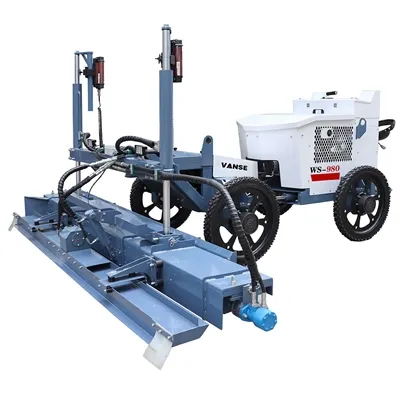
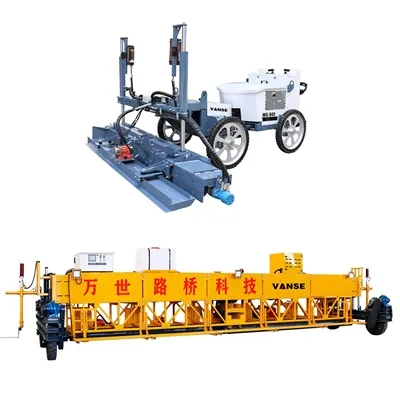
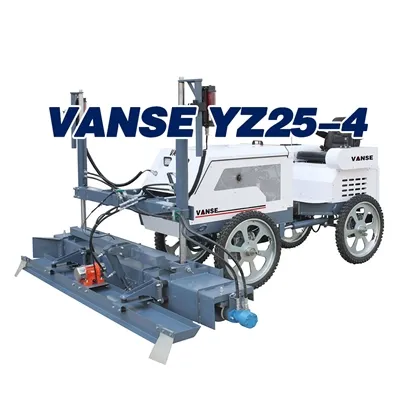
Concrete laser levelings are widely used in a variety of scenarios, mainly including the following aspects:
1. Industrial plants and workshops: These places often require large-area, high-precision concrete floors, such as large industrial plants, workshops and automated three-dimensional warehouses. Laser leveling machines can quickly and accurately complete the leveling work of these floors.
2. Electronic appliances and clean workshops: For places such as electronic appliances and clean workshops that require a highly clean environment, laser leveling machines also play an important role because they can provide precise floor flatness and meet cleanliness requirements.
3. Large warehouse supermarkets, logistics centers and exhibition centers: These places also require large areas of concrete floors and high flatness to ensure smooth transportation of goods and safe walking of personnel.
4. Outdoor floors: Outdoor places such as docks, container yards, freight yards, airport runways, aprons, parking lots, squares, residential floors, municipal roads and other outdoor places also require high-quality concrete floors. In these places, laser leveling machines can achieve high-quality leveling of outdoor floors through its high-precision measurement and control technology. In summary, concrete laser leveling machines are widely used in various fields because of their efficient and accurate leveling effects. Places that require high-quality concrete floors.


Thanks to All the Friends Who Support and Trust Shandong Vanse Machinery Technology Co., Ltd.
If you want to know more about Shandong Vanse Machinery Technology Co., Ltd. or have any questions, please feel free to contact us:
Our Factory
Shandong Vanse Machinery Technology Co., Ltd.








Share this article

About the Author: Shandong Vanse Machinery Technology Co., Ltd.
Shandong Vanse Machinery Technology Co., Ltd. is a high-tech manufacturer specializing in concrete construction machinery, including laser screeds and related equipment. The company integrates R&D, production, and global sales, with products exported to over 60 countries and widely used in infrastructure projects worldwide.
Previous Post
Next Post
Related Articles
You Might Also Like
How do the sensitivity & reception range of the laser receiver affect the construction effect of the leveler?
The sensitivity and reception range of the laser receiver have an important impact on the construction effect of the concrete laser leveling machine, which is mainly reflected in the following aspects: 1. Construction accuracy: The higher the sensitivity of the laser receiver, the stronger the laser signal that can be received, thereby more accurately detecting the height and level of concrete. This helps ensure the accuracy of the leveling's construction, reducing errors and improving overall flatness. 2. Construction efficiency: The reception range of the laser receiver determines the working range and speed of the leveler. If the receiving range is small, the leveler needs to stop frequently to adjust its position, which will reduce construction efficiency. A laser receiver with a larger reception range can support faster and continuous construction, thereby improving the operating efficiency of the leveler. 3. Degree of automation: Laser receivers with high sensitivity and large receiving range can support a higher degree of automated construction. For example, by integrating with automatic control systems, functions such as remote control, automatic navigation, and real-time monitoring can be realized, further reducing manual intervention and improving the level of automation and intelligence in construction. 4. Adaptability and flexibility: The sensitivity and reception range of the laser receiver will also affect the adaptability and flexibility of the leveler to different construction environments and conditions. For example, in complex construction environments, laser receivers with high sensitivity and large reception range can better cope with special situations such as obstacles, slopes, and corners, ensuring the consistency and stability of construction effects. In summary, the sensitivity and reception range of the laser receiver have a multifaceted impact on the construction effect of the concrete laser leveler. Therefore, selecting the right laser receiver and performing proper calibration and adjustment are crucial to optimizing the construction results of the leveling.What are the risks in construction safety of laser leveling machines and pavers?
Both laser levelings and pavers present certain risks in terms of construction safety. Here are some of the main security risks they each face: Safety risks of laser leveling machines: 1. Equipment operation errors: Incorrect operation may cause the equipment to lose control and cause an accident. 2. Laser system interference: The accuracy of the laser system is crucial to the leveling quality. If it is interfered with, it may lead to substandard construction or cause an accident. 3. Poor road conditions: Operating on soft, slippery or uneven roads may cause equipment instability or damage. 4. Power supply and electrical safety: The equipment needs to be connected to electricity to work, and there is a risk of electric shock and electrical fire. 5. Improper maintenance and care: Equipment that is not maintained and maintained in a timely manner may increase the risk of failure. Paver safety risks: 1. Equipment overturning: Due to the large weight and complex structure of the paver, if it becomes unstable during operation, it may overturn. 2. High-temperature oil: The paver needs to use high-temperature oil during operation, which may lead to accidents such as fire or burns. 3. Mechanical damage: Rotating parts of the paver, conveyor belts, etc. may cause mechanical damage. 4. Construction environmental risks: Bad weather, road conditions and other factors may increase construction risks. 5. Traffic safety: At the road construction site, the paver may interact with passing vehicles, posing traffic safety risks. In order to reduce these risks, the construction unit should ensure that the operators have received professional training, the equipment is regularly maintained and maintained, and safety is strictly observed operating procedures. In addition, on-site safety management personnel should monitor the entire construction process to promptly discover and correct possible safety hazards.How should the daily maintenance of concrete laser leveling machines be carried out?
The daily maintenance of concrete laser leveling machines is crucial to maintaining the performance and extending the service life of the equipment. The following are the specific points of daily maintenance: – Cleaning the body: After work every day, use a high-pressure water gun or compressed air to completely remove concrete residues, dust and soil on the surface of the equipment. Focus on cleaning scrapers, spiral fabricators, vibrating plates and other components to prevent residual materials from corroding the equipment. – Check component connection: Check whether the connection bolts and nuts between each component are loose, such as the connection between engines, reducers, walking wheels, etc. Fasten it in time when it is found to be loose to avoid damage to parts or equipment failures due to looseness. At the same time, check whether the structural parts of the equipment are damaged by deformation, cracks, etc., especially key parts such as the frame and arm frame. If there are any problems, repair or replace them in time. – Cleaning laser transmitter and receiver: Use a clean, soft cloth to gently wipe the lens of the laser transmitter and receiver to ensure that no dust or stains block the laser signal. Avoid using hard objects to scratch the lens to avoid damage. – Check laser signal: Before each use, start the laser leveler to check whether the laser signal is stable and accurate. Observe whether the receiver can receive the laser signal normally. If there is any signal unstable or deviation, adjust the position of the transmitter and receiver in time to ensure the normal operation of the laser system. – Routine calibration: Calibrate the laser system regularly (usually quarterly or six months) according to the frequency of equipment usage and working environment to ensure its measurement accuracy and leveling effect. The calibration work should be carried out by professional and technical personnel using professional calibration equipment. – Check line connection: Check whether the electrical circuit connection is firm, whether there is any looseness or falling off, and whether the outer skin of the wire is damaged or aging. Repair or replace the line in time when problems are found to prevent electrical faults or safety accidents due to line problems. – Cleaning electrical components: Use compressed air or a clean brush to clean up dust and debris in the electrical control cabinet to keep the electrical components dissipating well. Check whether the contacts of electrical components such as contactors and relays are ablated or oxidized, and replace them in time if necessary. – Detection of Battery: For battery-powered laser levelers, regularly check the battery's power and performance. Keep the battery surface clean and avoid battery short circuit. In accordance with the requirements of the battery instruction manual, charge and discharge the battery regularly to extend the battery life. – Check oil level and oil quality: Before starting the machine every day, check the oil level of the hydraulic oil tank to ensure that the oil level is within the normal range. If the oil level is too low, add hydraulic oil that meets the requirements in time. At the same time, check the quality of the hydraulic oil regularly to observe whether the oil has discoloration, turbidity, and odor. If there is any abnormality, replace the hydraulic oil in time. – Check pipelines and joints: Check whether there are any leakage or damage in the hydraulic pipelines and whether the pipe joints are loose. If leakage is found, deal with it in time and replace damaged pipelines or seals. Tighten the pipe joint regularly to prevent loosening due to vibration and other reasons. – Cleaning hydraulic filter: Clean or replace the hydraulic filter regularly according to the cleaning level of the hydraulic oil and the use of the equipment. Generally, every 200-300 hours of work, the return oil filter should be checked and the hydraulic oil filter element should be replaced every 500-1000 hours of work to ensure the cleanliness of the hydraulic oil. – Check the oil level: Before starting the equipment every day, check the engine oil level to ensure that the oil level is within the normal scale range. If the engine oil level is too low, it will lead to poor engine lubrication and wear of the acceleration parts. Engine oil that meets the specifications should be added in time. – Check the air filter: Clean or replace the air filter element regularly, generally clean it every 50-100 hours of work, and replace the filter element every 500-1000 hours of work. Keeping the air filter clean ensures smooth engine air intake, improves combustion efficiency, and reduces engine wear. – Check the cooling system: Check the water level of the cooling water tank and add coolant in time when it is insufficient. Check whether there is any leakage in the cooling system, including radiator, water pump, water pipe and other parts. Regularly clean the dust and debris on the surface of the radiator to ensure good heat dissipation and prevent the engine from overheating. – Training and Qualifications: Operators must undergo professional training, be familiar with the operating methods, maintenance points and safety precautions of the equipment, and hold corresponding operating certificates. Unlicensed personnel are strictly prohibited from operating. – Correct operation: Operate strictly in accordance with the operating procedures of the equipment to avoid damage to the equipment due to illegal operations. Before starting the equipment, check whether there are people and obstacles around the equipment to ensure safety. During operation, pay attention to the operating status of the equipment. If abnormal sounds, vibrations or other signs of failure are found, the machine should be shut down immediately for inspection.