Technical Knowledge
Large-area high-precision concrete floor laser leveling construction method
Large-area high-precision concrete floor laser leveling construction method
1. Laser leveling machine
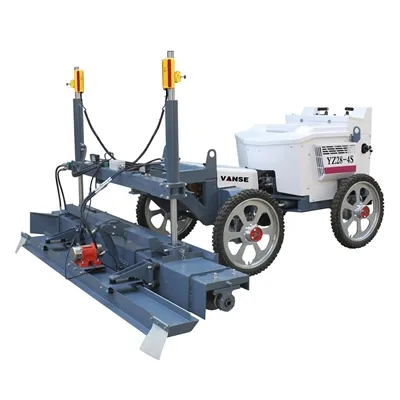
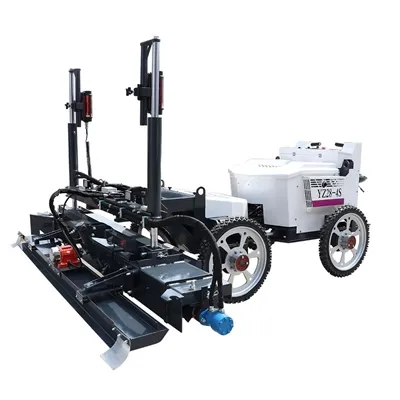
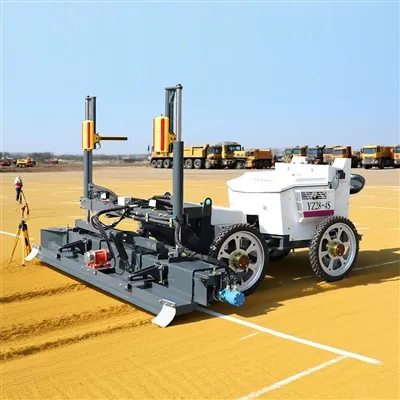
The laser leveler is a high-precision concrete construction equipment that uses laser technology and automated control technology to achieve rapid and accurate leveling of large-area floors. Its main features include
1. High precision:
The laser leveling machine adopts a high-precision laser sensing convergence controller, which can monitor and adjust the flatness and height of the concrete surface in real time to ensure construction quality.
2. Automated control:
The laser leveling machine can realize continuous automatic leveling operations, improving work efficiency. At the same time, automated control also reduces the impact of human factors on construction quality.
3. Large-area construction:
The laser leveling machine has a large construction range and can complete the leveling work of a large area of floors at one time, improving construction efficiency.
4. Vibration function:
The laser leveler has a vibration function, which can evenly compact the concrete material to the required thickness, further improving the flatness.
2. Concrete materials
When carrying out laser leveling construction of large-area high-precision concrete floors, high-quality concrete materials should be selected to ensure construction quality. The specific requirements are as follows:
1. Strength:
Concrete materials should have sufficient strength to meet design requirements.
2. Durability:
Concrete materials should have good durability and be able to withstand long-term use and the impact of various environmental factors.
3. Homogeneity:
Concrete materials should have good homogeneity to ensure the smoothness of the floor surface after leveling
4. Slump:
The slump of concrete materials should be moderate to ensure operability during construction.
3. Construction technology
The large-area high-precision concrete floor laser leveling construction process mainly includes the following steps:
1. Preparation:
Clean the construction site to ensure there is no debris and dust. Check whether the functions of the laser leveler are normal and prepare the concrete materials required for construction.
2. Spread concrete:
Spread the concrete material evenly on the floor to ensure consistent thickness. Paving can be done using tools such as a scraper or trowel.
3. Laser leveling:
Start the laser leveling machine and adjust various parameters according to construction requirements, such as flatness, height, etc. The laser leveling machine automatically completes the leveling work of the floor.
4. Compaction and trimming:
On the basis of laser leveling, compaction is performed mechanically or manually, and local uneven areas are trimmed.
5. Surface treatment:
Perform lightening treatment on the floor surface to improve flatness and smoothness. When finishing, be careful not to over-sand to avoid damaging the surface structure.
6. Curing and maintenance:
After completion of construction, the floor should be properly maintained to ensure the hardening and strength growth of the concrete material. At the same time, the floor should be maintained and maintained regularly to ensure its long-term use.
4. Construction personnel
Laser leveling construction of large-area high-precision concrete floors requires professional construction personnel to operate laser leveling machines and other related equipment. Construction personnel should meet the following conditions:
1. Professional training:
Construction personnel should undergo professional training, be familiar with the operation and maintenance of laser leveling machines, and master the construction technology and technical requirements.
2. Technical level:
Construction personnel should have a certain technical level and be able to adjust construction parameters and solve problems encountered during construction according to actual conditions.
3. Responsibility:
Construction personnel should have a high sense of responsibility and professional ethics, be able to conscientiously perform construction duties and ensure construction quality
5. Construction Management
Laser leveling construction of large-area high-precision concrete floors requires strengthening construction management to ensure that construction quality, progress and safety requirements are met. Specific management measures are as follows:
1. Formulate a construction plan:
Based on the actual conditions and requirements of the project, formulate a reasonable construction plan, including construction progress, personnel arrangements, and technical requirements.
2. Construction quality control:
Establish a complete construction quality management system and conduct strict quality control and acceptance of each process to ensure that the construction quality meets the design requirements.


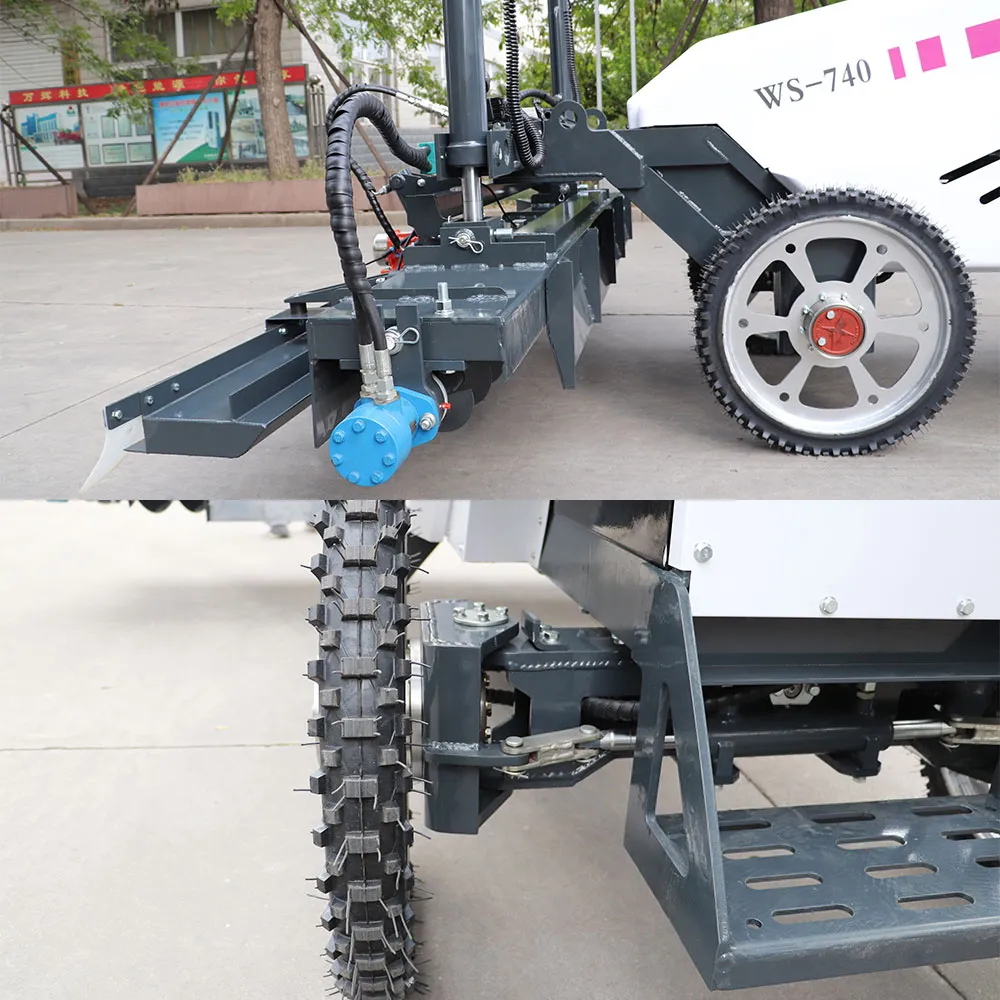
Thanks to All the Friends Who Support and Trust Shandong Vanse Machinery Technology Co., Ltd.
If you want to know more about Shandong Vanse Machinery Technology Co., Ltd. or have any questions, please feel free to contact us:
Our Factory
Shandong Vanse Machinery Technology Co., Ltd.








Share this article

About the Author: Shandong Vanse Machinery Technology Co., Ltd.
Shandong Vanse Machinery Technology Co., Ltd. is a high-tech manufacturer specializing in concrete construction machinery, including laser screeds and related equipment. The company integrates R&D, production, and global sales, with products exported to over 60 countries and widely used in infrastructure projects worldwide.
Previous Post
Next Post
Related Articles
You Might Also Like
How to monitor the status of concrete laser leveling machine in real time through vibration sensor?
To monitor the status of the concrete laser leveling in real time through a vibration sensor, the following steps can be taken: 1. Install vibration sensors: Install vibration sensors on key parts of the concrete laser leveling machine, such as the scraper or leveling beam. 2. Connect the sensor and control system: Connect the vibration sensor to the control system of the concrete laser leveling. 3. Set the alarm value: Set the alarm value of the vibration sensor as needed. When the vibration of the leveling machine exceeds the preset alarm value, the system will automatically sound an alarm and notify the operator to take appropriate action. 4. Real-time monitoring: The control system will monitor the data of the vibration sensor in real time and display the data to the operator through the control interface. The operator can check the vibration status of the leveler at any time and understand the operation of the leveler. 5. Abnormal handling: When the vibration sensor detects abnormal vibration, the control system will immediately issue an alarm and automatically take corresponding measures, such as shutting down or adjusting working parameters, etc., to protect the leveling machine from damage. 6. Recording and data analysis: The control system will also automatically record vibration data, and process and analyze the data through data analysis software. Through these data, the operator can fully understand the status of the leveling machine and provide a basis for equipment maintenance and upkeep. In summary, real-time monitoring of the status of the concrete laser leveling through vibration sensors requires steps such as connecting the vibration sensor to the control system, setting alarm values, real-time monitoring, recording and data analysis. In this way, abnormal conditions of the leveling machine can be discovered in time, ensuring the normal operation of the equipment, and improving construction efficiency and construction quality.What are the special operating techniques of laser leveling machines in different construction environments?
Laser leveling machine is a kind of equipment used for large-area concrete paving and leveling. There are special operating skills in different construction environments: – Indoor space is usually limited, and the size of laser leveling machine is relatively large. Before entering the indoor construction site, accurately measure the size of doors, passages, etc. to ensure that the machine can enter smoothly. If the passage is narrow, some parts, such as detachable scrapers, may need to be removed and installed after the machine enters the room. – During operation, pay attention to the turning radius of the machine due to limited indoor space. Plan the leveling route in advance and minimize the machine's large-scale turning movements to avoid colliding with walls, columns and other building structures. – Pay special attention to dust control during indoor construction, because dust will affect indoor air quality and subsequent decoration processes. The laser leveling machine can be equipped with an efficient dust suction device to simultaneously remove dust during the leveling process. – For situations where there are more loose debris on the ground, use a broom or industrial vacuum cleaner for preliminary cleaning before construction to reduce the situation of debris being raised during the leveling process. – Indoor floors usually have high requirements for flatness, such as warehouse floors, exhibition hall floors, etc. Before construction, carefully calibrate the laser transmitter and receiver to ensure the accuracy of the laser signal. – According to the designed slope of the indoor floor (if any), accurately set the control system parameters of the laser leveler. For example, for indoor floors with drainage requirements, the leveling operation should be carried out according to the designed drainage slope (such as 0.3% – 0.5%), and the flatness should be checked regularly during the construction process. Tools such as rulers can be used for random inspections. – If there is an uneven original ground on the construction site, such as potholes, bumps, etc. Before construction, use equipment such as bulldozers to perform preliminary leveling on the site and deal with areas with large height differences. For small potholes, the thickness of the concrete can be appropriately increased during the construction of the laser leveler to fill them. – When the site has a certain slope, the working mode of the laser leveler should be adjusted according to the design requirements. For example, for the gentle slopes at the entrance and exit of the parking lot, they should be leveled according to the specified slope (such as no more than 7% – 10%), and the transition with the adjacent plane area should be natural and smooth. – Weather factors have a greater impact on outdoor construction. If high temperatures are encountered, the solidification speed of concrete will be accelerated. The leveling construction speed should be appropriately accelerated, and retarders can be added to the concrete to extend the working time of the concrete. At the same time, attention should be paid to providing heatstroke prevention measures for operators. – When encountering rainy weather, the laid but not completely solidified concrete should be covered with plastic film in time to prevent rain erosion. If there is water accumulation on the ground, drain it before construction, and check the water content of the ground to avoid affecting the quality of concrete due to excessive water content. – For large outdoor sites, in order to improve construction efficiency, multiple laser leveling machines can be used for collaborative operation. When dividing the construction area, the walking route of the machine should be reasonably planned to avoid mutual interference. – Arrange the supply of concrete in advance to ensure that concrete can be supplied to the construction area continuously and stably. Concrete mixer trucks can be used to unload directly near the construction area to reduce the concrete transportation time and improve the overall construction progress. – When constructing on narrow roads or corridors, the positioning of the laser leveler must be accurately controlled. Due to the narrow space, the machine may not be able to perform regular steering operations. The concrete can be spread and leveled by adjusting the angle of the scraper by alternating forward and backward movements. – Set up warning signs on both sides of the road or corridor in advance to prevent other vehicles or personnel from interfering with the construction, and also to avoid the machine from colliding with roadside facilities. – When constructing in narrow spaces, the safety of the operator is of vital importance. The operator should wear protective equipment, such as a helmet, reflective vest, etc. And ensure that the machine's emergency brake is in good condition so that it can stop in time in case of an emergency. – As roads or corridors may have a certain amount of traffic flow, during construction, it is necessary to work closely with on-site traffic management personnel and select periods with less traffic flow for construction, or adopt temporary traffic control measures.How can we address common safety hazards during concrete construction?
During concrete construction, common safety hazards (such as formwork support instability, mechanical failure, electric shock, and falls from height) must be addressed according to the principle of "stopping the danger first, then investigating, then rectifying, and finally verifying" to prevent them from escalating into accidents. The following describes six common hazards, including specific identification methods, emergency response measures, and long-term rectification plans, to ensure closed-loop risk management: During construction, pay close attention to the following abnormal signs to determine whether the support is unstable: Structural deformation: noticeable sagging or bulging of the formwork, or tilting or bending of the support posts; Fastener/joint abnormalities: unusual "creaking" sounds from fasteners, or loosening or disconnection of the crossbar and posts; Ground settlement: uneven subsidence at the base of the support posts (especially on soft soil) and shifting of the pads. Stop the danger immediately: Immediately stop concrete pouring operations and notify all workers (especially those under and around the formwork) via intercom/loudspeaker to evacuate to a safe area. No one is allowed to remain or approach the unstable area. Isolation and Warning: Use warning tape and signs to enclose the unstable area. Deploy dedicated personnel to prevent entry and prevent secondary collapse and injury. Temporary reinforcement (for professionals only): If the degree of instability is minor (such as partial tilting of a pole), a certified scaffolder, while ensuring their own safety, should use spare steel pipes and fasteners to temporarily support the unstable area (e.g., by adding diagonal supports or increasing the number of poles). Non-professionals are prohibited from performing this operation. Cause Identification: Determine the root cause of instability by reviewing the plan and conducting on-site inspections (e.g., excessive pole spacing, substandard fasteners, uncompacted foundation, or irregular pouring sequence). Targeted Corrective Actions: If the foundation is a problem: Replace the soft foundation with gravel/lime soil and re-install wooden (or steel) pads ≥ 20cm thick to ensure uniform load distribution at the base of the poles. If the support setup is a problem: Remove the substandard support section and re-erect according to the specific plan (with vertical deviation of the poles ≤ 1/200, and crossbar pitch and sweeping bar placement meeting requirements). After erection, conduct a joint inspection by the technical and safety departments. If the pouring sequence is a problem: Re-define the pouring process (e.g., layered pouring, symmetrical pouring), re-examine the team before pouring, and have a safety officer supervise the entire process. Fault Type Identification signals Potential Risks Pump truck/tower crane brake failure Hook slipping during lifting, pump truck boom unable to secure Machine overturning, impact from objects Vibrator leakage Operators experiencing numbness when touching, leakage protector frequently tripping Electric shock Mixer jam Motor making unusual noises, mixer drum stalling, feed inlet blocked Motor burnout, personal injury from misoperation Brake Failure (Pump Truck/Tower Crane): Immediately stop operations. If a heavy object is hanging from the hook, temporarily secure the object with a spare wire rope (e.g., tie it to a solid structure). Do not forcefully lift or lower the object. Evacuate all personnel within the operating radius and contact professional maintenance personnel. Operators are strictly prohibited from disassembling the brake system on their own. If the vibrator is leaking electricity: Immediately unplug the power cord (or turn off the main switch at the distribution box). Never operate the switch with wet hands. Check the cable for damage (such as scratches from rebar or soaking in water). If damaged, replace the entire cable. Do not wrap it with insulating tape for temporary use. If the mixer is stuck: Disconnect the power and lock the mixer (hang a "Do Not Close" warning sign) to prevent accidental restart. Use a dedicated tool (such as a long pole) to clear any obstructions in the feed inlet. Do not insert your hands or body into the mixer drum. After clearing, test-run the mixer for 3 minutes to confirm that there are no abnormalities before resuming operation. Equipment Maintenance: Establish a "one machine, one file" system and regularly (e.g., monthly) inspect the mechanical brake system, cables, and motor insulation, maintaining records. Personnel Training: Conduct emergency drills for mechanical failures (e.g., handling electrical leakage and clearing stuck materials) for operators to ensure everyone understands the "power off first, then handle" procedure. Spare Parts Reserve: Maintain a stockpile of commonly used spare parts (e.g., vibrator cables, fasteners, and wire ropes) on-site to avoid prolonged downtime due to parts shortages after a failure. Inadequate edge protection: 1.2m high guardrails are not installed around the foundation pit or floor edges, or the guardrails lack toeboards or safety nets. Work platform violations: Scaffolding planks are not fully laid (probe boards are present), or the platform's load capacity is insufficient (excessive concrete is piled). Inadequate personal protective equipment: Operators are not wearing safety belts, or safety belts are hung too low (the attachment point is below the work surface). If protective measures are missing: Immediately cease work at height. Use steel pipes and a fine-mesh safety net to construct temporary guardrails. Secure the footboards with sheet metal or wooden boards (height ≥ 18 cm). Work may resume only after inspection and approval. If the platform is not in compliance with regulations: Immediately clear any excess material from the platform, remove the probe boards (the length of the scaffolding boards extending beyond the crossbars should be ≤ 15 cm), and verify the platform's load-bearing capacity (e.g., by reinforcing with steel pipe fasteners). If personal protective equipment is inadequate: Immediately stop the violator and require them to properly fasten their safety belt (with two hooks attached to different secure points). Prohibit them from working until the situation is corrected. Daily Inspections: Safety officers inspect edge protection and work platforms before each day's workday, focusing on loose scaffolding and damaged safety nets. Mandatory Protection: Permanent protection (such as pre-embedded iron and welded railings) is implemented for fixed edges (such as floor edges) to avoid repeated installation. Penalty Mechanism: Personnel who repeatedly violate the rules by not wearing safety belts will be suspended for training (at least four hours) and may only return to work after passing the training. Illegal temporary power use: Cables laid directly on the ground (caused by tankers), soaked in concrete curing water, or distribution boxes not rainproofed or without leakage protectors; Incomplete equipment grounding: Vibrators and pump trucks not re-grounded (ground resistance > 10Ω), or grounding electrodes removed; Improper operation: Touching switches with wet hands, using power tools in the rain. If an electric shock accident occurs: Immediately disconnect the power supply (unplug the power cord first; if you cannot reach the power cord, use a dry wooden stick or bamboo pole to pry the power cord apart). Do not drag the victim by hand. Check the victim's consciousness: If unconscious and not breathing, immediately perform CPR (chest compressions and artificial respiration). Simultaneously call 120. Cover yourself with warm clothing while waiting for emergency assistance. If any electrical violations are discovered: Immediately stop using the relevant equipment and install the power cables overhead (secured with insulators, height ≥ 2.5m) or bury them underground in PVC pipes (depth ≥ 0.7m). Inspect the distribution box: Ensure that each circuit is equipped with a residual current device (RCD) (rated operating current ≤ 30mA, operating time ≤ 0.1s). Perform a test trip (press the "test button" to confirm that it trips). Electricity Regulations: Develop a "Special Plan for Temporary Electricity Use in Concrete Work Areas" to clearly define cable laying, grounding, and zeroing requirements. Certified electricians will be responsible for wiring and maintenance. Lightning and Rain Protection: Install a rain shelter on the distribution box. Cover power tools with plastic sheeting during rainy weather to prevent water from entering the motors. First Aid Training: All employees will receive training in first aid for electric shock (including cardiopulmonary resuscitation). First aid kits (including defibrillators for large projects) will be provided on-site. Unprotected Cross-Work: When pouring concrete on the upper level, someone is working on the lower level without a hard barrier (such as scaffolding or safety nets); Irregular Material Stacking: Rebar and steel pipes are stacked against edges (which can easily fall), or the concrete hopper is not secured (which can tip over if impacted); Improper Tool Use: Operators throw tools such as vibrators and shovels, or tools are not stored in tool bags. If cross-working without protective equipment: Immediately stop work on the upper and lower levels. Lay safety nets above the lower working surface (one every two layers), or install a hard barrier layer (such as full-coverage scaffolding). Once protective equipment is in place, resume work in separate layers. If materials/tools are misplaced: Immediately clear any materials stacked near the edge, secure the hopper to the scaffolding with wire rope, confiscate any tools thrown by the operator, and issue a verbal warning. Work Coordination: Rationally arrange the construction sequence and minimize vertical overlap. If overlap is necessary, assign a "safety supervisor" to monitor the work progress on the upper level in real time. Material Management: Designate a fixed mater ial storage area (away from edges) and display warning signs. Small tools must be placed in tool bags and are strictly prohibited from being thrown. Protective Facilities: In areas prone to falling objects (such as under the pouring platform), permanently install a safety shelter (made of steel pipes, topped with scaffolding and tarpaulin). All safety hazard handling must strictly adhere to the "Four No-Tolerance" principle to ensure complete elimination of risks: No Tolerance for Causes Unidentified: It is strictly prohibited to only rectify superficial issues (e.g., reinforcing a tilted support without investigating the cause of foundation settlement); No Tolerance for Responsible Personnel Untreated: Personnel who violate safety regulations or fail to fulfill their safety responsibilities (e.g., safety officers failing to conduct inspections or team leaders failing to provide briefings) will be penalized according to project regulations (e.g., fines, suspension of work for training); No Tolerance for Failed Corrective Measures: Rectifications must be jointly inspected and signed off by the technical and safety departments before work can resume. Verbal corrections are prohibited; No Tolerance for Relevant Personnel Untrained: Training should be organized for similar personnel in response to hazard cases to prevent recurrence (e.g., re-instruction for all scaffolding workers after formwork instability). In summary, the core of handling hidden dangers in concrete engineering projects is "rapid response, root cause control, and full staff coordination". It is necessary to curb the expansion of risks through emergency disposal, and to establish safety barriers through long-term measures, shifting from "passive treatment" to "active prevention". Note: The parameters provided in this document are for reference only and are not mandatory. Due to differences in technical characteristics between different brands and models of laser levelers, please consult the manufacturer for a suitable solution before actual operation. This reference document assumes no responsibility for any issues arising from failure to follow the manufacturer's instructions.