Technical Knowledge
How to Verify Laser Leveling Effect through F-number (FF/FL) System?

April 21, 2026

In the high-stakes world of industrial flooring-especially for VNA (Very Narrow Aisle) warehouses and automated logistics hubs-"flat enough" isn't a measurement. To prove your work meets international standards, you need the F-number system (FF/FL).
If you’re using a Concrete Laser Leveling Machine and need to verify your results for a client, here is the professional's guide to understanding, measuring, and hitting those high scores.
1. What Exactly are You Measuring? (FF VS FL)
Before you pull out the testing equipment, you need to know what the numbers represent. Global buyers and engineers follow the ACI 117 standard, which breaks down into two parts:
FF (Floor Flatness): This measures the "waviness" of the surface. Think of it as the small bumps and dips. High FF numbers mean a smoother ride for forklifts.
FL (Floor Levelness): This measures the overall tilt or slope of the slab. It’s about how close the floor is to the actual horizontal plane.
2. The "Golden Window" for Measurement
Timing is everything. To get an accurate reading that reflects the machine's performance, measurements should be taken within 24 to 72 hours after placement. If you wait too long, concrete curling (due to drying) can throw off your FL numbers, even if your laser leveling did a perfect job.
3. The Role of Equipment in Hitting the Specs
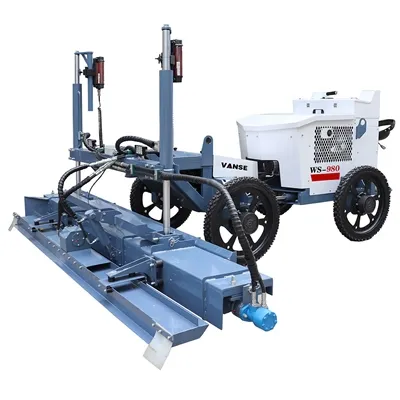
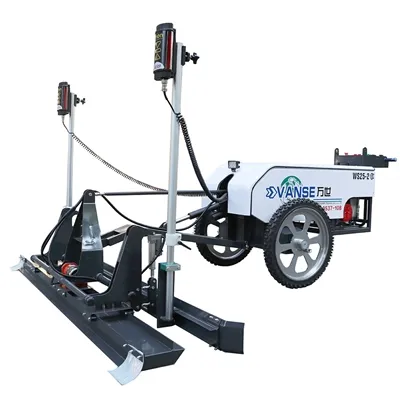
You can’t verify a high F-number if the machine didn't produce it in the first place. This is where the engineering of your Concrete Laser Leveling Machine comes into play.
Vanse Insight: To achieve FF numbers in the 50s or 60s (Superflat), the machine’s hydraulic response must be instantaneous. Vanse’s YZ series, uses high-speed laser receivers that talk to the leveling head 10 times per second. This constant, automatic correction is what eliminates the "waves" that tank your FF scores.
4. How to Conduct the Test
Most international contractors use an F-Meter or a Dipstick® Profiler.
Walk the Lines: You don't measure the whole floor randomly. You walk the device in straight lines across the slab.
Data Collection: The device records the elevation changes every 12 inches (30cm).
The Result: The software calculates a statistical average. If your goal was FF 50 and you hit FF 52, you’ve verified that your laser leveling machine and your crew executed the plan perfectly.
How Vanse Helps You Guarantee FF/FL Results
When a buyer asks, "Can your machine hit FM1 standards?" they are asking about reliability. Here’s how Vanse Machinery ( www.vansemac.com ) supports those high-spec requirements:
Integrated Vibration: A major enemy of FF numbers is uneven concrete density. Vanse machines feature high-frequency vibration integrated directly into the leveling head, ensuring the slab is consolidated uniformly before the final pass.
Telescopic Precision: For the highest FL accuracy, the Vanse YZ30-4E telescopic boom allows the machine to stay in one spot while the head extends. This removes the variable of machine weight shifting on the wet concrete, which is a common cause of "dips" in the F-number report.
Dual-System Control: By combining top-tier laser transmitters (Leica/Trimble) with Vanse’s proprietary hydraulic control, the margin for error is reduced to nearly zero.
Note: The parameters provided in this document are for reference only and are not mandatory. Due to differences in technical characteristics between different brands and models of laser levelers, please consult the manufacturer for a suitable solution before actual operation. This reference document assumes no responsibility for any issues arising from failure to follow the manufacturer's instructions.
Thanks to All the Friends Who Support and Trust Shandong Vanse Machinery Technology Co., Ltd.
If you want to know more about Shandong Vanse Machinery Technology Co., Ltd. or have any questions, please feel free to contact us:
Our Factory
Shandong Vanse Machinery Technology Co., Ltd.


About the Author: Shandong Vanse Machinery Technology Co., Ltd.

Shandong Vanse Machinery Technology Co., Ltd. is a high-tech manufacturer specializing in concrete construction machinery, including laser screeds and related equipment. The company integrates R&D, production, and global sales, with products exported to over 60 countries and widely used in infrastructure projects worldwide.

Shandong Vanse Machinery
Leading manufacturer specializing in high-performance concrete laser screeds, telescopic arm flatwork handlers, and mechanical ride-on power trowels.
Post overview
Main PRODUCT Categories
Need Machine Guidance?
Speak directly with Shandong Vanse field specialists for tailored equipment quotes and site planning.
Contact Us TodayRelated Articles
You Might Also Like
November 27, 2025
The entire process and key control points of the construction of the diamond sand wear-resistant floor
There are various methods for basement floor construction. Among them, the construction of diamond sand floor and diamond sand floor with curing agent is favored by many real estate projects due to its economic, wear-resistant, pressure-resistant, anti-pollution and easy-to-clean features. However, improper manufacturing processes can also lead to quality issues and potential risks. This article will respectively introduce the diamond sand wear-resistant floor from the perspective of technology and the prevention and control of common problems. 1. Diamond sand floor Compared with ordinary concrete floors, diamond sand floors have better wear resistance, compressive strength and impact resistance, and have a longer service life. However, from the perspective of microstructure, the surface of the diamond sand floor is relatively rough, and the capillary structure of concrete has a low resistance to the penetration, pollution and corrosion of substances such as acids, alkalis and oils. 2. Corundum + cured floor The construction of adding curing agent to the diamond sand floor. When the diamond sand floor is applied with a curing agent, it better makes up for the above deficiencies. Moreover, as the curing agent penetrates and forms a film, it enhances the integrity of the original surface, significantly improving its surface strength and wear resistance. After long-term use, it is obviously superior to the ordinary diamond sand floor in terms of cracking, powdering, and dusting, and is also easier to clean. It has extremely strong wear resistance, pressure resistance and impact resistance The diamond sand floor itself has excellent wear resistance. After adding a curing agent, the strength and hardness of the floor are further enhanced, and its wear resistance, pressure resistance and impact resistance are also significantly improved, and the durability of the floor is greatly enhanced. 2) Prevent sanding and dusting The main advantage of the diamond sand reinforced floor is its ability to prevent sanding and dusting. After the application of the curing agent, the surface hardness (indicated by the diameter of the indentation) and wear resistance (indicated by the length of the grinding pit) can be effectively enhanced. The surface becomes denser and has better integrity, which can effectively prevent sanding and dusting. 3) Waterproof, oil-proof and anti-corrosion The surface of a common diamond sand floor has pores that are hard to see with the naked eye. Water, oil and other corrosive liquids can seep into the interior of the floor through these holes and gaps. The most notable feature of the curing agent is its excellent sealing property, just like coating the floor with a film to prevent erosion. 1. The surface of the floor is firmly combined with the base layer, without any hollowing or sanding phenomena. 2. Surface layer quality: Uniform color, no obvious color difference, no scratches, no slag inclusions. The surface must not have cracks and hollowing is not allowed. 3. Gloss requirements: Achieve medium to high brightness, and the lamp should have a reflective effect when illuminated. 4. Joint: Uniform width, and the inside of the joint should be thoroughly cleaned. 5. The hardness of the floor should reach above 6.5 on the Mohs scale (tested by a hardness tester). 6. The trachoma rate shall not exceed 3 per square meter. 1. The strength of the concrete shall not be lower than C25. 2. The smallest possible water-cement ratio. A water-cement ratio that is too high can cause bleeding on the concrete surface and reduce the compressive strength of the concrete surface. Therefore, the water-cement ratio should be as small as possible, generally controlled below 0.5. 3. Commercial concrete should be used as much as possible. If on-site mixed concrete is used, its slump should be controlled at 1 to 3cm. The slump of commercial concrete is between 12 and 14cm. The diameter of the larger crushed stones shall not exceed 30mm. 4. When the concrete thickness is greater than 8cm, ordinary concrete should be used for pouring; when the concrete thickness is less than 8cm, fine aggregate concrete should be used for pouring. 5. Concrete should be leveled immediately after pouring, with a flatness of no more than 2mm within a 2-meter range. 6. Before the surface layer construction, the base concrete and vibration slurry should be sufficient (not less than 5mm). 7. The mud content of sand and gravel in concrete shall not exceed 2%. 8. After vibration grouting, the bleeding of the concrete should be uniform. If there are water pits, they must be removed and the surface leveled again; otherwise, the flatness of the diamond sand floor construction cannot be guaranteed. 1. Construction of diamond sand floor 1) The ground concrete is poured in sections and leveled immediately after pouring. When multiple locations are being poured simultaneously, pay attention to the construction sequence being carried out in one direction and consider the consistency of the mating surfaces. ② Concrete should be leveled with a long roller or a long straightedge after being pushed flat. Three to five hours after the concrete is poured, it should be observed that there is no bleeding on the surface and it has reached the initial setting state. 2) Use a mechanical trowel to tap the slurry in a round motion. For fine areas, use a wooden trowel to trim the edges. The main purpose is to smooth the concrete surface and reduce the floating slurry. Pay attention to troweling in the same direction as pouring. 3) Sprinkle the wear-resistant aggregate in two batches. In the first batch, evenly spread two-thirds of the wear-resistant material on the already troweled cement floor. 4) For the second time, evenly spread the remaining 1/3 of the wear-resistant material on the surface of the concrete, and use a mechanical trowel with a disc installed to work crisscross and cross at least twice. 5) Use a mechanical trowel (metal disc) to smooth it out multiple times back and forth. For the fine corners and edges, use a manual trowel in coordination with the construction. The time for the next process should be determined based on the temperature and humidity. 6) When the surface of the floor begins to harden, use a mechanical trowel with a metal blade to grind and smooth it, and repeat this operation 3 to 4 times. (Construction workers must wear soft flat shoes to avoid damaging the surface. The fine corners and edges should be polished by hand.) 7) Water curing should be carried out on the polished wear-resistant floor (mainly to prevent the evaporation of surface moisture and ensure the stable growth of the wear-resistant material's strength). The curing period is 7 days. 8) After the surface has cured for a certain period of time (5 to 6 hours after the completion of the wear-resistant material floor), use a mechanical trowel equipped with a metal blade for the final polishing and leveling. 9) Mold and compartment cutting (this can be done according to the actual situation on site and the owner's needs). Mold removal can be carried out the day after the completion of the diamond sand floor. During the operation, be careful not to damage the edge of the floor. The size of the compartments shall be determined by Party A on the third day after the completion of the diamond sand floor. 2. Application of penetrating liquid hardener (commonly known as curing agent) The original color of the diamond sand floor should be cured for more than 14 days, while the colored diamond sand floor usually needs to be cured for 28 days. Only after the color has matured can the penetrating liquid hardener be applied. The specific measures are as follows: Before construction, clean and remove debris, oil stains, paints, curing agents, etc. from the ground. If there are any pits or cracks, they should be repaired in advance with cement-based jointing mortar and maintained for 3 days. If no repair is needed, proceed with the construction directly. 2) Sprinkle water on the base layer until it is fully moistened. Do not sprinkle too much. 3) Use a 50-mesh resin grinding disc to grind the base layer, removing the floating slurry and stains on the base layer to make it free of roughness and gradually smooth. 4) After the 50-mesh grinding is completed, use a 150-mesh resin grinding disc for grinding. After grinding, use a high-power vacuum cleaner to suck up the mud and sewage on the surface of the base layer. 5) Sprinkle water on the surface of the base layer and grind it with a 300-mesh resin grinding disc (the ground should be ground evenly in a grid pattern, and the machine's pushing speed should be one step per second to grind off the remaining materials and fine scratches on the ground). After grinding, grind it with a 500-mesh grinding disc. Then, use a vacuum cleaner to suck up the wastewater and ventilate to dry the base layer. 6) After the base layer is dry, if the surface turns slightly white, apply the concrete sealant and hardener. Sprinkle the material evenly and spread it evenly with a mop. Keep the base layer surface moist for 30 minutes. If there is rapid penetration in some areas and it has dried, sprinkle the material again and use a mop to evenly moisten the base layer. 7) After 30 minutes, the surface of the concrete sealant and hardener begins to thicken. Water should be sprinkled on its surface and pushed back and forth with a long-bristled brush or floor scrubber to dilute the excess hardener and better penetrate into the base layer. After one hour, the excess material and water should be sucked dry with a vacuum cleaner to ensure that the base layer is dry for more than 12 hours. 8) After 12 hours, sprinkle water on the base surface of the completed construction material, and grind it with a 500-mesh resin grinding disc to remove the excess material. Then, grind it with a 1000-mesh grinding process. After grinding, use a vacuum cleaner to suck up the wastewater. 9) After 12 hours, the base layer has basically dried. Then, it is ground and polished with a 2000-mesh resin grinding disc to gradually give its surface a lustrous appearance. 10) For each mesh size, the grinding discs should be cross-ground 3 to 5 times in both the longitudinal and transverse directions. 11) Special treatment ① Corner and edge treatment: Large machinery can only be used for large-scale grinding. For corner and edge positions, a portable Angle grinder should be used for grinding and polishing, following the same method as for large-scale construction. When the base layer has poor strength and severe sanding, it is necessary to reinforce the base layer first, and then proceed with the normal construction process. First, use a 300-mesh resin grinding disc to remove the floating slurry on the surface of the base layer. Then, evenly sprinkle the concrete sealant and hardener to ensure it fully wets and penetrates into the base layer. After 12 hours, when the concrete sealant and hardener has cured and the strength of the base layer has improved, follow the normal process: 50-mesh grinding (water grinding) → 150-mesh grinding (water grinding) → 300-mesh grinding (water grinding) → construction materials → 12-hour drying and curing → 500-mesh grinding (water grinding) → 1000-mesh grinding (water grinding) → 2000-mesh grinding (dry grinding). The aesthetic effect of the floor cannot be achieved without meticulous control during the construction process. Besides strictly adhering to the corresponding techniques and methods, the prevention of common quality problems also requires attention. If the construction is not done properly, many problems will occur during later use. Now let's talk about the common quality problems of the diamond sand wear-resistant floor and how to prevent them. There are mainly three reasons for the color difference of corundum: 1) Material selection issues; 2) The materials were not spread in several portions, the amount of materials used was insufficient, and the thickness was uneven. 3) Maintenance issues: The use of covering with plastic film for maintenance led to uneven evaporation of ground moisture. The area where the film comes into contact with the floor is whitish, while the area where it does not touch the floor is normal in color. Preventive measures Choose a manufacturer with stable and reliable product quality and a good reputation. 2) The spreading of materials should be carried out strictly in accordance with the requirements of the briefing in several portions, with a usage of no less than 5kg/m². 3) Plastic film curing is strictly prohibited. During summer construction, water spraying curing can be adopted in several batches (with an interval of 2 to 3 hours). The allowable deviation of ground flatness is ≤2.5mm/2m in both longitudinal and transverse directions. The reasons for the deviation during construction are: 1) The template setup is out of tolerance; 2) The concrete part was not leveled in accordance with the standard. 3) The wear-resistant material is not evenly spread. Preventive measures 1) Strictly calibrate the elevation lines. Set up steel rods every 2 meters or so. The elevation of the steel rods should be the same as that on the longitudinal seam formwork. Check with a level. 2) The joints should be roughened and leveled in advance. When pouring new concrete, the levelness should be consistent with that of the already poured ground. Any low-lying areas should be replenished and filled in a timely manner. 3) Wear-resistant aggregates should be spread in two portions. The first dosage should be two-thirds of the total dosage. Ensure that the mixture falls evenly. Do not throw it forcefully to avoid the separation of aggregates and cement. After the wear-resistant material has absorbed a certain amount of moisture, it is ground and dispersed with a grinding machine and then combined with the base concrete slurry. For the second spreading, apply the remaining one-third in a direction perpendicular to that of the first spreading. When spreading, first use a straightedge or a straight scraper to measure the levelness, and adjust the uneven areas of the first spreading. After spreading, immediately smooth and polish it, and repeat the grinding machine operation at least twice. When the grinding machine is in operation, it should be carried out alternately in the longitudinal and transverse directions, evenly and orderly, to prevent material accumulation. The third time mainly involves repair treatment. For low-lying areas, materials are replenished and leveled. For corners and edges that cannot be covered by the grinding machine, manual flattening and smoothing are adopted. There are the following situations regarding ground cracks: If the initial setting time of concrete is not well controlled and the diamond sand wear-resistant aggregate is scattered when the moisture content of the concrete is relatively low, it is easy to cause cracks after the construction is completed. 2) Improper construction methods, insufficient thickness of the wear-resistant layer (corundum layer), rapid water loss (such as excessive construction environment atmosphere, etc.), resulting in volume shrinkage and linear shrinkage, causing cracks or hollowing. 3) Improper maintenance: After the completion of construction, the ground was not maintained within the prescribed time or was not adequately watered for maintenance. When the concrete temperature is relatively high, pouring cold water for curing can also cause cracks. Note: When using only the diamond sand floor, it is recommended to use a maintenance agent (oily and film-forming effect) to maintain the floor. If the corundum is reinforced (or epoxy), water curing can be directly adopted. 4) The contraction joint was cut late, and cracks appeared due to thermal expansion and contraction. Under normal circumstances, it is advisable to cut the expansion joints 24 to 48 hours after the completion of the construction of the corundum floor. If it is too late, as the hardness of the floor gradually increases, the floor is prone to "cracking" and developing cracks during the cutting process. 5) If the spacing of the division joints is too large, cracks may also occur. Preventive measures 1) Strictly control the time of the first sprinkling of materials; 2) The concrete layer and the wear-resistant layer (corundum) are constructed simultaneously. 3) The curing time shall be no less than 14 days; 4) Reasonably control the cutting time; The spacing of the division joints should generally not exceed 6m*6m. Cause of formation 1) The roughening and polishing processes are rough. 2) Inadequate maintenance and insufficient maintenance time; 3) The spreading time of wear-resistant aggregates is not well controlled. Preventive measures 1) Use a grinding machine to thoroughly smooth, compact and roughen the ground for no less than three times, and use a floor trowel to thoroughly smooth and level the ground for no less than three times. 2) The curing time shall be no less than 14 days; 3) Strictly control the spreading time of wear-resistant materials. The timing of spreading wear-resistant materials varies as needed, depending on factors such as climate, temperature, and concrete mix ratio. Spreading too early will cause the wear-resistant material to sink into the concrete and lose its effect. If it is spread too late, the concrete will gradually lose its adhesive force due to solidification, preventing the wear-resistant material from fully bonding with it. The most convenient way to determine the time for spreading wear-resistant materials is to let your feet sink about 5mm when stepping on the ground, and then you can start the first spreading work. The moisture at the edges of walls, columns, doors and formwork disappears more quickly. It is advisable to prioritize the application of water to prevent the effect from being reduced due to water loss. 1. Local damage: Clean the damaged area thoroughly, soak it in water to moisten it, then repair it with a putty made of styrene-butadiene latex mixed with water and a hardener material that has screened out the aggregates. Finally, apply the styrene-butadiene latex mixed with water emulsion. 2. Large-scale damage: According to actual needs, lines can be drawn and sawn on the damaged area, the surface layer and part of the base layer can be chiseled off, then the area can be cleaned and moistened, the plain cement slurry can be swept, concrete can be poured, and finally the surface layer of the diamond sand hardener can be applied. 3. Floor peeling: The surface of the wear-resistant diamond sand floor curls and peels. Remedial measures: Cut and chisel off the peeling area (chiseling it into a pitted surface), spray water on the pitted area to moisten it, then apply repair mortar of the same grade as the concrete and press it down to level the ground. Finally, apply a curing agent. 4. Remedial measures for cracks in diamond sand floor: 1) Cracks in areas with requirements for anti-seepage, impact resistance and wear resistance on the surface should undergo surface treatment. 2) For cracks that can affect the integrity, strength, impermeability and steel bar corrosion of the structure, grouting treatment should be carried out. 3) For cracks that endanger the safe operation of buildings, in addition to grouting treatment, other reinforcement measures should also be taken when necessary. 4) Cracks that are sensitive to temperature should be treated when the crack opening is relatively large in the later stage of the low-temperature season. 5) Flexible materials must be used to treat active cracks. Note: The parameters provided in this document are for reference only and are not mandatory. Due to differences in technical characteristics between different brands and models of laser levelers, please consult the manufacturer for a suitable solution before actual operation. This reference document assumes no responsibility for any issues arising from failure to follow the manufacturer's instructions.Read More
December 15, 2023
What are the common failures & solutions of concrete trowel machines?
Common faults and solutions of concrete trowel machine ●1. The engine cannot start Cause of issue: 1. The battery power is low; 2. The engine oil circuit is not smooth; 3. Starter failure; 4. The engine air filter is clogged. Solution: 1. Charge or replace the battery; 2. Check the oil line to ensure it is smooth; 3. Check the starter and replace it if necessary; 4. Clean the air filter. If you need to replace it, please contact professional technicians. ●2. Insufficient engine power Cause of issue: 1. Engine fuel system failure; 2. Improper engine valve clearance; 3. Engine air intake system failure. Solution: 1. Check the fuel system to ensure smooth fuel supply; 2. Adjust the valve clearance. If you need to replace the valve, please contact professional technicians; 3. Check the air intake system and clean or replace the air filter. ●3. The operation of the trowel machine is unstable Cause of issue: 1. The trowel blade is worn or loose; 2. The bearings of the trowel are worn or loose; 3. Improper operation of the trowel or poor road conditions. Solution: 1. Replace or tighten the blade; 2. Replace or tighten the bearings; 3. Adjust the operating method and select the appropriate operating speed and pressure according to the road conditions. ●4. The trowel machine makes a lot of noise when working Cause of issue: 1. The bearings of the trowel are damaged or loose; 2. The trowel blade is loose or worn; 3. There are foreign objects in the running parts of the trowel. Solution 1. Replace or tighten the bearing; 2. Fasten or replace the blade; 3. Check the running parts and clean up foreign objects. ●5. The smoothing effect of the trowel is not ideal Cause of issue: 1. The trowel blade is worn or improperly installed; 2. The smoothed concrete surface is uneven or blocked by hard objects; 3. Improper operation of the trowel or poor road conditions. Solution: 1. Replace or reinstall the blade; 2. Check the flatness of the concrete surface and clean up hard objects; 3. Adjust the operating method and select the appropriate operating speed and pressure according to the road conditions.Read More
February 3, 2026
Comparison of Concrete Floor Construction Equipment Standards in Different Countries
In the field of concrete floor construction, differences in equipment standards often stem from varying definitions of flatness, levelness, and construction environments across different countries. Currently, there are three main standard systems globally: the United States (ACI/ASTM), Europe (EN/TR34), and China (GB/JGJ). The following is a detailed comparative analysis of construction equipment and technical standards: The selection of construction equipment directly depends on how the country evaluates the quality of the flooring. Features American Standards (ACI/ASTM) European Standard (EN/TR34) Chinese Standards (GB/JGJ) Main Measurement System F-Number (FF/FL) FM/DM (TR34) Straightedge Method (2m/3m) Evaluation Dimensions Emphasizes flatness (FF) and levelness (FL) for random traffic areas. Distinguishes between free movement (FM) and defined movement (DM) Measuring surface flatness and perpendicularity deviations Trends in Mainstream Equipment Laser Leveling, digital measuring instrument High-precision laser leveling and grinding correction equipment Laser leveling machine, traditional Leveling, straightedge US Standards: ACI 302.1R strongly promotes large-area automated paving. Due to high labor costs and emphasis on the FF / FL index in the US, their equipment is typically equipped with high-frequency vibration and laser feedback systems to correct flatness in real time.European Standards: Especially in the UK and Germany, for very narrow aisle (VNA) warehouses, the equipment focuses more on lateral tilt control. The TR34 standard has very high requirements for "directional travel," so European floor finishing equipment often combines this with a "grinding and thinning" process. Chinese Standards: Early practices favored traditional construction methods, but with the popularization of standards such as the "Code for Construction and Quality Acceptance of Floor Engineering," large-area laser Leveling have become mainstream. However, the requirements for automated data analysis in equipment are slightly lower than in Europe and the US. United States (CPAA/ASCC): Emphasizes dry grinding and dust collection (OSHA silica dust standards). Equipment often features high power and multi-planetary grinding heads.Europe (CE Standards): Mandatory requirement for equipment to comply with CE safety certification, with a strong emphasis on low noise and low energy consumption during operation. China: Emphasizes efficiency and cost-effectiveness. Currently, domestically produced polishing machines have reached international standards in terms of weight and pressure adjustment, but there is still a gap compared to top European and American brands in terms of operational comfort (ergonomics) and intelligent control. This is the most significant "hard barrier" when using equipment across borders: USA: Commonly 110V/240V, 60Hz. Europe/China: 220V/380V, 50Hz. This means that the specifications for frequency converters and motors must be different. Europe (CE): Mandates emergency stop switches, protective guards, and strict electromagnetic compatibility (EMC) testing. USA (UL/OSHA): Places greater emphasis on fire risk prevention and operator dust protection. American System: The core principle is "data-driven." Equipment often requires the use of laser measuring instruments (such as Dipstick or FloorPro) to provide real-time FF values. European System: The core principle is "application-oriented." Floor surfaces are classified into FM (Free Movement) and DM (Defined Movement), and equipment requires more complex track or laser guidance systems during construction. Chinese System: The core principle is "acceptance-based." Although it is rapidly aligning with European and American standards, there is still greater diversity in the standardized interfaces of construction equipment (such as grinding head fixing methods). If you are planning to procure construction equipment internationally or need to develop construction plans based on specific national standards, I can assist you with: A detailed explanation of the calculation formula for the FF / FL value and equipment requirements; Providing construction process flowcharts for specific countries (such as German DIN or British TR34 standards). Which part would you like to learn more about? Contact us NOW Note: The parameters provided in this document are for reference only and are not mandatory. Due to differences in technical characteristics between different brands and models of laser levelers, please consult the manufacturer for a suitable solution before actual operation. This reference document assumes no responsibility for any issues arising from failure to follow the manufacturer's instructions.Read More