Technical Knowledge
How to ensure the construction safety of concrete laser leveling machine?


••◆•• Introduction ••◆••
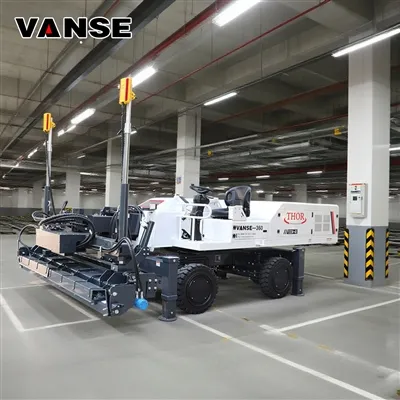
With the advancement of science and technology, concrete laser levelings are increasingly used in construction projects. In order to ensure the safety of the construction process, we must take a series of measures to ensure the normal operation and safe operation of the equipment.
••◆•• Equipment performance testing ••◆••
1. Before using the concrete laser leveling machine, a comprehensive performance test must be carried out, including mechanical components, electrical systems, laser systems, etc.
2. Regularly maintain and calibrate the equipment to ensure its accuracy and stability.
••◆•• Operator training ••◆••
1. Operators must undergo professional training and be familiar with the structure and operating principles of the equipment.
2. The training content includes but is not limited to basic operation of equipment, safe operating procedures, emergency response measures, etc.
••◆•• Safety operating regulations ••◆••
1. Develop and implement strict safety operating regulations to ensure that operators comply with regulations.
2. Operators must wear protective equipment such as safety helmets, protective glasses, and dust-proof mouthpieces.
••◆•• Construction Environmental Assessment ••◆••
1. Before construction, a detailed environmental assessment must be conducted on the construction site, including topography, climate, traffic and other factors.
2. Based on the assessment results, formulate corresponding safety measures to ensure the safety of the construction process.
••◆•• Formulation of emergency plans ••◆••
1. Develop contingency plans for possible emergencies, including equipment failure, casualties, etc.
2. Conduct regular emergency drills to improve the ability to respond to emergencies.
••◆•• On-site safety supervision ••◆••
1. Set up on-site safety supervision personnel to monitor the entire construction process.
2. When safety hazards are discovered, take immediate measures to make corrections to ensure construction safety.
••◆•• Regular maintenance ••◆••
1. Perform regular maintenance on the concrete laser leveling to ensure the normal operation of the equipment.
2. Maintenance includes cleaning, lubrication, tightening, etc. to ensure the performance and accuracy of the equipment.
••◆•• Post-construction quality inspection ••◆••
1. After the construction is completed, the construction quality must be comprehensively inspected to ensure that it meets the design requirements.
2. If quality problems are found, rectification should be made immediately to ensure the safety and stability of the project.
••◆•• Conclusion ••◆••
The construction safety of concrete laser leveling machine is an aspect that cannot be ignored in construction projects. Through the implementation of equipment performance testing, operator training, safe operating specifications, construction environment assessment, emergency plan formulation, on-site safety supervision, regular maintenance and post-construction quality inspection, we can effectively ensure the construction of concrete laser leveling machines. Safety provides a strong guarantee for the smooth progress of construction projects.
Thanks to All the Friends Who Support and Trust Shandong Vanse Machinery Technology Co., Ltd.
If you want to know more about Shandong Vanse Machinery Technology Co., Ltd. or have any questions, please feel free to contact us:
Our Factory
Shandong Vanse Machinery Technology Co., Ltd.








Share this article

About the Author: Shandong Vanse Machinery Technology Co., Ltd.
Shandong Vanse Machinery Technology Co., Ltd. is a high-tech manufacturer specializing in concrete construction machinery, including laser screeds and related equipment. The company integrates R&D, production, and global sales, with products exported to over 60 countries and widely used in infrastructure projects worldwide.
Previous Post
Next Post
Related Articles
You Might Also Like
What are the benefits of using a laser leveling machine for concrete construction?
Concrete laser levelings have become a core piece of equipment for achieving high quality standards in modern floor construction. Their advantages are multifaceted and revolutionary, far surpassing traditional manual construction methods. The following are the main advantages of concrete laser leveling machines in construction, divided into four aspects: efficiency, quality, cost and safety: Technical principle: The leveling machine receives the rotating laser signal generated by the laser transmitter, and the control system automatically adjusts the height of the scraper in real time to achieve precise control of the concrete elevation. Results: This completely eliminates the errors associated with manual rebar punching and leveling, easily achieving ultra-high precision of FF 50/FL 35 (American Concrete Institute standards) and even exceeding FF 100/FL 80. This is impossible to achieve manually, making it particularly suitable for logistics warehouses, large supermarkets, clean workshops, aircraft hangars, and other locations with extremely high floor requirements. Technical principle: The equipment's high-power vibrator produces uniform, high-frequency vibrations, making the concrete aggregate more evenly distributed and the thickness of the mortar floating layer consistent. Effect: Greatly reduces the pores and bubbles in the base layer, making the concrete denser and stronger, thereby significantly improving the wear resistance, compression resistance, and impact resistance of the ground and extending its service life. Technical principle: The construction efficiency of the laser leveling machine allows one-time continuous pouring of ultra-large areas (up to tens of thousands of square meters). Effect: Construction joints formed by multiple pourings are reduced, thus fundamentally avoiding potential cracking problems caused by joints. The entire floor becomes a complete plate with better structural performance. A laser leveling machine can achieve an average productivity of 150-300 square meters per hour, 10-15 times faster than traditional manual construction methods. This significantly shortens construction timelines and saves valuable project time. Traditional craftsmanship: A large number of workers are required to perform heavy physical labor such as supporting formwork, making mortar cakes, scraping bars and leveling. Laser leveling: It can be completed by only 1 equipment operator and 4-6 auxiliary workers responsible for paving concrete and operating the laser transmitter, saving more than 60% of labor, reducing dependence on skilled workers and management difficulty. A substantial reduction in the number of employees directly means a significant drop in labor costs, which is particularly advantageous today when labor costs are increasing. Because the floor is highly flat, has good integrity, and is less susceptible to dust and cracking, the frequency and cost of subsequent maintenance (such as repairs, polishing, and curing) are greatly reduced. This is a very important long-term value for the owner. Precise elevation control avoids concrete waste caused by over-thick pouring. In theory, it can achieve "zero error" pouring thickness and save materials. Workers are freed from heavy bending and squatting labor and can now focus on operating and maintaining machinery, greatly reducing labor intensity. The shortened construction period means that the exposure time of safety risks of the entire project site is reduced, which indirectly improves the overall safety of the project. Advantages Traditional manual construction Laser Leveling Installation Results: Flatness/Levelness Relies on experience, low precision (FF20-30) Fully automatic control, extremely high precision (FF50+) Meets high-standard requirements, such as automated warehouses. Construction Efficiency Slow, 50-100 m2/day/group Extremely fast, 1000-2000 square meters/day/machine Significantly shortens construction timelines and accelerates project progress. Number of Workers Requires a large number of skilled workers (10-15 people) Reduced staff requirements (5-7 people) Reduces labor costs and management complexity. Surface Integrity Prone to delamination, uneven strength High density, high strength, and excellent integrity Durable and wear-resistant, with a long service life. Maintenance Prone to dust and cracking, frequent maintenance Resistant to damage, extremely low maintenance costs Saves long-term costs for owners. Labor Intensity High-intensity physical labor Mechanically operated, low labor intensity Improves the work environment and makes recruitment easier. In short, the concrete laser leveling represents not only an upgrade to construction tools but also a revolution in construction technology. Through automated, digital, and precise control, it achieves breakthroughs in quality, efficiency, cost, and safety, making it an indispensable and critical piece of equipment for modern large-scale floor construction. Click the below to jump immediately!!!What is the difference between a concrete trowel and traditional hand troweling?
– Troweling machine: Mechanized operation, fast construction speed, can quickly complete large-area concrete surface troweling work. – Manual troweling: Depends on manual operation, slow speed, low efficiency, and takes a long time for large-area construction. – Troweling machine: Can provide a more uniform and smoother surface, reducing errors caused by human factors. – Manual troweling: The quality is greatly affected by the skills and experience of workers, and there may be differences in flatness and uniformity. – Troweling machine: Reduces manual labor, reduces labor intensity, and reduces the physical burden of workers. – Manual troweling: The labor intensity is high, and workers need to bend over for a long time, which is easy to cause fatigue and occupational diseases. – Troweling machine: The initial investment is high, but in the long run, due to high efficiency and high-quality construction, the overall cost can be reduced. – Manual troweling: The initial cost is low, but the labor cost is high, and inconsistent construction quality may lead to increased maintenance costs in the later stage. – Troweling machine: Reduces the risk of workers directly contacting wet concrete and improves construction safety. – Manual troweling: Workers need to work on slippery concrete surfaces, which may cause slips and injuries. – Troweling machine: Can work in a variety of environmental conditions, including bad weather, but may require additional maintenance and care. – Manual troweling: Affected by environmental conditions, such as high temperature, rain and snow, which will seriously affect the progress and quality of construction. – Troweling machine: Operators need to master certain mechanical operation skills and safety regulations. – Manual troweling: Relies on the workers' manual skills and experience, and has high technical requirements. – Troweling machine: Mechanized operations reduce dependence on human resources and are in line with the sustainable development trend of the modern construction industry. – Manual troweling: labor-intensive operation, with rising labor costs, less sustainable. In summary, concrete trowels have obvious advantages in efficiency, quality, safety and sustainability, while traditional manual troweling has certain advantages in flexibility and initial cost. With the development of technology and the rise in labor costs, mechanized construction has gradually become the mainstream.Emery floor cleaning Emery wear-resistant floor cleaning and maintenance
Emery floor cleaning and emery wear-resistant floor maintenance Emery flooring is widely used in industrial plants, warehouses, parking lots and other places because of its wear resistance, anti-skid, and easy cleaning. However, long-term use and improper maintenance may cause stains, wear and other problems on the floor, affecting the appearance and usability. Therefore, cleaning and maintenance during operation is very important. This article will introduce the cleaning and maintenance methods of emery floor. •◆• Emery floor cleaning 1. Remove surface debris: Use a broom or vacuum cleaner to remove dust, sand and other debris on the ground to ensure that the ground is clean and tidy. 2. Use neutral cleaners: Choose neutral or weakly alkaline cleaners and avoid using strong acid and alkali cleaners to avoid damage to the floor. 3. Wet cleaning method: After diluting the detergent, apply it evenly on the ground with a mop or floor washer, then rinse it with clean water and finally use a water absorber to absorb the water. 4. Dry cleaning method: For minor stains, you can use dry cleaning powder or sandpaper to gently wipe them, and then use a vacuum cleaner to absorb the stains and dust •◆• Emery wear-resistant floor maintenance 1. Regular cleaning: It is recommended to clean at least once a day to keep the floor clean and tidy. For special stains such as oil stains and chemicals, they should be cleaned in time to avoid remaining for a long time. 2. Avoid heavy pressure and scratching: Avoid heavy objects, sharp objects, etc. from direct contact with the ground to avoid scratching or damaging the ground. If heavy equipment needs to be moved, it is recommended to lay protective mats on the floor or use roller devices. 3. Regular maintenance: Regularly check the wear and tear of the floor. If necessary, perform partial repairs or overall renovation. At the same time, the floor can be polished regularly to restore its gloss and anti-slip properties. 4. Control humidity: Maintain appropriate indoor humidity and avoid the ground from being too wet or dry. Too much moisture may cause problems such as mildew and deformation of the ground; too much dryness may cause the ground to crack and fall off. To sum up, the cleaning and maintenance of emery floor need to be carried out regularly to maintain its beauty and usability. At the same time, care must be taken to avoid damage to the ground during use to extend its service life.