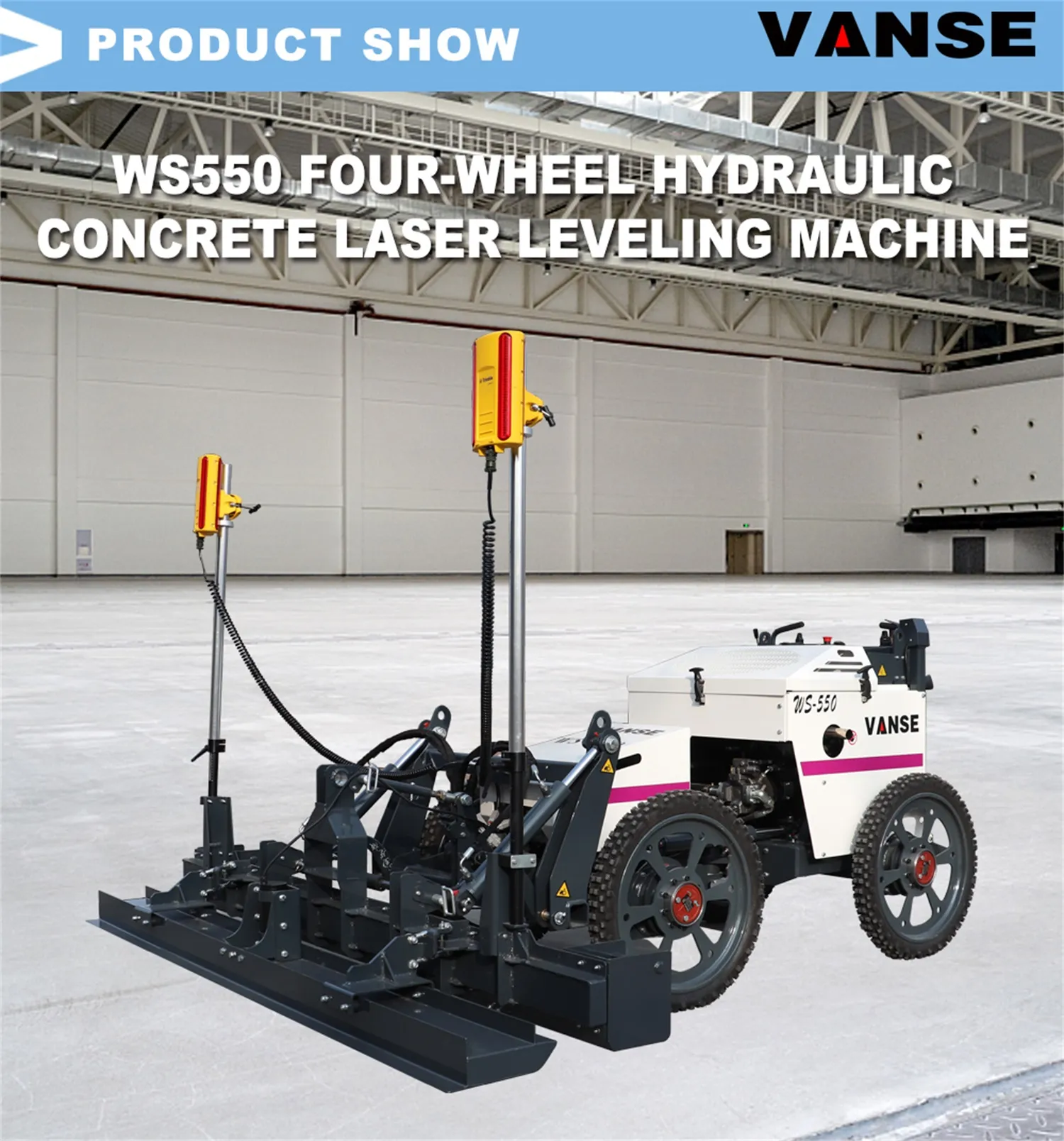
How to determine the maintenance cycle of concrete laser leveling machine?
July 2, 2024
How to determine the maintenance cycle of concrete laser leveling machine? 4How to determine the maintenance cycle of concrete laser leveling machine? 5How to determine the maintenance cycle of concrete laser leveling machine? 6
How to determine the maintenance cycle of concrete laser leveling machine?
As an important equipment in modern construction, the efficient and precise leveling performance of concrete laser leveling machine greatly improves the quality and efficiency of the project. However, the long-term stable operation of any equipment is inseparable from scientific and reasonable maintenance. Therefore, determining the maintenance cycle of concrete laser leveling machine is a vital task. This article will discuss in depth how to determine the maintenance cycle of concrete laser leveling machine from the aspects of equipment use frequency analysis, working environment investigation, manufacturer recommended cycle, component wear inspection, maintenance record, maintenance cost analysis, and safety and performance evaluation.
1. Equipment use frequency analysis
+
–
The use frequency of concrete laser leveling machine is one of the important factors affecting its maintenance cycle. The higher the frequency of equipment use, the faster the wear and aging of its internal mechanical parts, so more frequent maintenance is required. For equipment with high frequency use, the maintenance cycle should be shortened to ensure that the equipment is always in good working condition. On the contrary, for equipment with low frequency of use, the maintenance cycle can be appropriately extended Avoid unnecessary waste of resources. When conducting a frequency analysis, we need to carefully record each use of the equipment, including information such as usage time, workload, and working environment. Through the statistics and analysis of these data, we can derive the average frequency and characteristics of the equipment, which provides an important basis for determining the maintenance cycle.
2. Working environment inspection
+
–
The working environment of the temperature-soluble soil laser leveling machine also has an important impact on its maintenance cycle. The equipment works in a harsh environment, such as dust, high temperature, etc., which will accelerate the corrosion and wear of its components. Therefore, when determining the maintenance cycle, the impact of the working environment must be fully considered. We should conduct on-site inspections of the working environment of the equipment to understand factors such as humidity, temperature, and dust concentration in the environment. At the same time, it is also necessary to pay attention to whether the equipment is often exposed to corrosive substances or subjected to strong mechanical shock during work. Based on this information, we can make appropriate adjustments to the maintenance cycle of the equipment to adapt to different working environments.
3. Manufacturer recommended cycle
+
–
Equipment manufacturers usually give recommended maintenance cycles based on the design and manufacturing process of the equipment. These recommended cycles are usually based on the normal service life and expected wear of the equipment, and have certain reference value. When determining the maintenance cycle of the concrete laser leveling machine, we should refer to the recommended cycle provided by the manufacturer and make comprehensive considerations based on the actual use of the equipment and the working environment. If the equipment does not have any abnormal situation during use and the working environment is good, then maintenance can be carried out according to the cycle recommended by the manufacturer. However, if the equipment fails frequently or the working environment is bad, the maintenance cycle may need to be shortened.
4. Component wear inspection
+
–
The various components of the concrete laser leveling machine will wear during use, and the different degrees of wear will directly affect the performance and life of the equipment. Therefore, regular wear inspection of the components of the equipment is an important basis for determining the maintenance cycle. When inspecting component wear, we should focus on the vulnerable parts and key components of the equipment, such as blades, bearings, seals, etc. By checking the wear of these components, we can understand the overall operating status of the equipment and then determine whether maintenance is needed. At the same time, according to the wear law of the components, the future wear trend can be predicted to provide a basis for formulating maintenance plans.
5. Maintenance records
+
–
Maintenance records are important data reflecting the maintenance of equipment. By analyzing the maintenance records, we can understand the historical maintenance of the equipment and the operating status after each maintenance. This information is of great significance for determining the maintenance cycle. We should establish a complete maintenance record system to record the time, content, personnel and other information of each maintenance in detail. At the same time, we should also track and record the operation of the equipment after maintenance. Through the statistics and analysis of these records, we can find potential problems in the operation of the equipment, so as to carry out preventive maintenance in advance.
6. Maintenance cost analysis
+
–
Maintenance cost is one of the important factors to be considered when determining the maintenance cycle of wet concrete laser leveling machine. Too frequent maintenance will increase maintenance costs, while too long maintenance cycle may lead to more equipment failures and increase the cost of overhaul or replacement of parts. Therefore, we need to conduct a comprehensive analysis of the maintenance cost of the equipment. This includes counting the cost of each maintenance and repair, and analyzing the relationship between the cost and the maintenance cycle. By finding the best balance point, we can reduce maintenance costs while ensuring the normal operation of the equipment. When conducting maintenance cost analysis, it is also necessary to consider the purchase cost and expected service life of the equipment. If the purchase cost of the equipment is high and the expected service life is long, then when determining the maintenance cycle, more attention should be paid to the long-term stable operation of the equipment and the reduction of long-term costs.
7. Safety and performance evaluation
+
–
Safety and performance are key indicators for the operation of concrete laser leveling machines, and are also important bases for determining maintenance cycles. The safety of equipment includes the safety of operators and the safety of the equipment itself, while performance is directly related to construction quality and efficiency. Therefore, we need to regularly evaluate the safety and performance of the equipment. This includes checking whether the safety protection devices of the equipment are intact, whether the operation is convenient, and whether the operation is smooth. At the same time, it is also necessary to test and evaluate the performance indicators of the equipment, such as leveling accuracy and work efficiency. Based on the evaluation results of safety and performance, we can adjust the maintenance cycle. If the safety and performance of the equipment decline or fluctuate, the maintenance cycle should be shortened, and the problem should be checked and solved in time. On the contrary, if the safety and performance of the equipment are stable and good, the maintenance cycle can be appropriately extended. In summary, determining the maintenance cycle of the concrete laser leveling machine requires comprehensive consideration of equipment use frequency, working environment, manufacturer recommended cycle, component wear inspection, maintenance records, maintenance costs, safety and performance evaluation, and other aspects. Only by comprehensively considering these factors can we formulate a scientific and reasonable maintenance plan to ensure the long-term stable operation and efficient construction of the equipment.
8. Specific implementation of safety and performance evaluation
+
–
When implementing safety and performance evaluation, it is necessary to first provide professional training to operators to ensure that they are familiar with the various safety operating procedures of the equipment and can correctly identify and deal with potential safety hazards. At the same time, the equipment manager or maintenance engineer also needs to conduct regular equipment inspections, focusing on whether the safety protection devices and warning signs of the equipment are complete and clear to ensure the safety of the operators. In terms of performance evaluation, professional testing equipment and methods can be used to quantitatively evaluate the various performance indicators of the concrete laser leveling machine. For example, by measuring the leveling accuracy and efficiency of the equipment, the performance status of the equipment can be intuitively understood. At the same time, the performance of the equipment can also be comprehensively evaluated in combination with the actual needs of the construction to determine whether it is necessary to adjust the maintenance cycle or take other improvement measures. In addition, with the continuous advancement of technology and the upgrading of equipment, we also need to pay attention to the safety performance and performance characteristics of the new concrete laser leveling machine. By comparing and analyzing the differences between new equipment and existing equipment, we can provide a reference for formulating a more scientific and reasonable maintenance cycle.
9. Dynamic adjustment of maintenance cycle
+
–
It should be noted that the maintenance cycle of the concrete laser leveling machine is not static. With the increase of equipment use time, changes in working environment and technological progress, the maintenance cycle may need to be adjusted dynamically. Therefore, we should establish a dynamic maintenance cycle adjustment mechanism. This includes regular evaluation and analysis of the equipment's operating conditions, component wear, maintenance costs, etc., and timely adjustment of the maintenance cycle based on the evaluation results. At the same time, it is also necessary to pay attention to changes in industry standards and best practices, and promptly apply new experiences and practices to the maintenance of equipment.
10. Conclusion
+
–
In summary, determining the maintenance cycle of concrete laser leveling machines is a complex and meticulous process that requires comprehensive consideration of multiple factors. Through scientific analysis, reasonable evaluation and dynamic adjustment, we can formulate a maintenance plan that meets the actual needs of the equipment, ensure the safe and stable operation of the equipment and efficient construction, and at the same time, this will also help reduce the maintenance cost of the equipment, extend its service life, and provide strong guarantees for the sustainable development of the enterprise.
In future work, we should continue to deepen the research and practice of the maintenance cycle of warm concrete laser leveling machines, constantly explore new methods and means, improve the maintenance level and management efficiency of equipment, and at the same time strengthen exchanges and cooperation within the industry, share experience and resources, and jointly promote the progress and development of maintenance technology for concrete laser leveling machines.
About the Author: Shandong Vanse Machinery Technology Co., Ltd.
Shandong Vanse Machinery Technology Co., Ltd. is a high-tech manufacturer specializing in concrete construction machinery, including laser screeds and related equipment. The company integrates R&D, production, and global sales, with products exported to over 60 countries and widely used in infrastructure projects worldwide.
How to ensure the smooth progress of the laser leveling machine leveling work
When you use a laser leveler for floor construction, you will definitely hope that the leveler can run smoothly, because only in this way can the completion of the floor construction be guaranteed, but it is easier said than done, and many people are controlling The laser leveling machine often fails to master the skills, which will lead to some errors in the construction of the floor and affect the construction effect. So how can we ensure the smooth operation of the laser leveling machine? The little knowledge about the smooth operation of the laser leveling machine will be shared here first, and we will continue to update it for you in the future. We hope that the shared content can help you better solve the problem. If you still want to know more exciting information about levelings, please feel free to visit our official website for inquiries.
Read More
May 28, 2024
Concrete Laser Leveling Machine Construction Operation Steps
Concrete laser leveling machine construction operation steps The concrete laser leveling is an indispensable and efficient tool in modern building construction. Its precise operation ability can significantly improve the flatness of the ground and lay a solid foundation for the quality and aesthetics of subsequent projects. This article will introduce the concrete laser leveling machine in detail from seven aspects: preliminary preparation and inspection, equipment installation and debugging, laser system calibration, concrete pouring and initial leveling, laser leveling machine operation, construction quality inspection, and equipment cleaning and maintenance. Construction operation steps. 1. Preliminary preparation and inspection Adequate preparation is crucial before proceeding with concrete laser leveling construction. First, conduct a comprehensive inspection and planning of the construction site to ensure that the site is flat, the size of the space meets the construction requirements, and there is no interference from debris. Clean the site to ensure the construction surface is clean and tidy, and provide a good working environment for subsequent concrete laying and leveling work. At the same time, necessary protection is provided to the construction site to prevent the external environment from affecting the construction quality. In addition, the concrete materials required for construction are inspected to ensure that the quality and quantity of the materials meet the design requirements. If problems are found, the supplier should be contacted in time for replacement or supplementation to ensure the smooth progress of the construction. 2. Equipment installation and debugging Equipment installation and debugging are key steps to ensure the normal operation of the laser leveler. First of all, install the concrete laser leveling reasonably according to the actual conditions of the construction site. During the installation process, attention should be paid to the stability and safety of the equipment to prevent the equipment from shifting or toppling during work. After the installation is complete, debug the equipment. During the debugging process, it is necessary to check whether the various functions of the equipment are normal, such as laser sensors, control systems, etc. At the same time, the flatness, cutting depth and other parameters of the leveling system are debugged to ensure that the equipment can achieve the preset construction goals and requirements. 3. Laser system calibration Laser system calibration is a key link in the construction of concrete laser leveling machines. First, install and debug the laser system to ensure the laser horizontal line is accurate. Then, set target values for concrete height and flatness according to project needs. The calibration accuracy of the laser system directly affects the leveling effect, so the operating procedures must be strictly followed during the calibration process to ensure the accuracy and stability of the laser system. During the laser system calibration process, you also need to pay attention to the safe use of the laser transmitter. Avoid direct exposure of personnel to the laser beam to prevent eye injury. At the same time, regularly check the performance of the laser transmitter to ensure that it is working properly. 4. Concrete pouring and initial leveling Concrete pouring and initial leveling are the basic steps in the construction of concrete laser leveling. First, concrete is poured according to the design and requirements. During the pouring process, the quality and uniformity of the concrete must be ensured to avoid problems such as cracking and deformation. After pouring is completed, use a vibrator or other tools to vibrate the concrete surface to ensure that the surface is smooth and free of bubbles. Then proceed with the initial leveling of the concrete. Preliminary leveling mainly uses manual or mechanical means to initially level the concrete surface to eliminate large height differences and uneven parts. The quality of the initial leveling directly affects the subsequent laser leveling effect, so it needs to be taken seriously to ensure that the concrete surface after the initial leveling is smooth and has no obvious unevenness. 5. Laser leveling machine operation Laser leveling machine operation is the core link in the entire construction process. Before operation, the equipment needs to be checked again to ensure that all instruments and equipment are operating normally. Start the laser leveling machine and operate the leveling machine to perform leveling operations according to the guidance of the laser system. During the operation, parameters such as the flatness and cutting depth of the laser leveler need to be adjusted according to actual needs to obtain the best leveling effect. At the same time, operators need to maintain a high degree of attention and concentration, and pay close attention to the instructions of the laser system and the changes in flatness of the concrete surface. Once differences in height or uneven parts are found, machine parameters or operating methods need to be adjusted in time to ensure the leveling quality. In addition, you need to pay attention to safe operations during the operation. Operators should wear protective equipment and abide by safety procedures to prevent accidents. 6. Construction quality inspection After completing the laser leveling machine operation, the leveled concrete surface needs to be inspected. The inspection content mainly includes flatness, elevation and smoothness. First, use measuring tools to measure the flatness of the concrete surface to ensure that it meets the design requirements. Secondly, check whether the elevation meets the predetermined standards to avoid unevenness. Finally, observe the smoothness of the concrete surface to ensure there are no obvious roughness or scratches. If problems are found during the inspection, they need to be dealt with promptly. For parts where the flatness does not meet the requirements, handheld leveling tools can be used to repair and adjust; for parts where the elevation does not meet the standards, the laser leveling operation needs to be performed again; for rough or scratched surfaces, grinding or grinding can be used Processed by polishing and other methods. 7. Equipment cleaning and maintenance After the construction is completed, cleaning and maintaining the concrete laser leveling is an important part of ensuring the long-term stable operation of the equipment. First, turn off the power to the device and make sure it comes to a complete stop. Then, use cleaning tools to clean the equipment and remove dust, dirt and other debris on the surface. The internal components of the equipment need to be inspected and maintained regularly to ensure their normal operation. In addition, laser systems need to be inspected and maintained. Clean the laser transmitter and receiver regularly to ensure stable and accurate performance. If any problems or faults are found, they should be dealt with promptly or contact professionals for repair. In short, the construction operation steps of the concrete laser levelinging machine involve multiple links, and each link needs to be taken seriously and operated carefully. Through standardized operations such as preliminary preparation and inspection, equipment installation and debugging, laser system calibration, concrete pouring and initial leveling, laser leveling machine operation, construction quality inspection, and equipment cleaning and maintenance, we can ensure the safety of concrete laser leveling machine construction. Quality and efficiency provide a solid foundation for construction projects. In terms of equipment cleaning and maintenance, in addition to daily cleaning work, the laser leveling machine should also be comprehensively inspected and maintained regularly. This includes checking the tightening of each component of the equipment to ensure there are no loose or damaged parts; checking and replenishing the lubrication system of the equipment to ensure normal operation of the equipment; checking the electrical system of the equipment to prevent the occurrence of electrical faults. . In addition, with the continuous advancement of technology, concrete laser leveling machines are also constantly being updated. New equipment and technology may lead to higher construction efficiency and better construction quality. Therefore, operators should continue to learn and master new technologies to adapt to the development needs of the industry. In terms of construction quality, in addition to relying on the precise operating capabilities of the laser leveler, we should also pay attention to quality control during the construction process. This includes quality control of construction materials, monitoring of the construction process, and acceptance of construction results. Only by comprehensively controlling construction quality can the long-term effectiveness of the project be ensured. In addition, the construction operation of concrete laser levelinging machine should also pay attention to environmental protection and energy saving. During the construction process, environmental damage and pollution should be minimized, stolen sources should be rationally utilized, and energy consumption should be reduced. This is not only a manifestation of corporate social responsibility, but also a requirement for sustainable development. In summary, the standardization and refinement of concrete laser leveling construction operation steps are the key to ensuring construction quality and efficiency. Through strict control of preliminary preparation and inspection, equipment installation and debugging, laser system calibration, concrete pouring and initial leveling, laser leveling machine operation, construction quality inspection, and equipment cleaning and maintenance, we can ensure that the warm soil laser leveling machine Play the greatest role in the construction project and provide a strong guarantee for the smooth progress of the construction project. In future construction projects, with the continuous advancement and application of technology, concrete laser levelings will become more intelligent, automated and efficient. We expect it to play a greater role in future construction and contribute more to the quality and efficiency of construction projects. Finally, it needs to be emphasized that the installation and maintenance of a concrete laser leveling requires professional knowledge and skills. Therefore, operators should receive professional training. Be familiar with the performance and use of equipment, and operate in strict accordance with the lifting procedures. At the same time, enterprises should also strengthen the maintenance and management of equipment to ensure the normal operation and long-term use of equipment. To sum up, the construction operation of concrete laser leveling machine is a complex and delicate process, which requires the operator to have professional knowledge and rigorous working attitude. Through standardized machine operation and meticulous management, it can be ensured that the concrete laser leveling machine plays its greatest role in construction projects, providing a strong guarantee for the quality and efficiency of construction projects. In the future development, with the continuous emergence of new technologies and new materials, concrete laser leveling machines will also face more challenges and opportunities. We should continue to strengthen technology research and development and innovation, promote the application and development of concrete laser leveling machines in construction projects, and make greater contributions to the progress of the construction industry. At the end of this article, we once again emphasize the importance of concrete laser leveling construction operations and look forward to its playing a more important role in the future construction industry. Let us look forward to more innovations and breakthroughs in this field together, injecting new vitality and impetus into the development of construction engineering.
Read More
October 11, 2023
How to choose a concrete laser leveling machine?
There are many aspects to consider when purchasing a concrete laser leveling. Here are some suggestions: 1. Determine needs and budget: Before choosing a concrete laser leveling, you need to clarify your needs and budget. First, consider the area that needs to be leveled, the hardness of the ground, the flatness that needs to be achieved, etc., and then choose the appropriate model based on your budget. 2. Understand the performance parameters of the machine: When purchasing a concrete laser leveling machine, you need to understand the performance parameters of the machine, including the performance indicators of the laser transmitter, receiver, controller, leveling head and other components. Among them, the power, spot size, spot shape, etc. of the laser transmitter will affect the leveling effect, and the sensitivity of the receiver will also affect the measurement accuracy. 3. Consider the reliability of the machine: Concrete laser levelinging machines require long-term, high-intensity work, so products with high reliability are needed. When purchasing, you need to pay attention to choosing products with high brand awareness and good reputation. At the same time, you should also pay attention to factors such as the material, structure, and service life of the machine. 4. Number and configuration of leveling heads: The number and configuration of leveling heads of the concrete laser leveling machine are also factors that need to be considered. Generally speaking, the greater the number of leveling heads, the faster the leveling speed, but it is also necessary to consider whether the leveling head configuration is suitable for actual needs. 5. Convenience of operation: When purchasing a concrete laser leveling, you need to consider whether it is easy to operate. Generally speaking, the simpler the operation and easier to use the machine, the better it is to use and can save a lot of time and cost. 6. Maintenance convenience: The maintenance of the concrete laser leveling machine is also a factor that needs to be considered. When purchasing, you need to pay attention to the convenience and cost of maintenance. 7. Manufacturer and service: Manufacturer and after-sales service are also factors that need to be considered. When choosing a manufacturer, you need to choose a company with technical strength, production scale and good after-sales service. In short, when purchasing a concrete laser leveling, you need to consider many factors, such as demand and budget, machine performance parameters, reliability, number and configuration of leveling heads, ease of operation, ease of maintenance, manufacturer and service, etc. Only by comprehensive consideration can you choose a concrete laser leveling that is cost-effective and meets actual needs.
Read More
Online now. Replies personally on WhatsAppFionaCustomer specialist
Hi! I am here to help you find the right solution for your project.
You can share your product, capacity, or project needs. Our specialist will help you work out the next step.
Would you like a quick answer? Tap below to speak directly with our specialist on WhatsApp.