Technical Knowledge
How serviceable is a concrete laser leveling machine?
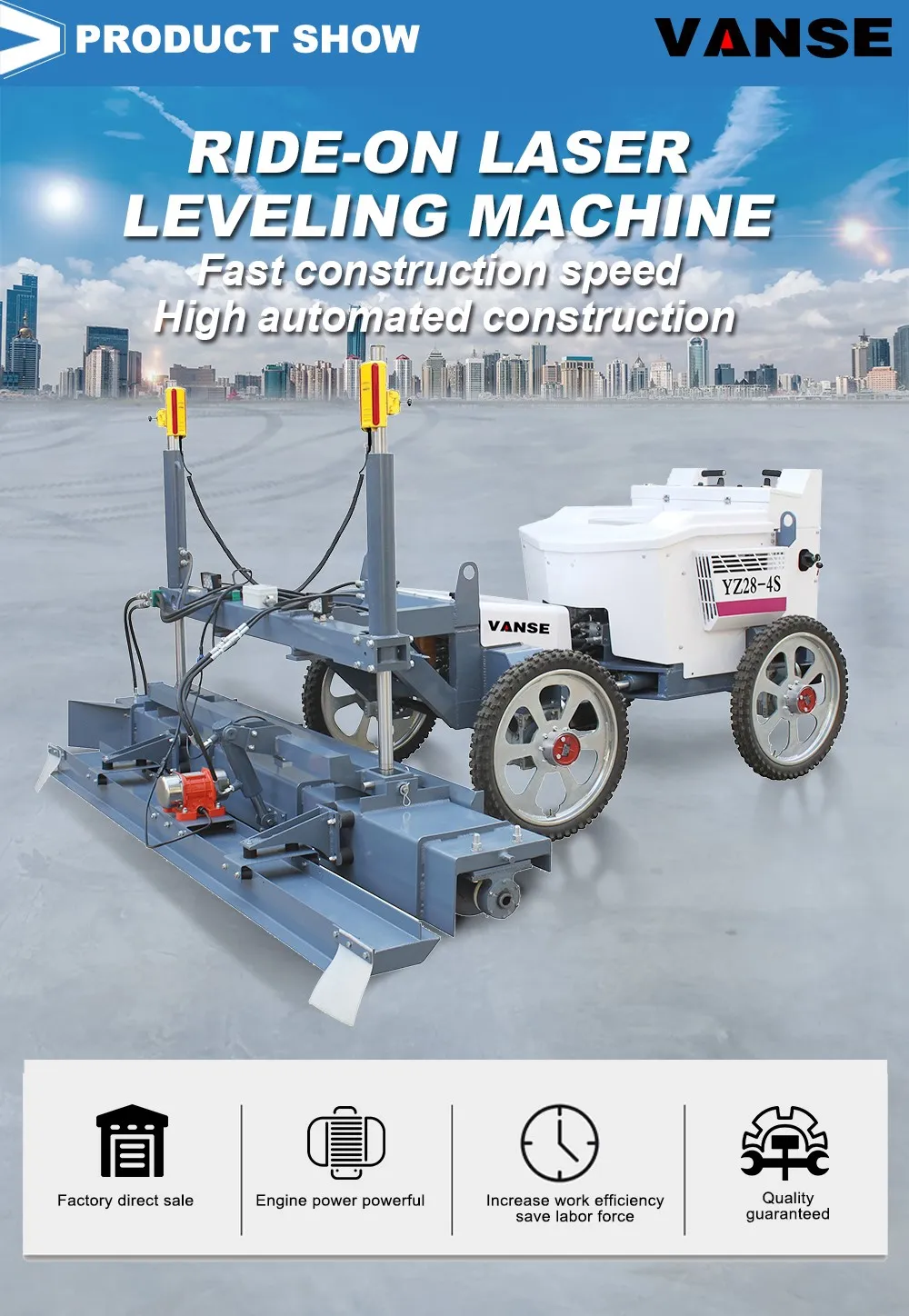
The maintainability of the concrete laser leveling is one of its important characteristics, which directly affects the reliability and service life of the equipment. Here’s a 2,000-word analysis of the serviceability of concrete laser levelings:
1. The importance of maintainability
Maintainability refers to the ability of equipment to be easily repaired and parts replaced to restore its normal working condition after failure or damage. For concrete laser levelings, the importance of maintainability is reflected in the following aspects:
Equipment reliability and longevity
The maintainability of the concrete laser leveling directly affects the reliability and service life of the equipment. If equipment is difficult to repair or parts can be replaced after a failure, the reliability of the equipment will be severely affected and its service life will be shortened.
Production efficiency and cost control
If the repairability of the concrete laser leveling is not good, it will take more time and cost to repair and replace parts after the equipment fails. This will affect production efficiency and increase the company's operating costs.
Safety
If the serviceability of the concrete laser leveling is not good, there may be safety risks involved during the repair process. For example, if parts need to be replaced manually, the operator may be exposed to hazards such as high temperatures or high pressures.
2. Factors affecting maintainability
Equipment design and construction
The design and structure of a concrete laser leveling are important factors affecting its maintainability. If the design and structure of the equipment are not reasonable, you may encounter difficulties during the repair process or even be unable to repair it.
Replacement of parts
The replaceability of concrete laser leveling machine parts is also an important factor affecting its maintainability. If parts are difficult to purchase or replace, it will take more time and cost to repair the equipment after it fails.
Operator skills and experience
The operator's skills and experience are also important factors affecting the maintainability of the concrete laser leveling. If the operator does not receive adequate training or experience, effective repairs may not be possible after equipment failure.
3. Measures to improve maintainability
Optimize equipment design and structure
In order to improve the maintainability of the concrete laser leveling, its design and structure should be optimized. For example, the convenience of maintenance should be taken into consideration during the design process, and modular and standardized designs should be adopted as much as possible to reduce difficulties that may be encountered during the maintenance process.
Improve part replaceability
In order to improve the maintainability of the concrete laser leveling, the replaceability of components should be improved. For example, choose components that are easy to purchase and replace and avoid parts or materials that are too specialized. In addition, a complete spare parts inventory system should be established to ensure that parts can be replaced in time when equipment fails.
Improve operator skills and experience
In order to improve the maintainability of concrete laser leveling machines, the operator's skills and experience should be improved. Operators should receive adequate training and skills improvement programs to understand the performance and use of equipment, as well as how to perform effective repairs when equipment malfunctions. In addition, operators should be regularly organized to conduct experience exchanges and technical seminars to improve the technical level of operators.
Develop maintenance plans and record maintenance logs
In order to improve the maintainability of the concrete laser leveling, a reasonable maintenance plan should be developed and a maintenance log should be recorded. By formulating a reasonable maintenance plan, potential fault problems can be discovered and solved in time to avoid the expansion of faults. At the same time, recording maintenance logs can help operators understand the maintenance history and fault conditions of the equipment, and provide reference for subsequent maintenance and upkeep.
4. Summary
The maintainability of the concrete laser leveling is one of its important characteristics, which directly affects the reliability and service life of the equipment. In order to improve the maintainability of equipment, a series of measures should be taken, including optimizing equipment design and structure, improving the replaceability of components, improving operator skills and experience, formulating maintenance plans and recording maintenance logs, etc. These measures can help companies improve production efficiency and cost control capabilities while ensuring the safety and reliability of equipment.
Thanks to All the Friends Who Support and Trust Shandong Vanse Machinery Technology Co., Ltd.
If you want to know more about Shandong Vanse Machinery Technology Co., Ltd. or have any questions, please feel free to contact us:
Our Factory
Shandong Vanse Machinery Technology Co., Ltd.








Share this article

About the Author: Shandong Vanse Machinery Technology Co., Ltd.
Shandong Vanse Machinery Technology Co., Ltd. is a high-tech manufacturer specializing in concrete construction machinery, including laser screeds and related equipment. The company integrates R&D, production, and global sales, with products exported to over 60 countries and widely used in infrastructure projects worldwide.
Previous Post
Next Post
Related Articles
You Might Also Like
How to evaluate the construction effect of concrete laser leveling machine?
•••◁●▷••• Introduction As an important innovation in modern building construction technology, the concrete laser leveling machine's construction effect has a significant impact on project quality and efficiency. This article will discuss how to evaluate the construction effect of concrete laser leveling machines from many aspects, including improved flatness, improved work efficiency, enhanced quality stability, reduced material waste, reduced labor costs, easy operation, strong adaptability and long-term Obvious benefits, etc. •••◁●▷••• Improved flatness 1. The concrete laser leveling machine uses laser technology to perform precise leveling. Compared with traditional construction methods, its flatness is greatly improved, ensuring that the ground is smooth and beautiful. 2. The improvement of flatness not only enhances the use function of the floor but also helps the smooth progress of subsequent decoration projects. •••◁●▷••• Improvement of work efficiency 1. The concrete laser leveling machine has a high degree of automation and fast construction speed, which greatly improves work efficiency. 2. Compared with traditional construction methods, the use of concrete laser leveling machines can shorten the construction period and speed up the project progress. •••◁●▷••• Enhanced quality stability 1. The concrete laser leveling can achieve precise control during the construction process, reducing the impact of human factors on construction quality. 2. The use of concrete laser leveling machine can ensure the stability and uniformity of construction quality and improve the quality level of the project. •••◁●▷••• Reduced material waste 1. The concrete laser leveling machine can accurately control the amount of concrete used during the construction process, effectively reducing material waste. 2. Reducing material waste not only helps save costs, but is also beneficial to environmental protection and sustainable development. •••◁●▷••• Reduced labor costs 1. The concrete laser leveling machine has a high degree of automation, which reduces the dependence on skilled workers and reduces labor costs. 2. Using a concrete laser leveler can also reduce the number of personnel during the construction process and reduce labor costs. •••◁●▷••• High ease of operation 1. The operating system of the concrete laser leveling machine is simple and easy to understand, and you can start operating it after a brief training. 2. The simplicity of operation enables construction workers to quickly master the use of the equipment and improve construction efficiency. •••◁●▷••• Strong adaptability 1. Concrete laser leveling machine is suitable for different types of concrete floor construction, such as parking lots, warehouses, factories, etc. 2. The highly adaptable characteristics of the concrete laser leveling enable it to achieve efficient and high-quality construction in various complex environments. •••◁●▷••• Obvious long-term benefits 1. The use of concrete laser leveling machine can improve the quality of the project, extend the service life of the project and reduce maintenance costs. 2. Long-term use of concrete laser leveling machines can improve the competitiveness of enterprises and establish a good image of the enterprise. •••◁●▷••• Conclusion In summary, the construction effect of the concrete laser leveling machine is significant in improving flatness, improving work efficiency, enhancing quality stability, reducing material waste, reducing labor costs, improving ease of operation, enhancing adaptability, and achieving long-term benefits. It has obvious advantages in all aspects. With the advancement of science and technology and the development of the construction industry, concrete laser levelings will play a more important role in the future and make greater contributions to the sustainable development of the construction industry.How to ensure the construction quality of laser leveling machine during construction?
Designed for small commercial, upper deck, and residential projects—-the WALK-BEHIND concrete laser leveling provides you and your customers with high quality, professionally produced floors at a fraction of the cost of conventional methods. DZ30-2 CONSTRUCTION SITE DZ30-2 CONSTRUCTION SITE DZ30-2 CONSTRUCTION SITE DZ30-2 CONSTRUCTION SITE The methods for laser leveling machines to ensure construction quality during construction include: 1. **Precise laser control system**: – Use high-precision laser transmitters and receivers to ensure flatness and elevation control during construction. 2. **Automated operation**: – Use the automated control system of the laser leveling machine to adjust the height and angle of the leveling head in real time to adapt to different construction conditions. 3. **High-quality construction materials**: – Select appropriate concrete mix ratios and aggregates to ensure the fluidity and plasticity of concrete and reduce cracks and unevenness. 4. **Professionally trained operators**: – Ensure that operators receive professional training, are familiar with the operation and maintenance of the equipment, and understand the key points of quality control during construction. 5. **Real-time monitoring and adjustment**: – Use monitoring equipment to monitor the laying of concrete in real time during construction, and adjust the working parameters of the laser leveling machine in time. 6. **Strict construction plan and process**: – Develop a detailed construction plan and process, arrange the construction sequence reasonably, and avoid cross-construction and construction interruption. 7. **Environmental adaptability**: – Adjust equipment settings according to the characteristics of the construction environment, such as taking corresponding measures under high temperature or high humidity conditions. 8. **Post-construction maintenance management**: – Perform maintenance in time after construction, such as covering and moistening maintenance, to ensure that the concrete reaches the designed strength. 9. **Quality inspection and acceptance**: – Use professional tools to test flatness, levelness and strength to ensure that the construction quality meets the standards. 10. **Risk management**: – Identify possible risk factors during the construction process and formulate corresponding prevention and response measures. 11. **Technology upgrade and maintenance**: – Regularly upgrade and maintain the laser leveling machine to ensure that the equipment is in the best working condition. 12. **Construction data recording and analysis**: – Record key data during the construction process, such as concrete temperature, pouring speed, etc., and analyze the data to optimize the construction plan. Through the above measures, the laser leveling machine can ensure construction quality during the construction process, reduce rework and maintenance costs, and improve the overall quality and efficiency of the project.Maintenance standard for concrete production equipment
Maintenance standards for concrete production equipment Concrete production equipment is an indispensable and important tool in the construction industry, and its normal operation and efficient performance are crucial to protecting concrete quality and construction progress. In order to ensure the stable operation of the equipment and extend its service life, it is particularly important to formulate a set of scientific and reasonable maintenance standards for concrete production equipment. This article will elaborate on the key points of daily equipment inspections, maintenance cycle settings, key component maintenance measures, lubrication and cleaning operations, electrical system maintenance, safety protection measures, and maintenance record management. 1. Key points for daily inspection of equipment Routine inspection of equipment is the basic work to prevent failures and ensure normal operation. During daily inspections, you should focus on the following aspects: ☑ Equipment appearance: Check the equipment for deformation, cracks, rust and other damage, especially damage to wearing parts and key components. ☑ Operating status: Observe whether the equipment is running smoothly and whether there is any abnormal noise or vibration. ☑ Temperature check: Check whether the temperature of each part of the equipment is normal, especially whether the temperature of the motor, reducer and other components is too high. ☑ Leakage: Check whether there is leakage in the lubrication system, hydraulic system, etc. of the equipment. ☑ Instrument display: Check whether the instrument display is accurate, such as whether the oil pressure, oil temperature, water level and other indications are normal. 2. Maintenance cycle setting The maintenance cycle setting should be comprehensively considered based on the frequency of use of the equipment, working environment, equipment performance and other factors. Generally speaking, equipment maintenance cycles can be divided into different levels such as daily maintenance, weekly maintenance, monthly maintenance and annual maintenance. The specific cycle setting should be determined based on the equipment's instruction manual and manufacturer's recommendations, and should be adjusted appropriately based on the actual situation. 3. Maintenance measures for key components Key components are the core part of the equipment, and their maintenanc e is particularly important. For key components of concrete production equipment, the following maintenance measures should be taken: ☑ Mixing host: Regularly check the wear of mixing blades, linings and other components, and promptly replace seriously worn parts; clean the inside of the mixing host to prevent concrete residue from hardening. ☑ Conveyor system: Check the tension and wear of the conveyor belt, adjust or replace the conveyor belt; check the operation of the conveyor roller and idler roller, and clean the concrete residue on the surface of the roller. ☑ Metering system: Regularly check the accuracy and sensitivity of the metering sensor to ensure accurate metering; clean the metering hopper to prevent material residues from affecting metering accuracy. ☑ Electrical system: Check the integrity and insulation performance of electrical components such as motors and cables; regularly check the electrical control system to ensure normal operation. 4. Lubrication and cleaning work Lubrication and cleaning are important aspects of equipment maintenance. ☑ Lubrication work: Lubricate each lubrication point regularly according to the requirements of the equipment lubrication table. Use appropriate oils and greases to ensure a smooth lubrication system. Regularly check the quality and level of lubricating oil and replace contaminated lubricating oil in a timely manner. ☑ Cleaning work: Clean the equipment regularly, especially the mixing host, conveyor belt and other components. Remove dust, oil and concrete residue from the surface of the equipment to keep the equipment clean and hygienic. During the cleaning process, attention should be paid to using appropriate cleaning agents and tools to avoid damage to the equipment. 5. Electrical system maintenance The electrical system is the core control system of the equipment, and its maintenance is crucial. In electrical system maintenance, the following aspects should be focused on: ☑ Check electrical components: Regularly check the integrity and performance of electrical components such as motors, cables, relays, etc. If components are found to be damaged or have degraded performance, they should be replaced in time. ☑ Clean dust: Clean the dust and debris inside the electrical control cabinet regularly to keep the inside of the control cabinet clean and dry. ☑ Check the line connections: Check whether the line connections are secure and whether there are any loose or virtual connections. Problems found should be dealt with promptly to ensure reliable line connections. ☑ Verify safety devices: Verify the electrical safety devices of the equipment, such as overload protection, short-circuit protection, etc., to ensure they are sensitive and effective. 6. Safety protection measures Equipment safety protection is an important measure to ensure the safety of operators and the equipment itself. During equipment maintenance, the following safety protection measures should be strengthened: ☑ Set safety warning signs: Set obvious safety warning signs around the equipment to remind operators to pay attention to safety. ☑ Provide personal protective equipment: Provide operators with necessary personal protective equipment, such as hard hats, protective glasses, gloves, etc., to ensure personal safety during the operation ☑ Regularly check safety protection devices: Check whether equipment protection devices, guardrails and other safety protection devices are intact and effective, and repair or replace damaged parts in a timely manner. ☑ Comply with operating procedures: Operators should strictly follow the operating procedures and are not allowed to change equipment parameters without authorization or perform illegal operations. 7. Maintenance record management Maintenance record management is an important means to ensure that maintenance work is carried out in an orderly manner. During the equipment maintenance process, detailed maintenance records should be established, including maintenance time, content, personnel and other information. Regularly organize and analyze maintenance records, summarize experience and deficiencies in equipment maintenance, and provide reference and basis for future maintenance work. At the same time, maintenance records should be included in equipment file management as an important basis for equipment service life and performance evaluation. By tracking and analyzing maintenance records, potential problems and hidden dangers of equipment can be discovered in time, providing a basis for preventive maintenance. To sum up, the maintenance standards of concrete production equipment are an important guarantee to ensure the normal operation of the equipment and extend its service life. By formulating and implementing this standard, we can standardize the maintenance of equipment, improve the operating efficiency and stability of equipment, and provide reliable technical support for concrete production. In actual work, we should constantly summarize experience and improve maintenance standards to adapt to changing equipment and technical requirements. In the process of maintaining concrete production equipment, we also need to pay attention to some details and special situations. For example, when using equipment in winter, special attention should be paid to anti-freezing measures to ensure that the equipment can operate normally in low-temperature environments. In addition, equipment that has not been used for a long time should be started and run regularly to avoid component aging and functional degradation caused by long-term inactivity of the equipment. In addition to routine maintenance work, preventive maintenance of equipment should also be strengthened. Preventive maintenance is to detect and solve potential problems in advance to avoid equipment failure by regularly checking, predicting and evaluating the operating status of equipment. By implementing preventive maintenance, the failure rate of equipment can be greatly reduced and the reliability and stability of equipment can be improved. In addition, with the continuous advancement of science and technology, some advanced maintenance technologies and methods should also be widely used. For example, IoT technology can be used to remotely monitor and diagnose equipment, understand the operating status of equipment in real time, and detect and handle abnormal situations in a timely manner. At the same time, big data analysis technology can also be used to mine and analyze equipment maintenance data to provide strong support for equipment optimization and improvement. In the process of maintaining concrete production equipment, we should also pay attention to cultivating the maintenance awareness and skills of operators. Through regular training and skill improvement, operators can become proficient in equipment maintenance. knowledge and skills to improve their work ability and sense of responsibility. At the same time, corresponding reward and punishment mechanisms should also be established to encourage operators to actively participate in equipment maintenance. Finally, it needs to be emphasized that concrete production equipment maintenance standards are not static, but should be continuously updated and improved with the development of equipment and technology. We should pay close attention to industry trends and technological developments, promptly apply new maintenance concepts and technologies to actual work, and continuously improve the maintenance level of equipment. In short, concrete production equipment maintenance standards are an important guarantee to ensure the normal operation of the equipment and extend its service life. By formulating and implementing this standard, strengthening the preventive maintenance of equipment, applying advanced maintenance technologies and methods, and cultivating the maintenance awareness and skills of operators, we can continuously improve the maintenance level of equipment and ensure the smooth progress of concrete production. Provide strong protection. In the future maintenance work of concrete production equipment, we should also actively explore new maintenance models and methods. For example, an intelligent maintenance system can be introduced to realize automatic monitoring, early warning and maintenance of equipment through technical means such as sensors and cloud computing. This can not only improve the efficiency and accuracy of maintenance, but also reduce the cost and labor investment of maintenance. In addition, with the increasing awareness of environmental protection, we should also pay attention to environmental protection and energy saving during equipment maintenance. For example, when cleaning equipment, environmentally friendly cleaning agents should be used as much as possible to reduce environmental pollution. At the same time, energy-saving transformation of the equipment can also be carried out, the operating parameters of the equipment can be optimized, and the energy consumption of the equipment can be reduced. In short, the maintenance of concrete production equipment is a long-term and arduous task. We need to constantly summarize experience, explore innovation, and improve standards to adapt to changing market demands and technological development. Only in this way can we ensure the stable operation and efficient production of concrete production equipment and contribute to the sustainable development of the concrete industry. To sum up, the concrete production equipment maintenance standard is a comprehensive system, covering daily equipment inspection, maintenance cycle setting, key component maintenance, lubrication and cleaning, electrical system maintenance, safety protection measures and maintenance record management In many aspects, etc., by strictly implementing this standard, we can ensure the normal operation and extend the service life of the equipment, improve production efficiency, reduce the failure rate, and provide a strong guarantee for the smooth progress of concrete production. At the same time, we should continue to pay attention to the application of new technologies and new methods to adapt to the needs of industry development and promote the continuous progress of concrete production equipment maintenance.