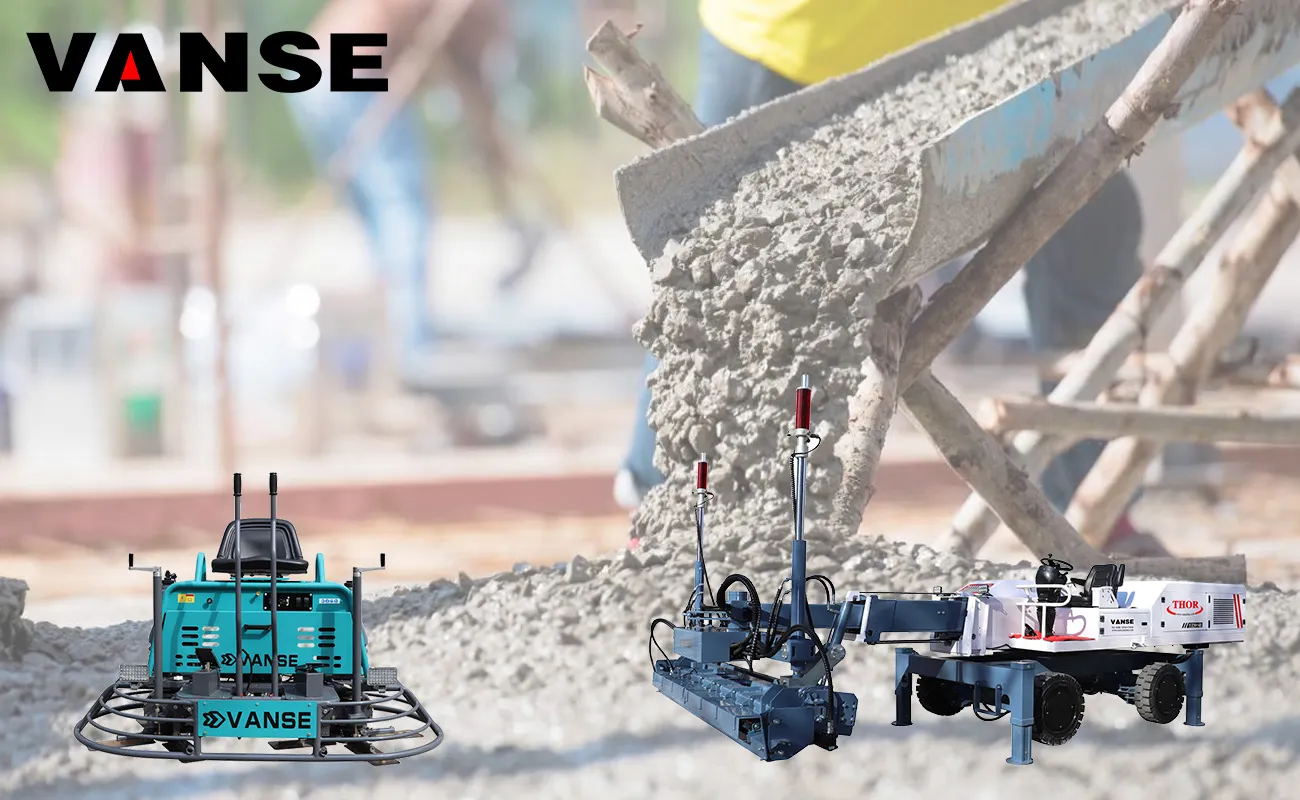
How do power trowel machines and concrete laser levelers work together?
April 1, 2025
How do power trowel machines and concrete laser levelers work together? 2
The trowel and concrete laser leveler are usually used together in concrete construction to improve the flatness of the ground and construction efficiency. The following is the working process and precautions of the two:
🎈 1. Workflow
Laser leveler rough leveling
△ Applicable stage: Before initial setting after concrete pouring (about 1-2 hours after pouring, the specific time depends on the concrete ratio and ambient temperature). △ Operation points: The laser leveler sets the reference plane through the laser transmitter, automatically levels and vibrates the concrete, and quickly completes the rough leveling of a large area. Focus on the corners, column roots and other areas that are difficult for the laser leveler to cover, and manually assist in scraping.
Trowel fine leveling
△ Applicable stage: after the initial setting of concrete (when there is a slight indentation when pressing with fingers but it is not sticky). Operation steps: △ Disc trowel: First use a disc trowel to perform preliminary slurry lifting and compaction to eliminate surface bumps. △ Blade trowel: After the concrete strength is further improved, use a blade trowel for fine finishing to form a smooth surface. △ Note: The trowel needs to be divided into 2-3 Operate over and adjust the blade angle (from low to high) each time to gradually increase the surface density.
🎈 2. Key points of cooperation
Time control
△ The laser leveling machine needs to complete the rough leveling before the initial setting of the concrete to avoid the difficulty of vibrating the concrete after hardening. △ The trowel machine needs to start working after the initial setting of the concrete. Too early will cause sand on the surface, and too late will make it difficult to compact.
Division of labor and cooperation
△ The laser leveling machine is responsible for efficient leveling of large areas, and the trowel machine is responsible for local finishing and surface treatment. △ For the corners that the laser leveling machine cannot reach, it is necessary to manually use a scraper to initially level it, and then the trowel machine will handle it.
Technical parameter matching
△ The leveling accuracy of the laser leveling machine must meet the design requirements (such as ±3mm/3m), providing a good foundation for the trowel. △ The angle and speed of the trowel blade need to be adjusted according to the strength of the concrete to avoid over-grinding or under-grinding.
🎈 3. Precautions
Concrete maintenance
Cover and maintain in time after the operation is completed to prevent surface cracking.
Environmental factors
The operation interval should be shortened in hot and dry weather to avoid excessive water loss of concrete.
Equipment maintenance
The laser leveling machine needs to calibrate the laser transmitter regularly, and the trowel blade needs to clean the concrete residue in time. Through reasonable process arrangement and equipment coordination, the quality and efficiency of concrete construction can be significantly improved, which is suitable for large-scale ground projects such as industrial plants, parking lots, and airport runways.
About the Author: Shandong Vanse Machinery Technology Co., Ltd.


Shandong Vanse Machinery Technology Co., Ltd. is a high-tech manufacturer specializing in concrete construction machinery, including laser screeds and related equipment. The company integrates R&D, production, and global sales, with products exported to over 60 countries and widely used in infrastructure projects worldwide.

How Often Should A Concrete Laser Leveling Be Maintained?
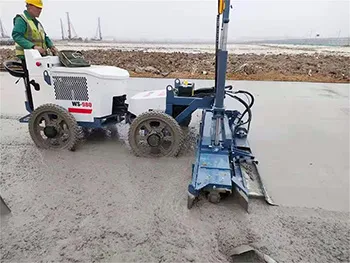
What is the frequency of maintenance of concrete laser leveling machine? As an indispensable and important equipment in modern building construction, the diffuse concrete laser leveling machine's performance stability and service life directly affect the construction quality and efficiency. Therefore, it is particularly important to carry out scientific and reasonable maintenance of concrete laser leveling machines. However, many users may have some questions about the frequency of maintenance of concrete laser leveling machines. This article will focus on this issue and elaborate on the key points of daily equipment inspections, periodic maintenance plans, special maintenance needs, lubrication and cleaning, electrical system inspection, replacement of wearing parts, and repair and maintenance records. 1. Key points for daily inspection of equipment Routine inspection is the basic work to ensure the normal operation of the concrete laser leveling, and its frequency should be relatively high. In general, a thorough daily inspection should be performed before and after each use. Key check points include: ☀ Check whether the appearance of the equipment is intact and whether there is any damage, deformation, etc.; ☀ Check whether the fasteners of the equipment are loose. If they are loose, tighten them in time; ☀ Check whether the hydraulic and electrical systems of the equipment are working normally. If there are any abnormalities, they should be dealt with in time; ☀ Check whether the operation control of the equipment is flexible and reliable. If there is any jamming or failure, repair it in time; ☀ Check whether the walking system of the equipment is stable and whether the track is seriously worn, etc. Through daily inspections, problems with the equipment can be discovered and solved in time to ensure the normal operation of the equipment. 2. Periodic maintenance plan In addition to daily inspections, a periodic maintenance schedule should be developed based on the equipment's usage and manufacturer's recommendations. The frequency of periodic maintenance can generally be determined based on the working hours or length of use of the equipment. ☀Weekly maintenance: Conduct a comprehensive inspection of the equipment every week, including checking the oil level and quality of the hydraulic oil, cleaning the radiator and filter, and checking whether the wiring of the electrical system is loose, etc. ☀ Monthly maintenance: Perform more in-depth maintenance on the equipment every month, such as replacing hydraulic oil and filters, checking the engine oil and water tank, etc. ☀ Quarterly maintenance: Conduct extensive maintenance and upkeep on the equipment every quarter, such as checking the wear of the track, replacing severely worn track shoes, checking the sealing of the hydraulic cylinder, etc. By formulating and executing a periodic maintenance plan, the service life of the concrete laser leveling can be effectively extended and its work efficiency improved. 3. Special maintenance needs In some special cases, additional maintenance on your concrete laser leveling may be required. These special circumstances include: ☀ The equipment has not been used for a long time: If the equipment has not been used for a long time, it should be started and operated regularly to prevent parts from rusting or aging due to long-term parking of the equipment. ☀ Harsh working environment: In harsh working environments, such as high temperature, dusty, humid and other environments, the maintenance frequency of the equipment should be appropriately increased to cope with the impact of environmental changes on the equipment. ☀ Equipment failure: When equipment fails, troubleshooting and repairs should be carried out in a timely manner to ensure that the equipment can resume normal operation in a timely manner. For these special circumstances, we need to formulate corresponding maintenance measures and plans based on the actual situation to ensure the normal operation of the equipment and extend its service life. 4. Lubrication and cleaning Lubrication and cleaning are important aspects that cannot be ignored in the maintenance of concrete laser leveling machines. Lubrication can effectively reduce the wear and friction of equipment and extend its service life; while cleaning can prevent equipment failures caused by dust, debris, etc. ☀ In terms of lubrication, all lubrication points of the equipment should be lubricated regularly, such as bearings, chains, etc. At the same time, pay attention to selecting appropriate lubricating oil and grease to ensure the lubrication effect. ☀ In terms of cleaning, dust and debris on the surface of the equipment should be cleaned regularly to keep the equipment tidy. In addition, the radiator and filter of the equipment should be cleaned regularly to ensure the heat dissipation effect and ventilation performance of the equipment. Through reasonable lubrication and cleaning work, the working efficiency and stability of the concrete laser leveling can be effectively improved. 5. Electrical system inspection The electrical system is a critical part of the proper operation of the concrete laser leveling, so regular inspection and maintenance of it is essential. Electrical system inspection mainly includes the following aspects: ☀ Check whether the cable lines are intact and not damaged or aged; ☀ Check the working status of electrical components, such as whether switches, relays, etc. are working normally; ☀ Check the stability and accuracy of the electrical control system to ensure that the operation and control of the equipment are accurate and reliable; ☀ Clean and dust-proof the electrical system regularly to prevent failures caused by dust accumulation. Through electrical system inspection, electrical faults can be discovered and solved in time to ensure the normal operation of the concrete laser leveler. 6. Replace wearing parts During the use of the concrete laser leveling, some wearing parts will gradually wear or be damaged as the use time increases. In order to ensure the normal operation of the equipment and extend its service life, these wearing parts need to be replaced in time. Common wearing parts include blades, scrapers, track shoes, etc. These parts will wear or deform during long-term use, affecting the construction quality and efficiency of the equipment. Therefore, the wear of these parts should be checked regularly and replaced according to the actual situation. When replacing wearing parts, you should choose qualified products produced by regular manufacturers and perform replacement operations in accordance with the requirements of the equipment manual. At the same time, replacement records should be kept for reference in subsequent maintenance work. 7. Repair and maintenance records In order to better understand the maintenance status of the concrete laser leveling machine, it is recommended to establish complete repair and maintenance records. The record content includes basic information of the equipment, maintenance time, content, personnel, and replaced parts and other information. Through repair and maintenance records, you can clearly understand the maintenance history and usage status of the equipment, providing a reference for subsequent maintenance work. At the same time, it also helps to discover potential problems in the operation of the equipment and take timely measures to deal with them to avoid failures. In addition, repair and maintenance records can help improve the efficiency of equipment management. Through the analysis of records, the effectiveness of equipment maintenance can be evaluated, deficiencies in maintenance work can be found, and a more scientific and reasonable maintenance plan can be formulated. When establishing repair and maintenance records, it is recommended to use electronic methods for recording and management. Through the electronic recording system, data can be easily queried, counted and analyzed to improve work efficiency. At the same time, it can also reduce the risk of loss and damage of paper records and ensure the integrity and reliability of data. In summary, the maintenance of concrete laser leveling machines is of great significance to the normal operation and extended service life of the equipment. By formulating reasonable maintenance plans, performing daily inspections and periodic maintenance, paying attention to special maintenance needs, doing lubrication and cleaning work, checking electrical systems, replacing wearing parts in time, and establishing complete repair and maintenance records, we can ensure that The stable operation of the pyrolysis soil laser leveling machine improves construction quality and efficiency. However, it should be noted that the maintenance frequency and content mentioned in this article are only general recommendations, and actual operations need to be adjusted and improved according to the specific conditions of the equipment, the use environment and the manufacturer's recommendations. At the same time, maintenance work should be performed by professionals with corresponding qualifications and experience to ensure correct, safe and effective operations. Finally, we hope that the discussion in this article can provide some reference and help for the maintenance of concrete laser levelings, and contribute to the stable operation and extended service life of the equipment.
Read More
March 6, 2026
Rotary VS ride-on power trowel—Which polishes super flat floors better
When it comes to achieving and polishing Superflat (high FF) floors, the debate is entirely one-sided: the ride-on power trowel is the undisputed heavyweight champion. While rotary (walk-behind) trowels are essential tools on any job site, relying on them to polish a high-tolerance warehouse floor is like trying to iron a king-sized bedsheet with a travel iron. It will get the job done eventually, but you won't get perfectly crisp results. Here is the technical breakdown of why ride-on trowels dominate the Superflat and polishing arenas. The primary goal of a Superflat floor is high FF (Flatness), which means eliminating the microscopic "waves" in the concrete. Ride-On Trowels: Because they feature dual (or triple) overlapping rotors and a wide, rigid wheelbase, they act like a massive carpenter's plane. When equipped with float pans, a ride-on trowel "bridges" the low spots and violently shaves off the high peaks. Walk-Behind Trowels: A walk-behind has a single, small rotor. Instead of bridging the waves, it tends to ride up and down them. If you aren't careful, a walk-behind can actually create dips and dishing, ruining your FF numbers. Polishing and densifying the surface (creating that hard, dark "burnished" look) requires extreme friction and pressure. Ride-On Trowels: These machines weigh anywhere from 800 lbs to over 2,500 lbs. That massive downward force, combined with high-speed rotors and a steep blade pitch, generates the heat and friction necessary to melt the surface paste into a glass-like finish. Walk-Behind Trowels: Weighing in at only 150 to 300 lbs, they simply do not have the mass to forcefully close the pores of the concrete to the same density as a ride-on. This is the most critical factor for Superflat floors. Walk-Behind Trowels: The operator must physically walk backward on the curing concrete. Even when the concrete is firm enough to support a machine, work boots can still leave millimeter-deep micro-depressions. Every footprint is a localized failure in flatness. Ride-On Trowels: The operator sits on the machine. The weight is entirely distributed across the massive surface area of the rotors or float pans, leaving zero footprints and maintaining the pristine levelness established by the laser Leveling. Feature Ride-On Power Trowel Walk-Behind (Rotary) Trowel Superflat Capability Exceptional (Bridges waves) Poor (Follows contours) Burnishing/Polishing Superior (High downward pressure) Moderate (Lacks weight) Surface Disruption Zero (Operator rides) High (Operator footprints) Best Used For The main floor (the "runway") Edges, tight corners, around pipes It is worth noting that you still need both machines on a Superflat project. A massive ride-on trowel cannot get within a few inches of a wall or a structural column without risking damage to the concrete or the machine. The standard Superflat workflow uses ride-on trowels for 95% of the floor area to establish the density and flatness, while a skilled operator uses a walk-behind trowel equipped with a rotating edge ring to manually polish the remaining 5% along the perimeter. Would you like me to outline a specific overlapping pass pattern for a ride-on trowel to ensure you don't create ridges while pushing for maximum FF numbers? Contact us NOW Note: The parameters provided in this document are for reference only and are not mandatory. Due to differences in technical characteristics between different brands and models of laser levelers, please consult the manufacturer for a suitable solution before actual operation. This reference document assumes no responsibility for any issues arising from failure to follow the manufacturer's instructions.
Read More
November 25, 2025
Experience in adjusting the operating parameters of the power trowel machine (such as rotational speed and blade Angle) for different concrete mix ratios and additives
Adjusting the operating parameters of the power trowel machine for different concrete ratios and additives is a key technology for achieving high-grade floor quality (such as super-flat floors and wear-resistant floors). The following are the experiences and guidelines for adjusting the operating parameters of the power trowel machine according to the characteristics of different concretes: Understanding the interaction: The "temperament" of concrete (setting speed, hardness, bleeding) determines how the power trowel should "treat" it. Observation is more important than presetting: Parameters have no fixed values, and the only criterion is the state of the concrete surface. An excellent operator is one who "watches the work" during construction rather than mechanically timing. Step by step: From low speed to high speed, from large angles to small angles, gradually apply pressure and improve precision. Characteristics: High cement content, dense slurry, fast setting speed, high early strength, and low bleeding. Operational challenge: The operation window period is short, making it easy to miss the best polishing opportunity. The surface is prone to rapid hardening and it is difficult to extract slurry. Adjustment strategy Rotational speed The first pass (disc slurry lifting) : It should be done a little earlier and at a medium to low speed (about 60-80 RPM). Because the slurry is thick, sufficient force is needed to bring it to the surface, but if the rotational speed is too high, it will curl the slurry and roughen the surface. Second and third coats (power trowel polishing) : After the surface is slightly dry, immediately change the power trowel and use medium-high speed (about 90-120 RPM). High speed helps to make the surface very dense and bright. Once you notice a significant increase in machine resistance and the surface starts to feel "rough", it indicates that the final setting is approaching and you need to stop immediately. Blade Angle The first power trowel: The Angle can be slightly level (about 3-5°), mainly for leveling and avoiding too deep a cut. Subsequent power trowel: As the surface hardness increases, gradually raise the blade Angle (about 5-10°), and use the sharp edge of the blade to perform a "cutting" type of polishing to achieve an extremely high gloss. Core experience: "Racing against time". Personnel and equipment must be ready. Once the concrete meets the conditions for machine operation, continuous work should be carried out immediately until completion. Characteristics: The initial and final setting times are significantly prolonged. The surface remains in a "soft" state for a long time, but the interior is slowly setting. Operational challenges: Prone to premature operation, which can damage the surface structure; The long waiting time affects the construction efficiency. It may be accompanied by bleeding. Adjustment strategy Rotational speed First round (disc) : You must wait! Until the depth of the foot depression is less than 5mm. Use a low speed (about 50-70 RPM) to lift the slurry smoothly, as the surface support force is still insufficient. Subsequent polishing: The interval between each application is quite long, requiring great patience. Always use medium and low speeds to avoid surface "wavy" or "curled skin" caused by excessive speed. Blade Angle Throughout the entire process, always maintain a relatively small Angle (approximately 0-5°). Because concrete is soft, if the Angle is too large, it will overly erode the surface and form grooves. Core experience: "Patience". Never be in a hurry to use the computer. If there is bleeding on the surface, it should be scraped off with water first or wait for it to evaporate. The operation mainly involves "gentle kneading". Characteristics: Fast setting speed and rapid strength growth. Operational challenge: The operational window period is extremely short, almost an "accelerated version" of high-grade concrete, making it easier to miss the opportunity. Adjustment strategy Rotational speed All rounds: The pace should be fast. The disc and the first power trowel operation can be combined or carried out quickly and continuously. The rotational speed can be medium to high (80-100 RPM) to complete compaction and smoothness within a limited time. Blade Angle The blade Angle can be raised relatively quickly. When applying the second coat of gloss, a relatively large Angle (about 7-10°) can be adopted to seize the final opportunity for pressing. Core experience: "Prediction and connection". The operator must constantly observe the surface changes. After the disc operation, the power trowel operation should be seamlessly connected. Machines can't stop. When people rest, the machines don't. Characteristics: The early strength is relatively low, and the setting speed is slightly slower, but the later strength is high, and the surface is easier to smooth. Operational challenges: Low surface strength in the early stage and prone to damage; However, the slurry has good lubricity and is prone to excessive polishing, which can lead to bleeding. Adjustment strategy Rotational speed First pass (disc) : The waiting time is similar to or slightly longer than that of ordinary concrete. Lift the slurry smoothly at medium speed (about 70-90 RPM). Subsequent polishing: Due to its excellent lubricity and wear resistance, it can be polished multiple times at medium speed, making it easy Concrete type Disk stage rotational speed The rotational speed of the power trowel stage Suggested blade Angle Core operational philosophy High grade/low water-binder ratio Medium and low speed (60-80 Medium and high speeds (90-120) From flat (3-5°) to steep (5-10°) Race against time and increase pressure step by step Add retarder Low speed (50-70 Medium and low speed (70-90) Always maintain a small Angle (0-5°) Wait patiently and operate gently Adulterated with early strength agents Medium and high speeds (80-100) Medium and high speeds (90-110 Quickly increase the Angle (7-10°) Predictive connection, quick and decisive High-admixture Medium speed (70-90) Medium speed (80-100) Medium Angle (5-8° Gentle multiple times, taking advantage of the characteristics Note: The unit of rotational speed is RPM (revolutions per minute), which is an empirical reference value. The specific speed should be subject to the machine model and on-site conditions. The "Better late than early" rule: No matter what the ratio is, it is better to apply the gloss on the machine a little later than a little earlier. The machine may be strenuous at night, but in the morning it will completely damage the surface structure and cannot be remedied. Footprint Method for timing: Disc operation: Footprint depth is approximately 3 to 5 mm. The first power trowel: The depth of the footprint is approximately 1-2 mm. Final polished: The footprints are extremely shallow or non-existent, and the foot feel is hard. Listen to its sound, observe its trace Too high rotational speed/too early timing: The machine makes a dull sound, has high resistance, and there are "slurry" or "scratches" marks on the back of the blade. Too low speed/too late timing: The machine jumps severely, the blade "floats" on the surface and cannot be eaten, leaving white scratches without luster. The Angle and rotational speed are optimally matched: the machine operates smoothly, with uniform sound, and the blade leaves a uniform, bright, and traceless surface after passing through. Mastering these adjustment experiences requires a great deal of practice and careful observation. The best approach is to consciously associate the concrete mix ratio, weather conditions, the adopted operation parameters and the final effect with each construction, constantly accumulate and correct one's own "experience database", and thus become an expert in concrete plastering capable of handling any "temper". Note: The parameters provided in this document are for reference only and are not mandatory. Due to differences in technical characteristics between different brands and models of laser levelers, please consult the manufacturer for a suitable solution before actual operation. This reference document assumes no responsibility for any issues arising from failure to follow the manufacturer's instructions.
Read More
Online now. Replies personally on WhatsAppFionaCustomer specialist
Hi! I am here to help you find the right solution for your project.
You can share your product, capacity, or project needs. Our specialist will help you work out the next step.
Would you like a quick answer? Tap below to speak directly with our specialist on WhatsApp.