Technical Knowledge
High quality cement machinery concrete laser leveling
What is laser leveling concrete flooring?
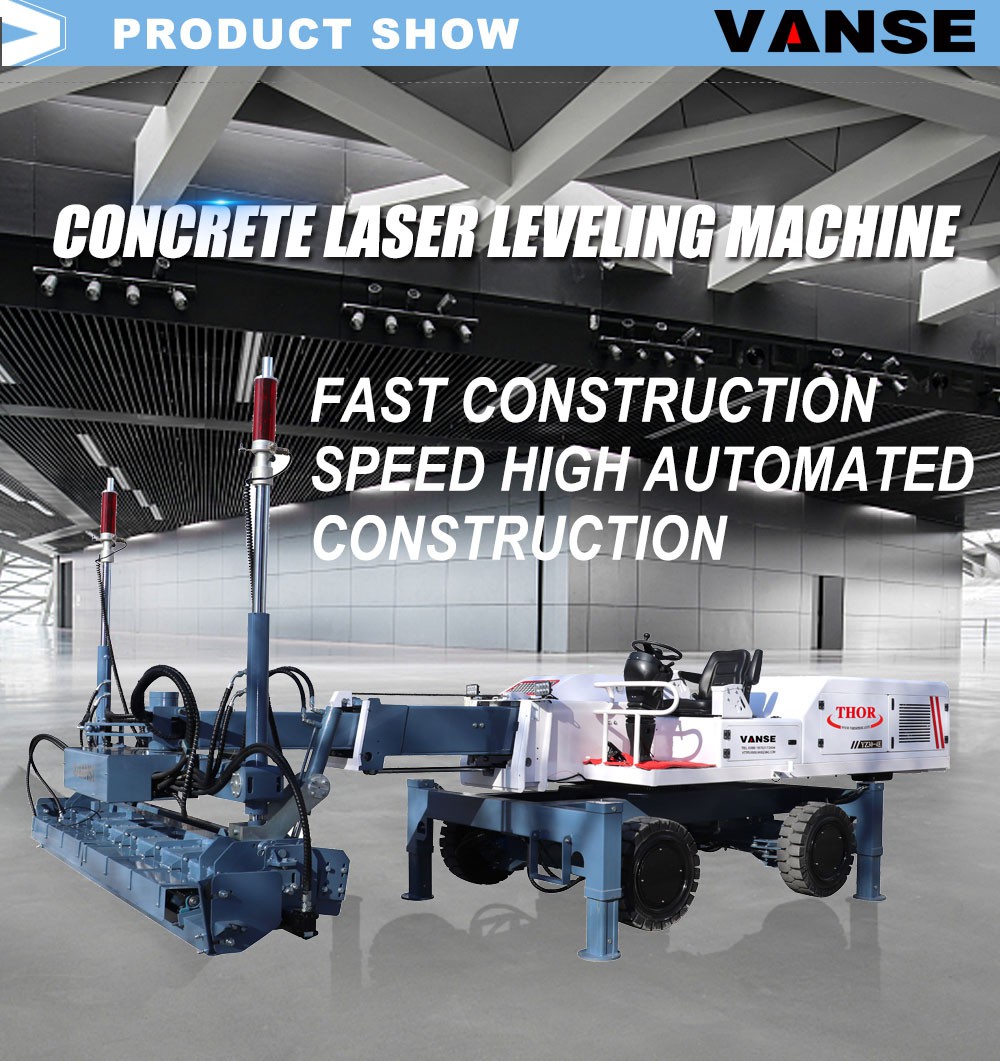
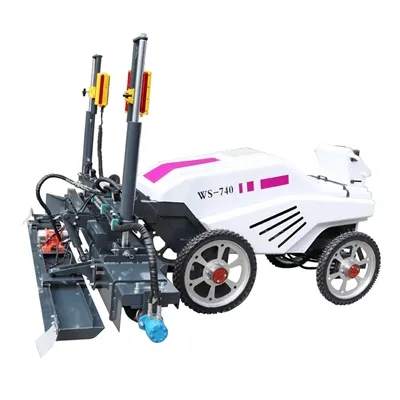
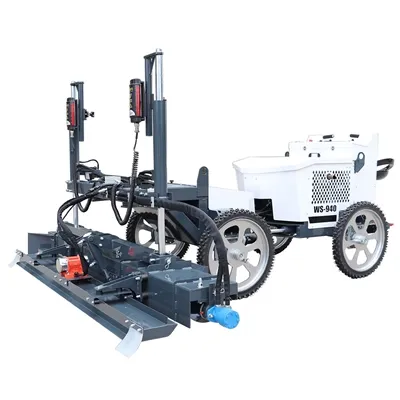
A laser leveling is a machine used to both level and vibrate concrete used in floors. The method is typically used in large floor pours, such as retail or warehouse structures.
So many people don't know "What is the concrete laser leveling flooring" this article will introduce the details of concrete laser leveling, and i wish it can help you to find a high quality cement machinery concrete laser leveling.
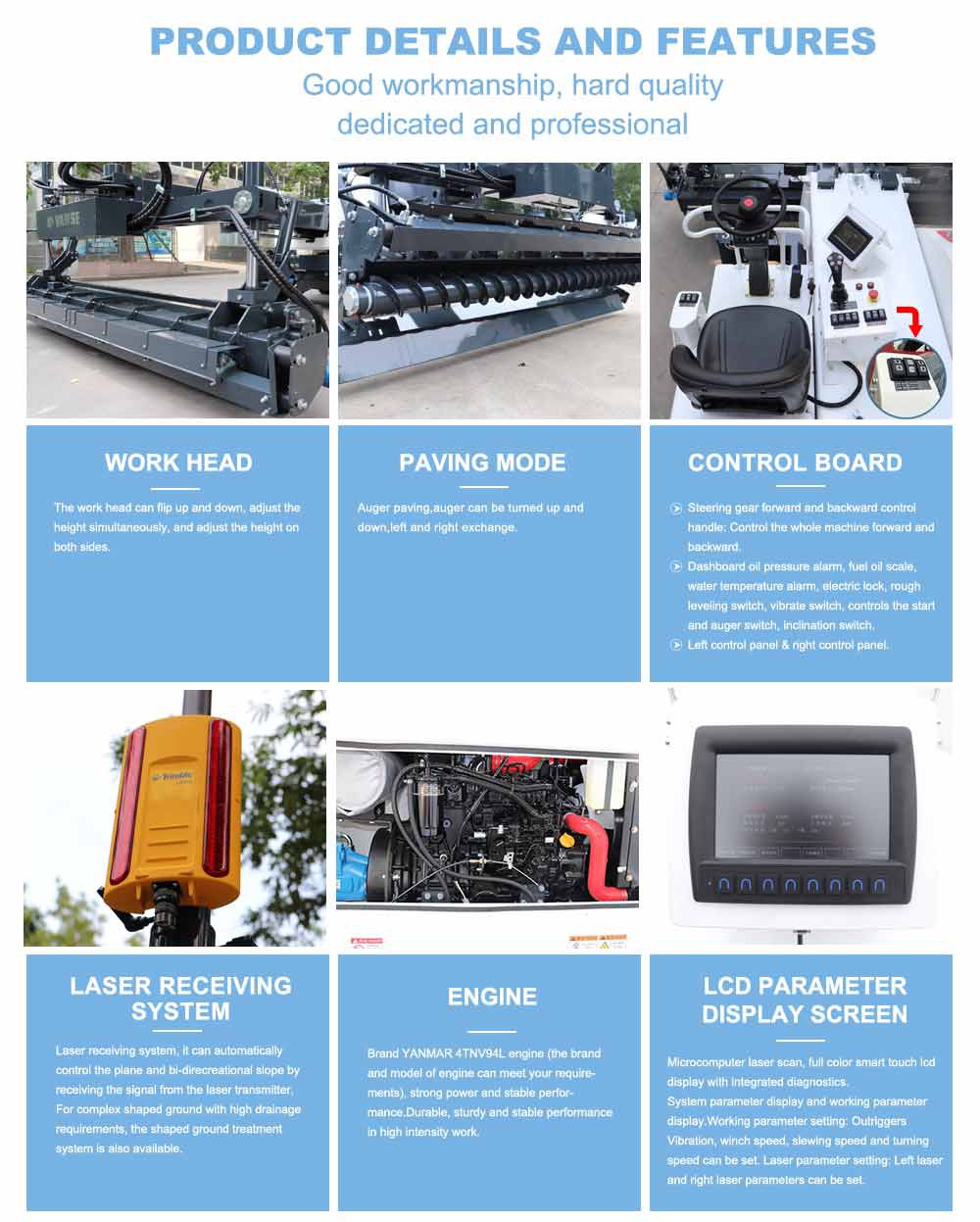
A laser-emitting device is placed on a static location outside the pour. Two laser receivers on the ends of the leveling align themselves with the laser to keep a floor pour level during placement. An auger inside the leveling levels and vibrates the concrete as the leveling pulls over the wet surface, similar to any hand-leveling operations.
The advantages of the laser leveling are (generally) more level and even-thickness concrete floors, high quality cement machinery concrete laser leveling will save you more time and other cost.
Through the above words, can you choose a high quality cement machinery concrete laser leveling by yourself ?
Thanks to All the Friends Who Support and Trust Shandong Vanse Machinery Technology Co., Ltd.
If you want to know more about Shandong Vanse Machinery Technology Co., Ltd. or have any questions, please feel free to contact us:
Our Factory
Shandong Vanse Machinery Technology Co., Ltd.








Share this article

About the Author: Shandong Vanse Machinery Technology Co., Ltd.
Shandong Vanse Machinery Technology Co., Ltd. is a high-tech manufacturer specializing in concrete construction machinery, including laser screeds and related equipment. The company integrates R&D, production, and global sales, with products exported to over 60 countries and widely used in infrastructure projects worldwide.
Previous Post
Next Post
Related Articles
You Might Also Like
How to evaluate the economic benefits of laser leveling machines in municipal engineering?
– Laser leveling machines have a high degree of automation and can greatly reduce manpower input compared to traditional manual leveling methods. In municipal engineering, such as concrete leveling operations on roads and squares, the use of laser leveling machines can complete large-scale construction tasks with fewer operators. For example, traditional manual leveling may require 10-15 workers, while the use of laser leveling machines may only require 3-5 operators, including machine operators, auxiliary personnel, etc. Calculated based on the labor cost per person per day, a large amount of labor costs can be saved in projects with longer construction periods. – Moreover, the operation of laser leveling machines is relatively simple, and personnel who have undergone short-term training can start working, reducing dependence on senior technical workers and indirectly saving labor costs. Because the wages of senior technical workers are usually much higher than those of ordinary workers. – Laser leveling machines can accurately control the paving thickness and flatness of concrete. In municipal road construction, it can accurately lay concrete according to design requirements to avoid excessive laying or uneven thickness of concrete due to imprecise manual operation. For example, manual leveling may cause the concrete thickness error to reach ±10 – 15mm due to lack of experience or improper operation, while the laser leveling machine can control the error within ±3 – 5mm. Such precise control can effectively reduce the waste of concrete, because concrete materials are more expensive in municipal engineering, and reducing waste means reducing material costs. – At the same time, due to the high flatness of the ground leveled by the laser leveling machine, the amount of materials required for subsequent construction (such as paving asphalt, installing curbstones, etc.) is also more accurate, and there will be no additional material consumption due to uneven ground, thereby further reducing material costs. – The laser leveling machine has high working efficiency and can quickly complete large-area leveling tasks. Taking the construction of the municipal square as an example, traditional manual leveling may take several days or even weeks to complete the leveling of a large square, while the laser leveling machine can complete the same workload in a shorter time. For example, a 1,000-square-meter square may take 5 to 7 days to be leveled manually, while a laser leveler may only take 2 to 3 days. – Shortening the construction period can bring many economic benefits. On the one hand, it can enable the project to be put into use ahead of schedule. For example, the early opening of municipal roads can relieve traffic pressure, bring social benefits, and may also obtain additional economic benefits due to early operation; on the other hand, shortening the construction period can reduce the indirect costs of the project, such as construction site management costs, equipment rental costs, etc., which will increase accordingly when the construction period is extended. – The laser leveler is relatively less affected by external factors such as weather, and can maintain stable working efficiency as long as it is under suitable construction conditions. In municipal engineering, especially some key projects with construction period requirements, stable project progress is very important. For example, in areas with more rainy seasons, laser levelers can quickly resume construction in a short time after the rain stops, while manual leveling may delay construction due to factors such as wet ground, thus affecting the progress of the entire project. Stable project progress helps to arrange subsequent construction procedures reasonably, avoid the chain reaction of the entire project caused by the delay of a certain process, and reduce the economic losses that may be caused by project delays. – The ground leveled by the laser leveler has high flatness and good quality. In municipal road projects, a flat road surface can reduce the bumps when vehicles are driving and reduce the probability of cracks, potholes and other diseases caused by uneven force on the road surface. For example, under normal use, the time when road diseases appear on roads treated by laser levelers may be 2-3 years later than that on roads leveled by traditional manual leveling. – Reducing later maintenance can not only save maintenance materials and labor costs, but also avoid indirect economic losses such as traffic congestion caused by road maintenance. For municipal engineering, some lanes may need to be closed during road maintenance, which will affect traffic flow, reduce vehicle traffic efficiency, and generate economic costs. – High-quality leveling effects enhance the overall stability of municipal engineering structures (such as roads, squares, etc.), allowing them to withstand greater loads and longer use. Taking the concrete bridge deck construction of municipal bridges as an example, the use of laser leveling machines can make the bridge deck flatness reach a higher standard. Within the design service life of the bridge, it can better resist the impact of repeated vehicle loads and reduce damage to the bridge deck structure caused by poor flatness, thereby extending the service life of the bridge. In the long run, this will undoubtedly bring huge economic benefits.How to ensure the safety and reliability of concrete laser leveling machine during construction?
It is very important to ensure the safety and reliability of the concrete laser leveling machine during the construction process. This is not only related to the quality of the project, but also directly affects the safety of the operator. Here are some key steps and suggestions to ensure the safe and reliable operation of the concrete laser leveling machine: 1. Training and certification: Ensure that all operators have received appropriate operation training and are familiar with all functions and emergency stop procedures of the equipment. 2. Equipment inspection: Before starting work every day, perform a comprehensive visual inspection of the leveling machine, including checking tires, fuel levels, oil, coolant, and all controls. 3. Laser calibration: Ensure that the laser transmitter is properly installed and calibrated to provide an accurate height reference. 4. Safety protection: Ensure that all safety devices such as emergency brake buttons, safety guardrails, etc. are in good condition. 1. Site leveling: Before using the laser leveling machine, properly prepare the construction site to ensure that the ground is relatively flat and free of large debris. 2. Traffic control: Set up warning signs and fences to restrict unauthorized personnel from entering the work area. 3. Material supply: Rationally arrange the supply speed of concrete to avoid idling of equipment or pouring too quickly due to waiting for concrete, resulting in quality degradation. 4. Smooth communication: Ensure good communication means within the construction site to facilitate command and dispatch and emergency response. 1. Smooth driving: The operator should maintain a constant speed and avoid sharp turns or sudden braking, which can improve flatness and reduce the risk of equipment damage. 2. Monitoring laser signals: Keep an eye on the working conditions of the laser receiver to ensure that a stable signal is received. 3. Timely adjustment: Adjust the scraper angle and vibration frequency according to the actual construction conditions to achieve the best effect. 4. Rest and inspection: Let the machine rest regularly and check the equipment condition again during this period. 1. Regular maintenance: Perform routine maintenance tasks according to the manufacturer's recommended schedule, such as changing the engine oil and cleaning the filter. 2. Record keeping: Keeping detailed records of each maintenance helps track the historical performance of the equipment and predict possible problems in the future. 3. Professional repair: When encountering complex failures, please contact professional repair services instead of trying to repair them yourself. The above measures can greatly improve the safety and reliability of concrete laser leveling machines on the construction site. It is important to always follow the guidelines in the user manual provided by the manufacturer and comply with relevant local safety regulationsHow to match a concrete laser leveling machine with the concrete mixture to achieve perfect leveling?
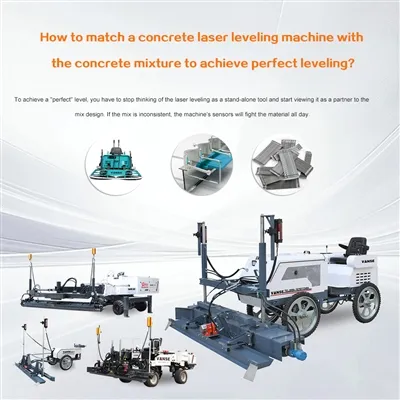
To achieve a "perfect" level, you have to stop thinking of the laser leveling as a stand-alone tool and start viewing it as a partner to the mix design. If the mix is inconsistent, the machine's sensors will fight the material all day. Here is how to calibrate your mix to your machine for maximum precision. For laser leveling, consistency is more important than the actual slump number. However, there is a "sweet spot" for machine performance. The Target: 4" to 5" (100mm – 125mm) slump. Too Wet (>6"): The leveling head will "sink" or create a wake like a boat. When the water evaporates, the "perfect" level you just pulled will settle and dip, ruining your FF (Floor Flatness) numbers. Too Stiff (<3"): The vibrator won't be able to liquefy the paste enough to close the surface, leaving "honeycombs" or tears that the machine can't fix. The auger on the front of the leveling head is designed to move excess concrete out of the way. The Mix: Use a well-graded aggregate (a mix of large, medium, and small stones). The Logic: If you use only large 1" stones (Gap-graded), the auger will "catch" them and drag them, creating gouges in the subgrade. A well-graded mix creates a "lubricated" matrix that the auger can trim precisely to the millimeter. Adjustment: If your mix is "rocky," increase your sand-to-aggregate ratio slightly (usually by 1-2%) to provide a "cream" cushion for the leveling head to glide on. The laser leveling needs the concrete to stay "live" long enough to finish a full pass, but not so long that it bleeds excessively. Avoid Sugar-Based Retarders: These can make the concrete "sticky." Sticky concrete clings to the back of the leveling head, causing it to "pull" the surface rather than shaving it. Use Mid-Range Water Reducers (MRWR): These provide workability (flow) without the massive water content that causes shrinkage. This ensures that the elevation the laser sets stays the same elevation after the concrete cures. Different mixes require different "energy" to settle. Air-Entrained Concrete (Exterior): Air bubbles act like tiny ball bearings. You should lower the vibrator frequency on the leveling. If you vibrate air-entrained concrete too hard, you'll pull the air out of the top 1/2 inch, leading to surface scaling later. Dense Interior Mixes: Use high frequency. You want to "liquefy" the paste immediately as the head passes over so the trailing edge can seal the surface perfectly. Element Specification for Laser leveling Water/Cement Ratio 0.45 to 0.50 (ideal for strength and minimal shrinkage) Air Content Interior: < 3% Sand Content 42% – 45% of total aggregate volume Chemicals Polycarboxylate-based superplasticizers (for flow without sag) The first truck of the day is often slightly different than the rest. Always check your grade with a manual stick after the first 20 feet of the first load. If the machine is struggling to "cut" the concrete, tell the plant to add a small dose of plasticizer to the remaining trucks to increase "cream" without adding water. Would you like me to help you draft a "Mix Design Requirement" sheet to send to your concrete supplier for your next high-tolerance job? Contact us NOW Note: The parameters provided in this document are for reference only and are not mandatory. Due to differences in technical characteristics between different brands and models of laser levelers, please consult the manufacturer for a suitable solution before actual operation. This reference document assumes no responsibility for any issues arising from failure to follow the manufacturer's instructions.