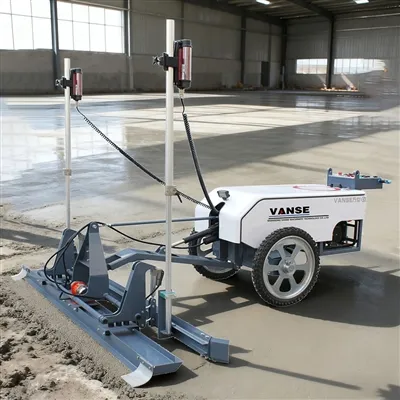
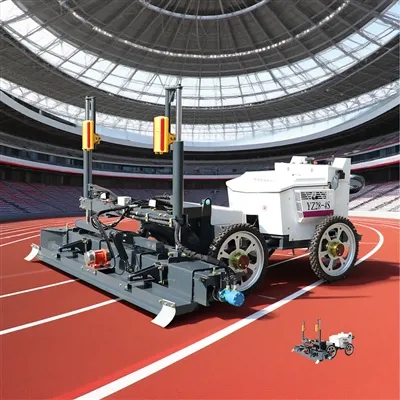
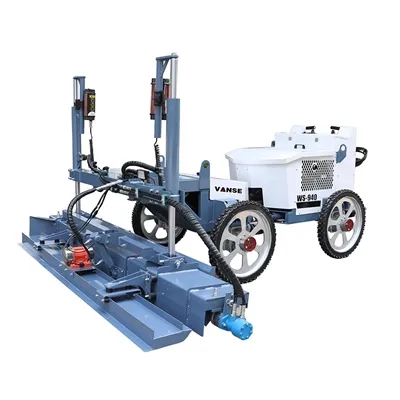
Technical Knowledge
Concrete leveling machine – application case
Concrete leveling Machine "Application Case"
Save more than 75% in labor costs when choosing the VANSE Concrete Laser leveling. Available Now! Fast shipping available.
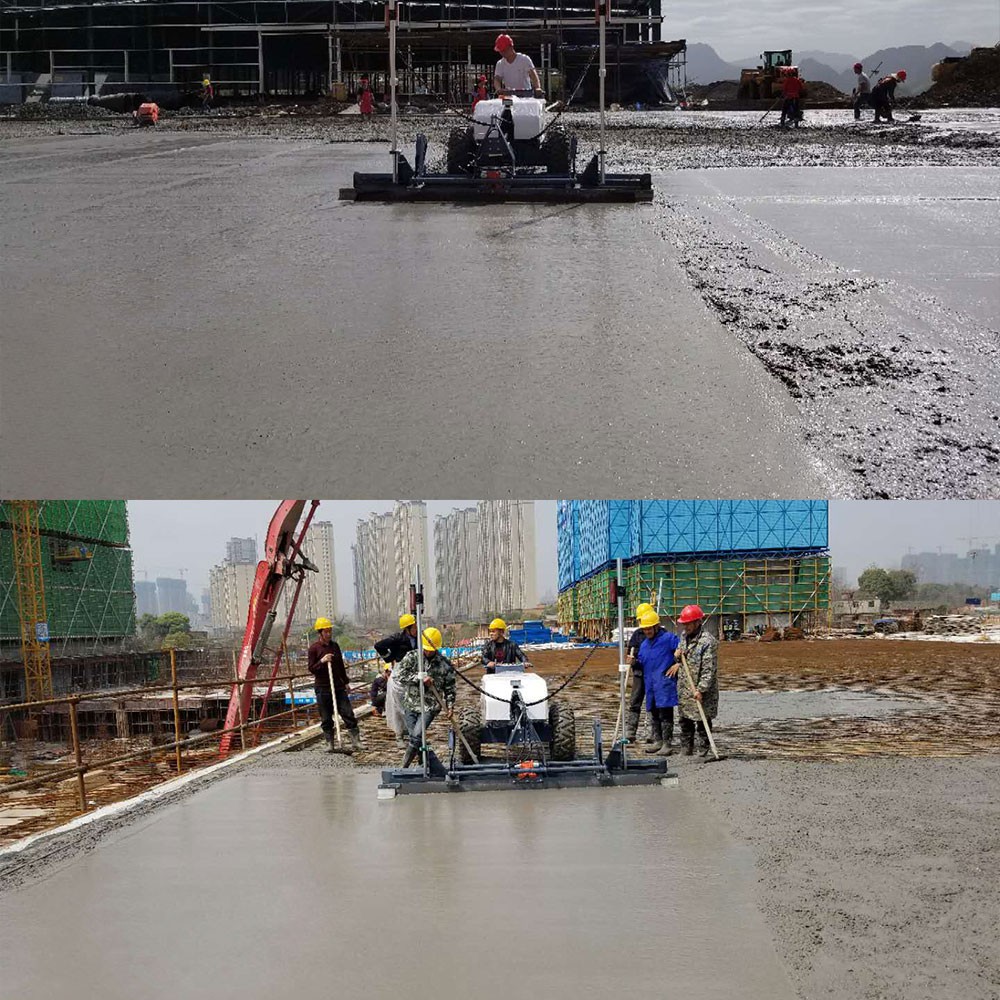
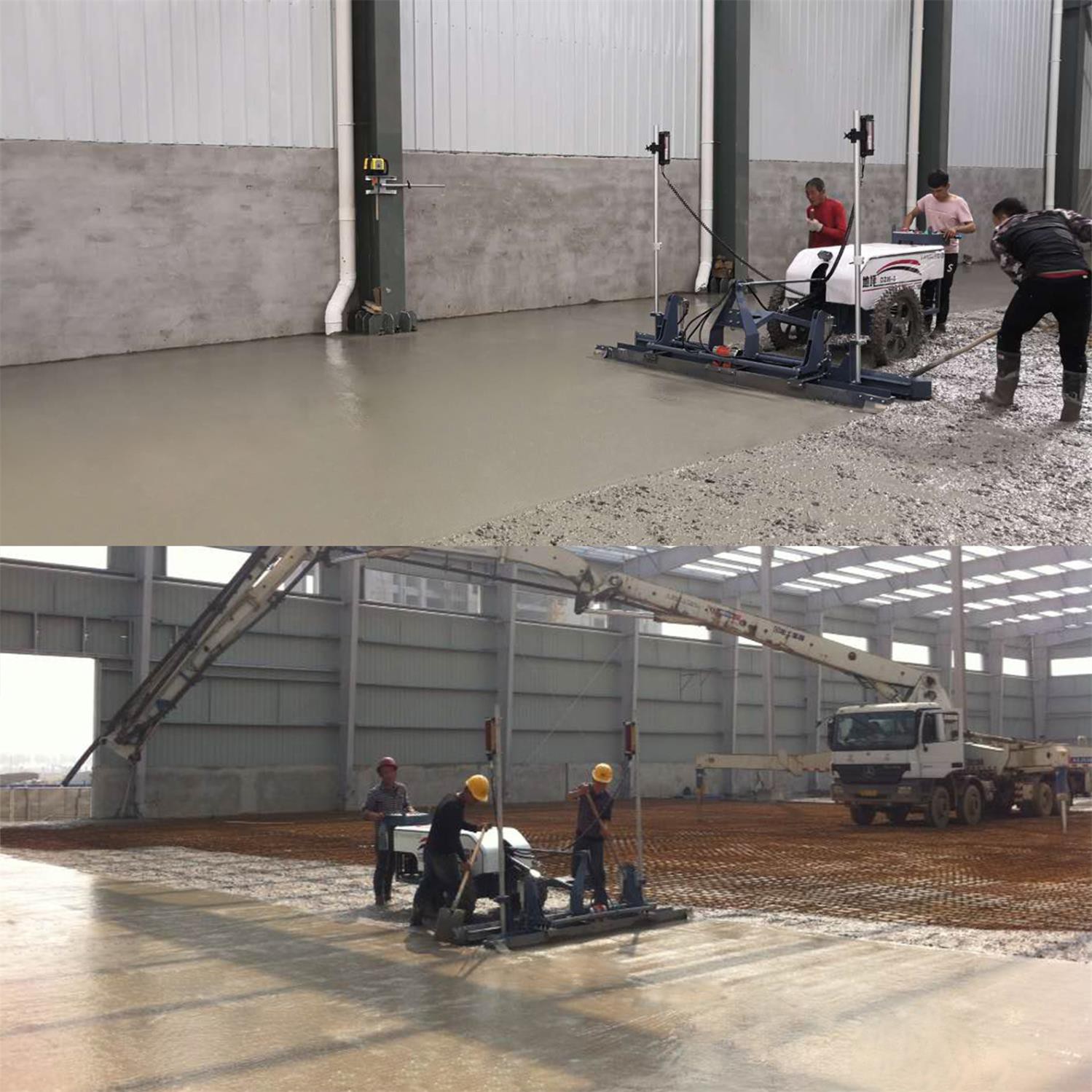
Concrete leveling Machine "Application Case"
User simplified adjustments insure faster resets for changes in mix, improved handling of oversized aggregate, and increased consolidation due to a full-length vibration system.
Thanks to All the Friends Who Support and Trust Shandong Vanse Machinery Technology Co., Ltd.
If you want to know more about Shandong Vanse Machinery Technology Co., Ltd. or have any questions, please feel free to contact us:
Our Factory
Shandong Vanse Machinery Technology Co., Ltd.








Share this article

About the Author: Shandong Vanse Machinery Technology Co., Ltd.
Shandong Vanse Machinery Technology Co., Ltd. is a high-tech manufacturer specializing in concrete construction machinery, including laser screeds and related equipment. The company integrates R&D, production, and global sales, with products exported to over 60 countries and widely used in infrastructure projects worldwide.
Previous Post
Next Post
Related Articles
You Might Also Like
What are the construction options for a concrete laser leveling machine?
The construction plan for a concrete laser leveling machine must be tailored to the project type (e.g., industrial plant, underground garage, large plaza, etc.), concrete grade, and site conditions. The core design principle is "standardized processes and controllable precision." The following is a general plan framework and examples of typical scenarios: Floor Flatness Error: ≤3mm/2m (core indicator for laser leveling); Concrete Density: ≥98% (avoiding sanding and hollowing); Construction Schedule: Planned based on a "500-800㎡/shift" (per machine). Stages Key Work Areas Core Requirements 1. Construction Preparation ① Base Preparation: Compaction (compaction degree ≥ 95%), debris removal, and watering (no water accumulation); Base leveling error ≤ 5mm/2m; Laser signal unobstructed (avoid metal and strong light). ② Laser System Commissioning: Transmitter calibration (horizontal error ≤ 0.1mm/m), receiver sensitivity test; ③ Material Preparation: Concrete (slump 120-160mm, initial setting ≥ 4h), geotextile/plastic film curing 2. Concrete Pouring ① Spreading: Use a tanker or concrete spreader to spread the material evenly, 30-50mm above the design elevation (allowing for leveling margin); Material spreading speed matches leveling speed (no accumulation or material shortages); Bin seams align with subsequent expansion joints. ② Combination Casting: For large areas, divide the concrete into 6-8m wide compartments (with temporary dividers) to prevent cracking after initial setting. 3. Laser Leveling ① Equipment Movement: Drive at a constant speed (0.8-1.2m/min), following a "horizontal back-and-forth" pattern with staggered overlaps; Real-time monitoring of the laser receiver (steady green indicates normal operation); immediate shutdown and calibration if deviation exceeds 2mm. ② Vibration Control: Insert the vibrator ≥ 50mm (penetrating the current paving layer) to ensure the connection between the upper and lower layers. 4. Finishing ① Rough Finishing: After the leveling passes, manually use a scraper to assist with leveling (to address any minor vibration leaks or unevenness). Timing of fine cutting is critical: premature cutting can lead to sanding, while delayed cutting may prevent surface air bubbles. ② Fine Finishing: After the concrete surface has cleared of water seepage (no noticeable indentations when pressed with a finger), use a trowel (with a disc) to smooth the surface 2-3 times. 5. Curing ① Covering: Cover with geotextile/plastic film within 1-2 hours of completion (before initial setting). No personnel or material stacking is permitted during the curing period; avoid freeze-thaw cycles in winter. ② Moisturizing: Water the surface every 2 hours in summer (to keep the film moist), and cover with a thermal blanket in winter (curing temperature ≥ 5°C). ③ Curing Time: ≥ 7 days (≥ 14 days for C30 and above concrete). 6. Expansion Joint Cutting ① Timing: 24-48 hours after pouring (surface hardness reaches 1.2 MPa, and no visible marks are visible when scratched with a fingernail). Clean the seams after cutting and apply sealant later to prevent water seepage. ② Specifications: Joint depth = 1/3-1/4 of the floor thickness, spacing ≤ 6 meters (required for areas over 36 square meters), joint width 5-8 mm. Key Differentiations: Concrete Grade: C35/C40 (one grade higher than standard flooring) is used, with polypropylene anti-cracking fiber (0.9 kg/m³) added to reduce thermal cracking. Laser System: Due to obstruction by pillars in the garage, a "multi-transmitter zoned coverage" system (one transmitter every 15-20 meters) is used to avoid signal blind spots. Surface Optimization: After finishing, diamond wear-resistant aggregate (5-6 kg/m²) is applied, followed by finishing with a high-speed trowel to improve surface hardness (Mohs hardness ≥ 6). Key Differentiators: Base Reinforcement: 300mm thick graded sand and gravel with a 150mm thick C25 cushion layer (50% thicker than standard flooring) ensures a load capacity of ≥5t/m2; Leveling Parameters: Vibration frequency is adjusted to 60-70Hz (compared to 50Hz for standard flooring) and travel speed is reduced to 0.6-0.8m/min to enhance concrete density; Post-treatment: After curing, a sealant and curing agent treatment (penetration depth ≥5mm) is applied to improve the floor's compressive strength (≥80MPa) and impermeability. Key Differentiations: Optimized Compartmentalization: Compartments are divided into 10m x 10m squares (common flooring requires 6-8m). Expansion joints (filled with foam board) are provided to relieve thermal stress. Concrete Control: Low-heat cement (heat of hydration ≤ 270kJ/kg) is used, and a retarder is added in summer (extending the initial setting time to 6-8 hours) to prevent cracking due to temperature differences. Laser Calibration: Transmitter levelness is rechecked every 2 hours (common flooring requires 4 hours). Because the plaza is unobstructed, a wind shield is required to prevent strong winds from interfering with the signal. Staffing: Each machine is equipped with one operator (certified) + two fabricators + two finishers + one laser monitor. Equipment Inspection Checklist: Before starting the machine, check the laser transmitter battery, vibrator wear, and tire pressure (tolerance ≤ 0.1 MPa). Emergency Plan: If the initial setting of the concrete is too rapid, immediately activate the backup leveling. If the laser signal is lost, switch to manual mode (using the adjacent leveled surface as a reference). Note: The parameters provided in this document are for reference only and are not mandatory. Due to differences in technical characteristics between different brands and models of laser levelers, please consult the manufacturer for a suitable solution before actual operation. This reference document assumes no responsibility for any issues arising from failure to follow the manufacturer's instructions.What is the importance of concrete laser leveling machine in construction
Concrete laser leveling machines play a revolutionary role in modern floor construction. Their importance can be comprehensively explained from multiple core dimensions such as project quality, construction efficiency, economic benefits and labor intensity. It not only simply replaces the traditional manual scraping tools, but also fundamentally improves the craftsmanship and standards of floor construction. This is the core and most important value of the laser leveling machine. Traditional technology: relies on manual formwork, string pulling, and ruler scraping, which is greatly affected by workers' experience, physical strength, and visual judgment, resulting in large errors and difficulty in ensuring overall consistency. Laser leveling machines use a precise optical plane established by a laser transmitter as a single reference, ensuring absolute horizontality and stability within the construction area. A receiver on the leveling acquires elevation information in real time, and the control system automatically and precisely drives the scraper for leveling. Result: F can be easily achieved₃₀ ≥ 90%, F₄₀≥ 70% or even higher, the industry's highest flatness standards. This level of accuracy is unattainable by manual labor and is particularly suitable for applications with extremely high floor requirements, such as large logistics warehouses, automated production lines, and super-large shopping malls. Traditional construction often requires separate formwork and pouring in multiple compartments, which results in numerous construction joints. These joints are both weak points and the starting point for future damage. The laser leveling machine has extremely high construction efficiency and can achieve large-scale continuous pouring (the construction area in a single day can reach more than 2,000 square meters), greatly reducing the number of construction joints, and forming a concrete floor with better integrity and more stable structure. The tamping plate and high-frequency vibrator of the leveling machine will fully vibrate and compact the concrete before leveling, effectively eliminating bubbles, avoiding aggregate separation, and evenly distributing the concrete slurry, thereby obtaining a denser, more uniform, and higher-strength surface, greatly reducing common quality problems such as sanding, hollowing, and cracks. A laser leveling machine can achieve an efficiency of 100-200 square meters per hour, 10-20 times that of traditional manual levelinging. This means project duration can be significantly shortened, giving owners valuable time to start production earlier and create value. Large-scale construction does not require waiting for tedious processes such as supporting and dismantling formwork, and realizes the integrated flow operation of concrete pouring, vibration, leveling, and slurry preparation. The processes are closely connected and the construction process is more scientific and reasonable. Traditional processes require a large number of skilled plasterers, resulting in high labor costs and difficult personnel management. Using a laser leveling machine, the job can be completed by just one operator and several auxiliary workers (responsible for unloading, initial paving, etc.), reducing the number of workers and skill requirements, and significantly saving labor costs. The laser control system can accurately control the elevation and flatness of the floor, avoiding concrete waste caused by over-thick pouring, and also avoiding the cost of secondary filling due to insufficient elevation, thus achieving precise control of concrete usage. Because the molded floor is of high quality, strong and has good integrity, it is wear-resistant and durable during use and not easy to be damaged, which greatly reduces future maintenance and repair costs. It frees workers from heavy, high-intensity bending labor and transforms them into equipment operation and technical supervision roles, improves working conditions, and conforms to the humanistic trend of modern engineering management. Construction quality no longer relies excessively on individual workers' skills and sense of responsibility. As long as the equipment is debugged accurately, no matter who operates it, the same high-standard product can be produced, achieving controllable, standardized, and industrialized construction quality. Workers do not need to walk back and forth on the unset concrete surface, reducing safety hazards. The importance of concrete laser leveling machine in construction can be summarized as follows: In terms of quality: It is an indispensable core equipment for building ultra-high precision, high strength and high integrity modern industrial floors. In terms of efficiency: it is a powerful engine that significantly shortens construction period and speeds up project progress. Economically: It is a key tool to reduce comprehensive costs (labor, materials, maintenance) and improve the return on project investment. In terms of management: it transforms floor construction from a "craft" to an "industrial process", realizes standardized production, and represents the development direction of modernization of construction. Therefore, in today's context of increasing quality requirements for large-area concrete floors, laser leveling machines have changed from "optional equipment" to "necessary equipment" and have become standard equipment for high-quality flooring projects.How does the concrete laser leveling machine achieve high-precision leveling?
The concrete laser leveling machine mainly relies on advanced laser technology and computer control system to achieve high-precision leveling. Specifically, the working principle of the concrete laser leveling is as follows: First, the laser transmitter emits a laser beam, which is positioned and navigated through a computer control system to ensure the accuracy and stability of the laser beam. After the laser beam is received by the receiver, it forms an optical path through a series of optical operations such as reflection and focusing, which provides a benchmark for the operation of the leveler. Secondly, the leveling head is the core part of the concrete laser leveling machine. It integrates components such as scrapers, spirals and vibrating plates, and can complete the initial leveling, vibrating and leveling of concrete at one time. The operation of the leveling head is controlled by a computer control system. The leveling head is accurately adjusted through the received laser signal so that the elevation of the leveling head is always maintained at the set value to ensure the flatness of the floor. At the same time, the compacted soil laser leveling machine uses high-precision laser ranging sensors and angle sensors to monitor the position and attitude of the leveling head in real time and feed the data back to the control system. The control system adjusts the running trajectory and speed of the leveling head based on the feedback data to ensure that the leveling machine can quickly and accurately complete the floor leveling work. In addition, the concrete laser leveling machine is also equipped with a high-precision weighing system that can monitor the amount and distribution of concrete in real time. By adjusting the proportion of concrete and the mixing method, as well as controlling the pouring speed and thickness of concrete during construction, the flatness and quality of the floor can be further improved. To sum up, the compacted soil laser leveling machine achieves high-precision and efficient leveling work through advanced laser technology and computer control system. It can not only improve the quality and service life of the floor, but also significantly reduce labor costs and material waste, providing strong support for the development of the modern construction industry.