Technical Knowledge
Description of another method and technique for concrete pavement leveling
◆◆1◆◆ Introduction
Concrete pavement leveling is an important task in road construction, which directly affects the smoothness, compressive strength and other properties of the pavement. The traditional concrete pavement leveling method has some problems, such as low construction efficiency and insufficient flatness. In order to solve these problems, this article will introduce a new concrete pavement leveling method and its techniques.
Introduction to the new method
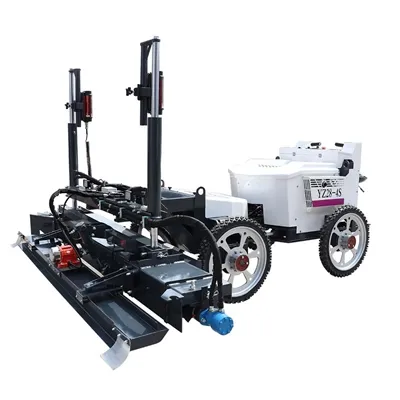
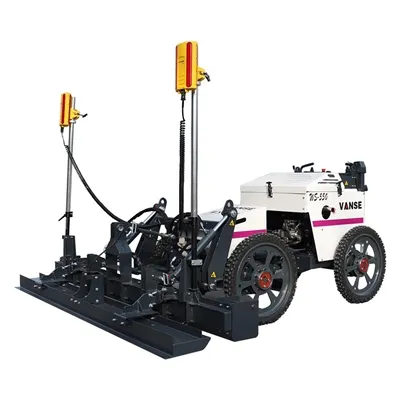
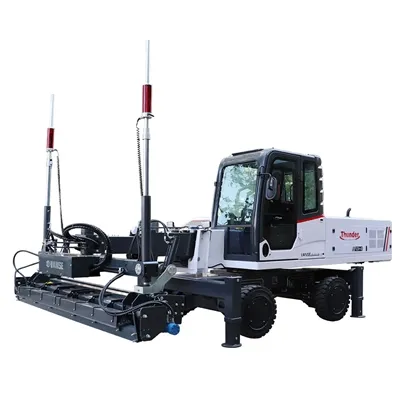
The new method uses an advanced leveling machine with high-precision sensors and control systems to quickly level the road surface before the concrete is initially tightened. Compared with traditional methods, the new method can better control the smoothness and drainage performance of the road surface and increase the service life of the road surface.
◆◆2◆◆ Advantages of the new method
1. High flatness:
The new method uses high-precision sensors and control systems to better control the flatness of the road surface and reduce unevenness.
2. Rapid construction:
The new method has higher construction efficiency, can shorten the construction period and reduce the impact on traffic.
3. Wear resistance and pressure resistance:
The new method can better withstand the rolling and friction of vehicles and improve the wear resistance and pressure resistance of the road surface.
4. Environmental protection and energy saving:
The new method uses advanced leveling machinery to reduce manual operations and energy consumption. and emissions, more environmentally friendly and energy-saving.
◆◆3◆◆ Implementation steps of the new method
1. Concrete pouring:
Before concrete pouring, the formwork should be cleaned and moistened to ensure that the formwork is clean and free of water. Then mix and transport the concrete according to the design requirements.
2. Paving and vibrating:
Spread the concrete evenly on the formwork, and use appropriate vibrating equipment to vibrate to ensure uniform density of the concrete.
3. Leveling machinery construction:
Before the initial setting of concrete, use leveling machinery for construction. The leveling machinery should be driven at a constant speed to avoid sudden acceleration or deceleration that may affect the construction quality. At the same time, the sensors and control systems should be adjusted according to the actual situation to ensure that the smoothness and drainage performance of the road surface meet the requirements.
4. Surface treatment:
After the leveling machinery construction is completed, the surface treatment of the road surface should be carried out. Smoothing, calendering, etc. can be used to make the road surface smoother and flatter. At the same time, attention should be paid to controlling the water-cement ratio and cement dosage to reduce cracks and color difference on the concrete surface.
5. Maintenance and protection:
After the pavement construction is completed, maintenance and protection should be carried out in accordance with the design requirements. Moisturizing and maintenance can be carried out by covering with film, sprinkling water, etc. At the same time, heavy objects should be avoided from crushing and rubbing the road surface. During the maintenance period, debris and dirt on the road surface should be cleaned in time to keep the road surface clean and beautiful.
6. Quality inspection:
After the construction is completed, the smoothness, compressive strength and other properties of the road surface should be inspected. If there are any problems, they should be rectified promptly. At the same time, the road surface should be inspected and maintained regularly to ensure that the quality and safety performance of the road surface meet the requirements.
◆◆4◆◆ Conclusion
This article introduces a new concrete pavement leveling method and its techniques. This method uses advanced leveling machinery and has the advantages of high flatness, fast construction, wear and pressure resistance, environmental protection and energy saving. Through reasonable construction inspections and quality inspections, we can ensure that the quality and safety performance of the pavement meet the requirements and extend the service life of the pavement. This method is suitable for various types of concrete pavement construction and has broad application prospects. If you still have questions or want to know more, please continue to ask questions or consult a professional.


Thanks to All the Friends Who Support and Trust Shandong Vanse Machinery Technology Co., Ltd.
If you want to know more about Shandong Vanse Machinery Technology Co., Ltd. or have any questions, please feel free to contact us:
Our Factory
Shandong Vanse Machinery Technology Co., Ltd.








Share this article

About the Author: Shandong Vanse Machinery Technology Co., Ltd.
Shandong Vanse Machinery Technology Co., Ltd. is a high-tech manufacturer specializing in concrete construction machinery, including laser screeds and related equipment. The company integrates R&D, production, and global sales, with products exported to over 60 countries and widely used in infrastructure projects worldwide.
Previous Post
Next Post
Related Articles
You Might Also Like
How to strengthen construction management in floor construction to ensure the smooth progress of the construction process?
🎨 Technical preparation: Organize technical personnel to be familiar with the construction drawings, master the floor design requirements, technical standards and construction technology. Prepare a detailed floor construction plan, covering the construction process, quality standards, safety measures, progress plan, etc., and submit it to the supervision and construction unit for review and approval. At the same time, conduct a comprehensive technical briefing for the construction personnel to make them clear about the construction process, quality requirements and safety precautions. 🎨 Material preparation: According to the construction drawings and plans, accurately determine the variety, specifications, and quantity of the required floor materials and purchase them. Strictly inspect the purchased floor materials, check whether the quality certification documents and specifications are consistent, and strictly prohibit unqualified materials from entering the site. According to the material storage requirements, keep them properly to prevent moisture, deterioration, and damage. 🎨 Staff preparation: Establish a professional floor construction team, and the construction personnel should have the corresponding skills and experience, and be qualified after training. Clarify the job responsibilities of each construction personnel, and make sure that the division of labor is clear and the responsibility is assigned to the person. Provide safety education and training for construction personnel to improve safety awareness and self-protection ability. 🎨 Equipment and tool preparation: According to construction needs, equip with complete floor construction equipment and tools, such as concrete laser leveling machine, floor grinder, vacuum cleaner, mixer, trowel, etc., and ensure that the equipment is in good performance and can operate normally. Regularly inspect, maintain and service the construction equipment and tools, and replace damaged parts in time to ensure safety and reliability. For the concrete laser leveling machine, you must be familiar with its performance and operation methods, debug it before use, and ensure that the laser system, hydraulic system, etc. work normally. 🎨 Site preparation: Clean the construction site, remove obstacles, level the site, and ensure that the construction site is solid and flat. Take drainage measures at the construction site to prevent water accumulation from affecting the quality of floor construction. Set up obvious construction signs and warning signs, demarcate the construction area, implement closed management, and prevent unrelated personnel from entering. 🎨 Base treatment: Clean the surface of the base, remove debris, dust, oil, etc., to ensure that the surface of the base is clean, flat, and crack-free. Check and accept the base, the flatness deviation should meet the design requirements, and the non-compliant parts should be processed. According to the conditions of the base layer, take appropriate treatment measures, such as applying interface agent, repairing cracks, etc., to enhance the bonding force between the base layer and the floor. 🎨 Floor material laying: Lay the floor material according to the construction plan and material instructions, pay attention to the uniformity and density of the material, and avoid defects such as hollowing and cracks. Control the laying thickness of the floor material to ensure that it meets the design requirements and the deviation is within the allowable range. If it exceeds, make corrections. During the laying of the floor material, vibrate and compact it in time to remove air so that the material is closely combined with the base layer. If a concrete laser leveler is used, after pouring the concrete, use it for rapid leveling to improve the flatness and density. 🎨 Floor construction process control: According to the flatness of the floor, reasonably select grinding equipment and grinding discs for floor grinding, control the grinding speed and pressure, and ensure that the surface is flat and smooth. After grinding, vacuum and clean in time. Mix the materials according to the requirements of the floor material mix ratio to ensure uniform mixing and consistent performance. After the mixed floor material is laid, smooth it in time and control the speed and angle of the smoothing machine. When using a concrete laser leveler, it is necessary to operate it in accordance with its operating procedures to ensure that the laser system accurately controls the elevation of the leveling head and achieves high-precision leveling. 🎨 Construction quality control: Establish a quality management system, clarify the responsibilities of quality management personnel, and strengthen quality control during the construction process. Strictly follow the construction specifications and quality standards for construction, conduct quality self-inspection after each process is completed, and report to the supervision unit and the construction unit for acceptance after passing the inspection. For quality problems that arise during construction, promptly analyze the causes and take measures to rectify them to ensure the quality of floor construction. For example, the use of a concrete laser leveler can improve the flatness and levelness of the floor. Regularly check its leveling effect and make timely adjustments if there is any deviation. 🎨 Construction safety management: Establish a safety management system, clarify the responsibilities of safety management personnel, and strengthen safety management at the construction site. Conduct safety education and training for construction personnel to improve safety awareness and self-protection capabilities, and require construction personnel to comply with safety operating procedures and correctly wear and use personal safety protection equipment. Set up obvious safety warning signs at the construction site and equip it with necessary fire-fighting equipment and first-aid medicines. Strengthen safety inspections, timely discover and eliminate safety hazards, immediately stop construction at locations with safety hazards, and take measures to rectify them. 🎨 Construction progress management: Develop a construction progress plan, clarify the construction tasks and time nodes at each stage, and report to the supervision unit and the construction unit for review and approval. According to the progress plan, reasonably arrange construction personnel and construction equipment to ensure smooth progress. Regularly check and analyze the construction progress, promptly discover factors that affect the progress, and take effective measures to adjust to ensure that the floor construction is completed on time. For example, the use of concrete laser leveling machines can improve construction efficiency. It is necessary to reasonably arrange its working hours, give full play to its role, and speed up the construction progress. 🎨 Construction cost management: Establish a cost management system, clarify the responsibilities of cost management personnel, and strengthen cost control during the construction process. Strictly control the procurement cost of floor materials, and select material suppliers with reliable quality and reasonable prices. Reasonably arrange construction personnel and construction equipment to improve construction efficiency and reduce costs. Strengthen cost accounting at the construction site, keep abreast of cost trends, analyze and adjust cost deviations, and ensure that construction costs are controlled within the budget. 🎨 Acceptance standards: After the floor construction is completed, the acceptance shall be carried out in accordance with the design requirements and relevant construction specifications. The acceptance content includes that the floor surface is flat and smooth, without defects such as cracks, hollows, and sanding; the floor color is uniform and consistent, without obvious color difference; the floor strength meets the design requirements, and the compressive strength test report should be complete; the floor slope meets the design requirements, the drainage is smooth, and there is no water accumulation. 🎨 Acceptance procedures: After the construction unit completes the floor construction, it will first conduct a self-inspection. After passing the self-inspection, it will submit the project inspection form to the supervision unit, and attach construction records, quality inspection reports and other materials. After receiving the inspection form, the supervision unit will organize the construction unit, construction unit and other relevant personnel to conduct acceptance. The acceptance personnel will inspect the floor according to the acceptance standards and fill in the acceptance records. For the problems found during the acceptance, the construction unit will promptly rectify them, and resubmit the acceptance application after the rectification is completed until the acceptance is qualified. 🎨 Acceptance materials: Floor construction acceptance materials should include construction drawings, construction plans, technical briefing records; floor material quality certification documents, inspection reports; construction records, such as base treatment records, floor material laying records, construction process control records, etc.; quality inspection reports, including floor flatness test reports, floor strength test reports, etc.; project inspection reports, acceptance records, etc. 🎨 Protection measures: After the floor construction is completed, take protective measures in time to prevent the floor surface from being polluted and damaged. When performing other operations on the completed floor, take protective measures such as paving and covering to avoid damaging the floor. It is strictly forbidden to stack heavy objects, drag tools, etc. on the completed floor to prevent scratches, dents and other defects. 🎨 Protection responsibility: The construction unit is responsible for the protection of the finished floor, formulates finished product protection measures and organizes their implementation. Each construction team shall do a good job in the protection of the finished floor within the construction scope of the team, and repair it in time if there is any damage. The supervision unit shall strengthen the supervision and inspection of the protection of the finished floor, and require rectification in time if problems are found. Click the below to jump immediately!!! ARMOUR JOINT CONCRETE LASER LEVELING MACHINE LIGHT TOWER POWER TROWEL SLIPFORM MACHINE STEEL FIBER TOPPING SPREADER TRACKED MINI DUMPERHow does the control system control the operating status and parameters of the concrete laser leveling?
The control system controls the operating status and parameters of the concrete laser leveling mainly through the following methods: 1. Sensor technology: Laser leveling machines are equipped with a variety of sensors, such as laser receivers, level sensors, vibration sensors, etc., to monitor the height, levelness and vibration status of concrete. These sensors feed real-time data back to the control system. 2. Embedded system: The em bedded system processes the data received from the sensor and determines the operating status of the leveler based on preset parameters. If data that does not meet the preset conditions is detected (for example, the concrete is too high or too low, or the equipment vibrates too much), the system will automatically adjust the operating parameters of the leveling or issue an alarm to prompt operator intervention. 3. Human-machine interface: The operator observes the real-time data and graphics provided by the control system through the human-machine interface, such as equipment location, concrete thickness, etc., and can manually adjust operating parameters. In addition, when an error occurs in the system, the interface will display the corresponding error code or information for operator reference. 4. Communication technology: The control system exchanges data with the leveling machine through wireless or wired communication technology to achieve remote monitoring and operation. For example, operators can remotely control and adjust parameters of a concrete laser leveling from the control room. 5. Database technology: The control system is usually equipped with a database to store information such as historical data and error codes of equipment operation. This data can be used for troubleshooting, performance analysis and quality control. 6. Safety protection: The control system also includes a safety protection mechanism to ensure that the leveling machine can automatically shut down or take other safety measures under abnormal circumstances, such as overload protection, overheating protection, etc. 7. Programmable logic controller (PLC): In some more advanced systems, programmable logic controllers are used to control various actions and logical processes of the leveling machine. Through programming, complex control logic and automated processes can be realized. To sum up, the control system controls the operating status and parameters of the concrete laser leveling machine by comprehensively using various technologies and mechanisms to ensure that the equipment completes its work efficiently and safely.How Does The Concrete Laser Leveling Machine Ensure The Flatness And Smoothness Of The Concrete During The Construction Process?
With the continuous advancement of modern construction technology, concrete laser levelings have become an efficient tool to ensure the flatness and smoothness of the ground. During the construction process, how to make full use of this technology to ensure the quality of concrete is the key that every construction worker needs to study and master in depth. This article will cover an overview of laser leveling machine technology, pre-construction preparation and material selection, laser leveling machine operation points, flatness control technical measures, smoothness improvement methods, construction quality inspection and evaluation, common problems and preventive measures, and construction safety and Environmental protection and other aspects, discuss how to ensure the flatness and smoothness of concrete during the construction process. ✔ Laser Leveling Machine Technology Overview The concrete laser leveling machine uses laser technology to perform precision leveling, which has the advantages of high efficiency, high precision and high stability. During the construction process, the laser leveling machine can adjust the height and position of the leveling tool in real time through the laser beam emitted by the laser transmitter to ensure that the flatness of the ground meets the design requirements. ✔ Pre-construction preparation and material selection Before construction, adequate preparations need to be made, including cleaning the construction site, ensuring the ground is solid and flat, and selecting appropriate concrete materials. The selection of concrete materials has a direct impact on flatness and smoothness. Concrete materials with stable quality and excellent performance should be selected, and the mix ratio of concrete should be adjusted according to the construction environment and requirements. ✔ Key points for laser leveling machine operation When operating the laser leveling machine, you need to pay attention to the following points: 1. Strictly follow the equipment instructions to ensure normal operation of the equipment. 2. Adjust the parameters of the laser leveler according to the construction requirements, such as leveling speed, leveling height, etc. 3. During the leveling process, keep driving at a constant speed and avoid sudden acceleration or braking. 4. Regularly check the wear of leveling tools and replace seriously worn tools in a timely manner. ✔ Technical measures for flatness control To ensure the flatness of concrete, the following technical measures can be taken: 1. Use a laser leveling machine for multiple levels to ensure that the flatness of the ground gradually improves. 2. During the leveling process, debris and accumulated water on the ground should be cleaned up in time to avoid affecting the leveling effect. 3. For areas with uneven ground, local leveling can be used. ✔ How to improve smoothness To improve the smoothness of concrete, you can do the following: 1. Before the initial setting of the concrete, use a professional trowel to perform troweling treatment to make the ground smoother. 2. During the troweling process, pay attention to controlling the speed and angle of the troweling machine to avoid excessive scratches. 3. For floors with special requirements, an appropriate amount of lubricant can be added to the concrete to improve the smoothness of the ground. ✔ Construction quality inspection and evaluation During the construction process, the construction quality should be regularly tested and evaluated. Specific contents include: 1. Use a spirit level, laser rangefinder and other equipment to check the flatness of the ground to ensure it meets the design requirements. 2. Observe the smoothness of the ground and check whether there are obvious scratches or pitting. 3. Record and analyze the test results, discover problems in a timely manner and take measures to improve them. ✔ Frequently asked questions and preventive measures During the construction process, some common problems may occur, such as sanding and cracking on the ground. To address these issues, the following preventive measures can be taken: 1. Control the concrete mix ratio and water-cement ratio to prevent the concrete from being too dry or too wet. 2. During the leveling process, avoid excessive vibration or impact on the ground to avoid cracking the ground. 3. For areas prone to sanding, you can increase the number of times of troweling or use professional sand control agents. ✔ Construction safety and environmental protection During the construction process, attention should be paid to construction safety and environmental protection. Specific measures include 1. Construction workers should wear safety protective equipment, such as hard hats, protective glasses, etc. 2. Obvious safety warning signs should be set up at the construction site to remind personnel to pay attention to safety. 3. To avoid noise, dust and other pollution during the construction process, noise reduction, dust reduction and other measures can be taken to reduce the impact on the surrounding environment. To sum up, ensuring the flatness and smoothness of concrete requires many aspects, including selecting appropriate materials, correct equipment, taking technical measures, conducting quality inspection and evaluation, and doing a good job in construction safety and environmental protection. Only by comprehensively considering and strictly implementing these measures can we ensure that the construction quality meets the expected requirements. At the same time, with the continuous advancement of technology and the accumulation of experience, we have reason to believe that concrete laser levelings will play a greater role in future construction. , providing a more reliable guarantee for improving the flatness and smoothness of the ground.