Technical Knowledge
Concrete laser screed: a revolutionary innovation in construction

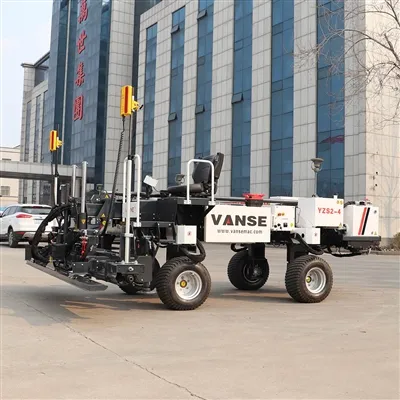
In the field of modern construction, the requirements for ground flatness and construction efficiency are increasing. Concrete laser leveling machine has become a revolutionary innovation in construction technology with its excellent performance and high efficiency. This article will explore in depth the working principle of laser leveling machine and the advantages it brings in construction.
1. Working principle of laser leveling machine
The core principle of concrete laser leveling machine is to use laser control technology, closed-loop control technology and high-precision hydraulic system, combined with computer adjustment control, to achieve precise control of ground flatness.
Laser control technology**: The horizontal line emitted by the laser transmitter is used as a reference to ensure accuracy during the construction process.
Closed-loop control system**: The laser receiver receives the horizontal line signal and transmits it to the control panel to form a feedback mechanism.
Computer adjustment control**: The operator adjusts the height and angle of the leveling head through the computer system according to the prompts of the control panel.
2. The role of high-precision hydraulic system and computer adjustment control
In the leveling process, high-precision hydraulic system and computer adjustment control play a vital role.
Precise control of the hydraulic system**: Ensure the precise adjustment of the scraper and vibrating instrument of the leveling machine head in height and angle.
High efficiency of computer adjustment**: To achieve one-time passing through the construction area, the computer can adjust the height standard ten times per second, and the vibration frequency is about four thousand times per minute.
3. Construction advantages of laser leveling machine
Compared with traditional manual leveling methods, laser leveling machine has many significant advantages:
High precision**: Achieve millimeter-level high-precision horizontal and vertical control.
Fast speed**: Significantly improve leveling efficiency and shorten the project cycle.
Good quality**: Ensure the flatness and smoothness of the ground and improve the overall quality of the project.
Low labor intensity**: Reduce the labor intensity of the operator and reduce the labor cost during the construction process.
4. Wide application of laser leveling machine
Due to the above advantages, laser leveling machine has been widely used in many fields:
Construction engineering**: Play an important role in ground construction of large warehouses, factories, shopping malls, etc.
Road construction**: Improve the flatness of the road surface and ensure driving safety.
Bridge construction**: Ensure flatness in the construction of bridge decks and improve structural stability.
5. Future Outlook
With the continuous advancement of technology, laser leveling machines will become more intelligent and automated in the future, further improving construction efficiency and quality.
Intelligent development**: Introduce intelligent sensors and artificial intelligence algorithms to improve the adaptive ability and decision-making efficiency of equipment.
Green and environmental protection**: Develop energy-saving and environmentally friendly technologies and materials to reduce environmental impact during construction.
Conclusion
Concrete laser leveling machines have become an indispensable equipment in modern construction with their advantages of high precision, high efficiency, high quality and low labor intensity. With the continuous development of technology, we expect laser leveling machines to play a greater role in the future construction field and bring broader development prospects to construction.
I hope this article can provide valuable reference and guidance for professionals in the field of construction.


Thanks to All the Friends Who Support and Trust Shandong Vanse Machinery Technology Co., Ltd.
If you want to know more about Shandong Vanse Machinery Technology Co., Ltd. or have any questions, please feel free to contact us:
Our Factory
Shandong Vanse Machinery Technology Co., Ltd.








Share this article

About the Author: Shandong Vanse Machinery Technology Co., Ltd.
Shandong Vanse Machinery Technology Co., Ltd. is a high-tech manufacturer specializing in concrete construction machinery, including laser screeds and related equipment. The company integrates R&D, production, and global sales, with products exported to over 60 countries and widely used in infrastructure projects worldwide.
Previous Post
Next Post
Related Articles
You Might Also Like
Analysis of the demand differences and preferences for power trowels in key regional markets such as North America, Europe, and Asia
Below, I will conduct a detailed analysis of the demand differences and preferences for matting machines in the three key regional markets of North America, Europe, and Asia. The North American market: It pursues high efficiency, high power and durability, prefers large-scale and automated equipment, has a high brand loyalty, and the rental market is an important driving force. The European market: Emphasizing safety, environmental friendliness, and precise craftsmanship, it prefers well-designed, energy-efficient, and environmentally friendly small and medium-sized equipment that meets strict standards. The Asian market: Demand is highly polarized. The high-end market pursues brand and performance, while the mainstream market pays extreme attention to cost-effectiveness and multi-functionality, and is extremely sensitive to price. North America, especially the United States, is one of the world's largest markets for trowels, characterized by its vast territory, sparse population, high labor costs, and large-scale construction projects. High efficiency and large-scale: As they are commonly used in large-scale concrete floor construction in large warehouses, shopping centers, industrial plants, etc., the market strongly prefers large riding trowelers and large-diameter hand-held trowelers. Strive to complete the construction of the largest area within the shortest initial setting time of concrete. Power and durability: Large-displacement gasoline engines (such as the Honda GX series) are widely used, aiming for strong power and reliability during long-term continuous operation. The structure of the equipment must be sturdy and durable to withstand high-intensity use and potential rough operation. Automation and ease of use: Interested in automation functions that can reduce the skill requirements for operators, such as the integration of laser leveling systems and automatic leveling functions, etc. The ergonomic design of operation is also very important. Brand preference: Extremely high brand recognition, an established brand (regarded as the industry's gold standard). Users have a strong loyalty to the brand and believe that the brand represents quality and reliability. Drive mode: Gasoline drive is the absolute mainstream as it offers the best power and mobility. Electric models are mainly limited to small-scale indoor construction with strict emission requirements. Procurement channels: The leasing market is extremely developed. A large number of contractors choose to lease equipment from large leasing companies rather than purchase it directly. This, in turn, affects the product design and marketing strategies of manufacturers (which need to meet the durability and standardization requirements of leasing companies). Safety standards: Strictly comply with safety regulations such as OSHA, and require equipment to be equipped with necessary protective devices and emergency stop switches. The European market is renowned for its strict regulations, high environmental protection standards and exquisite craftsmanship requirements. Environmental protection and low noise: The world's strictest control over emissions and noise. Therefore, there is a strong demand for electric trowelers (including battery-powered and cable-powered types) and low-emission gasoline/diesel engines. In urban construction and interior decoration, electric equipment is almost the only option. Safety and Health: Strictly adhere to CE certification and mechanical directives, with extremely high requirements for operator safety protection. The equipment must be equipped with complete protective measures, such as cutter head guards, vibration isolation handles, etc. The focus on ergonomics far exceeds that of other markets to prevent occupational injuries and illnesses. Precision and high-quality construction: For commercial Spaces, residences and other projects, extremely high ground flatness and smoothness are pursued. Therefore, there are strict requirements for the precise adjustment functions of the trowel machine (such as fine-tuning the blade Angle), smooth operation and the final trowel effect. Compact and multi-functional: In European cities, streets are narrow and construction sites have limited space, so there is a greater preference for equipment that is compact in structure and lightweight. There is also a certain demand for multi-functional models that can adapt to various working conditions. Brand preference: Domestic brands have an advantage. Users attach great importance to the "German craftsmanship" or "Italian design" of the product. Drive mode: Electric and gasoline/diesel are given equal weight, and the trend of electrification is much faster than that in North America. The market acceptance of medium-sized three-phase electric trowels and light-duty trowels driven by lithium batteries is very high. Technical preference: Tends to choose products that are technologically advanced and well-designed, even if they are relatively expensive. There is a good acceptance of equipment that integrates technologies such as frequency converters (to achieve stepless speed regulation) and lightweight composite material bodies. The Asian market is the most complex, presenting a typical "pyramid" structure with both high-end and low-end demands coexisting. Extreme cost sensitivity: In mainstream markets other than developed regions such as Japan, South Korea, and Singapore (such as China, India, and Southeast Asia), price is the primary determining factor. This has given rise to a huge domestic mid-to-low-end manufacturing industry, with products mainly meeting basic functions. Polarized market demand High-end market: Large-scale infrastructure projects (airports, ports), high-end commercial complexes, foreign-funded projects, etc. Its demand is similar to that of the North American market, pursuing high-performance and highly reliable products from international first-line brands. The mid-to-low-end market: A large number of civil buildings and small and medium-sized projects mainly use domestic brands with low prices. There is no high demand for durability and fineness. What is more valued is "usable, sufficient and quick return on investment". Versatility and adaptability: As construction teams often need a single machine for multiple uses, there are requirements for the adaptability of the equipment, such as the ability to replace different blades to adapt to concrete of different hardness. The emerging trend of electrification: With the rise of China's manufacturing industry and the tightening of environmental protection policies, cost-effective lithium battery polishing machines are rapidly gaining popularity, especially in interior decoration and urban renewal projects. Brand preference High-end: Similar to the North American market, the brand holds an unshakable position in top-tier projects and is a symbol of quality and credibility. Mid-range/mainstream: Chinese domestic brands have occupied the vast majority of the market share with their extremely high cost performance. Japanese brands also have a certain influence in Southeast Asia and other regions. Procurement behavior: Price-driven is very obvious. The purchase decision-making cycle is short, and the requirements for after-sales service are gradually increasing, but price remains the overwhelming factor. The rental market is developing, but not as mature as that in North America. Product preference: Prefers models with simple structures, easy maintenance, and inexpensive and readily available spare parts. The pursuit of operational comfort and advanced functions is limited to high-end customers. Characteristic dimension The North American market European market The Asian market Core requirements Efficiency, power, durability Safety, environmental protection and precision Cost-effectiveness, multi-functionality (polarization) Product preference Large riding type, large-diameter hand-guided type Compact, electric/low-emission, precision The main type is the economical hand-guided type, and the high-end demand is on par with that in North America Motivation preference Gasoline engines are the main type. Equal emphasis is placed on electric and gasoline/diesel Gasoline engines are dominant, while electric (lithium battery) vehicles are growing rapidly Brand landscape Dominated by international giants, the brand loyalty is high Strong domestic high-end brands, technology-oriented International brands dominate the high-end market, while domestic brands are in the mainstream. The competition is highly intense Price sensitivity Moderately low (emphasis on value Medium (emphasizing quality and compliance Extremely high (mainstream market Procurement channel The rental market is key Professional distributors, direct sales Dealers, online platforms, direct sales from manufacturers Regulation-driven OSHA safety standards CE certification, environmental protection directive (the strictest Standards vary from country to country, but those of China and other countries are rapidly improving Advice for manufacturers/exporters: Entering North America: It is necessary to offer durable and powerful products and cooperate with a strong distribution and after-sales network. Brand building and gaining recognition from leasing giants are the keys to success. Entering the European market: Products must be 100% compliant with CE and other regulations, with a focus on investing in electric and low-noise technologies, emphasizing the safety, precision and environmental friendliness of the products. Entering Asia: Flexible strategies are needed. Either position it at the high end and rely on brand and technological advantages; Either enter the mainstream, design highly cost-competitive products, and establish an efficient supply chain and distribution system. Pay close attention to the market transformation opportunities brought about by lithium battery technology. Note: The parameters provided in this document are for reference only and are not mandatory. Due to differences in technical characteristics between different brands and models of laser levelers, please consult the manufacturer for a suitable solution before actual operation. This reference document assumes no responsibility for any issues arising from failure to follow the manufacturer's instructions.How does the concrete laser leveling machine improve construction efficiency and quality?
Concrete laser leveling machine is a key equipment to improve efficiency and quality in modern concrete construction. Its core is to achieve high-precision leveling through the laser system, and to complete large-area concrete paving, vibration and leveling in combination with mechanical structure. The following is a detailed analysis of its advantages and mechanism of action from the two aspects of construction efficiency and construction quality: Traditional manual leveling requires multiple vibration and scraping in different areas, and is limited by manual physical strength and operating range (small single-person operation area). The laser leveling machine can cover a range of up to 3-6 meters (depending on the model) through a mechanical arm or scraper, and can achieve a construction area of 500-3000㎡/day (traditional manual only 100-300㎡/day), especially suitable for large areas such as factories, warehouses, and parking lots. – Advantages: Reduce the gap between manual shifts and tool adjustments, and realize the integrated continuous operation of "paving-vibration-leveling". The laser leveling machine establishes a horizontal reference plane through a laser transmitter, and the sensor receives signals in real time and automatically adjusts the scraper height, without the need for repeated manual measurement and adjustment. For example: – Traditional manual work requires frequent calibration of elevations with rulers and levels, measuring every 1-2 meters; the laser system can dynamically level in real time, with a response time of only 0.1-0.3 seconds, greatly reducing the time spent on measurement and adjustment. The bottom of the equipment is usually equipped with multiple sets of high-frequency vibrating rods (vibration frequency 200-300 times/minute), which complete the concrete vibration and compaction while leveling, avoiding the repeated process of manual vibration first and then leveling. The vibration depth can reach 10-30cm, the coverage range is synchronized with the leveling, and the efficiency is 3-5 times higher than manual vibration alone. The horizontal accuracy of the laser system can reach ±1mm/3m, which is much higher than the ±5-10mm error of manual leveling. The principle is: – The laser transmitter emits a 360° rotating laser beam to form a horizontal reference plane; – The fuselage sensor detects the height difference with the reference plane in real time, and automatically adjusts the scraper height through the hydraulic system to ensure that the surface flatness of the concrete meets high standards (such as precision workshops, airport runways, etc.). When paving manually, coarse aggregates are prone to sinking (segregation) due to uneven shovel throwing and vibration. The laser leveler pushes concrete at a uniform speed through the scraper, and cooperates with high-frequency vibration to make the aggregate distribution more uniform, avoiding defects such as honeycombs and hemp surfaces. At the same time, the vibration frequency can be adjusted according to the slump of the concrete (such as reducing the frequency when the slump is high to prevent over-vibration segregation), and it is more adaptable. Manual leveling is greatly affected by experience, physical strength, and environment (such as strong light and fatigue), and height differences may occur in the same area; laser leveling machines use mechanical automation to ensure the consistency of bid height and slope (supporting one-way/two-way slope settings) in large-scale construction, especially suitable for sites with drainage slope requirements (such as parking lots and roofs). Due to the high surface flatness and uniform density, there is no need for repeated finishing before the initial setting of concrete, and the maintenance stage can be quickly entered, indirectly reducing the quality risks caused by later repairs. The laser leveling machine reduces the inefficient links of manual intervention (such as multiple measurements and repeated vibration) through "automatic benchmark control + integrated process integration", and avoids the quality fluctuations of manual operation through high-precision systems. In actual application, its comprehensive benefits are reflected in: – Efficiency: Construction speed increased by 2-3 times, and labor costs reduced by more than 50%; – Quality: The flatness pass rate increased from 70%-80% of manual work to more than 95%, and the problems of cracking and sanding in the later stage of the ground were reduced by more than 60%. Therefore, in large-scale, high-standard concrete construction, laser leveling machines have become the core equipment to replace traditional processes. Click the below to jump immediately!!! AMOUR JOINT CONCRETE LEVELING MACHINE LIGHT TOWER POWER TROWEL SLIPFORM MACHINE STEEL FIBER TOPPING SPREADER TRACKED MINI DUMPERHow to extend the service life of metal trowels blades?
– Speed: According to the requirements of the trowel machine's instruction manual, reasonably control the speed of the trowel. If the speed is too high, the friction between the trowel and the ground material will increase sharply, resulting in increased wear. For example, for general concrete troweling operations, controlling the speed within a reasonable range (such as 100-150 rpm) can effectively reduce the wear of the trowel. – Pressure: During operation, avoid applying too much pressure to the trowel. Excessive pressure will cause excessive friction between the trowel and the ground. The correct approach is to apply moderate pressure according to the flatness of the ground and the requirements for troweling. For example, when finely troweling a ground that has been preliminarily leveled, only light pressure is needed to allow the trowel to slide smoothly on the ground. – Avoid idling: After the trowel is started, the trowel should be placed on the ground material as soon as possible to avoid long-term idling of the trowel. Because when idling, the friction between the edge of the trowel and the air and the centrifugal force generated by its own high-speed rotation may cause slight deformation or damage to the trowel, thus affecting its service life. – Uniform operation: When performing trowel operations, keep the movement trajectory of the trowel uniform. Try to avoid repeated excessive troweling in a local area, which will cause excessive wear of the trowel in that area. For example, when troweling a large area of concrete floor, use a zigzag or spiral movement trajectory to make the trowel uniformly stressed and worn on the entire floor. – Clean up debris in time: After each use of the trowel machine, clean up concrete residues, dust and other debris on the trowel in time. If these debris are attached to the trowel for a long time, the friction between the trowel and the ground will increase the next time it is used, accelerating wear. You can use a soft brush or a compressed air gun to clean the trowel. – Prevent chemical corrosion: If the trowel comes into contact with liquids containing chemicals (such as concrete admixtures, acidic or alkaline detergents, etc.), rinse it with clean water in time. Because chemicals may corrode metal trowels, reducing their hardness and wear resistance. – Regular inspection: Check the wear of the trowel regularly (such as every week or every two weeks), including the degree of wear on the blade, whether there are cracks or deformation on the surface, etc. If problems are found, they should be repaired or replaced in time. At the same time, check whether the connection between the trowel and the trowel machine is firm. If there is any looseness, tighten the fixing screws in time. – Proper lubrication: Apply an appropriate amount of lubricant, such as grease, to the connecting shaft of the trowel. Lubrication can reduce friction at the connection point and prevent damage to the connecting shaft and trowel due to heat generated by friction. It also helps the trowel to rotate flexibly, indirectly extending its service life. – Storage in a dry environment: Store the trowel in a dry and well-ventilated environment to avoid humid environments that cause metal rust. If the trowel is rusty, the rust layer on its surface will increase the friction with the floor material and accelerate wear. You can place a desiccant in the storage area, or use anti-rust oil to simply protect the trowel. – Store separately to avoid collision: Try to store the trowel separately to avoid collision with other tools or hard objects. Because collision may cause damage such as gaps and deformation on the trowel, affecting its normal use and service life. If you need to stack the trowels, place soft isolation materials in the middle, such as foam boards or rubber pads.