Technical Knowledge
About the Shandong Wanshi Machinery Technology Co., Ltd.

Since its establishment in 2013, Shandong Vanse Group has seized the golden period of the development of the concrete industry, adhered to the development concept of high-end, high-quality and high efficiency, and rapidly emerged as a leader in the field of domestic and even international concrete equipment. The group not only focuses on technology research and development and innovation, but also pays more attention to market expansion and customer service, and successfully builds a complete industrial chain integrating research and development, production, sales and after-sales service, and has won the trust and cooperation of many well-known companies such as JD Logistics, CATL, Great Wall Motors, and China Construction Corporation.
Group Overview and Business Layout
Vanse Group has several business divisions, including Vanse Machinery, Wanhui New Energy, Vanse Road and Bridge, and Shanghai Vanse Machinery, forming a diversified product line and service system. Its concrete equipment not only covers the vast market of 31 provinces, cities and autonomous regions in China, but also is exported to more than 30 countries and regions around the world, including the United States, the United Kingdom, Russia, Germany, Saudi Arabia, Australia, etc., demonstrating the international influence of the Vanse brand.
Technical Cooperation and Innovative Development
In 2018, the technical cooperation agreement between Vanse Group and British experts marked an important step in its internationalization strategy. By introducing the world's top technology, Vanse Group has perfectly integrated humanized mechanical design with laser systems, reaching the international advanced level. At the same time, the group has established a deep cooperation mechanism between industry, academia, research and application with higher education institutions such as Shandong University and Chang'an University to jointly promote technological innovation and achievement transformation, injecting a steady stream of power into the development of the industry.
Corporate Vision and Social Responsibility
Vanse Group has always taken the vision of "creating a better life for mankind" as the direction of corporate development, and is committed to improving product performance and optimizing user experience through technological innovation, and providing more efficient, environmentally friendly and intelligent concrete solutions for global customers. The group actively participates in social welfare undertakings, practices corporate citizenship responsibilities, and is committed to sustainable development, striving to contribute to social harmony and environmental protection while achieving commercial success.
Looking to the Future
Standing at a new historical starting point, Vanse Group will continue to deepen its domestic and foreign market layout, increase R&D investment, expand emerging fields such as new energy and intelligent equipment, and continuously explore new trends and technologies in the development of the concrete industry, drive development with innovation, and win the market with quality. Facing the future, Vanse Group will take a more open attitude and work with global partners to jointly create a more brilliant tomorrow for the concrete industry.
Conclusion
The growth process of Shandong Vanse Group is a model of innovation and pursuit of excellence. Through unremitting efforts, Vanse Group has not only shaped its own brand image, but also made positive contributions to the development of the global concrete industry. In the future, Vanse Group will continue to uphold its original aspirations, keep pace with the times, and work tirelessly to achieve the grand goal of "grasping the present and realizing the future". Working with Vanse to create a better future is not only the group's commitment, but also a good wish for every partner and all walks of life.
Thanks to All the Friends Who Support and Trust Shandong Vanse Machinery Technology Co., Ltd.
If you want to know more about Shandong Vanse Machinery Technology Co., Ltd. or have any questions, please feel free to contact us:
Our Factory
Shandong Vanse Machinery Technology Co., Ltd.








Share this article

About the Author: Shandong Vanse Machinery Technology Co., Ltd.
Shandong Vanse Machinery Technology Co., Ltd. is a high-tech manufacturer specializing in concrete construction machinery, including laser screeds and related equipment. The company integrates R&D, production, and global sales, with products exported to over 60 countries and widely used in infrastructure projects worldwide.
Previous Post
Next Post
Related Articles
You Might Also Like
Safety measures in concrete floor construction
Safety measures in concrete floor construction Concrete floor construction is a complex project involving many links, among which safety issues are particularly critical. From safety preparation before construction to management of the construction site, to the operation of mechanical equipment, personal protection and equipment, high-altitude operations and protection, electrical safety and fire prevention, as well as emergency handling and rescue, each link is directly related to the life safety of construction personnel and the smooth progress of the project. Therefore, this article will focus on these aspects and discuss in detail the safety measures in concrete floor construction: 1. Safety preparation before construction Safety preparation before construction is the basis for ensuring the smooth progress of concrete floor construction. First of all, the construction unit should formulate a detailed safety construction plan, clarify the safety construction goals, responsible persons and safety measures, and conduct safety technical briefings for construction personnel so that they can fully understand the safety risks and countermeasures that may be encountered during construction. Secondly, a comprehensive inspection should be carried out on the construction site to eliminate safety hazards, such as checking whether the construction power lines are intact and whether the mechanical equipment is operating normally. At the same time, according to the needs of the construction, the construction area should be reasonably arranged, and obvious safety warning signs should be set up to ensure that construction personnel can clearly identify dangerous areas. 2. Construction site management Construction site management is an important link to ensure the safety of concrete floor construction. The construction unit should establish a sound construction site management system and clarify various safety management regulations, such as prohibiting smoking at the construction site and prohibiting the random discarding of construction waste. At the same time, a dedicated person should be set up to be responsible for on-site safety management, regularly inspect the construction site, and promptly correct violations. In addition, the construction site should be kept clean and orderly, and construction materials and equipment should be stored in categories to avoid confusion and misoperation. 3. Safety of mechanical equipment operation Concrete floor construction involves a large number of mechanical equipment, such as mixers, rollers, pumping equipment, etc. In order to ensure the safety of mechanical equipment operation, first of all, it should be ensured that the operator has the corresponding operating qualifications and skills, and is familiar with the working principle and operating procedures of mechanical equipment. Secondly, mechanical equipment should be regularly maintained to ensure that it is in good working condition. At the same time, when operating mechanical equipment, it should be strictly carried out in accordance with the operating procedures, and overload operation or illegal operation is prohibited. 4. Personal protection and equipment Construction workers in concrete floor construction need to wear appropriate personal protective equipment to reduce the risk of injury. First of all, construction workers should wear basic protective equipment such as safety helmets, safety shoes and protective glasses. To deal with possible injuries such as falling objects and splashes. Secondly, depending on the construction environment, construction workers should also wear specific protective equipment such as dustproof mouthpieces and anti-noise earplugs to deal with occupational hazards such as dust and noise. In addition, construction units should regularly check and replace personal protective equipment to ensure that it is always in an effective state. 5. High-altitude work and protection In the construction of concrete floors, high-altitude work is inevitable. In order to ensure the safety of high-altitude work, construction units should set up special safety nets, safety fibers and other protective facilities to prevent construction workers from falling and causing accidents. At the same time, construction workers should wear safety belts when working at heights, and ensure that the connection between the safety belts and the fixed points is firm and reliable. In addition, construction units should also regularly inspect the high-altitude work areas to eliminate potential safety hazards in a timely manner. 6. Electrical safety and fire prevention Electrical safety and fire prevention are safety issues that require special attention in the construction of concrete floors. Construction units should strictly abide by the relevant national regulations on electrical safety and fire prevention to ensure that the electrical equipment and lines at the construction site are safe and reliable. At the same time, the construction site should be equipped with a sufficient number of fire-fighting equipment and facilities, such as fire extinguishers, fire hydrants, etc., to deal with possible fire accidents. In addition, construction workers should master basic firefighting knowledge and skills, and be able to quickly take effective countermeasures when a fire occurs. 7. Emergency handling and rescue Although we can take various preventive measures to reduce the safety risks in concrete floor construction, accidents may still occur. Therefore, it is crucial to establish a sound emergency handling and rescue mechanism. The construction unit should formulate a detailed emergency plan to clarify the response measures and rescue procedures for various accidents. At the same time, emergency drills should be organized regularly to improve the emergency handling capabilities and rescue skills of construction personnel. In the event of an accident, the construction unit should immediately activate the emergency plan and quickly organize rescue forces to deal with it, minimizing the losses caused by the accident. In summary, safety measures in concrete floor construction involve many aspects, which require the joint efforts of construction units and construction personnel. By strengthening pre-construction safety preparation, construction site management, mechanical equipment operation safety, personal protection and equipment, high-altitude operations and protection, electrical safety and fire prevention, and emergency handling and rescue, we can effectively reduce the safety risks in concrete floor construction and ensure the life safety of construction personnel and the smooth progress of the project. At the same time, construction units and construction personnel should continue to learn new knowledge and master new technologies to adapt to the ever-changing safety needs and challenges in concrete floor construction.Concrete finishing-trowel machine
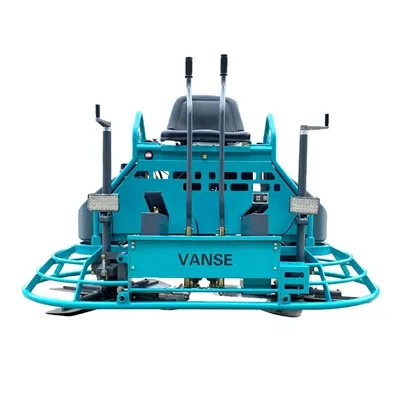
Concrete finishing is not an easy job. During construction, workers' hands, backs and knees are easily injured. The advent of trowels allows construction workers to stand and operate when finishing concrete. Based on the size of the project, the number of people and the customer's requirements for the surface layer, the construction party can consider purchasing a trowel. If you are a construction party specializing in concrete coloring, dyeing or home decoration polishing, you may not need to buy a ride-on trowel (double-disc machine). This type of trowel is not only expensive, but also has a higher hardness after finishing, and there is no such high requirement for the above-mentioned types of floors. In fact, a walk-behind trowel is sufficient to meet the work requirements of small-area floor slurry finishing. Under what circumstances should you consider investing in a trowel? Generally speaking, the construction area is an important consideration. "Even small-area projects can use trowels, even if the project is only a few hundred square meters. As long as the construction area reaches 100 square meters, a trowel must be used. If it exceeds 300 square meters, a small ride-on trowel must be considered." From another perspective, the working efficiency of a single-disc trowel is equivalent to that of three construction workers using traditional manual finishing tools such as scrapers. It seems that the biggest advantage of the trowel is to increase the construction speed. But this is only a one-sided understanding of the advantages of the trowel. The trowel does not simply increase the speed but the efficiency when dealing with large-area construction. To put it further, the trowel allows the construction party to choose a more appropriate time to start the machine when dealing with large-area construction, instead of having to start early because of the need to consider the overall area of construction like traditional construction. 1. Before use, check whether the motor, electrical switch, cable and wiring are normal and meet the regulations, and install a leakage protector. 2. Before use, check and clean the debris on the trowel to avoid the whole machine jumping during use. 3. After the power is turned on, the test run is carried out. The blades rotate in a clockwise direction and must not be reversed. 4. The operator should wear insulating shoes and insulating gloves. The cable is carried by the assistant, who should also wear insulating shoes and insulating gloves. Be careful to prevent the cable insulation layer from being scratched and causing electric shock accidents. 5. If the trowel fails, it needs to be shut down and the power is cut off before it can be repaired. 6. The trowel should be stored in a dry, clean environment without corrosive gases. The handle should be placed in the specified position. It should not be loaded and unloaded rudely during transfer. 1. During construction, pay attention to the temperature of the motor reducer not exceeding 80° 2. The oil of the turbine box needs to be checked frequently. If it is lower than the oil mark, please add oil in time. The machine should be cleaned in time after each use, especially the wiper should be clean and stored in a dry, clean and non-corrosive environment. When the wiper is worn to 30mm on one side, loosen the nut, turn the wiper around and tighten the screw again to achieve the purpose of using two pairs. The angle of the trowel can be adjusted by turning the hand wheel to achieve the ideal effect of rough trowel. If you need to stop the machine during construction, please turn off the power in time. When the gasoline engine stops, press the switch on the handle in time to stop the machine. The floor effect after the trowel is processed is more uniform, the construction speed is faster, and the operation is more convenient. Long-term operation with a handheld trowel will easily fatigue the construction worker's knees, shoulders and elbows, which will affect the construction effect. Simply put, using a trowel makes the originally difficult operation easier, and it is a better equipment for floor finishing.How does concrete laser leveling technology improve construction efficiency?
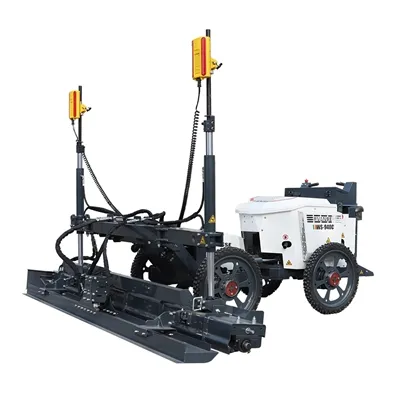
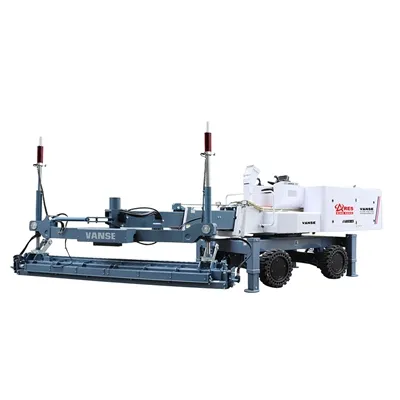
Concrete laser leveling technology is an innovative technology in the field of modern construction. It uses laser as a reference to achieve fast and precise leveling of concrete surfaces. This technology not only improves the efficiency of construction, but also ensures the stability and consistency of construction quality. The following is an in-depth analysis of how concrete laser leveling technology improves construction efficiency. Introduction In traditional concrete construction, ground leveling work usually relies on manual operation, which is not only labor-intensive and inefficient, but also difficult to ensure flatness and accuracy. With the improvement of the construction industry's requirements for construction quality and efficiency, concrete laser leveling technology has emerged, bringing revolutionary changes to construction. 1. Technical Overview Concrete laser leveling technology is a technology that uses laser as a reference to accurately level the concrete surface through automated equipment. The core of this technology lies in the effective coordination of laser transmitters, receivers, control systems and leveling equipment. > Learn more about customlzatlon >> 2. Working Principle The working principle of concrete laser leveling technology mainly includes the following steps: – **Laser transmitter**: emits a stable laser beam to form a horizontal reference plane. – **Receiver**: installed on the leveling machine, receives laser signals and converts them into electrical signals. – **Control system**: According to the received electrical signal, the working state of the leveler is automatically adjusted to ensure that the concrete surface is consistent with the laser plane. – **Leveling equipment**: According to the instructions of the control system, the concrete surface is leveled through vibration and scraping functions. > Learn more about customlzatlon >> 3. Key factors to improve construction efficiency The key factors for improving construction efficiency of concrete laser leveling technology include: – **High degree of automation**: Reduces manual intervention and improves construction speed. – **High construction accuracy**: Ensures the flatness and accuracy of the concrete surface. – **Stable construction quality**: Reduces rework caused by uneven construction quality. – **High material utilization rate**: Reduces material waste by accurately controlling the laying thickness of concrete. > Learn more about customlzatlon >> 4. Construction process optimization The application of laser leveling technology optimizes the construction process, including: – **Site preparation**: Quickly complete site cleaning and leveling. – **Laser transmitter setting**: Quickly and accurately set the laser transmitter. – **Concrete pouring**: With the assistance of the laser leveling machine, the concrete pouring is quickly completed. – **Leveling operation**: The laser leveler automatically completes the leveling of concrete according to the laser signal. – **Surface treatment**: Quickly complete the leveling and calendering of the concrete surface. – **Quality inspection**: Use professional equipment to quickly complete the flatness and levelness inspection of the concrete surface. > Learn more about customlzatlon >> 5. Technical advantages and practical applications Laser leveling technology has shown obvious advantages in practical applications: – **Industrial plant**: Quickly complete the leveling of large areas of ground and improve construction efficiency. – **Commercial facilities**: Ensure the flatness of the ground and improve customer experience. – **Airport runway**: Ensure the flatness and strength of the runway to ensure the safe takeoff and landing of aircraft. – **Roads and bridges**: Improve the flatness and bearing capacity of the road surface and extend its service life. > Learn more about customlzatlon >> 6. Technical challenges and coping strategies Although laser leveling technology has obvious advantages, it also faces some challenges in practical applications: – **Environmental factors**: Wind, temperature changes, etc. may affect the stability of the laser. – **Equipment maintenance**: The laser leveler needs regular maintenance to ensure its performance. – **Training of construction personnel**: Professional knowledge and skills are required to operate the laser leveling machine. Countermeasures include: – Improve the stability of the laser transmitter through technical improvements. – Establish a complete maintenance system and train operators. – Provide professional training courses to improve the operating skills of construction personnel. > Learn more about customlzatlon >> 7. Technological innovation and development trends With the continuous advancement of science and technology, laser leveling technology is also constantly innovating and developing: – **Intelligentization**: Integrate more intelligent sensors and control systems to improve the automation level of the leveling machine. – **Multifunctionality**: Develop a leveling machine that can complete multiple construction tasks at the same time. – **Environmentally friendly materials**: Research and use more environmentally friendly concrete materials to reduce the impact of construction on the environment. > Learn more about customlzatlon >> 8. Conclusion Concrete laser leveling technology has become an indispensable part of modern construction with its advantages of high efficiency, high precision and construction quality. By optimizing the construction process, improving material utilization and reducing rework rate, this technology has significantly improved construction efficiency. With the continuous development and innovation of technology, concrete laser leveling technology will play a greater role in the future and bring more possibilities to the construction industry. > Learn more about customlzatlon >>