Technical Knowledge
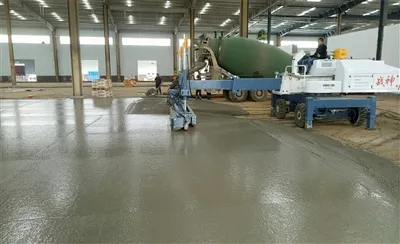
Concrete laser leveling machine construction plan
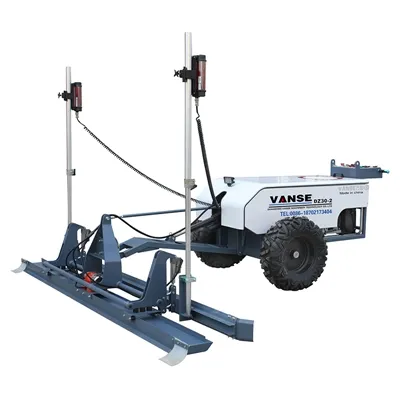
The technical construction of laser leveling machine is a brand-new design concept. The application of leveling machine has become a popular trend in the modern concrete industry. However, what is the technical solution of laser leveling machine? Let's introduce it in detail below.
1. Requirements for concrete
❶ Concrete must be produced by commercial concrete production plants, transported or pumped to the floor project site.
❷ Concrete specifications: C25~C30 concrete, the 28-day strength is not less than 25MPa, according to the design requirements.
❸ Water-cement ratio: no greater than 1. Do not add water at will during the feeding process.
❹ Cement: Use ordinary Portland cement not less than the grade.
❺ Aggregate: Well-graded aggregates should be used. Use crushed granite or pebbles as coarse aggregate, with the maximum diameter not larger than 25mm. Clean river sand is used as fine aggregate, and the fineness modulus is appropriate.
❻ Concrete mix ratio: cement dosage should not be less than 350Kg/m3. In order to avoid surface quality problems, the sand rate should be controlled at 35%~40%
❼ Concrete slump: 14+2cm, maximum 16cm
❽ Setting time: The initial setting time should be controlled at 3-5 hours.
2. Construction coordination requirements
❶ The concrete feeding speed should be determined according to the ground thickness and pouring area. The minimum hourly feeding speed should be determined. For a floor with a thickness of 200 mm, if the one-time pouring width reaches 40 meters, the minimum feeding speed should reach 40 cubic meters per hour. Otherwise, cold joint problems will occur and the quality of the ground construction will be affected.
❷ Manual cooperation requires workers to remove the concrete delivered to the floor as soon as possible and roughly level it. In addition, manual leveling is required for areas around the formwork, walls, columns, trenches, equipment foundations, floor drains or pipelines that cannot be leveled. Generally, 3-4 workers are required to cooperate with the construction (provided by Party A).
❸ Other precautions: To ensure the flatness of the ground, please note:
① The slump of the concrete delivered to the floor must be consistent each time.
② Ensure that the concrete supply speed reaches 40 cubic meters per hour or above, and the initial setting time of each batch of concrete must be consistent.
③ Ensure that the formwork elevation is accurate and cannot be disturbed during construction.
④Environmental cooperation. The newly constructed concrete floor should not be exposed to sunlight, wind, rain and other environments that are detrimental to the health of concrete.
❹ Other requirements:
A. In order to avoid random cracks on the floor, shrinkage joints should be cut as early as possible (within 24 hours).
B. While the laser leveling machine is being constructed, there must be no welding machines or reflective objects (such as glass windows) on site.
C. The foundation must reach a certain hardness to ensure that the laser leveler does not collapse when operating on the ground.
D. The height of the ground in the factory building is calibrated by Party A. The points must be evenly distributed and there must be no error in level.
E. Concrete pouring must be carried out according to the requirements of Party B's technical personnel.
Thanks to All the Friends Who Support and Trust Shandong Vanse Machinery Technology Co., Ltd.
If you want to know more about Shandong Vanse Machinery Technology Co., Ltd. or have any questions, please feel free to contact us:
Our Factory
Shandong Vanse Machinery Technology Co., Ltd.
Share this article

About the Author: Shandong Vanse Machinery Technology Co., Ltd.
Shandong Vanse Machinery Technology Co., Ltd. is a high-tech manufacturer specializing in concrete construction machinery, including laser screeds and related equipment. The company integrates R&D, production, and global sales, with products exported to over 60 countries and widely used in infrastructure projects worldwide.
Previous Post
Next Post
Related Articles
You Might Also Like
How to deal with the scrapped laser leveling machine
No matter how excellent the performance of the laser leveling machine is, with the continuous increase of the service life or usage, or the influence of improper maintenance and untimely after-sales service of the manufacturer, it is very likely to cause the laser leveling machine to fail. Aging, or even scrapping. Faced with such machines, the usual practice of many construction units is to throw them aside and ignore them. Little do they know that many manufacturers have launched activities of "recycling old machines at high prices and exchanging old ones for new ones". For the laser leveling machine that has been scrapped, customers and friends can participate in the above activities in the following ways. ●Sell the idle laser leveling machine directly, and the manufacturer will recycle it at a high price For the aging laser leveling machine that is idle and aging in your hands, it may be due to the large amount of engineering used, the long service life, the old software system, or the purchase of a newer or larger laser leveling machine, or has changed careers. No more direct concrete paving construction, and no plans to reuse the original idle laser leveling machine. As long as the laser system is in good condition, it can be sold directly to manufacturers with "trade-in" activities, and they will definitely appreciate your equipment Conduct a professional assessment to help you monetize. ●Repair and refurbish the laser leveling machine in hand, and the manufacturer will provide you with remanufacturing services Towards the end of the year, many construction units arrange their construction equipment after they are free to prepare for the next year's construction. They hope to reuse the idle and aging laser leveling machines in their hands, but often because they do not have professional technology , and it cannot be repaired, and the cost of repurchasing the machine is too high. At this time, you can contact the manufacturer of "recycling the old machine at a high price" to remanufacture your laser leveling machine. In addition to solving the problems of your current equipment, replacing the damaged one In addition to accessories, you can also use your own technical advantages to upgrade your equipment software system, making it "turn waste into treasure". ●Replace the scrapped equipment with a new one at a price, and the manufacturer provides the service of "trading the old for the new" Laser leveling machine is a precision equipment. Some friends ignored the product after-sales service, brand technology, product quality and other factors when purchasing the machine. They often bought products with low quality and no after-sales service because they only wanted "cheap" for a while. There are concrete paving projects in hand, but due to equipment problems or the manufacturer's lack of systematic and professional training for operators, it cannot be used normally. I want to repurchase a product with higher intelligence, guaranteed service and high quality, but due to high financial pressure, I cannot purchase it temporarily. In order to meet the needs of such friends, we will carry out the "old for new" service, conduct replacement evaluation, and replace the brand-new intelligent laser leveling machine after making up the difference. After the laser leveling machine has been used for a long time, although it is inevitable that it will be idle or scrapped, as long as we handle it reasonably, we can smoothly turn waste into treasure and obtain unexpected benefits. Therefore, if the laser leveling machine in your hand The flat machine has been aging or scrapped. Do not throw it away at will. You can contact the manufacturer with recycling activities to make the equipment "turn waste into treasure".Will the vibration frequency of 4000 rpm cause the fibers in the steel fiber concrete to sink?
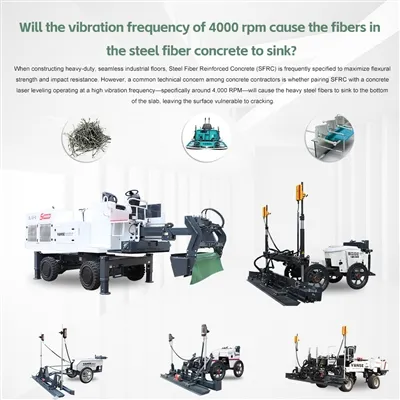
When constructing heavy-duty, seamless industrial floors, Steel Fiber Reinforced Concrete (SFRC) is frequently specified to maximize flexural strength and impact resistance. However, a common technical concern among concrete contractors is whether pairing SFRC with a concrete laser leveling operating at a high vibration frequency-specifically around 4,000 RPM-will cause the heavy steel fibers to sink to the bottom of the slab, leaving the surface vulnerable to cracking. The short answer is no. When a laser leveling is operated correctly, a 4,000 RPM vibration frequency does not cause steel fibers to sink. In fact, it provides the optimal consolidation needed to align the fibers perfectly within the concrete matrix. Here is a comprehensive, technical breakdown of how high-frequency laser leveling interact with steel fiber concrete, ensuring top-tier Floor Flatness (FF) and Floor Levelness (FL) without compromising structural integrity. To understand why the fibers do not sink, it is crucial to distinguish between the type of vibration used by a laser leveling and traditional manual vibrators. Deep Poker Vibrators (Low Frequency/High Amplitude): Traditional internal vibrators create violent, high-amplitude waves deep within the slab. If left in one place too long, this aggressive action will force heavy aggregates and steel fibers to the bottom while driving excess water and weak cement paste to the top. Laser leveling Vibrating Plates (High Frequency/Low Amplitude): The vibrating plate on a modern laser leveling operates at roughly 4,000 RPM. This is a high-frequency, low-amplitude surface vibration. It is designed to temporarily fluidize only the top layer (typically the top 50mm to 75mm) of the concrete. This gentle, rapid liquefaction allows the leveling to close the surface and bring up just enough cream (cement paste) for power troweling, without disturbing the homogenous suspension of steel fibers in the deeper matrix. Far from causing the fibers to sink, the 4,000 RPM vibration actually improves the mechanical performance of the SFRC. As the leveling head of the laser leveling passes over the concrete, the high-frequency vibration and the physical strike-off action force the steel fibers near the surface to lie down horizontally. This parallel alignment is exactly what engineers want. Fibers that are aligned horizontally across the surface provide maximum resistance against surface micro-cracking, shrinkage, and dynamic loads from heavy warehouse equipment like forklifts. If steel fibers are sinking to the bottom of a slab, the equipment is rarely the root cause. The primary culprit is almost always a poorly designed concrete mix with an excessively high slump (too much water or chemical plasticizer). Proper SFRC Mix: In a well-proportioned SFRC mix, the mortar holds the fibers in suspension. Over-Wet Mix: If the concrete is too fluid (a high slump), the matrix lacks the viscosity to support the heavy steel fibers. In this scenario, gravity-accelerated by any form of vibration-will cause the fibers to settle. Maintaining strict control over the batching process and ensuring a cohesive mix design is essential for seamless floor construction. Achieving perfect E-E-A-T (Experience, Expertise, Authoritativeness, and Trustworthiness) in industrial flooring requires equipment that guarantees consistency. This is where advanced machinery from Shandong Vanse Machinery Technology Co., Ltd. excels. As detailed on www.vansemac.com, Vanse's equipment ecosystem is specifically engineered to handle complex materials like steel fiber concrete: Constant Travel Speed: Models like the YZ30-4E and YZ40-4E telescopic boom laser leveling utilize intelligent control systems that maintain a smooth, continuous retraction speed. Because the machine never stalls or pauses over one spot, there is zero risk of localized over-vibration that could cause aggregate or fibers to segregate. Optimized Leveling Heads: The heavy-duty vibrating plates on Vanse equipment are calibrated to deliver exactly the 4,000 RPM surface energy required to consolidate stiff, low-slump SFRC mixes efficiently. Electric Drive Precision: For smaller commercial decks, walk-behind units like the all-electric DZ25-2 provide fixed-speed walking. This steady pace ensures the vibration exposure is mathematically uniform across every square meter of the slab. Pairing a high-performance concrete laser leveling with steel fiber concrete is not a risk; it is the industry standard for delivering super-flat, ultra-durable logistics and manufacturing facilities. The 4,000 RPM high-frequency surface vibration ensures rapid surface closure and optimal horizontal fiber alignment, locking in the structural strength of the floor. Note: The parameters provided in this document are for reference only and are not mandatory. Due to differences in technical characteristics between different brands and models of laser levelers, please consult the manufacturer for a suitable solution before actual operation. This reference document assumes no responsibility for any issues arising from failure to follow the manufacturer's instructions.How to evaluate & deal with potential risks of laser leveling machines and pavers during construction?
How to evaluate and deal with the potential risks of laser levelers and pavers during construction? In modern construction, laser levelers and pavers are key equipment that greatly improve construction efficiency and quality. However, in the process of using these advanced equipment, there are also a series of potential risks. If these risks are not properly evaluated and dealt with, they may have a serious impact on the construction progress, quality and personnel safety. Therefore, this article aims to explore in depth how to evaluate and deal with the potential risks of laser levelers and pavers during construction to ensure smooth construction and protect personnel safety. 1. Overview of laser leveler risks Laser levelers are widely used in concrete construction due to their high precision and high efficiency. However, there are also some potential risks in its use. First, the laser leveler is complex to operate and requires a high level of technical skills from the operator. Improper operation may cause equipment damage or substandard construction quality. Secondly, the laser leveler needs to maintain a stable laser signal during operation. If it encounters bad weather or a poor construction environment, it may affect the stability and accuracy of the laser signal. In addition, equipment maintenance is also crucial. Long-term non-maintenance may lead to equipment performance degradation and increase the risk of failure. 2. Risk Analysis of Pavers Pavers play a vital role in road construction, but there are also certain risks. On the one hand, the paver needs to cooperate with the transport vehicle during operation. If the cooperation is improper or the vehicle loses control, it may cause a safety accident. On the other hand, the working performance and paving quality of the paver are affected by many factors such as raw materials, equipment status, and operating technology. Any mistakes in any link may lead to construction quality problems. In addition, if key components such as the electrical system and hydraulic system of the paver fail, it may also have a serious impact on the construction. 3. Safety Assessment of Construction Site When evaluating and responding to the potential risks of laser levelers and pavers, safety assessment of the construction site is crucial. First, it is necessary to survey the construction site to understand the basic conditions such as terrain, weather, and traffic, and determine whether there are safety hazards. Secondly, a comprehensive inspection of construction equipment, materials, personnel, etc. should be carried out to ensure that the equipment performance is good, the materials are qualified, and the personnel qualifications meet the requirements. At the same time, a detailed safety construction plan should be formulated to clarify various safety measures and emergency plans to ensure safety and control during the construction process. 4. Risk Assessment of Personnel Operation Personnel operation is a risk factor that cannot be ignored during the construction process. In the operation of laser levelers and pavers, the focus should be on the skill level and safety awareness of the operators. First, ensure that the operators have undergone professional training and are proficient in the operation skills and maintenance knowledge of the equipment. Secondly, strengthen safety education and improve the safety awareness of operators so that they can respond correctly in emergency situations. In addition, strict operating procedures and reward and punishment mechanisms should be established to standardize operating behaviors and reduce risks caused by human factors. 5. Equipment maintenance and overhaul management Equipment maintenance and overhaul management is an important part of ensuring construction safety. For high-precision equipment such as laser levelers and push pavers, more attention should be paid to daily maintenance and regular overhaul. First of all, a complete equipment maintenance system should be established to clarify the maintenance cycle, maintenance content and responsible persons. Secondly, equipment inspections should be strengthened to promptly discover and deal with equipment failures and hidden dangers. At the same time, equipment maintenance should be done well to extend the service life of the equipment and reduce the failure rate. In addition, old equipment or equipment with poor performance should be updated or modified in a timely manner to improve construction efficiency and safety. 6. Risk Response Measures For the potential risks of laser levelers and pavers during construction, the following response measures should be taken: First, strengthen site management to ensure that the construction site is clean and orderly and reduce safety risks. Second, optimize the construction plan to reasonably arrange the construction progress and equipment configuration to reduce the impact of equipment failure on construction. Third, improve the skill level and safety awareness of operators, and improve their professional quality through training and education. Fourth, strengthen equipment maintenance and repair management to ensure stable and reliable equipment performance. Fifth, establish a risk pre-management mechanism to monitor and warn potential risks in real time so that timely measures can be taken to respond. 7. Safety training and operating specifications Safety training and operating specifications are important means to reduce the risks of laser levelers and pavers. First, safety training activities should be organized regularly to improve the safety awareness and risk identification ability of operators. The training content should include equipment safety operating procedures, emergency response measures, etc., to ensure that operators can master safety knowledge and skills. Secondly, it is necessary to formulate detailed operating specifications to clarify the operating procedures, precautions and prohibited behaviors of the equipment, and provide clear operating guidance for operators. At the same time, a supervision and inspection mechanism should be established to conduct regular inspections and evaluations of the operating behaviors of operators to ensure that they comply with the operating specifications and maintain good safety habits. In addition to training and specifications, attention should also be paid to the construction of safety culture. By promoting safety concepts, sharing safety experiences, and commending safety behaviors, a positive safety atmosphere can be created to improve the safety awareness of all employees. In addition, safety competitions, safety months and other activities can be carried out to stimulate employees' enthusiasm and initiative to participate in safety management. In summary, evaluating and responding to the potential risks of laser levelers and pavers during construction is a complex and important task. By strengthening construction site safety assessments, personnel operation risk assessments, equipment maintenance and overhaul management, and taking a series of risk response measures, risks can be effectively reduced and construction can be ensured to proceed smoothly. At the same time, strengthening safety training and improving the construction of operating specifications is also an important way to reduce risks. Only by continuously improving the level of safety management can we ensure that laser levelers and pavers play the greatest role in construction and ensure personnel safety. In future construction, with the continuous advancement of technology and the upgrading of equipment, the risk assessment and response measures for laser leveling machines and push-paving machines also need to be constantly reviewed and improved. Through in-depth research and accumulation of practical experience, I believe we can better deal with these potential risks and promote the sustainable and healthy development of the construction industry.