Technical Knowledge
Concrete cutting
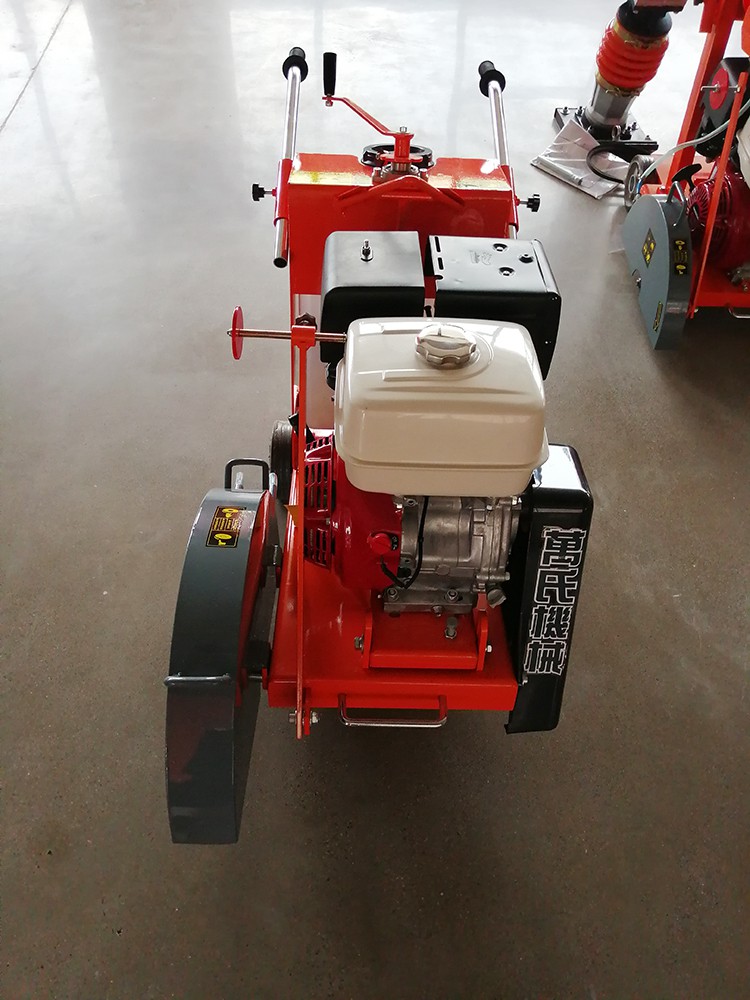
Concrete cutting, refers to the use of hydraulic wall sawing machine, electric dish saw machine, diamond or road cutting machine and other tools for concrete components, walls, pavement and other cutting technology. It has a strong cutting ability, static loss, high efficiency, the use of water cooling, no construction dust and so on.
Thanks to All the Friends Who Support and Trust Shandong Vanse Machinery Technology Co., Ltd.
If you want to know more about Shandong Vanse Machinery Technology Co., Ltd. or have any questions, please feel free to contact us:
Our Factory
Shandong Vanse Machinery Technology Co., Ltd.








Share this article

About the Author: Shandong Vanse Machinery Technology Co., Ltd.
Shandong Vanse Machinery Technology Co., Ltd. is a high-tech manufacturer specializing in concrete construction machinery, including laser screeds and related equipment. The company integrates R&D, production, and global sales, with products exported to over 60 countries and widely used in infrastructure projects worldwide.
Previous Post
Next Post
Related Articles
You Might Also Like
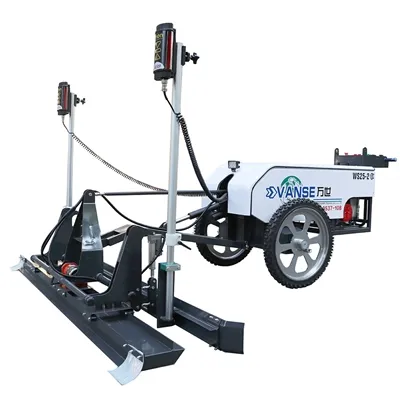
The magic weapon for large-area floor construction—concrete laser leveling machine
As we all know, the concrete laser leveling machine is a kind of equipment that uses laser as the reference plane and controls the leveling head in real time to achieve high-precision and rapid leveling of concrete. It is an important magic weapon to reduce the cost of enterprise construction. By choosing the laser leveling machine for construction, you can save fixed investment, reduce labor costs, and reduce operating costs. The widespread application of concrete laser levelings has improved the green and environmentally friendly performance of the floor. At the same time, the supply of laser paver equipment market has also driven the development of floor equipment. The continuous expansion of the concrete laser leveling equipment industry has prompted increasingly fierce market competition. Whether in the short or long term, the demand for the concrete leveling machine industry is affected by factors such as region and construction methods, and there is still considerable room for development. Reducing costs is the main reason for flooring companies to choose concrete laser leveling machines. Some data show that companies that purchase concrete laser levelinging machines have an average reduction in material costs of 10 to 25%. Sometimes specific cost reductions can reach 30%. The reason why the concrete laser leveling machine can significantly reduce the purchase cost is mainly because the laser leveling machine has extremely high construction efficiency and greatly saves labor. In addition to reducing costs, it also provides precise ground leveling. Concrete laser leveling machines are currently the most accurate leveling machines with small errors. The machine's vibration frequency is 4,000 times/minute, which ensures the density of the concrete floor and is formed in one go. The operation is simple and flexible, and the degree of automation is high, which greatly improves the construction efficiency. It is especially suitable for large-area floor construction, reducing labor costs and labor intensity. The concrete laser leveling machine is a powerful concrete floor construction machine. Suitable for a variety of floor works, from building floors to large warehouses and multi-storey buildings. The use of laser leveling machines for floor construction is a construction method that has been widely used at home and abroad. Therefore, as a mature and advanced construction technology, it has good benefits and prospects.Selection Strategy for Riding-Type VS Hand-held Trowel Machines: Large Warehouse VS Small Workshop
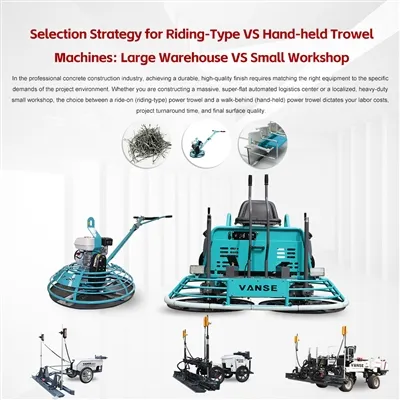
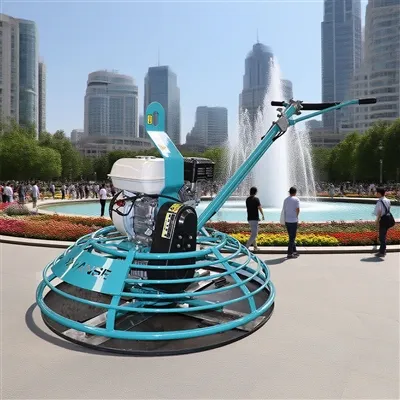
In the professional concrete construction industry, achieving a durable, high-quality finish requires matching the right equipment to the specific demands of the project environment. Whether you are constructing a massive, super-flat automated logistics center or a localized, heavy-duty small workshop, the choice between a ride-on (riding-type) power trowel and a walk-behind (hand-held) power trowel dictates your labor costs, project turnaround time, and final surface quality. To maintain high E-E-A-T (Experience, Expertise, Authoritativeness, and Trustworthiness) standards in concrete flooring, contractors must deploy a strategic equipment selection process. Here is the ultimate guide to selecting the right concrete finishing machinery for your next project, featuring industry-leading insights and equipment solutions from Shandong Vanse Machinery Technology Co., Ltd. (www.vansemac.com). The Requirement: Massive daily pour volumes, strict international Floor Flatness (FF) and Floor Levelness (FL) tolerances, and high surface wear resistance. For expansive commercial and industrial spaces, the riding-type power trowel is the undisputed necessity. Utilizing walk-behind equipment in a massive warehouse is an operational bottleneck that dramatically inflates labor costs and risks the concrete curing before the finishing phase is complete. Superior Surface Compaction: Ride-on trowels, such as the heavy-duty models offered by Vanse Machinery, feature dual-rotor systems and weigh significantly more than hand-held units. This intense mechanical weight drives coarse aggregates down and brings the cement paste to the top, resulting in a highly densified, burnished finish that resists the heavy dynamic loads of forklifts and automated storage and retrieval systems (ASRS). Protecting FF and FL Metrics: When pouring super-flat floors, contractors rely on advanced Concrete Laser Screeds (like the Vanse YZ30-4E or YZ40-4E telescopic boom models) to establish the perfect grade. A ride-on trowel operator sits on the machine, meaning no human footprints disrupt the freshly leveled surface. The wide, overlapping stance of the machine acts as a massive smoothing plane, locking in the laser-guided levelness. Exponential Efficiency (OpEx Savings): A single operator on a high-speed ride-on trowel can cover thousands of square meters in a fraction of the time it takes a manual crew. This rapid turnaround is essential for preventing cold joints and keeping international construction projects ahead of schedule. The Requirement: Maneuverability, cost-effectiveness, and precision around structural obstacles. Not every project has the square footage to justify the deployment of heavy riding equipment. For small workshops, residential garages, retail expansions, or tight mezzanine decks, the walk-behind power trowel is the strategic choice. Unmatched Maneuverability: Walk-behind trowels excel in confined spaces. They can easily navigate around plumbing stub-outs, structural columns, and tight corners where a bulky ride-on machine simply cannot fit or safely maneuver. Lower Capital Expenditure (CapEx): For smaller contracting firms or specialized repair teams, hand-held trowels require a much lower initial investment while still providing the mechanized blade rotation necessary for a smooth, hard trowel finish. Ease of Transport: Walk-behind units are lightweight and can be easily loaded into standard service trucks or elevated to upper-deck projects without the need for heavy-duty telehandlers or cranes. For global contractors handling comprehensive commercial builds, the selection strategy is rarely "either/or." It is highly recommended to view concrete finishing as an integrated ecosystem. As demonstrated by the comprehensive product lineup at Vanse Group, a flawless commercial floor requires a hybrid deployment: The Primary Output: Deploy the Ride-On Power Trowel to handle the vast 90% of the open warehouse floor space, matching the rapid advancement of the laser Leveling. The Perimeter Polish: Simultaneously deploy a team with Walk-Behind Power Trowels to follow the perimeter, expertly finishing the critical edge work along the formwork, walls, and structural pillars where the ride-on machine cannot safely reach. Selecting the correct concrete power trowel is a direct calculation of project scale, labor economics, and required floor specifications. For vast, seamless industrial floors, ride-on trowels are critical for efficiency and super-flat compaction. For confined workshops and precise edge-work, walk-behind trowels remain indispensable. By equipping your fleet with a balanced combination of reliable, high-performance machinery from an authoritative manufacturer like Shandong Vanse Machinery, you ensure your contracting business can competitively bid on-and flawlessly execute-any project, from the smallest workshop to the largest global logistics center. Note: The parameters provided in this document are for reference only and are not mandatory. Due to differences in technical characteristics between different brands and models of laser levelers, please consult the manufacturer for a suitable solution before actual operation. This reference document assumes no responsibility for any issues arising from failure to follow the manufacturer's instructions.Lifecycle management and replacement records for wear parts of power trowels (such as filters, oil seals, and bearings).
Effective management of the vulnerable parts of the power trowel not only ensures the continuity and quality of construction but also significantly extends the overall service life of the machine and reduces long-term operating costs. The following is a detailed elaboration on the establishment and implementation of the life cycle management and replacement record system for the vulnerable parts (filter elements, oil seals, bearings) of the power trowel. Life cycle management aims to prevent unexpected downtime and chain damage to other components by replacing parts before they fail through preventive maintenance. Life cycle influencing factors Environmental dust concentration: This is the most crucial factor. During the polishing stage of the cement floor, the dust is extremely high and the working load on the filter element is very heavy. Working hours: Cumulative working hours are the basic reference. Filter element type: The paper filter element is disposable, while the polyurethane foam pre-filter element can be cleaned and reused. Life Cycle and Management strategies Paper main filter element Standard cycle: Usually 50 to 100 working hours. In an environment with extremely high levels of dust, it may be necessary to inspect and clean the area every shift (8-10 hours) and replace it every 25-50 hours. Management method Daily inspection: After each shift's work, remove the filter element and illuminate it from the inside with a light to observe if there are any light-transmitting points on the outside. If so, it indicates that it is damaged and must be replaced. Non-oily cleaning: For minor blockages, low-pressure air (pressure < 0.5MPa) can be used to blow from the inside out. Do not strike. Forced replacement: Even if there is no obvious damage, replacement must be carried out when the recommended working time is reached or significant resistance is still found after cleaning. Polyurethane foam pre-filter core Cleaning cycle: Per shift or every 4 to 8 working hours. Management method: Clean with neutral detergent (such as soapy water), squeeze out the water by hand, dry and then install. Do not clean with gasoline, as it will damage the foam. Replace immediately in case of damage or loss of elasticity. Life cycle influencing factors Operating temperature: High temperatures in the engine and transmission will accelerate the aging of the oil seal rubber. The quality of lubricating grease: Using substandard grease or grease mixed with impurities will wear out the lip of the oil seal. The surface condition of the journal: If the output shaft is rusted or scratched, it will directly cut the oil seal, causing oil leakage. Installation quality: Improper installation is the main cause of early failure of oil seals. Life Cycle and Management strategies There is no fixed time period, and it belongs to the type of vulnerable parts that are subject to condition monitoring and regular inspection. Management method Daily observation: During each maintenance or use, check whether there is any grease leakage at the transmission case, engine crankshaft end, blade drive shaft, etc. Regular inspection: Every 100 to 200 working hours, or every quarter, conduct a detailed inspection of the oil seals at key parts to check for any flanging, hardening or cracks at the lip. Preventive replacement: When overhauling equipment (such as replacing bearings and clutches), all associated oil seals must be replaced at the same time. Do not take the risk of secondary disassembly and assembly just to save a little money. Life cycle influencing factors Load: When the trowel is under eccentric load or overload (such as when attempting to grind overly high protrusions), the bearings are subjected to impact loads. Lubrication: Insufficient lubrication is the primary cause of bearing damage. This includes incorrect grease type, untimely addition, and excessive addition leading to high temperatures. Sealing performance: The failure of the oil seal causes cement dust and moisture to invade the bearing, forming abrasives and causing rapid wear. Alignment accuracy: Improper installation (such as directly hitting with a hammer) or shaft bending can cause uneven wear of the bearing. Life Cycle and Management strategies As a core transmission component, the goal is to extend its service life infinitely through good maintenance before the end of its natural lifespan. Management method Regular lubrication: Strictly follow the instructions and add the specified lithium-based grease through the grease nipple every 8 to 10 working hours. Add until new grease overflows from the seal and squeeze out the old impurities. Abnormal noise and vibration monitoring: Operators and mechanics must be sensitive. If you hear a "clattering" noise, a strong granular friction sound or abnormal vibration of the entire machine at the bearing part during operation, stop the machine immediately for inspection. Temperature monitoring: After working for a period of time, touch the outer shell of the bearing housing with your hand. If it is abnormally hot and cannot be touched, it indicates that there may be poor lubrication or wear inside. Establishing a record system is the core of achieving scientific management. It is recommended to use the tabular management of "one file per machine". Record Form for Replacement and Maintenance of Vulnerable Parts of the power trowel Equipment number: ______ Equipment model: ______ Person in charge: ______ Date Cumulative working hours Name of vulnerable parts Specification and model Reasons for replacement/maintenance Operator The estimated maintenance time for the next time is per hour Remarks 2023/10/26 1250 Air filter element (paper) ABC-123 Replace periodically/Dust blockage A 1350 2023/10/26 1250 Polyurethane pre-filter element XYZ-456 Clean B 1258 2023/11/15 1380 Drive shaft oil seal OIL-789 When replacing bearings, replace them prevatively C – Accompanied by bearing replacement 2023/11/15 1380 Main shaft bearing BEAR-001 There is an abnormal noise during operation and it is damaged after disassembly and inspection D – Replace the oil seals on both sides simultaneously 2023/12/1 1450 Air filter element (paper) ABC-123 Replace on a periodic basis E 1550 … … … … … … … … When purchasing genuine parts, the lifespan of counterfeit parts may only be half that of genuine ones, and they are prone to causing collateral damage, which is not worth it. Train operators: Cultivate the habit among operators of "checking before starting work, monitoring during work, and maintaining after completion". They are the first perceivers of the equipment's status. Establish an early warning mechanism: Based on the record sheet, simple early warnings can be set up. For instance, when the accumulated hours approach the "estimated next maintenance time", the equipment administrator should prepare spare parts in advance and arrange a maintenance plan. Standardized operation procedures: Especially for the replacement of bearings and oil seals, standard operation instructions must be formulated, including: Correct disassembly and installation tools (use pullers and special sockets; hammering is strictly prohibited). Cleaning work before installation (ensuring that the shaft and seat are clean and free of debris). Apply grease to the lip of the oil seal before installation. After installation, conduct a trial run and check. Through the life cycle management of the above system and strict replacement records, you can minimize the unexpected failures of the power trowel, ensure that it is in the best condition on every construction day, and ultimately achieve cost reduction and efficiency improvement. Note: The parameters provided in this document are for reference only and are not mandatory. Due to differences in technical characteristics between different brands and models of laser levelers, please consult the manufacturer for a suitable solution before actual operation. This reference document assumes no responsibility for any issues arising from failure to follow the manufacturer's instructions.